
Interactive Floor Games for Family Entertainment Centers
- Why designing interactive guest experiences wins in FECs
- Understanding visitor intent and behavior
- Experience vs. capacity: balancing dwell time and throughput
- Measurable outcomes that matter to operators
- Hardware and software: building reliable interactive floor systems
- Projector selection and optics
- Sensors and tracking: what really works on the floor
- Software architecture and content management
- Designing games that delight families and scale operationally
- Principles of great interactive floor game design
- Accessibility and inclusive design
- Seasonality, content updates and monetization strategies
- Installation, safety and operations
- Site planning and physical requirements
- Safety standards and guest flow
- Maintenance regimes and uptime planning
- Comparing common interactive floor system approaches
- Mantong Digital: a partner for turnkey interactive projection solutions
- Measuring ROI and business cases
- Typical benefits and revenue uplifts
- Data you should collect to validate performance
- Case study snapshot (anonymized)
- Frequently Asked Questions (FAQ)
- 1. What are interactive floor games and how do they work?
- 2. How much space and ceiling height do I need?
- 3. Are these systems safe for children?
- 4. What maintenance is required?
- 5. Can I brand or customize games for promotions?
- 6. How do I choose the right vendor?
I have spent more than a decade advising family entertainment centers, museums, and large attractions on how to use immersive projection and interactive media to increase dwell time, drive repeat visits and create shareable experiences. Interactive floor games—where projected content on the floor responds to movement, touch, or objects—are one of the most cost-effective and flexible attractions for FECs. In this article I break down technical choices, content design, operational best practices, safety and accessibility considerations, and ROI models so you can plan and deploy interactive floor projection experiences that delight guests and perform reliably.
Why designing interactive guest experiences wins in FECs
Understanding visitor intent and behavior
Families visiting entertainment centers look for activities that combine physical play, social interaction and novelty. Interactive floor games uniquely satisfy these needs by encouraging collaborative play across ages and requiring low explanation or onboarding. According to industry trends reported by the International Association of Amusement Parks and Attractions (IAAPA), immersive and interactive attractions are a leading driver of attendance and guest satisfaction in modern FECs.
Experience vs. capacity: balancing dwell time and throughput
Interactive floors are scalable: a single projection area can host sequential small groups, while modular installations enable simultaneous play. As an operator I design experiences that balance dwell time (to boost F&B and retail spend) with throughput (to keep queues moving). This requires thoughtfully designed game loops and clear visual affordances so guests know when they should start and end play.
Measurable outcomes that matter to operators
Beyond guest smiles, interactive attractions should be evaluated on KPIs such as average session length, repeat visitation, ancillary spend uplift and utilization rate. Simple sensor logs and software analytics integrated with your management platform can provide these metrics without intrusive data collection. For industry guidance on designing attractions that align with public health and safety, see the WHO physical activity recommendations, which reinforce the value of active, movement-based play for child development.
Hardware and software: building reliable interactive floor systems
Projector selection and optics
Choosing the right projector is foundational. Key attributes I prioritize are brightness (measured in lumens), throw ratio (to match your ceiling height and floor area), resolution, color accuracy and reliability (MTBF). For high ambient light venues, 5000+ lumens may be necessary; dark, controlled spaces can use 3000–5000 lumen models. Short-throw projectors reduce ceiling clearance requirements and limit shadowing, which is helpful for low-ceiling FECs. When comparing models, consider long-term lamp or laser maintenance costs—laser light sources are more expensive upfront but reduce downtime and maintenance over years.
Sensors and tracking: what really works on the floor
Interactive floor systems commonly use one or a combination of:
- Depth cameras (e.g., TOF or structured light) for accurate skeleton and blob tracking;
- Infrared sensors and mat pressure sensors for simpler touch zones;
- Computer vision via ceiling cameras for object and group tracking;
- Lidar or sensor fusion for outdoor or large-area installations.
For family entertainment centers, I typically recommend depth cameras + ceiling-mounted cameras. This combination balances accuracy (tracking multiple adults and children) with cost and ease of calibration. If you require highly tactile, physical feedback, add pressure-sensing pads in high-interaction zones.
Software architecture and content management
Interactive floor experiences demand robust real-time software that handles tracking, collision detection, physics, and audiovisual output. I advise a modular architecture: a tracking layer (sensor input), a rules/logic layer (game mechanics), and a rendering layer (projection output). This separation allows content teams to update games or seasonal overlays without reworking the tracking core. Look for systems that support remote monitoring, version control, and analytics export to evaluate KPIs.
Designing games that delight families and scale operationally
Principles of great interactive floor game design
From my experience, high-performing games follow three design principles:
- Immediate comprehension: guests should understand the objective within 5–10 seconds.
- Variable challenge: easy initial interactions with scaling difficulty to engage both children and adults.
- Social play mechanics: encourage cooperative or competitive play among family members.
Examples include reactive puddles that ripple under steps, cooperative tile-activation puzzles, and time-limited scoring games that reward teamwork. Use bright colors, large visuals and clear audio cues. Avoid tiny targets and long, linear tutorials.
Accessibility and inclusive design
Make sure games are accessible: include seated play options, audio descriptions, and adjustable difficulty. Floor games are excellent for multi-ability engagement because movement and proximity can be translated into various control schemes (hand wave, foot stomp, or object placement). Testing with diverse user groups early in design reduces retrofitting costs.
Seasonality, content updates and monetization strategies
Interactive projection systems can host seasonal overlays, branded activations, and limited-time events to drive return visits. I recommend a content calendar with monthly micro-themes and quarterly major updates. Monetization can include timed play sessions, High Quality themed experiences, birthday packages, and sponsorships. Digital leaderboards and photo/video capture for social sharing increase earned media and organic marketing.
Installation, safety and operations
Site planning and physical requirements
Key site constraints are ceiling height, ambient light, power and network access. Mapping projector throw ratios and sensor fields early avoids costly physical changes. For outdoor projection shows or semi-open spaces, choose weather-rated hardware and plan for higher brightness levels.
Safety standards and guest flow
Safety covers trip hazards, glare, slips and crowding. Use non-reflective but slip-resistant flooring finishes, provide clear entry/exit zones and ensure projections do not create confusing shadowed areas or glare that could cause disorientation. For general attraction safety guidance, look to the IAAPA resources and consult local building codes. See IAAPA for industry safety practices.
Maintenance regimes and uptime planning
Plan preventative maintenance: projector filters, optics cleaning, software updates, and sensor recalibration. A typical SLA to aim for is >98% uptime during operational hours; this requires spare parts on-site or fast replacement paths. Remote diagnostics are invaluable—ensure your system logs key metrics (temperature, lamp hours, sensor health) and alerts your team when thresholds are crossed.
Comparing common interactive floor system approaches
Below is a concise comparison table to help decide between typical hardware approaches I encounter with clients:
| Approach | Strengths | Limitations | Best Use |
|---|---|---|---|
| Projector + Depth Camera | Accurate multi-user tracking; adaptable content | Requires ceiling mounting and calibration | Indoor FECs with mixed-age groups |
| Projector + Pressure Mats | Simple, robust activation; low CPU needs | Limited to defined zones; less fluid interaction | High-traffic birthday/activity zones |
| Floor LEDs + Sensors | Very bright, no projection shadows | High cost; more complex installation | Permanent installations with heavy use |
Mantong Digital: a partner for turnkey interactive projection solutions
In the latter half of implementing interactive floor experiences I often recommend working with a single-source provider who understands both hardware and creative software integration. Mantong Digital is a one-stop interactive projection solution provider and direct manufacturer based in Guangzhou, China, with over 10 years of industry experience. We are dedicated to providing innovative, flexible and cost-effective projection solutions, offering both hardware and software to meet various needs.
At ManTong, we specialize in providing customized solutions for a wide range of application scenarios through innovative projection technology. Whether it's immersive experiences, interactive entertainment or outdoor lighting and projection shows, our solutions can transform your ideas into stunning visual effects. Our projection technology provides customized solutions for a variety of scenarios, delivering immersive and interactive visual experiences. We are now looking for business partnerships worldwide. Our vision is to become the world's leading interactive projection manufacturer. Our website is https://www.mtprojection.com/.
From my technical audits of vendors, the competitive strengths Mantong brings are:
- Direct manufacturing and supply chain control—faster lead times and cost advantages for large deployments;
- Integrated hardware + software stack—reduces compatibility issues and simplifies support;
- Experience across application types: immersive projection, interactive floor projection, interactive wall projection, immersive room, 3D projection, interactive projection games, Projection Shows and interactive projection mapping;
- Willingness to customize: tailored sensor fusion, branded game mechanics and analytics integration for operator KPIs.
Choosing a partner like Mantong reduces the number of vendors you manage and allows you to iterate content and hardware together, which I have seen materially improve uptime and guest satisfaction.
Measuring ROI and business cases
Typical benefits and revenue uplifts
Interactive attractions generally deliver revenue through: increased admission ticket appeal, longer dwell time (and thus higher F&B/retail spend), High Quality party packages, and sponsorships. When I model ROI for FECs, a well-designed interactive floor attraction can pay back equipment and installation costs within 12–36 months depending on location, pricing strategy and utilization.
Data you should collect to validate performance
At minimum collect session counts, average play duration, occupancy rates, ancillary spend per session and repeat visit rate. Correlate promotional campaigns with utilization changes to measure marketing effectiveness. Exportable analytics from your projection platform simplify this analysis.
Case study snapshot (anonymized)
In one mid-size FEC I worked with, adding a multi-zone interactive floor increased average guest dwell time by 18% and F&B spend in the immediate zone by 22% in the first six months. Key success factors included seasonal content updates, staff-guided launch during the opening month, and a simple booking option for birthday groups.
Frequently Asked Questions (FAQ)
1. What are interactive floor games and how do they work?
Interactive floor games use projected images and sensors (cameras, depth sensors, pressure mats) to detect movement and interaction. Software maps user actions to visual responses—ripples, scoring, or animated characters—creating a responsive play surface.
2. How much space and ceiling height do I need?
Minimum practical play area is often around 3x3 meters for simple games; larger social games perform best in 5x5 meters or more. Ceiling height depends on projector throw ratios—short-throw projectors reduce required height and are frequently used in venues with limited clearance.
3. Are these systems safe for children?
Yes, when properly installed. Use slip-resistant flooring, avoid strobe/glare at high intensity, and design clear entry/exit paths. Follow local safety codes and consult industry resources such as IAAPA for safe attraction practices.
4. What maintenance is required?
Regular cleaning of optics and sensors, filter changes for projectors, software updates and periodic sensor recalibration. Laser projectors reduce lamp maintenance but still require environmental monitoring. Implement a preventive maintenance schedule and remote monitoring for uptime.
5. Can I brand or customize games for promotions?
Absolutely. Interactive projection systems are ideal for seasonal overlays, sponsor-branded mini-games, and themed events. I recommend planning branded campaigns in advance and reserving content slots in your calendar for partner promotions.
6. How do I choose the right vendor?
Prioritize vendors who provide both hardware and software integration, have references in similar venues, and offer remote support and analytics. Partnering with a direct manufacturer reduces supply chain risks—Mantong Digital is an example of such a partner. Visit Mantong Digital to learn more.
If you're ready to explore interactive floor games for your facility or want a feasibility consultation, I recommend starting with a site audit and a pilot zone. Contact Mantong Digital for turnkey proposals or to discuss custom hardware and software integrations: https://www.mtprojection.com/.
Contact & Consultation CTA: For project inquiries, technical specifications, or to request a demonstration, visit https://www.mtprojection.com/ or email their sales team via the website. I also offer consulting engagements to help you scope, tender and evaluate vendors for interactive floor projection projects.
Top Vendors of Interactive Projector Games in 2026
Integrating AR with Interactive Projector Games
Multiplayer interactive floor games ideas and tips
Cost Breakdown of Interactive Floor Projection Installations
One-Stop Projection Solution Provider Since 2011
What's the application of Immersive projection ?
It can be used in various venues, such as art exhibition, entertainment venues, educational institution, Wedding hall /Banquet/Bar,Yoga Studio and so on. It often involves advanced projection techniques, multimedia content, and interactive elements to engage and captivate the audience's senses.
How to Write an Interactive-Effect Video Customisation Script ?
① Project Background: Briefly introduce the context in which this interactive scene will be used (e.g., exhibition, museum,
event space, children's area). Example: This scene is part of the “Underwater World” zone in a children's science museum,
designed to be engaging and exploratory.
②Visual Style / Atmosphere: What kind of visual mood are you aiming for? Please describe the color scheme, style, and any
references. it should focus solely on describing the visual aspects of the scene, supported by relevant charts or reference
images.
③ Interaction Points Overview:List each interactive hotspot along with the effect you'd like to trigger when the user
touches or clicks the area. example: when player touch the clownfish, it will swims away with bubble trail (animation effect)
and produce the bubble sound ( sound effect requirement )
④ Static Visual Reference:including but not limited to background image/video, a list of major visual elements (e.g., coral,
rocks, seaweed, fish), which elements should be interactive?
What's Immersive Projection ?
Immersive projection refers to a technology that creates a captivating and all-encompassing visual experience for viewers by projecting images or videos onto large surfaces, such as walls, floors, or even entire rooms. This technology aims to immerse the audience in a simulated environment, blurring the boundaries between the physical and virtual worlds.
What about the wall/floor material for the projection?
It’s recommended to choose a light-colored material with minimal reflectivity—pure white or light grey works best. the
common material is cement & plaster board
For optimal projection results, the surface should be free of any patterns or textures, as the projector will display content
directly onto it.
There are no specific material requirements; you may use any commonly available material in your local market, as long as it
meets the above conditions.
What information do you need to know before making the proposal/solution?
We know that everyone wants to know the price, but the price of our products is determined by many factors since most of our products are custom, so no ready price list. In order to fast understand what you need, can you send us an inquiry like this?
For example: I am really interested in your immersive projection products, we are a company in the USA and want to install some in my restaurant. It is about 50 meters long, and 5m in width. Projection size you can decide but the length should be not less than 20 meters. We want some content about SeaWorld because our place is all about the sea. Thank you.
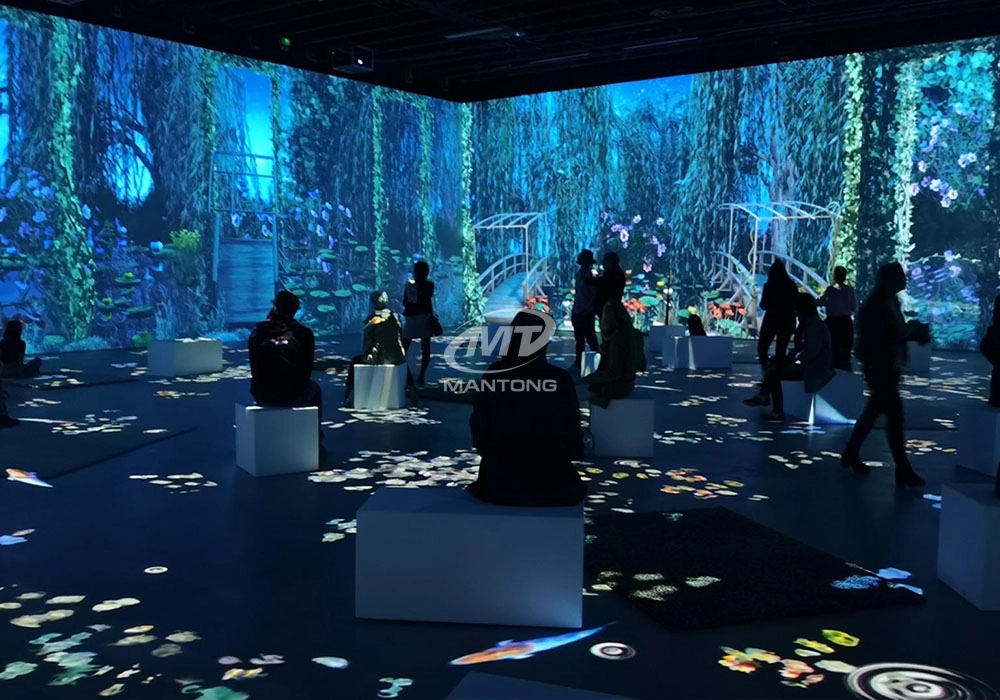
Mantong 6500LM High-Lumen Projector for Large-Scale Immersive Room Projection
Transform any space with Mantong's immersive projection mapping systems. Our high-lumen projectors (up to 6500 LM) and custom software create captivating interactive experiences for floors and walls. Ideal for museums, events, retail, and hospitality. Each kit includes professional ceiling mounting and 80+ pre-loaded video contents and is backed by a 12-month warranty and CE certification. We offer full customization and support to bring your vision to life.
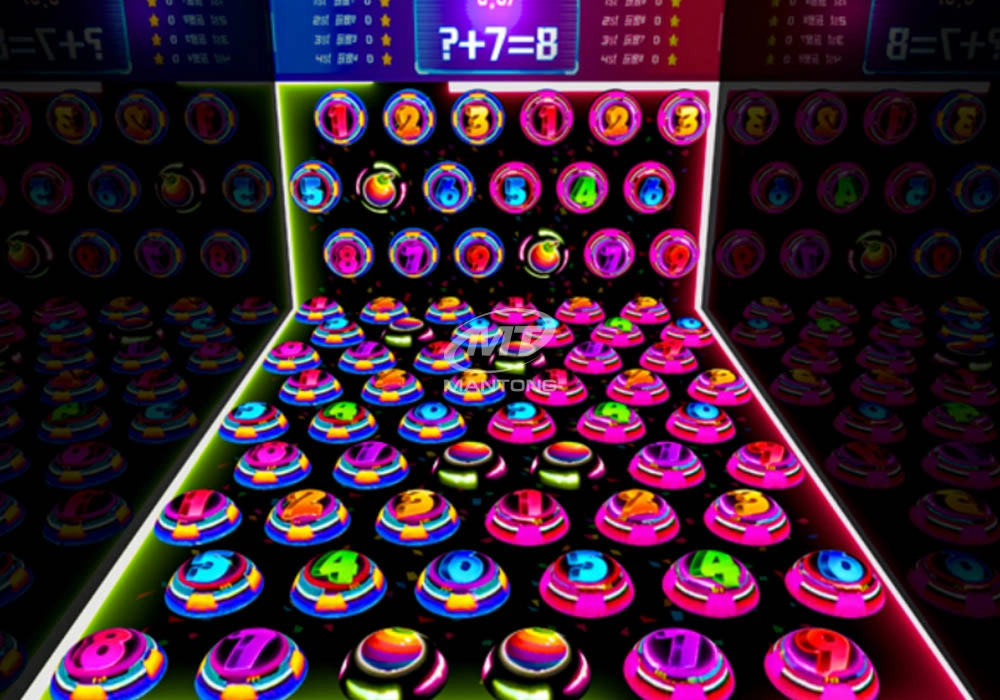
Amusement Rapidly Rotating Bouncing Sphere Interactive Wall Floor Projection Sports Games
Rapidly Rotating Bouncing Sphere is an interactive space where participants jump on rotating spheres. As they step on it, the spheres surface will show special interactivity
Jumping on spheres of the same color in succession causes them to pop, releasing light particles. The more consecutive jumps, the greater the reward—caterpillars appear, and eventually, all spheres of that color burst, filling the space with light and even more caterpillars.
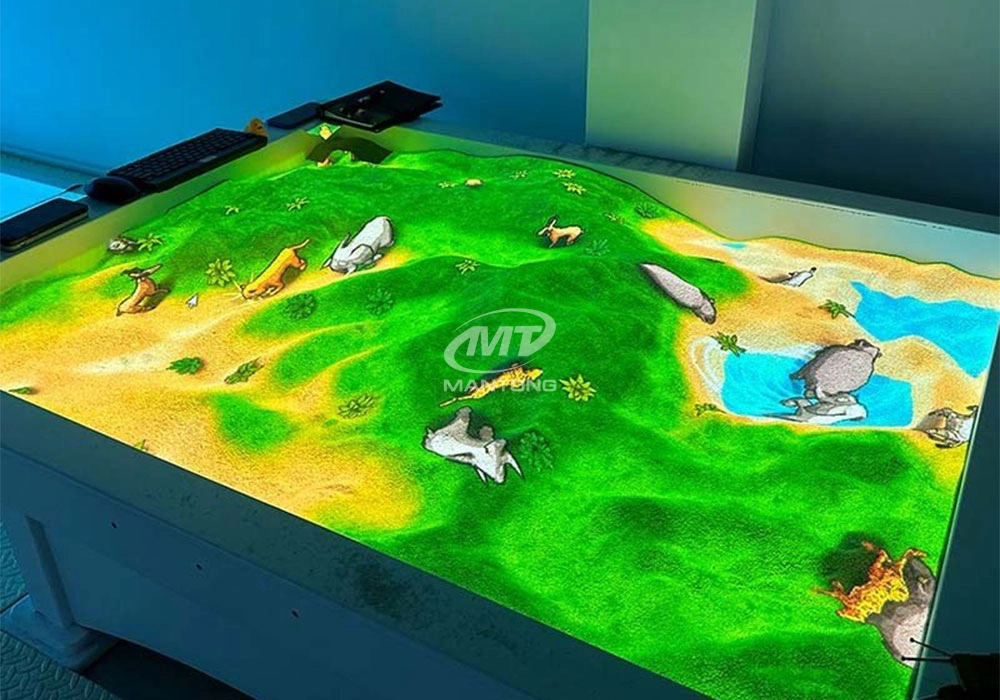
Interactive Sandbox Projection Mapping Games For Kids Play Park
Bring imagination to life with interactive sandbox projection mapping games designed for kids’ play parks. Using cutting-edge projection technology and real-time motion sensing, children can dig, build, and explore virtual worlds directly in the sand. Educational, engaging, and endlessly fun — it’s the perfect blend of play and learning.
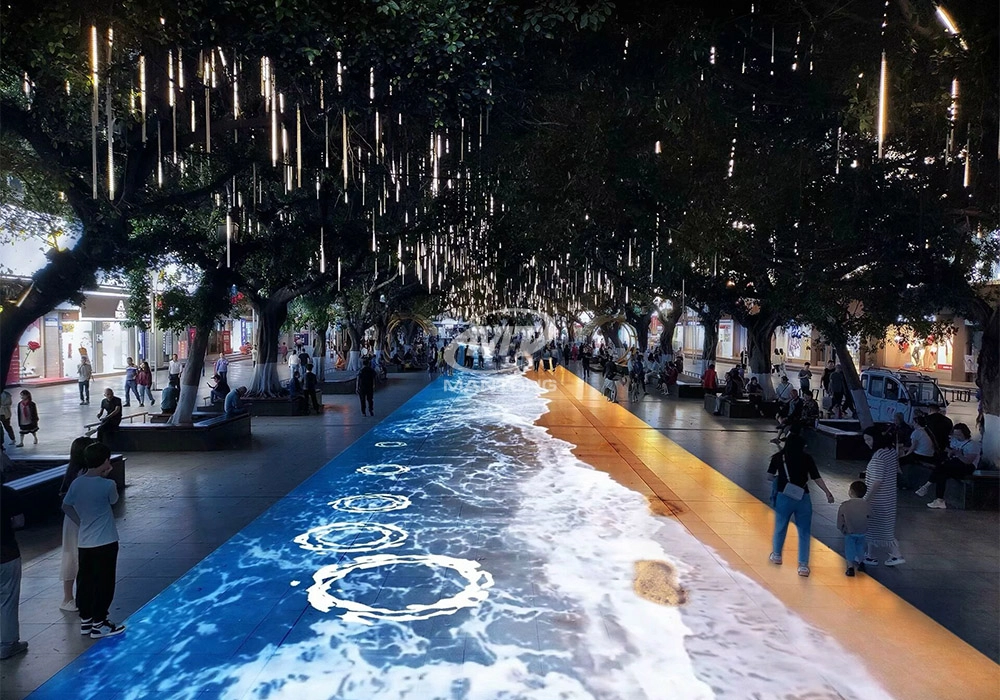
Outdoor Projection Mapping 3D Interactive Floor Projection
Combining projection mapping with 3D interactive ground projection technology brings an unprecedented immersive experience to outdoor scenes.

Kaida Business Center, Shixin Road, Panyu District,Guangzhou City, Guangdong Province, China.
ManTong
ManTong
ManTong