
Interactive Floor Games for Schools: Engagement & Safety
- Why active, movement-based learning matters
- Evidence for improved student outcomes
- How interactive floor games support attention and inclusion
- Designing safe interactive floor games for schools
- Hardware & sensor selection: trade-offs and recommendations
- Projector selection and installation tips
- Safety, hygiene, and accessibility best practices
- Injury prevention and supervision protocols
- Cleaning, infection control and materials
- Accessibility and inclusive design
- Implementation, curriculum integration, and procurement
- Curriculum alignment and assessment
- Budgeting, maintenance and ROI
- Choosing a vendor: key criteria
- Mantong Digital: a partner for schools
- Who Mantong Digital is and what they offer
- Mantong’s competitive strengths and product range
- How Mantong solutions address school needs
- Deployment checklist and final recommendations
- Pre-installation checklist
- Operational checklist
- FAQ
- 1. Are interactive floor games safe for young children?
- 2. Do interactive floor projections spread germs?
- 3. What sensors work best in bright, sunny classrooms?
- 4. How much does an interactive floor system cost?
- 5. Can interactive floor games integrate with curriculum and assessment?
- 6. How do I choose between UST and standard throw projectors?
- 7. Who should I contact for a school-ready interactive projection solution?
Interactive floor games combine projection, sensors and software to create large-scale, motion-driven learning experiences. For schools, they offer kinesthetic activities that improve attention, motor skills and collaboration—when designed and deployed with proper hardware, safety controls and maintenance procedures. This article explains evidence for their educational value, practical design choices (projectors, sensors, surfaces), safety and hygiene best practices, integration into curriculum, procurement criteria and vendor evaluation, with actionable checklists and references to authoritative standards and studies.
Why active, movement-based learning matters
Evidence for improved student outcomes
Active learning techniques—where students participate through discussion, problem solving or movement—show measurable gains in retention and performance. A landmark meta-analysis found active learning increased student performance across STEM disciplines compared with traditional lectures (Freeman et al., PNAS, 2014). Interactive floor games enable embodied cognition and kinesthetic learning, aligning with this evidence by making abstract concepts physical and social.
How interactive floor games support attention and inclusion
Large-scale visuals and movement attract attention and accommodate diverse learning preferences. For neurodiverse students and those with sensory processing differences, configurable audio-visual feedback and adjustable difficulty let teachers tailor experiences. Touchless motion detection also supports students with fine-motor challenges.
Designing safe interactive floor games for schools
Hardware & sensor selection: trade-offs and recommendations
Selecting the right projector and sensor ensemble is foundational. Choices impact image clarity, latency, interaction reliability and safety. Common sensor options include RGB cameras with computer vision, depth sensors (Time-of-Flight), infrared cameras, and pressure mats. Each has trade-offs in cost, lighting tolerance and privacy concerns.
| Sensor Type | Interaction Mode | Range / Lighting | Pros | Cons | Typical Cost |
|---|---|---|---|---|---|
| RGB Camera + CV | Gesture, body tracking | Requires moderate to good lighting | Low cost, flexible | Privacy concerns; performance degrades in low light | Low–Medium |
| Depth / Time-of-Flight | Accurate body/pose detection | Works in varied lighting | Reliable, touchless | Higher cost | Medium–High |
| Infrared Camera | Motion, limb detection | Good in low light | Robust to ambient light | Limited resolution for detailed gestures | Medium |
| Pressure Mats | Step & location detection | Independent of lighting | Simple, deterministic | Wear & maintenance; fixed locations | Low–Medium |
Choosing sensors should consider classroom lighting, privacy policy (cameras capture images), and desired interaction fidelity. For many schools, a hybrid approach (depth sensor + infrared) balances reliability and privacy.
Projector selection and installation tips
For interactive floor projection, projector characteristics determine image quality and usability. Key parameters: brightness (ANSI lumens), throw ratio (short throw or ultra-short throw reduces ceiling mounting distance and shadow), resolution (1080p recommended; 4K for detailed graphics), and ingress protection for dusty spaces.
| Projector Type | Best For | Typical Brightness | Pros | Cons |
|---|---|---|---|---|
| Standard Throw | Large halls, long throw distances | 4000–8000 lumens | High brightness | Requires more mounting space; possible shadows |
| Short Throw (ST) | Classrooms with limited ceiling height | 3000–6000 lumens | Smaller shadows; compact install | Cost higher than standard |
| Ultra-Short Throw (UST) | Mounted near floor-facing surfaces | 2000–5000 lumens | Minimal shadowing; safer mount | Lower contrast in high ambient light |
For typical classrooms with ambient lighting, aim for 3000–5000 ANSI lumens to maintain vivid, readable images. Use lens shift or keystone correction carefully; where possible, use geometric calibration in software to correct floor irregularities. For safety, ceiling or recessed mounts with tamper-proof hardware reduce risk of collision and theft.
Safety, hygiene, and accessibility best practices
Injury prevention and supervision protocols
Interactive floor games combine movement with visual stimuli, creating potential for slips, trips and collisions. Adopt these measures:
- Use non-slip floor finishes or anti-slip mats; ensure fuses and cables are recessed and coded.
- Set soft boundaries visually in the software; implement automatic pauses if too many bodies cluster.
- Establish adult supervision ratios, especially for younger students, and include clear signage using standardized symbols (see ISO 7010 for safety symbol norms).
For broader context on playground and active play safety, consult CDC guidance on preventing injuries during physical play: CDC Playground Safety.
Cleaning, infection control and materials
Floor projections are often touchless, reducing direct contact, but classrooms are shared spaces. Adhere to school cleaning protocols and the CDC's environmental cleaning guidance (CDC cleaning guidance). Recommendations:
- Specify floor surfaces that are durable and easy to disinfect (vinyl, sealed hardwood with non-slip finish).
- Choose projectors with sealed optics or filters if dust is an issue; maintain HVAC and perform scheduled lens cleaning.
- Design games to minimize prolonged face proximity—avoid audio volumes and strobing that can trigger sensory issues or seizures.
Accessibility and inclusive design
Ensure interactive floor games comply with equality and accessibility standards. Provide alternative modes (audio cues, adjustable speed), large visual targets, and seating options. Consult local disability regulations (e.g., ADA in the U.S.) when installing equipment and creating pathways. Inclusive settings increase participation and reduce liability.
Implementation, curriculum integration, and procurement
Curriculum alignment and assessment
Interactive floor games are most effective when mapped to learning objectives. Sample integrations:
- Math: number lines, hop-to-add activities, sorting algorithms visualized as games.
- Literacy: phoneme hunts, vocabulary tag, story sequence sequencing.
- Physical education: agility drills with real-time feedback, collaborative team challenges.
Assess engagement and learning through observational rubrics, in-game analytics (time on task, accuracy), and traditional formative assessments. Many modern interactive projection platforms log user events that can be exported for teacher review.
Budgeting, maintenance and ROI
When evaluating ROI, include direct costs (projector, sensors, mounts, software licenses) and ongoing costs (warranty, replacement bulbs or laser modules, calibration, cleaning). Consider multi-use value: interactive floor projection can be repurposed for assemblies, exhibitions or family nights, increasing utilization.
| Item | Initial Cost Estimate | Ongoing Cost | Useful Life |
|---|---|---|---|
| Projector (UST / Laser) | $2,000–$8,000 | 0–$500/year (warranty/cleaning) | 5–10 years |
| Sensors (depth camera / IR) | $300–$2,000 | Minimal; firmware updates | 3–7 years |
| Software (license) | $0–$3,000 | 0–$1,000/year | Depends on vendor |
Choosing a vendor: key criteria
Look for vendors who provide:
- Turnkey solutions (hardware + software + installation).
- Customizable educational content and reporting tools.
- Strong after-sales support, warranty and local service options.
- Compliance with safety and electrical standards and transparent data/privacy policies.
Mantong Digital: a partner for schools
Who Mantong Digital is and what they offer
Mantong Digital is a one-stop interactive projection solution provider and direct manufacturer based in Guangzhou, China, with over 10 years of industry experience. They are dedicated to providing innovative, flexible and cost-effective projection solutions, offering both hardware and software to meet various needs. Visit their site: https://www.mtprojection.com/.
Mantong’s competitive strengths and product range
Mantong specializes in customized solutions across immersive projection, interactive floor projection, interactive wall projection, interactive projection games, immersive rooms, 3D projection and projection shows. Their competitive advantages include:
- Direct manufacturing: tighter quality control and competitive pricing.
- End-to-end services: hardware, software, content creation and installation.
- Customization: tailored content and calibration for classroom layouts, ADA compliance, and special-needs adaptations.
- Proven installations: experience across education, museums and entertainment sectors giving transferable best practices for schools.
Mantong is actively seeking business partnerships worldwide and positions itself to become a leading interactive projection manufacturer by combining technical depth with flexible project delivery.
How Mantong solutions address school needs
For schools, Mantong can provide packages with appropriate projector models (including laser UST options to reduce maintenance), depth sensors tuned for classroom lighting, pre-built interactive floor games aligned to curricular goals, teacher training, and maintenance contracts. Their approach emphasizes safety (secure mounts, cable management), hygiene-friendly materials, and analytics for teacher evaluation of usage and outcomes.
Deployment checklist and final recommendations
Pre-installation checklist
- Define learning objectives and usage scenarios (classroom, gym, corridor).
- Perform site survey for ambient light, ceiling height, floor material and power availability.
- Select sensors and projector type based on lighting and interaction fidelity needs.
- Confirm privacy policy and data handling if cameras are used.
- Plan supervision and emergency stop controls in software and hardware.
Operational checklist
- Establish cleaning schedule and procedures following CDC guidance: CDC cleaning guidance.
- Train teachers on content selection, classroom management and safety protocols.
- Monitor analytics (engagement, session length) and iterate content based on outcomes.
FAQ
1. Are interactive floor games safe for young children?
Yes, when designed with appropriate non-slip surfaces, visual boundaries, adult supervision and speed/complexity limits. Follow playground safety principles and use automatic safety pauses when crowding is detected. Consult CDC playground safety guidance: https://www.cdc.gov/homeandrecreationalsafety/playground/index..
2. Do interactive floor projections spread germs?
Interactive floor games are mostly touchless, lowering direct contact risk. However, floors are shared surfaces—use cleanable flooring materials and follow school cleaning protocols. For guidance on cleaning shared spaces, see the CDC: CDC cleaning guidance.
3. What sensors work best in bright, sunny classrooms?
Depth sensors (Time-of-Flight) and infrared-based systems are more tolerant of varying ambient light than RGB cameras. Hybrid solutions combining depth sensing with infrared reduce false negatives in bright conditions.
4. How much does an interactive floor system cost?
Costs vary widely: basic systems (projector + simple sensor + software) can start around a few thousand dollars, while turnkey, multi-zone solutions with high-end projectors and professional installation may reach tens of thousands. Consider total cost of ownership: maintenance, calibration and content licensing.
5. Can interactive floor games integrate with curriculum and assessment?
Yes. Many platforms provide teacher dashboards, session logs and configurable activities mapped to learning objectives. Design activities with clear learning outcomes and combine in-game analytics with formative assessments to measure impact.
6. How do I choose between UST and standard throw projectors?
Choose UST projectors when ceiling height is limited or to minimize shadows and reduce the need for long mounts. Standard throw is suitable for auditoriums and large halls where mounting distance is available and higher brightness is needed.
7. Who should I contact for a school-ready interactive projection solution?
For turnkey solutions that include hardware, software, content and installation, consider established manufacturers and solution providers. Mantong Digital (Guangzhou) offers one-stop interactive projection solutions with a decade of experience. Learn more at https://www.mtprojection.com/ or contact their sales team to discuss school deployments and partnerships.
Interested in a tailored solution for your school or district? Contact Mantong Digital to request a quote, demo or partnership at https://www.mtprojection.com/. Our teams can provide site surveys, pilot installations and curriculum-aligned content to ensure safe, engaging and measurable outcomes.
Best Interactive Projectors for Classrooms in 2025
The latest trends for immersive experience room
What is wall mapping projection ?
Best Top Benefits of Implementing an Immersive Meeting Room in Your Office manufacturers and supplier brands
One-Stop Projection Solution Provider Since 2011
What about the wall/floor material for the projection?
It’s recommended to choose a light-colored material with minimal reflectivity—pure white or light grey works best. the
common material is cement & plaster board
For optimal projection results, the surface should be free of any patterns or textures, as the projector will display content
directly onto it.
There are no specific material requirements; you may use any commonly available material in your local market, as long as it
meets the above conditions.
How to install the projection equipment ?
1) Install the projector in a suitable position. We will provide you with a hanger, which you need to fix on the ceiling with
screws.
2) Connect projectors, computers and other accessories through wires.
3) After completing the above 2 steps, we will carry out the edge blending steps. Our team can complete it through remote
control.
In general, installation instructions for each project need to be specified on a project-by-project basis. The above is for
reference only.
What's the application of Immersive projection ?
It can be used in various venues, such as art exhibition, entertainment venues, educational institution, Wedding hall /Banquet/Bar,Yoga Studio and so on. It often involves advanced projection techniques, multimedia content, and interactive elements to engage and captivate the audience's senses.
Are you trader or manufacturer ?
We are direct manufacturer who specialize in providing one-stop solution for different outdoor & indoor projection project with our stable software and qualified projectors
What information do you need to know before making the proposal/solution?
We know that everyone wants to know the price, but the price of our products is determined by many factors since most of our products are custom, so no ready price list. In order to fast understand what you need, can you send us an inquiry like this?
For example: I am really interested in your immersive projection products, we are a company in the USA and want to install some in my restaurant. It is about 50 meters long, and 5m in width. Projection size you can decide but the length should be not less than 20 meters. We want some content about SeaWorld because our place is all about the sea. Thank you.
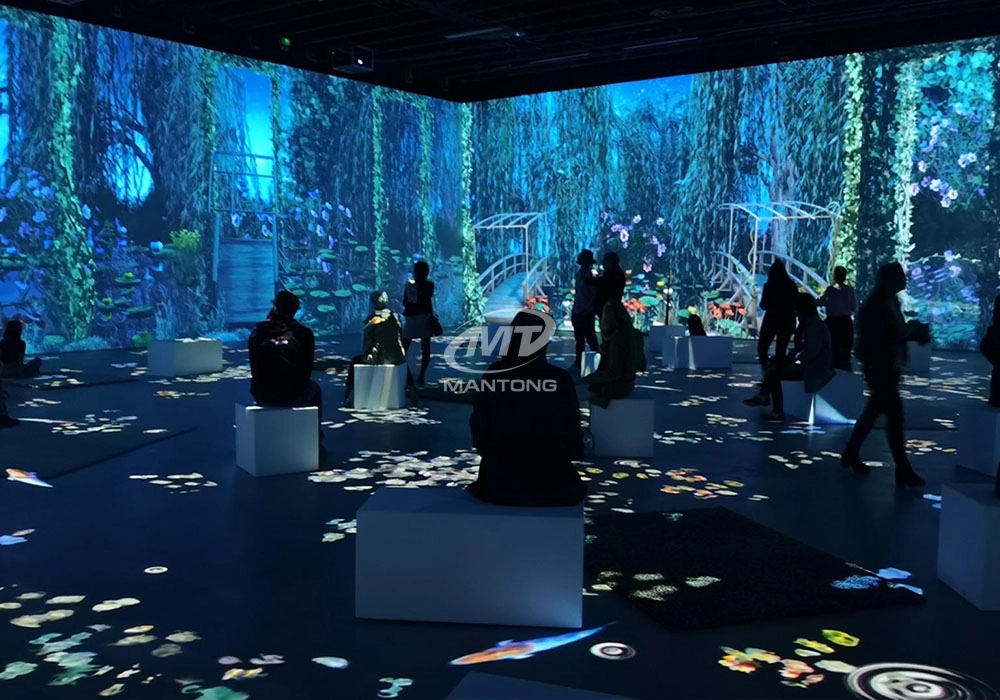
Mantong 6500LM High-Lumen Projector for Large-Scale Immersive Room Projection
Transform any space with Mantong's immersive projection mapping systems. Our high-lumen projectors (up to 6500 LM) and custom software create captivating interactive experiences for floors and walls. Ideal for museums, events, retail, and hospitality. Each kit includes professional ceiling mounting and 80+ pre-loaded video contents and is backed by a 12-month warranty and CE certification. We offer full customization and support to bring your vision to life.
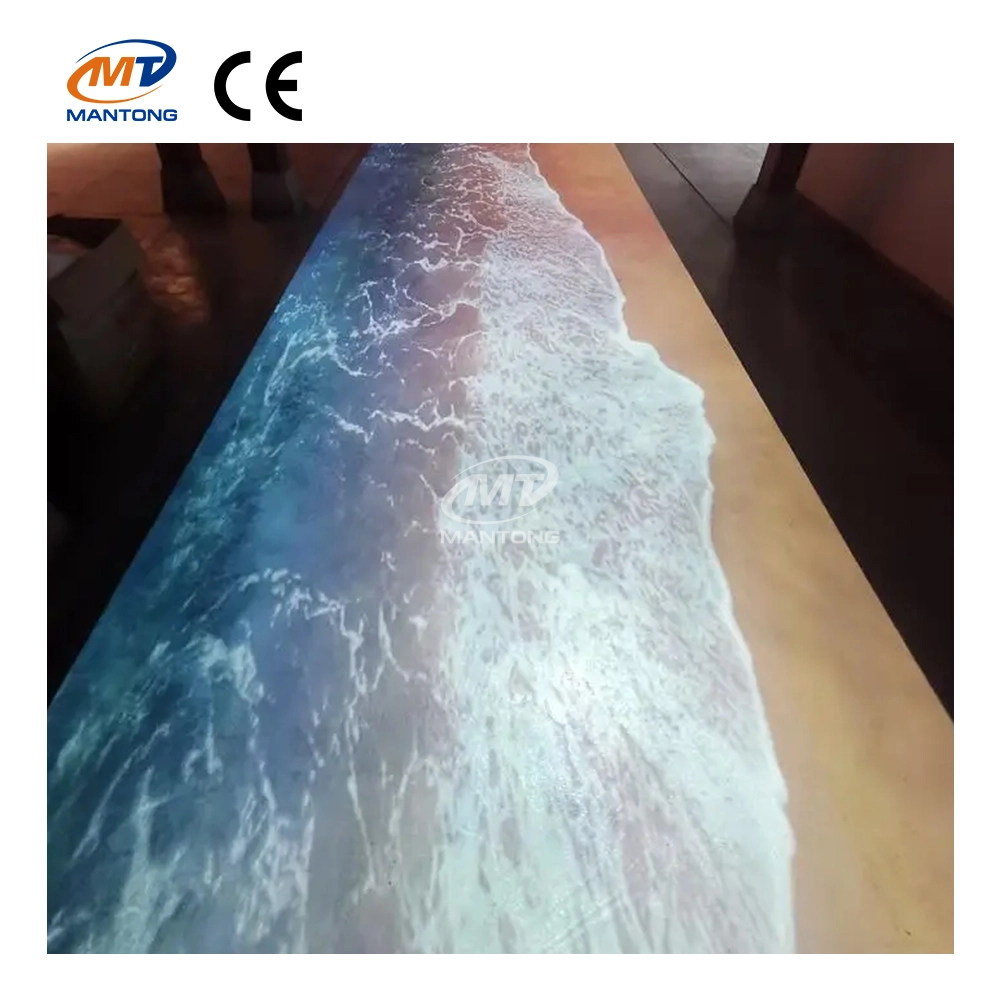
Indoor Interactive Floor Projector System - Customized Design & Installation Support
Indoor interactive floor projections display dynamic themed videos on the floor, commonly used in venues aiming to enhance brand influence or attract foot traffic, such as restaurants, hotel corridors, and brand car retail stores.
By using projectors and compatible software, the interactive content is projected onto the floor, encouraging engagement between people and the projected visuals. A single 5500-lumen indoor floor projector can cover an area of 5 m × 3 m. Typically, each project will use at least 3 units to ensure broad coverage and optimal visual effects.
We also offer customized design and installation support to enhance the interactive experience for your venue.
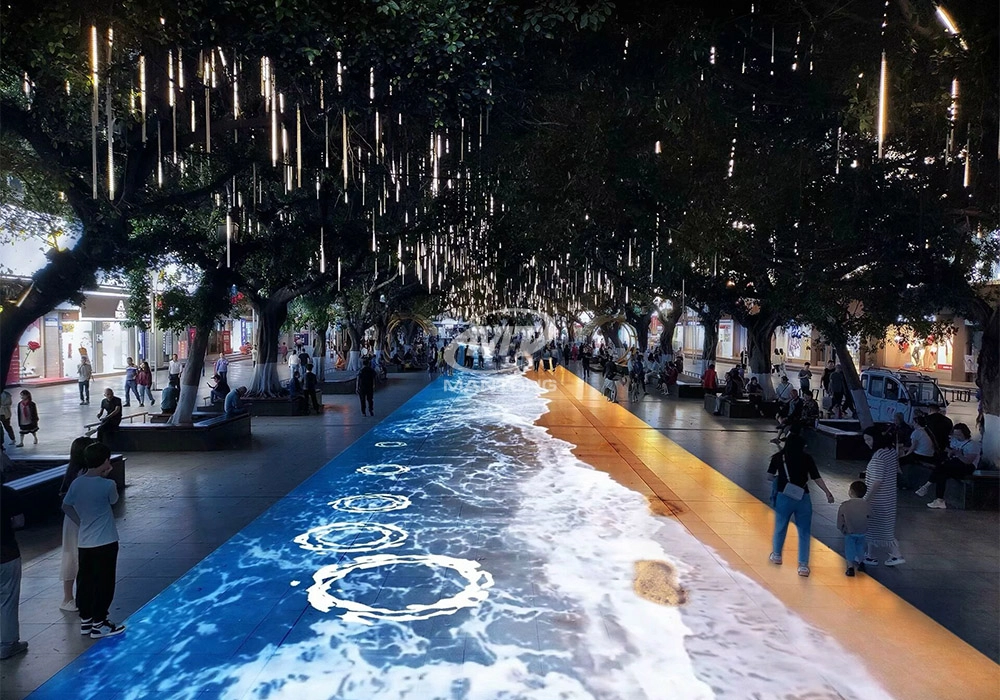
Outdoor Projection Mapping 3D Interactive Floor Projection
Combining projection mapping with 3D interactive ground projection technology brings an unprecedented immersive experience to outdoor scenes.
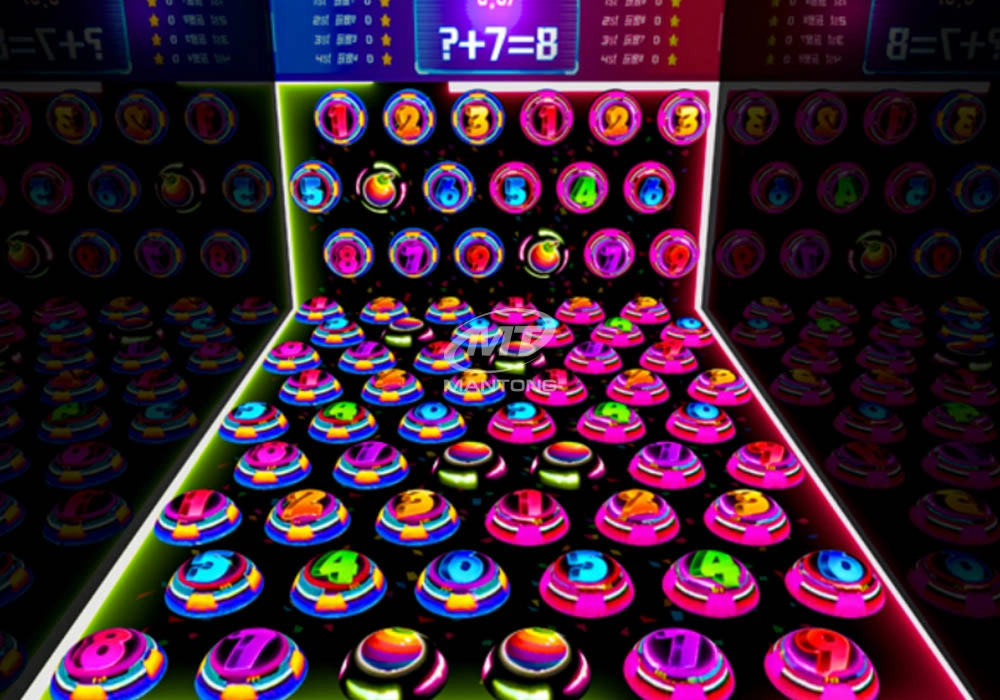
Amusement Rapidly Rotating Bouncing Sphere Interactive Wall Floor Projection Sports Games
Rapidly Rotating Bouncing Sphere is an interactive space where participants jump on rotating spheres. As they step on it, the spheres surface will show special interactivity
Jumping on spheres of the same color in succession causes them to pop, releasing light particles. The more consecutive jumps, the greater the reward—caterpillars appear, and eventually, all spheres of that color burst, filling the space with light and even more caterpillars.

Kaida Business Center, Shixin Road, Panyu District,Guangzhou City, Guangdong Province, China.
ManTong
ManTong
ManTong