
Use Cases: Interactive Floor Projectors in Senior Living Homes
- Enhancing Quality of Life in Senior Living with Interactive Projection
- Why senior living homes need interactive technology (keyword: interactive floor projector for home)
- 1. Fall prevention and balance training (keyword: interactive floor projector for home)
- 2. Physical therapy and rehabilitation (keyword: interactive floor projector for home)
- 3. Cognitive stimulation, memory care, and dementia-friendly activities (keyword: interactive floor projector for home)
- 4. Social engagement, recreation and intergenerational programs (keyword: interactive floor projector for home)
- 5. Wayfinding, safety overlays, and environment control (keyword: interactive floor projector for home)
- 6. Mood, ambiance and seasonal programming (keyword: interactive floor projector for home)
- Comparing interactive floor projectors with other activity technologies
- Evidence and expected outcomes
- Procurement checklist: choosing the right interactive floor projector for home or facility
- Implementation best practices
- Cost-effectiveness and ROI
- Mantong Digital: a partner for senior living interactive projection solutions
- Deployment case example (hypothetical ROI snapshot)
- Common pitfalls to avoid
- FAQ — Interactive Floor Projectors in Senior Living Homes
- 1. What is an interactive floor projector and how is it safe for seniors?
- 2. Can interactive floor projection reduce falls?
- 3. Is the technology suitable for residents with dementia?
- 4. How much space and infrastructure are required?
- 5. What are ongoing costs and support expectations?
- 6. How do I measure success?
- Contact and next steps
- References
Enhancing Quality of Life in Senior Living with Interactive Projection
Interactive floor projection systems—compact devices that project responsive visuals onto floors or low surfaces—are rapidly becoming a practical tool in senior living homes for rehabilitation, engagement, and safety. This guide explains how an interactive floor projector for home and facility use can address key needs of older adults, presents real-world use cases, compares alternatives, and gives procurement and implementation advice for operators and families.
Why senior living homes need interactive technology (keyword: interactive floor projector for home)
Senior living operators face overlapping challenges: rising resident acuity, pressure to reduce falls, need for engaging activities that scale, and demand for measurable outcomes that justify investment. Interactive floor projectors respond to these by providing low-barrier, multisensory activities that can be tailored for physical therapy, cognitive stimulation, and social programs. They work well as an adjunct to existing therapy programs and can be deployed in common areas, therapy rooms, or private suites—making the interactive floor projector for home a useful device both for family caregivers and institutional buyers.
1. Fall prevention and balance training (keyword: interactive floor projector for home)
Falls are a leading cause of injury among older adults. According to the U.S. Centers for Disease Control and Prevention (CDC), one in four older adults falls each year, and fall-related injuries and costs rise with age. Interactive floor projection used as a guided balance or stepping program supports purposeful movement training in a low-risk, engaging format.
Typical interventions using an interactive floor projector include weight-shifting games, step-target exercises, and reaction-time drills. Advantages: customizable difficulty, objective logging of steps/response times, ability to integrate with a therapist's plan, and increased adherence because games are enjoyable.
2. Physical therapy and rehabilitation (keyword: interactive floor projector for home)
Rehab clinicians integrate interactive floor systems into gait training and mobility exercises because the systems encourage repetition while providing immediate visual feedback. For short-term rehab patients, higher engagement can translate to more minutes of active therapy per day. For long-term care residents, maintenance programs supported by scheduled interactive sessions can help preserve functional independence.
Key metrics to track: session participation rate, active minutes per session, reach/step counts, and changes in standardized balance tests (e.g., Timed Up and Go). These metrics allow administrators to quantify ROI and clinical benefit.
3. Cognitive stimulation, memory care, and dementia-friendly activities (keyword: interactive floor projector for home)
Multisensory activities can reduce agitation and provide meaningful engagement for residents with cognitive impairment. Interactive floor projection offers gentle prompts, large-format visuals, and movement-based tasks that are easier to follow than handheld devices. Content such as reminiscence-themed scenes, simple memory-matching games, or sensory visualizations (rippling water, falling leaves) can be tailored to cognitive capacity.
Best practice: co-design content with care staff and families, start with low-complexity interactions, and measure behavioral outcomes like agitation, mood scores, and participation time.
4. Social engagement, recreation and intergenerational programs (keyword: interactive floor projector for home)
Group activities powered by interactive projection can transform a dull common room into a social hub. Examples: group dance games, collaborative puzzle walls projected on floors, or team-based games that encourage communication. Intergenerational programs (visiting school groups, family days) benefit from large-format, intuitive activities that require minimal instruction.
Social metrics: number of participants per event, repeat attendance, resident satisfaction surveys, and family feedback. These can support marketing and occupancy strategies.
5. Wayfinding, safety overlays, and environment control (keyword: interactive floor projector for home)
Interactive projection isn't only for games. It can be used for dynamic wayfinding (projecting directional cues to the dining room or restroom), marking safe walking paths during the night, or temporarily highlighting hazards (wet floor warnings). These subtle overlays can reduce confusion for residents with impaired vision or cognitive changes.
6. Mood, ambiance and seasonal programming (keyword: interactive floor projector for home)
Projection can create calming environments—simulated seaside, snowfall, or botanical gardens—that are useful in memory care and relaxation sessions. The technology is also ideal for seasonal programming (festive displays during holidays), enhancing resident satisfaction without the physical clutter of decorations.
Comparing interactive floor projectors with other activity technologies
Operators often evaluate multiple options: traditional group activities, tablet-based apps, standing exercise equipment, or interactive floor projection. The table below summarizes strengths and trade-offs.
| Solution | Strengths | Limitations | Best use |
|---|---|---|---|
| Interactive floor projector | Low barrier to use, multisensory, scalable group/individual, measurable | Requires flat projection surface, initial setup and calibration | Therapy rooms, common areas, memory care engagement |
| Tablet / handheld apps | Portable, personalized, many apps available | Requires fine motor skills, small screens less group-friendly | One-on-one cognitive games, telehealth |
| TV / video programs | Easy to deliver, familiar | Passive engagement, limited physical activity | Group entertainment, education |
| Classic PT equipment | Clinically validated, strong resistance training | Less motivating for repeated practice, space/equipment cost | Strength training, formal rehab |
Evidence and expected outcomes
Authoritative demographic and injury data underline the need for interventions: the World Health Organization projects a global increase in the 60+ population (projected to reach 2.1 billion by 2050), stressing demand for age-friendly services. The CDC reports that one in four older adults falls annually, driving medical costs and morbidity. While research on specific interactive floor projector brands is emerging, a growing body of literature supports exergames and multisensory interventions for improving balance, motivation, and mood in older adults. Facilities adopting interactive projection typically track increased activity participation rates, better therapy adherence, and qualitative improvements in resident mood.
Procurement checklist: choosing the right interactive floor projector for home or facility
When purchasing an interactive floor projector for home or for a senior living facility, evaluate the following:
- Brightness and resolution: adequate for ambient-lit common areas
- Sensor accuracy and latency: precise tracking for steps, toes, hand interactions
- Content library and customization: clinical programs, dementia-friendly scenes, branding
- Hardware durability and IP rating: easy to clean and maintain in care environments
- Mounting flexibility: ceiling-mounted, wall-projection, or portable units
- Analytics and reporting: session logs, engagement metrics, API/export capability
- Safety and privacy compliance: meets local electrical and data regulations
- Warranty, service level agreement (SLA), and local support availability
- Cost of ownership: hardware, software licenses, content updates, and training
Implementation best practices
To maximize benefit:
- Start with small pilots in therapy rooms or one common area. Measure participation and staff time.
- Co-design content with therapy staff and activity directors to ensure clinical relevance.
- Train staff with short workflows: start/stop sessions, calibrate sensors, sanitize equipment.
- Engage families with demonstration sessions to boost buy-in and resident morale.
- Track outcomes—participation rate, minutes of activity, standardized balance test changes, and qualitative resident feedback—to justify expansion.
Cost-effectiveness and ROI
ROI can be demonstrated by measuring reduced therapy staff time per unit of functional gain, reduced fall rates (if applicable), higher resident satisfaction scores, and marketing advantages (occupancy and family referrals). Because interactive floor projectors can be used across multiple programs (therapy, recreation, memory care), utilization rates are typically higher than single-purpose therapeutic equipment.
Mantong Digital: a partner for senior living interactive projection solutions
Mantong Digital is a one-stop interactive projection solution provider and direct manufacturer based in Guangzhou, China, with over 10 years of industry experience. We are dedicated to providing innovative, flexible and cost-effective projection solutions, offering both hardware and software to meet various needs.
At ManTong, we specialize in providing customized solutions for a wide range of application scenarios through innovative projection technology. Whether it's immersive experiences, interactive entertainment or outdoor lighting and projection shows, our solutions can transform your ideas into stunning visual effects. Our projection technology provides customized solutions for a variety of scenarios, delivering immersive and interactive visual experiences.
Core products and capabilities relevant to senior living:
- Interactive floor projection systems with low-latency sensors and robust content libraries
- Interactive wall projection and immersive room systems for memory care and group engagement
- Interactive projection games designed for balance, reaction, and cognitive stimulation
- 3D projection and projection mapping for seasonal programming and facility events
- Turnkey software + hardware packages, plus customization for therapeutic protocols
Mantong's competitive advantages and differentiators:
- Direct manufacturer: cost efficiencies and faster customization cycles
- 10+ years industry experience: established manufacturing and product roadmaps
- End-to-end solutions: hardware, software, content and installation support
- Customization capability: clinical program tailoring, language localization, branding
- Global partnership orientation: seeking distributors and integrators worldwide
To learn more or discuss a pilot, view product details and contact Mantong at https://www.mtprojection.com/.
Deployment case example (hypothetical ROI snapshot)
Scenario: a 120-resident assisted living community deploys two interactive floor units (therapy room + activity lounge). Over 6 months they record: a 40% increase in activity session attendance, average of 25 active minutes per resident per week on interactive sessions, and a 12% reduction in fall-related incidents in areas where cueing overlays were used. By comparing reduced incident costs and improved occupancy marketing, the equipment cost is often recovered within 18–30 months depending on local economics.
Common pitfalls to avoid
- Underestimating staff training needs—assign a power user and provide short, repeated training sessions.
- Choosing poor-quality content—ensure clinical or activity relevance rather than novelty-only games.
- Poor placement—avoid high-glare floors or heavily cluttered areas; ensure safe mounting and cable management.
FAQ — Interactive Floor Projectors in Senior Living Homes
1. What is an interactive floor projector and how is it safe for seniors?
An interactive floor projector combines a short-throw projector with motion/camera sensors and software. It projects visuals onto the floor and responds to movement. Safety is ensured by mounting the projector securely (ceiling or high wall), using non-slip projection surfaces, keeping cords concealed, and selecting gentle, clinically appropriate content. Providers should follow manufacturer installation guidelines and local electrical codes.
2. Can interactive floor projection reduce falls?
Interactive programs focused on balance, gait and stepping practice can reduce fall risk factors by improving reaction time and balance. While projection systems are an adjunct to proven fall-prevention programs, facilities that integrate them into a comprehensive fall-prevention strategy often see measurable improvements in functional outcomes and participant engagement.
3. Is the technology suitable for residents with dementia?
Yes—when content is designed for cognitive level and sensory tolerance. Simple, slow-paced visual scenes, large interactive targets, and short sessions tend to work best. Staff supervision and gentle guidance are important to avoid overstimulation.
4. How much space and infrastructure are required?
Interactive floor systems typically need a flat projection area (2–6 m2 for small games), secure mounting point, standard power, and room lighting that can be moderated. Portable units are available for temporary setups, while fixed ceiling mounts are common for permanent installations.
5. What are ongoing costs and support expectations?
Ongoing costs may include software licensing, content updates, occasional hardware service, and staff training refreshers. Choose a vendor that offers SLA-backed support, remote diagnostics where possible, and clear warranty terms.
6. How do I measure success?
Track objective metrics (participation, active minutes, step counts), clinical measures (balance test scores, fall incident rates), and subjective measures (resident and family satisfaction). Use baseline data before deployment and compare at regular intervals (30, 90, 180 days).
Contact and next steps
If you want to pilot an interactive floor projector for home use or deploy systems across senior living communities, Mantong Digital offers tailored consultation, demonstration units, and global partnership options. Visit https://www.mtprojection.com/ to request a quote or discuss partnership opportunities.
References
- World Health Organization — Ageing and health: global brief. Source: https://www.who.int/news-room/fact-sheets/detail/ageing-and-health (accessed 2025-12-28)
- Centers for Disease Control and Prevention — Important facts about falls. Source: https://www.cdc.gov/homeandrecreationalsafety/falls/adultfalls. (accessed 2025-12-28)
- AARP — Technology and aging resources. Source: https://www.aarp.org/home-family/personal-technology/ (accessed 2025-12-28)
- ManTong (Mantong Digital) official website. Source: https://www.mtprojection.com/ (accessed 2025-12-28)
Interactive Floor Projection Installation: Buyer’s ROI Guide
Best professional floor projection system manufacturers and supplier brands in China
Where to Buy 360 immersive projection
Best professional interactive projection games manufacturers and supplier brands
One-Stop Projection Solution Provider Since 2011
Are you trader or manufacturer ?
We are direct manufacturer who specialize in providing one-stop solution for different outdoor & indoor projection project with our stable software and qualified projectors
What's the application of Immersive projection ?
It can be used in various venues, such as art exhibition, entertainment venues, educational institution, Wedding hall /Banquet/Bar,Yoga Studio and so on. It often involves advanced projection techniques, multimedia content, and interactive elements to engage and captivate the audience's senses.
What's Immersive Projection ?
Immersive projection refers to a technology that creates a captivating and all-encompassing visual experience for viewers by projecting images or videos onto large surfaces, such as walls, floors, or even entire rooms. This technology aims to immerse the audience in a simulated environment, blurring the boundaries between the physical and virtual worlds.
How to install the projection equipment ?
1) Install the projector in a suitable position. We will provide you with a hanger, which you need to fix on the ceiling with
screws.
2) Connect projectors, computers and other accessories through wires.
3) After completing the above 2 steps, we will carry out the edge blending steps. Our team can complete it through remote
control.
In general, installation instructions for each project need to be specified on a project-by-project basis. The above is for
reference only.
How to Write an Interactive-Effect Video Customisation Script ?
① Project Background: Briefly introduce the context in which this interactive scene will be used (e.g., exhibition, museum,
event space, children's area). Example: This scene is part of the “Underwater World” zone in a children's science museum,
designed to be engaging and exploratory.
②Visual Style / Atmosphere: What kind of visual mood are you aiming for? Please describe the color scheme, style, and any
references. it should focus solely on describing the visual aspects of the scene, supported by relevant charts or reference
images.
③ Interaction Points Overview:List each interactive hotspot along with the effect you'd like to trigger when the user
touches or clicks the area. example: when player touch the clownfish, it will swims away with bubble trail (animation effect)
and produce the bubble sound ( sound effect requirement )
④ Static Visual Reference:including but not limited to background image/video, a list of major visual elements (e.g., coral,
rocks, seaweed, fish), which elements should be interactive?
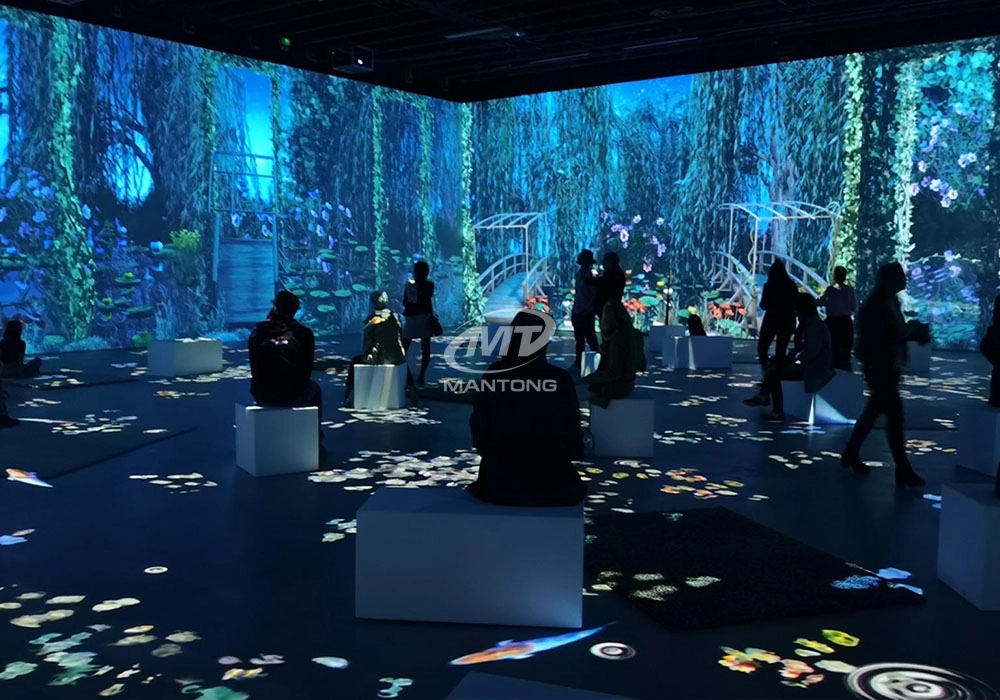
Mantong 6500LM High-Lumen Projector for Large-Scale Immersive Room Projection
Transform any space with Mantong's immersive projection mapping systems. Our high-lumen projectors (up to 6500 LM) and custom software create captivating interactive experiences for floors and walls. Ideal for museums, events, retail, and hospitality. Each kit includes professional ceiling mounting and 80+ pre-loaded video contents and is backed by a 12-month warranty and CE certification. We offer full customization and support to bring your vision to life.
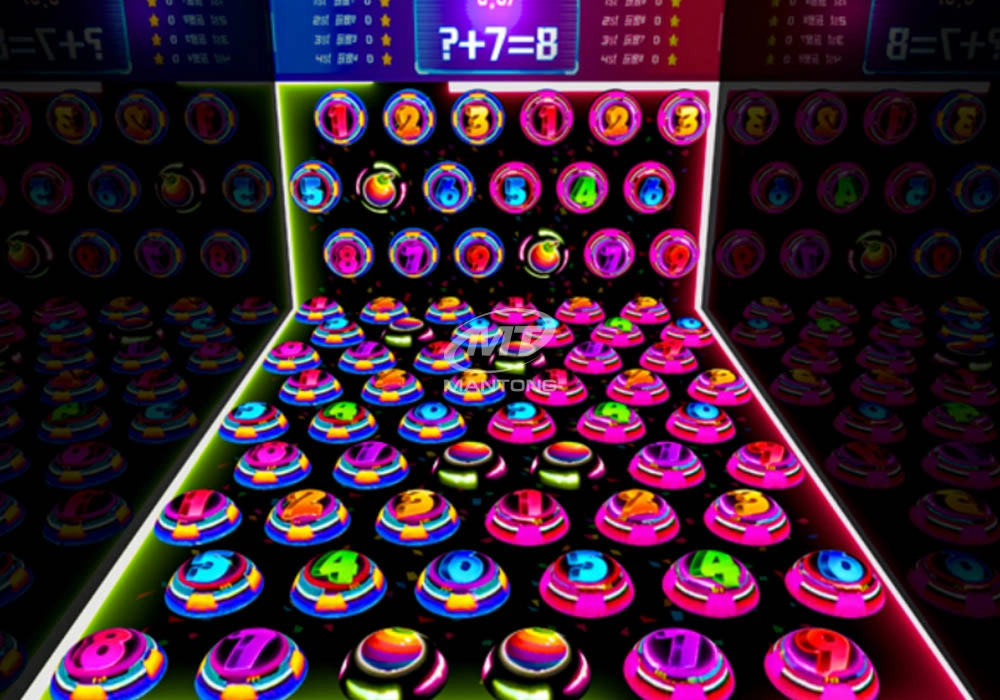
Amusement Rapidly Rotating Bouncing Sphere Interactive Wall Floor Projection Sports Games
Rapidly Rotating Bouncing Sphere is an interactive space where participants jump on rotating spheres. As they step on it, the spheres surface will show special interactivity
Jumping on spheres of the same color in succession causes them to pop, releasing light particles. The more consecutive jumps, the greater the reward—caterpillars appear, and eventually, all spheres of that color burst, filling the space with light and even more caterpillars.
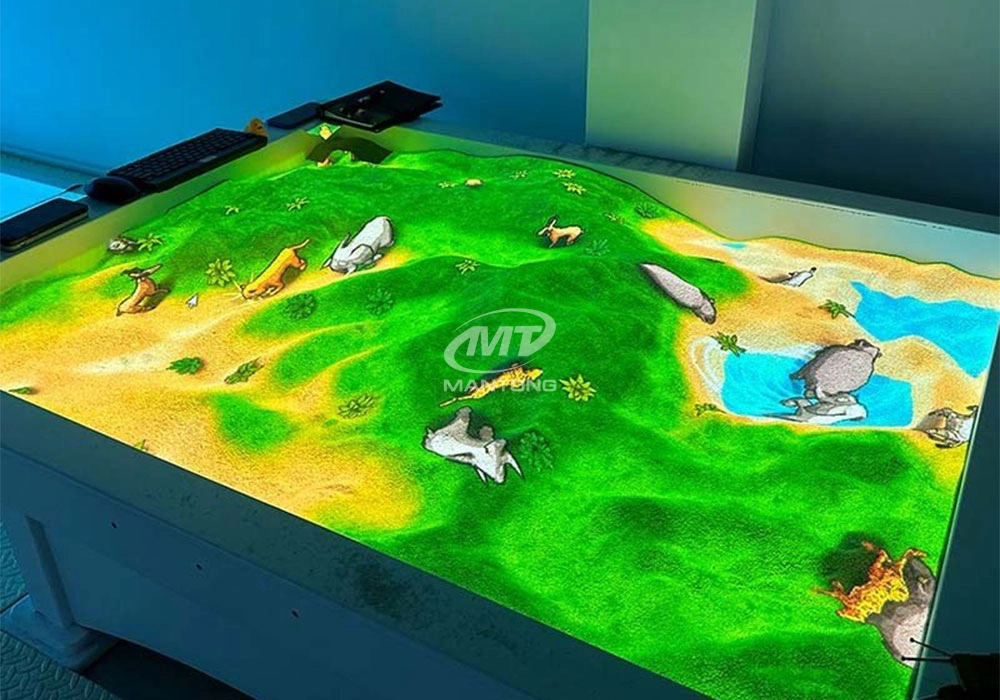
Interactive Sandbox Projection Mapping Games For Kids Play Park
Bring imagination to life with interactive sandbox projection mapping games designed for kids’ play parks. Using cutting-edge projection technology and real-time motion sensing, children can dig, build, and explore virtual worlds directly in the sand. Educational, engaging, and endlessly fun — it’s the perfect blend of play and learning.
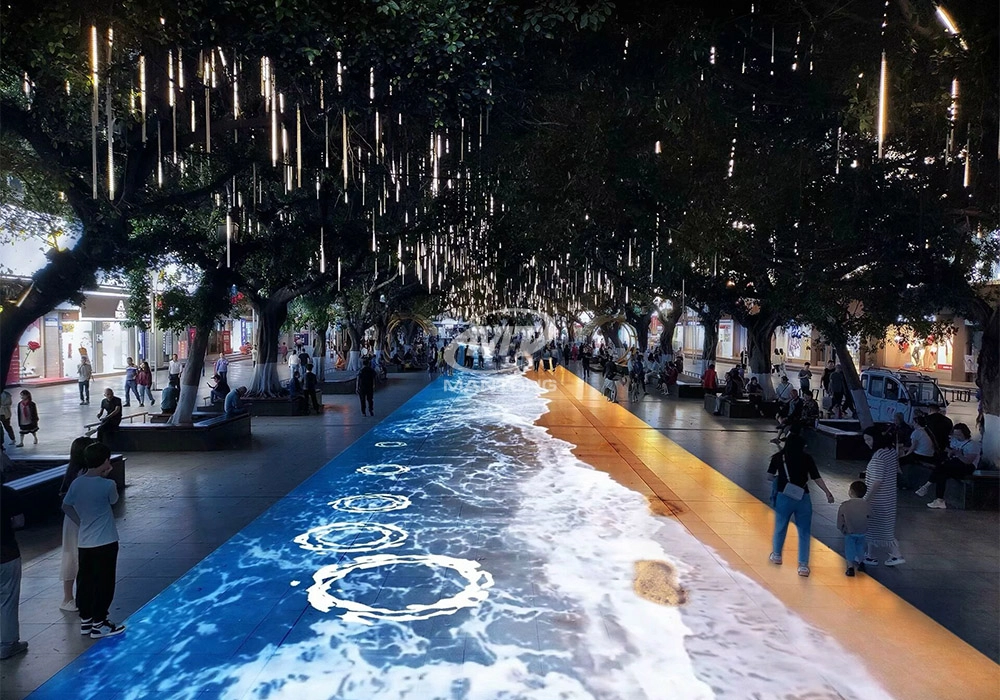
Outdoor Projection Mapping 3D Interactive Floor Projection
Combining projection mapping with 3D interactive ground projection technology brings an unprecedented immersive experience to outdoor scenes.

Kaida Business Center, Shixin Road, Panyu District,Guangzhou City, Guangdong Province, China.
ManTong
ManTong
ManTong