
Interactive Projection Mapping Supplier Case Studies
- Why projection mapping matters for experience design
- From spectacle to measurable engagement
- Common goals suppliers must address
- Standards and technical baselines
- Case studies: supplier performance in real projects
- Case study A — Museum immersion: increasing dwell time by design
- Case study B — Retail activation: converting impressions to sales
- Case study C — Landmark projection show: scale and safety
- Technical selection: what to evaluate in a supplier
- Hardware selection and projector technology
- Software, content pipeline and interactivity
- Operations, maintenance and SLA
- Comparing suppliers: practical matrix
- Quantifying ROI and KPIs
- Risk management and compliance
- Mantong Digital: a direct manufacturer’s advantage
- Who we are and what we offer
- Core strengths and differentiators
- Product portfolio and typical applications
- Partnership model and global reach
- Procurement checklist and how I advise clients
- 7-point checklist before finalizing a supplier
- Red flags to watch for
- How to trial a supplier
- FAQ
- Q1: What defines an interactive projection mapping supplier?
- Q2: How do I measure success after installation?
- Q3: What are typical lifecycles and maintenance needs for projection systems?
- Q4: Can projection mapping be used outdoors year-round?
- Q5: How do I choose between renting and buying?
- Q6: What content formats and resolution should I request?
- Contact and next steps
I have compiled this collection of interactive projection mapping supplier case studies to help experience designers, museum curators, event producers and architects understand what matters when selecting a partner. This article summarizes project outcomes, supplier selection criteria, technical trade-offs, measurable results and vendor comparisons to support informed procurement decisions for interactive projection mapping solutions.
Why projection mapping matters for experience design
From spectacle to measurable engagement
Interactive projection mapping is no longer just a spectacle. When designed and executed correctly, it drives measurable outcomes: visitor dwell time, social sharing, footfall uplift and brand recall. Research and industry reports from AVIXA show continued investment in immersive experiences across cultural institutions and retail as organizations seek deeper customer engagement (see AVIXA Insights).
Common goals suppliers must address
When I evaluate suppliers, I first confirm they can align the interactive projection mapping supplier role with clients’ goals — whether those are experiential storytelling, wayfinding, revenue-generating interactive games, or large-scale projection shows. A good supplier translates experience KPIs into technical specifications, timeline and budget.
Standards and technical baselines
Suppliers should reference established technical baselines: projector brightness and optics (see projector specifications), projection mapping workflows (source content, warping, edge blending), and safety/compliance standards. Where networked interactive elements are used, suppliers must also account for latency, synchronization and accessibility.
Case studies: supplier performance in real projects
Case study A — Museum immersion: increasing dwell time by design
Project brief: a mid-sized history museum wanted a 10-minute immersive exhibit that combined motion tracking, projection mapping and responsive audio. They needed a supplier to provide both hardware and bespoke software, plus long-term maintenance.
Approach: the supplier created interactive zones using a mix of short-throw laser projectors, infrared-based visitor tracking and a lightweight content management system that allowed museum educators to update narratives. We selected laser projectors for stable color and low maintenance (see technical notes below).
Outcome: post-installation analytics showed a 34% increase in average dwell time and higher return visits during the first six months. The supplier embedded analytics hooks to export anonymized data for ongoing evaluation.
Case study B — Retail activation: converting impressions to sales
Project brief: an international retail brand wanted a weekend activation with interactive floor projection games that captured shopper leads and promoted a new product line.
Approach: the supplier designed interactive projection games with lead-capture integration to the retailer’s CRM. The installation used edge-blended projectors to create a continuous floor canvas and integrated live scoring displayed on adjacent LED screens.
Outcome: the activation generated a 22% uplift in on-site conversions and 4,500 new leads over three days. The client credited the supplier for rapid deployment and CRM integration.
Case study C — Landmark projection show: scale and safety
Project brief: a city asked for an annual projection show on a historic façade. The supplier needed to coordinate permits, minimize physical rigging on the building and deliver precise mapping at long throw distances.
Approach: the supplier used high-lumen, weather-rated projection housings, laser projection sources for color fidelity at distance and photogrammetry-based mapping workflows. They worked with local authorities on safety and acoustic permits.
Outcome: the projection show ran across three nights with an estimated 40,000 attendees, received local press coverage and established an annual event. The supplier’s expertise in permits and temporary infrastructure was critical to success.
Technical selection: what to evaluate in a supplier
Hardware selection and projector technology
Choosing the right projector type is a core competency. In my practice, I contrast lamp-based and laser-based systems: laser projectors deliver higher color stability and lower maintenance; lamp projectors can offer lower upfront cost for short-term installations. See general projector technology details on Wikipedia.
Software, content pipeline and interactivity
A capable supplier provides not only mapping and playback software but also a predictable content pipeline: asset ingestion, version control, playback redundancy and tools for non-technical operators. For interactive installations, low-latency sensors (camera-based tracking, depth sensors or pressure mats) and robust middleware are essential.
Operations, maintenance and SLA
Operational readiness differentiates suppliers. I always assess warranty terms, spare-part strategy, remote monitoring, and whether the supplier provides on-site support or remote troubleshooting. For mission-critical public installations, demand a Service Level Agreement (SLA) with clear response times.
Comparing suppliers: practical matrix
Below is a practical comparison matrix I use when evaluating suppliers. The table is illustrative and based on typical market offerings and technical references for projector luminance and technologies (DLP).
| Evaluation Criteria | Commodity Vendor | Specialist Projection Mapping Supplier | Full-Service Manufacturer (e.g., Mantong) |
|---|---|---|---|
| Hardware (projectors) | Off-the-shelf rental units | High-lumen, calibrated projectors | Direct-manufactured, optimized for mapping |
| Software & content | Basic playback | Custom mapping & interactivity | End-to-end hardware + customized software |
| SLA & maintenance | Limited | Dedicated support options | Comprehensive global support + spares |
| Cost (typical) | Lowest upfront | Higher, value-driven | Competitive, direct-manufacturer pricing |
Source references: projector and DLP technology descriptions from Wikipedia and industry trend data from AVIXA.
Quantifying ROI and KPIs
To justify investment in an interactive projection mapping supplier, I recommend quantifying: increased dwell time, conversion uplift, social media reach, and repeat visitation. Suppliers should deliver baseline measurements and define how they will measure post-installation performance (sensors, Wi-Fi analytics, or CRM integration).
Risk management and compliance
Suppliers must document risk mitigation: weatherproofing for outdoor shows, electrical safety, IP protection for content and data privacy for any captured user data. Where applicable, reference the local building codes and applicable safety regulations; for technical interoperability, vendors often align with AV standards referenced by associations like AVIXA.
Mantong Digital: a direct manufacturer’s advantage
Who we are and what we offer
As an industry consultant and content strategist, I have evaluated dozens of suppliers. In the later-stage procurement phase, I often recommend considering direct manufacturers for their price-performance and integration capability. Mantong Digital is a one-stop interactive projection solution provider and direct manufacturer based in Guangzhou, China, with over 10 years of industry experience. We are dedicated to providing innovative, flexible and cost-effective projection solutions, offering both hardware and software to meet various needs. Visit Mantong Digital for examples and product briefs.
Core strengths and differentiators
Mantong’s competitive advantages include vertical integration (manufacturing control), customizable projection housings for outdoor use, proprietary mapping and interaction software, and modular solutions for immersive environments. This combination reduces lead times and enables competitive pricing without sacrificing engineering support or performance guarantees.
Product portfolio and typical applications
Mantong specializes in a broad product range and tailored solutions including immersive projection, interactive floor projection, interactive projection, interactive wall projection, immersive room installations, 3D projection, interactive projection games, Projection Shows, and interactive projection mapping. These products are deployed in museums, retail, theme parks, corporate events and public art campaigns.
Partnership model and global reach
Mantong is now seeking business partnerships worldwide. Their model supports OEM/ODM relationships and project-based delivery with local installation partners. Their vision is to become the world's leading interactive projection manufacturer, combining product R&D with project experience.
Procurement checklist and how I advise clients
7-point checklist before finalizing a supplier
Based on hands-on projects and procurement reviews, use this checklist:
- Define measurable KPIs (dwell time, conversions, leads).
- Request a demo in-situ or a site-specific simulation.
- Verify projector specs: lumen output, contrast, color stability and IP rating for outdoors (see basic projector metrics).
- Confirm software workflow and content update process.
- Check SLA terms, spares availability and warranty coverage.
- Validate the supplier’s portfolio with similar scale references.
- Ensure clear data privacy and safety documentation for interactive elements.
Red flags to watch for
Vague measurement claims, lack of references, absent maintenance plans and refusal to provide test content or on-site demos are immediate red flags. I also caution against selecting a supplier solely on cost without assessing total cost of ownership (installation, maintenance, and content updates).
How to trial a supplier
Ask for a small pilot with clear acceptance criteria. A pilot reduces risk and proves both the technical approach and operational model. During pilots, test environmental conditions similar to the final site (ambient light, crowd flow and acoustics).
FAQ
Q1: What defines an interactive projection mapping supplier?
A1: An interactive projection mapping supplier delivers both the projection hardware and the software/interaction layer required to map dynamic visual content onto 3D surfaces and respond to user input. This can include projectors, mounting systems, mapping software, sensors for interactivity and content services.
Q2: How do I measure success after installation?
A2: Measure against pre-defined KPIs like dwell time, conversion rates, ticket sales, lead capture counts, social impressions and qualitative visitor feedback. Use embedded analytics (sensors, Wi-Fi analytics or CRM integration) to collect data.
Q3: What are typical lifecycles and maintenance needs for projection systems?
A3: Laser projectors typically require less maintenance and have longer service life than lamp-based units. Routine maintenance includes cleaning optics, checking mounts/alignments, firmware updates and ensuring environmental protections. A formal SLA should define response times and spare parts strategy.
Q4: Can projection mapping be used outdoors year-round?
A4: Yes, but it requires weatherproof housings, appropriate projector brightness for ambient light, robust mounts and local permits. Suppliers should use IP-rated enclosures and consider seasonal scheduling to protect equipment.
Q5: How do I choose between renting and buying?
A5: Rent for temporary activations and events; buy for permanent installations. Buying makes sense if you need long-term control over content, expect recurring use, or require custom integration. Evaluate total cost of ownership including maintenance and upgrades.
Q6: What content formats and resolution should I request?
A6: Request content in high-resolution formats scaled to projector native resolutions. Suppliers should specify codec, color space and playback server compatibility. For mapping, vector-based assets and high-res raster assets are often combined.
Contact and next steps
If you are evaluating an interactive projection mapping supplier for an upcoming project, I recommend starting with a clear brief that includes KPIs, site photos and target dates. For turnkey hardware and software solutions, consider Mantong Digital as a direct manufacturer and one-stop provider. Learn more and request a consultation at https://www.mtprojection.com/.
For project inquiries and partnership opportunities, contact Mantong to discuss customized immersive projection solutions including immersive rooms, interactive floor projection, interactive wall projection, 3D projection, interactive projection games and large-scale projection shows. Their experience and vertical integration can reduce lead times and deliver competitive total costs while ensuring technical reliability.
Ready to evaluate suppliers? Prepare your brief and contact Mantong Digital to discuss prototypes, site surveys and international partnerships.
Museum Installations: Designing Interactive Projection Exhibits
How to Choose the floor projection system manufacturer and supplier ?
The latest trends for interactive projection mapping
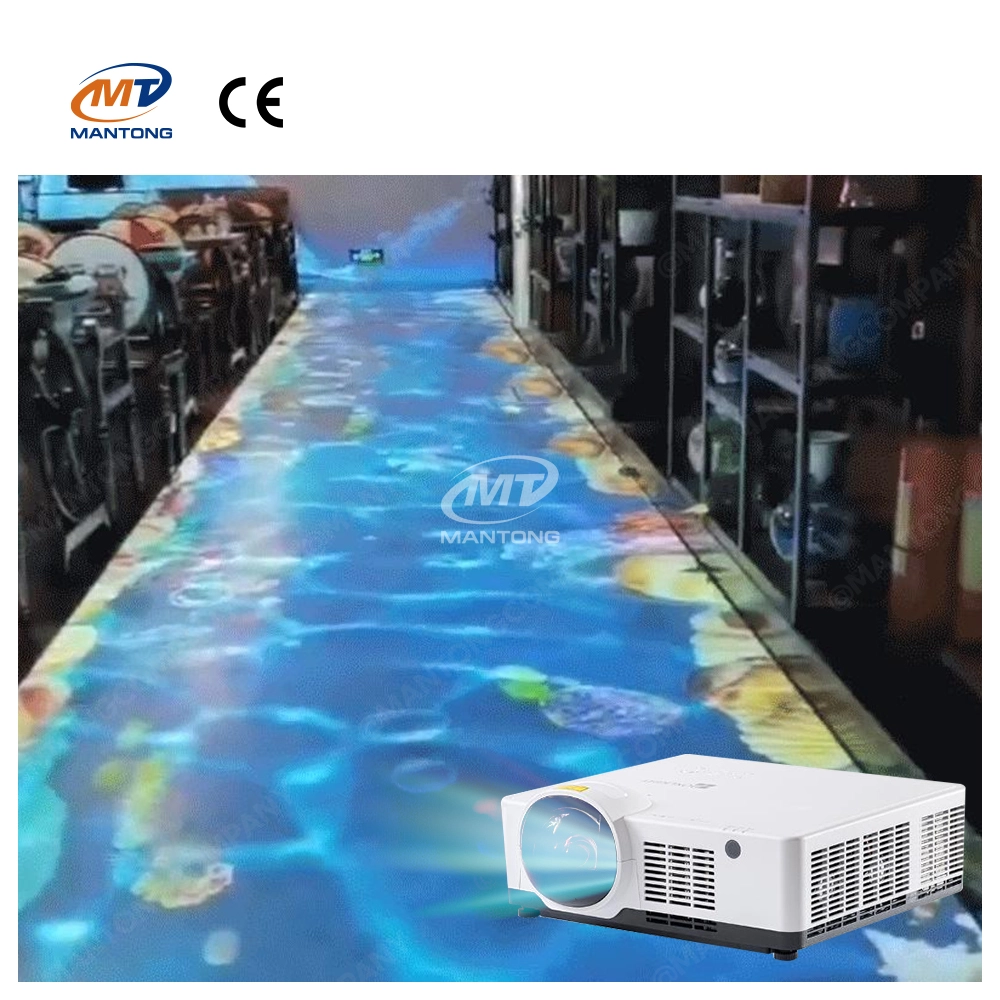
Interactive Floor Projector Solutions: Custom Design & Professional Installation
One-Stop Projection Solution Provider Since 2011
How to Write an Interactive-Effect Video Customisation Script ?
① Project Background: Briefly introduce the context in which this interactive scene will be used (e.g., exhibition, museum,
event space, children's area). Example: This scene is part of the “Underwater World” zone in a children's science museum,
designed to be engaging and exploratory.
②Visual Style / Atmosphere: What kind of visual mood are you aiming for? Please describe the color scheme, style, and any
references. it should focus solely on describing the visual aspects of the scene, supported by relevant charts or reference
images.
③ Interaction Points Overview:List each interactive hotspot along with the effect you'd like to trigger when the user
touches or clicks the area. example: when player touch the clownfish, it will swims away with bubble trail (animation effect)
and produce the bubble sound ( sound effect requirement )
④ Static Visual Reference:including but not limited to background image/video, a list of major visual elements (e.g., coral,
rocks, seaweed, fish), which elements should be interactive?
How to install the projection equipment ?
1) Install the projector in a suitable position. We will provide you with a hanger, which you need to fix on the ceiling with
screws.
2) Connect projectors, computers and other accessories through wires.
3) After completing the above 2 steps, we will carry out the edge blending steps. Our team can complete it through remote
control.
In general, installation instructions for each project need to be specified on a project-by-project basis. The above is for
reference only.
What about the wall/floor material for the projection?
It’s recommended to choose a light-colored material with minimal reflectivity—pure white or light grey works best. the
common material is cement & plaster board
For optimal projection results, the surface should be free of any patterns or textures, as the projector will display content
directly onto it.
There are no specific material requirements; you may use any commonly available material in your local market, as long as it
meets the above conditions.
What information do you need to know before making the proposal/solution?
We know that everyone wants to know the price, but the price of our products is determined by many factors since most of our products are custom, so no ready price list. In order to fast understand what you need, can you send us an inquiry like this?
For example: I am really interested in your immersive projection products, we are a company in the USA and want to install some in my restaurant. It is about 50 meters long, and 5m in width. Projection size you can decide but the length should be not less than 20 meters. We want some content about SeaWorld because our place is all about the sea. Thank you.
What's the application of Immersive projection ?
It can be used in various venues, such as art exhibition, entertainment venues, educational institution, Wedding hall /Banquet/Bar,Yoga Studio and so on. It often involves advanced projection techniques, multimedia content, and interactive elements to engage and captivate the audience's senses.
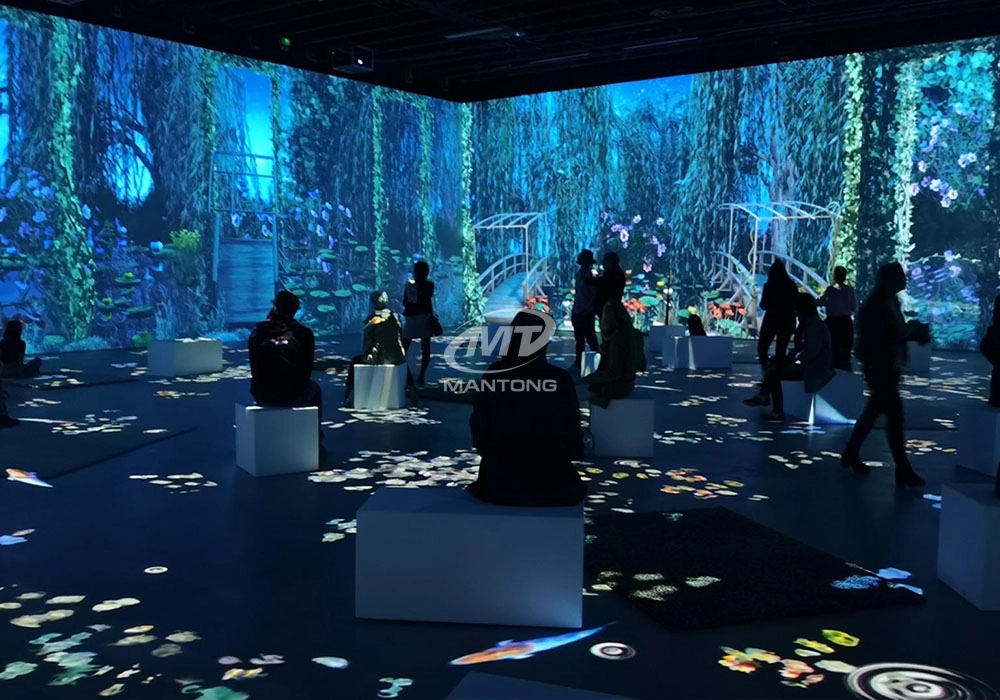
Mantong 6500LM High-Lumen Projector for Large-Scale Immersive Room Projection
Transform any space with Mantong's immersive projection mapping systems. Our high-lumen projectors (up to 6500 LM) and custom software create captivating interactive experiences for floors and walls. Ideal for museums, events, retail, and hospitality. Each kit includes professional ceiling mounting and 80+ pre-loaded video contents and is backed by a 12-month warranty and CE certification. We offer full customization and support to bring your vision to life.
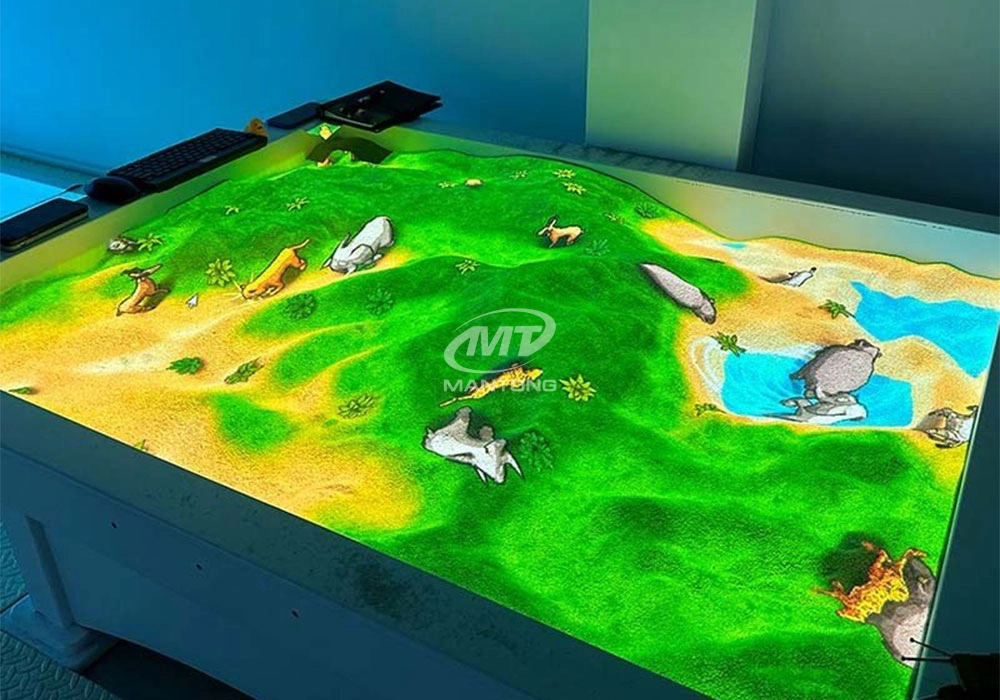
Interactive Sandbox Projection Mapping Games For Kids Play Park
Bring imagination to life with interactive sandbox projection mapping games designed for kids’ play parks. Using cutting-edge projection technology and real-time motion sensing, children can dig, build, and explore virtual worlds directly in the sand. Educational, engaging, and endlessly fun — it’s the perfect blend of play and learning.
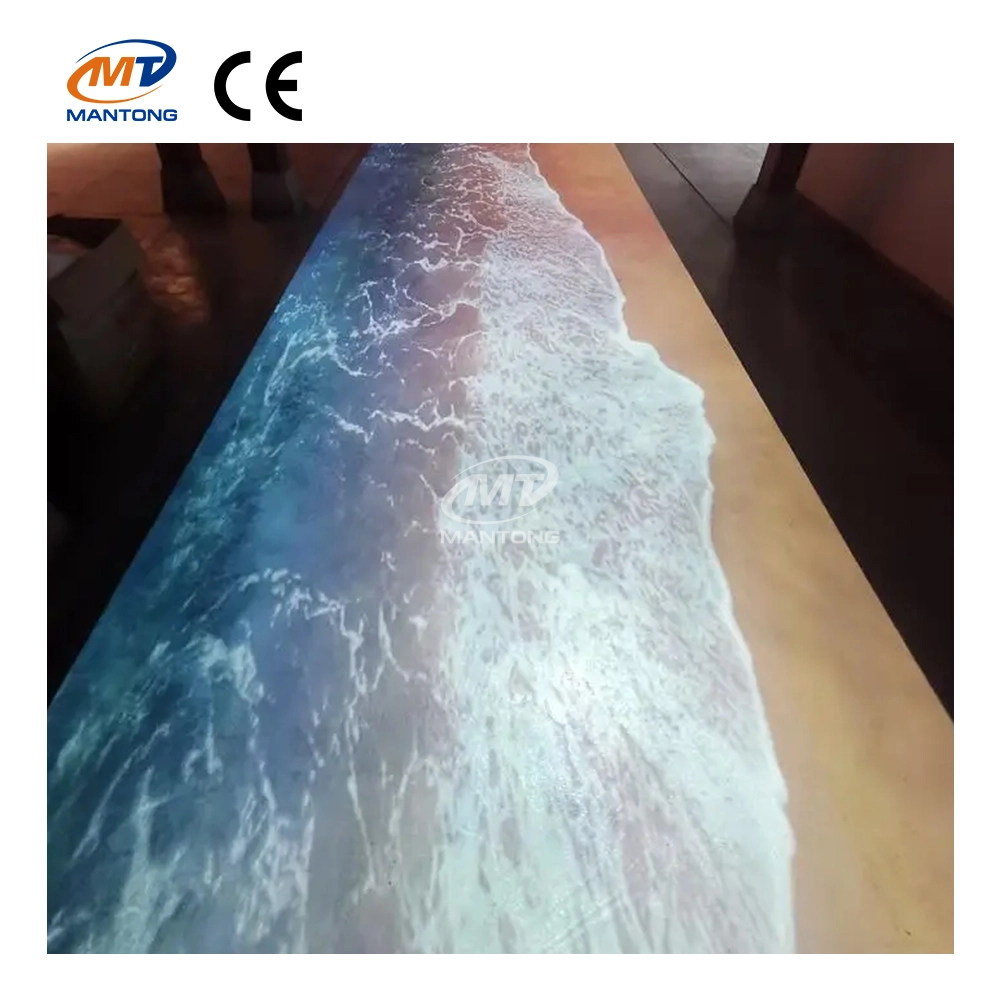
Indoor Interactive Floor Projector System - Customized Design & Installation Support
Indoor interactive floor projections display dynamic themed videos on the floor, commonly used in venues aiming to enhance brand influence or attract foot traffic, such as restaurants, hotel corridors, and brand car retail stores.
By using projectors and compatible software, the interactive content is projected onto the floor, encouraging engagement between people and the projected visuals. A single 5500-lumen indoor floor projector can cover an area of 5 m × 3 m. Typically, each project will use at least 3 units to ensure broad coverage and optimal visual effects.
We also offer customized design and installation support to enhance the interactive experience for your venue.
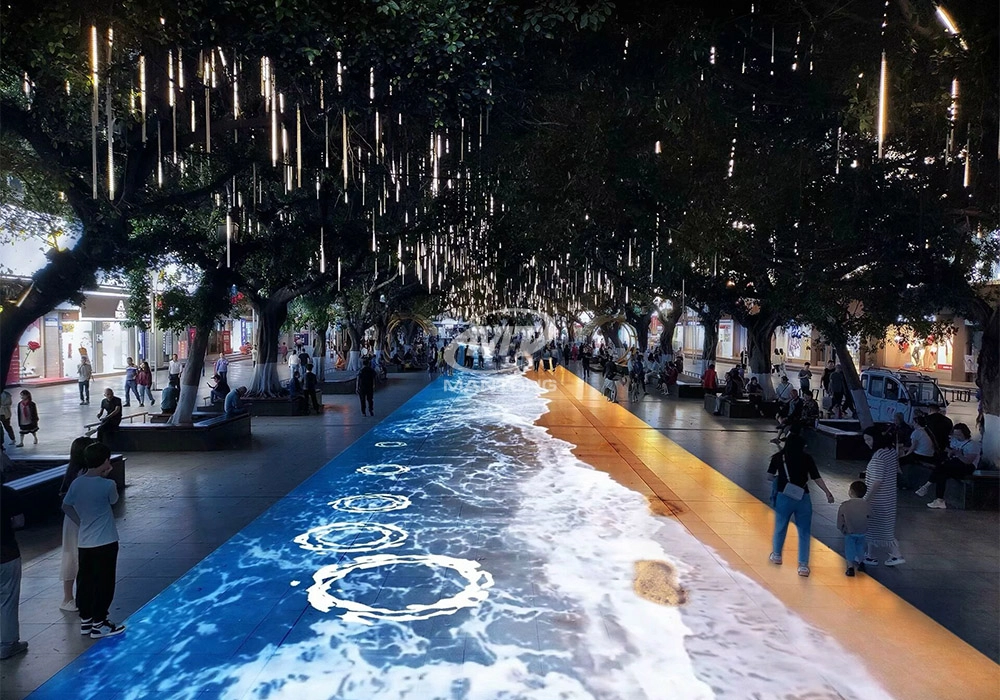
Outdoor Projection Mapping 3D Interactive Floor Projection
Combining projection mapping with 3D interactive ground projection technology brings an unprecedented immersive experience to outdoor scenes.

Kaida Business Center, Shixin Road, Panyu District,Guangzhou City, Guangdong Province, China.
ManTong
ManTong
ManTong