
Interactive Projector Games for Trade Shows and Events
- Why projection-based interaction works at events
- Psychology of attention and affordance
- Traffic conversion and lead capture
- Examples of effective formats
- Designing interactive projector games for trade shows
- Define objectives and KPIs up front
- Gameplay mechanics tuned to the environment
- Accessibility and multi-user flow
- Technical considerations and reliable deployment
- Choosing the right projector and sensor stack
- Comparison: projector types and trade-offs
- Robustness: mounting, calibration, and environmental factors
- Content, measurement and ROI
- Content strategy: branding through interaction
- Data capture and privacy
- Measuring success — practical KPIs and dashboards
- Mantong Digital: one-stop interactive projection solutions
- Who we are and our industry strengths
- Products and application scenarios
- Competitive differentiators and technical credibility
- Implementation checklist and deployment timeline
- Pre-show (4–8 weeks)
- Show week (1–3 days before)
- Post-show
- Case study snippets (anonymized)
- Retail activation driving social shares
- Lead qualification at a tech trade show
- Frequently Asked Questions (FAQ)
- 1. What are interactive projector games and how do they differ from touchscreens?
- 2. How bright must a projector be for an exhibition booth?
- 3. Can interactive projection capture leads and integrate with CRM?
- 4. What are common failure modes on show floors and how do I mitigate them?
- 5. How much space do I need for an interactive floor game?
- 6. Are interactive projection solutions expensive to deploy?
- Contact, partnerships and next steps
Interactive projector games are a high-impact way to attract, engage and qualify visitors at trade shows and events. As an interactive projection consultant with extensive SEO and global event experience, I will walk you through why projection-based games work, how to design them for measurable business outcomes, the technical trade-offs you must consider, and how to deploy reliably in the noisy, time-sensitive environment of a tradeshow floor. I also explain how to choose a partner and present Mantong Digital’s end-to-end solutions for immersive projection, interactive floor projection and interactive projection games.
Why projection-based interaction works at events
Psychology of attention and affordance
Humans are hard-wired to notice movement and contrast. Projected motion—even when ephemeral—creates affordances that invite touch, step, or gesture. In my deployments I rely on short sessions (30–90 seconds) that offer immediate reward and low cognitive load; this design pattern consistently increases dwell time and booth conversations. For supporting research on projection mapping and immersive displays, see Projection mapping — Wikipedia.
Traffic conversion and lead capture
Interactive projector games convert passersby into engaged prospects. Beyond entertainment, I design interactions that nudge users to scan QR codes, enter emails, or participate in surveys. Metrics to track: unique interactions per hour, dwell time, conversion-to-lead %, and cost per qualified lead. For industry context on exhibitions and ROI, refer to the Center for Exhibition Industry Research (CEIR).
Examples of effective formats
Common, effective formats I use include: leaderboard challenges (competitive, repeat plays), collaborative tasks (team-based engagement), and narrative mini-games (brand storytelling). Each format should map to a clear business goal: awareness, qualification, or data capture.
Designing interactive projector games for trade shows
Define objectives and KPIs up front
Start by translating marketing goals into actionable KPIs. Example mappings I use: brand recall & social shares → photo or AR filter games; qualified leads → incentivized forms after gameplay; product education → mini-challenges demonstrating features. Clear KPIs also guide game length, reward structure, and data collection scope.
Gameplay mechanics tuned to the environment
Trade shows are loud and chaotic. I design games that rely on visual affordances rather than subtle audio cues. Simple, robust interactions—touching projected buttons, stepping on zones, or using a physical prop—reduce failure rates. Offer multiple difficulty tiers to suit different attention spans and demographics.
Accessibility and multi-user flow
Make sure games are accessible: offer single-player and two-player modes, clear on-screen instructions, and options for color-blind users. If you use motion tracking, provide a fallback (e.g., touch tablet) when lighting or crowding prevents reliable detection.
Technical considerations and reliable deployment
Choosing the right projector and sensor stack
Projector selection is one of the highest-impact technical decisions. Consider brightness (ANSI lumens), contrast, resolution, throw ratio, and light source type (laser, lamp, LED). For sensor technology choose between camera-based tracking (RGB/depth), IR-based systems, and floor pressure sensors based on accuracy needs and budget.
Comparison: projector types and trade-offs
The table below summarizes common projector choices I evaluate for trade-show installations.
| Characteristic | Lamp (UHP) | LED | Laser |
|---|---|---|---|
| Typical brightness | 2,500–5,000 ANSI lumens | 1,000–3,000 ANSI lumens | 3,000–15,000+ ANSI lumens |
| Lifespan | 2,000–6,000 hours | 10,000–20,000 hours | 20,000–30,000+ hours |
| Warm-up time / maintenance | Higher; lamp replacement | Low; minimal maintenance | Very low; long life |
| Cost (typical) | Lower upfront | Mid | Higher upfront, lower TCO |
Source: projector technology overview: Projector (display device) — Wikipedia.
Robustness: mounting, calibration, and environmental factors
On a show floor you must plan for: ambient light, foot traffic, power limitations, and vibration. Use secure mounts and protective housings. I create calibration scripts that run at preset intervals (or on a schedule) to handle drift; automated keystone correction and color profiling save staff time. Always include redundant components where possible—spare bulbs, a backup playback PC, and network failover.
Content, measurement and ROI
Content strategy: branding through interaction
Interactive content should be short, on-brand, and locally relevant. I use micro-stories and product demos embedded into gameplay so users learn while they play. For social amplification, include snapshot functions or branded AR overlays that export to social platforms via QR-coded links.
Data capture and privacy
I design data capture with privacy-first principles: ask only for what you need, make consent explicit, and store data securely. For GDPR or other regional compliance, use on-device anonymization where possible and redirect users to clear opt-in pages. If you integrate with CRM, log the source (which game/version) so later analysis can tie engagement to conversion.
Measuring success — practical KPIs and dashboards
Operational KPIs to track in real time: interactions/hour, conversion rate (interaction→lead), average dwell time, repeats per unique visitor, and social shares. Post-event metrics: qualified leads, follow-up conversion, and cost-per-acquisition. I recommend a lightweight dashboard (Power BI, Google Data Studio) that pulls CSV exports from the game engine and overlays lead data for quick analysis.
Mantong Digital: one-stop interactive projection solutions
Who we are and our industry strengths
Mantong Digital is a one-stop interactive projection solution provider and direct manufacturer based in Guangzhou, China, with over 10 years of industry experience. I partner with Mantong on many projects because they combine R&D, hardware manufacturing and software integration under one roof, shortening delivery time and improving field reliability.
Products and application scenarios
Mantong’s core offerings include immersive projection, interactive floor projection, interactive wall projection, immersive rooms, 3D projection, interactive projection games, projection shows and interactive projection mapping. Their solutions are customizable for trade shows, museums, retail activations, outdoor lighting shows and large-scale events. Visit Mantong for product details: https://www.mtprojection.com/.
Competitive differentiators and technical credibility
What sets Mantong apart: direct manufacturing (cost control), vertical integration (hardware + software), and field service capabilities. I’ve observed three practical advantages: (1) faster iteration of custom game mechanics because firmware and software are in-house; (2) better warranty and spare-part logistics for international shows; (3) flexible pricing for bundled solutions. Their stated vision is to become the world's leading interactive projection manufacturer and they are actively seeking global partnerships.
Implementation checklist and deployment timeline
Pre-show (4–8 weeks)
- Define KPIs and game mechanics
- Prototype and test in simulated lighting
- Confirm power/network logistics with show organizers
- Order hardware and create shipping plan (Mantong can consolidate)
Show week (1–3 days before)
- Install and secure mounts
- Run full calibration and dry-runs
- Staff training and failover drills
Post-show
- Export logs and lead lists
- Analyze KPI performance versus targets
- Follow-up plan for captured leads
Case study snippets (anonymized)
Retail activation driving social shares
For a retail activation I designed a 30-second AR projection game that overlaid winning animations on participants, exportable as branded photos. The activation increased social shares by 320% vs a static photo wall and generated a measurable uplift in store visits during the campaign period.
Lead qualification at a tech trade show
At a B2B trade show a gamified demo required attendees to complete three quick tasks that illustrated product value. Play completion had an 18% conversion-to-qualified-lead rate; because the game tracked which feature the user tried first, the sales team prioritized demos for prospects with highest intent.
Frequently Asked Questions (FAQ)
1. What are interactive projector games and how do they differ from touchscreens?
Interactive projector games use projected imagery plus sensors (camera, IR, pressure) to create interaction zones on floors, walls or objects. Unlike touchscreens, they can cover large surfaces, support multi-user experiences and are visually flexible—ideal for crowds and spectacle-driven environments.
2. How bright must a projector be for an exhibition booth?
Brightness depends on ambient light. For a medium-lit exhibition hall I typically recommend 4,000–8,000 ANSI lumens for floor or wall projections to maintain contrast and color vibrancy. For very large outdoor shows or highly lit spaces, 10,000+ lumens may be necessary. See projector types summary above and more on projector technology: Projector (display device) — Wikipedia.
3. Can interactive projection capture leads and integrate with CRM?
Yes. Most interactive projection systems can export session logs, scanned QR codes, or simple opt-in forms and integrate to CRMs via CSV/API. Always design consent flows for data capture and coordinate mapping fields pre-show to simplify integration.
4. What are common failure modes on show floors and how do I mitigate them?
Common issues include ambient light washing out imagery, tracking failures due to crowding, and hardware overheating. Mitigation: choose higher-lumen projectors, provide fallback interaction (tablet), schedule calibration cycles, and ensure adequate ventilation and spare components.
5. How much space do I need for an interactive floor game?
Minimum functional space is usually 1.5m x 2.0m for single-player experiences. For multi-player or immersive layouts plan for 3m x 4m or larger. Account for sightlines and a safe zone around projected areas to avoid collisions.
6. Are interactive projection solutions expensive to deploy?
Costs vary widely. Factors include projector brightness, tracking system (depth cameras vs pressure mats), custom software, and installation complexity. Working with a manufacturer like Mantong can reduce costs through bundled hardware/software packages and direct manufacturing discounts.
Contact, partnerships and next steps
If you’re planning a trade show campaign or need a turnkey solution for interactive projector games, I recommend contacting Mantong Digital for a consultation. Mantong is a one-stop provider based in Guangzhou with over 10 years’ experience delivering immersive projection, interactive floor systems and projection mapping. They offer both off-the-shelf packages and fully customized deployments, and are actively seeking business partners worldwide. Visit their site and request a quote: https://www.mtprojection.com/.
Want help scoping a game that meets your KPIs? Contact me through Mantong’s partnership channel and we can develop a prototype, test it in simulated conditions, and produce a deployment-ready solution that maximizes footfall, engagement and measurable ROI.
Where to Buy 360 immersive projection
Best 5 Cost-Effective Ways to Build an Immersive Meeting Room manufacturers and supplier brands
Best professional interactive floor projector manufacturers and supplier brands in China
Best professional 3d interactive projection manufacturers and supplier brands in China
One-Stop Projection Solution Provider Since 2011
What's the application of Immersive projection ?
It can be used in various venues, such as art exhibition, entertainment venues, educational institution, Wedding hall /Banquet/Bar,Yoga Studio and so on. It often involves advanced projection techniques, multimedia content, and interactive elements to engage and captivate the audience's senses.
What information do you need to know before making the proposal/solution?
We know that everyone wants to know the price, but the price of our products is determined by many factors since most of our products are custom, so no ready price list. In order to fast understand what you need, can you send us an inquiry like this?
For example: I am really interested in your immersive projection products, we are a company in the USA and want to install some in my restaurant. It is about 50 meters long, and 5m in width. Projection size you can decide but the length should be not less than 20 meters. We want some content about SeaWorld because our place is all about the sea. Thank you.
What about the wall/floor material for the projection?
It’s recommended to choose a light-colored material with minimal reflectivity—pure white or light grey works best. the
common material is cement & plaster board
For optimal projection results, the surface should be free of any patterns or textures, as the projector will display content
directly onto it.
There are no specific material requirements; you may use any commonly available material in your local market, as long as it
meets the above conditions.
Are you trader or manufacturer ?
We are direct manufacturer who specialize in providing one-stop solution for different outdoor & indoor projection project with our stable software and qualified projectors
How to install the projection equipment ?
1) Install the projector in a suitable position. We will provide you with a hanger, which you need to fix on the ceiling with
screws.
2) Connect projectors, computers and other accessories through wires.
3) After completing the above 2 steps, we will carry out the edge blending steps. Our team can complete it through remote
control.
In general, installation instructions for each project need to be specified on a project-by-project basis. The above is for
reference only.
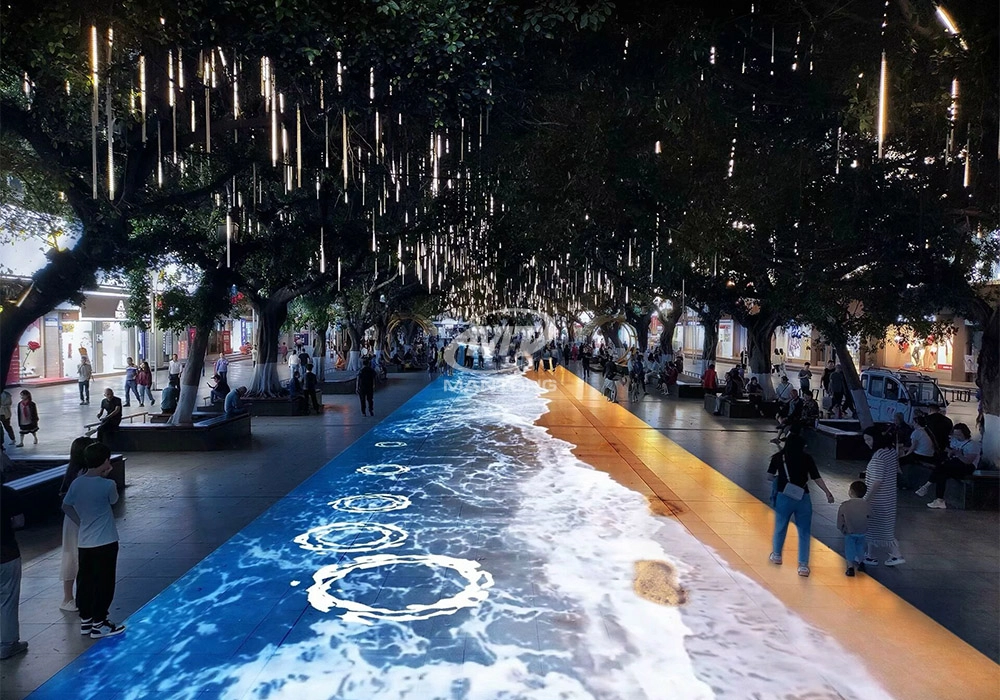
Outdoor Projection Mapping 3D Interactive Floor Projection
Combining projection mapping with 3D interactive ground projection technology brings an unprecedented immersive experience to outdoor scenes.
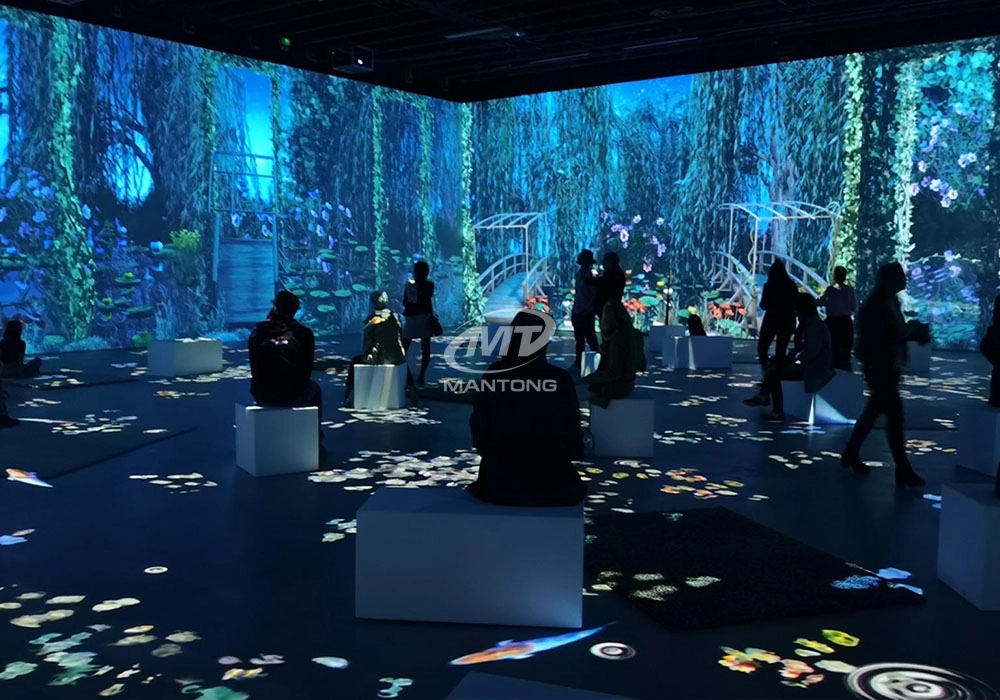
Mantong 6500LM High-Lumen Projector for Large-Scale Immersive Room Projection
Transform any space with Mantong's immersive projection mapping systems. Our high-lumen projectors (up to 6500 LM) and custom software create captivating interactive experiences for floors and walls. Ideal for museums, events, retail, and hospitality. Each kit includes professional ceiling mounting and 80+ pre-loaded video contents and is backed by a 12-month warranty and CE certification. We offer full customization and support to bring your vision to life.
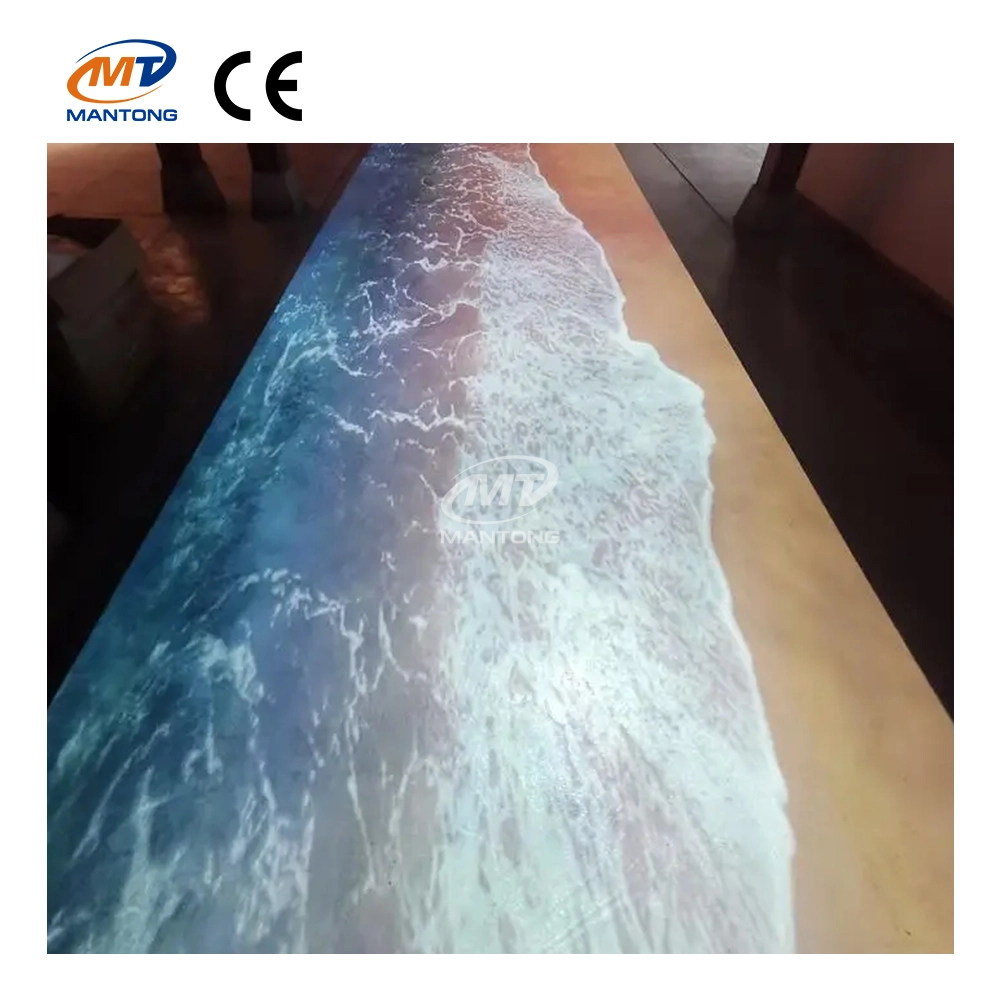
Indoor Interactive Floor Projector System - Customized Design & Installation Support
Indoor interactive floor projections display dynamic themed videos on the floor, commonly used in venues aiming to enhance brand influence or attract foot traffic, such as restaurants, hotel corridors, and brand car retail stores.
By using projectors and compatible software, the interactive content is projected onto the floor, encouraging engagement between people and the projected visuals. A single 5500-lumen indoor floor projector can cover an area of 5 m × 3 m. Typically, each project will use at least 3 units to ensure broad coverage and optimal visual effects.
We also offer customized design and installation support to enhance the interactive experience for your venue.
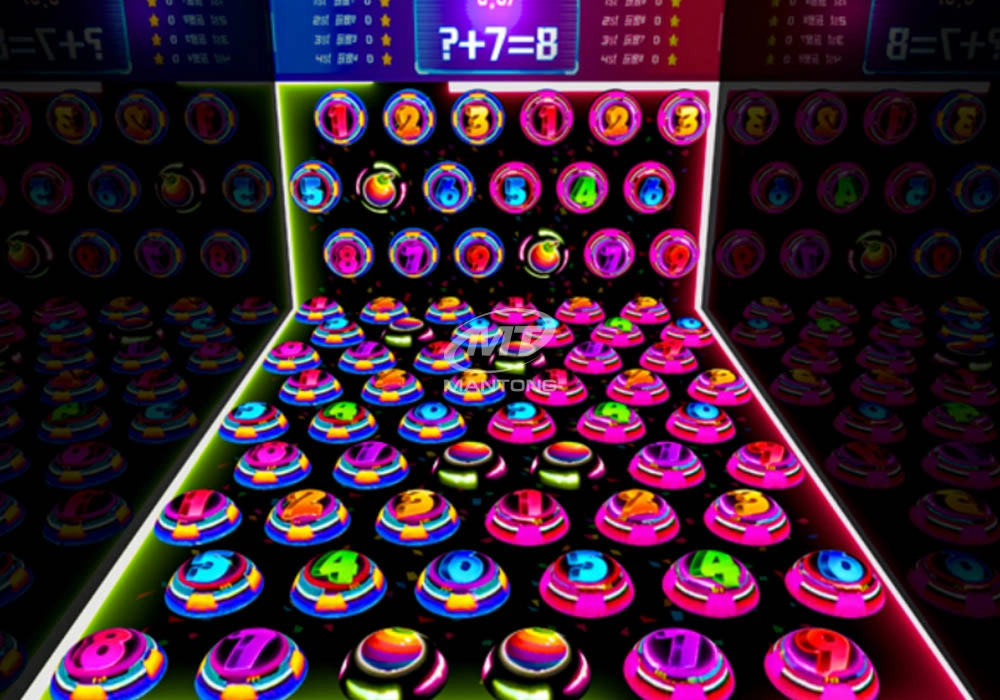
Amusement Rapidly Rotating Bouncing Sphere Interactive Wall Floor Projection Sports Games
Rapidly Rotating Bouncing Sphere is an interactive space where participants jump on rotating spheres. As they step on it, the spheres surface will show special interactivity
Jumping on spheres of the same color in succession causes them to pop, releasing light particles. The more consecutive jumps, the greater the reward—caterpillars appear, and eventually, all spheres of that color burst, filling the space with light and even more caterpillars.

Kaida Business Center, Shixin Road, Panyu District,Guangzhou City, Guangdong Province, China.
ManTong
ManTong
ManTong