
Content Ideas for Interactive Projection Experiences
- Content Ideas for Interactive Projection Experiences
- Why interactive projection matters
- Understand the user's for interactive projection
- Retail experiences: drive conversion with interactive projection
- Museum and exhibition concepts using interactive projection
- Education and learning: interactive projection for classrooms
- Events and trade shows: create shareable moments
- Hospitality & themed entertainment: elevate guest experience
- Playgrounds and family attractions: safe, engaging play
- Healthcare and therapy: therapeutic interactive projection ideas
- Corporate and training: improve retention with immersive learning
- Projection mapping and outdoor shows: large-scale spectacle
- Interactive projection games and 3D projection experiences
- Immersive rooms and experience design
- Technical execution tips for interactive projection
- Measuring success: KPIs for interactive projection
- Content formats that help sell interactive projection
- SEO and CRO tips for interactive projection pages
- Comparison of interactive projection types
- Content production workflow for interactive projection projects
- Why partner with Mantong for interactive projection solutions
- Mantong's main products and strengths
- Budgeting and procurement advice for buyers
- Common pitfalls and how to avoid them
- Final checklist before launching an interactive projection experience
- FAQ
- What is interactive projection and where is it most effective?
- How much does an interactive projection installation cost?
- What hardware is typically required for an interactive projection system?
- How do you measure ROI on interactive projection?
- How long does it take to deploy an interactive projection experience?
- Can interactive projection be used outdoors?
- How do I select a vendor for interactive projection?
- What maintenance is required for interactive projection systems?
Content Ideas for Interactive Projection Experiences
Why interactive projection matters
Interactive projection has become a powerful medium to create memorable brand moments, increase dwell time, and drive conversions. When you build blog content around interactive projection, focus on what users want to achieve—entertainment, education, wayfinding, or purchase decisions—and provide practical ideas that match those intents. Clear, experience-oriented content helps search engines understand relevance and authority, improving visibility for commercial queries related to interactive projection solutions.
Understand the user's for interactive projection
Users searching for interactive projection typically fall into three groups: buyers (event planners, retailers, museums), designers/creatives (experience designers, architects), and researchers/enthusiasts. Tailor content to answer each group's intent—spec sheets and budgets for buyers, concept and technical workflows for designers, and case studies or trend pieces for researchers.
Retail experiences: drive conversion with interactive projection
Retailers use interactive projection to create product try-ons, virtual fitting walls, and immersive window displays that attract foot traffic. For content, present concept ideas (e.g., product discovery walls, gesture-controlled catalogs), implementation steps, expected ROI signals (increased footfall, dwell time), and practical tips like projector placement, ambient light control, and content refresh cadence. Include calls-to-action such as downloadable specs or consultation forms to capture commercial leads interested in interactive projection solutions.
Museum and exhibition concepts using interactive projection
Museums and exhibitions benefit from interactive projection by bringing artifacts to life through contextual overlays, touchless navigation, and multi-user experiences. Content ideas include timeline projections that respond to gestures, floor projections that guide visitor flow, and mixed-media installations combining projection with AR. Explain accessibility considerations, content durability for high-traffic installations, and partnerships between curators and interactive projection vendors.
Education and learning: interactive projection for classrooms
Interactive projection can transform lessons into collaborative activities. Create content showing classroom scenarios like interactive quizzes projected on walls, floor games for kinesthetic learning, and immersive story rooms. Provide implementation guidance: low-maintenance hardware choices, simple software interfaces for teachers, and ways to measure learning outcomes. Position these pieces to address administrators and educators searching for scalable interactive projection solutions.
Events and trade shows: create shareable moments
Event planners need concepts that generate social sharing and lead capture. Suggest ideas such as branded interactive photo booths, projection-mapped stages that react to sound, or crowd-driven visuals that change with audience movement. Include logistical advice—power, rigging, content handoff—and optimization tips for quick setup/teardown. Combine these with commercial CTAs like demo bookings and rental quotes for interactive projection systems.
Hospitality & themed entertainment: elevate guest experience
Hotels, restaurants, and theme parks use interactive projection to enhance ambiance and guest engagement. Offer content concepts: projection-driven table experiences, lobby installations that change with time of day, and immersive dining scenes. Emphasize operational reliability, content localization, and integration with property management systems when discussing long-term interactive projection deployments.
Playgrounds and family attractions: safe, engaging play
For family-focused venues, interactive floor projection games and motion-reactive walls are attractive. Provide a set of family-friendly game concepts (catch-the-butterfly, interactive hopscotch), safety considerations (non-slip surfaces, low heat projectors), and content update strategies to keep repeat visitors engaged. Include tips for choosing hardware that meets durability standards for public spaces.
Healthcare and therapy: therapeutic interactive projection ideas
Interactive projection can support rehabilitation, pediatric distraction, and sensory rooms. Content should highlight evidence-based approaches—calm, non-triggering visuals, adjustable interaction intensity, and ways to track patient engagement. Address privacy, infection control, and cleaning procedures when presenting interactive projection solutions for clinical settings.
Corporate and training: improve retention with immersive learning
Corporates can use interactive projection for onboarding, simulation training, and hybrid meetings. Suggest scenarios such as interactive scenario-based training rooms, collaborative whiteboards projected on walls, and projection-driven role-play. Explain how interactive projection integrates with LMS platforms and metrics to evaluate training effectiveness.
Projection mapping and outdoor shows: large-scale spectacle
Outdoor projection shows and architectural mapping are high-impact uses of interactive projection. Offer content that explains layered storytelling across a façade, synchronized audio, and daylight-readability strategies. Discuss permitting, weatherproof hardware, and audience sightlines. For product-minded readers, recommend scalable hardware and content pipelines to deliver reliable projection shows.
Interactive projection games and 3D projection experiences
Games and 3D projection can turn floors and walls into dynamic playfields. Share concept templates—multi-player collaborative games, single-player skill challenges, and projection games tied to loyalty programs. Provide development tips: latency budgets, input methods (camera tracking, infrared, Lidar), and how to balance graphical fidelity with robust performance for public deployments.
Immersive rooms and experience design
Immersive rooms combine projection on multiple surfaces, spatial audio, and environmental effects. For content, outline narrative-driven experience blueprints, pacing strategies, and guest throughput optimization. Include advice about calibration workflows, edge blending for seamless visuals, and safety egress planning—critical details for buyers evaluating immersive interactive projection solutions.
Technical execution tips for interactive projection
Good interactive projection content must also briefly cover execution: projector lumen ranges for different ambient conditions, throw distances, keystone correction, edge blending, and content frame rates to prevent motion judder. Offer checklists for on-site testing and maintenance recommendations to minimize downtime for commercial clients.
Measuring success: KPIs for interactive projection
Offer measurable KPIs so commercial readers can justify investment in interactive projection: footfall/dwell-time uplift, conversion rate increases (retail), time-on-task or learning gains (education), number of social shares or leads captured (events), and repeat visits. Encourage A/B testing of content variations and share simple methods for collecting qualitative visitor feedback.
Content formats that help sell interactive projection
Create content assets that convert: short demo videos showing interaction, case studies with before/after metrics, downloadable spec sheets, and interactive prototypes or simulations on the website. Use high-quality imagery and video to showcase the experience—buyers want to visualize how interactive projection will function in their space.
SEO and CRO tips for interactive projection pages
When optimizing for search, include the keyword interactive projection in title tags, s, and meta description naturally. Use structured data where applicable (product, local business, event) and create landing pages for specific use cases (interactive floor projection, projection mapping). Add strong CTAs like Request a demo or Get a quote and use form fields that align with sales follow-up processes.
Comparison of interactive projection types
Below is a concise comparison to help select the right interactive projection solution for your project:
| Type | Typical Engagement | Installation Complexity | Cost Range | Best Use Cases |
|---|---|---|---|---|
| Interactive Floor Projection | High (physical play) | Medium | Medium | Playgrounds, retail, museums |
| Interactive Wall Projection | Medium–High | Low–Medium | Low–Medium | Retail walls, education, murals |
| Immersive Room Projection | Very High (full immersion) | High | High | Exhibitions, branded experiences |
| 3D Projection & Mapping | High (spectacle) | High | High | Facade shows, events, art installations |
| Interactive Projection Games | High (repeat play) | Medium | Medium | Family venues, events, retail activations |
Content production workflow for interactive projection projects
Recommend a streamlined workflow: discovery (user goals, KPIs), concept (storyboard, interaction mapping), prototype (software mockup), pilot installation (small-scale test), rollout (hardware procurement, installation), and maintenance (SLA, content refresh plan). Clear workflows reassure buyers and demonstrate your E-E-A-T—expertise, experience, authority, and trustworthiness—in interactive projection.
Why partner with Mantong for interactive projection solutions
Mantong Digital is a one-stop interactive projection solution provider and direct manufacturer based in Guangzhou, China, with over 10 years of industry experience. Mantong offers end-to-end capabilities—hardware supply, software development, and turnkey installation—allowing customers to move from concept to deployment with fewer vendors. Their experience means faster prototyping, flexible customization, and competitive pricing compared to intermediaries.
Mantong's main products and strengths
Mantong specializes in a range of interactive projection products: immersive projection, interactive floor projection, interactive wall projection, immersive rooms, 3D projection, interactive projection games, projection shows, and interactive projection mapping. Key strengths include tailored solutions for different scenarios, proven experience in both indoor and outdoor deployments, and a focus on delivering visually compelling, reliable systems. Mantong supports global business partnerships and positions itself as a manufacturer-driven partner for clients seeking scalable, cost-effective interactive projection solutions.
Budgeting and procurement advice for buyers
When procuring interactive projection, budget for hardware, mounting/rigging, content creation, calibration, and ongoing content refresh. Get multiple quotes that separate hardware from content and maintenance. Ask manufacturers about warranties, spare parts availability, and remote support options—these factors reduce long-term TCO for interactive projection installations.
Common pitfalls and how to avoid them
Common mistakes include underestimating ambient light, neglecting interactive latency, and choosing content that doesn't match your audience. Avoid these by performing on-site light measurements, building latency budgets into the technical spec, and piloting content with representative users before full roll-out.
Final checklist before launching an interactive projection experience
Create a launch checklist that includes: accessibility review, safety and egress verification, content QA across all resolutions, calibration and alignment tests, audience flow and signage checks, and analytics setup for KPIs. A pre-launch walk-through reduces last-minute surprises and improves the professional delivery of interactive projection projects.
FAQ
What is interactive projection and where is it most effective?
Interactive projection uses projected visuals combined with sensors or cameras to respond to user movement or input. It's most effective in retail, museums, events, education, and themed entertainment where engagement and immersion matter.
How much does an interactive projection installation cost?
Costs vary widely based on scale, hardware quality, and content complexity. Small interactive walls can be relatively affordable, while immersive rooms and large-scale mapping projects are higher budget due to multiple projectors, rigging, and bespoke content. Ask vendors for itemized quotes to compare.
What hardware is typically required for an interactive projection system?
Common components include projectors (laser or lamp-based), media servers or playback PCs, sensors or cameras for interaction, mounting and rigging hardware, edge-blending and warping tools, and protective housings for public installations.
How do you measure ROI on interactive projection?
Measure ROI via KPIs like increased footfall, longer dwell time, conversion uplift, social media mentions, lead generation, and engagement metrics from integrated analytics. Combine quantitative data with qualitative visitor feedback for a full picture.
How long does it take to deploy an interactive projection experience?
Deployment timelines depend on complexity. A small installation (single wall or floor) can take a few weeks from design to launch. Large immersive rooms or projection mapping events typically require several months for design, content production, and technical testing.
Can interactive projection be used outdoors?
Yes—outdoor projection and mapping are common for events and architectural shows. Outdoor deployments need weatherproof equipment, higher-lumen projectors for visibility, and permits for public spaces.
How do I select a vendor for interactive projection?
Choose a vendor with proven installations, transparent costs, and support for both hardware and content. Ask for case studies, references, and detailed timelines. A direct manufacturer with turnkey services can reduce lead times and integration risks.
What maintenance is required for interactive projection systems?
Maintenance includes projector lamp or laser checks, lens cleaning, software updates, sensor recalibration, and content refresh. For high-traffic public installations, schedule regular checks to maintain performance and safety.
How to Choose the wall interactive projection manufacturer and supplier in China?
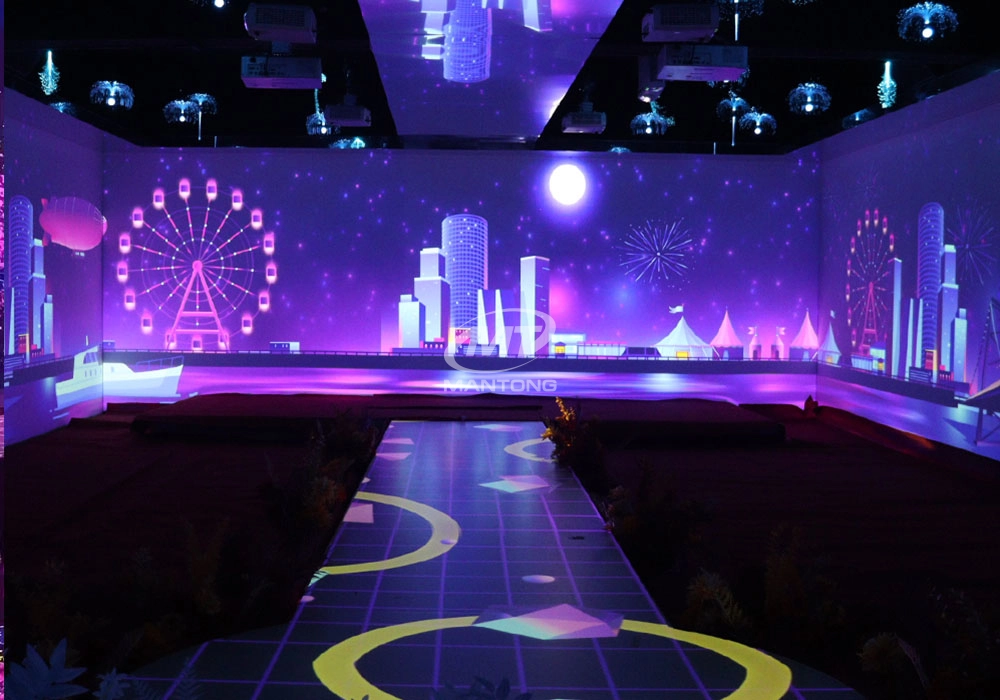
Immersive Brilliance: Mantong 6500 Lumen Immersive Room Projector for Interactive Experiences
Best Uses of Interactive Wall Projection in Museums and Exhibitions
Safety, Accessibility, and Compliance for Interactive Floors
One-Stop Projection Solution Provider Since 2011
How to Write an Interactive-Effect Video Customisation Script ?
① Project Background: Briefly introduce the context in which this interactive scene will be used (e.g., exhibition, museum,
event space, children's area). Example: This scene is part of the “Underwater World” zone in a children's science museum,
designed to be engaging and exploratory.
②Visual Style / Atmosphere: What kind of visual mood are you aiming for? Please describe the color scheme, style, and any
references. it should focus solely on describing the visual aspects of the scene, supported by relevant charts or reference
images.
③ Interaction Points Overview:List each interactive hotspot along with the effect you'd like to trigger when the user
touches or clicks the area. example: when player touch the clownfish, it will swims away with bubble trail (animation effect)
and produce the bubble sound ( sound effect requirement )
④ Static Visual Reference:including but not limited to background image/video, a list of major visual elements (e.g., coral,
rocks, seaweed, fish), which elements should be interactive?
What information do you need to know before making the proposal/solution?
We know that everyone wants to know the price, but the price of our products is determined by many factors since most of our products are custom, so no ready price list. In order to fast understand what you need, can you send us an inquiry like this?
For example: I am really interested in your immersive projection products, we are a company in the USA and want to install some in my restaurant. It is about 50 meters long, and 5m in width. Projection size you can decide but the length should be not less than 20 meters. We want some content about SeaWorld because our place is all about the sea. Thank you.
Are you trader or manufacturer ?
We are direct manufacturer who specialize in providing one-stop solution for different outdoor & indoor projection project with our stable software and qualified projectors
What's the application of Immersive projection ?
It can be used in various venues, such as art exhibition, entertainment venues, educational institution, Wedding hall /Banquet/Bar,Yoga Studio and so on. It often involves advanced projection techniques, multimedia content, and interactive elements to engage and captivate the audience's senses.
How to install the projection equipment ?
1) Install the projector in a suitable position. We will provide you with a hanger, which you need to fix on the ceiling with
screws.
2) Connect projectors, computers and other accessories through wires.
3) After completing the above 2 steps, we will carry out the edge blending steps. Our team can complete it through remote
control.
In general, installation instructions for each project need to be specified on a project-by-project basis. The above is for
reference only.
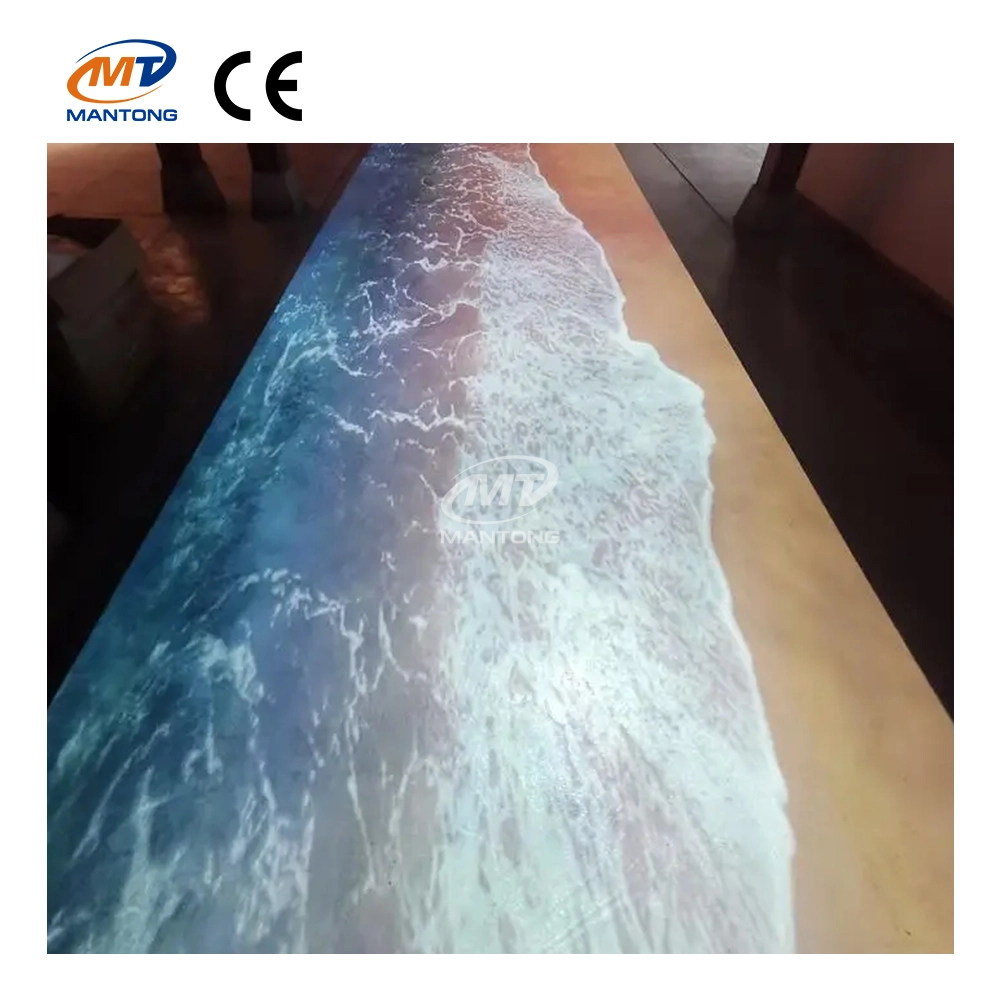
Indoor Interactive Floor Projector System - Customized Design & Installation Support
Indoor interactive floor projections display dynamic themed videos on the floor, commonly used in venues aiming to enhance brand influence or attract foot traffic, such as restaurants, hotel corridors, and brand car retail stores.
By using projectors and compatible software, the interactive content is projected onto the floor, encouraging engagement between people and the projected visuals. A single 5500-lumen indoor floor projector can cover an area of 5 m × 3 m. Typically, each project will use at least 3 units to ensure broad coverage and optimal visual effects.
We also offer customized design and installation support to enhance the interactive experience for your venue.
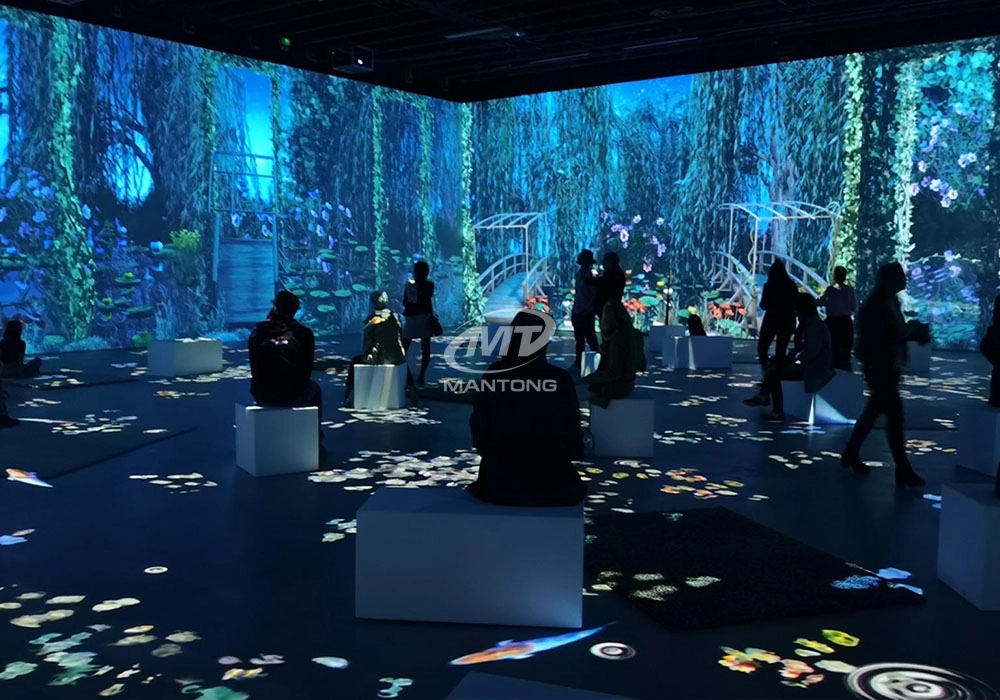
Mantong 6500LM High-Lumen Projector for Large-Scale Immersive Room Projection
Transform any space with Mantong's immersive projection mapping systems. Our high-lumen projectors (up to 6500 LM) and custom software create captivating interactive experiences for floors and walls. Ideal for museums, events, retail, and hospitality. Each kit includes professional ceiling mounting and 80+ pre-loaded video contents and is backed by a 12-month warranty and CE certification. We offer full customization and support to bring your vision to life.
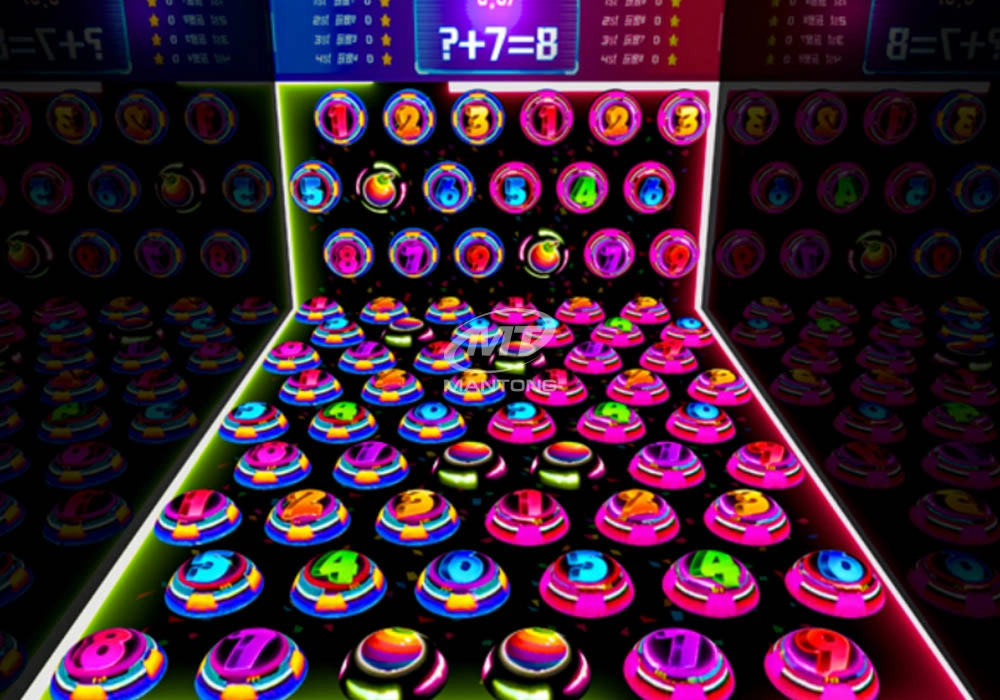
Amusement Rapidly Rotating Bouncing Sphere Interactive Wall Floor Projection Sports Games
Rapidly Rotating Bouncing Sphere is an interactive space where participants jump on rotating spheres. As they step on it, the spheres surface will show special interactivity
Jumping on spheres of the same color in succession causes them to pop, releasing light particles. The more consecutive jumps, the greater the reward—caterpillars appear, and eventually, all spheres of that color burst, filling the space with light and even more caterpillars.
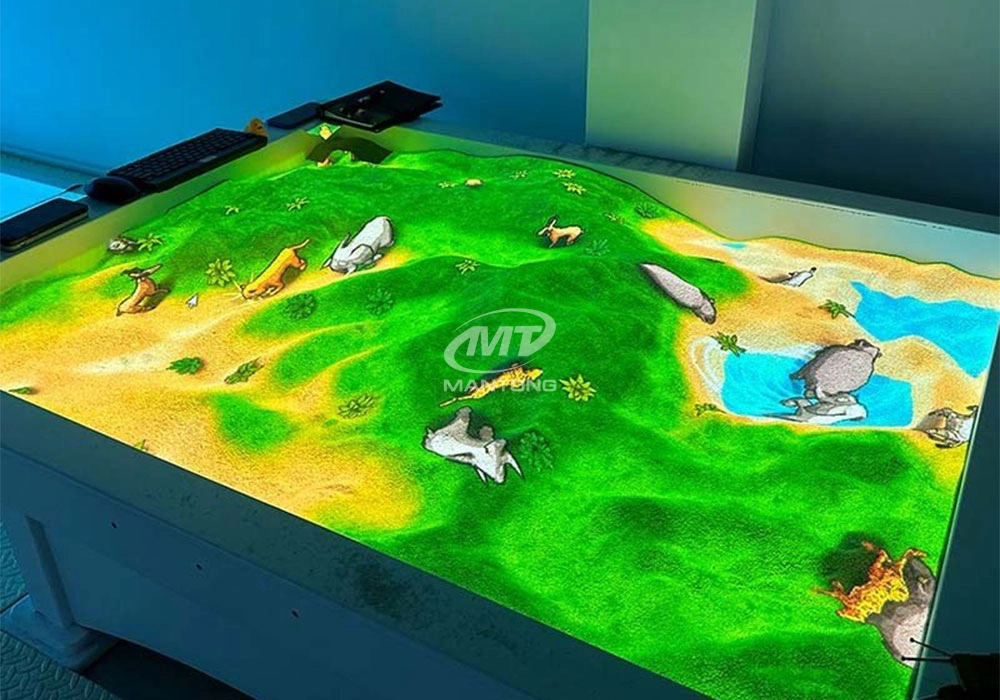
Interactive Sandbox Projection Mapping Games For Kids Play Park
Bring imagination to life with interactive sandbox projection mapping games designed for kids’ play parks. Using cutting-edge projection technology and real-time motion sensing, children can dig, build, and explore virtual worlds directly in the sand. Educational, engaging, and endlessly fun — it’s the perfect blend of play and learning.

Kaida Business Center, Shixin Road, Panyu District,Guangzhou City, Guangdong Province, China.
ManTong
ManTong
ManTong