
The latest trends for projection mapping game in 2026 | Mantong Ultimate Insights
- Latest trends for projection mapping game in 2026 | Mantong Insights
- Why this matters to you
- Market context: projection mapping meets interactive entertainment
- Top trends shaping projection mapping game experiences in 2026
- 1. AI-first creative workflows and procedural content
- 2. Real-time mapping, cloud rendering, and edge compute
- 3. Laser and 4K projection as the new baseline
- 4. Sensor fusion: LiDAR, depth cameras, and computer vision
- 5. Low-latency networking for multiplayer and competitive gameplay
- 6. Mixed reality (MR) and AR convergence
- 7. Gamification and data-driven engagement
- 8. Sustainability and energy efficiency
- 9. Modular software platforms and SDK ecosystems
- Comparison table: projector technologies and typical use-cases
- Business models and monetization for projection mapping games
- Paid-per-play and timed sessions
- Sponsorships and branded content
- Subscription and content-as-a-service (CaaS)
- Data-driven upsells
- Implementation checklist: design and deployment best practices
- Pre-production and site survey
- Hardware and redundancy
- Content and interaction testing
- Operations and training
- Use cases and practical examples
- Retail activations
- Museums and edutainment
- Theme parks and live events
- Mantong Digital: your partner for 2026-ready projection mapping games
- Conclusion
- Frequently Asked Questions
Latest trends for projection mapping game in 2026 | Mantong Insights
Introduction
Projection mapping game experiences are evolving faster than ever. By 2026, creators and brands will expect immersive, low-latency, multi-user experiences that blend physical environments with responsive digital content. This article breaks down the practical trends shaping projection mapping games, explains their business impact, and gives actionable guidance for partners, integrators, and decision-makers. Mantong Digital (Guangzhou) — a one-stop interactive projection solution provider and direct manufacturer with over 10 years of experience — presents these insights to help you plan, build, and scale projection mapping game projects worldwide.
Why this matters to you
for “projection mapping game” in 2026 usually falls into three buckets: (1) designers looking for technical and creative possibilities; (2) buyers seeking vendors or partnerships; (3) operators wanting best practices, cost-saving tips, and ROI. This article answers those intents with real-world trends, hardware/software comparisons, and implementation advice that supports commercial decisions.
Market context: projection mapping meets interactive entertainment
The lines between live events, themed entertainment, retail activations, and gaming continue to blur. Projection mapping game experiences are now core to experiential marketing, museums, dark rides, and esports activations. Brands want projects that drive social sharing, dwell time, and repeat visits — while reducing operational complexity and cost. Mantong Digital’s integrated hardware + software approach addresses these needs through customizable, scalable solutions.
Top trends shaping projection mapping game experiences in 2026
1. AI-first creative workflows and procedural content
AI tools are accelerating content creation for projection mapping games. Procedural generation and AI-driven visual shaders let teams produce large libraries of responsive assets fast. On the runtime side, neural networks optimize mapping on non-rigid, moving, or complex surfaces in real time. For commercial projects, this means reduced production time and lower content update costs — enabling seasonal campaigns or dynamic in-game events without full rebuilds.
2. Real-time mapping, cloud rendering, and edge compute
Expect a hybrid architecture: heavy compute in the cloud for asset streaming and orchestration, with edge servers or embedded GPUs handling latency-sensitive rendering and sensor fusion. This split reduces local hardware costs while maintaining sub-50ms interactive latency for most projection mapping games. For large outdoor shows, edge compute nodes at venues ensure reliability even with spotty network conditions.
3. Laser and 4K projection as the new baseline
Laser light sources and 4K (3840×2160) resolution projectors are becoming the standard for high-end projection mapping games. Laser projectors offer longer lifespan (typically 20,000–30,000 hours), quicker warm-up, and better color stability than lamp-based systems. 4K resolution increases perceived immersion and supports small-font HUDs and detailed interactive elements in proximity gaming.
4. Sensor fusion: LiDAR, depth cameras, and computer vision
Sensor fusion combines depth sensors, LiDAR, IMUs, and RGB cameras to track players, props, and stage elements. This enables believable occlusion, hit detection, and physics-based interactions. Combining multiple sensor types increases robustness in variable lighting and outdoor environments — critical for commercial activations that operate day-to-night.
5. Low-latency networking for multiplayer and competitive gameplay
Modern projection mapping games increasingly support multi-user interactions or competitive modes. Low-latency networking (local mesh, 5G private networks, or dedicated LANs) ensures synchronized visuals across multiple projectors and player devices. For monetizable esports-style experiences, consistent <20ms local latency for player inputs is a practical target.
6. Mixed reality (MR) and AR convergence
Projection mapping games are integrating with AR headsets and mobile AR to layer personal, private content atop shared projection visuals. This hybrid approach expands gameplay mechanics (private clues, targeted ads) and increases personalization without compromising group experiences. It also opens new sponsorship opportunities through dynamic, targeted overlays.
7. Gamification and data-driven engagement
Projects combine game mechanics, analytics, and CRM integration to drive repeat visits and loyalty. Scoring systems, leaderboards, and progressable experiences convert one-time participants into long-term customers. Data capture (opt-in) enables personalized offers and measurable ROI for brands and operators.
8. Sustainability and energy efficiency
Sustainability is not just PR. Laser projectors, LED-based screens used in hybrid systems, and optimized scheduling (night/day brightness scaling) significantly reduce lifetime energy consumption. Operators also favor modular, repairable hardware to extend asset life and lower total cost of ownership.
9. Modular software platforms and SDK ecosystems
Open, modular projection mapping software with robust SDKs accelerates integration with third-party game engines (Unity, Unreal), ticketing systems, and IoT devices. Platforms that offer cloud content management, device orchestration, and analytics are preferred by enterprise buyers who need predictable deployment and scaling.
Comparison table: projector technologies and typical use-cases
| Technology | Typical Brightness | Lifespan (hours) | Strengths | Best use-cases |
|---|---|---|---|---|
| Lamp-based | 2,500–12,000 ANSI lumens | 2,000–5,000 | Lower upfront cost | Small indoor installations, budget projects |
| Laser | 5,000–40,000+ ANSI lumens | 20,000–30,000 | Stable color, low maintenance, high brightness | Large-scale outdoor, theme park shows, long-run exhibits |
| LED-based (direct view hybrids) | Varies by panel; high day-brightness | 50,000+ (panels) | High contrast, direct-view clarity | Retail, permanent installations, mixed-screen + projection systems |
Business models and monetization for projection mapping games
Paid-per-play and timed sessions
Classic revenue for pop-up activations and mall experiences. Short session times and high throughput are key — system design should focus on reliability and quick resets.
Sponsorships and branded content
Brands pay for immersive ad placements inside game narratives. Dynamic overlays driven by cloud systems allow sponsors to rotate creative assets without on-site crews.
Subscription and content-as-a-service (CaaS)
Operators can subscribe to seasonal content packs, analytics dashboards, and remote management. This recurring model improves margins for both solution providers and venue owners.
Data-driven upsells
Using opt-in analytics, operators can offer personalized merchandise, follow-up offers, or VIP access — increasing lifetime value per user.
Implementation checklist: design and deployment best practices
Pre-production and site survey
- Perform a 3D scan of the environment (photogrammetry or LiDAR) to avoid surprises during mapping.
- Assess ambient light conditions (lux readings) across day/night to size projector brightness appropriately.
- Plan cable runs, safety zones, and service access points for maintenance.
Hardware and redundancy
Use redundant servers and network paths for mission-critical installations. Modular racks and hot-swappable power supplies reduce downtime in high-traffic venues.
Content and interaction testing
Conduct user testing with representative participants to validate UX flows, accessibility, and average session times. Minor UX improvements can dramatically increase throughput and revenue.
Operations and training
Provide clear SOPs for on-site staff, remote troubleshooting tools, and cloud monitoring dashboards. A built-in content update pipeline enables fast refreshes without on-site visits.
Use cases and practical examples
Retail activations
Brands use projection mapping games during product launches to drive dwell time and social shares. Mobile AR tie-ins allow shoppers to continue the experience beyond the store.
Museums and edutainment
Projection mapping games turn static exhibits into interactive lessons, improving retention metrics. Procedural content keeps exhibits fresh with seasonal variations.
Theme parks and live events
In theme parks, projection mapping games act as queueless, distributed experiences that reduce perceived wait times and add incremental revenue via merch and photo ops.
Mantong Digital: your partner for 2026-ready projection mapping games
Mantong Digital is a Guangzhou-based manufacturer and one-stop interactive projection solution provider with over 10 years of industry experience. We supply both hardware and software, plus customized integration for immersive experiences, interactive entertainment, and outdoor projection shows. Our global-ready solutions emphasize modularity, energy efficiency, and rapid deployment so businesses can scale projection mapping games with predictable cost and performance. Visit https://www.mtprojection.com/ to explore hardware, software, and partnership opportunities.
Conclusion
Projection mapping game projects in 2026 must blend AI-assisted content, edge/cloud hybrid architectures, high-brightness laser projectors, robust sensor fusion, and smart monetization to deliver lasting commercial value. For brands and integrators, the winning formula is an integrated approach: combine reliable hardware, flexible software, and measurable engagement metrics. Mantong Digital offers end-to-end solutions to help you design, deploy, and scale immersive projection mapping games worldwide. If you’re evaluating partners or planning an activation, focus on interoperability, latency budgets, and content pipelines — and choose a vendor that can deliver both components and services.
Contact Mantong: For partnership inquiries and custom solutions, reach out via our website: https://www.mtprojection.com/
Sources
- AVIXA (The Audiovisual and Integrated Experience Association) — Industry reports and market context for immersive experiences (2022–2024).
- Gartner — Hype Cycle and edge/cloud trends for immersive and real-time rendering (2022–2023).
- Projector manufacturers' technical specifications (e.g., mainstream laser projector specs) and technical whitepapers for lifespan and brightness comparisons.
- Statista — Market overviews for AR/VR and experiential marketing trends (2021–2023).
- Trade publications and case studies from major AV integrators on sensor fusion, low-latency networking, and projection mapping deployments (2020–2024).
Frequently Asked Questions
What is a projection mapping game and how is it different from traditional projection mapping?A projection mapping game combines interactive gameplay mechanics (scores, player inputs, rules) with mapped projection onto surfaces. Traditional projection mapping focuses on visuals and non-interactive shows; projection mapping games add sensor-driven interactions, real-time logic, and often multiplayer modes.
What hardware should I prioritize for a 2026-ready projection mapping game?Prioritize laser projectors for long-term reliability and brightness, edge compute for low-latency rendering, depth/vision sensors for interaction, and a modular networking stack to support local and cloud hybrid architectures.
How much latency is acceptable for interactive projection mapping games?Aim for under 50ms end-to-end for casual interactive experiences and below 20ms for competitive or precision gameplay. Use edge compute and optimized input pipelines to meet these targets.
Can I combine projection mapping with AR headsets or mobile AR?Yes. Hybrid experiences that combine shared projection visuals with personalized AR overlays on headsets or phones are becoming common. They allow private content, personalized ads, or additional gameplay layers without changing the physical projection.
How do I measure ROI for projection mapping game activations?Key metrics include dwell time, conversion rate (ticket sales or purchases), social shares, repeat visits, and opt-in data capture for CRM. For sponsored experiences, measure brand lift and ad engagement metrics from in-game sponsor placements.
What maintenance considerations should I plan for?Plan for periodic cleaning, firmware updates, service access to lamps or laser modules, spare projectors for redundancy, and training for on-site staff. Cloud-based monitoring helps predict failures and schedule preventive maintenance.
How can Mantong Digital support a global rollout?Mantong offers end-to-end solutions from hardware manufacturing to software integration and remote management. Our modular systems and global partnership model are designed to simplify deployment, localization, and scaling across regions.
Measuring ROI with an Interactive Projection Mapping Supplier
Best professional immersive room manufacturers and supplier brands
Cost and ROI of Interactive Water Projection Projects: A Practical Guide
Interactive Floor Games for Schools: Engagement & Safety
One-Stop Projection Solution Provider Since 2011
How to Write an Interactive-Effect Video Customisation Script ?
① Project Background: Briefly introduce the context in which this interactive scene will be used (e.g., exhibition, museum,
event space, children's area). Example: This scene is part of the “Underwater World” zone in a children's science museum,
designed to be engaging and exploratory.
②Visual Style / Atmosphere: What kind of visual mood are you aiming for? Please describe the color scheme, style, and any
references. it should focus solely on describing the visual aspects of the scene, supported by relevant charts or reference
images.
③ Interaction Points Overview:List each interactive hotspot along with the effect you'd like to trigger when the user
touches or clicks the area. example: when player touch the clownfish, it will swims away with bubble trail (animation effect)
and produce the bubble sound ( sound effect requirement )
④ Static Visual Reference:including but not limited to background image/video, a list of major visual elements (e.g., coral,
rocks, seaweed, fish), which elements should be interactive?
What about the wall/floor material for the projection?
It’s recommended to choose a light-colored material with minimal reflectivity—pure white or light grey works best. the
common material is cement & plaster board
For optimal projection results, the surface should be free of any patterns or textures, as the projector will display content
directly onto it.
There are no specific material requirements; you may use any commonly available material in your local market, as long as it
meets the above conditions.
Are you trader or manufacturer ?
We are direct manufacturer who specialize in providing one-stop solution for different outdoor & indoor projection project with our stable software and qualified projectors
How to install the projection equipment ?
1) Install the projector in a suitable position. We will provide you with a hanger, which you need to fix on the ceiling with
screws.
2) Connect projectors, computers and other accessories through wires.
3) After completing the above 2 steps, we will carry out the edge blending steps. Our team can complete it through remote
control.
In general, installation instructions for each project need to be specified on a project-by-project basis. The above is for
reference only.
What's the application of Immersive projection ?
It can be used in various venues, such as art exhibition, entertainment venues, educational institution, Wedding hall /Banquet/Bar,Yoga Studio and so on. It often involves advanced projection techniques, multimedia content, and interactive elements to engage and captivate the audience's senses.
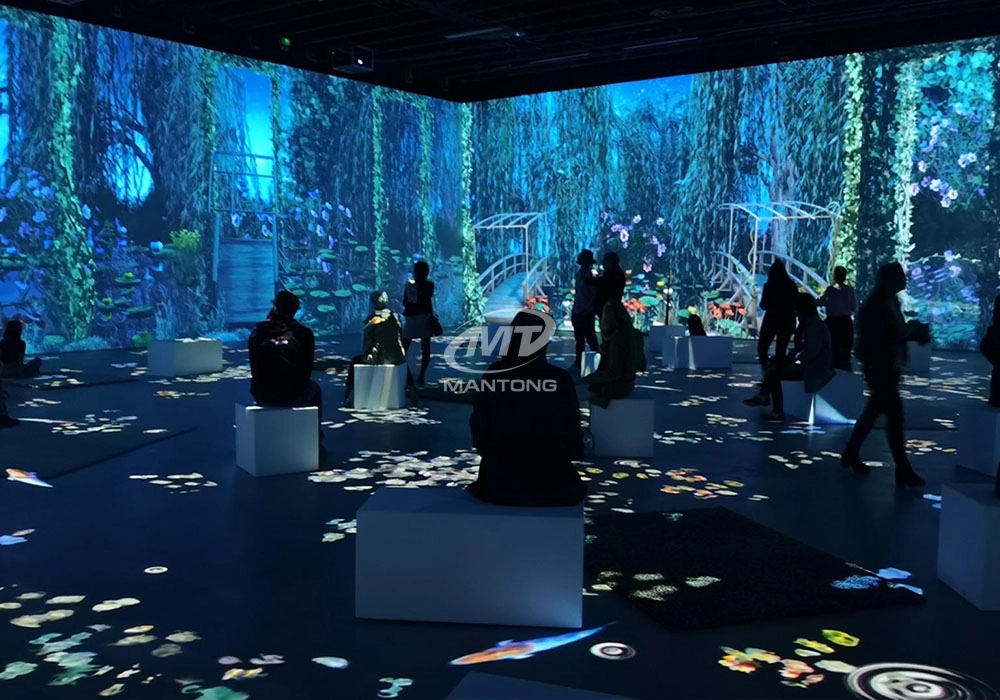
Mantong 6500LM High-Lumen Projector for Large-Scale Immersive Room Projection
Transform any space with Mantong's immersive projection mapping systems. Our high-lumen projectors (up to 6500 LM) and custom software create captivating interactive experiences for floors and walls. Ideal for museums, events, retail, and hospitality. Each kit includes professional ceiling mounting and 80+ pre-loaded video contents and is backed by a 12-month warranty and CE certification. We offer full customization and support to bring your vision to life.
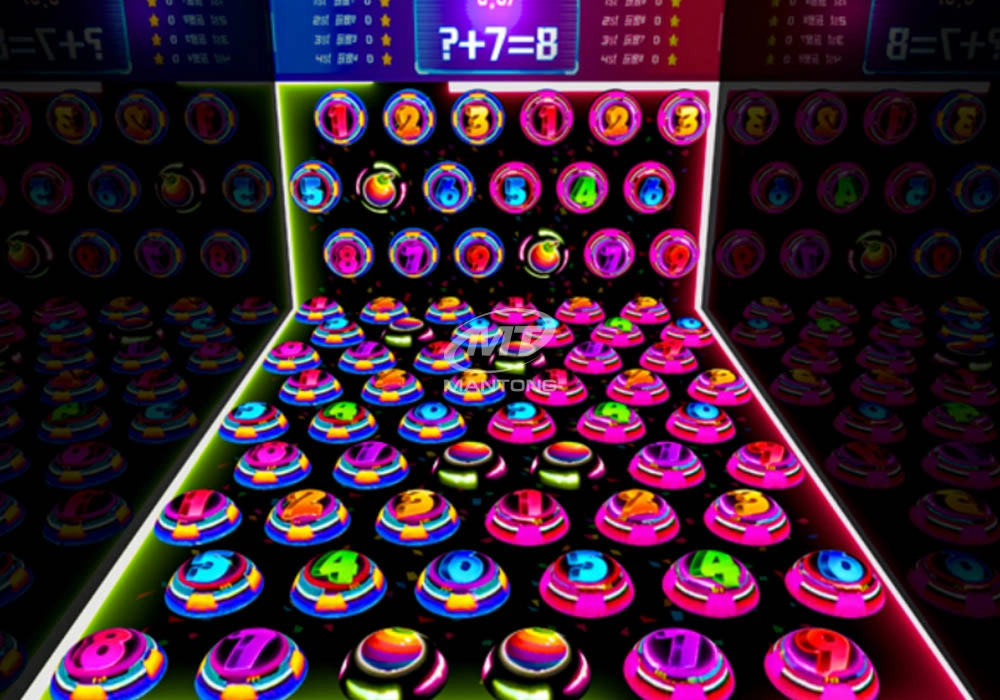
Amusement Rapidly Rotating Bouncing Sphere Interactive Wall Floor Projection Sports Games
Rapidly Rotating Bouncing Sphere is an interactive space where participants jump on rotating spheres. As they step on it, the spheres surface will show special interactivity
Jumping on spheres of the same color in succession causes them to pop, releasing light particles. The more consecutive jumps, the greater the reward—caterpillars appear, and eventually, all spheres of that color burst, filling the space with light and even more caterpillars.
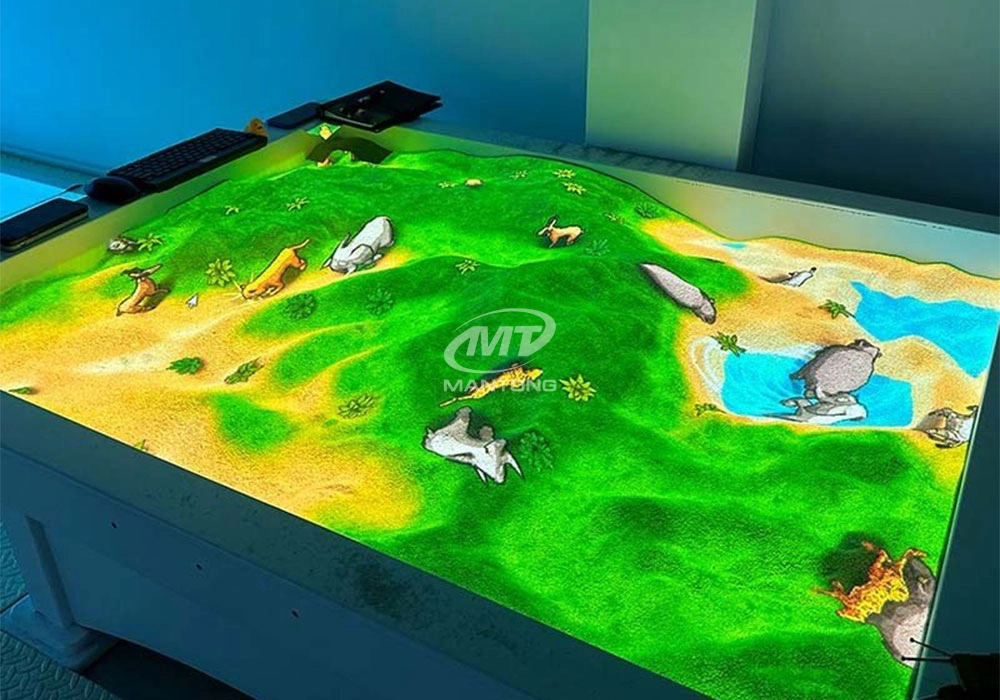
Interactive Sandbox Projection Mapping Games For Kids Play Park
Bring imagination to life with interactive sandbox projection mapping games designed for kids’ play parks. Using cutting-edge projection technology and real-time motion sensing, children can dig, build, and explore virtual worlds directly in the sand. Educational, engaging, and endlessly fun — it’s the perfect blend of play and learning.
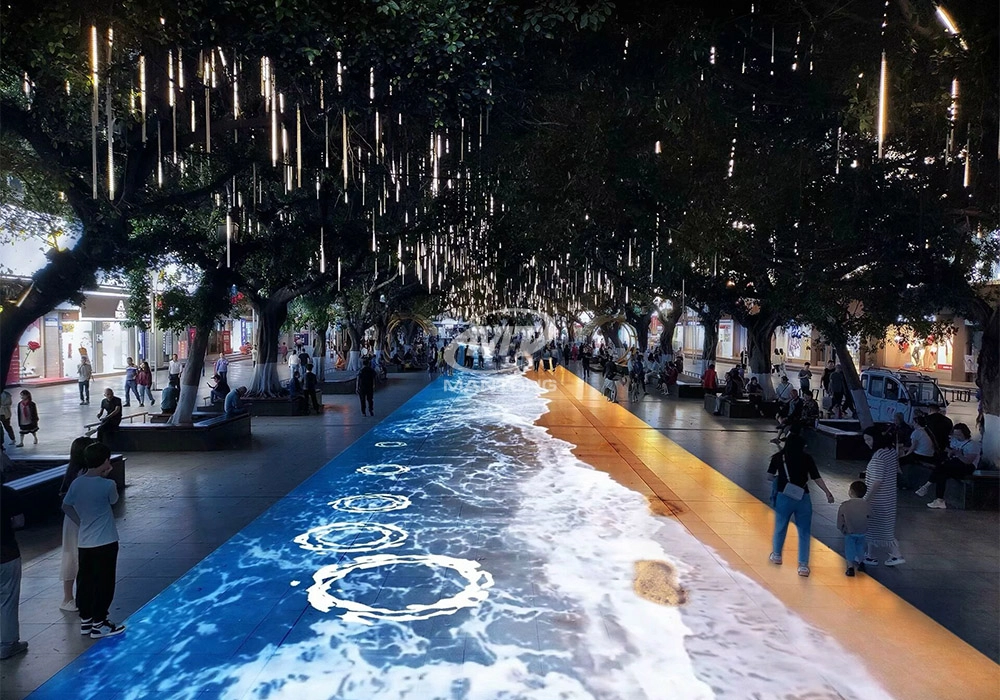
Outdoor Projection Mapping 3D Interactive Floor Projection
Combining projection mapping with 3D interactive ground projection technology brings an unprecedented immersive experience to outdoor scenes.

Kaida Business Center, Shixin Road, Panyu District,Guangzhou City, Guangdong Province, China.
ManTong
ManTong
ManTong