
Future trends: AI-driven interactive projection innovations
- Why interactive experiences are accelerating now
- Market and user demand shaping interactive projection technology
- Enabling technologies fueling rapid adoption
- Core AI-driven innovations transforming projection systems
- Real-time projection mapping and geometry correction
- Sensor fusion and user intent recognition
- Edge AI and low-latency inference
- Business-focused use cases and ROI models
- Retail and experiential marketing
- Museums, education and cultural experiences
- Events, live shows and projection mapping festivals
- Technical comparison: Traditional vs AI-driven interactive projection
- Implications for procurement teams
- Design and implementation best practices
- Start with measurable business objectives
- Prototype early and iterate with real users
- Plan for maintainability and remote management
- Security, privacy and accessibility considerations
- Data minimization and on-device inference
- Accessible design for all audiences
- Choosing a vendor: what distinguishes leaders
- Integrated hardware+software expertise
- Field experience and references
- Support for customization and IP ownership
- ManTong Digital: one-stop interactive projection solutions (manufacturer profile)
- Key products and strengths
- How ManTong addresses procurement criteria
- Implementation checklist and cost considerations
- Project scoping checklist
- High-level cost drivers
- Frequently asked questions (FAQ)
- 1. What is interactive projection technology?
- 2. How does AI improve projection mapping?
- 3. What are the main sensors used in interactive projection systems?
- 4. Can interactive projection systems protect visitor privacy?
- 5. How should I evaluate interactive projection vendors?
- 6. What is the typical deployment timeline?
- Contact and next steps
- References
Why interactive experiences are accelerating now
Market and user demand shaping interactive projection technology
Interactive projection technology is increasingly adopted as brands, venues and public spaces seek memorable, measurable engagement. The demand is driven by retail experiential strategies, museums prioritizing immersive learning, live events requiring dynamic visuals, and smart-city lighting initiatives. These commercial use cases create clear buying intent for interactive projection solutions that combine hardware, software and content services.
Enabling technologies fueling rapid adoption
Recent advances in AI (computer vision, machine learning), affordable high-lumen laser projectors, depth sensors, and GPU-accelerated rendering enable interactive projection systems that are more accurate, responsive and scalable than before. Integration with mobile devices and IoT platforms further expands business use cases where projection can be a measurable marketing and wayfinding tool.
Core AI-driven innovations transforming projection systems
Real-time projection mapping and geometry correction
AI and computer vision enable automated surface detection, 3D geometry reconstruction and dynamic warping. Instead of manual calibration, modern interactive projection technology can map content to irregular surfaces in real time, supporting moving objects and live performances. That reduces installation time and increases reliability for touring shows and temporary activations.
Sensor fusion and user intent recognition
Combining camera-based tracking, depth sensors (ToF or structured light), and inertial data, systems can infer user intent and engagement levels. Machine learning models classify gestures, body poses, and proxemics so interactive content responds contextually — e.g., scaling visuals to crowd density or switching modes when children are detected in an interactive floor game.
Edge AI and low-latency inference
Edge AI devices (on-site GPUs, inference accelerators) allow sub-50ms response times needed for tactile-feeling interactivity. For commercial installations where mobile connectivity is unreliable or latency-sensitive (e.g., interactive exhibits, retail kiosks), local inference preserves performance and privacy while supporting complex AI models for tracking and content adaptation.
Business-focused use cases and ROI models
Retail and experiential marketing
Interactive projection technology creates immersive storefronts, interactive fitting-room experiences and product visualizers. Retailers measure ROI through increased dwell time, conversion uplift and social shares. A/B testing content variants and integrating with POS and CRM systems help quantify revenue impact and refine creative strategies.
Museums, education and cultural experiences
AI-driven projection allows curators to layer contextual information onto artifacts, enable multilingual narration triggered by visitor proximity, and provide adaptive learning pathways. Interactive projections reduce physical signage needs and allow content updates without costly retrofits, improving exhibit longevity and relevance.
Events, live shows and projection mapping festivals
For concerts and large-scale projection shows, AI simplifies complex mapping across moving stage pieces and multiple projection nodes. Real-time content changes driven by audience interaction increase perceived value of shows and sponsorship inventory, supporting High Quality ticketing and branded activations.
Technical comparison: Traditional vs AI-driven interactive projection
| Capability | Traditional Projection | AI-driven Interactive Projection |
|---|---|---|
| Calibration | Manual alignment, time-consuming | Automated surface detection and real-time warping |
| Interaction sensing | Basic motion sensors or infrared beams | Multi-sensor fusion with computer vision and depth sensing |
| Latency | Often higher; not optimized for tactile interactivity | Low-latency edge inference for sub-50ms response |
| Scalability | Scaling adds manual configuration overhead | Distributed systems with centralized orchestration and auto-calibration |
| Content adaptation | Pre-rendered or scheduled content | Dynamic, context-aware content adapted by AI models |
Implications for procurement teams
Procurement should evaluate suppliers on software update cadence, support for edge AI, compatibility with standard content engines (Unity, Unreal), and APIs for analytics/CRM integration. These criteria separate commodity projector resellers from integrated interactive projection solution providers.
Design and implementation best practices
Start with measurable business objectives
Define KPIs (dwell time, impressions, conversions, ticket upsell) before selecting hardware. Interactive projection projects that tie to specific commercial metrics achieve better stakeholder buy-in and clearer ROI.
Prototype early and iterate with real users
Rapid prototyping in the intended environment uncovers constraints (ambient light, sightlines, foot traffic) that influence projector lumen needs, throw distances, and sensor placement. Iteration reduces costly reworks at deployment stage.
Plan for maintainability and remote management
Choose systems with remote monitoring, health reporting, and over-the-air content updates. For multi-site rollouts, centralized management reduces downtime and total cost of ownership.
Security, privacy and accessibility considerations
Data minimization and on-device inference
Because interactive systems often capture imagery of visitors, adopt data-minimization strategies: use on-device inference without storing identifiable images, anonymize analytics, and provide clear signage about data usage. These practices align with privacy regulations and public expectations.
Accessible design for all audiences
Design interactions with multimodal feedback (audio cues, haptic where applicable, and visual contrast adjustments). Ensure content accommodates mobility-impaired visitors by supporting seated interactions and non-gesture triggers (buttons, app-based controls).
Choosing a vendor: what distinguishes leaders
Integrated hardware+software expertise
Top vendors provide not just projectors but also bespoke software, content pipelines, and assembly-level support. Look for manufacturers who can customize optics, enclosure designs, and mounting solutions alongside software calibration tools.
Field experience and references
Prefer suppliers with a proven track record in similar verticals. Case studies, uptime SLAs, and test installations are strong indicators of ability to deliver at scale. Commercial clients should request operational metrics (MTTR, update frequency, support response times).
Support for customization and IP ownership
Determine who owns creative assets and AI models after deployment. Vendors offering white-label solutions and flexible licensing enable agencies and brands to maintain control over long-term content strategies.
ManTong Digital: one-stop interactive projection solutions (manufacturer profile)
Mantong Digital is a one-stop interactive projection solution provider and direct manufacturer based in Guangzhou, China, with over 10 years of industry experience. We are dedicated to providing innovative, flexible and cost-effective projection solutions, offering both hardware and software to meet various needs.At ManTong, we specialize in providing customized solutions for a wide range of application scenarios through innovative projection technology. Whether it's immersive experiences, interactive entertainment or outdoor lighting and projection shows, our solutions can transform your ideas into stunning visual effects. Our projection technology provides customized solutions for a variety of scenarios, delivering immersive and interactive visual experiences.We are now looking for business partnerships worldwide. Our vision is to become the world's leading interactive projection manufacturer. Our website is https://www.mtprojection.com/.
Key products and strengths
- Core products: immersive projection, interactive floor projection, interactive wall projection, immersive room, 3D projection, interactive projection games, projection shows, and interactive projection mapping.
- Competitive advantages: direct manufacturing (cost control), customizable hardware and software stacks, over 10 years industry experience, and end-to-end project delivery from design to installation and maintenance.
- Technical capabilities: integration of sensor fusion, real-time mapping, support for edge AI inference, and compatibility with mainstream content engines for rapid content development.
How ManTong addresses procurement criteria
ManTong emphasizes rapid prototyping, remote device management, and white-label content licensing. Their factory-direct model shortens supply chains and makes multi-site rollouts more predictable and cost-effective for global partners.
Implementation checklist and cost considerations
Project scoping checklist
- Define KPIs and user journeys.
- Survey site conditions (lux levels, surfaces, foot traffic patterns).
- Choose sensors/projection hardware to meet lumen and throw requirements.
- Specify software integration needs (analytics, POS, CRM, ticketing).
- Plan for maintenance access and remote monitoring.
High-level cost drivers
Major cost drivers include projector type (laser vs lamp), optical customization, sensor suites, on-site installation complexity, and custom content development. Total Cost of Ownership should include warranty, spare parts, and remote-support subscriptions.
Frequently asked questions (FAQ)
1. What is interactive projection technology?
Interactive projection technology uses projectors combined with sensors, cameras and software to project visuals that respond to people or environmental conditions in real time. Typical applications include interactive floors, walls, exhibits and live shows.
2. How does AI improve projection mapping?
AI automates surface detection, enables accurate tracking of moving elements, classifies user actions for richer interactions, and adapts content dynamically based on contextual signals (crowd size, time of day, user demographics anonymized).
3. What are the main sensors used in interactive projection systems?
Common sensors include RGB cameras, depth sensors (ToF or structured light), IMUs for moving surfaces, and proximity sensors. Sensor fusion yields robust detection in varied lighting conditions.
4. Can interactive projection systems protect visitor privacy?
Yes. Best practices include on-device inference without storing identifiable images, aggregating analytics, and clear signage about data collection. Systems can be designed to report only anonymized metrics like dwell time and interaction counts.
5. How should I evaluate interactive projection vendors?
Evaluate vendors on demonstrated vertical expertise, integrated hardware/software offerings, support SLAs, demo installations, content delivery workflows, and total cost of ownership including maintenance and updates.
6. What is the typical deployment timeline?
Small-scale prototypes can be installed in 2–6 weeks. Medium to large multi-site rollouts often require 2–6 months depending on custom content, mounting complexity, and integration requirements.
Contact and next steps
If you are planning an experiential retail rollout, museum exhibit, immersive room, or projection show, speak with a manufacturer-experienced partner to scope ROI-focused solutions. For turnkey interactive projection technology solutions and global partnership enquires, visit ManTong's website: https://www.mtprojection.com/ or contact their sales team to request a demo, technical datasheets, and reference installations.
References
- Projection mapping — Wikipedia. https://en.wikipedia.org/wiki/Projection_mapping (accessed 2026-01-05)
- Video projector — Wikipedia. https://en.wikipedia.org/wiki/Video_projector (accessed 2026-01-05)
- Augmented reality — Wikipedia. https://en.wikipedia.org/wiki/Augmented_reality (accessed 2026-01-05)
- Grand View Research — Projection Mapping Market Analysis. https://www.grandviewresearch.com/industry-analysis/projection-mapping-market (accessed 2026-01-05)
- Unity real-time development platform. https://unity.com/ (accessed 2026-01-05)
- Examples of edge AI for vision — NVIDIA Developer. https://developer.nvidia.com/embedded/ai (accessed 2026-01-05)
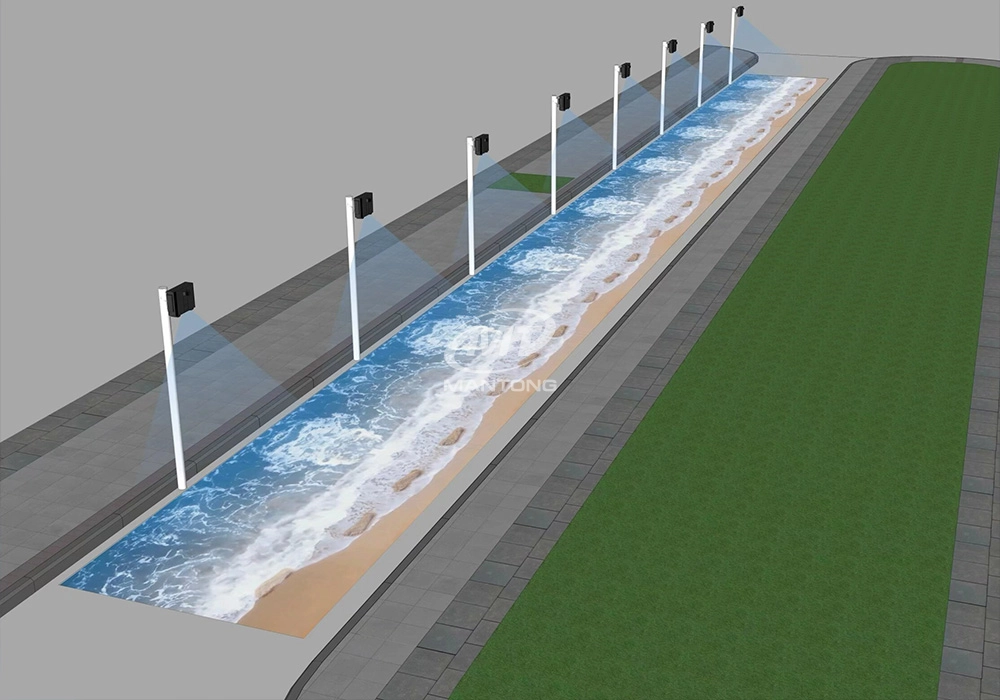
Outdoor Projection Mapping & 3D Interactive Floor Projection — Immersive, Weatherproof Solutions by Mantong Digital
Case Studies: Successful Interactive Floor Game Installations
Evaluating Interactive Floor Game Hardware and Sensors
Best professional interactive projection mapping wall manufacturers and supplier brands
One-Stop Projection Solution Provider Since 2011
What's Immersive Projection ?
Immersive projection refers to a technology that creates a captivating and all-encompassing visual experience for viewers by projecting images or videos onto large surfaces, such as walls, floors, or even entire rooms. This technology aims to immerse the audience in a simulated environment, blurring the boundaries between the physical and virtual worlds.
What's the application of Immersive projection ?
It can be used in various venues, such as art exhibition, entertainment venues, educational institution, Wedding hall /Banquet/Bar,Yoga Studio and so on. It often involves advanced projection techniques, multimedia content, and interactive elements to engage and captivate the audience's senses.
What about the wall/floor material for the projection?
It’s recommended to choose a light-colored material with minimal reflectivity—pure white or light grey works best. the
common material is cement & plaster board
For optimal projection results, the surface should be free of any patterns or textures, as the projector will display content
directly onto it.
There are no specific material requirements; you may use any commonly available material in your local market, as long as it
meets the above conditions.
What information do you need to know before making the proposal/solution?
We know that everyone wants to know the price, but the price of our products is determined by many factors since most of our products are custom, so no ready price list. In order to fast understand what you need, can you send us an inquiry like this?
For example: I am really interested in your immersive projection products, we are a company in the USA and want to install some in my restaurant. It is about 50 meters long, and 5m in width. Projection size you can decide but the length should be not less than 20 meters. We want some content about SeaWorld because our place is all about the sea. Thank you.
How to Write an Interactive-Effect Video Customisation Script ?
① Project Background: Briefly introduce the context in which this interactive scene will be used (e.g., exhibition, museum,
event space, children's area). Example: This scene is part of the “Underwater World” zone in a children's science museum,
designed to be engaging and exploratory.
②Visual Style / Atmosphere: What kind of visual mood are you aiming for? Please describe the color scheme, style, and any
references. it should focus solely on describing the visual aspects of the scene, supported by relevant charts or reference
images.
③ Interaction Points Overview:List each interactive hotspot along with the effect you'd like to trigger when the user
touches or clicks the area. example: when player touch the clownfish, it will swims away with bubble trail (animation effect)
and produce the bubble sound ( sound effect requirement )
④ Static Visual Reference:including but not limited to background image/video, a list of major visual elements (e.g., coral,
rocks, seaweed, fish), which elements should be interactive?
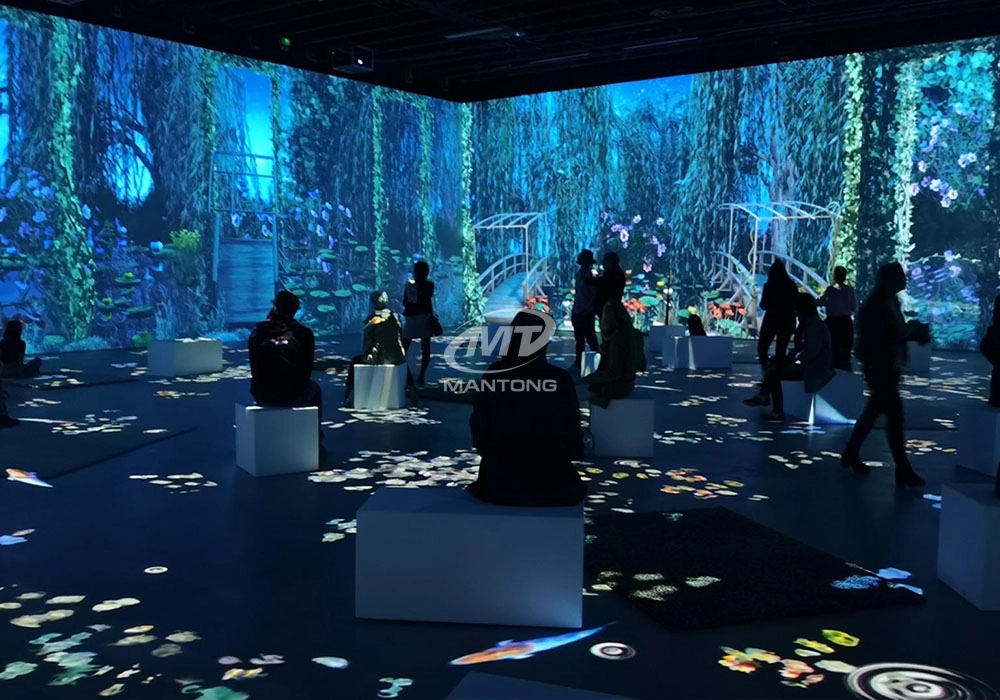
Mantong 6500LM High-Lumen Projector for Large-Scale Immersive Room Projection
Transform any space with Mantong's immersive projection mapping systems. Our high-lumen projectors (up to 6500 LM) and custom software create captivating interactive experiences for floors and walls. Ideal for museums, events, retail, and hospitality. Each kit includes professional ceiling mounting and 80+ pre-loaded video contents and is backed by a 12-month warranty and CE certification. We offer full customization and support to bring your vision to life.
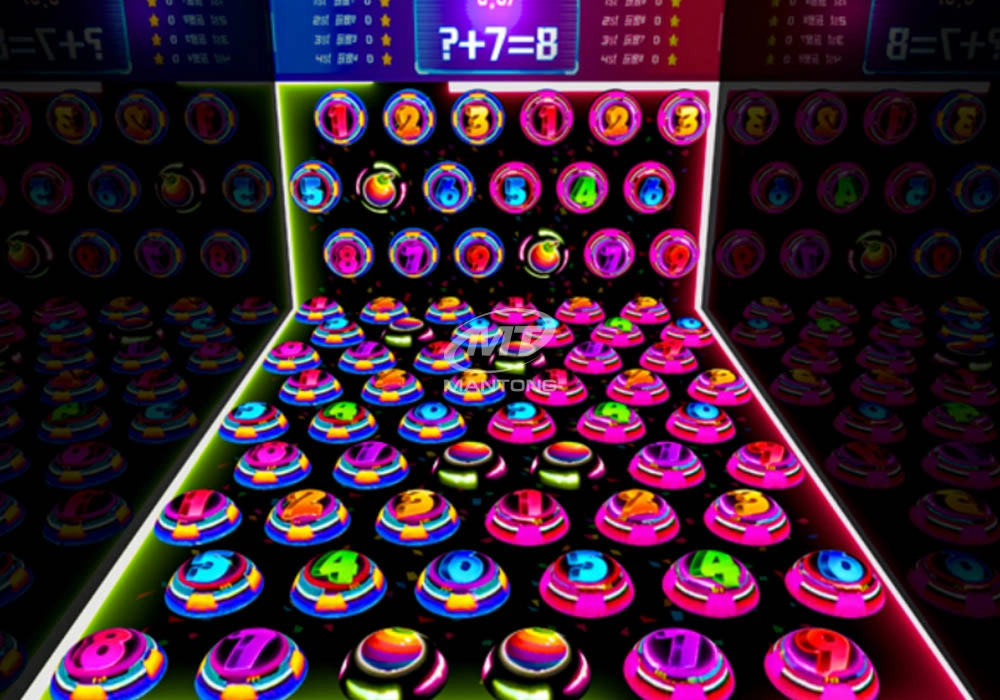
Amusement Rapidly Rotating Bouncing Sphere Interactive Wall Floor Projection Sports Games
Rapidly Rotating Bouncing Sphere is an interactive space where participants jump on rotating spheres. As they step on it, the spheres surface will show special interactivity
Jumping on spheres of the same color in succession causes them to pop, releasing light particles. The more consecutive jumps, the greater the reward—caterpillars appear, and eventually, all spheres of that color burst, filling the space with light and even more caterpillars.
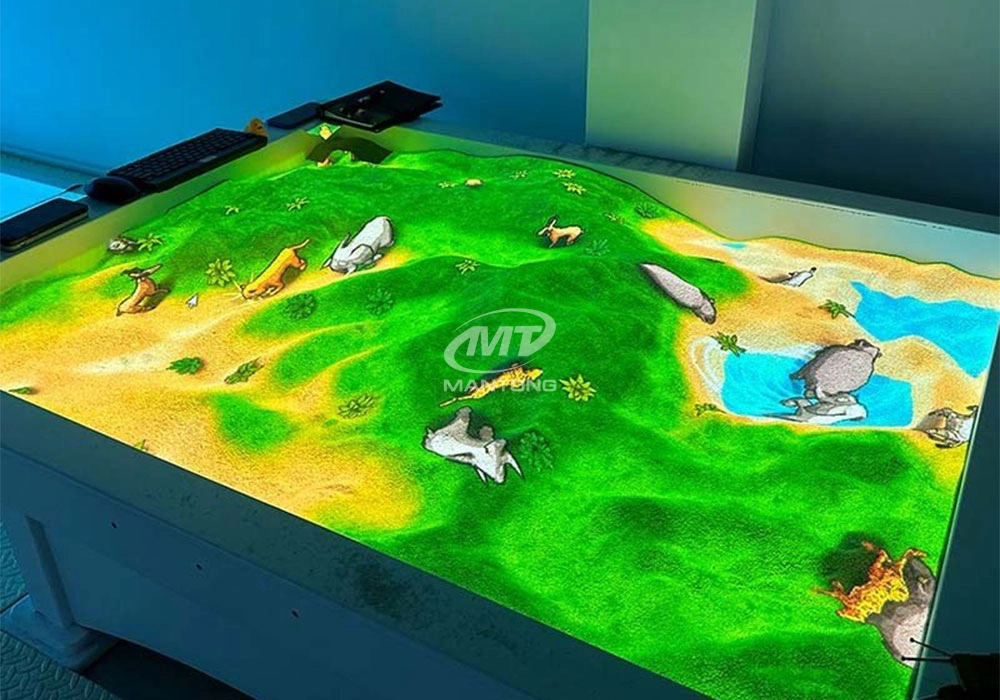
Interactive Sandbox Projection Mapping Games For Kids Play Park
Bring imagination to life with interactive sandbox projection mapping games designed for kids’ play parks. Using cutting-edge projection technology and real-time motion sensing, children can dig, build, and explore virtual worlds directly in the sand. Educational, engaging, and endlessly fun — it’s the perfect blend of play and learning.
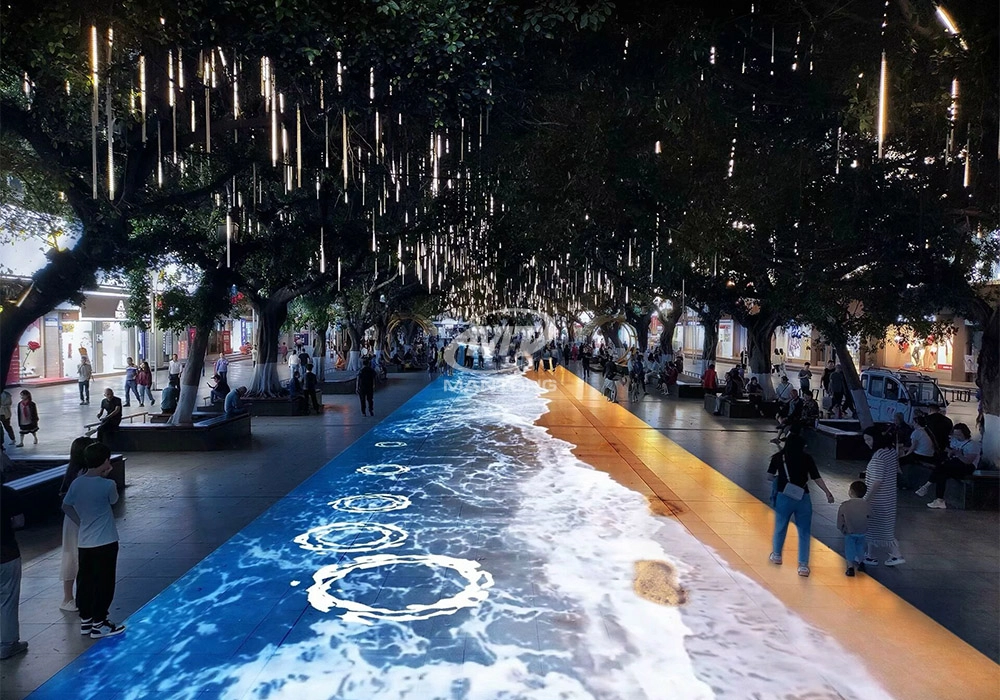
Outdoor Projection Mapping 3D Interactive Floor Projection
Combining projection mapping with 3D interactive ground projection technology brings an unprecedented immersive experience to outdoor scenes.

Kaida Business Center, Shixin Road, Panyu District,Guangzhou City, Guangdong Province, China.
ManTong
ManTong
ManTong