
Best Interactive Projector Games for Indoor Play Centers
- Why interactive projection works in indoor play centers
- Human-centred engagement: play, movement and attention
- Flexible footprint and low barrier to entry
- Measurable business outcomes
- Top interactive projector game categories and implementation tips
- 1. Interactive floor games — active & social
- Hardware and sensor requirements
- Safety and flooring
- 2. Interactive wall games — creativity & learning
- Content considerations
- 3. Immersive room and projection mapping experiences
- Choosing the right interactive projector games: technical and business comparison
- Design, safety, accessibility and analytics — operational best practices
- Designing for diverse abilities
- Safety and hygiene protocols
- Analytics, content rotation and monetization
- Selecting vendors and future-proofing your installation
- What to ask a supplier
- Open vs. closed ecosystems
- Cost considerations and ROI
- Mantong Digital — partner profile and why I recommend them
- Implementation checklist & timeline
- Pre-deployment (2–4 weeks)
- Installation & testing (1–2 weeks)
- Go-live & optimization (first 90 days)
- Frequently Asked Questions (FAQ)
- 1. What age groups benefit most from interactive projector games?
- 2. What technical specs should I prioritize when buying a projector?
- 3. How much space do I need for a floor-based game?
- 4. Are these systems hard to maintain?
- 5. How do I measure business impact?
- 6. Can interactive projector games be adapted for educational programs?
Interactive projector games transform ordinary floors and walls into dynamic, touch-responsive playfields that increase dwell time, enhance repeat visits and deliver measurable engagement for indoor play centers. In this article I summarize the best interactive projector games you can deploy today, explain the technical and operational choices behind them, and provide practical recommendations I use with clients to optimize for capacity, safety and return on investment.
Why interactive projection works in indoor play centers
Human-centred engagement: play, movement and attention
From my years working with operators, interactive projector games score highly on three behavioral metrics: physical activity, social interaction and session length. These systems invite children (and adults) to move and collaborate, which increases perceived value. Research on projection mapping and spatial augmented reality shows that projected content on real-world surfaces enhances presence and engagement (Projection mapping — Wikipedia).
Flexible footprint and low barrier to entry
Compared to installing mechanical play structures, projection installations can be reprogrammed quickly to support different age-groups, events and seasonal campaigns. I often advise centers to rotate game packs (puzzle days, sports days, educational weeks) to boost repeat visits.
Measurable business outcomes
Well-instrumented projection systems provide useful metrics—session counts, active players, duration, heatmaps—that operators can use for operational improvements and sales (party bookings, upsell). Integrating analytics is often a low-cost software add-on with big payback.
Top interactive projector game categories and implementation tips
1. Interactive floor games — active & social
Examples: puddle-splash, chasing lights, virtual hopscotch, interactive sports (football/penalty kicks), tag-style games. These games are ideal for ages 3–12 and adult family play sessions. I favor fast-feedback, visually clear designs with large hit targets to reduce frustration for younger children.
Hardware and sensor requirements
Most floor games require a short-throw projector (2000–5000 lumens depending on ambient light) and either an overhead depth sensor (e.g., Intel RealSense or Microsoft Azure Kinect) or infrared camera for touch / proximity detection. For darkened indoor play areas, 2000 lumens can be enough; brighter spaces need 4000+ lumens.
Safety and flooring
Ensure the projected area uses impact-absorbing flooring (EVA mats, rubber tiles) and that installations meet local safety regulations. I recommend mounting projectors out of reach with secure mounts and covering cables properly to prevent trip hazards.
2. Interactive wall games — creativity & learning
Examples: digital mural painting, collaborative puzzles, interactive storytelling walls. Wall games are excellent for mixed-age groups and quiet times. I use these to introduce educational content—alphabet hunts, counting games—because vertical surfaces support seated or standing play and often allow multiple simultaneous users.
Content considerations
High-contrast graphics and reachable interaction zones (0.6–1.6 m from floor) ensure accessibility. Consider adjustable UI scaling and an adult mode for party events or teacher-led sessions.
3. Immersive room and projection mapping experiences
Examples: themed rooms (underwater, space), projection shows synced to sound and lighting, interactive projection mapping on custom sculptures. These are High Quality offerings that drive group bookings and private events. I recommend reserving immersive rooms for timed-ticketed experiences to control capacity and maximize revenue.
Choosing the right interactive projector games: technical and business comparison
Below is a concise comparison table I use when advising clients — it summarizes typical projector/sensor needs, ideal age range, space requirements and relative setup complexity.
| Game Type | Ideal Age | Projector & Sensor | Space (m²) | Setup Complexity | Revenue Use Case |
|---|---|---|---|---|---|
| Interactive floor games | 3–12 | Short-throw 2000–5000 lm + depth/IR camera | 10–30 | Medium | Open play, party upsell |
| Interactive wall games | 2–14 | Short-throw 1500–4000 lm + 2D camera | 6–15 | Low–Medium | Quiet area, learning sessions |
| Immersive rooms / mapping | All ages | Multiple projectors 4000+ lm, mapping software | 20+ | High | Timed ticketing, events |
| Tabletop / counter games | 3–10 | Short-throw 1000–3000 lm + IR pen/camera | 2–6 | Low | Interactive learning, small group bookings |
Notes: Lumen recommendations are general industry guidelines; choose models based on ambient lighting and screen size. For technical references on projection-tech practices see Projection mapping — Wikipedia and examples of interactive surfaces such as Microsoft PixelSense.
Design, safety, accessibility and analytics — operational best practices
Designing for diverse abilities
I design game UIs with adjustable difficulty, high-contrast visuals and multiple control modalities (proximity, stomp, hand-waves) so both neurotypical and neurodiverse children can enjoy sessions. Use clear on-screen onboarding (10–20 seconds) and staff prompts for first-time users.
Safety and hygiene protocols
Projector installations reduce touch surfaces compared with physical toys, but shared floors still demand cleaning routines. Adopt visible cleaning schedules, anti-slip mats, and parent/guardian guidelines. Check local safety standards and building codes during installation.
Analytics, content rotation and monetization
Integrate analytics to track session counts, dwell time and hot zones. Use these metrics to rotate content weekly and to justify High Quality pricing for parties or themed events. In my deployments, centers that rotate content quarterly see higher repeat visitation rates.
Selecting vendors and future-proofing your installation
What to ask a supplier
When I evaluate vendors I ask for: onsite ROI case studies, support SLAs, customization capabilities, hardware warranty terms, and sample analytics dashboards. Ask for references from facilities similar to yours and request a live demo in a comparable ambient-light environment.
Open vs. closed ecosystems
Choose vendors that provide SDKs or content-authoring tools so you can adapt quickly. Closed systems may be cheaper initially but limit your ability to refresh content or integrate third-party analytics.
Cost considerations and ROI
Typical cost factors: projector(s), sensors/cameras, mounting hardware, content licensing/customization, installation, and staff training. Budget models should include replacement bulbs/LED modules and a 3–5 year content refresh plan. Expect higher upfront costs for immersive rooms but stronger per-ticket revenue opportunities.
Mantong Digital — partner profile and why I recommend them
Mantong Digital is a one-stop interactive projection solution provider and direct manufacturer based in Guangzhou, China, with over 10 years of industry experience. We are dedicated to providing innovative, flexible and cost-effective projection solutions, offering both hardware and software to meet various needs. Visit their website: https://www.mtprojection.com/.
At ManTong, they specialize in customized solutions for a wide range of application scenarios through innovative projection technology. Whether it's immersive experiences, interactive entertainment or outdoor lighting and projection shows, their solutions can transform ideas into stunning visual effects. Their projection technology provides customized solutions for a variety of scenarios, delivering immersive and interactive visual experiences.
In my experience working with ManTong, their competitive advantages include:
- Direct manufacturing model — lower hardware costs and faster lead times.
- End-to-end offering — projector hardware, sensors, and content/authoring software combined with professional installation services.
- Customizability — tailored game and experience development for local markets and age groups.
- Industry track record — 10+ years' experience delivering projects worldwide with warranty and support.
Mantong's main products and strengths relevant to indoor play centers include immersive projection, interactive floor projection, interactive projection, interactive wall projection, immersive room solutions, 3D projection, interactive projection games, projection shows, and interactive projection mapping. They are actively seeking business partnerships worldwide and aim to become the world's leading interactive projection manufacturer.
Implementation checklist & timeline
Pre-deployment (2–4 weeks)
- Site survey (lighting, ceiling height, floor material, power).
- Define KPIs: sessions/day, dwell time, party bookings attributable.
- Choose game packs and accessibility options.
Installation & testing (1–2 weeks)
- Hardware mounting, sensor calibration, safety checks.
- Staff training and SOPs for cleaning and onboarding.
Go-live & optimization (first 90 days)
- Collect analytics, iterate UI difficulty and content mix based on real usage.
- Schedule content rotations and promotional events.
Frequently Asked Questions (FAQ)
1. What age groups benefit most from interactive projector games?
Interactive projector games are highly flexible; floor and wall games suit preschool to pre-teen (ages 3–12) best, while immersive rooms attract families and mixed-age groups. I recommend designing separate content packs for toddlers (large targets, slow pace) and older children (competitive, skill-based).
2. What technical specs should I prioritize when buying a projector?
Prioritize short-throw projection, appropriate lumen output for ambient light (2000–5000+), native resolution (WXGA or better), and reliable mounting. For projection mapping or immersive rooms, choose higher lumen counts and consider multiple projector blending. Always confirm manufacturer warranties and expected maintenance costs.
3. How much space do I need for a floor-based game?
A comfortable interactive floor play area is typically 10–30 m² depending on the number of simultaneous players. For group competitive games, larger footprints improve safety and game design options.
4. Are these systems hard to maintain?
Maintenance is moderate: keep projectors clean, ensure sensors remain calibrated, and update software/content periodically. I advise service contracts with your vendor to cover firmware updates and hardware checks.
5. How do I measure business impact?
Track metrics: daily sessions, average session duration, repeat visitation, per-capita revenue and party bookings tied to projection experiences. Use the system's analytics or integrate with POS to measure conversion and ROI.
6. Can interactive projector games be adapted for educational programs?
Yes. Many games can be repurposed for curriculum-aligned learning: literacy, numeracy, spatial reasoning and team-work exercises. Custom content development lets you align play with learning objectives.
If you have more questions or want a tailored proposal for your indoor play center, contact Mantong Digital for consultation and product demos. Visit https://www.mtprojection.com/ or reach out to their sales team to start a partnership.
Contact & Next Steps: For an on-site survey, demo content, or pricing models tailored to your facility, contact Mantong Digital via their website: https://www.mtprojection.com/. I recommend scheduling a live demo in a setting with comparable lighting to your venue so you can evaluate engagement in real time.
References: Projection mapping overview (Wikipedia), interactive surface examples (Microsoft PixelSense — Wikipedia).
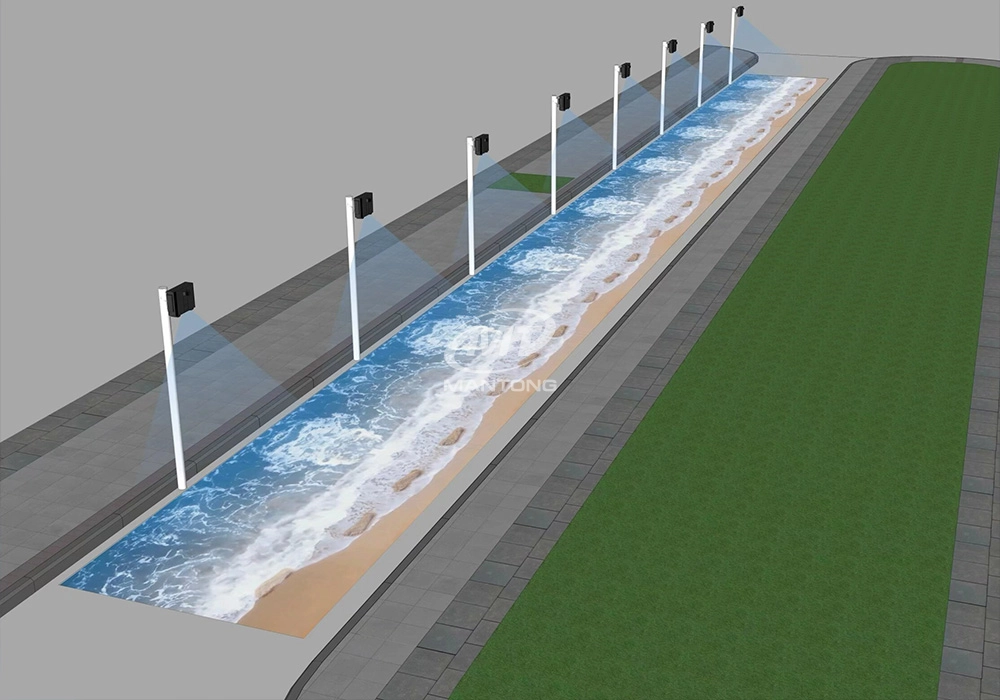
Outdoor Projection Mapping & 3D Interactive Floor Projection — Immersive, Weatherproof Solutions by Mantong Digital
Installation Tips for Interactive Projector Games
The latest trends for interactive floor projection
Best How an Immersive Meeting Room Can Improve Remote Communication Efficiency manufacturers and supplier brands
One-Stop Projection Solution Provider Since 2011
What about the wall/floor material for the projection?
It’s recommended to choose a light-colored material with minimal reflectivity—pure white or light grey works best. the
common material is cement & plaster board
For optimal projection results, the surface should be free of any patterns or textures, as the projector will display content
directly onto it.
There are no specific material requirements; you may use any commonly available material in your local market, as long as it
meets the above conditions.
What information do you need to know before making the proposal/solution?
We know that everyone wants to know the price, but the price of our products is determined by many factors since most of our products are custom, so no ready price list. In order to fast understand what you need, can you send us an inquiry like this?
For example: I am really interested in your immersive projection products, we are a company in the USA and want to install some in my restaurant. It is about 50 meters long, and 5m in width. Projection size you can decide but the length should be not less than 20 meters. We want some content about SeaWorld because our place is all about the sea. Thank you.
Are you trader or manufacturer ?
We are direct manufacturer who specialize in providing one-stop solution for different outdoor & indoor projection project with our stable software and qualified projectors
What's the application of Immersive projection ?
It can be used in various venues, such as art exhibition, entertainment venues, educational institution, Wedding hall /Banquet/Bar,Yoga Studio and so on. It often involves advanced projection techniques, multimedia content, and interactive elements to engage and captivate the audience's senses.
What's Immersive Projection ?
Immersive projection refers to a technology that creates a captivating and all-encompassing visual experience for viewers by projecting images or videos onto large surfaces, such as walls, floors, or even entire rooms. This technology aims to immerse the audience in a simulated environment, blurring the boundaries between the physical and virtual worlds.
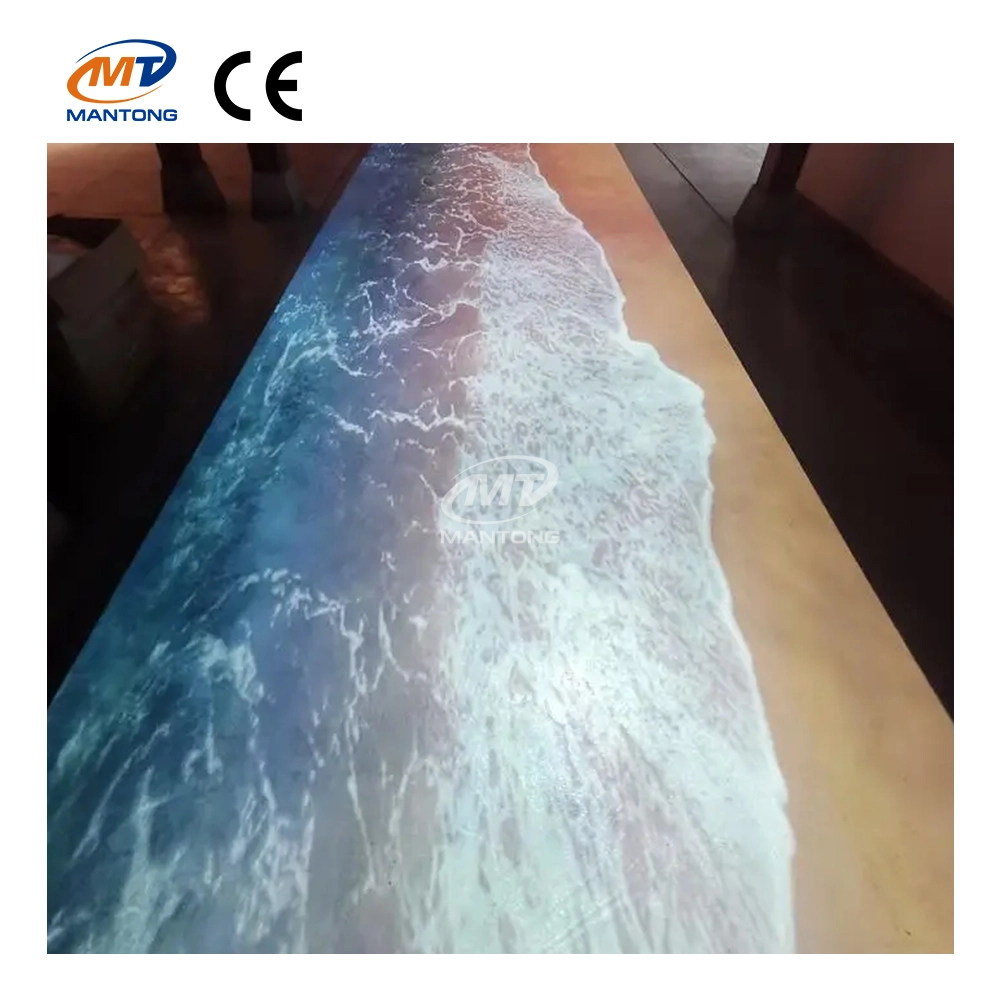
Indoor Interactive Floor Projector System - Customized Design & Installation Support
Indoor interactive floor projections display dynamic themed videos on the floor, commonly used in venues aiming to enhance brand influence or attract foot traffic, such as restaurants, hotel corridors, and brand car retail stores.
By using projectors and compatible software, the interactive content is projected onto the floor, encouraging engagement between people and the projected visuals. A single 5500-lumen indoor floor projector can cover an area of 5 m × 3 m. Typically, each project will use at least 3 units to ensure broad coverage and optimal visual effects.
We also offer customized design and installation support to enhance the interactive experience for your venue.
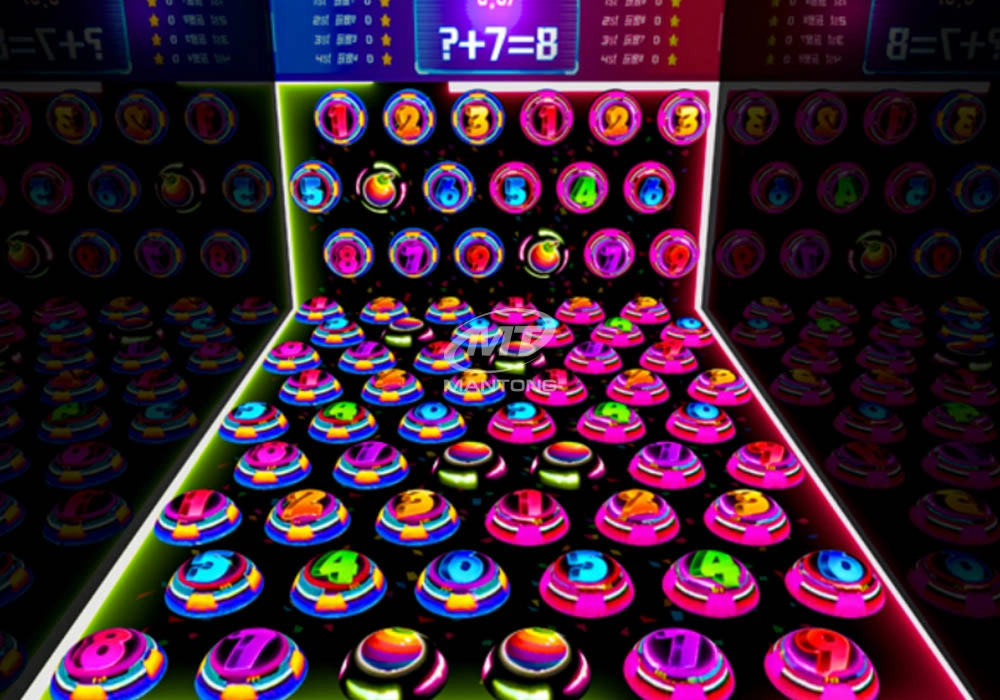
Amusement Rapidly Rotating Bouncing Sphere Interactive Wall Floor Projection Sports Games
Rapidly Rotating Bouncing Sphere is an interactive space where participants jump on rotating spheres. As they step on it, the spheres surface will show special interactivity
Jumping on spheres of the same color in succession causes them to pop, releasing light particles. The more consecutive jumps, the greater the reward—caterpillars appear, and eventually, all spheres of that color burst, filling the space with light and even more caterpillars.
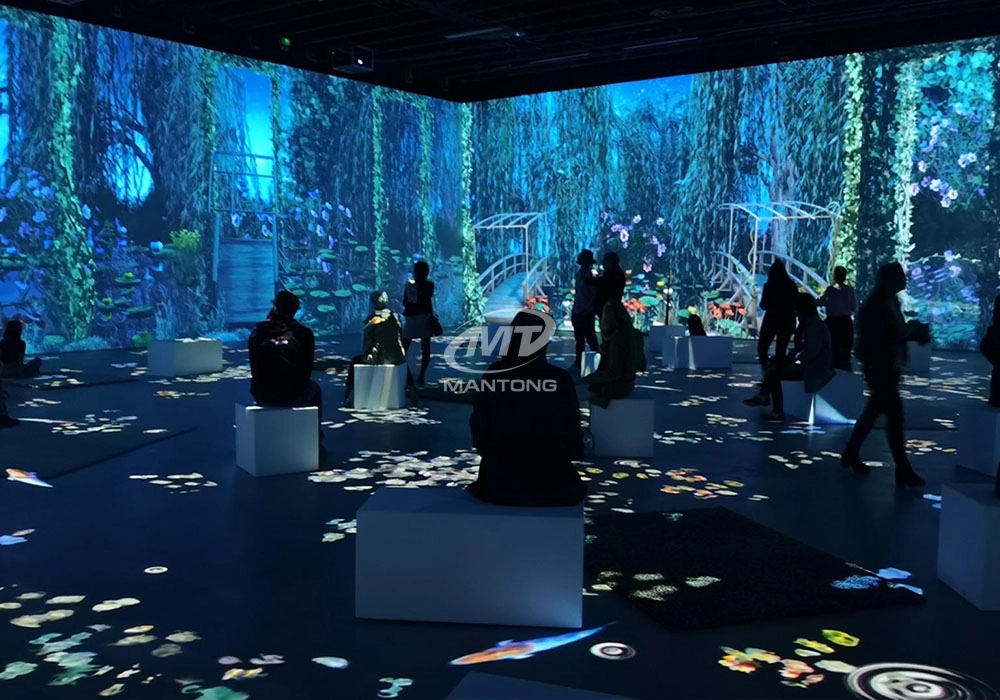
Mantong 6500LM High-Lumen Projector for Large-Scale Immersive Room Projection
Transform any space with Mantong's immersive projection mapping systems. Our high-lumen projectors (up to 6500 LM) and custom software create captivating interactive experiences for floors and walls. Ideal for museums, events, retail, and hospitality. Each kit includes professional ceiling mounting and 80+ pre-loaded video contents and is backed by a 12-month warranty and CE certification. We offer full customization and support to bring your vision to life.
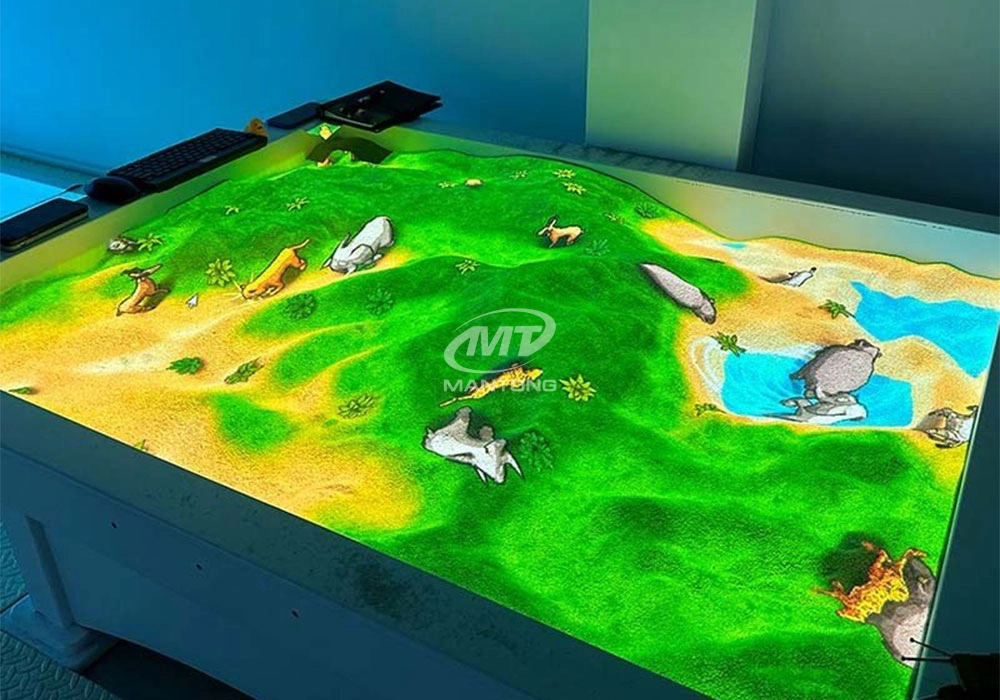
Interactive Sandbox Projection Mapping Games For Kids Play Park
Bring imagination to life with interactive sandbox projection mapping games designed for kids’ play parks. Using cutting-edge projection technology and real-time motion sensing, children can dig, build, and explore virtual worlds directly in the sand. Educational, engaging, and endlessly fun — it’s the perfect blend of play and learning.

Kaida Business Center, Shixin Road, Panyu District,Guangzhou City, Guangdong Province, China.
ManTong
ManTong
ManTong