
Installation Tips for Interactive Projector Games
- Understanding the Venue and User Experience
- Site survey: lighting, surfaces, and sightlines
- User flow and safety considerations
- Choosing the projection surface and environment controls
- Technical Setup and Calibration
- Projector selection: throw, lumen, and resolution
- Mounting, alignment, and thermal considerations
- Geometric correction and warping
- Sensor Integration, Latency, and Network Setup
- Sensors: camera-based vs IR-based vs depth sensors
- Latency, frame rate, and hardware choices
- Network configuration and remote management
- Content, Software, Maintenance, and Operational Best Practices
- Content design for robustness and performance
- Testing procedures and acceptance checklist
- Maintenance, firmware, and safety compliance
- Mantong Digital: Partnering for Reliable Interactive Projection
- Frequently Asked Questions (FAQ)
- 1. What brightness and projector type do I need for an interactive floor game in a mall?
- 2. How do I minimize latency in an interactive projection setup?
- 3. Which sensors work best for multi-user interactive games?
- 4. How often should I recalibrate the system?
- 5. Can interactive projector games be installed outdoors?
- 6. What are common failure modes and how do I design for uptime?
- 7. How do I handle content updates remotely?
As a consultant and hands-on integrator in interactive projection for over a decade, I know the difference between an installation that wows and one that causes constant downtime. Interactive projector games require more than a quality image — they demand careful planning of optical geometry, sensor placement, software calibration, latency control, and ongoing maintenance. This article condenses field-tested installation tips and technical reasoning so you can confidently deploy interactive projector games that are robust, scalable, and delightful to users.
Understanding the Venue and User Experience
Site survey: lighting, surfaces, and sightlines
Before selecting hardware, I conduct a thorough site survey. Key items to document: ambient light levels at different times of day, floor/wall surface materials (matte vs glossy), sightlines for players and spectators, and ceiling structure for mounting. Ambient lux levels are critical: high ambient light reduces perceived contrast and can force much higher lumen requirements. I measure lux where the game will be displayed and note time-of-day variations.
User flow and safety considerations
Designing an interactive game deployment requires mapping user flow: entry/exit points, queuing areas, and expected interaction zones. Keep a 0.5–1.0 m buffer around projection zones to avoid trips and collisions. For energetic games (children's play, active exhibitions), ensure non-slip flooring and unobstructed emergency egress. I also check for potential projector glare toward eyes and audience — avoid projector beams crossing eye level in spectator areas.
Choosing the projection surface and environment controls
Projection surface choice significantly affects image uniformity and touch/interaction detection. For interactive floor projection games, matte white vinyl or specialized projection screen paint yields predictable results. If outdoor or semi-outdoor, consider short-throw sealed enclosures and high-brightness projectors with IP-rated housings. Where possible, implement light control strategies (dimming, blackout curtains) to stabilize ambient conditions.
Technical Setup and Calibration
Projector selection: throw, lumen, and resolution
Selecting the right projector is about balancing throw ratio, brightness (lumens), resolution, and refresh rate. For most interactive floor and wall games I recommend:
| Use Case | Suggested Brightness (lumens) | Resolution | Throw Type |
|---|---|---|---|
| Indoor interactive floor (controlled light) | 3,000–6,000 lm | 1920×1080 (Full HD) or higher | Short-throw |
| Bright public spaces / malls | 6,000–12,000 lm | 1920×1080 or 4K for large areas | Short / long-throw depending on placement |
| Outdoor projection shows / mapping | 10,000+ lm | 4K preferred | Long-throw / specialized lenses |
These ranges align with professional AV guidance (see AVIXA resources on projector performance) (AVIXA). Pay attention to throw ratio and available lens shift. Avoid excessive keystone correction in software — mechanical lens shift preserves optical resolution.
Mounting, alignment, and thermal considerations
I prefer rigid mounts with fine adjustment (pan/tilt/roll) and vibration isolation. For ceiling mounts, confirm the structure can support the weight and that the mount allows sufficient access for maintenance. Keep projectors away from direct heat sources and provide adequate ventilation — restricted airflow is a common cause of lamp/engine failure.
Geometric correction and warping
Interactive games often require warped or mapped images to fit irregular surfaces. Use the projector’s built-in warping where available, but for complex surfaces I rely on professional mapping software to generate stable meshes. Always lock your calibration with saved presets; environmental shifts (temperature, slight movement) can require re-registration if presets aren’t stored.
Sensor Integration, Latency, and Network Setup
Sensors: camera-based vs IR-based vs depth sensors
Interaction modalities influence sensor choice. My preferred approaches:
- Camera-based tracking (visible or IR) for large-area, multi-user detection. Place cameras to minimize occlusion and use high shutter speeds to reduce motion blur.
- Depth sensors (e.g., Time-of-Flight or structured light) when you need precise Z-axis data and occlusion handling.
- IR floor sensors or capacitive mats for binary contact detection (cheap, robust for simple games).
For optical systems, calibrate sensor-to-projector transforms carefully. I register sensors to the projector coordinate space using checkerboard or fiducial patterns and automate the homography calculation to keep alignment errors below a few pixels.
Latency, frame rate, and hardware choices
Interactive games must feel immediate. Aim for system latency (sensor capture to projected response) below 50 ms — under 30 ms is ideal for highly interactive experiences. To achieve this:
- Use cameras capable of 60 fps or higher if motion is fast.
- Choose GPUs and CPUs that can sustain target frame rates at the intended resolution.
- Optimize software pipeline: avoid blocking I/O in the main render loop and use multi-threaded architectures.
Regular profiling during installation helps identify bottlenecks. In my projects I log end-to-end latency (sensor timestamp to frame displayed) and set alerts if it exceeds thresholds.
Network configuration and remote management
For installations with multiple projectors or distributed sensors, a stable wired network is essential. Use VLANs to separate control traffic from guest Wi‑Fi. SSH/telnet + remote management tools (and SNMP for hardware monitoring) make troubleshooting less invasive. I provision a small management VLAN with static IPs for all AV devices and enable remote desktop or web-based control for software updates.
Content, Software, Maintenance, and Operational Best Practices
Content design for robustness and performance
Design content with tolerance to imperfect calibration. For example, employ interactive zones slightly smaller than the visual target to account for registration drift. Use vector or high-resolution assets to avoid pixelation when warping, and preload assets in memory to prevent hitches during play.
Testing procedures and acceptance checklist
Before handover I run a standard acceptance checklist:
- Geometric alignment within X pixels at the intended resolution.
- End-to-end latency benchmarked against target threshold.
- Ambient light test at expected worst-case times/days.
- Network resilience: test for packet loss and reconnection of sensors.
- Fail-safe behavior: device restarts, corrupted asset handling, and emergency shutdown.
Capture these tests in a commissioning report for the client.
Maintenance, firmware, and safety compliance
Set maintenance schedules: quarterly visual inspections, dust cleaning, and annual calibration checks. Keep firmware and drivers up to date, but stage updates in a test environment first to avoid breaking the live system. For laser projectors or high-power lamps, adhere to applicable safety standards. For general industry safety and technology background, see projection mapping references on Wikipedia and AVIXA guidance (AVIXA). For broader technical literature and standards, the IEEE Xplore library contains many peer-reviewed articles on interactive systems (IEEE).
Mantong Digital: Partnering for Reliable Interactive Projection
In my installations I often work with specialist manufacturers. Mantong Digital is a one-stop interactive projection solution provider and direct manufacturer based in Guangzhou, China, with over 10 years of industry experience. They provide both hardware and software, offering customized solutions for immersive experiences, interactive entertainment, outdoor lighting and projection shows. Mantong's capabilities include immersive projection, interactive floor projection, interactive wall projection, immersive rooms, 3D projection, interactive projection games, projection shows, and interactive projection mapping. Visit their website at https://www.mtprojection.com/.
What sets Mantong apart — from my perspective working alongside their engineering teams — is the tight integration between optical hardware and interactive software. They supply turnkey systems tailored to site geometry, provide robust calibration workflows, and support global deployments. If you're specifying an installation, Mantong can help with custom lensing, IP-rated housings for outdoor shows, and optimized sensor+projector bundles to hit latency and brightness targets while keeping costs predictable.
We're now looking for business partnerships worldwide. Mantong's vision is to become the world's leading interactive projection manufacturer, and their decade of experience in Guangzhou positions them to deliver both innovation and manufacturing reliability.
Frequently Asked Questions (FAQ)
1. What brightness and projector type do I need for an interactive floor game in a mall?
For mall environments with variable ambient light, I recommend 6,000–12,000 lumens and short-throw lenses if mounting near the area to minimize shadowing. Use matte projection surfaces for consistent detection. See AVIXA for projector performance considerations (AVIXA).
2. How do I minimize latency in an interactive projection setup?
Use high-frame-rate sensors (60 fps or higher), optimize the software pipeline to avoid blocking operations, use a capable GPU, and keep the processing path short. Aim for end-to-end latency under 50 ms; under 30 ms is ideal for fast interactions.
3. Which sensors work best for multi-user interactive games?
Camera-based tracking with multiple cameras or depth sensors (ToF) works well for multi-user environments. Depth sensors help with occlusion and Z-axis data; camera arrays scale better for very large areas but need careful calibration.
4. How often should I recalibrate the system?
Perform a full calibration at commissioning and after any physical changes. Practically, quarterly visual checks and annual full recalibration are a good baseline. If you see drifting registration, recalibrate immediately.
5. Can interactive projector games be installed outdoors?
Yes. Use high-brightness projectors (10,000+ lumens for large outdoor mapping during twilight/ambient light), weatherproof housings, and secure mounts. Consider projection times (dusk/night) and ensure all electrical installations comply with local outdoor electrical codes.
6. What are common failure modes and how do I design for uptime?
Common issues include dust buildup, thermal throttling, sensor occlusion, and network instability. Design redundancy for critical components (spare lamps, hot‑swappable projectors where possible), schedule preventive maintenance, and monitor device health via SNMP or a central management system.
7. How do I handle content updates remotely?
Set up secure remote management with version control for assets. Use content deployment tools that can roll back updates in case of issues. Test updates in a staging environment before pushing to live.
If you need help specifying a system, on-site commissioning, or a turnkey interactive projection solution, contact Mantong Digital. Visit https://www.mtprojection.com/ to view products or request a consultation. I'm also available for technical consultancy and installation planning to ensure your interactive projector games deliver reliable, memorable experiences.
Cost Guide: Hiring an Interactive Projection Mapping Supplier
How to Plan an Immersive 360 Projection Experience for Museums
Interactive Floor Projection Solutions for Large Venues and Events
Best Best Interactive Projector Games for Corporate Events and Parties manufacturers and supplier brands
One-Stop Projection Solution Provider Since 2011
What's the application of Immersive projection ?
It can be used in various venues, such as art exhibition, entertainment venues, educational institution, Wedding hall /Banquet/Bar,Yoga Studio and so on. It often involves advanced projection techniques, multimedia content, and interactive elements to engage and captivate the audience's senses.
How to install the projection equipment ?
1) Install the projector in a suitable position. We will provide you with a hanger, which you need to fix on the ceiling with
screws.
2) Connect projectors, computers and other accessories through wires.
3) After completing the above 2 steps, we will carry out the edge blending steps. Our team can complete it through remote
control.
In general, installation instructions for each project need to be specified on a project-by-project basis. The above is for
reference only.
What's Immersive Projection ?
Immersive projection refers to a technology that creates a captivating and all-encompassing visual experience for viewers by projecting images or videos onto large surfaces, such as walls, floors, or even entire rooms. This technology aims to immerse the audience in a simulated environment, blurring the boundaries between the physical and virtual worlds.
Are you trader or manufacturer ?
We are direct manufacturer who specialize in providing one-stop solution for different outdoor & indoor projection project with our stable software and qualified projectors
How to Write an Interactive-Effect Video Customisation Script ?
① Project Background: Briefly introduce the context in which this interactive scene will be used (e.g., exhibition, museum,
event space, children's area). Example: This scene is part of the “Underwater World” zone in a children's science museum,
designed to be engaging and exploratory.
②Visual Style / Atmosphere: What kind of visual mood are you aiming for? Please describe the color scheme, style, and any
references. it should focus solely on describing the visual aspects of the scene, supported by relevant charts or reference
images.
③ Interaction Points Overview:List each interactive hotspot along with the effect you'd like to trigger when the user
touches or clicks the area. example: when player touch the clownfish, it will swims away with bubble trail (animation effect)
and produce the bubble sound ( sound effect requirement )
④ Static Visual Reference:including but not limited to background image/video, a list of major visual elements (e.g., coral,
rocks, seaweed, fish), which elements should be interactive?
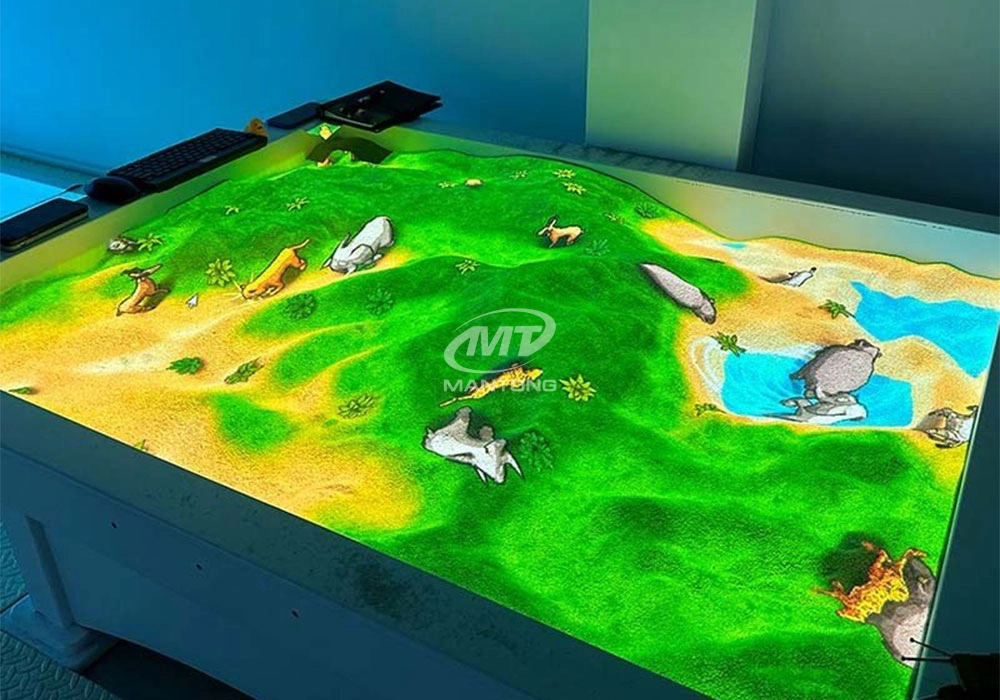
Interactive Sandbox Projection Mapping Games For Kids Play Park
Bring imagination to life with interactive sandbox projection mapping games designed for kids’ play parks. Using cutting-edge projection technology and real-time motion sensing, children can dig, build, and explore virtual worlds directly in the sand. Educational, engaging, and endlessly fun — it’s the perfect blend of play and learning.
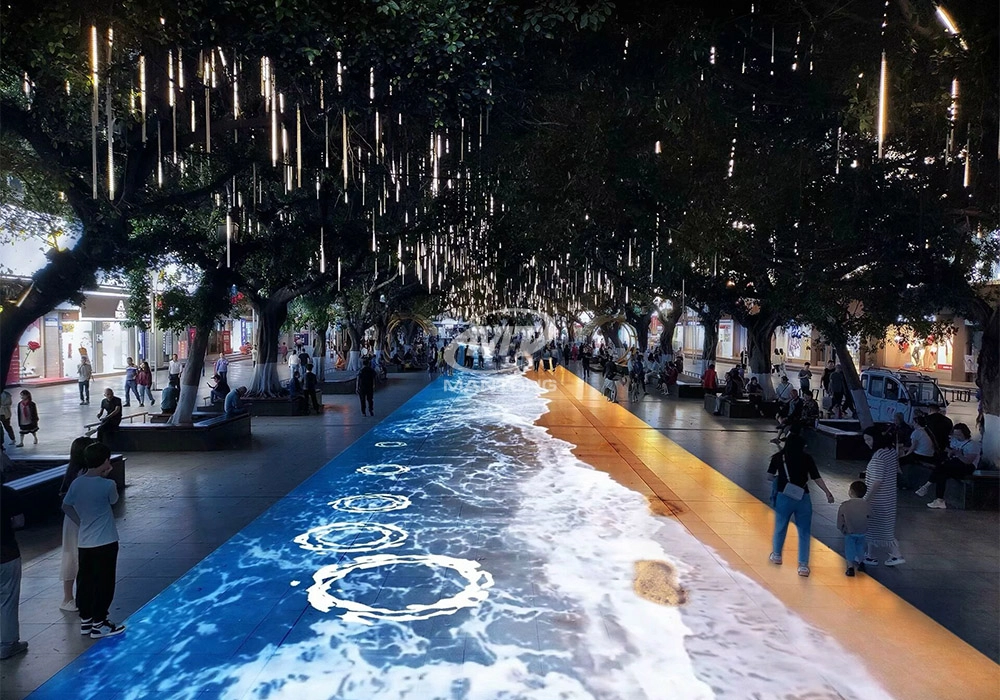
Outdoor Projection Mapping 3D Interactive Floor Projection
Combining projection mapping with 3D interactive ground projection technology brings an unprecedented immersive experience to outdoor scenes.
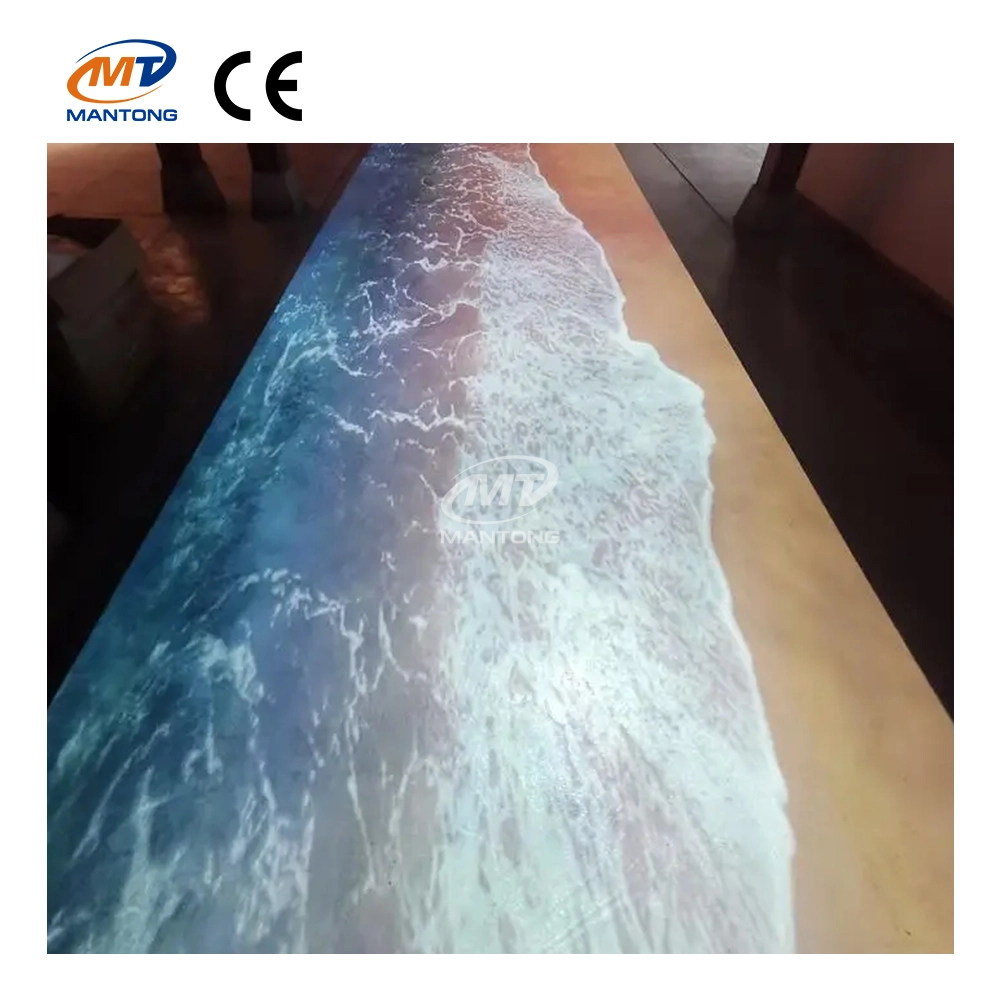
Indoor Interactive Floor Projector System - Customized Design & Installation Support
Indoor interactive floor projections display dynamic themed videos on the floor, commonly used in venues aiming to enhance brand influence or attract foot traffic, such as restaurants, hotel corridors, and brand car retail stores.
By using projectors and compatible software, the interactive content is projected onto the floor, encouraging engagement between people and the projected visuals. A single 5500-lumen indoor floor projector can cover an area of 5 m × 3 m. Typically, each project will use at least 3 units to ensure broad coverage and optimal visual effects.
We also offer customized design and installation support to enhance the interactive experience for your venue.
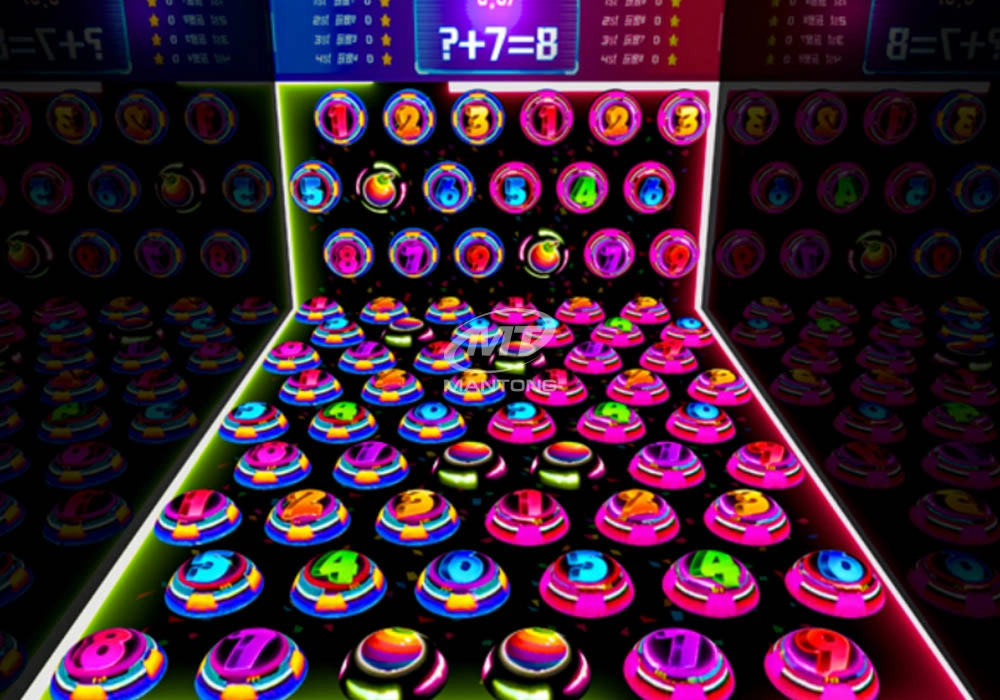
Amusement Rapidly Rotating Bouncing Sphere Interactive Wall Floor Projection Sports Games
Rapidly Rotating Bouncing Sphere is an interactive space where participants jump on rotating spheres. As they step on it, the spheres surface will show special interactivity
Jumping on spheres of the same color in succession causes them to pop, releasing light particles. The more consecutive jumps, the greater the reward—caterpillars appear, and eventually, all spheres of that color burst, filling the space with light and even more caterpillars.

Kaida Business Center, Shixin Road, Panyu District,Guangzhou City, Guangdong Province, China.
ManTong
ManTong
ManTong