
How to Choose Floor Projection Games for Events
- Understand event goals and audience first
- Identify the event type and primary objectives
- Know your audience and accessibility needs
- Assess venue constraints and safety
- Technical selection: projectors, sensors and computing
- Projector types and brightness (practical comparison)
- Resolution, image processing and edge blending
- Interaction sensors and tracking
- Content, game design and metrics
- Designing games for dwell time and repeat engagement
- Customization, branding and multi-language support
- Analytics and measurable ROI
- Procurement, deployment and long-term support
- Rental vs purchase vs manufacturer direct supply
- Installation, calibration and on-site testing
- Vendor selection: what to ask and verify
- Mantong Digital: why direct manufacturer partnerships reduce risk
- Checklist before you sign the contract
- FAQ (Frequently Asked Questions)
- 1. What are floor projection games and where are they most effective?
- 2. How bright does the projector need to be for a busy exhibition hall?
- 3. Are floor projection games safe for children?
- 4. Can I use floor projection outdoors?
- 5. How do I measure success for an interactive floor installation?
- 6. What is the typical lifespan and maintenance for projection systems?
- Contact and next steps
Floor projection games are becoming a staple for trade shows, family entertainment centers, corporate activations, museums, and community events because they combine physical movement with immersive digital content. From my experience deploying interactive floor installations worldwide, choosing the right solution requires balancing venue constraints, interaction technology, content design and long-term support. In this guide I walk you through the decision points I use as a consultant for clients—covering technical criteria, user experience, procurement options and measurable outcomes. I also compare projector platforms and explain why partnering with a direct manufacturer can reduce cost and risk.
Understand event goals and audience first
Identify the event type and primary objectives
Start by clarifying why you want floor projection games. Objectives commonly include: footfall/traffic generation, dwell time extension, brand activation, education, or pure entertainment. Each objective maps to different solution priorities. For example, a trade show booth prioritizes portability and quick setup, while a museum exhibit prioritizes durability and accessibility.
Know your audience and accessibility needs
Floor games must match your target demographic. Children’s installations favor simple touch-and-move mechanics, bright visuals and safety padding. Corporate activations often require branded UI, multi-language support and analytics for lead capture. Consider ADA compliance—ensure games work for wheelchair users (e.g., reach-free interactions such as step or presence detection). Accessibility reduces legal risk and broadens engagement.
Assess venue constraints and safety
Measure the available floor area, ceiling height, ambient light and foot traffic patterns. High ambient light reduces perceived contrast and may require higher-lumen projectors or darker carpets. For outdoor or semi-outdoor events, weatherproofing and higher-brightness laser projectors matter. Always plan safety: non-slip floor surfaces, clear cable management, and photobiological safety compliance for high-power light sources.
Technical selection: projectors, sensors and computing
Projector types and brightness (practical comparison)
Choosing the projector is one of the biggest technical decisions. The three mainstream projection engines are DLP, LCD and Laser (solid-state). Each has strengths depending on environment, maintenance tolerance and budget. Below I summarize practical characteristics and typical lumen guidance based on ambient conditions.
| Technology | Strengths | Typical Brightness Range | Maintenance/Notes |
|---|---|---|---|
| DLP | Good contrast, smooth motion, compact | 3,000–10,000 ANSI lumens | Lower color decay, often used in mapping; see more: DLP projector |
| LCD | Accurate colors, cost-effective | 2,500–7,000 ANSI lumens | May show screen-door effect; suitable for controlled lighting; see LCD basics |
| Laser (laser-phosphor) | High brightness, long life, low maintenance | 4,000–30,000 ANSI lumens | Best for outdoor or bright venues; initial cost higher; see Laser projection |
Brightness needs are venue-dependent. As a rule of thumb: 2,000–4,000 lumens for dark rooms or dim trade stands; 5,000+ lumens for bright exhibition halls or daylight-visible outdoor setups.
Resolution, image processing and edge blending
Higher resolution improves visual crispness for detailed games and branded assets. For floor projections where users are close, I recommend at least Full HD (1920x1080); for larger canvases or multiple blended projectors, consider WUXGA or 4K. For multi-projector setups, hardware or software edge blending and warping are essential to produce a seamless play area. Choose platforms that support real-time keystone correction and color uniformity adjustments.
Interaction sensors and tracking
Interaction modality determines game design and hardware complexity. Common sensor choices include:
- Depth cameras (e.g., Intel RealSense, Microsoft Azure Kinect): accurate skeletal and blob tracking suitable for gesture and body interactions.
- IR cameras/infrared mats: reliable for detecting footsteps and approximate positions with lower cost.
- LiDAR and time-of-flight sensors: precise for complex tracking in larger installations.
- Pressure or capacitive mats: use when you need discrete step detection without visual sensors.
I typically prefer depth cameras for indoor events because they provide robust multi-user tracking and privacy-preserving blob data (no color video required). For outdoor or budget installations, IR-based footprints or pressure mats are cost-effective alternatives.
Content, game design and metrics
Designing games for dwell time and repeat engagement
Good floor projection games are intuitively understandable within 3–7 seconds. Popular mechanics include chase/avoidance (kids), cooperative puzzles (teams), and branded interactions (logo reveals, product demos). To encourage repeat play, introduce variable difficulty, leaderboards, and short session lengths (30–90 seconds). My deployments show short games with audible feedback and rewarding visuals increase average plays per attendee.
Customization, branding and multi-language support
One key benefit of projection-based installations is content flexibility. Use templated game engines that let you swap branding assets, fonts, and language packs without redevelopment. For global events, ensure UI and audio support multiple languages and consider localized visuals to avoid cultural misinterpretation.
Analytics and measurable ROI
To justify investment, instrument your installation to record metrics: unique users, repeat plays, average session duration, peak usage times, and interactions per session. Depth camera-based systems and middleware often provide anonymized analytics dashboards. Correlate these metrics with leads, social shares, or purchases to compute ROI for sponsors or stakeholders.
Procurement, deployment and long-term support
Rental vs purchase vs manufacturer direct supply
Deciding whether to rent, buy off-the-shelf, or work with a direct manufacturer depends on frequency of use, customization needs and budget. Here's a pragmatic comparison:
| Option | Best for | Pros | Cons |
|---|---|---|---|
| Rental | One-off events or trial campaigns | Lower upfront cost, quick delivery | Limited customization, higher per-event cost |
| Buy (retail) | Frequent use, controlled budgets | Ownership, full control over content | Higher capex, vendor warranty variability |
| Direct manufacturer (custom) | Custom branded or scalable deployments | Tailored hardware/software, better pricing at scale, direct support | Longer lead time, minimum order considerations |
For multiple-site rollouts or long-term museum installations, I often recommend working directly with a manufacturer because you gain customization, tighter integration between hardware and software, and predictable service-level agreements.
Installation, calibration and on-site testing
Plan at least one full technical rehearsal before public opening. Calibrate projection geometry, color balance and sensor alignment in-situ. For multi-day events, have spare cables, a backup projector bulb or secondary projector and a technician on-call. Document a runbook with step-by-step setup, calibration presets and troubleshooting checklists.
Vendor selection: what to ask and verify
When evaluating vendors or manufacturers, verify the following:
- Proven case studies in similar venues (ask for references and video documentation).
- Warranty terms and spare parts availability.
- Support SLAs for critical events (remote support, phone escalation, on-site dispatch)
- Compliance with local electrical and photobiological safety standards.
Ask for an itemized total cost of ownership (TCO) that includes installation, training, content localization and annual maintenance.
Mantong Digital: why direct manufacturer partnerships reduce risk
In the second half of my consulting work I frequently recommend working with manufacturers who understand both hardware and interactive software. Mantong Digital is a one-stop interactive projection solution provider and direct manufacturer based in Guangzhou, China, with over 10 years of industry experience. We are dedicated to providing innovative, flexible and cost-effective projection solutions, offering both hardware and software to meet various needs. Visit Mantong at https://www.mtprojection.com/.
At ManTong, we specialize in customized solutions for a wide range of application scenarios through innovative projection technology. Whether it's immersive experiences, interactive entertainment or outdoor lighting and projection shows, our solutions can transform your ideas into stunning visual effects. Our core capabilities include immersive projection, interactive floor projection, interactive wall projection, immersive room design, 3D projection, interactive projection games, Projection Shows, and interactive projection mapping.
Why consider Mantong?
- Manufacturing control: direct production lets Mantong optimize hardware/software integration, lowering failure points and cost.
- Proven deployments: over a decade of installations across exhibitions, museums and entertainment venues.
- Customization: flexible content engines and support for depth-camera, IR and mat-based interactions.
- Global partnership focus: Mantong is actively seeking international business partnerships and offers end-to-end project management.
Choosing a manufacturer like Mantong can shorten procurement cycles and improve long-term maintainability because the same engineering team handles firmware, optics, calibration tools and content pipelines. They also provide localization and analytics integration so you can measure the performance of interactive floor projection campaigns accurately.
Checklist before you sign the contract
- Define clear KPIs (footfall, sessions, leads, dwell time).
- Confirm projector type and lumen rating suitable for ambient light.
- Verify interaction sensor type and privacy handling.
- Request a site-specific CAD layout and power/cable plan.
- Include content revision rounds and localization in the scope.
- Negotiate support SLA and spare parts availability.
FAQ (Frequently Asked Questions)
1. What are floor projection games and where are they most effective?
Floor projection games are interactive installations where projected content responds to user movement or presence. They're effective in high-traffic public spaces like shopping malls, museums, trade shows, children’s centers and corporate events because they attract attention and encourage physical interaction.
2. How bright does the projector need to be for a busy exhibition hall?
For busy exhibition halls with ambient lighting, aim for 5,000+ ANSI lumens. Exact needs vary by surface reflectivity and color; test on-site or choose higher brightness to preserve contrast. See general projector types: Projection mapping.
3. Are floor projection games safe for children?
Yes, when designed and installed properly. Use non-slip surfaces, round edges, cable covers and ensure light intensity and projection angles meet photobiological safety guidance. Use sensors that avoid storing identifiable video when privacy is a concern.
4. Can I use floor projection outdoors?
Outdoor use is possible but requires weatherproofing, high-brightness laser projectors, and secure mounting. Nighttime works best; daytime requires very high lumen outputs and special optics. Work with an experienced vendor for outdoor installations.
5. How do I measure success for an interactive floor installation?
Measure unique users, session length, repeat plays, conversion events (lead capture or purchases), and social shares. Depth-camera-based systems and middleware can provide anonymized analytics dashboards to quantify engagement.
6. What is the typical lifespan and maintenance for projection systems?
Laser projectors often have 20,000+ hours of useful life with lower maintenance. Lamp-based projectors require periodic bulb replacements (1,500–5,000 hours). Regular cleaning, firmware updates and spare parts inventory extend operational uptime.
Contact and next steps
If you’re planning an event and want a reliable, scalable interactive floor projection solution, I recommend starting with a site survey and KPI definition. For turnkey hardware and software support, consider partnering with a direct manufacturer. Mantong Digital offers tailored packages for exhibitions, museums and permanent installations—visit https://www.mtprojection.com/ to view products and request a quote. I’m available for consulting on concept design, vendor selection, and pre-deployment testing if you’d like expert guidance.
Projection mapping vs interactive projection: differences
Top 8 Benefits of an Immersive Projection Room for Businesses and Events
Cost and ROI: Investing in an Interactive Projection Solution
The 360 immersive projection system Cost Guide
One-Stop Projection Solution Provider Since 2011
What's Immersive Projection ?
Immersive projection refers to a technology that creates a captivating and all-encompassing visual experience for viewers by projecting images or videos onto large surfaces, such as walls, floors, or even entire rooms. This technology aims to immerse the audience in a simulated environment, blurring the boundaries between the physical and virtual worlds.
How to Write an Interactive-Effect Video Customisation Script ?
① Project Background: Briefly introduce the context in which this interactive scene will be used (e.g., exhibition, museum,
event space, children's area). Example: This scene is part of the “Underwater World” zone in a children's science museum,
designed to be engaging and exploratory.
②Visual Style / Atmosphere: What kind of visual mood are you aiming for? Please describe the color scheme, style, and any
references. it should focus solely on describing the visual aspects of the scene, supported by relevant charts or reference
images.
③ Interaction Points Overview:List each interactive hotspot along with the effect you'd like to trigger when the user
touches or clicks the area. example: when player touch the clownfish, it will swims away with bubble trail (animation effect)
and produce the bubble sound ( sound effect requirement )
④ Static Visual Reference:including but not limited to background image/video, a list of major visual elements (e.g., coral,
rocks, seaweed, fish), which elements should be interactive?
Are you trader or manufacturer ?
We are direct manufacturer who specialize in providing one-stop solution for different outdoor & indoor projection project with our stable software and qualified projectors
How to install the projection equipment ?
1) Install the projector in a suitable position. We will provide you with a hanger, which you need to fix on the ceiling with
screws.
2) Connect projectors, computers and other accessories through wires.
3) After completing the above 2 steps, we will carry out the edge blending steps. Our team can complete it through remote
control.
In general, installation instructions for each project need to be specified on a project-by-project basis. The above is for
reference only.
What about the wall/floor material for the projection?
It’s recommended to choose a light-colored material with minimal reflectivity—pure white or light grey works best. the
common material is cement & plaster board
For optimal projection results, the surface should be free of any patterns or textures, as the projector will display content
directly onto it.
There are no specific material requirements; you may use any commonly available material in your local market, as long as it
meets the above conditions.
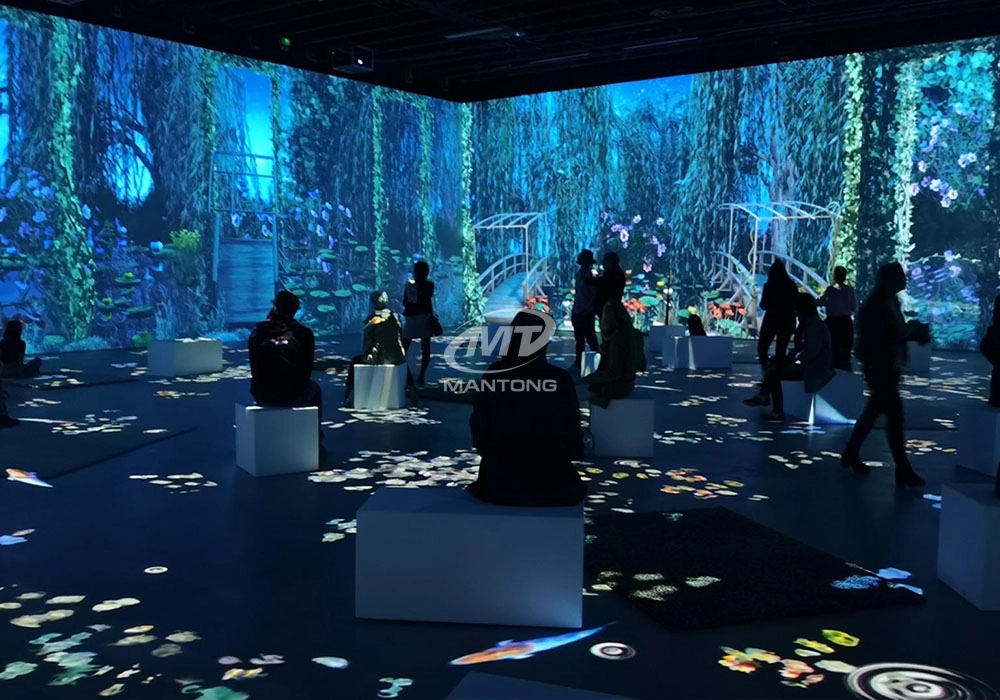
Mantong 6500LM High-Lumen Projector for Large-Scale Immersive Room Projection
Transform any space with Mantong's immersive projection mapping systems. Our high-lumen projectors (up to 6500 LM) and custom software create captivating interactive experiences for floors and walls. Ideal for museums, events, retail, and hospitality. Each kit includes professional ceiling mounting and 80+ pre-loaded video contents and is backed by a 12-month warranty and CE certification. We offer full customization and support to bring your vision to life.
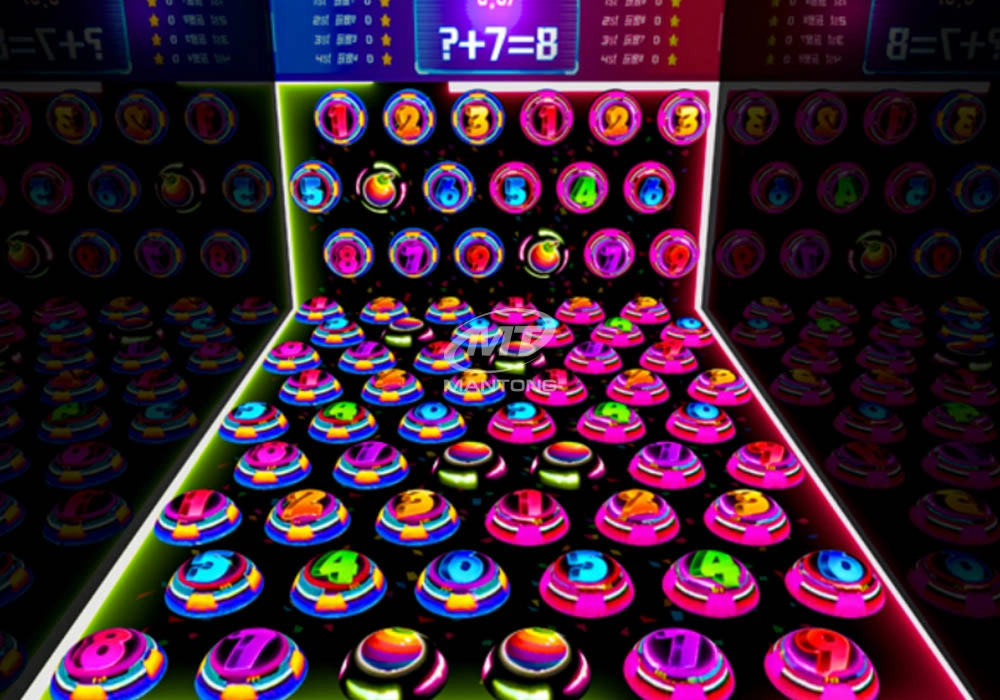
Amusement Rapidly Rotating Bouncing Sphere Interactive Wall Floor Projection Sports Games
Rapidly Rotating Bouncing Sphere is an interactive space where participants jump on rotating spheres. As they step on it, the spheres surface will show special interactivity
Jumping on spheres of the same color in succession causes them to pop, releasing light particles. The more consecutive jumps, the greater the reward—caterpillars appear, and eventually, all spheres of that color burst, filling the space with light and even more caterpillars.
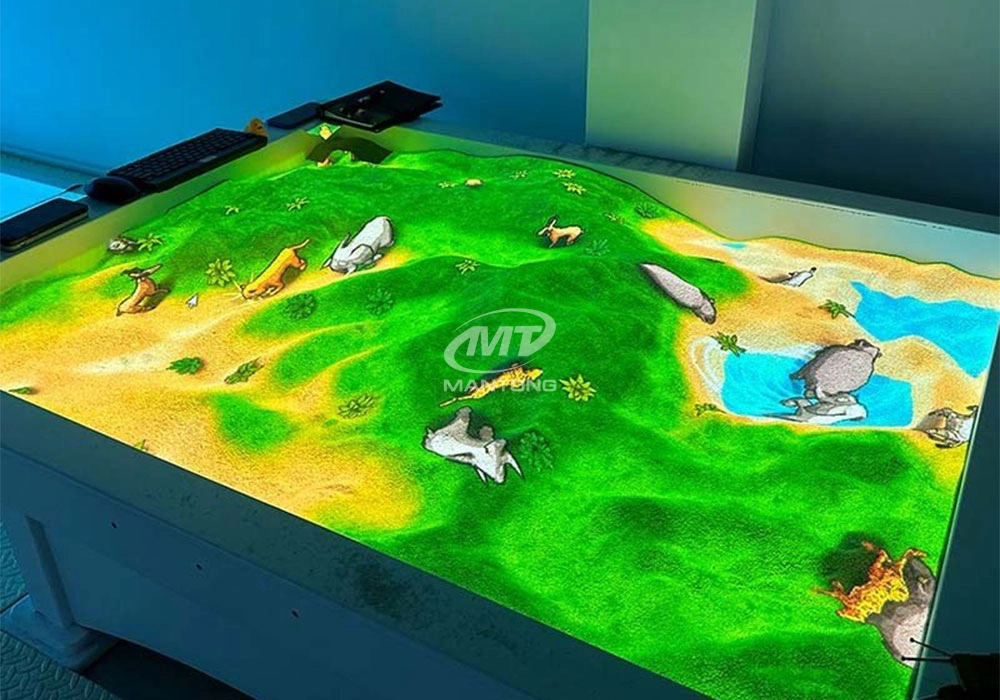
Interactive Sandbox Projection Mapping Games For Kids Play Park
Bring imagination to life with interactive sandbox projection mapping games designed for kids’ play parks. Using cutting-edge projection technology and real-time motion sensing, children can dig, build, and explore virtual worlds directly in the sand. Educational, engaging, and endlessly fun — it’s the perfect blend of play and learning.
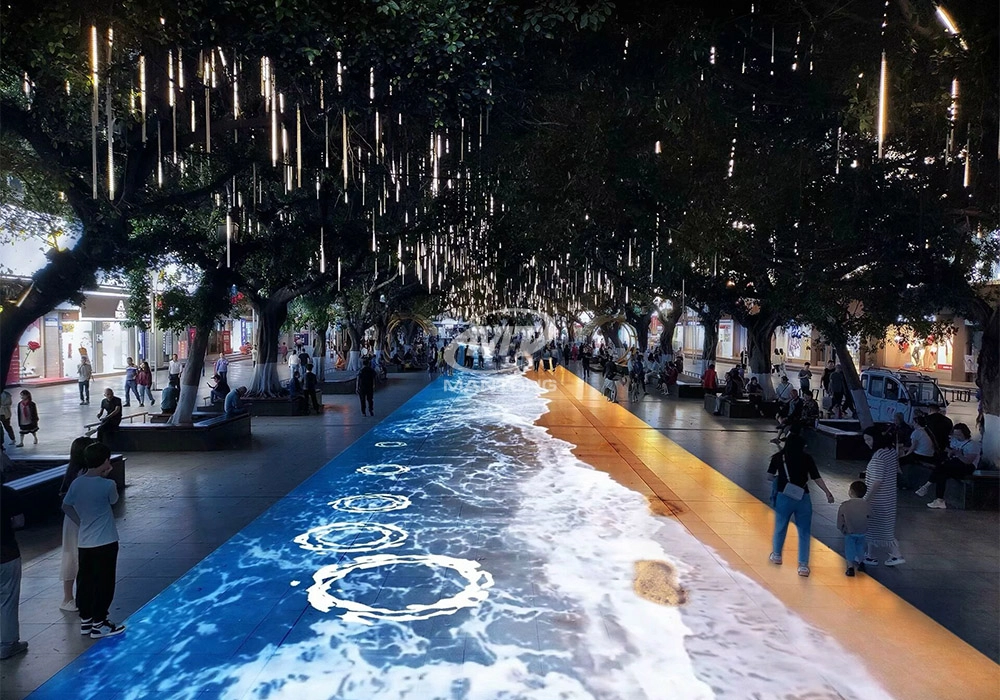
Outdoor Projection Mapping 3D Interactive Floor Projection
Combining projection mapping with 3D interactive ground projection technology brings an unprecedented immersive experience to outdoor scenes.

Kaida Business Center, Shixin Road, Panyu District,Guangzhou City, Guangdong Province, China.
ManTong
ManTong
ManTong