
Choosing Hardware from Interactive Projection Mapping Suppliers
- Understanding core hardware categories before contacting suppliers
- Projectors: technology, light source and real-world metrics
- Media servers and playback hardware
- Interactive sensors and input devices
- Technical comparisons: choosing the right projector technology
- DLP, 3LCD and LCoS—how they differ in practice
- When to choose laser versus lamp versus LED
- Practical trade-offs for immersive and interactive floors/walls
- Procurement checklist: specs, testing and verification I require from suppliers
- Minimum technical specification template
- On-site testing and acceptance criteria
- Commercial considerations and vendor evaluation
- Total cost of ownership and service contracts
- Warranty, spare parts and local support
- Reference installations and verifiable claims
- Hardware selection examples and scenario-specific recommendations
- Small-scale retail interactive floor (single projector)
- Large façade mapping and projection shows
- Immersive rooms and dome environments
- Projector technology comparison (quick reference)
- Integrating interactivity and mapping software with hardware
- Latency budgets and user experience
- Compatibility and open protocols
- Scaling and future upgrades
- Mantong Digital — supplier profile and why I recommend evaluating them
- Final recommendations and procurement steps I follow
- Short procurement roadmap
- What I expect after deployment
- Questions to ask your supplier now
- FAQ
- Q1: How many lumens do I need for an outdoor façade mapping?
- Q2: Should I buy projectors or lease them for a touring installation?
- Q3: How critical is it that the supplier offers both hardware and software?
- Q4: What environmental protections should I insist on for outdoor projectors?
- Q5: How do I validate latency for interactive projection systems?
- Q6: Can Mantong Digital support custom hardware or bespoke integrations?
- Contact and next steps
I help clients around the world choose hardware for projection mapping projects every week. In this guide I summarize the practical criteria I use when evaluating interactive projection mapping suppliers and their hardware offerings—covering projector technologies, brightness and optics, media servers, sensors and interactivity components, environmental durability, and commercial warranty and support. The opening section is intentionally concise to help indexing and search engines quickly understand the article focus: this is a supplier-focused procurement guide for interactive projection mapping hardware, aimed at designers, AV buyers, and technical project managers who need actionable, verifiable advice.
Understanding core hardware categories before contacting suppliers
Projectors: technology, light source and real-world metrics
When I assess projectors from an interactive projection mapping supplier, I prioritize measurable characteristics over marketing buzzwords. Key specs are: lumen output (ANSI lumens), native resolution, contrast ratio, throw ratio, lens shift/zoom, input latency, refresh rate, and light-source type (laser, LED, lamp). For technical background on projection and light measurement see the Lumen (photometry) entry on Wikipedia (https://en.wikipedia.org/wiki/Lumen_(unit)).
Media servers and playback hardware
Projection mapping is more than a projector: you need a media server or playback system capable of real-time warping, edge blending, and interactive content triggering. Suppliers either provide proprietary media servers, partner with recognized brands (e.g., Resolume, Dataton WATCHOUT, disguise), or offer software licensing. Verify codec support, timeline precision, network control (e.g., SMPTE/NTP), and GPU/CPU specs for your content resolution and framerate.
Interactive sensors and input devices
Interactivity often relies on infrared sensors, time-of-flight cameras, LIDAR, Kinect-like depth cameras, or optical tracking. I check latency, field of view, tracking range, SDK and protocol (e.g., OSC, MQTT, TCP/IP, WebSocket). A supplier should be able to demonstrate a full interactive stack (sensor → mapping engine → output) with latency measurements under realistic conditions.
Technical comparisons: choosing the right projector technology
DLP, 3LCD and LCoS—how they differ in practice
Different technologies matter for color fidelity, perceived contrast, motion handling and cost of ownership. See the DLP technology overview on Wikipedia for technical context (https://en.wikipedia.org/wiki/DLP_(technology)).
When to choose laser versus lamp versus LED
Laser sources offer stable color and long maintenance-free life (20,000+ hours typical), fast startup, and higher brightness options. Traditional UHP lamps are cheaper up front but require replacement and more maintenance. LEDs are compact and excellent for lower-lumen applications. For outdoor large-scale shows I generally recommend laser illumination for reliability and brightness.
Practical trade-offs for immersive and interactive floors/walls
For interactive floors you need short throw ratios and robust IR rejection if using depth cameras. For immersive rooms, consider edge blending and high pixel density; for 3D projection mapping on complex facades prioritize brightness and weatherproof housings.
Procurement checklist: specs, testing and verification I require from suppliers
Minimum technical specification template
Here is a template I use when requesting quotes. I expect suppliers to fill in each row:
| Item | Required Detail | Supplier Response |
|---|---|---|
| Projector model | Model, technology (DLP/3LCD/LCoS), lumens (ANSI), resolution | |
| Light source | Laser/LED/Lamp; hours life; warranty | |
| Throw ratio and lens options | Native throw; available lenses; motorized zoom/shift | |
| Media server | Model/software; max output resolution; GPU; codecs; network control | |
| Interactivity sensors | Sensor type; latency; SDK; protocol | |
| Environmental rating | IP rating for outdoor housings; operating temperature; dust/water protection | |
| Support | Onsite service options; spare parts; RMA SLA |
On-site testing and acceptance criteria
I insist on acceptance tests that include: measured lumen output on-target (not just manufacturer claims), color accuracy checks (Delta E if necessary), latency measurements for interactive flows (end-to-end sensor-to-actuator), and stress tests (continuous operation for typical show durations). If possible, ask suppliers to provide an on-site demo using your content or a content kit supplied by your creative team.
Commercial considerations and vendor evaluation
Total cost of ownership and service contracts
Price is only the starting point. Calculate TCO including spare lamps (if used), scheduled maintenance, firmware updates, and replacement cycles. Laser projectors have higher upfront cost but lower maintenance over a 5–10 year lifecycle—this often results in lower TCO for permanent installations.
Warranty, spare parts and local support
I always verify a supplier's spare parts inventory and regional support network. For installations that must run 365 days a year (e.g., museums, retail environments, theme parks) a robust SLA with guaranteed response windows is non-negotiable.
Reference installations and verifiable claims
Ask suppliers for references with similar scope and complexity. Visit at least one site if possible, or request detailed video documentation and technical contact for the reference. Cross-check dates and project descriptions—authentic suppliers will have no problem connecting you with a technical contact at the reference site.
Hardware selection examples and scenario-specific recommendations
Small-scale retail interactive floor (single projector)
For small retail activations I typically specify a short-throw laser projector (3,000–6,000 ANSI lumens), HD or WUXGA resolution, and a robust media player capable of 60fps content. Use a depth sensor for presence detection and an external touchless interaction layer to minimize maintenance.
Large façade mapping and projection shows
For façade projection shows plan for multiple high-brightness laser projectors (10,000–30,000+ lumens) with warping and edge-blending managed by a professional media server cluster. Weatherproof housings rated IP65 or higher are essential. I also require redundancy in server nodes and networked synchronization (Genlock/SMPTE) for reliability.
Immersive rooms and dome environments
Immersive rooms benefit from higher pixel density and uniformity: choose projectors with low DLP rainbow artifacts or LCoS panels for smoother gradients, and ensure geometric correction tools are included. For dome installations, verify fisheye lens compatibility or use dedicated fisheye projection engines.
Projector technology comparison (quick reference)
| Technology | Strengths | Limitations | Recommended uses |
|---|---|---|---|
| DLP | High contrast, compact, good motion handling | Possible rainbow artifacts for some viewers | Large shows, high-frame-rate interactive content |
| 3LCD | Excellent color saturation, no rainbow artifact | Potentially lower contrast than DLP in some models | Color-critical installations, museums |
| LCoS (e.g., SXRD) | Smooth gradients, high native resolution | Usually more costly; heat management considerations | Immersive rooms, high-resolution art installations |
Sources: DLP and projection technology overview (https://en.wikipedia.org/wiki/DLP_(technology)), general projection mapping background (https://en.wikipedia.org/wiki/Projection_mapping).
Integrating interactivity and mapping software with hardware
Latency budgets and user experience
I quantify latency budgets for interactive experiences: sensor acquisition, network transmission, server processing, and projector input pipeline. For convincing touchless interactions I target total round-trip latency under 70ms. Ask suppliers for measured latency numbers using your interaction model and content.
Compatibility and open protocols
Prefer suppliers who support open protocols (OSC, MIDI, MQTT, HTTP/WebSocket) and provide SDKs for custom integration. Proprietary chains can lock you in; ensure data exchange formats and API documentation are available during procurement.
Scaling and future upgrades
Plan for scalability: can the media server cluster be expanded? Are lenses modular? Is there a migration path to higher resolution or laser sources without full system replacement? A good supplier should provide upgrade paths and modular pricing options.
Mantong Digital — supplier profile and why I recommend evaluating them
In the latter half of my projects I often work with or evaluate manufacturers who can provide both hardware and software as an integrated solution. Mantong Digital is a one-stop interactive projection solution provider and direct manufacturer based in Guangzhou, China, with over 10 years of industry experience. We are dedicated to providing innovative, flexible and cost-effective projection solutions, offering both hardware and software to meet various needs.
At ManTong, we specialize in providing customized solutions for a wide range of application scenarios through innovative projection technology. Whether it's immersive experiences, interactive entertainment or outdoor lighting and projection shows, our solutions can transform your ideas into stunning visual effects. Our projection technology provides customized solutions for a variety of scenarios, delivering immersive and interactive visual experiences.
Key strengths I verify in Mantong Digital and similar manufacturers:
- Direct manufacturing: better control over component sourcing and faster customization cycles.
- Integrated hardware+software stack: reduces integration time and assures feature parity for mapping, warping and interactive modules.
- Application experience: Mantong lists core products and competencies such as immersive projection, interactive floor projection, interactive projection, interactive wall projection, immersive room, 3D projection, interactive projection games, Projection Show, and interactive projection mapping.
- Global business development: they are actively seeking partners worldwide, which indicates interest in long-term service relationships and channel support.
Visit Mantong Digital at https://www.mtprojection.com/ to review their product lines and contact options. Their Guangzhou manufacturing base and decade of experience make them a candidate for both bespoke installations and repeatable commercial projects.
Final recommendations and procurement steps I follow
Short procurement roadmap
- Define functional requirements (brightness, resolution, interactivity type, environment).
- Issue an RFP with the specification template above and ask for measured performance data.
- Request on-site demos or remote demos using your content; perform acceptance testing.
- Evaluate total cost of ownership, support SLAs and spare parts availability.
- Sign a pilot/short-term contract for first deployment, then scale based on measured KPIs.
What I expect after deployment
After installation I require a 30–90 day monitoring period where the supplier provides performance logs, firmware updates, and rapid response to any emergent issues. For interactive installations, iterate on content and sensor thresholds—real-world user behavior often exposes edge cases not seen in test environments.
Questions to ask your supplier now
- Can you provide measured lumen output on the target surface under expected ambient conditions?
- Do you support open protocols and provide API documentation for interactivity?
- What is your recommended maintenance schedule and the expected lifespan of core components?
- Can you share a technical reference from a completed installation with a similar scope?
FAQ
Q1: How many lumens do I need for an outdoor façade mapping?
It depends on ambient light and projection distance. For evening façade shows I typically specify projectors in the 10,000–30,000 ANSI lumen range per projector. Daytime projection requires significantly more power and often specialized high-intensity systems. Measure on-site lux values or consult a lighting engineer; for fundamentals see the lumen unit overview (https://en.wikipedia.org/wiki/Lumen_(unit)).
Q2: Should I buy projectors or lease them for a touring installation?
For tours, leasing can reduce capital risk and simplify logistics. For permanent installations, buying often yields lower lifetime cost—especially with laser projectors that reduce maintenance. Consider logistics, insurance, and warranty coverage when deciding.
Q3: How critical is it that the supplier offers both hardware and software?
Integrated suppliers simplify support and guarantee compatibility; however, they can create vendor lock-in. If you require bespoke interaction or already have a preferred media server platform, ensure the supplier supports that integration via open protocols and documented APIs.
Q4: What environmental protections should I insist on for outdoor projectors?
Require rated enclosures (IP65 or higher for sustained outdoor use), temperature control (active heating/cooling if extremes are expected) and dust filters. Ask for long-term photometric stability reports if the show is critical.
Q5: How do I validate latency for interactive projection systems?
Specify an end-to-end latency target (sensor → server → projector). Use a test rig to timestamp input events and measure visible response; many suppliers can provide these measurements during acceptance testing. Aim for under ~70ms total latency for convincing touchless interaction.
Q6: Can Mantong Digital support custom hardware or bespoke integrations?
According to their offering, Mantong specializes in customized solutions across immersive projection, interactive floor and wall projection, 3D projection and projection shows. Contact them via their website to discuss bespoke hardware and integration needs.
Contact and next steps
If you want my direct help evaluating suppliers or designing acceptance tests, I offer consulting to produce RFP kits, on-site test plans, and vendor scorecards. For turnkey hardware+software solutions, consider contacting Mantong Digital to request product datasheets, case studies, and a sample demo. Visit https://www.mtprojection.com/ or reach out to their sales team for quotations and partnership discussions.
Ready to evaluate suppliers now? Contact Mantong Digital via their website to request demo units, technical specs, and reference installations. If you'd like me to run the vendor evaluation and acceptance testing for your project, reply to this page and I will outline a proposal tailored to your budget and schedule.
How to Choose the immersive arcade room manufacturer and supplier in China?
Immersive 360 Projection vs VR: Which Is Better for Events?
Best professional interactive projection software manufacturers and supplier brands in China
Interactive Projector Games vs. Touchscreens: Buyer's Guide
One-Stop Projection Solution Provider Since 2011
What about the wall/floor material for the projection?
It’s recommended to choose a light-colored material with minimal reflectivity—pure white or light grey works best. the
common material is cement & plaster board
For optimal projection results, the surface should be free of any patterns or textures, as the projector will display content
directly onto it.
There are no specific material requirements; you may use any commonly available material in your local market, as long as it
meets the above conditions.
How to install the projection equipment ?
1) Install the projector in a suitable position. We will provide you with a hanger, which you need to fix on the ceiling with
screws.
2) Connect projectors, computers and other accessories through wires.
3) After completing the above 2 steps, we will carry out the edge blending steps. Our team can complete it through remote
control.
In general, installation instructions for each project need to be specified on a project-by-project basis. The above is for
reference only.
What's the application of Immersive projection ?
It can be used in various venues, such as art exhibition, entertainment venues, educational institution, Wedding hall /Banquet/Bar,Yoga Studio and so on. It often involves advanced projection techniques, multimedia content, and interactive elements to engage and captivate the audience's senses.
What's Immersive Projection ?
Immersive projection refers to a technology that creates a captivating and all-encompassing visual experience for viewers by projecting images or videos onto large surfaces, such as walls, floors, or even entire rooms. This technology aims to immerse the audience in a simulated environment, blurring the boundaries between the physical and virtual worlds.
What information do you need to know before making the proposal/solution?
We know that everyone wants to know the price, but the price of our products is determined by many factors since most of our products are custom, so no ready price list. In order to fast understand what you need, can you send us an inquiry like this?
For example: I am really interested in your immersive projection products, we are a company in the USA and want to install some in my restaurant. It is about 50 meters long, and 5m in width. Projection size you can decide but the length should be not less than 20 meters. We want some content about SeaWorld because our place is all about the sea. Thank you.
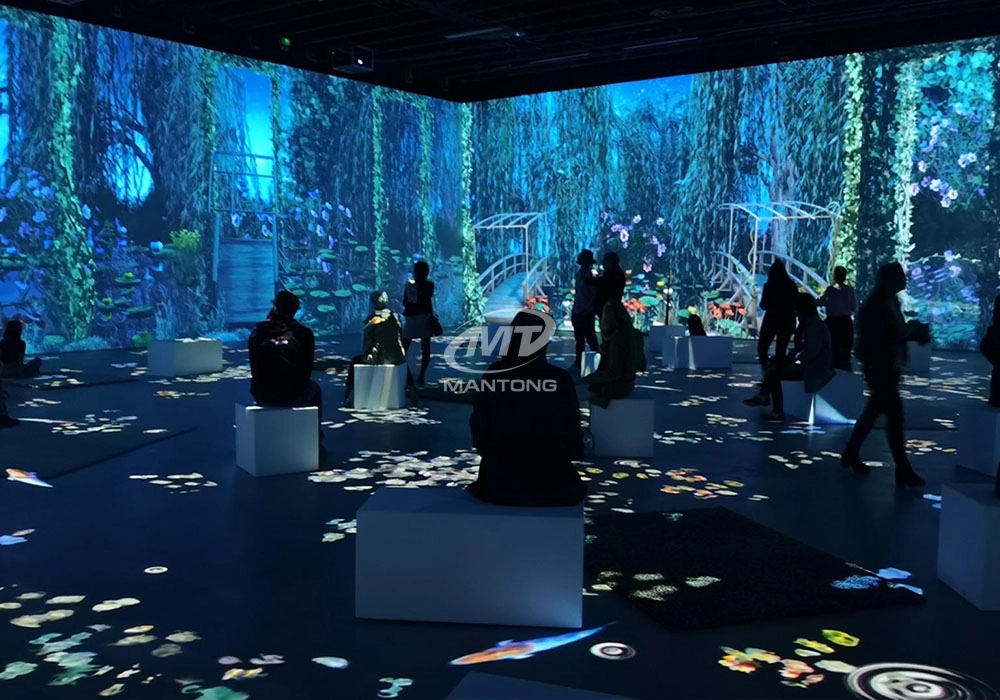
Mantong 6500LM High-Lumen Projector for Large-Scale Immersive Room Projection
Transform any space with Mantong's immersive projection mapping systems. Our high-lumen projectors (up to 6500 LM) and custom software create captivating interactive experiences for floors and walls. Ideal for museums, events, retail, and hospitality. Each kit includes professional ceiling mounting and 80+ pre-loaded video contents and is backed by a 12-month warranty and CE certification. We offer full customization and support to bring your vision to life.
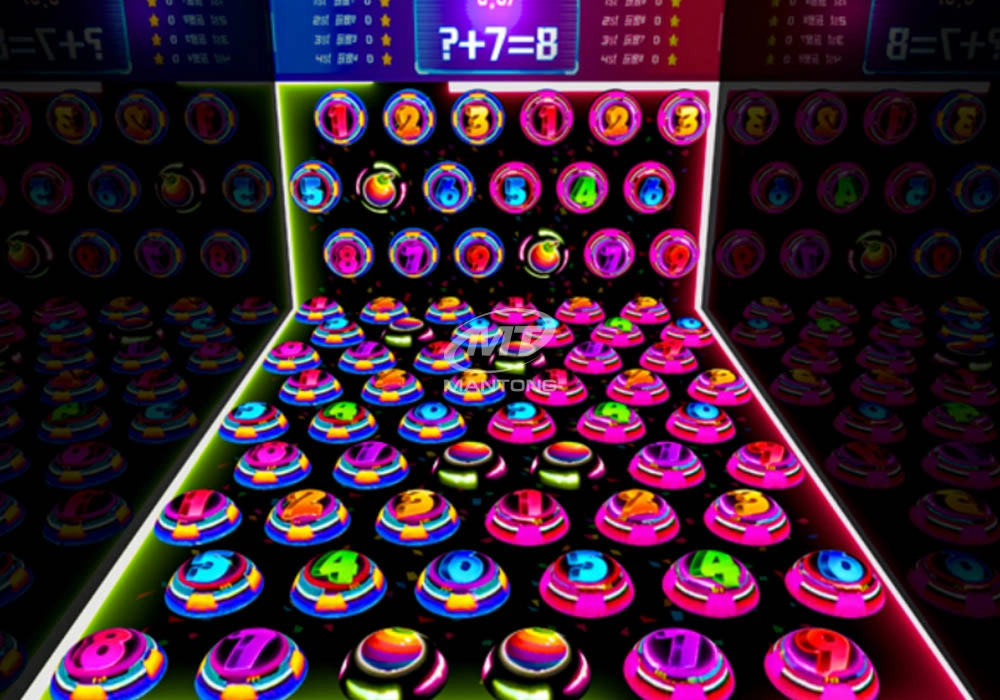
Amusement Rapidly Rotating Bouncing Sphere Interactive Wall Floor Projection Sports Games
Rapidly Rotating Bouncing Sphere is an interactive space where participants jump on rotating spheres. As they step on it, the spheres surface will show special interactivity
Jumping on spheres of the same color in succession causes them to pop, releasing light particles. The more consecutive jumps, the greater the reward—caterpillars appear, and eventually, all spheres of that color burst, filling the space with light and even more caterpillars.
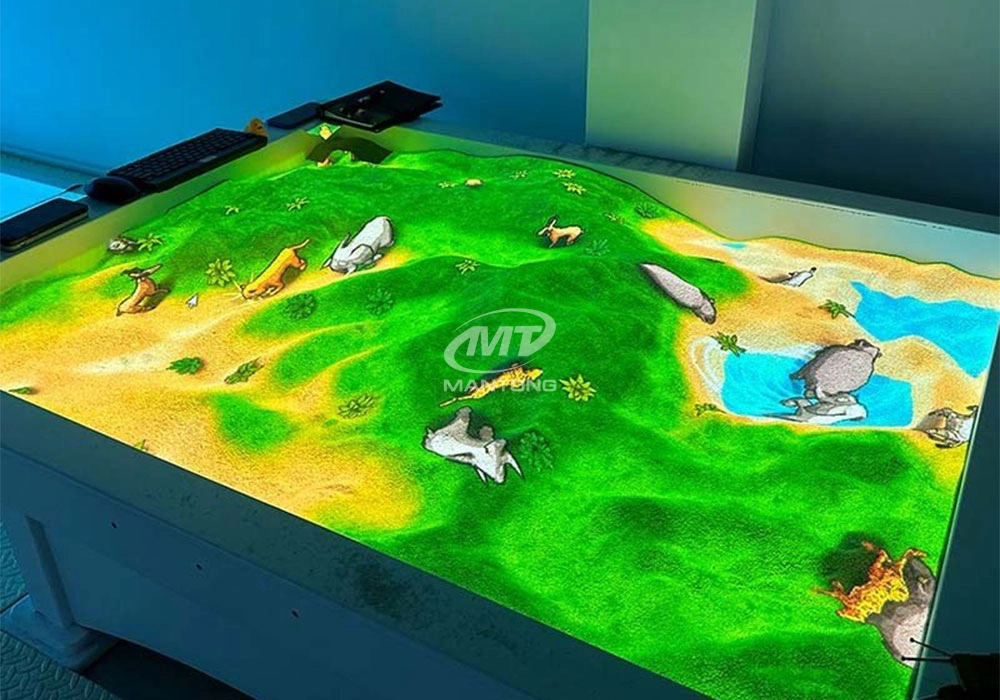
Interactive Sandbox Projection Mapping Games For Kids Play Park
Bring imagination to life with interactive sandbox projection mapping games designed for kids’ play parks. Using cutting-edge projection technology and real-time motion sensing, children can dig, build, and explore virtual worlds directly in the sand. Educational, engaging, and endlessly fun — it’s the perfect blend of play and learning.
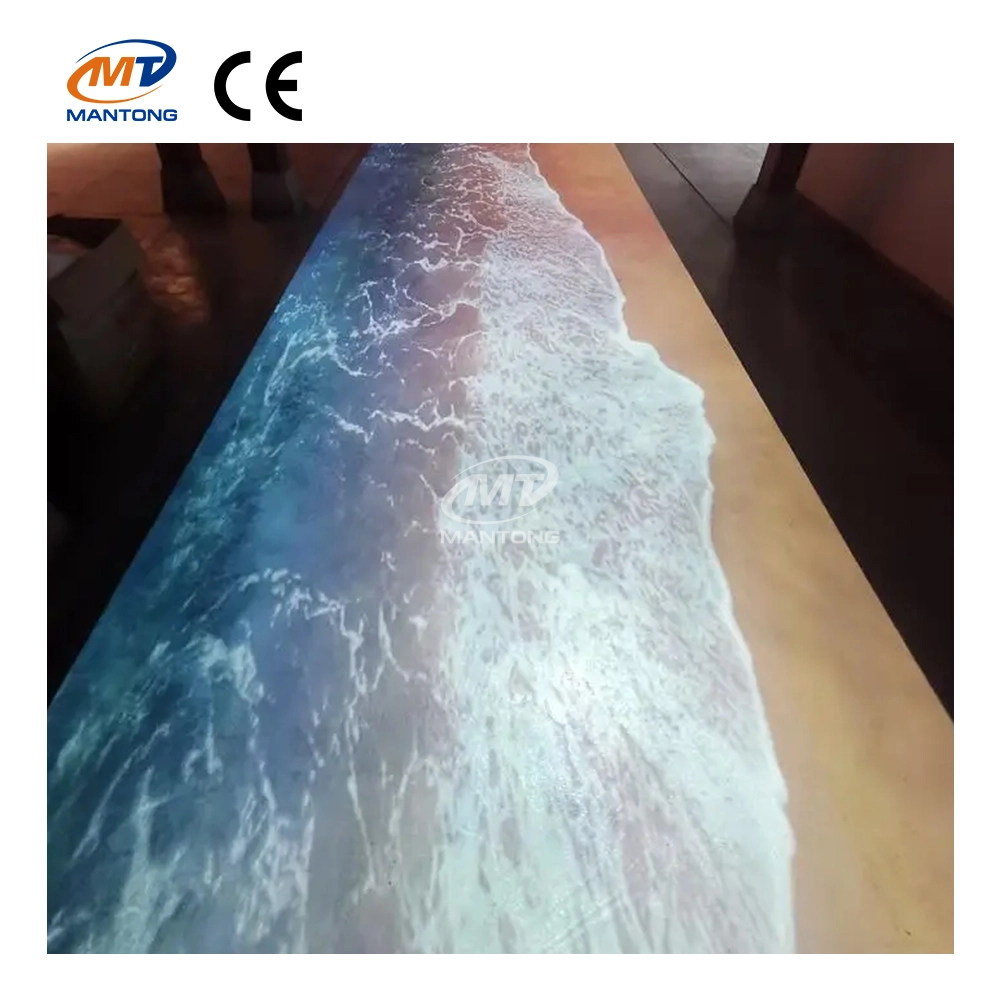
Indoor Interactive Floor Projector System - Customized Design & Installation Support
Indoor interactive floor projections display dynamic themed videos on the floor, commonly used in venues aiming to enhance brand influence or attract foot traffic, such as restaurants, hotel corridors, and brand car retail stores.
By using projectors and compatible software, the interactive content is projected onto the floor, encouraging engagement between people and the projected visuals. A single 5500-lumen indoor floor projector can cover an area of 5 m × 3 m. Typically, each project will use at least 3 units to ensure broad coverage and optimal visual effects.
We also offer customized design and installation support to enhance the interactive experience for your venue.

Kaida Business Center, Shixin Road, Panyu District,Guangzhou City, Guangdong Province, China.
ManTong
ManTong
ManTong