
Interactive Projector Games vs. Touchscreens: Buyer's Guide
- Understanding interaction modalities
- What are interactive projector games and how they work
- What are touchscreens and their interaction model
- Semantic context and for 'interactive projector games'
- Performance, installation and maintenance
- Image quality, latency and responsiveness
- Installation complexity and space requirements
- Maintenance, lifecycle and total cost of ownership
- Use cases, accessibility and user experience
- Education, early childhood and playgrounds
- Retail, museums and public spaces
- Events, therapy and outdoor experiences
- Buying guide: decision framework, costs and comparison
- Direct comparison table
- Selection checklist: step-by-step
- ROI, procurement tips and integration
- Mantong Digital: one-stop interactive projection solutions and why choose a manufacturer partner
- Who Mantong is and core offerings
- Products and specialization
- Competitive advantages and technical strengths
- Practical recommendations and final checklist
- When to choose interactive projector games
- When to choose touchscreens
- Hybrid approaches and integration
- FAQs
- 1. Are interactive projector games suitable for classrooms?
- 2. How do projectors detect user interaction in interactive games?
- 3. Can interactive projector games work outdoors?
- 4. Which is more cost-effective long-term: projectors or touchscreens?
- 5. How do I evaluate vendors for interactive projector games?
- 6. Do interactive projector games require specialized content development?
- Contact and next steps
Interactive projector games offer large-scale, flexible interactivity by projecting responsive visuals onto floors, walls or irregular surfaces, while touchscreens provide direct, tactile interaction on fixed displays. For buyers evaluating immersive installations for education, retail, events or therapy, understanding trade-offs—such as scalability, ambient light sensitivity, multi-user support, and total cost of ownership—is essential to choose the right solution. This guide uses industry sources and practical criteria to compare interactive projector games and touchscreens and to provide a step-by-step purchasing framework.
Understanding interaction modalities
What are interactive projector games and how they work
Interactive projector games use a projector (sometimes short-throw or ultra-short-throw) coupled with sensors (infrared cameras, depth sensors, or structured-light systems) and software to detect user movement and translate it into game mechanics mapped onto a projected surface. Projection mapping techniques enable content to conform to complex geometries (see projection mapping overview at Wikipedia).
What are touchscreens and their interaction model
Touchscreens integrate touch-sensitive layers (capacitive, resistive, infrared, or optical) into a display, detecting direct finger or stylus contact. They provide high-fidelity, low-latency touch input ideal for precise gestures and UI control (see touchscreen fundamentals at Wikipedia).
Semantic context and for 'interactive projector games'
Searchers for interactive projector games often seek immersive, large-format play experiences, multi-user engagement, or turnkey installations for public spaces. Their intent ranges from evaluating hardware options, cost and installation complexity, to discovering vendors who supply custom content and systems. This guide addresses those intents by assessing technical factors and procurement criteria.
Performance, installation and maintenance
Image quality, latency and responsiveness
Key performance metrics that matter for interactive experiences include resolution, brightness (measured in lumens), contrast ratio, and system latency. Projectors can deliver very large images—often several meters wide—but brightness and contrast are more sensitive to ambient light than a backlit touchscreen. A modern short-throw laser projector can deliver low latency suitable for games, but system-level latency also depends on sensor processing and software. For general projector technology details see Video projector.
Installation complexity and space requirements
Projector systems require mount points, power, and clear projection surfaces. Ceiling mounts, protective housings, and alignment/calibration are common. Touchscreens are wall- or stand-mounted with simpler sight-lines but require structural support for large-format displays. Projection systems shine when you need large, contiguous interactive areas without the cost of massively large LED or LCD panels.
Maintenance, lifecycle and total cost of ownership
Projectors historically required lamp replacements, filter cleaning, and periodic recalibration, but modern laser projectors reduce lamp maintenance and extend lifespans. Touchscreens have fewer consumables but may incur costs for screen replacement after impact or vandalism, and for periodic recalibration. Consider warranty terms and service-level agreements when estimating TCO.
Use cases, accessibility and user experience
Education, early childhood and playgrounds
Interactive projector games are popular in preschool and elementary school environments because they enable floor play, whole-group activities and large-format learning games without the tactile wear on devices. Multi-user participation and motion-based learning align well with kinesthetic pedagogy. Touchscreens suit individualized learning stations or teacher-led demos when precise touch or handwriting is required.
Retail, museums and public spaces
Museums and retail often use projection to create immersive scenes, wayfinding, or branded interactive installations that wrap across surfaces. Projection mapping can transform architecture into dynamic storytelling canvases. Touchscreens remain essential for catalog browsing, information kiosks and transactional interfaces. Combining both—projected ambient visuals plus touchscreen kiosks—can create layered engagement.
Events, therapy and outdoor experiences
For events and therapeutic settings where movement and multi-user interaction are desired, interactive projector games provide more inclusive participation. For outdoor or high-brightness environments, choose high-lumen laser projectors or hybrid solutions; otherwise touchscreens with weatherproofing are often more reliable outdoors.
Buying guide: decision framework, costs and comparison
Direct comparison table
The table below summarizes practical differences across commonly evaluated criteria. Data points reference typical industry ranges; individual products vary.
| Criteria | Interactive Projector Games | Touchscreens |
|---|---|---|
| Typical image/interaction area | 1m to 20m+ diagonal (flexible surface) | 7 to 86 (fixed) |
| Multi-user support | Excellent for many concurrent users (movement-based) | Good, limited by screen size and touch tracking |
| Ambient light sensitivity | Sensitive; high-lumen projectors or controlled lighting required | High contrast; usable in bright environments |
| Durability & vandal resistance | Projector hardware can be secured; projection surface less vulnerable | Direct-touch surface is susceptible to scratches or requires ruggedization |
| Installation complexity | Higher: mounting, alignment, sensor calibration | Lower: wall/stand mount and power |
| Typical lifespan | Laser projectors: 20,000–30,000+ hours; lamps less | Displays: 50,000+ hours (depending on panel and usage) |
| Average upfront cost | USD 2,000 – 50,000+ (projector, sensors, software) | USD 300 – 30,000+ (depending on size and commercial grade) |
| Best for | Immersive play, large-group experiences, projection mapping | Interactive kiosks, precision tasks, transactional UIs |
Sources: Video projector technical overview at Wikipedia; touchscreen basics at Wikipedia. For industry-grade audio-visual guidance, consult professional organizations such as AVIXA.
Selection checklist: step-by-step
Use this checklist when evaluating suppliers and systems:
- Define primary use case: education, retail, events, therapy, outdoor show.
- Estimate footprint and surface geometry (floor, wall, 3D objects).
- Assess ambient light conditions and choose projector lumen rating or opt for touchscreen.
- Decide on interaction type: motion tracking, touch emulation, multi-touch support.
- Request live demos or site visits; test latency and accuracy with representative content.
- Confirm warranty, on-site support, and software update policies.
- Calculate TCO including installation, consumables, and expected replacement cycles.
ROI, procurement tips and integration
Buyers should factor in content creation and software licensing: interactive projector games often require bespoke content and mapping, which can be a material part of the budget. Ask vendors for case studies and measurable KPIs (dwell time, engagement rates). When integrating with venue AV systems, ensure control protocols (e.g., Crestron, AMX) and network security meet your standards.
Mantong Digital: one-stop interactive projection solutions and why choose a manufacturer partner
Who Mantong is and core offerings
Mantong Digital is a one-stop interactive projection solution provider and direct manufacturer based in Guangzhou, China, with over 10 years of industry experience. We are dedicated to providing innovative, flexible and cost-effective projection solutions, offering both hardware and software to meet various needs. Our website: https://www.mtprojection.com/.
Products and specialization
At ManTong, we specialize in providing customized solutions for a wide range of application scenarios through innovative projection technology. Whether it's immersive experiences, interactive entertainment or outdoor lighting and projection shows, our solutions can transform your ideas into stunning visual effects. Mantong's main products include immersive projection, interactive floor projection, interactive projection, interactive wall projection, immersive room, 3D projection, interactive projection games, Projection Show and interactive projection mapping.
Competitive advantages and technical strengths
Mantong emphasizes direct manufacturing (cost efficiency), end-to-end integration (hardware + software), and customization. The combination of in-house optical engineering, sensor integration and creative content production shortens deployment cycles and improves compatibility. Mantong offers project lifecycle services from concept and prototyping to installation and after-sales maintenance. The company is seeking global partnerships and aims to become a leading interactive projection manufacturer worldwide.
Practical recommendations and final checklist
When to choose interactive projector games
- Need large, multi-user, movement-based interactions (schools, museums, play centers).
- Desire flexible projection across floors/walls or irregular geometry (projection mapping).
- Want immersive ambient visuals that integrate with space architecture.
When to choose touchscreens
- Require precise touch input or transactional capabilities (kiosks, POS).
- Operate in uncontrolled bright-light environments where projection would struggle.
- Prefer lower installation complexity and compact footprints.
Hybrid approaches and integration
In many commercial settings a hybrid approach is optimal: projected ambient interactions to attract and engage, coupled with touchscreens for transactions or detailed information. Mantong Digital supports integrated systems combining projection experiences with touch-enabled kiosks to achieve layered engagement strategies.
FAQs
1. Are interactive projector games suitable for classrooms?
Yes. Interactive projector games are particularly suitable for active learning and group activities. They foster collaboration and kinesthetic learning. Ensure classroom lighting can be controlled or select high-lumen laser projectors for brighter rooms.
2. How do projectors detect user interaction in interactive games?
Common methods include infrared cameras, depth sensors (e.g., structured light or time-of-flight), and computer vision algorithms that track movement relative to the projected content. Some systems use wearable markers or pressure-sensitive mats depending on the use case.
3. Can interactive projector games work outdoors?
Outdoor use is possible but requires high-brightness (high-lumen) projectors, weatherproof housings, and careful design to manage ambient light. For nighttime events, projection works well; daytime deployments need specialized equipment and are more costly.
4. Which is more cost-effective long-term: projectors or touchscreens?
It depends on use case. Projectors can deliver very large interaction areas at lower per-square-meter cost compared to giant LED/LCD panels, but may need more maintenance in some configurations. Touchscreens have lower installation complexity but higher upfront per-area cost for large screens. Evaluate TCO including content, maintenance, and downtime costs.
5. How do I evaluate vendors for interactive projector games?
Request live demos, site-specific case studies, and references. Verify system latency, accuracy of tracking, warranty terms and post-sale support. Ensure the vendor can produce or integrate content that matches Mantong and educational goals.
6. Do interactive projector games require specialized content development?
Often yes. Off-the-shelf games exist, but for branding, pedagogy or venue-specific mapping you will need custom content and calibration. Choose vendors that include or coordinate content production and offer authoring tools if you plan frequent updates.
Contact and next steps
If you are evaluating interactive projection solutions for education, retail, events or immersive exhibits, consider scheduling a demo or consultation. Mantong Digital offers turnkey systems and custom development from its Guangzhou manufacturing base. Visit https://www.mtprojection.com/ to view product details, download case studies, or request a quote. For partnership inquiries, Mantong is actively seeking global business partners and can provide technical datasheets, site surveys and ROI assessments.
Ready to compare systems or see interactive projector games in action? Contact Mantong Digital for a customized proposal and demo tailored to your space and audience.
Safety, Accessibility, and Compliance for Interactive Floors
Best interactive floor projector games for kids
Interactive Floor Games for Education: Classroom Solutions
Compare Interactive Floor Games vs. Traditional Play Areas
One-Stop Projection Solution Provider Since 2011
What information do you need to know before making the proposal/solution?
We know that everyone wants to know the price, but the price of our products is determined by many factors since most of our products are custom, so no ready price list. In order to fast understand what you need, can you send us an inquiry like this?
For example: I am really interested in your immersive projection products, we are a company in the USA and want to install some in my restaurant. It is about 50 meters long, and 5m in width. Projection size you can decide but the length should be not less than 20 meters. We want some content about SeaWorld because our place is all about the sea. Thank you.
What's the application of Immersive projection ?
It can be used in various venues, such as art exhibition, entertainment venues, educational institution, Wedding hall /Banquet/Bar,Yoga Studio and so on. It often involves advanced projection techniques, multimedia content, and interactive elements to engage and captivate the audience's senses.
How to install the projection equipment ?
1) Install the projector in a suitable position. We will provide you with a hanger, which you need to fix on the ceiling with
screws.
2) Connect projectors, computers and other accessories through wires.
3) After completing the above 2 steps, we will carry out the edge blending steps. Our team can complete it through remote
control.
In general, installation instructions for each project need to be specified on a project-by-project basis. The above is for
reference only.
What about the wall/floor material for the projection?
It’s recommended to choose a light-colored material with minimal reflectivity—pure white or light grey works best. the
common material is cement & plaster board
For optimal projection results, the surface should be free of any patterns or textures, as the projector will display content
directly onto it.
There are no specific material requirements; you may use any commonly available material in your local market, as long as it
meets the above conditions.
What's Immersive Projection ?
Immersive projection refers to a technology that creates a captivating and all-encompassing visual experience for viewers by projecting images or videos onto large surfaces, such as walls, floors, or even entire rooms. This technology aims to immerse the audience in a simulated environment, blurring the boundaries between the physical and virtual worlds.
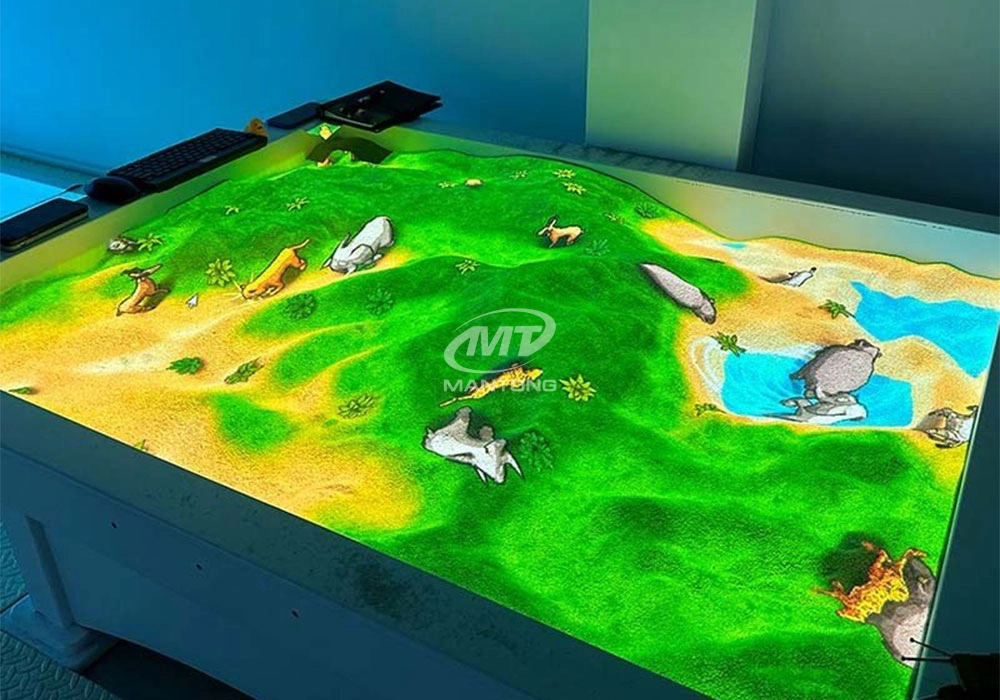
Interactive Sandbox Projection Mapping Games For Kids Play Park
Bring imagination to life with interactive sandbox projection mapping games designed for kids’ play parks. Using cutting-edge projection technology and real-time motion sensing, children can dig, build, and explore virtual worlds directly in the sand. Educational, engaging, and endlessly fun — it’s the perfect blend of play and learning.
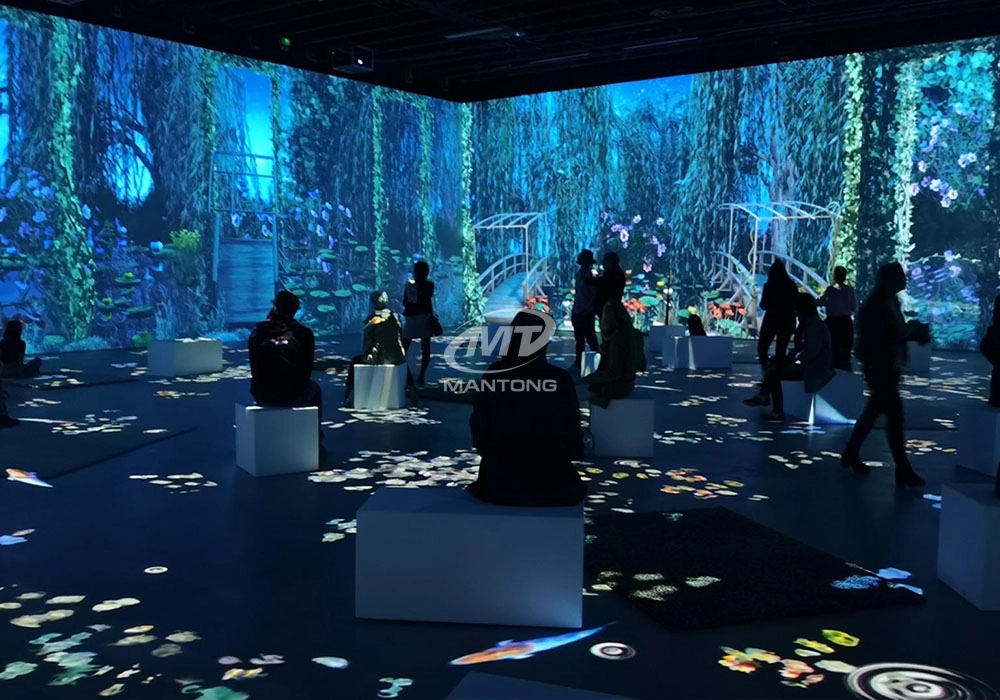
Mantong 6500LM High-Lumen Projector for Large-Scale Immersive Room Projection
Transform any space with Mantong's immersive projection mapping systems. Our high-lumen projectors (up to 6500 LM) and custom software create captivating interactive experiences for floors and walls. Ideal for museums, events, retail, and hospitality. Each kit includes professional ceiling mounting and 80+ pre-loaded video contents and is backed by a 12-month warranty and CE certification. We offer full customization and support to bring your vision to life.
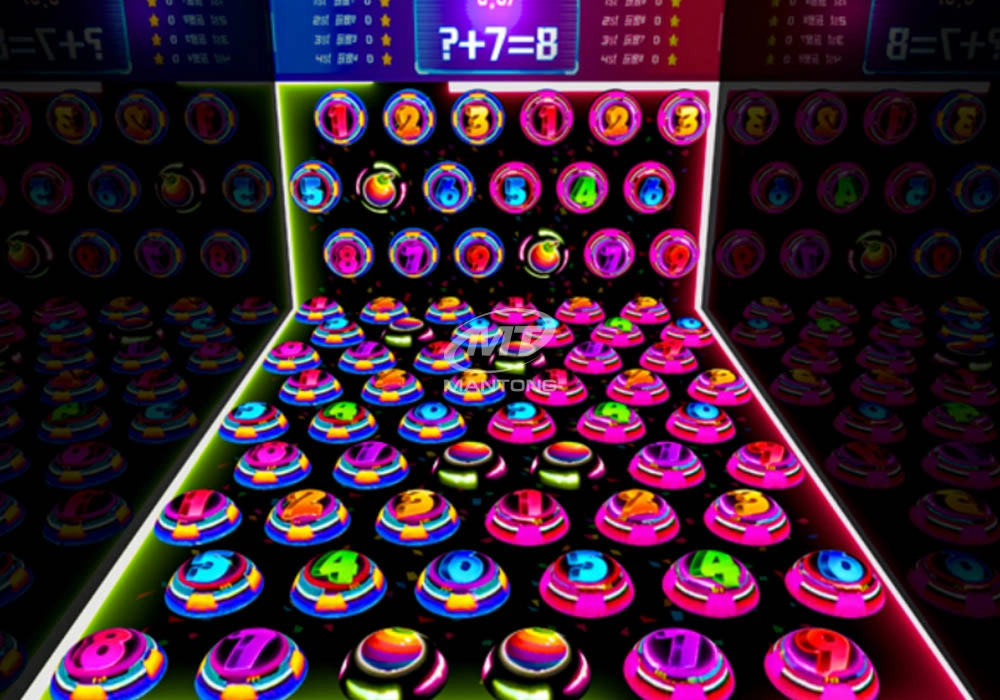
Amusement Rapidly Rotating Bouncing Sphere Interactive Wall Floor Projection Sports Games
Rapidly Rotating Bouncing Sphere is an interactive space where participants jump on rotating spheres. As they step on it, the spheres surface will show special interactivity
Jumping on spheres of the same color in succession causes them to pop, releasing light particles. The more consecutive jumps, the greater the reward—caterpillars appear, and eventually, all spheres of that color burst, filling the space with light and even more caterpillars.
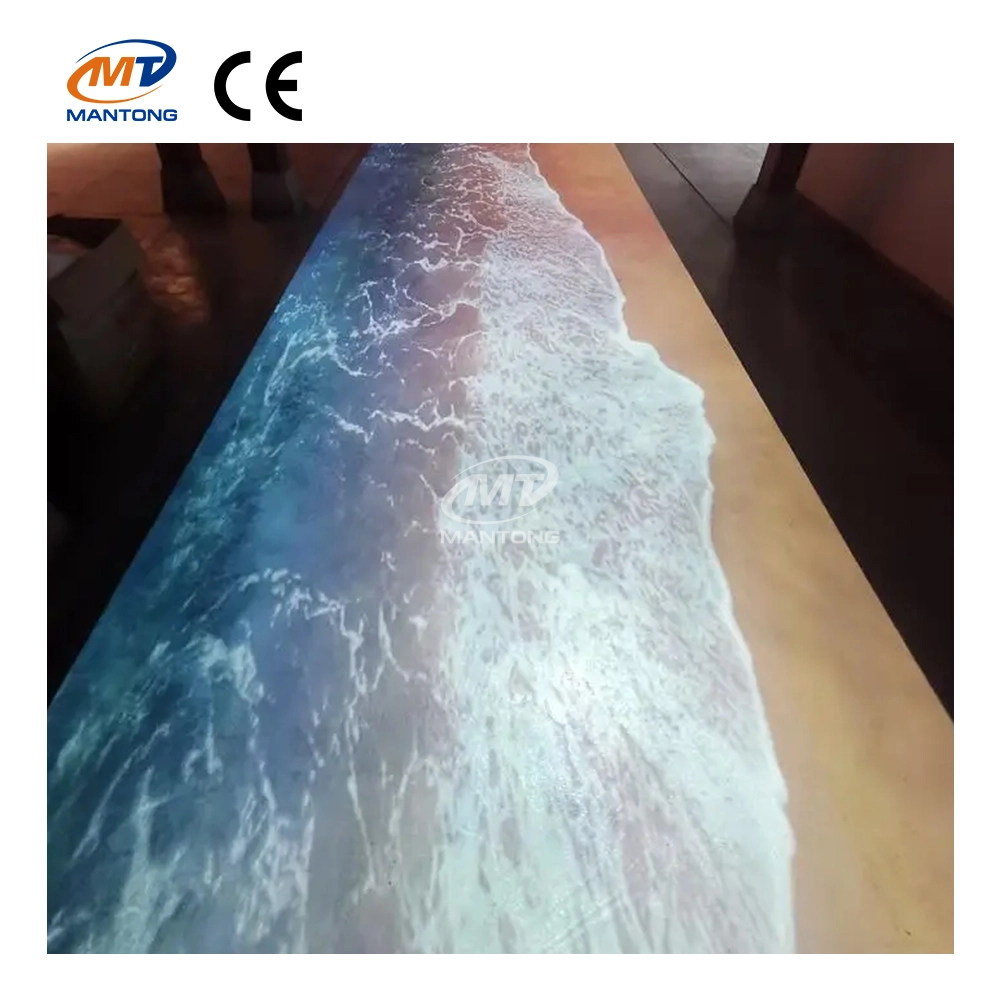
Indoor Interactive Floor Projector System - Customized Design & Installation Support
Indoor interactive floor projections display dynamic themed videos on the floor, commonly used in venues aiming to enhance brand influence or attract foot traffic, such as restaurants, hotel corridors, and brand car retail stores.
By using projectors and compatible software, the interactive content is projected onto the floor, encouraging engagement between people and the projected visuals. A single 5500-lumen indoor floor projector can cover an area of 5 m × 3 m. Typically, each project will use at least 3 units to ensure broad coverage and optimal visual effects.
We also offer customized design and installation support to enhance the interactive experience for your venue.

Kaida Business Center, Shixin Road, Panyu District,Guangzhou City, Guangdong Province, China.
ManTong
ManTong
ManTong