
Interactive Floor Games for Education: Classroom Solutions
- Why movement-based learning works
- Learning science and evidence
- Engagement, behavior and inclusivity
- Alignment with curriculum standards
- Designing interactive floor games for the classroom
- Defining learning objectives and assessment
- User experience and accessibility considerations
- Classroom management and group dynamics
- Technology, installation and comparison
- Core hardware components
- Software platforms and content ecosystems
- Comparative table: projector and sensor choices
- Implementation roadmap and procurement checklist
- Site survey and classroom readiness
- Procurement and TCO (total cost of ownership)
- Teacher training, evaluation and scale-up
- Pedagogical examples, case study and measurable outcomes
- Sample lesson plans
- Measuring impact
- Operational risks and mitigation
- Mantong Digital: provider profile and how we help
- Purchase decision checklist and next steps
- Short checklist before signing
- Pilot plan suggestion (6–10 weeks)
- Budgetary guidance
- FAQ
- 1. What ages and grades benefit most from interactive floor games?
- 2. How durable are interactive floor systems for daily classroom use?
- 3. Can interactive floor games integrate with existing LMS or assessment systems?
- 4. Are there privacy or safety concerns to consider?
- 5. How do I measure learning outcomes from interactive floor activities?
- 6. What is the difference between interactive floor games and interactive whiteboards?
- Contact and next steps
Interactive floor games (also known as interactive floor projection) are immersive, movement-based learning tools that combine digital projection, motion sensing and purpose-built software to create large-scale, engaging activities on classroom floors. Designed to support kinesthetic learning, social interaction and curriculum objectives across K–12 and special education, these solutions enable teachers to deliver standards-aligned lessons, formative assessments and inclusive play. This article provides evidence-based classroom solutions, technology comparisons, procurement guidance and implementation best practices to help educators and administrators plan, evaluate and deploy interactive floor games effectively.
Why movement-based learning works
Learning science and evidence
Movement and embodied cognition boost memory retention and concept understanding. Meta-analyses on active learning show measurable learning gains: a widely cited PNAS study found that active-learning approaches significantly increase student performance in STEM subjects compared with traditional lecturing (Freeman et al., 2014). Interactive floor games leverage embodied learning by combining physical activity with multimodal stimuli (visual, auditory, tactile), supporting multiple pathways to mastery.
Engagement, behavior and inclusivity
Interactive floors increase on-task behavior and motivation by turning abstract concepts into game-like challenges. For learners with diverse needs—autism spectrum disorder, ADHD or motor delays—well-designed floor activities offer adjustable difficulty, sensory control and inclusive group options. Research on multisensory instruction, such as studies described by the concept of embodied cognition (Embodied cognition), supports multisensory approaches used in these systems.
Alignment with curriculum standards
Effective deployment begins with mapping game mechanics to learning objectives. Interactive floor games can be adapted for math (number lines, counting hops), literacy (phoneme matching), physical education (reaction drills, cooperative games), and special education (turn-taking, sequencing). Aligning scenarios with Next Generation Science Standards (NGSS) or Common Core (for U.S.-based schools) ensures classroom relevance and easier teacher adoption.
Designing interactive floor games for the classroom
Defining learning objectives and assessment
Start with verbs: identify what learners should be able to do after the lesson (recognize, sort, compare, sequence, spell). Design game interactions that provide immediate, measurable outcomes—hit targets count, time-to-complete, accuracy percentages—so teachers can use in-class formative assessment and gather simple analytics for progress monitoring.
User experience and accessibility considerations
Design choices that support inclusivity:
- Adjustable interaction height and sensitivity to accommodate wheelchairs and varied motor skills.
- Multiple feedback channels (visual, auditory, haptic where available) for learners with sensory preferences.
- Color-contrast and font-size options for low-vision accessibility.
When developing content, follow WCAG-like principles adapted for physical interactions and consult special education professionals during design reviews.
Classroom management and group dynamics
Plan rotations: for a class of 25, use 4–6 minute play cycles with clear roles (player, scorer, observer) to keep all students engaged. Incorporate cooperative modes (team scoring) and competitive modes (timed challenges) depending on classroom culture and lesson goals. Prepare behavior prompts and safety boundaries for active play near furniture and technology components.
Technology, installation and comparison
Core hardware components
Interactive floor systems typically combine:
- Projector (short-throw or ultra-short-throw to avoid shadows)
- Motion tracking (infrared cameras, depth sensors like structured light/ToF, or simple camera-based computer vision)
- Mounting rig or ceiling bracket and housing
- Control PC or integrated media player
- Durable floor surface treatment (anti-glare, impact-resistant)
Software platforms and content ecosystems
Software determines pedagogical flexibility: look for platforms that offer curriculum-aligned templates, authoring tools for teachers, analytics dashboards and remote content updates. Open or API-driven systems allow schools to customize content, while packaged game libraries enable quick start-up.
Comparative table: projector and sensor choices
| Component | Option | Pros | Cons | Recommended use |
|---|---|---|---|---|
| Projector | Short-throw laser (3,000–6,000 lm) | Low shadowing, long lamp life, stable color | Higher upfront cost | Permanent classroom installations |
| Projector | Ultra-short-throw LED (2,000–4,000 lm) | Minimal mounting, safer for low ceilings | Limited brightness for large rooms | Small classrooms, portable setups |
| Sensor | Depth camera (ToF) | Accurate tracking, works in varied light | Higher cost, requires compute | Precise gesture recognition |
| Sensor | RGB camera + CV | Lower cost, flexible algorithms | Sensitive to lighting changes | Controlled indoor lighting |
Sources on projection and projection-mapping technology: Digital projector (Wikipedia), Projection mapping (Wikipedia).
Implementation roadmap and procurement checklist
Site survey and classroom readiness
Before purchase, conduct a site survey: measure ceiling height, floor area, ambient light, power access and network connectivity. Consider furniture layout, emergency exits and floor material. For multi-room deployments, document different dimensions and lighting conditions to inform projector lumen and lens selection.
Procurement and TCO (total cost of ownership)
Calculate TCO across 3–5 years including hardware, software licenses, installation, teacher training and maintenance. Example cost categories:
- Hardware purchase (projector, sensor, mount)
- Software license / content subscription
- Installation and calibration
- Professional development for teachers
- Replacement parts and power consumption
Teacher training, evaluation and scale-up
Effective rollout requires teacher buy-in. Provide 2–3 hours of hands-on PD focused on lesson integration, classroom management and basic troubleshooting. Use early evaluation metrics: student engagement surveys, pre/post learning checks and usage logs from the platform. Iterate content based on teacher feedback and plan phased scale-up by grade band or subject area.
Pedagogical examples, case study and measurable outcomes
Sample lesson plans
Example 1 — Early math (K–2): Number Hop — students jump to the correct number that solves a simple equation. Assessment: accuracy and response time recorded automatically. Example 2 — Literacy (Grade 1–3): Word Match — students drag phonemes to build words; supports multi-language sound banks for ESL learners.
Measuring impact
Key performance indicators (KPIs):
- Engagement rate (percentage of class participating during session)
- Accuracy improvement (pre/post lesson)
- Behavior incidents related to transitions (should decrease with structured rotation)
- Teacher satisfaction and perceived utility
Collect both quantitative (logs, scores) and qualitative (teacher interviews) data to create a robust evidence base for continued investment.
Operational risks and mitigation
Common risks: projector downtime, sensor miscalibration, content mismatch with curriculum. Mitigation steps: service-level agreements (SLA) with vendors, spare parts stock, remote monitoring and teacher-facing troubleshooting guides.
Mantong Digital: provider profile and how we help
Mantong Digital is a one-stop interactive projection solution provider and direct manufacturer based in Guangzhou, China, with over 10 years of industry experience. We are dedicated to providing innovative, flexible and cost-effective projection solutions, offering both hardware and software to meet various needs. At ManTong, we specialize in providing customized solutions for a wide range of application scenarios through innovative projection technology. Whether it's immersive experiences, interactive entertainment or outdoor lighting and projection shows, our solutions can transform your ideas into stunning visual effects. Our projection technology provides customized solutions for a variety of scenarios, delivering immersive and interactive visual experiences. We are now looking for business partnerships worldwide. Our vision is to become the world's leading interactive projection manufacturer. Our website is https://www.mtprojection.com/
Mantong advantages and core products:
- Immersive projection — large-scale visual environments for exhibitions and museums
- Interactive floor projection — turnkey systems for education and play spaces
- Interactive projection — wall and floor solutions with integrated sensing
- Interactive wall projection and immersive room installations
- 3D projection and interactive projection games tailored to curriculum goals
- Projection shows and interactive projection mapping for events and public spaces
Competitive differentiators:
- Direct manufacturer model — cost advantages and faster customization cycles
- End-to-end service — hardware, software, content creation and installation
- 10+ years industry experience with international deployments and compliance practices
- Custom R&D for sensor fusion and low-latency interaction, backed by iterative field testing
If you are evaluating vendors, consider Mantong for integrated delivery, local manufacturing control and the ability to tailor interactive floor games to specific educational outcomes. For detailed product specs, case studies and partnership inquiries, visit ManTong Projection.
Purchase decision checklist and next steps
Short checklist before signing
- Does the vendor provide curriculum-aligned content and teacher training?
- Is there a clear warranty and SLA for hardware and software?
- Can the system be customized for accessibility and local language support?
- Are analytics and reporting included for formative assessment?
- Is there a site survey and pilot period before full deployment?
Pilot plan suggestion (6–10 weeks)
- Week 1–2: Install system in one classroom, deliver teacher training.
- Week 3–6: Run weekly lessons with measurement checkpoints and teacher feedback.
- Week 7–8: Analyze outcomes, adapt content, and document ROI projections.
- Week 9–10: Decide scale-up plan and procurement timeline.
Budgetary guidance
Typical single-classroom turnkey systems range widely depending on projector brightness, sensing precision and software tier. For budgeting, obtain itemized quotes that separate one-time hardware from recurring licenses and service fees. Use the TCO methodology (3–5 years) outlined above to compare proposals objectively.
FAQ
1. What ages and grades benefit most from interactive floor games?
While interactive floor games are especially effective for early years (pre-K–grade 3) due to the physical nature of early learning, they are also valuable for upper elementary and secondary students when tailored to subject-specific simulations (e.g., ecosystem modeling, geometry). Special education programs across ages often see strong benefits.
2. How durable are interactive floor systems for daily classroom use?
When installed correctly with appropriate floor surface treatment and commercial-grade projectors and mounts, systems are durable for daily use. Choose products with warranty coverage and maintenance plans. Regular cleaning, scheduled recalibration and protective floor overlays extend lifespan.
3. Can interactive floor games integrate with existing LMS or assessment systems?
Many modern platforms provide APIs or exportable CSVs for assessment results. Ask vendors about integrations with Google Classroom, LMS systems or SIS platforms to ensure student data flows securely and supports teacher workflows.
4. Are there privacy or safety concerns to consider?
Privacy: ensure data about student performance is stored securely and in compliance with local regulations (e.g., FERPA in the U.S.). Safety: select mounting options that minimize trip hazards, enforce clear play zones and use low-glare surfaces. Vendors should provide safety documentation and risk assessments.
5. How do I measure learning outcomes from interactive floor activities?
Combine automated metrics (accuracy, response time, session duration) with teacher-led assessments (pre/post tests, observational rubrics). For programmatic evaluation, run a controlled pilot comparing a matched control group and use mixed methods (quantitative and qualitative) for a complete picture.
6. What is the difference between interactive floor games and interactive whiteboards?
Interactive floor games emphasize whole-body, kinesthetic interaction over a large projected surface; interactive whiteboards are typically hand- or stylus-driven and oriented toward small-group or teacher-led tasks. Both can be complementary: floors for movement and play, boards for focused instruction.
Contact and next steps
If you want to explore interactive floor projection solutions for your school, preschool or learning center, contact Mantong Digital for a tailored consultation, pilot proposal and detailed quote. Visit https://www.mtprojection.com/ to view product pages, case studies and contact information. Our team can provide site survey support, demo content aligned to your curriculum and partnership options for global distribution.
Ready to get started? Request a pilot or product demo and see how interactive floor games can increase engagement, support differentiated instruction and deliver measurable learning outcomes.
Best Top Benefits of Implementing an Immersive Meeting Room in Your Office manufacturers and supplier brands
Interactive Projector Games for Trade Shows and Events
Measuring Engagement: Analytics for 3D Projection Installs
Where to Buy immersive arcade room
One-Stop Projection Solution Provider Since 2011
Are you trader or manufacturer ?
We are direct manufacturer who specialize in providing one-stop solution for different outdoor & indoor projection project with our stable software and qualified projectors
What about the wall/floor material for the projection?
It’s recommended to choose a light-colored material with minimal reflectivity—pure white or light grey works best. the
common material is cement & plaster board
For optimal projection results, the surface should be free of any patterns or textures, as the projector will display content
directly onto it.
There are no specific material requirements; you may use any commonly available material in your local market, as long as it
meets the above conditions.
What's the application of Immersive projection ?
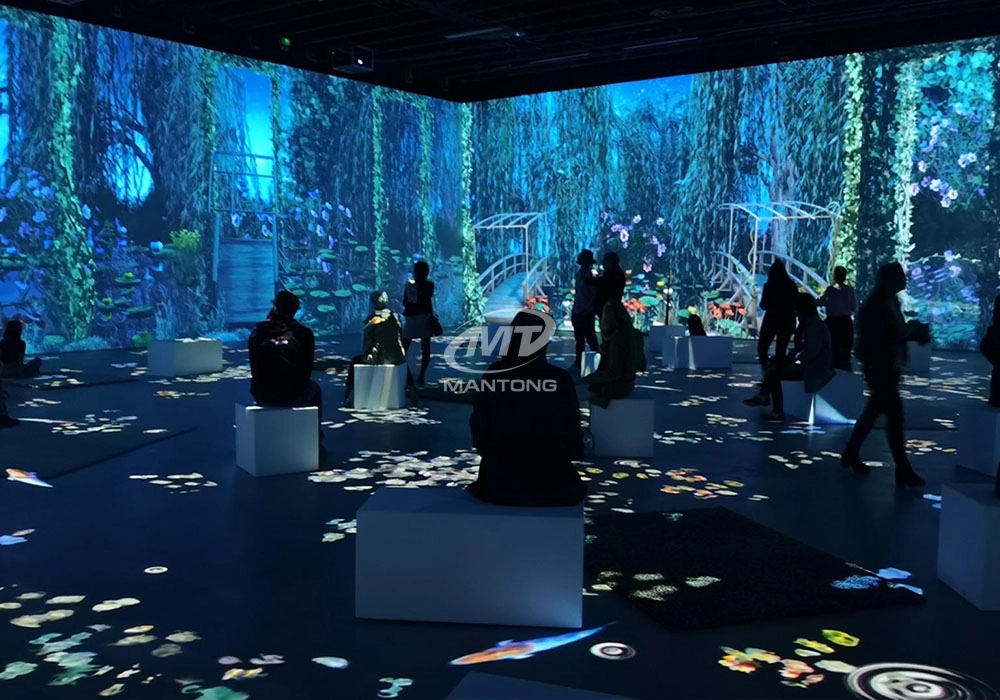
It can be used in various venues, such as art exhibition, entertainment venues, educational institution, Wedding hall /Banquet/Bar,Yoga Studio and so on. It often involves advanced projection techniques, multimedia content, and interactive elements to engage and captivate the audience's senses.
How to install the projection equipment ?
1) Install the projector in a suitable position. We will provide you with a hanger, which you need to fix on the ceiling with
screws.
2) Connect projectors, computers and other accessories through wires.
3) After completing the above 2 steps, we will carry out the edge blending steps. Our team can complete it through remote
control.
In general, installation instructions for each project need to be specified on a project-by-project basis. The above is for
reference only.
What information do you need to know before making the proposal/solution?
We know that everyone wants to know the price, but the price of our products is determined by many factors since most of our products are custom, so no ready price list. In order to fast understand what you need, can you send us an inquiry like this?
For example: I am really interested in your immersive projection products, we are a company in the USA and want to install some in my restaurant. It is about 50 meters long, and 5m in width. Projection size you can decide but the length should be not less than 20 meters. We want some content about SeaWorld because our place is all about the sea. Thank you.
Mantong 6500LM High-Lumen Projector for Large-Scale Immersive Room Projection
Transform any space with Mantong's immersive projection mapping systems. Our high-lumen projectors (up to 6500 LM) and custom software create captivating interactive experiences for floors and walls. Ideal for museums, events, retail, and hospitality. Each kit includes professional ceiling mounting and 80+ pre-loaded video contents and is backed by a 12-month warranty and CE certification. We offer full customization and support to bring your vision to life.
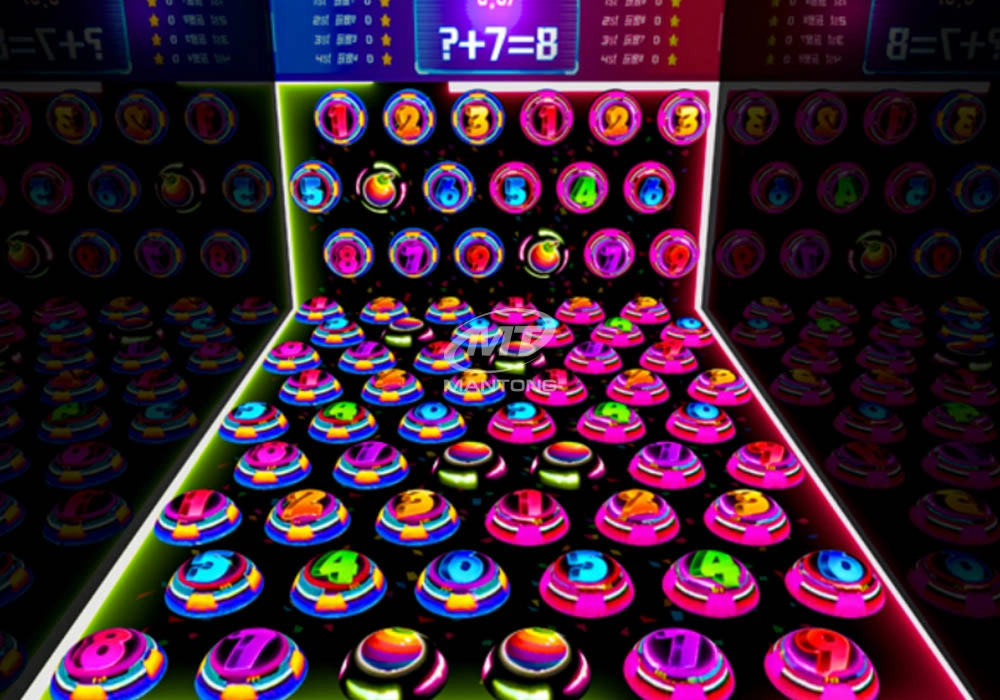
Amusement Rapidly Rotating Bouncing Sphere Interactive Wall Floor Projection Sports Games
Rapidly Rotating Bouncing Sphere is an interactive space where participants jump on rotating spheres. As they step on it, the spheres surface will show special interactivity
Jumping on spheres of the same color in succession causes them to pop, releasing light particles. The more consecutive jumps, the greater the reward—caterpillars appear, and eventually, all spheres of that color burst, filling the space with light and even more caterpillars.
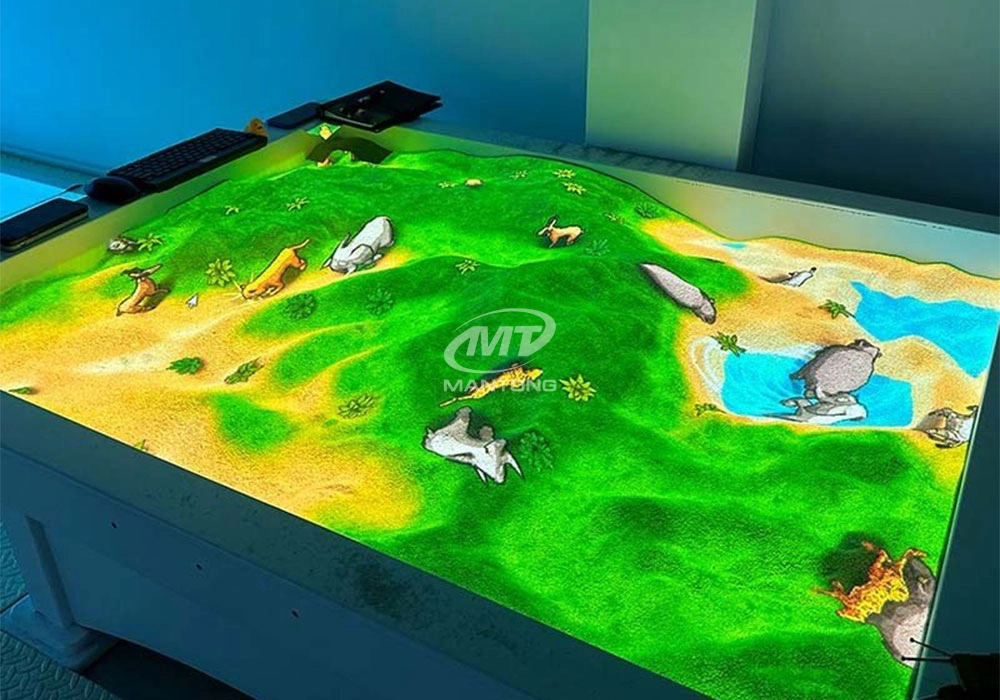
Interactive Sandbox Projection Mapping Games For Kids Play Park
Bring imagination to life with interactive sandbox projection mapping games designed for kids’ play parks. Using cutting-edge projection technology and real-time motion sensing, children can dig, build, and explore virtual worlds directly in the sand. Educational, engaging, and endlessly fun — it’s the perfect blend of play and learning.
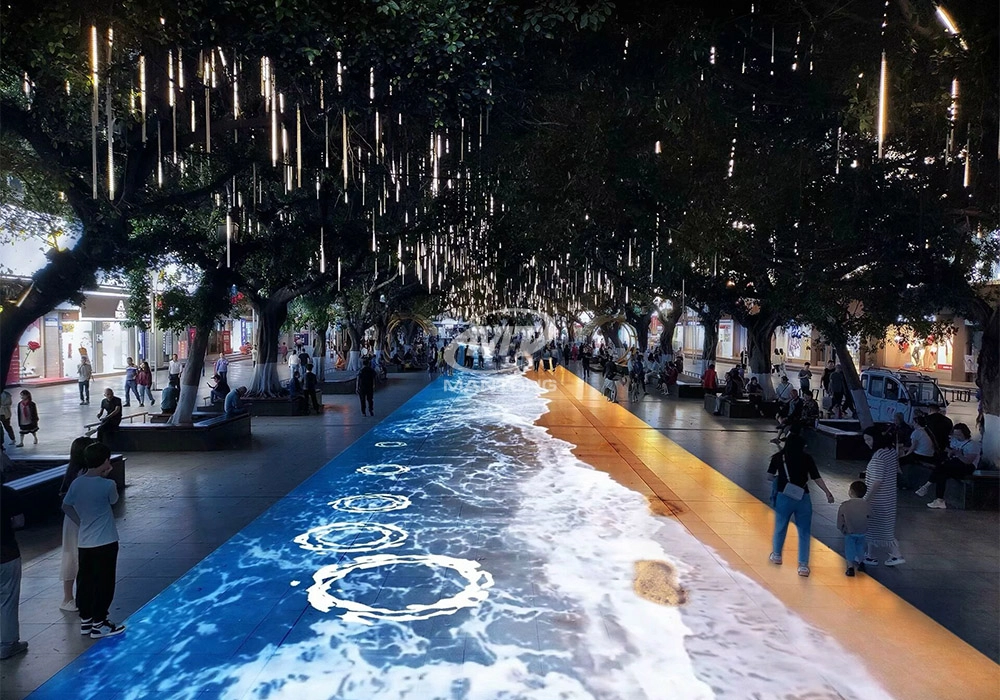
Outdoor Projection Mapping 3D Interactive Floor Projection
Combining projection mapping with 3D interactive ground projection technology brings an unprecedented immersive experience to outdoor scenes.

Kaida Business Center, Shixin Road, Panyu District,Guangzhou City, Guangdong Province, China.
ManTong
ManTong
ManTong