
Safety, Accessibility, and Compliance for Interactive Floors
- Understanding user needs and use cases
- Primary user groups and their expectations
- Contexts and environments
- Types of interactive floor games and behavioural patterns
- Safety considerations for interactive floor games
- Slip, trip and fall mitigation
- Material choice, mounting and projection safety
- Environmental and emergency considerations
- Comparison of regionally relevant safety and product standards
- Accessibility best practices
- Designing for diverse abilities
- Audio, visual and tactile affordances
- Testing with real users and iterative refinement
- Regulatory compliance, data privacy and operational protocols
- Electrical, EMC and product safety compliance
- Data privacy and camera/sensor use
- Documentation, maintenance and incident procedures
- Partner Spotlight: ManTong Digital — Solutions and Competence
- Company overview
- Product offerings and technical strengths
- Why choose ManTong
- Practical checklist for safe, accessible and compliant interactive floor deployments
- FAQs
- 1. What safety standards should I follow for interactive floor games?
- 2. How can I make interactive floor games accessible to people with disabilities?
- 3. Do projection surfaces increase slip risk?
- 4. What privacy concerns exist with motion-tracking sensors?
- 5. How often should I schedule maintenance and safety inspections?
- 6. Can interactive floor games be used outdoors?
- 7. Who is responsible if someone is injured on an interactive floor?
- Contact and next steps
Interactive floor games combine projection, motion tracking and responsive software to create immersive, playful experiences for public spaces, museums, retail, hospitality and education. For operators and integrators, achieving a balance between engagement and duty-of-care is essential: thoughtful design, tested materials, accessibility features and compliance with regional safety and electrical standards reduce liability and improve usability. This article synthesizes industry best practices, standards references and operational guidance to help you design, install and maintain safe, accessible and compliant interactive floor systems.
Understanding user needs and use cases
Primary user groups and their expectations
Interactive floor games are used by diverse audiences: children in play zones, families in retail and entertainment environments, seniors in rehabilitation centers, and general visitors in public exhibitions. Each group has different physical abilities, cognitive skills and behavioral patterns. Designing for the broadest audience means anticipating varied mobility (wheelchairs, walkers), sensory differences (low vision, hearing impairment), and unpredictable interactions (running, sudden stops).
Contexts and environments
Deployment context—indoor vs outdoor, permanent vs temporary installation, high-traffic transit hubs vs controlled museum spaces—drastically affects safety decisions. Outdoor installations must address weatherproofing, glare and surface drainage; indoor installations prioritize slip resistance, lighting balance and emergency egress. Consider ambient noise, lighting contrast and floor material compatibility before selecting projectors, sensors and interactive titles.
Types of interactive floor games and behavioural patterns
Game mechanics (freeplay projection, target-based stepping, cooperative team games) influence user movement and intensity. For example, chase-and-catch games can prompt rapid running and lateral movements, increasing slip and collision risk. Design gameplay to manage kinetic energy: include slow-start mechanics, soft borders, and visual cues that discourage unsafe speed or sudden direction changes.
Safety considerations for interactive floor games
Slip, trip and fall mitigation
Slips, trips and falls are a major cause of public injuries. The UK Health and Safety Executive notes slips and trips as a leading cause of workplace injuries and emphasizes controlling floor surface hazards (HSE: slips and trips). Key measures:
- Choose floor surfaces with appropriate slip resistance (coefficient of friction) for expected footwear and footwear contaminants.
- Use non-reflective, matte projection surfaces or add low-profile tactile edging to define play boundaries to reduce visual confusion.
- Maintain clear sightlines and avoid placing interactive zones across high-traffic walkways or emergency egress paths.
Material choice, mounting and projection safety
Hardware and mounting integrity are critical. Projectors should be secured to avoid accidental dislodgement. Cables must be routed or concealed to prevent tripping; use floor cable protectors rated for public spaces. Select projection surfaces that are fire-retardant and certified per local fire codes. For installations with high ambient light, specify projectors with adequate lumens so operators can avoid increasing projector brightness to unsafe levels (thermal risks).
Environmental and emergency considerations
Consider emergency scenarios: power outages, false alarms, or overcrowding. Fail-safe behaviors include reverting software to neutral visuals upon sensor loss, disabling fast-moving elements when occupancy sensors detect overcrowding, and ensuring interactive elements do not mask emergency signage. Ensure projection does not obscure evacuation signage and confirm compliance with safety signage standards such as ISO 7010 (ISO 7010).
Comparison of regionally relevant safety and product standards
| Region | Typical Standards / Regulations | Relevance to interactive floors |
|---|---|---|
| United States | ADA (accessibility), UL 62368 (electrical safety), ASTM slip test methods | Accessibility compliance, electrical safety, validated slip resistance testing |
| European Union | EN standards, CE marking (safety, EMC), European Accessibility Act | Product conformity, electromagnetic compatibility, accessibility mandates |
| United Kingdom | BS standards, UKCA marking, Equality Act | Product safety and anti-discrimination/accessibility obligations |
| China | CCC (where applicable), GB standards, local fire and electrical codes | Mandatory product certifications, local compliance for public venues |
For CE and conformity guidance see the European Commission's CE resources (CE marking - European Commission), and for general electrical safety and certification consult UL (UL).
Accessibility best practices
Designing for diverse abilities
Accessibility is both legal and practical: well-designed interactive floor games expand audience reach and improve inclusion. Follow principles from the W3C's Web Content Accessibility Guidelines (WCAG) for multimodal experiences—adapt concepts such as perceivable, operable and understandable to physical installations (WCAG - W3C). Key practices:
- Provide alternative interaction modes (audio prompts, hand gestures, mobile-device triggers) so users with limited mobility can participate without excessive physical exertion.
- Offer adjustable difficulty and pace settings. For rehabilitation or senior-friendly installations include a gentle mode that reduces speed and movement intensity.
- Use large, high-contrast visuals and avoid critical gameplay relying solely on color to assist users with low vision or color blindness.
Audio, visual and tactile affordances
Multimodal feedback increases accessibility: directional audio to indicate targets, vibrating handheld devices or floor pads, and tactile floor markings to indicate safe boundaries. Captioning or simple text overlays help users who are deaf or hard-of-hearing. Use redundant cues (sound + visual + haptic) to ensure core information is perceivable by different users.
Testing with real users and iterative refinement
Accessibility can't be assumed—conduct usability testing with participants representing the diversity of your audience. Measure success with both qualitative feedback and quantitative metrics (time-on-task, completion rates, error incidents). Iteratively refine interaction timing, required range of motion and on-screen time. Keep records of testing and adjustments as part of compliance documentation.
Regulatory compliance, data privacy and operational protocols
Electrical, EMC and product safety compliance
Interactive floors are integrated systems of projectors, sensors, embedded PCs and sometimes networked components. Ensure each electrical component complies with local product safety standards (UL, CE, CCC). EMC (electromagnetic compatibility) testing reduces risk of interference with other devices. Maintain a bill of materials and certificates of conformity for each component to streamline site inspections and procurement audits.
Data privacy and camera/sensor use
Some interactive floor systems use cameras or depth sensors to detect users. If personally identifiable data (images, tracking logs) are captured, you must comply with data protection laws such as GDPR in the EU or equivalent local regulations. Mitigation strategies:
- Prefer anonymous, on-device processing that does not retain or transmit images.
- If data is collected, implement clear signage and obtain consent where required; provide a privacy notice with contact details.
- Pseudonymize or delete logs quickly and apply secure storage and access controls.
Documentation, maintenance and incident procedures
Maintain an installation dossier: site plan, schematics, component certificates, test reports, and maintenance schedules. Establish routine checks for projector mounts, cable integrity, floor surface wear and software updates. Define incident procedures: who to contact for hardware faults, how to temporarily disable the interactive experience safely, and steps to capture incident reports for legal compliance and continuous improvement.
Partner Spotlight: ManTong Digital — Solutions and Competence
Company overview
ManTong Digital is a one-stop interactive projection solution provider and direct manufacturer based in Guangzhou, China, with over 10 years of industry experience. We are dedicated to providing innovative, flexible and cost-effective projection solutions, offering both hardware and software to meet various needs. Learn more at https://www.mtprojection.com/.
Product offerings and technical strengths
ManTong specializes in immersive projection, interactive floor projection, interactive wall projection, immersive rooms, 3D projection, interactive projection games, projection shows and interactive projection mapping. Their integrated approach includes:
- Customized hardware configurations and mounting solutions suited to each venue.
- Proprietary and partner software for accurate motion detection, multi-user support and content management.
- End-to-end deployment services—from site assessment and safety planning to commissioning and post-installation support.
Why choose ManTong
ManTong's direct-manufacturer model shortens the supply chain, enabling competitive pricing and faster customization cycles. With a decade of deployments across entertainment, retail, museums and outdoor shows, they demonstrate both technical depth and operational experience. They actively seek worldwide partnerships and aim to be the world’s leading interactive projection manufacturer, positioning themselves as a reliable partner for projects that require both creative design and strict compliance with safety and accessibility standards.
Practical checklist for safe, accessible and compliant interactive floor deployments
Use this checklist during planning and pre-launch:
- Site assessment: identify traffic patterns, emergency routes, and floor materials.
- Standards mapping: list applicable regional standards (electrical, accessibility, fire).
- Material selection: choose slip-resistant, fire-rated surfaces and non-reflective projection media.
- Hardware mounting: secure mounts, cable management and surge protection.
- Accessibility features: alternate modes, adjustable game pace, high-contrast visuals and audio cues.
- Privacy measures: on-device processing, clear signage, consent where required.
- Maintenance plan: scheduled inspections, cleaning procedures and emergency disable procedures.
- Documentation: component certificates, test reports and user-testing records.
FAQs
1. What safety standards should I follow for interactive floor games?
Follow regional product safety and accessibility standards relevant to your location—examples include ADA guidelines in the U.S., CE/EN standards in the EU, and local fire and electrical codes. Also apply best practices for slip resistance and user testing. Useful references: ADA (ada.gov), CE marking guidance (European Commission).
2. How can I make interactive floor games accessible to people with disabilities?
Offer multimodal interaction (audio, visual, tactile), adjustable game settings, and alternative controls (touchless gestures or mobile). Carry out user testing that includes people with varied abilities and document accessibility choices. Use WCAG principles as a design analog (W3C WCAG).
3. Do projection surfaces increase slip risk?
Projection surfaces can be slip-safe if correctly chosen. Use surfaces tested for slip resistance appropriate to your environment and maintain them. Avoid glossy or wet-prone surfaces and consider thin tactile borders to delineate play areas.
4. What privacy concerns exist with motion-tracking sensors?
If sensors or cameras capture identifiable images, you must follow applicable privacy laws (e.g., GDPR). Prefer anonymized, on-device processing and avoid storing raw images. Post privacy notices when data collection occurs and provide contact information for queries.
5. How often should I schedule maintenance and safety inspections?
At minimum, conduct weekly visual checks and monthly functional tests for public installations. Critical components like mounts and cable management should be inspected quarterly. High-use sites may require daily checks. Keep records of inspections and repairs.
6. Can interactive floor games be used outdoors?
Yes, but outdoor deployments require weatherproofed hardware, higher-lumen projectors for daylight visibility, drainage considerations, and more robust mounting. UV resistance, wind loads and temperature ranges must be considered in component selection.
7. Who is responsible if someone is injured on an interactive floor?
Liability depends on location, signage, maintenance records and whether reasonable precautions were taken. Operators should document safety measures, maintain inspection logs, and follow local regulations to reduce liability risk. Consult legal counsel for jurisdiction-specific advice.
Contact and next steps
For consultation, custom designs, or to view product offerings for safe, accessible and compliant interactive floor projection solutions, contact ManTong Digital. As a direct manufacturer based in Guangzhou with over 10 years of industry experience, ManTong offers end-to-end services from immersive projection design and interactive floor projection to interactive wall and 3D projection and projection shows. Visit https://www.mtprojection.com/ to request a quote or partnership inquiry. Our team can provide site assessments, compliance guidance and turnkey installation packages.
Interactive projector market size and forecast 2026-2030
Scalability: Planning Large Interactive Projection Installations
3D Projection for Outdoor Events: Weatherproofing Tips
Top global interactive experience companies list
One-Stop Projection Solution Provider Since 2011
Are you trader or manufacturer ?
We are direct manufacturer who specialize in providing one-stop solution for different outdoor & indoor projection project with our stable software and qualified projectors
How to install the projection equipment ?
1) Install the projector in a suitable position. We will provide you with a hanger, which you need to fix on the ceiling with
screws.
2) Connect projectors, computers and other accessories through wires.
3) After completing the above 2 steps, we will carry out the edge blending steps. Our team can complete it through remote
control.
In general, installation instructions for each project need to be specified on a project-by-project basis. The above is for
reference only.
What's the application of Immersive projection ?
It can be used in various venues, such as art exhibition, entertainment venues, educational institution, Wedding hall /Banquet/Bar,Yoga Studio and so on. It often involves advanced projection techniques, multimedia content, and interactive elements to engage and captivate the audience's senses.
What's Immersive Projection ?
Immersive projection refers to a technology that creates a captivating and all-encompassing visual experience for viewers by projecting images or videos onto large surfaces, such as walls, floors, or even entire rooms. This technology aims to immerse the audience in a simulated environment, blurring the boundaries between the physical and virtual worlds.
How to Write an Interactive-Effect Video Customisation Script ?
① Project Background: Briefly introduce the context in which this interactive scene will be used (e.g., exhibition, museum,
event space, children's area). Example: This scene is part of the “Underwater World” zone in a children's science museum,
designed to be engaging and exploratory.
②Visual Style / Atmosphere: What kind of visual mood are you aiming for? Please describe the color scheme, style, and any
references. it should focus solely on describing the visual aspects of the scene, supported by relevant charts or reference
images.
③ Interaction Points Overview:List each interactive hotspot along with the effect you'd like to trigger when the user
touches or clicks the area. example: when player touch the clownfish, it will swims away with bubble trail (animation effect)
and produce the bubble sound ( sound effect requirement )
④ Static Visual Reference:including but not limited to background image/video, a list of major visual elements (e.g., coral,
rocks, seaweed, fish), which elements should be interactive?
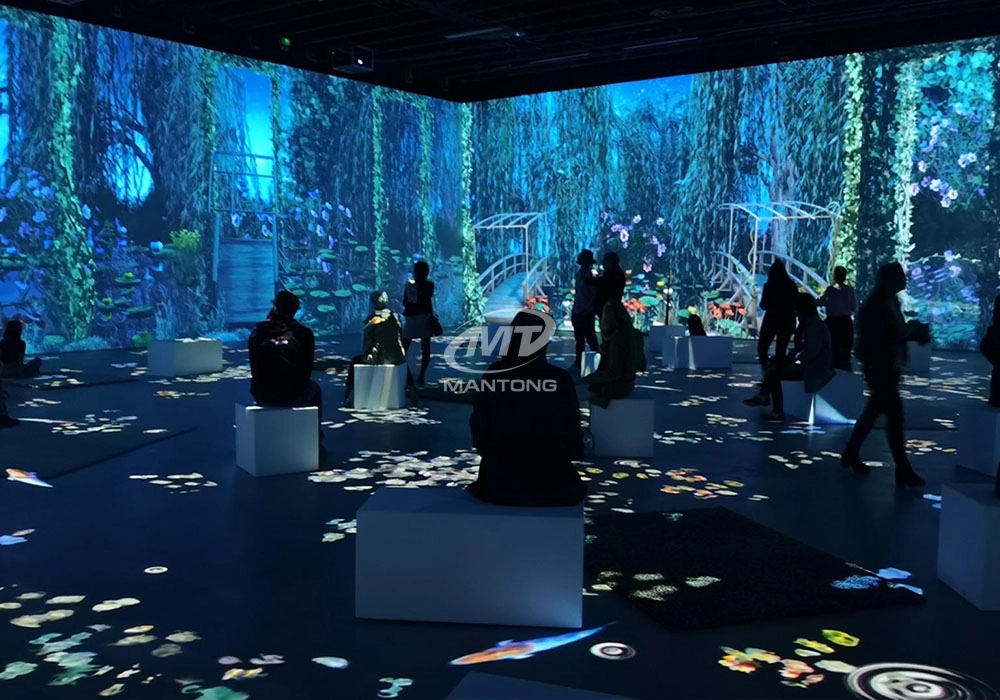
Mantong 6500LM High-Lumen Projector for Large-Scale Immersive Room Projection
Transform any space with Mantong's immersive projection mapping systems. Our high-lumen projectors (up to 6500 LM) and custom software create captivating interactive experiences for floors and walls. Ideal for museums, events, retail, and hospitality. Each kit includes professional ceiling mounting and 80+ pre-loaded video contents and is backed by a 12-month warranty and CE certification. We offer full customization and support to bring your vision to life.
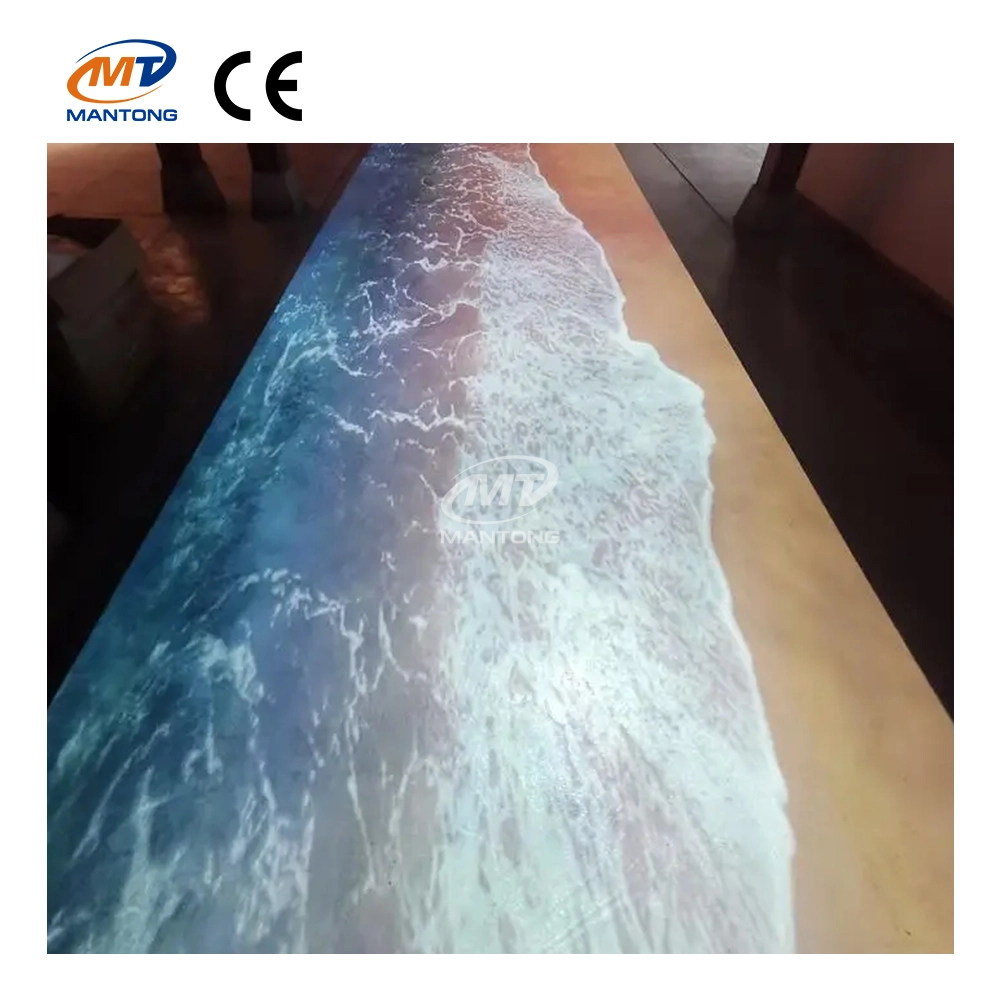
Indoor Interactive Floor Projector System - Customized Design & Installation Support
Indoor interactive floor projections display dynamic themed videos on the floor, commonly used in venues aiming to enhance brand influence or attract foot traffic, such as restaurants, hotel corridors, and brand car retail stores.
By using projectors and compatible software, the interactive content is projected onto the floor, encouraging engagement between people and the projected visuals. A single 5500-lumen indoor floor projector can cover an area of 5 m × 3 m. Typically, each project will use at least 3 units to ensure broad coverage and optimal visual effects.
We also offer customized design and installation support to enhance the interactive experience for your venue.
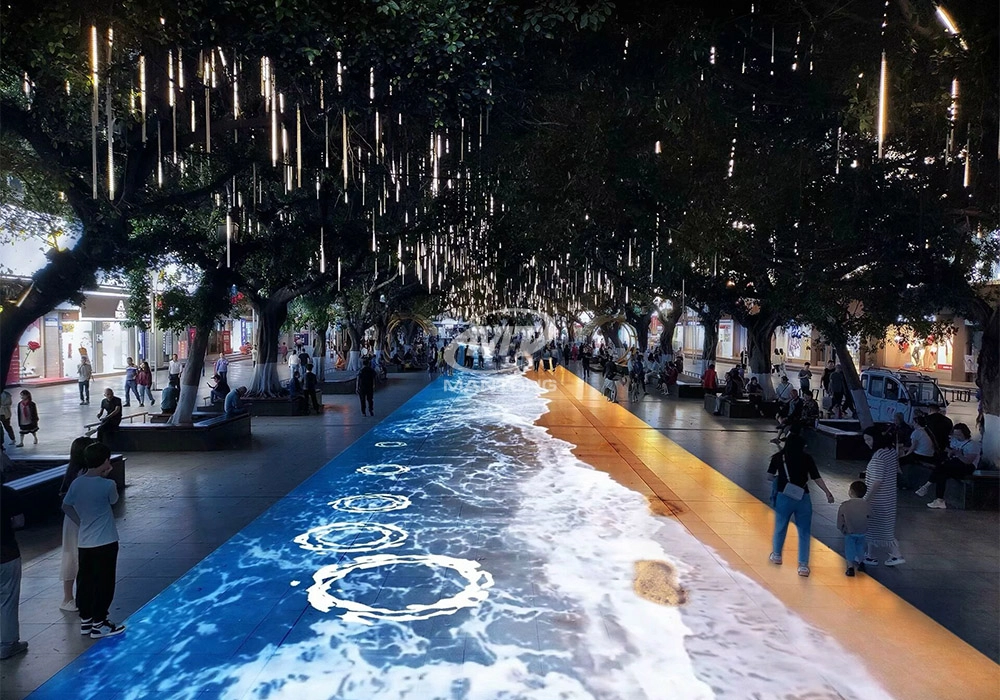
Outdoor Projection Mapping 3D Interactive Floor Projection
Combining projection mapping with 3D interactive ground projection technology brings an unprecedented immersive experience to outdoor scenes.
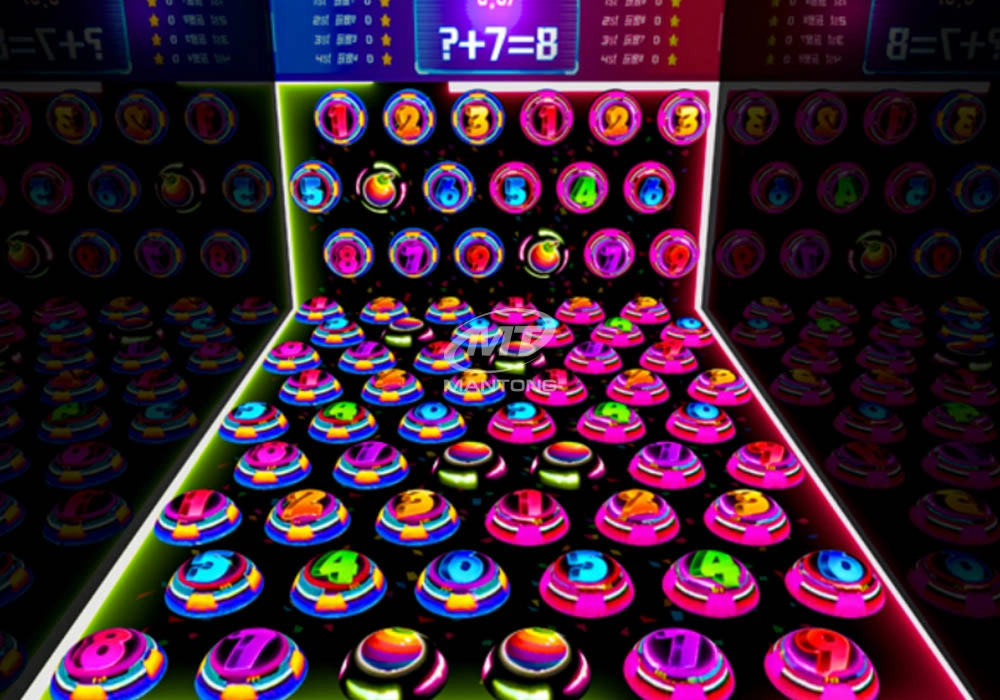
Amusement Rapidly Rotating Bouncing Sphere Interactive Wall Floor Projection Sports Games
Rapidly Rotating Bouncing Sphere is an interactive space where participants jump on rotating spheres. As they step on it, the spheres surface will show special interactivity
Jumping on spheres of the same color in succession causes them to pop, releasing light particles. The more consecutive jumps, the greater the reward—caterpillars appear, and eventually, all spheres of that color burst, filling the space with light and even more caterpillars.

Kaida Business Center, Shixin Road, Panyu District,Guangzhou City, Guangdong Province, China.
ManTong
ManTong
ManTong