
Choosing interactive projection for museums and exhibitions
- Why institutions are adopting projection-first experiences
- Visitor expectations and engagement
- Compatibility with collections and conservation
- Technical considerations: choosing the right projection approach
- Projection types and when to use them
- Key technical specs to prioritize
- Designing for visitor experience and operational needs
- UX-first design principles for projection-based exhibits
- Operational considerations: staffing, maintenance, and safety
- Measuring success: KPIs to track
- Cost, procurement and ROI framework
- Typical cost components
- Comparative cost/benefit table (illustrative ranges)
- Procurement best practices
- Vendor selection, case examples and ManTong Digital profile
- What to look for in a projection solution provider
- Why ManTong Digital (ManTong) is a viable partner
- Example deployments and lessons learned
- Implementation checklist and next steps
- Site evaluation checklist
- Pilot and scaling strategy
- Contact and procurement CTA
- Frequently Asked Questions (FAQ)
- 1. What is interactive projection technology and how does it differ from traditional AV?
- 2. Will projection damage sensitive artifacts?
- 3. How much space and light control do we need?
- 4. What maintenance does a projection system need?
- 5. How do we measure the impact of an interactive projection exhibit?
- 6. Can we localize content and language easily?
- 7. How long does it take to deploy a typical projection installation?
- References
Why institutions are adopting projection-first experiences
Interactive projection technology is rapidly becoming a preferred medium for museums and exhibitions that want to deliver high-impact, low-barrier immersive experiences. Rather than replacing traditional collections, projection augments artifacts, storytelling and circulation paths to increase dwell time, accessibility and repeat visits. For curators and exhibition planners, the key questions are: what type of projection fits the content and space, how will it affect conservation and visitor flow, and what measurable outcomes can be expected?
Visitor expectations and engagement
Contemporary museum visitors—especially younger demographics—expect interactivity and shareable moments. Interactive projection offers intuitive, low-touch interactions (gesture, touch-enabled floors/walls, object-triggered mapping) that align with modern engagement patterns. Well-designed projection experiences can boost dwell time, learning retention and social sharing without the friction of wearable hardware.
Compatibility with collections and conservation
Projection is attractive because it can be non-invasive: light can be directed onto inert surfaces, facades or specially prepared screens without physically altering sensitive objects. Properly specified systems (brightness, heat management, filters) minimize risks to artifacts and maintain conservation standards. This makes interactive projection viable for both temporary exhibitions and permanent galleries.
Technical considerations: choosing the right projection approach
Projection types and when to use them
Below is a practical comparison of common projection approaches. Choose based on space, ambient light, interaction mode and content complexity.
| Projection Type | Best for | Strengths | Constraints |
|---|---|---|---|
| Front projection (fixed) | Dark galleries, screens, linear video sequences | Simple installation; cost-effective; good image brightness for controlled light | Sensitive to ambient light; limited flexibility for mapping irregular surfaces |
| Projection mapping (interactive) | Architectural facades, sculptures, irregular surfaces | High visual impact; transforms surfaces; customizable geometry | Requires precise calibration; higher setup complexity |
| Interactive floor/wall projection | Play areas, family zones, wayfinding | Intuitive interaction; robust visitor appeal; durable hardware options | Floor installations must meet safety & accessibility standards |
| Immersive room/360° projection | Large-scale narratives, planetariums, full-room immersion | Complete sensory immersion; high dwell time potential | High hardware and content costs; careful climate control needed |
Key technical specs to prioritize
- Brightness (lumens): match projector output to ambient lighting. Museums often specify 2,000–12,000 ANSI lumens depending on space and screen (higher for outdoor facades).
- Resolution: native resolution should suit projection size and viewing distance—WUXGA (1920×1200) or 4K for crisp mapped content and text.
- Contrast and color accuracy: important for preserving the look of artifacts and media fidelity; consider projectors with high contrast ratios and color calibration tools.
- Latency and interaction sensors: for responsive interactive experiences, choose systems with sub-50ms end-to-end latency and reliable tracking (depth cameras, infrared, or LiDAR depending on budget).
- Reliability and maintenance: look for industrial-grade projectors with IP ratings (for outdoor) and remote management features.
Designing for visitor experience and operational needs
UX-first design principles for projection-based exhibits
Successful interactive projections prioritize accessibility, discoverability and narrative coherence. Design to scaffold learning: clear prompts, short interaction intervals, and optional deeper content for self-directed learners. Ensure that interactions do not create crowding—use time-limited interactions, multiple stations, or flow control.
Operational considerations: staffing, maintenance, and safety
Plan for daily alignment/calibration, lamp or laser maintenance cycles, backups for critical media servers, and staff training on basic troubleshooting. Safety checks are essential for floor projections (slip resistance) and outdoor shows (electrical safety and crowd control). Include SLAs with vendors for urgent support.
Measuring success: KPIs to track
Common KPIs include dwell time, dwell-to-conversion (e.g., shop sales, memberships), interaction rate per visitor, repeat visits, and qualitative learning outcomes (surveys). Use a mix of quantitative sensors (people counters, interaction logs) and qualitative feedback to evaluate impact.
Cost, procurement and ROI framework
Typical cost components
Major cost categories for an interactive projection deployment:
- Hardware: projectors, servers/players, sensors (cameras/IR), mounting & housings
- Software: content playback engines, mapping & calibration tools, custom interactive applications
- Installation: rigging, electrical, structural works, calibration time
- Content production: creative development, motion graphics, interactivity design
- Operations: maintenance, consumables, SLA/support
Comparative cost/benefit table (illustrative ranges)
| Project Scale | Typical Budget Range (USD) | Primary Benefits | Typical Payback/ROI Indicators |
|---|---|---|---|
| Small (single interactive wall or floor) | $10,000 – $50,000 | Increased engagement, family audience draw | Higher cross-sell in museum shop, modest increase in dwell time |
| Medium (multi-station or single immersive room) | $50,000 – $250,000 | Ticketing uplift, extended dwell, stronger PR value | Noticeable ticket sales/seasonal attendance lift; sponsorship revenue potential |
| Large (projection mapping or multi-room immersion) | $250,000+ | Landmark attraction, city/festival-level audience | Significant visitor growth, sponsorship & event revenue; long-term brand impact |
Notes: budget ranges are illustrative; specific quotes require site survey and requirements analysis. ROI often includes both direct (ticket/shop) and indirect (brand, membership, media value) returns.
Procurement best practices
- Issue a clear brief: include space plans, ambient light photos, conservation constraints, expected interaction modalities and accessibility requirements.
- Request site surveys: vendors should verify geometry, power, mounting and network availability in person.
- Ask for staged deliverables: concept visuals → prototype → factory acceptance test → on-site commissioning.
- Include training and SLA: define response times, spare part terms and remote diagnostics.
- Evaluate total cost of ownership: include maintenance, replacement cycles and software licenses.
Vendor selection, case examples and ManTong Digital profile
What to look for in a projection solution provider
A reliable vendor demonstrates technical depth (optical, mechanical, software), a track record of installations in similar institutions, and robust project management. Key differentiators include: custom content capability, in-house hardware manufacturing (for better lead times and cost control), and strong after-sales support with remote monitoring.
Why ManTong Digital (ManTong) is a viable partner
ManTong Digital is a one-stop interactive projection solution provider and direct manufacturer based in Guangzhou, China, with over 10 years of industry experience. We are dedicated to providing innovative, flexible and cost-effective projection solutions, offering both hardware and software to meet various needs. At ManTong, we specialize in providing customized solutions for a wide range of application scenarios through innovative projection technology. Whether it's immersive experiences, interactive entertainment or outdoor lighting and projection shows, our solutions can transform your ideas into stunning visual effects. Our projection technology provides customized solutions for a variety of scenarios, delivering immersive and interactive visual experiences.
ManTong's core strengths include:
- Direct manufacturing: control over optical housings, mounts and projector integration reduces lead time and cost variability.
- End-to-end service: hardware, interactive software, content deployment and commissioning.
- Experience across scenarios: immersive projection, interactive floor projection, interactive wall projection, immersive rooms, 3D projection, interactive projection games, projection shows and interactive projection mapping.
- Global partnership focus: actively seeking worldwide business partnerships with project support and localized service models.
ManTong's vision is to become the world's leading interactive projection manufacturer. Visit https://www.mtprojection.com/ for product details, technical specifications and contact information. (Company information retrieved 2026-01-04.)
Example deployments and lessons learned
Two brief illustrative scenarios:
- Small science center: an interactive floor projection with camera-based tracking increased family visitation during weekends by improving dwell and creating repeatable discovery loops. Key lesson: prioritize low-latency sensor fusion and durable hardware for heavy-use family zones.
- Historic façade mapping during a festival: projection mapping drove city-wide PR and sponsorship, creating a high-visibility event that required fail-safe power and weatherproof enclosures. Key lesson: for outdoor shows, robust mechanical design and redundancy are essential.
Implementation checklist and next steps
Site evaluation checklist
- Measure ambient light levels and surface reflectance.
- Verify structural mounting points and electrical capacity.
- Confirm network connectivity and where servers will be housed.
- Identify conservation-sensitive zones and visitor circulation constraints.
- Plan for accessibility (wheelchair lines, audio descriptions, tactile alternatives).
Pilot and scaling strategy
Start with a pilot that validates interaction mechanics and visitor flow. Use the pilot to tune timing, content complexity and staffing needs, then roll out at scale with modular hardware that allows replication across galleries.
Contact and procurement CTA
If you are planning an immersive or interactive projection project for a museum or exhibition, contact ManTong Digital for a consultation, site survey and tailored proposal. ManTong provides full-service solutions from concept to commissioning and global partnership support. Visit https://www.mtprojection.com/ to view product lines and request a quote. For project enquiries, ask for case studies relevant to museums and a detailed TCO estimate.
Frequently Asked Questions (FAQ)
1. What is interactive projection technology and how does it differ from traditional AV?
Interactive projection technology combines projectors with sensors (cameras, infrared, depth sensors) and software to create responsive visual surfaces. Unlike passive AV playback, interactive projection responds to visitor movement or inputs, enabling participatory storytelling and gamified learning.
2. Will projection damage sensitive artifacts?
When specified correctly, projection can be non-invasive. Use low-heat LED/laser light sources, avoid direct projection on light-sensitive materials, and consult conservation staff. Many museums use projection on secondary surfaces or digitally augmented facades rather than directly on valuable objects.
3. How much space and light control do we need?
Requirements vary: small screens need moderate light control; projection mapping on facades may tolerate higher ambient light with higher-lumen projectors. Conduct a site survey to determine lumen/spec needs. Typically, indoor gallery mapping benefits from controlled lighting to maximize contrast and color fidelity.
4. What maintenance does a projection system need?
Maintenance includes periodic calibration, cleaning optics, firmware updates, and replacing consumables (if any). Laser projectors have longer lifespans and lower consumable replacement than lamp-based projectors. Include maintenance and spare parts in procurement contracts.
5. How do we measure the impact of an interactive projection exhibit?
Track KPIs like dwell time, interaction rate, repeat visitation, ticket/shop uplift and qualitative surveys. Use sensors and analytics to capture anonymized interaction data and correlate with sales or membership metrics to demonstrate ROI.
6. Can we localize content and language easily?
Yes. Most interactive projection platforms separate UI/content assets from the underlying engine. Plan for multi-language assets and on-screen toggles; include localization in content budgets to maximize accessibility and reach.
7. How long does it take to deploy a typical projection installation?
Small installations (single wall/floor) can be delivered in 4–12 weeks including content; medium to large immersive or mapping projects typically take 3–9 months depending on content complexity and approvals. Start earlier for conservation and permit approvals.
References
- Projection mapping — Wikipedia. https://en.wikipedia.org/wiki/Projection_mapping (retrieved 2026-01-04)
- Video projector — Wikipedia. https://en.wikipedia.org/wiki/Video_projector (retrieved 2026-01-04)
- International Council of Museums (ICOM). https://icom.museum/en/ (retrieved 2026-01-04)
- American Alliance of Museums (AAM). https://www.aam-us.org/ (retrieved 2026-01-04)
- ManTong Digital — official site. https://www.mtprojection.com/ (retrieved 2026-01-04)
- Statista — market and attendance data (general reference). https://www.statista.com/ (retrieved 2026-01-04)
What is immersive projection systems ? | Ultimate Insight
How Interactive Wall Projection Enhances Hospitality and Tourism Spaces
The mapping floor projection Cost Guide
Case Studies: Interactive Projector Games That Drive Sales
One-Stop Projection Solution Provider Since 2011
How to install the projection equipment ?
1) Install the projector in a suitable position. We will provide you with a hanger, which you need to fix on the ceiling with
screws.
2) Connect projectors, computers and other accessories through wires.
3) After completing the above 2 steps, we will carry out the edge blending steps. Our team can complete it through remote
control.
In general, installation instructions for each project need to be specified on a project-by-project basis. The above is for
reference only.
What information do you need to know before making the proposal/solution?
We know that everyone wants to know the price, but the price of our products is determined by many factors since most of our products are custom, so no ready price list. In order to fast understand what you need, can you send us an inquiry like this?
For example: I am really interested in your immersive projection products, we are a company in the USA and want to install some in my restaurant. It is about 50 meters long, and 5m in width. Projection size you can decide but the length should be not less than 20 meters. We want some content about SeaWorld because our place is all about the sea. Thank you.
What about the wall/floor material for the projection?
It’s recommended to choose a light-colored material with minimal reflectivity—pure white or light grey works best. the
common material is cement & plaster board
For optimal projection results, the surface should be free of any patterns or textures, as the projector will display content
directly onto it.
There are no specific material requirements; you may use any commonly available material in your local market, as long as it
meets the above conditions.
What's the application of Immersive projection ?
It can be used in various venues, such as art exhibition, entertainment venues, educational institution, Wedding hall /Banquet/Bar,Yoga Studio and so on. It often involves advanced projection techniques, multimedia content, and interactive elements to engage and captivate the audience's senses.
What's Immersive Projection ?
Immersive projection refers to a technology that creates a captivating and all-encompassing visual experience for viewers by projecting images or videos onto large surfaces, such as walls, floors, or even entire rooms. This technology aims to immerse the audience in a simulated environment, blurring the boundaries between the physical and virtual worlds.
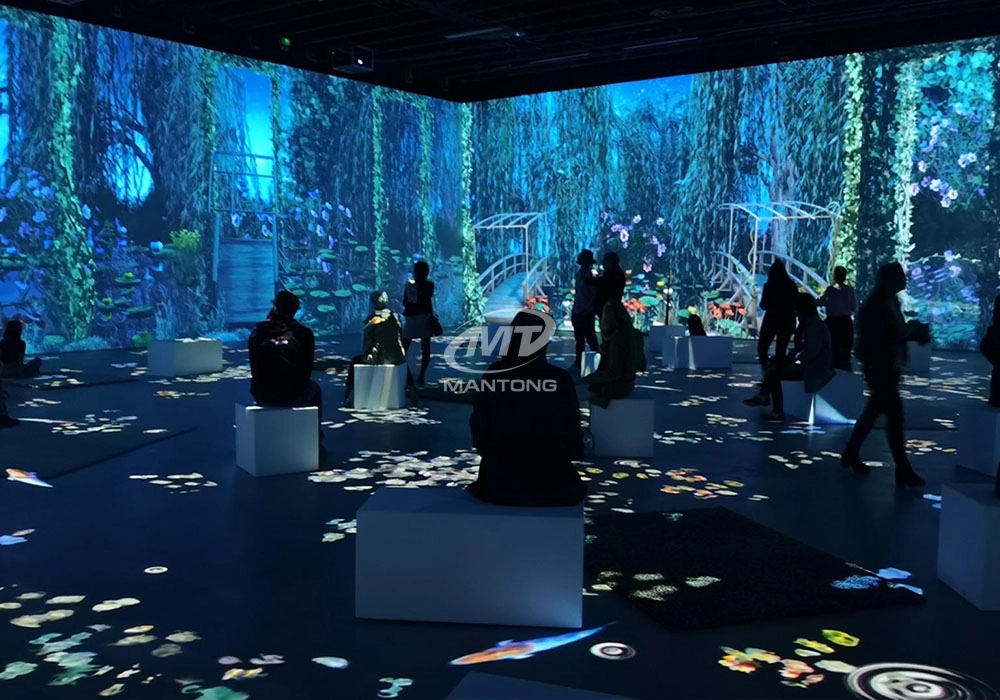
Mantong 6500LM High-Lumen Projector for Large-Scale Immersive Room Projection
Transform any space with Mantong's immersive projection mapping systems. Our high-lumen projectors (up to 6500 LM) and custom software create captivating interactive experiences for floors and walls. Ideal for museums, events, retail, and hospitality. Each kit includes professional ceiling mounting and 80+ pre-loaded video contents and is backed by a 12-month warranty and CE certification. We offer full customization and support to bring your vision to life.
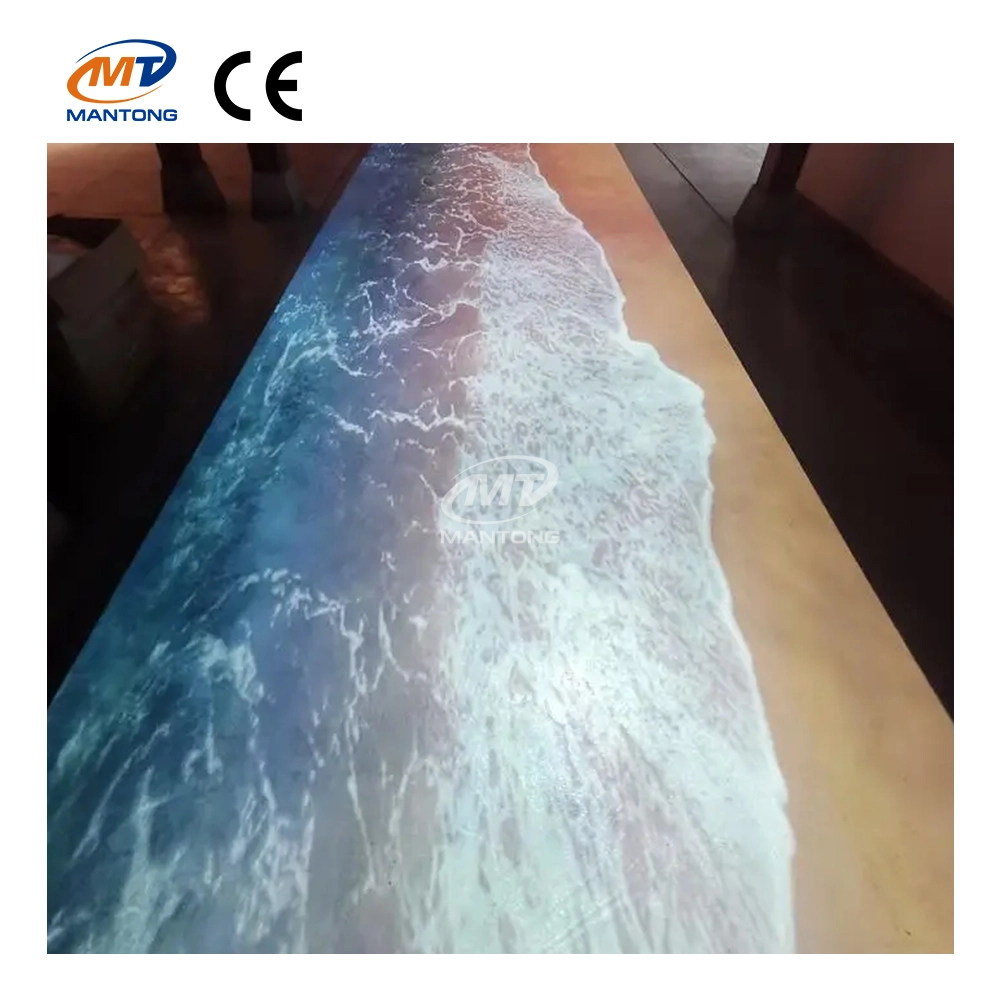
Indoor Interactive Floor Projector System - Customized Design & Installation Support
Indoor interactive floor projections display dynamic themed videos on the floor, commonly used in venues aiming to enhance brand influence or attract foot traffic, such as restaurants, hotel corridors, and brand car retail stores.
By using projectors and compatible software, the interactive content is projected onto the floor, encouraging engagement between people and the projected visuals. A single 5500-lumen indoor floor projector can cover an area of 5 m × 3 m. Typically, each project will use at least 3 units to ensure broad coverage and optimal visual effects.
We also offer customized design and installation support to enhance the interactive experience for your venue.
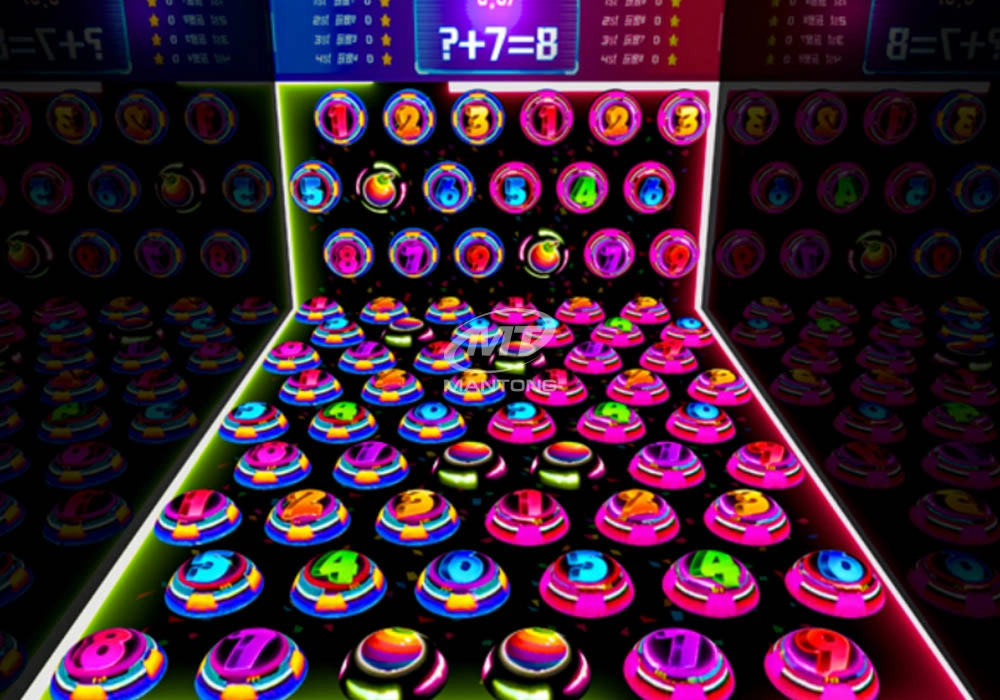
Amusement Rapidly Rotating Bouncing Sphere Interactive Wall Floor Projection Sports Games
Rapidly Rotating Bouncing Sphere is an interactive space where participants jump on rotating spheres. As they step on it, the spheres surface will show special interactivity
Jumping on spheres of the same color in succession causes them to pop, releasing light particles. The more consecutive jumps, the greater the reward—caterpillars appear, and eventually, all spheres of that color burst, filling the space with light and even more caterpillars.
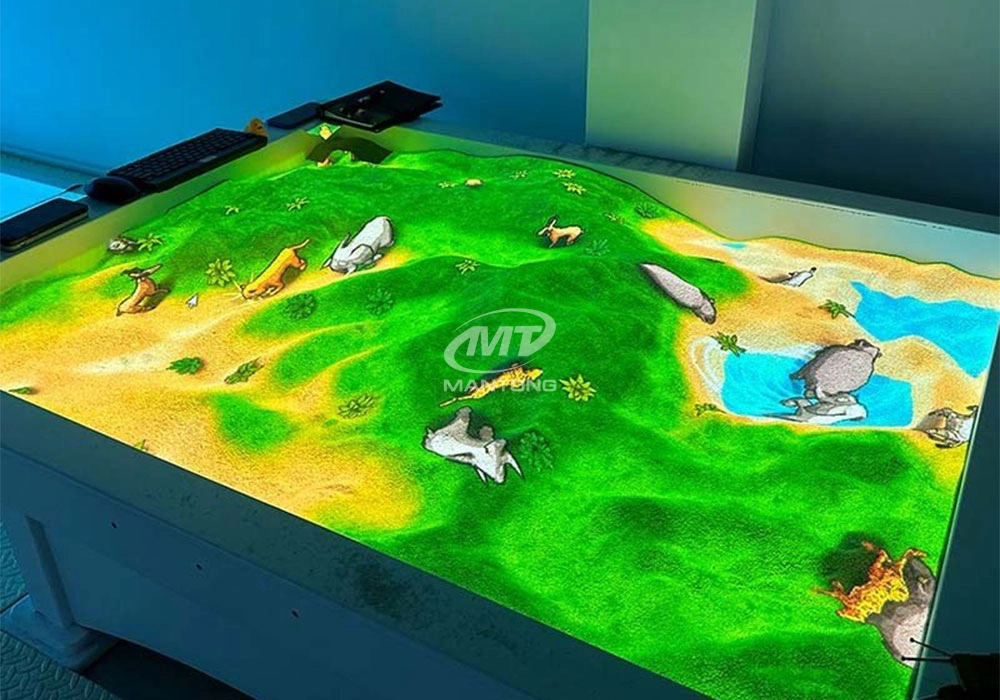
Interactive Sandbox Projection Mapping Games For Kids Play Park
Bring imagination to life with interactive sandbox projection mapping games designed for kids’ play parks. Using cutting-edge projection technology and real-time motion sensing, children can dig, build, and explore virtual worlds directly in the sand. Educational, engaging, and endlessly fun — it’s the perfect blend of play and learning.

Kaida Business Center, Shixin Road, Panyu District,Guangzhou City, Guangdong Province, China.
ManTong
ManTong
ManTong