
Choosing Interactive Projector Games for Museums
- Understanding visitor intent and exhibition goals
- Define the educational and engagement objectives
- Segment your audience and accessibility requirements
- Decide on dwell time and throughput
- Technical selection: projectors, sensors, and software
- Choosing the right projector type
- Sensor and tracking options for interactivity
- Software platforms and content flexibility
- Design considerations for effective museum games
- Balancing novelty with clarity
- Multisensory design and narrative integration
- Durability, hygiene, and safety in public spaces
- Budgeting, procurement, and lifecycle management
- Comparing total cost of ownership
- Maintenance plans and remote support
- Evaluating ROI and impact measurement
- Comparative data: projector technologies and common game mechanics
- Common interactive game mechanics and applicability
- Case studies and deployment lessons
- Small regional museum—low budget, high impact
- Large science center—multi-user, high throughput
- Projection mapping over artifacts—conservation considerations
- Mantong Digital: a partner for interactive projection solutions
- Who we are and why it matters
- Product breadth and customization
- Competitive differentiators and technical strength
- Procurement checklist and deployment roadmap
- Key questions to ask vendors
- Deployment timeline (typical)
- Post-deployment evaluation
- Frequently Asked Questions (FAQ)
- 1. What makes an interactive projector game suitable for a museum?
- 2. How much space do I need for a floor projection game?
- 3. Are projector-based interactions hygienic post-COVID?
- 4. How do I manage multilingual requirements in interactive games?
- 5. Can interactive projection be used with real artifacts?
- 6. What analytics should I track?
- 7. How do I select between buying and renting projection equipment?
As an interactive projection consultant based in Guangzhou, I often work with museums looking to add interactive projector games to their exhibits. Choosing the right interactive projector game is not just about flashy visuals; it's about matching technology, content strategy, accessibility, and long-term operational needs to your museum's mission and visitor profile. This article walks through the decision points I use with clients, backed by industry sources and practical comparisons to help curators, exhibit designers, and AV managers select solutions that truly engage visitors while remaining sustainable.
Understanding visitor intent and exhibition goals
Define the educational and engagement objectives
Before evaluating hardware or games, I start by clarifying what the exhibit must accomplish. Do you want visitors to learn specific facts, practice a skill, or simply experience wonder? Interactive projector games can support all three, but each requires different interaction models: knowledge checks (quiz-style interactions), skill-based interactions (timed tasks), or immersive free-play (open-ended exploration). Align game mechanics with learning outcomes to avoid technology-driven exhibits that look impressive but miss pedagogical goals.
Segment your audience and accessibility requirements
Museum audiences vary widely: families with young children, school groups, seniors, or enthusiasts. I always map primary and secondary user personas and consider accessibility needs—height-adjustable displays, clear audio, multilingual UI, and non-reliance on fine motor skills. The International Council of Museums (ICOM) emphasizes public accessibility as a core museum responsibility; when designing interactive projector games, accessibility should be a design constraint, not an afterthought.
Decide on dwell time and throughput
Estimate how long visitors should engage with the game and how many users will interact simultaneously. High-dwell attractions (5–15 minutes) require deeper narrative and reliable session management, while short dwell experiences (30–90 seconds) should be instantly intuitive. Throughput constraints can influence whether you deploy single-player floor projections, multi-user wall interactions, or networked stations to avoid bottlenecks during peak hours.
Technical selection: projectors, sensors, and software
Choosing the right projector type
Projector selection impacts brightness, maintenance, and image stability. Today, laser projectors offer longer life and consistent brightness compared to lamp-based units, making them ideal for continuous museum operation. For entry-level exhibits or temporary installations, lamp and LED projectors can be cost-effective but usually require more maintenance.
Sensor and tracking options for interactivity
Interactive projector games use a mix of sensors: infrared cameras for motion tracking, depth cameras (e.g., Intel RealSense or Microsoft Azure Kinect) for skeleton and gesture recognition, and floor-based pressure sensors for footsteps. Each sensor has trade-offs: depth cameras excel at body tracking but may be affected by ambient light or reflective surfaces, while infrared systems are robust in darker exhibits. I recommend testing sensors in the actual exhibition environment before final procurement.
Software platforms and content flexibility
Choose software that supports content updates, analytics, and remote management. Open or extensible platforms enable customization and localization—critical for museums hosting rotating exhibitions or multilingual visitors. Verify whether the interactive projector games include content management systems (CMS), support for scheduled content, and telemetry for usage statistics to inform long-term curation choices.
Design considerations for effective museum games
Balancing novelty with clarity
Interactive projection is inherently novel, but novelty wears off quickly if the interaction is confusing. I advocate for a layered onboarding approach: immediate visual affordances (bold prompts), short in-game instructions, and optional deeper explanations. This ensures walk-up-and-play usability for casual visitors and richer learning for those who stay longer.
Multisensory design and narrative integration
Successful interactive projector games combine visuals, sound, and tactile cues. Integrate audio cues to reinforce actions, haptic flooring where possible for physical play, and narrative hooks that connect the game to the exhibition content. Research on museum learning suggests storytelling significantly improves retention; align the game's narrative with exhibit themes to make the experience meaningful (for a general overview of museum learning principles, see Wikipedia: Museum).
Durability, hygiene, and safety in public spaces
Museums are public spaces with heavy foot traffic. Use robust materials for any physical interfaces and design gameplay to reduce wear (e.g., favor gestures and foot-based interactions over fragile touch surfaces). Since COVID-19, hygiene has become a priority—projection-based interactions that avoid touch are advantageous. Also ensure all installations meet local electrical and safety codes (consult relevant authorities for standards in your region).
Budgeting, procurement, and lifecycle management
Comparing total cost of ownership
Initial purchase price is only one component of cost. Consider total cost of ownership (TCO): installation, content creation or licensing, staff training, maintenance, and energy consumption. Laser projectors tend to have higher upfront cost but lower lamp replacement and maintenance expenses over 5–7 years. I encourage museums to calculate TCO over at least a 5-year horizon to make cost-effective choices.
Maintenance plans and remote support
Require vendors to include maintenance SLAs and remote diagnostics. Interactive systems often benefit from remote monitoring and modular components that are quick to replace. If possible, choose providers who offer on-site training for your technical staff and remote content updates to minimize downtime.
Evaluating ROI and impact measurement
Define KPIs before installation: dwell time increase, repeat visits, learning outcomes, or revenue from special exhibitions. Use built-in analytics (user counts, session lengths, game completion rates) to measure impact. I also recommend pre- and post-installation visitor surveys to capture qualitative outcomes related to learning and satisfaction.
Comparative data: projector technologies and common game mechanics
Below is a concise comparison of typical projector types and common interactive game mechanics relevant to museums. Data sources such as projectors' lifespan and brightness references are drawn from industry resources and technical summaries.
| Feature | Laser Projector | Lamp Projector | LED Projector |
|---|---|---|---|
| Typical lifespan | 20,000–30,000 hours (low maintenance) | 2,000–5,000 hours (lamp replacements) | 10,000–20,000 hours |
| Brightness range | 2,000–20,000+ ANSI lumens | 1,000–6,000 ANSI lumens | 800–5,000 ANSI lumens |
| Color stability | High (consistent over time) | Declines as lamp ages | Good, but depends on model |
| Typical use case | Permanent exhibits, large-scale mapping | Temporary installations, budget constraints | Small exhibits, portable demos |
Sources: Digital Light Processing (DLP) - Wikipedia, Projector (display device) - Wikipedia.
Common interactive game mechanics and applicability
- Floor projection games (step to trigger): excellent for family zones and physical engagement.
- Wall projection puzzles (touchless gesture-based): suitable for storytelling and group play.
- Interactive mapping (projection mapping over artifacts or maquettes): high impact for historic or architectural exhibits; requires careful calibration.
Case studies and deployment lessons
Small regional museum—low budget, high impact
I worked with a regional history museum that wanted to enliven a single gallery. We chose a compact LED projector with an infrared sensor and a curated game focused on matching artifacts to time periods. The result: average dwell time in the gallery increased by 40% in the first three months. Key takeaways: start small, measure impact, iterate on content.
Large science center—multi-user, high throughput
For a science center, we deployed an array of laser projectors with depth sensors for a collaborative floor game. The installation supported up to eight users simultaneously and included a CMS for daily content rotation. This required robust cooling, scheduled maintenance, and on-site technical training for staff to manage peak visitor periods.
Projection mapping over artifacts—conservation considerations
When projecting onto sensitive artifacts or historical surfaces, coordinate with your conservators. Non-contact projection is generally safe, but avoid intense heat sources and verify that lighting cycles won’t degrade materials. The principles of conservation should guide installation decisions.
Mantong Digital: a partner for interactive projection solutions
Who we are and why it matters
Mantong Digital is a one-stop interactive projection solution provider and direct manufacturer based in Guangzhou, China, with over 10 years of industry experience. I recommend them for museums that need both hardware and software delivered as an integrated package. Mantong focuses on innovative, flexible, and cost-effective projection solutions that simplify procurement and lifecycle management.
Product breadth and customization
At Mantong, we specialize in customized solutions across a wide range of scenarios: immersive projection, interactive floor projection, interactive wall projection, immersive rooms, 3D projection, and interactive projection games. We offer projection shows, interactive projection mapping, and turnkey systems that include projectors, sensors, software, and installation services. This vertical integration reduces compatibility issues and accelerates deployment timelines.
Competitive differentiators and technical strength
What sets Mantong apart is direct manufacturing control, enabling faster prototyping and cost optimization. Mantong invests in R&D for robust projection engines, multi-sensor fusion for accurate tracking, and CMS-enabled content pipelines. Our vision is to become the world's leading interactive projection manufacturer, and we are actively seeking business partnerships worldwide. Visit our website: https://www.mtprojection.com/.
Procurement checklist and deployment roadmap
Key questions to ask vendors
- What is the projected lifespan and warranty for the projector and sensors?
- Does the solution include remote monitoring and a CMS for content updates?
- What accessibility features and language supports are included?
- Can you provide references from similar museum installations?
Deployment timeline (typical)
A typical small-to-medium installation timeline looks like this:
- Week 1–2: Requirements gathering and site survey
- Week 3–6: System design and content concepting
- Week 7–10: Manufacturing and software development
- Week 11–12: On-site installation, calibration, and staff training
- Ongoing: Maintenance and content iteration
Post-deployment evaluation
After launch, collect analytics and visitor feedback for at least three months, then iterate on content and interaction patterns. Continuous improvement is the hallmark of successful interactive exhibits.
Frequently Asked Questions (FAQ)
1. What makes an interactive projector game suitable for a museum?
A suitable game aligns with exhibition goals, is accessible, durable, easily maintainable, and provides measurable learning or engagement outcomes. It should be intuitive for walk-up users and scalable for different visitor groups.
2. How much space do I need for a floor projection game?
Space needs vary by interaction. Simple step-trigger games can fit within 2–4 m²; collaborative games that involve running or group play may require 10–30 m². Conduct a site assessment to plan safe circulation and sightlines.
3. Are projector-based interactions hygienic post-COVID?
Yes—projection-based interactions that avoid touch are more hygienic than shared touchscreens. Use gesture or foot-based sensors and ensure regular cleaning of any physical surfaces used in the exhibit.
4. How do I manage multilingual requirements in interactive games?
Choose platforms that support localization and on-the-fly language switching. Use clear icons and pictograms to reduce reliance on text, and include audio narration for languages you cannot display as text.
5. Can interactive projection be used with real artifacts?
Yes, projection mapping can enhance artifacts without contact. Coordinate with conservators to confirm that light levels and positioning are safe. Mapping onto replicas or maquettes is a low-risk alternative for fragile originals.
6. What analytics should I track?
Track session counts, average dwell time, completion rates, and peak usage times. Qualitative feedback (surveys, staff observations) helps interpret quantitative data.
7. How do I select between buying and renting projection equipment?
Renting suits short-term exhibitions or pilot projects. For permanent installations, purchasing—ideally from a manufacturer that provides integrated hardware and software—often yields lower TCO and better long-term support.
If you want to discuss a project, evaluate specific interactive projector games for your museum, or explore a customized solution, contact Mantong Digital. We provide end-to-end services from concept and prototyping to manufacturing and global support. Visit https://www.mtprojection.com/ to view products like immersive projection, interactive floor projection, interactive wall projection, immersive rooms, 3D projection, interactive projection games, projection shows, and interactive projection mapping. For business inquiries and partnerships, please reach out via our website—I'm available to consult on requirements and help design an exhibit that meets your institution's goals.
Best professional immersive projection mapping manufacturers and supplier brands in China
Integrating Sensors with Floor Projection Games
Installation Costs for Interactive Floor Projection Systems
The latest trends for interactive projection mapping
One-Stop Projection Solution Provider Since 2011
What's the application of Immersive projection ?
It can be used in various venues, such as art exhibition, entertainment venues, educational institution, Wedding hall /Banquet/Bar,Yoga Studio and so on. It often involves advanced projection techniques, multimedia content, and interactive elements to engage and captivate the audience's senses.
What's Immersive Projection ?
Immersive projection refers to a technology that creates a captivating and all-encompassing visual experience for viewers by projecting images or videos onto large surfaces, such as walls, floors, or even entire rooms. This technology aims to immerse the audience in a simulated environment, blurring the boundaries between the physical and virtual worlds.
What information do you need to know before making the proposal/solution?
We know that everyone wants to know the price, but the price of our products is determined by many factors since most of our products are custom, so no ready price list. In order to fast understand what you need, can you send us an inquiry like this?
For example: I am really interested in your immersive projection products, we are a company in the USA and want to install some in my restaurant. It is about 50 meters long, and 5m in width. Projection size you can decide but the length should be not less than 20 meters. We want some content about SeaWorld because our place is all about the sea. Thank you.
Are you trader or manufacturer ?
We are direct manufacturer who specialize in providing one-stop solution for different outdoor & indoor projection project with our stable software and qualified projectors
How to install the projection equipment ?
1) Install the projector in a suitable position. We will provide you with a hanger, which you need to fix on the ceiling with
screws.
2) Connect projectors, computers and other accessories through wires.
3) After completing the above 2 steps, we will carry out the edge blending steps. Our team can complete it through remote
control.
In general, installation instructions for each project need to be specified on a project-by-project basis. The above is for
reference only.
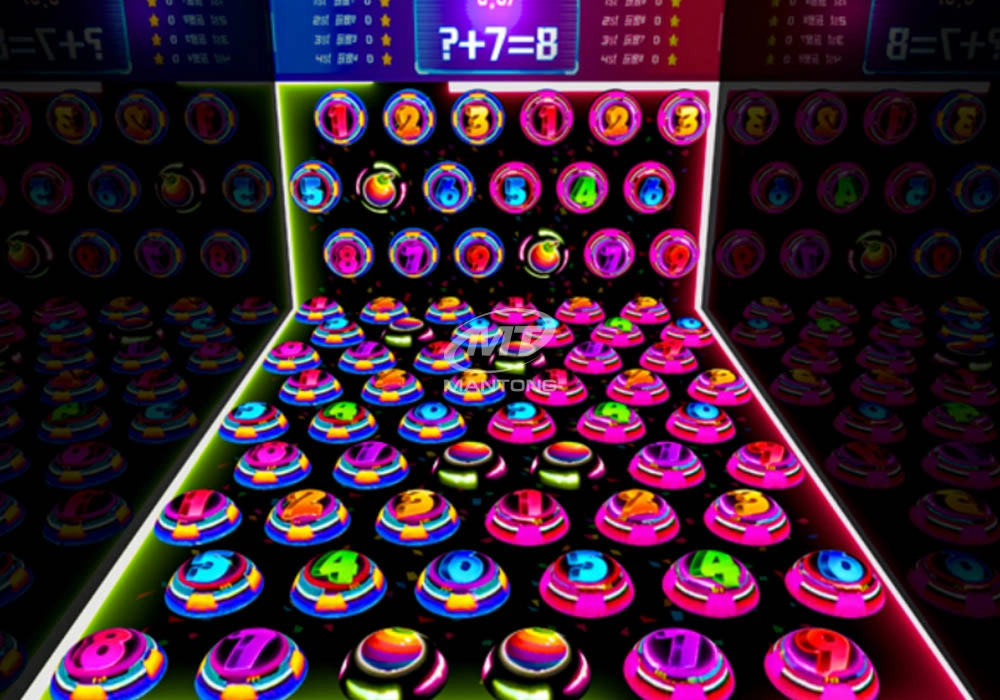
Amusement Rapidly Rotating Bouncing Sphere Interactive Wall Floor Projection Sports Games
Rapidly Rotating Bouncing Sphere is an interactive space where participants jump on rotating spheres. As they step on it, the spheres surface will show special interactivity
Jumping on spheres of the same color in succession causes them to pop, releasing light particles. The more consecutive jumps, the greater the reward—caterpillars appear, and eventually, all spheres of that color burst, filling the space with light and even more caterpillars.
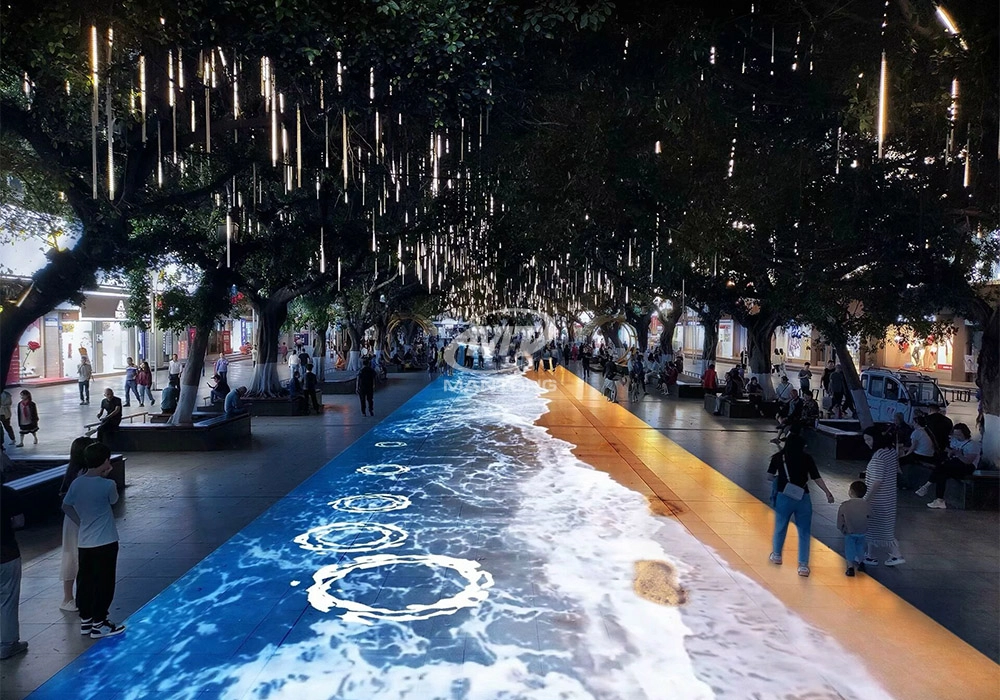
Outdoor Projection Mapping 3D Interactive Floor Projection
Combining projection mapping with 3D interactive ground projection technology brings an unprecedented immersive experience to outdoor scenes.
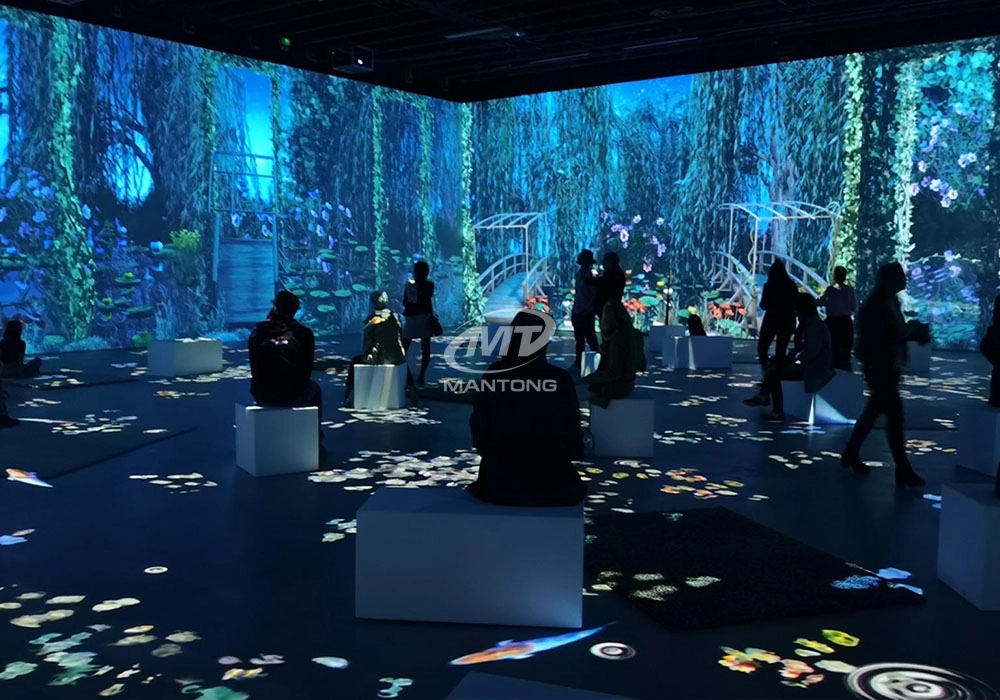
Mantong 6500LM High-Lumen Projector for Large-Scale Immersive Room Projection
Transform any space with Mantong's immersive projection mapping systems. Our high-lumen projectors (up to 6500 LM) and custom software create captivating interactive experiences for floors and walls. Ideal for museums, events, retail, and hospitality. Each kit includes professional ceiling mounting and 80+ pre-loaded video contents and is backed by a 12-month warranty and CE certification. We offer full customization and support to bring your vision to life.
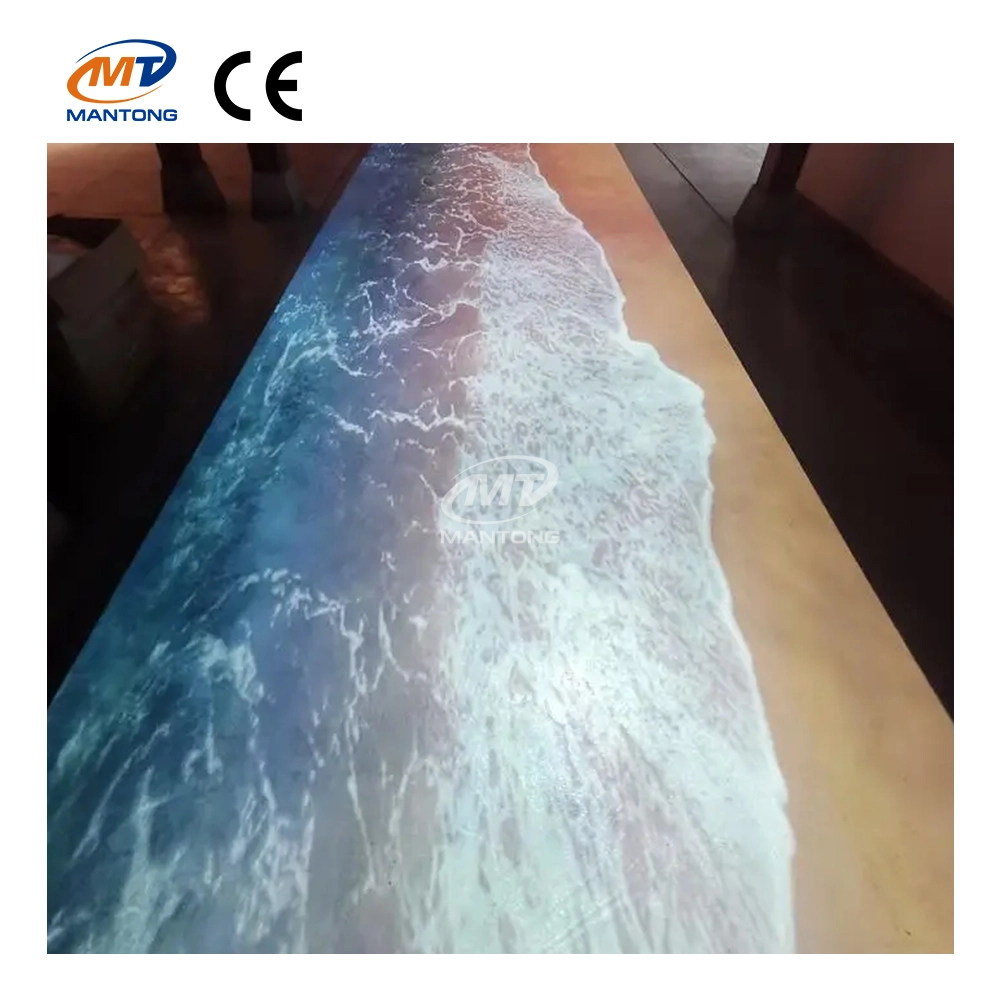
Indoor Interactive Floor Projector System - Customized Design & Installation Support
Indoor interactive floor projections display dynamic themed videos on the floor, commonly used in venues aiming to enhance brand influence or attract foot traffic, such as restaurants, hotel corridors, and brand car retail stores.
By using projectors and compatible software, the interactive content is projected onto the floor, encouraging engagement between people and the projected visuals. A single 5500-lumen indoor floor projector can cover an area of 5 m × 3 m. Typically, each project will use at least 3 units to ensure broad coverage and optimal visual effects.
We also offer customized design and installation support to enhance the interactive experience for your venue.

Kaida Business Center, Shixin Road, Panyu District,Guangzhou City, Guangdong Province, China.
ManTong
ManTong
ManTong