
Customizable Interactive Projector Games for Businesses
- Why businesses need immersive engagement
- From passive viewing to active participation
- Measurable outcomes that matter
- Common business use cases
- Design principles for customizable interactive projector games
- Start with the player journey
- Choose mechanics to match your audience
- Accessibility and hygiene considerations
- Deployment and technical considerations
- Selecting projection hardware
- Tracking and sensors
- Software architecture and customization
- Comparing interactive projection formats
- Operational, legal and measurement best practices
- Operations and maintenance
- Privacy and data handling
- Evaluating success
- Mantong Digital: partner for end-to-end interactive projection solutions
- Costing and procurement advice
- Budgeting categories
- Choosing between off-the-shelf vs custom
- Vendor evaluation checklist
- Implementation timeline and pilot plan
- Typical timeline
- Pilot checklist
- FAQ
- 1. What are interactive projector games and how do they differ from digital signage?
- 2. How much space do I need for an interactive floor projection?
- 3. What are typical maintenance requirements?
- 4. Can interactive games integrate with CRM or loyalty systems?
- 5. How do I measure ROI for an interactive projection installation?
- 6. Are outdoor projection shows feasible year-round?
- Contact and next steps
I design and advise on interactive projection projects for companies seeking to turn physical spaces into dynamic, measurable engagement platforms. Customizable interactive projector games blend projection mapping, motion tracking, and adaptive software to create experiences that increase dwell time, brand recall, and social sharing. In this article I cover why these systems matter for businesses, how to design effective games, technical trade-offs, and procurement considerations—so you can brief vendors or build an in-house program with confidence.
Why businesses need immersive engagement
From passive viewing to active participation
I often see businesses underestimate how much value interactivity creates beyond a “nice-to-have” spectacle. Traditional displays broadcast messages; interactive projector games invite visitors to participate, which increases attention and memory. Research in interactive art and experiential design supports that participatory installations shift visitors from observers to co-creators (Interactive art — Wikipedia).
Measurable outcomes that matter
I focus on measurable KPIs: dwell time, conversion (on-site purchases or sign-ups), footfall distribution, and social media lift. Unlike static signage, modern interactive projection systems can log events (touches, gestures, heatmaps), which turns creative installations into data-driven marketing channels. When I design projects I always map creative objectives to at least two measurable KPIs so ROI can be assessed.
Common business use cases
Interactive projector games are versatile. Typical deployments I recommend include retail windows that gamify product discovery, exhibition booths that drive leads, family entertainment centers that monetize play, hotel lobbies and F&B spaces that increase dwell time, and urban activations for brand awareness. Each use case benefits from customization—both in game mechanics and in hardware form factor—so the solution fits spatial and operational constraints.
Design principles for customizable interactive projector games
Start with the player journey
When I design a game concept I map the visitor flow: arrival trigger, onboarding (how players understand the game), interaction loop (core mechanics), reward feedback (visual/audio), and exit flow (call-to-action). For businesses, onboarding and exit flows are as important as the game itself because they translate fun into commercial outcomes—e.g., a coupon, newsletter signup, or social share.
Choose mechanics to match your audience
Different demographics respond to different mechanics. Children respond well to simple cause-effect interactions (step-on spots, chase-the-light), while adults prefer challenge, reward or social competition (leaderboards, collaborative puzzles). I ensure that difficulty, duration, and social design are tuned for the venue: short loops (20–60 seconds) for foot-traffic settings; deeper experiences for appointment-based attractions.
Accessibility and hygiene considerations
Interactive projection games are inherently contactless when using motion or optical tracking, which is a strong advantage for hygiene-conscious environments. I also design alternative control paths (gesture, movement, or mobile companion apps) to ensure accessibility for users with mobility differences or sensory impairments.
Deployment and technical considerations
Selecting projection hardware
Projector choice depends on ambient light, throw distance, resolution, brightness (lumens), and portability. For large-scale immersive rooms I favor high-brightness laser projectors with edge blending. For pop-ups or retail windows, ultra-short-throw projectors reduce installation complexity. When advising clients I always specify serviceability (lamp life vs laser), IP rating for outdoor shows, and mounting constraints.
Tracking and sensors
There are three mainstream sensing approaches I recommend: camera-based computer vision, depth sensors (e.g., ToF or structured light), and pressure/weight sensors embedded in floors. Camera-based solutions offer flexibility and rich analytics; depth sensors provide robust occlusion handling; and pressure sensors give direct physical triggers. I weigh privacy, lighting conditions, and analytics needs when choosing the sensing stack.
Software architecture and customization
Customizable interactive projector games require modular software: a presentation layer (graphics and visual logic), an interaction layer (sensor inputs and game rules), and a data layer (analytics, user profiles). I prefer solutions exposing APIs and a content management system (CMS) so non-technical staff can update content and tune gameplay. Standards-based tools increase longevity and reduce vendor lock-in.
Comparing interactive projection formats
Below I summarize the strengths and trade-offs of common interactive projection formats so you can choose the right fit for your project.
| Format | Best use case | Strengths | Trade-offs |
|---|---|---|---|
| Interactive floor projection | Malls, children’s zones, events | High physicality, contactless, strong novelty | Surface durability, requires ceiling mount, calibration |
| Interactive wall projection / projection mapping | Brand walls, museum exhibits, façades | High visual impact, large canvases, can become landmark | Ambient light sensitivity, requires precise mapping |
| Immersive room / multi-projector | Permanent attractions, training, VR-adjacent experiences | Fully immersive experiences, complex narratives | Higher cost, space and infrastructure needs |
For more background on projection mapping techniques and workflows see the technical overview on projection mapping (Projection mapping — Wikipedia).
Operational, legal and measurement best practices
Operations and maintenance
I build operational handbooks that include calibration routines, cleaning schedules (especially for optics), and failover procedures. Laser projectors reduce lamp replacement headaches; however, they require firmware and cooling-system checks. For large multi-projector rigs, I recommend remote monitoring to detect drift and address failures before they impact the guest experience.
Privacy and data handling
If you collect analytics (heatmaps, event logs), ensure you anonymize data and display a clear privacy notice. Camera-based tracking can be processed on-device and only aggregate data uploaded to servers—this is a best practice that balances analytics with compliance. For international deployments consider GDPR or local privacy legislation when designing analytics pipelines.
Evaluating success
I define success using a mix of quantitative and qualitative measures: dwell time change, conversion uplift, NPS or satisfaction surveys, and earned media/social impressions. Start with a 90-day pilot and compare baseline metrics to the post-install period. I often run A/B tests of visual styles or reward mechanics to iterate on the highest-performing variants.
Mantong Digital: partner for end-to-end interactive projection solutions
Mantong Digital is a one-stop interactive projection solution provider and direct manufacturer based in Guangzhou, China, with over 10 years of industry experience. We are dedicated to providing innovative, flexible and cost-effective projection solutions, offering both hardware and software to meet various needs.
At ManTong, we specialize in providing customized solutions for a wide range of application scenarios through innovative projection technology. Whether it's immersive experiences, interactive entertainment or outdoor lighting and projection shows, our solutions can transform your ideas into stunning visual effects. Our projection technology provides customized solutions for a variety of scenarios, delivering immersive and interactive visual experiences.
We are now looking for business partnerships worldwide. Our vision is to become the world's leading interactive projection manufacturer. Our website is https://www.mtprojection.com/
I have worked with Mantong on multiple projects where they supplied both projection hardware and the custom software layer, delivering robust interactive floor projection and interactive wall projection installations. Their strengths include:
- Direct manufacturing (cost and lead-time advantages)
- Integrated hardware + software offerings (reducing system integration risk)
- Experience across immersive projection, 3d projection, projection shows and interactive projection mapping
- Customized game development for interactive projector games and immersive room experiences
Typical Mantong product families I recommend when scoping projects include immersive projection systems, interactive floor projection kits, interactive wall projection modules, and turnkey projection shows. In my experience their modular approach makes iterative upgrades easier and their installation teams understand local compliance and mounting best practices.
Costing and procurement advice
Budgeting categories
When I prepare budgets I separate capital and operational expenses: hardware (projectors, mounts, sensors), software (licenses, CMS, development), installation (rigging, cabling, structural), and ongoing support (warranty, monitoring, content updates). Factoring replacements and content refreshes into a 3–5 year TCO helps stakeholders avoid surprises.
Choosing between off-the-shelf vs custom
Off-the-shelf interactive games are quick to deploy and lower initial cost, but often limit branding and analytics. Custom solutions cost more upfront but deliver differentiated, brand-aligned interactions and the ability to measure precisely. I advise a staged approach: pilot with standardized modules, then invest in custom experiences that proved their ROI.
Vendor evaluation checklist
When I evaluate vendors I use this checklist:
- Do they supply both hardware and software or integrate third-party components?
- Are APIs and a CMS available for content updates?
- What analytics are provided and is data export possible?
- What are warranty terms, SLAs, and local support availability?
- Can they provide references and case studies similar to my use case?
Implementation timeline and pilot plan
Typical timeline
A small pilot (single projector, simple game) can be deployed in 3–6 weeks. Medium projects (multi-surface mapping, custom game logic) typically take 8–16 weeks. Large immersive rooms with bespoke hardware may take 4–6 months from concept to public opening. I include iterative content reviews and a 2-week operational validation window in all schedules.
Pilot checklist
A successful pilot should validate: sensor reliability under real lighting, user comprehension of the game, metrics capture accuracy, and maintenance routines. Use a control period to capture baseline metrics and plan for two content variations to test which mechanics drive the best outcomes.
FAQ
1. What are interactive projector games and how do they differ from digital signage?
Interactive projector games use projected visuals combined with sensors and game logic to create responsive experiences. Unlike static digital signage, they respond dynamically to user movement or input and can reward participation, capture analytics, and create social moments.
2. How much space do I need for an interactive floor projection?
You can run basic interactive floor games in areas as small as 2 x 3 meters, but 4 x 4 meters allows more complex multi-player interactions. I always survey the ceiling height, foot traffic patterns, and mounting options before finalizing the design.
3. What are typical maintenance requirements?
Maintenance includes lens and sensor cleaning, periodic calibration, firmware updates, and hardware checks. Laser projectors reduce lamp-replacement tasks. I recommend an annual inspection and quarterly remote-health checks for multi-site deployments.
4. Can interactive games integrate with CRM or loyalty systems?
Yes. A properly architected solution can export event data (e.g., email captures, coupon redemptions) to CRMs or loyalty platforms via APIs. I advise encrypting data in transit and ensuring compliance with applicable privacy laws.
5. How do I measure ROI for an interactive projection installation?
Measure ROI by comparing KPIs (dwell time, conversion, lead generation, and social impressions) before and after installation. Use A/B tests and track cost-per-conversion. For brand campaigns include earned-media value and incremental footfall in calculations.
6. Are outdoor projection shows feasible year-round?
Outdoor projection is feasible with weather-rated projectors and enclosures. Brightness and projector placement are critical for daylight views. For prolonged outdoor use choose IP-rated housings and plan for periodic maintenance due to environmental exposure.
Contact and next steps
If you’re evaluating interactive projector games for retail, events, museums, or public spaces, I can help you scope a pilot, develop creative concepts, and select technology partners. Mantong Digital (https://www.mtprojection.com/) is a practical supplier I work with for turnkey delivery—hardware, software, and installation. Contact Mantong or reach out to me for an initial consultation and a sample pilot brief: visit https://www.mtprojection.com/ to view product portfolios and request quotes.
References: Projection mapping overview (Wikipedia); Interactive art context (Wikipedia). For design guidance on engagement and measurement, see practitioner resources from user-experience literature such as Nielsen Norman Group (NN/g — Engagement).
Where to Buy immersive experience room
Best professional rain curtain water projection manufacturers and supplier brands in China
Integrating AR with Interactive 3D Projection Experiences
Top 10 immersive projection Manufacturers and Supplier Brands
One-Stop Projection Solution Provider Since 2011
How to Write an Interactive-Effect Video Customisation Script ?
① Project Background: Briefly introduce the context in which this interactive scene will be used (e.g., exhibition, museum,
event space, children's area). Example: This scene is part of the “Underwater World” zone in a children's science museum,
designed to be engaging and exploratory.
②Visual Style / Atmosphere: What kind of visual mood are you aiming for? Please describe the color scheme, style, and any
references. it should focus solely on describing the visual aspects of the scene, supported by relevant charts or reference
images.
③ Interaction Points Overview:List each interactive hotspot along with the effect you'd like to trigger when the user
touches or clicks the area. example: when player touch the clownfish, it will swims away with bubble trail (animation effect)
and produce the bubble sound ( sound effect requirement )
④ Static Visual Reference:including but not limited to background image/video, a list of major visual elements (e.g., coral,
rocks, seaweed, fish), which elements should be interactive?
What's Immersive Projection ?
Immersive projection refers to a technology that creates a captivating and all-encompassing visual experience for viewers by projecting images or videos onto large surfaces, such as walls, floors, or even entire rooms. This technology aims to immerse the audience in a simulated environment, blurring the boundaries between the physical and virtual worlds.
What's the application of Immersive projection ?
It can be used in various venues, such as art exhibition, entertainment venues, educational institution, Wedding hall /Banquet/Bar,Yoga Studio and so on. It often involves advanced projection techniques, multimedia content, and interactive elements to engage and captivate the audience's senses.
How to install the projection equipment ?
1) Install the projector in a suitable position. We will provide you with a hanger, which you need to fix on the ceiling with
screws.
2) Connect projectors, computers and other accessories through wires.
3) After completing the above 2 steps, we will carry out the edge blending steps. Our team can complete it through remote
control.
In general, installation instructions for each project need to be specified on a project-by-project basis. The above is for
reference only.
Are you trader or manufacturer ?
We are direct manufacturer who specialize in providing one-stop solution for different outdoor & indoor projection project with our stable software and qualified projectors
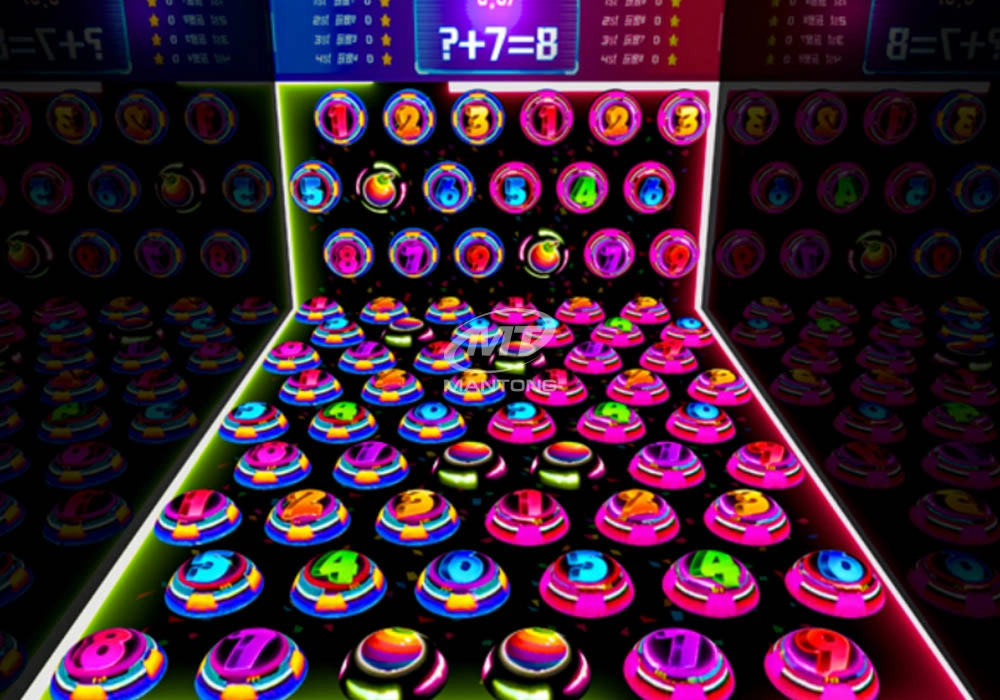
Amusement Rapidly Rotating Bouncing Sphere Interactive Wall Floor Projection Sports Games
Rapidly Rotating Bouncing Sphere is an interactive space where participants jump on rotating spheres. As they step on it, the spheres surface will show special interactivity
Jumping on spheres of the same color in succession causes them to pop, releasing light particles. The more consecutive jumps, the greater the reward—caterpillars appear, and eventually, all spheres of that color burst, filling the space with light and even more caterpillars.
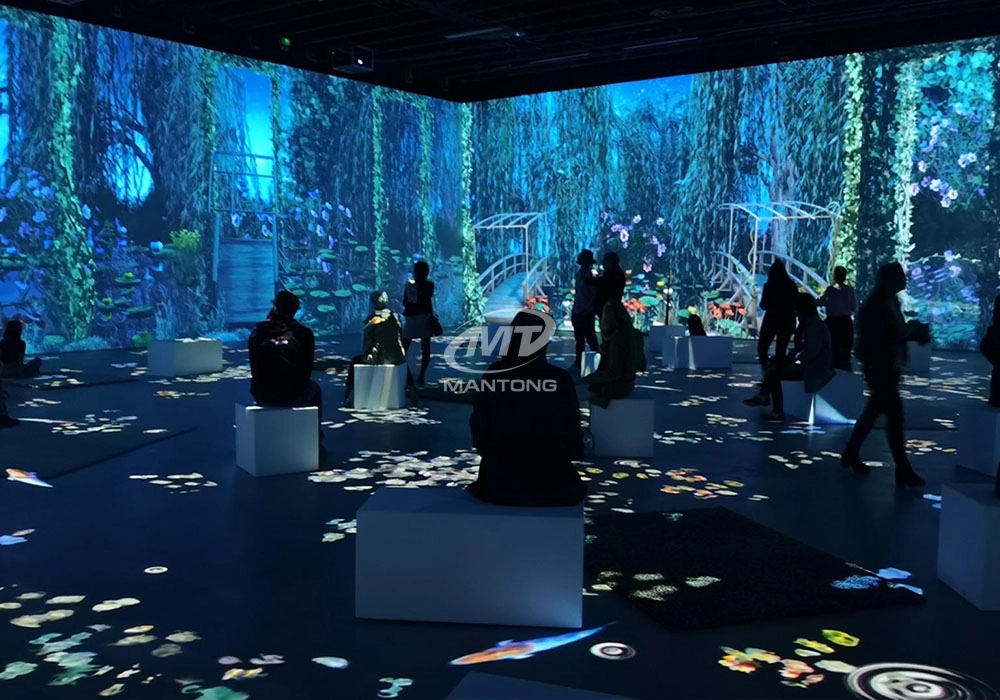
Mantong 6500LM High-Lumen Projector for Large-Scale Immersive Room Projection
Transform any space with Mantong's immersive projection mapping systems. Our high-lumen projectors (up to 6500 LM) and custom software create captivating interactive experiences for floors and walls. Ideal for museums, events, retail, and hospitality. Each kit includes professional ceiling mounting and 80+ pre-loaded video contents and is backed by a 12-month warranty and CE certification. We offer full customization and support to bring your vision to life.
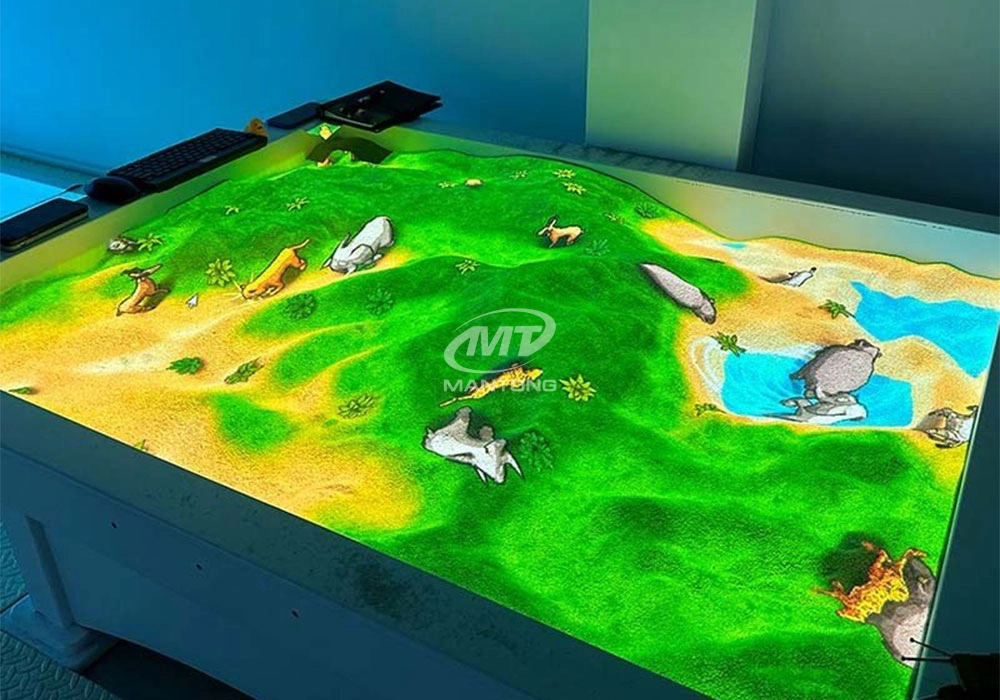
Interactive Sandbox Projection Mapping Games For Kids Play Park
Bring imagination to life with interactive sandbox projection mapping games designed for kids’ play parks. Using cutting-edge projection technology and real-time motion sensing, children can dig, build, and explore virtual worlds directly in the sand. Educational, engaging, and endlessly fun — it’s the perfect blend of play and learning.
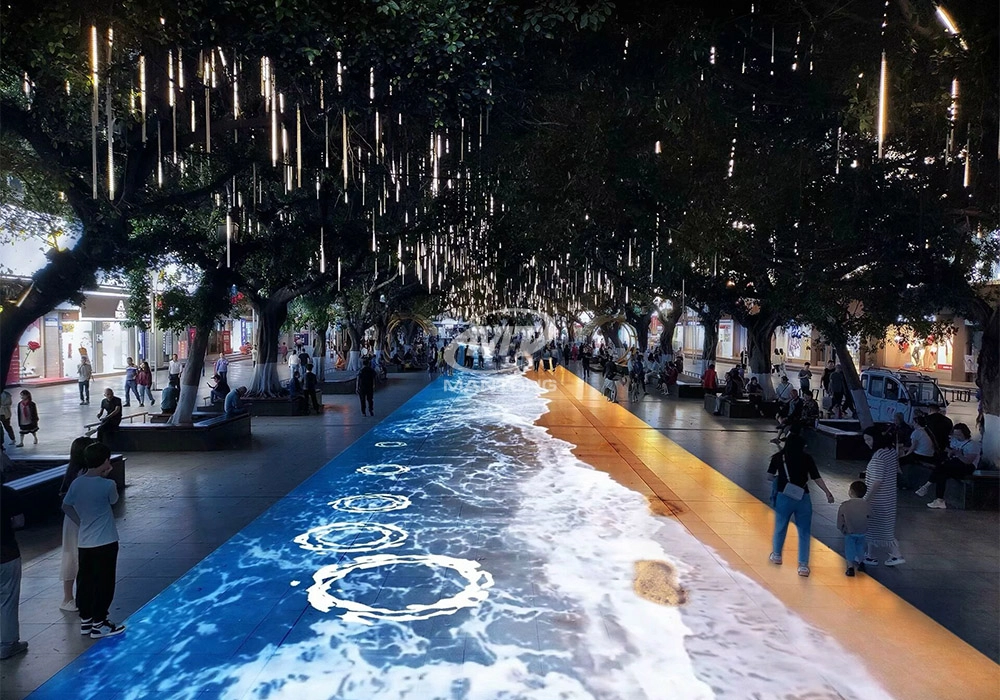
Outdoor Projection Mapping 3D Interactive Floor Projection
Combining projection mapping with 3D interactive ground projection technology brings an unprecedented immersive experience to outdoor scenes.

Kaida Business Center, Shixin Road, Panyu District,Guangzhou City, Guangdong Province, China.
ManTong
ManTong
ManTong