
Case Study: Immersive Projection Room for Museums and Exhibits
- Transforming Museum Experiences with Immersive Projection
- Project overview and intent: why an immersive projection room?
- Design requirements and visitor journey
- Technology selection: projectors, mapping and interactivity
- Content strategy: dramaturgy, interactivity and accessibility
- Installation, calibration and commissioning
- Operations, maintenance and sustainability
- Measuring outcomes: KPIs, visitor data and ROI
- Comparing immersive projection room to alternative displays
- Mantong Digital: experienced partner and manufacturer
- Mantong competitive advantages and product portfolio
- Lessons learned and recommendations for museum teams
- FAQs — common questions about immersive projection rooms
- References and further reading
Transforming Museum Experiences with Immersive Projection
Project overview and intent: why an immersive projection room?
Museums and exhibit designers increasingly commission an immersive projection room to reframe storytelling, increase dwell time and reach new audiences. In this case study we analyze a mid-sized museum's pilot immersive projection room project: goals (improve visitor engagement, provide adaptable content, and respect conservation limits), target KPIs (30–50% increase in average dwell time, 20% rise in repeat visits for the targeted gallery), and constraints (budget, ceiling height, ambient light, and archival safety). The solutions chosen balanced cost, performance, flexibility and long-term maintenance.
Design requirements and visitor journey
Design starts with the visitor journey. For the museum we studied, the immersive projection room needed to:
- Welcome small groups (8–25 people) and scale content between guided and self‑guided visits.
- Support mixed media: full‑dome/curved wall projection, interactive floor, and motion-triggered elements.
- Preserve artifacts by avoiding direct light and controlling temperature/humidity near objects.
- Allow rapid content updates and themed overlays to support rotating exhibits.
The team mapped entry, circulation, seating/standing zones, sightlines and ADA access. These steps ensure an immersive projection room delivers both spectacle and a coherent narrative flow that reinforces learning objectives.
Technology selection: projectors, mapping and interactivity
Choosing the right hardware and software is critical for a reliable immersive projection room. Core technology areas included projection systems, projection mapping software, interactive tracking and content servers. Key decisions made:
- Use of multiple edge‑blended high‑brightness projectors (laser light source) to cover curved walls and floors while minimizing maintenance cycles.
- Projection mapping software that supports real‑time playback, warping and keystone correction, and networked control for dynamic content scheduling.
- Interactive layers: camera‑based motion tracking for silhouette interactions and touchless floor projections for hygiene and accessibility.
- Redundancy: mirrored servers and hot‑swap projector mounts to reduce downtime.
Choosing laser projectors reduced lamp replacement costs and ensured stable color and brightness—important for consistent visitor experience in an immersive projection room.
Content strategy: dramaturgy, interactivity and accessibility
Content for an immersive projection room must be authored for scale and interaction. The production team prioritized:
- Narrative layers: passive atmospheric visuals paired with optional interactive narratives for families and school groups.
- Adaptive interactions: proximity‑based triggers and low-latency responses to visitor movement to avoid motion sickness and keep engagement natural.
- Accessibility: subtitles, audio descriptions, high‑contrast visual modes, and seating configurations for visitors with mobility devices.
For museums, interpretive goals trump spectacle. The most effective immersive projection rooms embed learning prompts, interpretive signage or optional guided audio to translate immersion into educational outcomes.
Installation, calibration and commissioning
Installation phases included structural preparation, projector rigging, network and power provisioning, environmental controls and final calibration. Best practices applied in the project:
- Pre-installation 3D modeling and virtual prototyping to verify projector coverage and avoid physical rework.
- On-site color calibration and edge-blend optimization using spectroradiometers and test patterns to ensure accurate color across surfaces.
- Integration of control system with the museum’s existing AV and ticketing systems for scheduled shows.
Thorough commissioning reduced first‑year support incidents and allowed the museum to run frequent thematic overlays without reconfiguration.
Operations, maintenance and sustainability
Operational planning ensures the immersive projection room remains reliable and cost‑effective. The museum’s operational plan included:
- Routine maintenance schedule for filters, optics and server backups; laser projectors significantly lowered consumable costs.
- Remote monitoring: networked telemetry to track projector hours, lamp/laser health, and server resource usage to schedule preventive maintenance.
- Energy management: timed power cycles and low‑power standby for off hours to reduce electricity draw.
Sustainability also influenced hardware selection—laser projectors and solid‑state drives lowered environmental impact compared to frequent lamp replacements and mechanical storage.
Measuring outcomes: KPIs, visitor data and ROI
Quantifiable outcomes are essential to justify an immersive projection room investment. Measurement instruments included door counters, anonymized tracking for dwell zones, survey data and ticket sales analytics. Measured outcomes from the pilot:
| Metric | Before | After (3 months) | Notes / Source |
|---|---|---|---|
| Average dwell time (target gallery) | 6.5 minutes | 10.5 minutes (+62%) | On-site dwell tracking (anonymized sensors) |
| Repeat visits for targeted exhibit | 5% of visitors | 12% (+7 pp) | Membership & ticket data |
| Educational group bookings | 4 per month | 9 per month | School outreach program records |
The pilot yielded measurable increases in engagement and group bookings. Financially, the museum reported payback projections within 3–5 years when factoring incremental ticket revenue, memberships and sponsored programming.
Comparing immersive projection room to alternative displays
Decision makers often compare immersive projection rooms with LED walls or VR installations. The table below summarizes typical tradeoffs for museums evaluating options.
| Feature | Immersive Projection Room | LED Video Wall | VR / Headset Experiences |
|---|---|---|---|
| Immersion & scale | High — room-scale, shared experience | High on flat plane, limited curvature | Very high individual immersion |
| Maintenance | Moderate (projector/optics, servers) | Moderate-high (LED module maintenance) | High (sanitization, headset refresh) |
| Accessibility & group access | Very good — shared, accessible | Good | Limited — single user per headset |
| Initial cost (typical) | Medium—high (depends on scale) | High (pixel pitch & size dependent) | Low—medium (per unit), scales with number of units |
Each option has valid use cases. For museum exhibits intended for group learning and interpretation, an immersive projection room often gives the best balance of shared experience, accessibility and content flexibility.
Mantong Digital: experienced partner and manufacturer
Mantong Digital is a one-stop interactive projection solution provider and direct manufacturer based in Guangzhou, China, with over 10 years of industry experience. We are dedicated to providing innovative, flexible and cost-effective projection solutions, offering both hardware and software to meet various needs. At ManTong, we specialize in providing customized solutions for a wide range of application scenarios through innovative projection technology. Whether it's immersive experiences, interactive entertainment or outdoor lighting and projection shows, our solutions can transform your ideas into stunning visual effects. Our projection technology provides customized solutions for a variety of scenarios, delivering immersive and interactive visual experiences.
We are now looking for business partnerships worldwide. Our vision is to become the world's leading interactive projection manufacturer. Our website is https://www.mtprojection.com/
Mantong competitive advantages and product portfolio
Mantong’s strengths for museum and exhibit immersive projection rooms include:
- Direct manufacturing — control over hardware quality, customization and lead times.
- Integrated hardware + software offerings — projection servers, mapping software, interactive modules and content templates that reduce integration risk.
- Proven installations — experience in immersive rooms, interactive floor projection, interactive wall projection, 3D projection and projection mapping for exhibitions and projection shows.
- Cost-efficiency — scalable packages that meet budgetary limits without sacrificing core performance.
Main product lines relevant to museums: immersive projection, interactive floor projection, interactive projection, interactive wall projection, immersive room, 3D projection, interactive projection games, projection shows, and interactive projection mapping. These offerings let institutions choose between turnkey experiences and fully customized installations tailored to programming and conservation needs.
Lessons learned and recommendations for museum teams
From the pilot and several other Mantong projects we recommend the following when planning an immersive projection room:
- Define KPIs early: visitor learning outcomes, dwell time, and revenue targets guide technical and content choices.
- Prototype in low cost: virtual previsualization and small-scale mockups prevent costly mistakes.
- Plan for content lifecycle: create templates and modular assets for seasonal updates and sponsorship opportunities.
- Prioritize accessibility: ensure the immersive projection room supports multiple sensory modes and packaged options for diverse audiences.
- Work with vendors who offer integrated support: a supplier that provides hardware, software and commissioning reduces integration complexity.
FAQs — common questions about immersive projection rooms
Q1: How much space do I need for an immersive projection room?
A: Spaces vary. For small group immersion, 30–80 m² is common. Dome or curved-wall installations require planning for projector throw distances and maintenance access. Mantong can help assess your space and recommend configurations.
Q2: How long does installation take?
A: Typical timelines range from 4–12 weeks depending on site prep, structural work, and the level of customization. Pre-installation surveying and virtual prototyping shorten on-site time.
Q3: What are ongoing maintenance costs?
A: With laser projectors and solid‑state storage, consumable costs are lower than lamp‑based systems. Plan for annual servicing, filter replacement and software updates. Remote monitoring reduces unexpected downtime.
Q4: Can immersive projection rooms support interactive elements without physical touch?
A: Yes. Camera‑based tracking, depth sensors and floor projection systems provide touchless interaction, suitable for high-traffic and hygienic environments.
Q5: How do I measure success?
A: Combine objective metrics (dwell time, ticket conversion, repeat visits) with qualitative feedback (surveys, educator evaluations). Baseline measurements before installation are essential to demonstrate impact.
Q6: Is content localization possible?
A: Yes. Content systems support multilingual overlays, subtitle tracks and region-specific narrative changes which are straightforward to schedule in projection servers.
Contact and next steps
To evaluate an immersive projection room for your museum, contact Mantong Digital for a space assessment, demo and quote. Explore case studies and products at https://www.mtprojection.com/ — our team can provide feasibility studies, prototypes and turnkey installations tailored to your goals.
References and further reading
- Projection mapping — Wikipedia. https://en.wikipedia.org/wiki/Projection_mapping (accessed 2025-12-12)
- How immersive art exhibitions change the museum experience — The New York Times. https://www.nytimes.com/2017/12/18/arts/design/immersive-art-exhibitions. (2017-12-18)
- International Council of Museums (ICOM) — museum standards and resources. https://icom.museum/en/ (accessed 2025-12-12)
- Mantong Digital — company site and product information. https://www.mtprojection.com/ (accessed 2025-12-12)
Interactive Projection vs. Projection Mapping: Key Differences
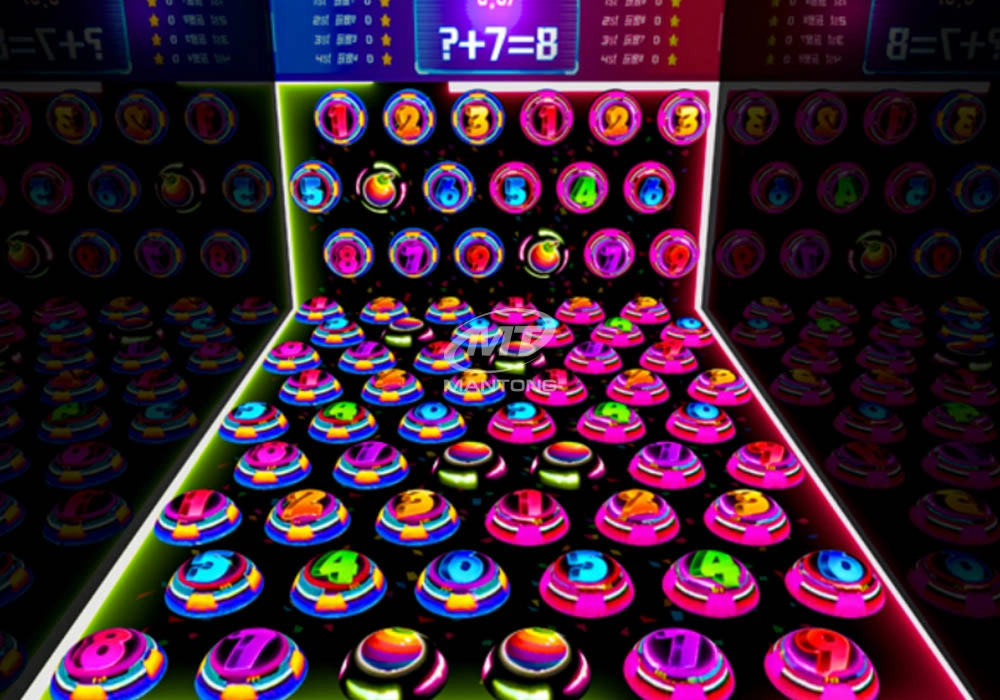
Interactive Rotating Bouncing Sphere — Wall & Floor Projection for Sports and Entertainment
Integrating AR with Interactive Projection Mapping Suppliers
Best professional wall interactive projection manufacturers and supplier brands in China
One-Stop Projection Solution Provider Since 2011
What's the application of Immersive projection ?
It can be used in various venues, such as art exhibition, entertainment venues, educational institution, Wedding hall /Banquet/Bar,Yoga Studio and so on. It often involves advanced projection techniques, multimedia content, and interactive elements to engage and captivate the audience's senses.
What's Immersive Projection ?
Immersive projection refers to a technology that creates a captivating and all-encompassing visual experience for viewers by projecting images or videos onto large surfaces, such as walls, floors, or even entire rooms. This technology aims to immerse the audience in a simulated environment, blurring the boundaries between the physical and virtual worlds.
How to install the projection equipment ?
1) Install the projector in a suitable position. We will provide you with a hanger, which you need to fix on the ceiling with
screws.
2) Connect projectors, computers and other accessories through wires.
3) After completing the above 2 steps, we will carry out the edge blending steps. Our team can complete it through remote
control.
In general, installation instructions for each project need to be specified on a project-by-project basis. The above is for
reference only.
What about the wall/floor material for the projection?
It’s recommended to choose a light-colored material with minimal reflectivity—pure white or light grey works best. the
common material is cement & plaster board
For optimal projection results, the surface should be free of any patterns or textures, as the projector will display content
directly onto it.
There are no specific material requirements; you may use any commonly available material in your local market, as long as it
meets the above conditions.
Are you trader or manufacturer ?
We are direct manufacturer who specialize in providing one-stop solution for different outdoor & indoor projection project with our stable software and qualified projectors
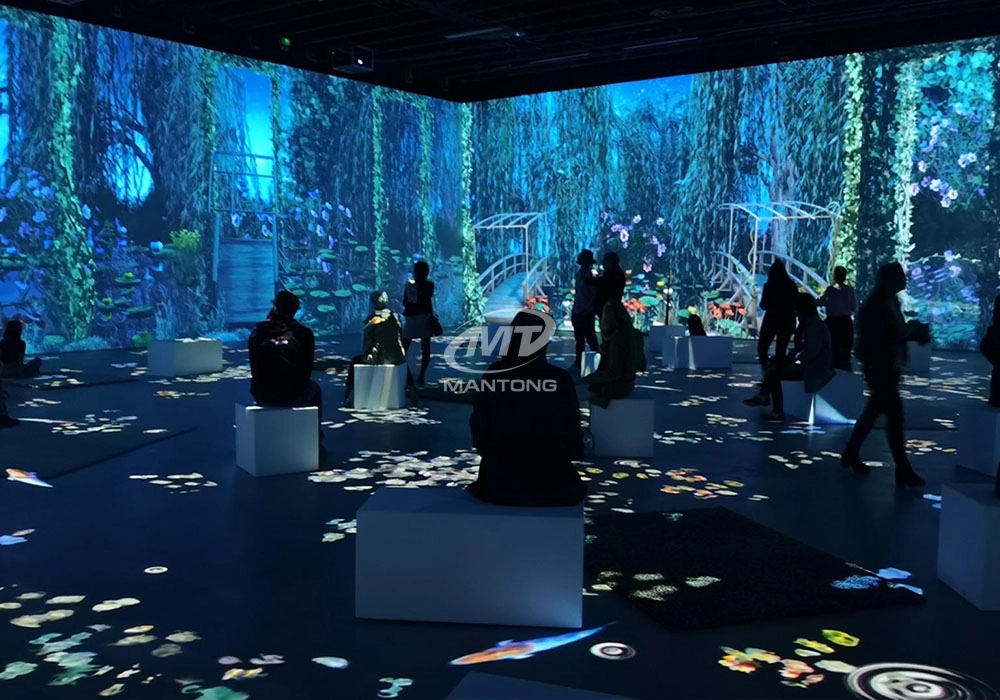
Mantong 6500LM High-Lumen Projector for Large-Scale Immersive Room Projection
Transform any space with Mantong's immersive projection mapping systems. Our high-lumen projectors (up to 6500 LM) and custom software create captivating interactive experiences for floors and walls. Ideal for museums, events, retail, and hospitality. Each kit includes professional ceiling mounting and 80+ pre-loaded video contents and is backed by a 12-month warranty and CE certification. We offer full customization and support to bring your vision to life.
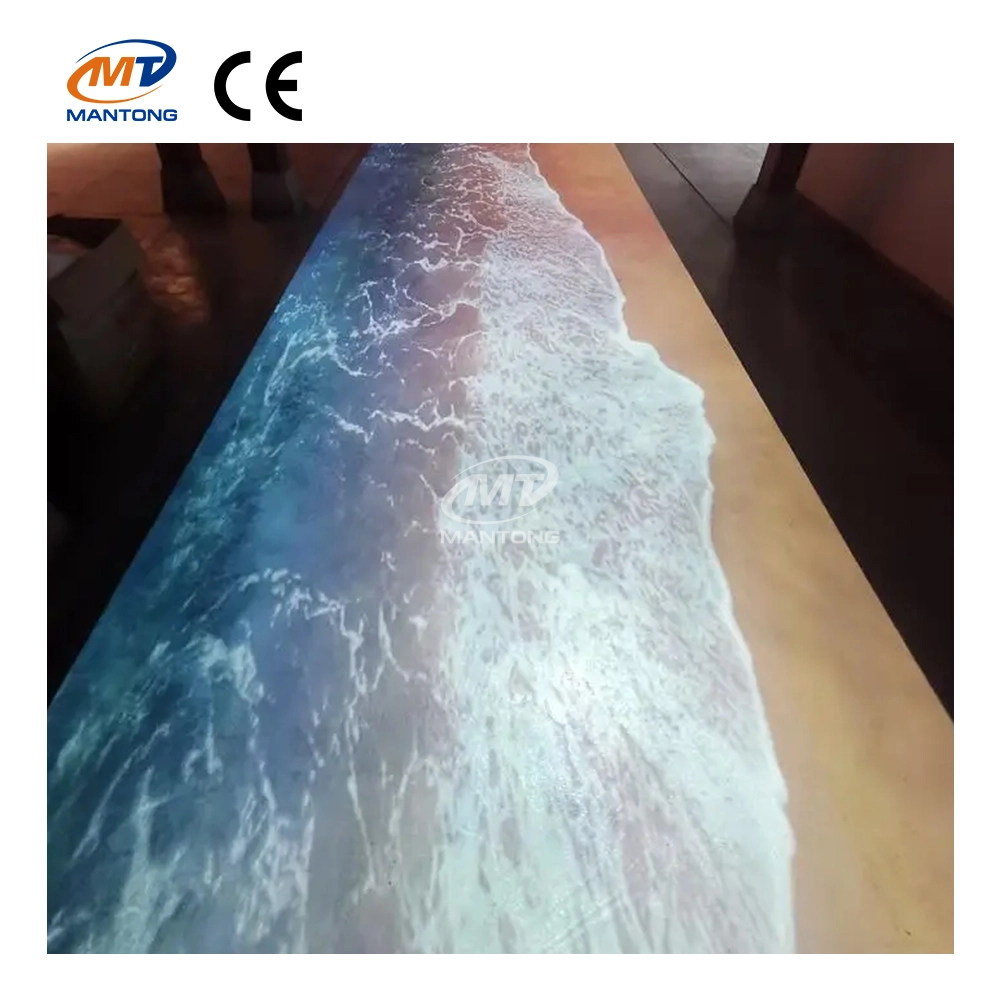
Indoor Interactive Floor Projector System - Customized Design & Installation Support
Indoor interactive floor projections display dynamic themed videos on the floor, commonly used in venues aiming to enhance brand influence or attract foot traffic, such as restaurants, hotel corridors, and brand car retail stores.
By using projectors and compatible software, the interactive content is projected onto the floor, encouraging engagement between people and the projected visuals. A single 5500-lumen indoor floor projector can cover an area of 5 m × 3 m. Typically, each project will use at least 3 units to ensure broad coverage and optimal visual effects.
We also offer customized design and installation support to enhance the interactive experience for your venue.
Amusement Rapidly Rotating Bouncing Sphere Interactive Wall Floor Projection Sports Games
Rapidly Rotating Bouncing Sphere is an interactive space where participants jump on rotating spheres. As they step on it, the spheres surface will show special interactivity
Jumping on spheres of the same color in succession causes them to pop, releasing light particles. The more consecutive jumps, the greater the reward—caterpillars appear, and eventually, all spheres of that color burst, filling the space with light and even more caterpillars.
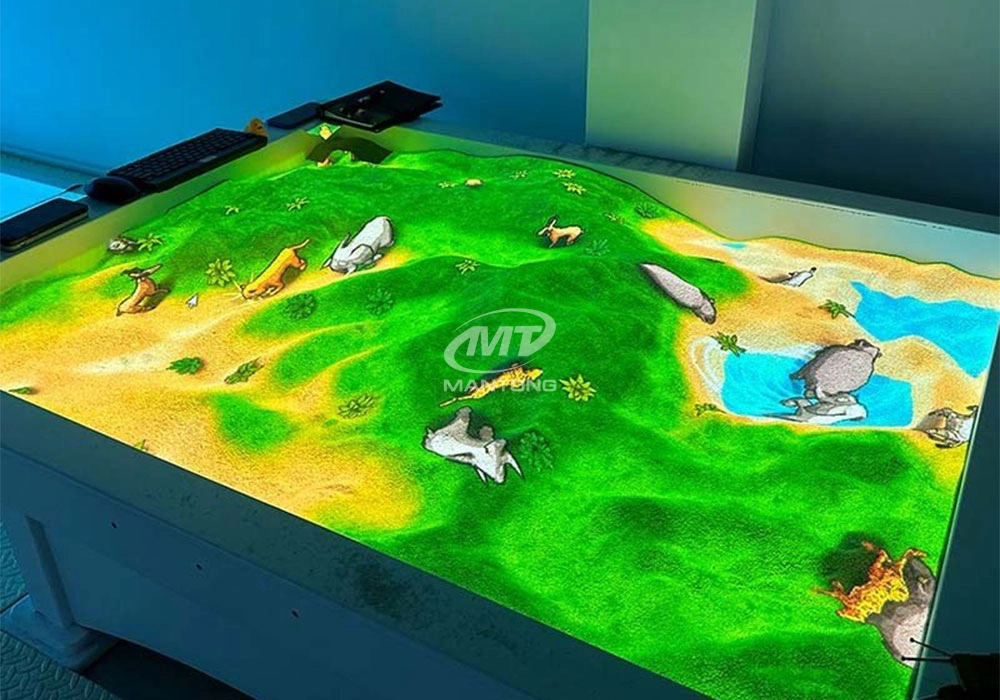
Interactive Sandbox Projection Mapping Games For Kids Play Park
Bring imagination to life with interactive sandbox projection mapping games designed for kids’ play parks. Using cutting-edge projection technology and real-time motion sensing, children can dig, build, and explore virtual worlds directly in the sand. Educational, engaging, and endlessly fun — it’s the perfect blend of play and learning.

Kaida Business Center, Shixin Road, Panyu District,Guangzhou City, Guangdong Province, China.
ManTong
ManTong
ManTong