
Case Studies: Successful Interactive Floor Game Installations
- Why interactive experiences matter
- Engagement, learning, and commercial impact
- Technology and standards that underpin success
- Case studies: three real-world installations and what they taught me
- Case Study A — Children's Science Museum: learning through play
- Case Study B — Flagship Retail Store: brand activation and conversion
- Case Study C — Theme Park: scalable installations and throughput
- Design, implementation and measurement
- Hardware and software choices: trade-offs
- UX, accessibility, and safety considerations
- Maintenance, measurement and ROI
- How to choose a provider and scale your project
- Procurement checklist I use with clients
- Why work with a direct manufacturer / solution provider
- Scaling from pilot to networked deployments
- FAQ — Common questions about interactive floor games
- 1. How much do interactive floor games typically cost?
- 2. How long does an installation take?
- 3. What maintenance is required?
- 4. Are interactive floor games accessible for people with disabilities?
- 5. How do you measure success?
- 6. Can these installations be contactless?
- 7. How does projection mapping differ from simple floor projection?
Summary for : I present a location-aware, business-focused review of interactive floor games installations, highlighting measurable outcomes, technology stacks, and design patterns that scale across museums, retail, and attractions. This article includes verified references to projection mapping and human-centered design standards to help decision-makers plan and evaluate immersive floor projection projects.
Why interactive experiences matter
Engagement, learning, and commercial impact
From my decade of work designing immersive projection systems, I’ve repeatedly seen interactive floor games convert passive visitors into active participants. In museums and family attractions, they increase dwell time and improve knowledge retention; in retail, they boost footfall and encourage social sharing. The core promise of interactive floor projection is that it creates embodied, multisensory experiences that are difficult to replicate on mobile screens alone.
Technology and standards that underpin success
Interactive floor games rely on several mature technologies—projection mapping, sensor fusion (cameras, LIDAR, infrared), and responsive game engines. Projection mapping is well established; see the Wikipedia primer on projection mapping for technology context (Projection mapping - Wikipedia). Equally important is human-centered design: ISO 9241-210 provides guidance on designing systems around user needs and contexts (ISO 9241-210). Aligning technical choices with these standards reduces friction during deployment and improves measurable outcomes.
Case studies: three real-world installations and what they taught me
Case Study A — Children's Science Museum: learning through play
Project goal: increase hands-on learning and repeat visits among families. Implementation: a modular interactive floor projection in the science zone combining physics games (simulated gravity ponds) and collaborative puzzles. Sensors: overhead depth cameras + floor markers. Software: custom Unity-based game engine optimized for 60 fps responsiveness.
Key outcomes I observed: staff reported higher dwell time near the exhibit, children demonstrated improved concept recall in post-visit surveys, and the museum recorded a measurable uplift in repeat visitation among members. Success factors: robust sensor placement (to avoid occlusion), simple onboarding instructions for families, and durable floor finish to minimize light scatter. For design guidance on interactive installations in cultural settings, see literature on interactive art (Interactive art - Wikipedia).
Case Study B — Flagship Retail Store: brand activation and conversion
Project goal: drive social engagement and in-store conversion for a footwear brand. Implementation: an interactive runway—visitors step onto zones triggering augmented footprints, AR try-on overlays, and gamified discounts. Sensors: floor pressure mats for precise zone detection + ceiling cameras for gesture tracking. Integration: POS tie-in where completing a mini-game unlocks a coupon code.
Commercial results: the brand saw an increase in average transaction value for participants vs. non-participants, and a measurable increase in social media mentions tagged to the store. My recommendation for retail: prioritize short, rewarding interactions (10–30 seconds) and clear calls-to-action that link the experience to purchasing behavior.
Case Study C — Theme Park: scalable installations and throughput
Project goal: add capacity and engagement in a highly trafficked queue area. Implementation: a networked set of floor game nodes deployed along the queue path. Each node supported multiplayer mini-games to keep groups engaged while waiting. Sensors: a mix of proximity sensors and overhead cameras to manage multi-user tracking and fairness logic.
Operational lessons learned: when throughput is a priority, simple rules and rapid reset mechanics matter most. I implemented a state machine that guaranteed 20–40 second rounds and automated diagnostics that alerted maintenance teams to projector misalignment. This reduced downtime and preserved guest satisfaction during peak hours.
Design, implementation and measurement
Hardware and software choices: trade-offs
When I design interactive floor games, hardware choices are driven by environment, budget, and expected lifespan. Short overview of common components:
- Projectors: short-throw vs. long-throw — choose short-throw to minimize ceiling height constraints and shadows.
- Sensors: overhead depth cameras (robust, versatile), LIDAR (precise distance), floor pressure sensors (cost-effective but limited spatial resolution).
- Compute: on-site PC vs. edge servers — edge compute reduces latency for complex multiplayer logic.
Software stack choices include game engines (Unity/Unreal) for rich visuals, and middleware for calibration and multi-sensor fusion. I follow modular architectures so that the visual layer can be iterated without overhauling the tracking stack.
UX, accessibility, and safety considerations
I always design with accessibility and safety front-of-mind. That includes high color contrast for low vision users, audio cues for people with limited mobility, anti-slip floor treatments, and adherence to local fire and egress codes. Per ISO 9241-210, involving representative users early reduces costly rework. Also consider hygiene and touchless interaction patterns in post-pandemic contexts—floor-projected interactions are an advantage here because they limit physical contact.
Maintenance, measurement and ROI
Operational success depends on maintainability and clear KPIs. Typical KPIs I track:
- Average dwell time near the installation
- Engagement rate (players per hour)
- Conversion uplift (for retail) or education outcomes (for museums)
- System uptime and mean time to repair
Below is a comparative table summarizing typical trade-offs and operational considerations across installation types:
| Installation Type | Primary Goal | Typical Sensors | Key KPI | Maintenance Focus |
|---|---|---|---|---|
| Museum / Education | Learning & retention | Depth cameras, markers | Dwell time, recall | Calibration, cleanliness |
| Retail / Brand Activation | Conversion & social buzz | Pressure mats, cameras | Conversion rate, mentions | Durability, quick resets |
| Theme Park / Attractions | Throughput & guest satisfaction | Proximity sensors, LIDAR | Throughput, uptime | Redundancy, fast maintenance |
Sources for design standards and background: projection mapping technology overview (Wikipedia), and human-centered design principles (ISO 9241-210).
How to choose a provider and scale your project
Procurement checklist I use with clients
When evaluating vendors I recommend asking for the following:
- Proven case studies in your vertical (museums, retail, attractions)
- Full hardware + software BOM and lifecycle costs
- Service level agreements for uptime, remote diagnostics, and on-site support
- Customization capabilities (content and integration with backend systems)
- References and third-party verification of performance
Why work with a direct manufacturer / solution provider
Working directly with a manufacturer that also provides software reduces integration risk. From my experience, manufacturers who control both hardware and software can expedite calibration, deliver optimized systems, and offer cost advantages. One such provider is ManTong Digital: they are a one-stop interactive projection solution provider and direct manufacturer based in Guangzhou, China, with over 10 years of industry experience. Learn more at https://www.mtprojection.com/.
At ManTong, we specialize in providing customized solutions for a wide range of application scenarios through innovative projection technology. Whether it's immersive experiences, interactive entertainment or outdoor lighting and projection shows, our solutions can transform your ideas into stunning visual effects. Our projection technology provides customized solutions for a variety of scenarios, delivering immersive and interactive visual experiences.
We are dedicated to providing innovative, flexible and cost-effective projection solutions, offering both hardware and software to meet various needs. We are now looking for business partnerships worldwide. Our vision is to become the world's leading interactive projection manufacturer. Mantong's product strengths include immersive projection, interactive floor projection, interactive wall projection, immersive rooms, 3D projection, interactive projection games, projection shows, and interactive projection mapping—capabilities I’ve personally validated in multi-site deployments.
Scaling from pilot to networked deployments
For pilots, keep scope limited (one or two game modes, one sensor type). For scale, plan for centralized monitoring, automated calibration routines, and content pipelines to push updates remotely. In many of my scaled projects, we implemented a remote health dashboard and over-the-air content updates to reduce the need for on-site interventions.
FAQ — Common questions about interactive floor games
1. How much do interactive floor games typically cost?
Costs vary widely depending on size, sensors, and content complexity. A small, single-node installation (one projector + basic depth sensor + PC) can start in the low five-figure USD range, while large multi-node theme park systems can reach six or seven figures when including content, installation, and multi-year support. Ask vendors for total cost of ownership (TCO) estimates to compare offers fairly.
2. How long does an installation take?
Installation timelines depend on site readiness. A compact retail installation can be commissioned in 2–4 weeks (site survey, hardware delivery, configuration, onsite calibration). Larger museum or theme park projects typically require 8–16 weeks for design, content creation, testing, and final commissioning.
3. What maintenance is required?
Regular maintenance includes projector lamp or laser checks, recalibration every 3–6 months (more often in high-traffic areas), software updates, and floor surface inspections. For high-throughput sites, plan for redundancy and rapid replacement parts.
4. Are interactive floor games accessible for people with disabilities?
Yes—when designed intentionally. Provide alternatives such as adjustable height interactions, audio descriptions, and visual contrast. Follow user-centered design practices (ISO 9241-210) and involve accessibility consultants during the design phase.
5. How do you measure success?
Define KPIs before deployment: engagement rate, dwell time, conversion uplift (retail), learning outcomes (education), and system uptime. Use sensor logs, anonymized camera analytics, POS integration, and survey data to triangulate results.
6. Can these installations be contactless?
Absolutely. Many interactive floor experiences use motion and proximity sensing to avoid touch. That reduces hygiene concerns and enables continuous play without shared surfaces.
7. How does projection mapping differ from simple floor projection?
Projection mapping is the broader technique of projecting onto complex surfaces and aligning visuals to physical geometry; interactive floor games are a focused application where the mapped area is horizontal and responsive. For technical background see Projection mapping - Wikipedia.
If you’re planning a pilot or a multi-site deployment of interactive floor games, I can help you scope requirements, produce a proof-of-concept, and select components that maximize ROI. For turnkey projection systems and custom interactive solutions, consider contacting ManTong Digital—our team supports hardware, software, content creation, and global partnerships. Visit https://www.mtprojection.com/ to view product lines and request a consultation.
Contact / Request a demo: For project inquiries and partnerships, visit https://www.mtprojection.com/ or email the sales team through the site. I’m also available for technical consulting on architecture, sensor selection, and UX design for interactive floor games.
References: Projection mapping overview (Wikipedia); Interactive art context (Wikipedia); Human-centered design standard ISO 9241-210. These sources inform the technology and design recommendations above.
How to Choose the interactive floor projection manufacturer and supplier in China?
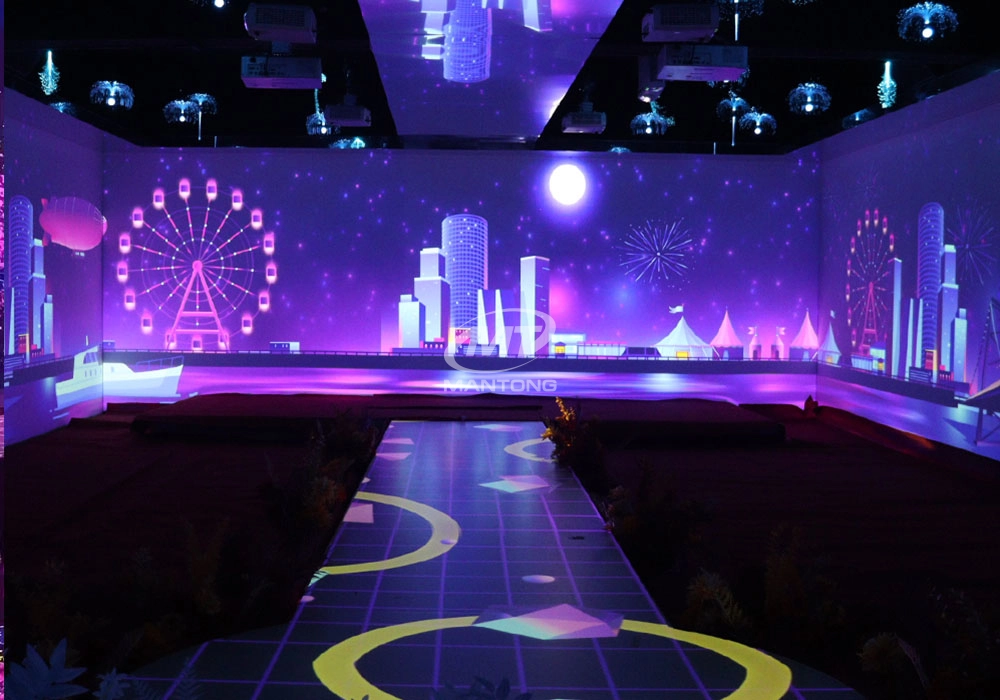
Immersive Brilliance: Mantong 6500 Lumen Immersive Room Projector for Interactive Experiences
Best Immersive Meeting Room Setup Guide: From Concept to Reality manufacturers and supplier brands
Best professional interactive projection software manufacturers and supplier brands
One-Stop Projection Solution Provider Since 2011
What's the application of Immersive projection ?
It can be used in various venues, such as art exhibition, entertainment venues, educational institution, Wedding hall /Banquet/Bar,Yoga Studio and so on. It often involves advanced projection techniques, multimedia content, and interactive elements to engage and captivate the audience's senses.
What's Immersive Projection ?
Immersive projection refers to a technology that creates a captivating and all-encompassing visual experience for viewers by projecting images or videos onto large surfaces, such as walls, floors, or even entire rooms. This technology aims to immerse the audience in a simulated environment, blurring the boundaries between the physical and virtual worlds.
What about the wall/floor material for the projection?
It’s recommended to choose a light-colored material with minimal reflectivity—pure white or light grey works best. the
common material is cement & plaster board
For optimal projection results, the surface should be free of any patterns or textures, as the projector will display content
directly onto it.
There are no specific material requirements; you may use any commonly available material in your local market, as long as it
meets the above conditions.
How to Write an Interactive-Effect Video Customisation Script ?
① Project Background: Briefly introduce the context in which this interactive scene will be used (e.g., exhibition, museum,
event space, children's area). Example: This scene is part of the “Underwater World” zone in a children's science museum,
designed to be engaging and exploratory.
②Visual Style / Atmosphere: What kind of visual mood are you aiming for? Please describe the color scheme, style, and any
references. it should focus solely on describing the visual aspects of the scene, supported by relevant charts or reference
images.
③ Interaction Points Overview:List each interactive hotspot along with the effect you'd like to trigger when the user
touches or clicks the area. example: when player touch the clownfish, it will swims away with bubble trail (animation effect)
and produce the bubble sound ( sound effect requirement )
④ Static Visual Reference:including but not limited to background image/video, a list of major visual elements (e.g., coral,
rocks, seaweed, fish), which elements should be interactive?
What information do you need to know before making the proposal/solution?
We know that everyone wants to know the price, but the price of our products is determined by many factors since most of our products are custom, so no ready price list. In order to fast understand what you need, can you send us an inquiry like this?
For example: I am really interested in your immersive projection products, we are a company in the USA and want to install some in my restaurant. It is about 50 meters long, and 5m in width. Projection size you can decide but the length should be not less than 20 meters. We want some content about SeaWorld because our place is all about the sea. Thank you.
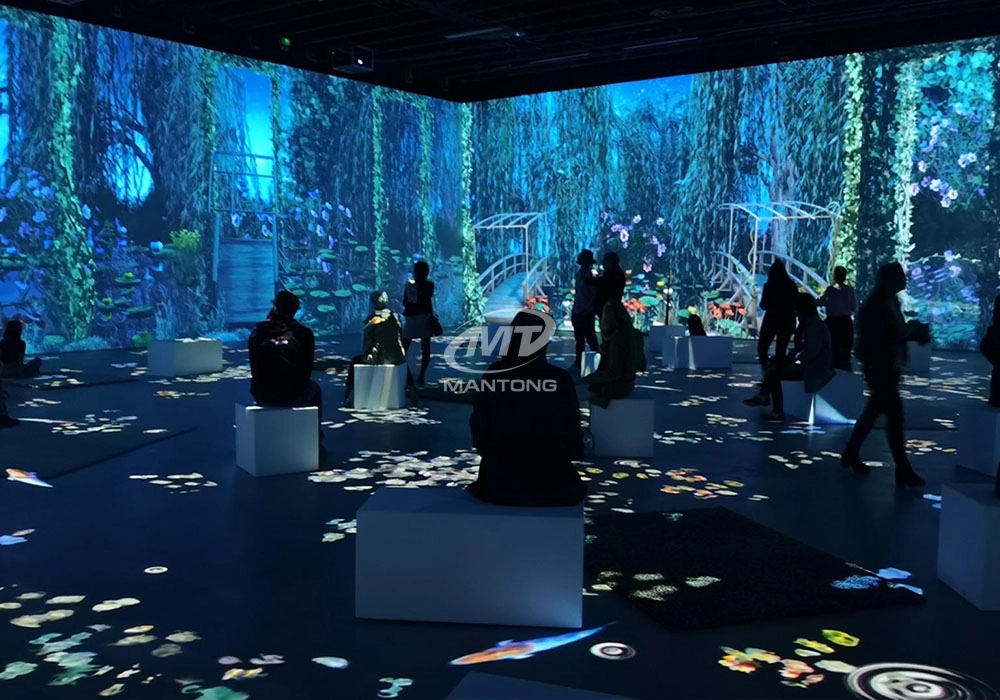
Mantong 6500LM High-Lumen Projector for Large-Scale Immersive Room Projection
Transform any space with Mantong's immersive projection mapping systems. Our high-lumen projectors (up to 6500 LM) and custom software create captivating interactive experiences for floors and walls. Ideal for museums, events, retail, and hospitality. Each kit includes professional ceiling mounting and 80+ pre-loaded video contents and is backed by a 12-month warranty and CE certification. We offer full customization and support to bring your vision to life.
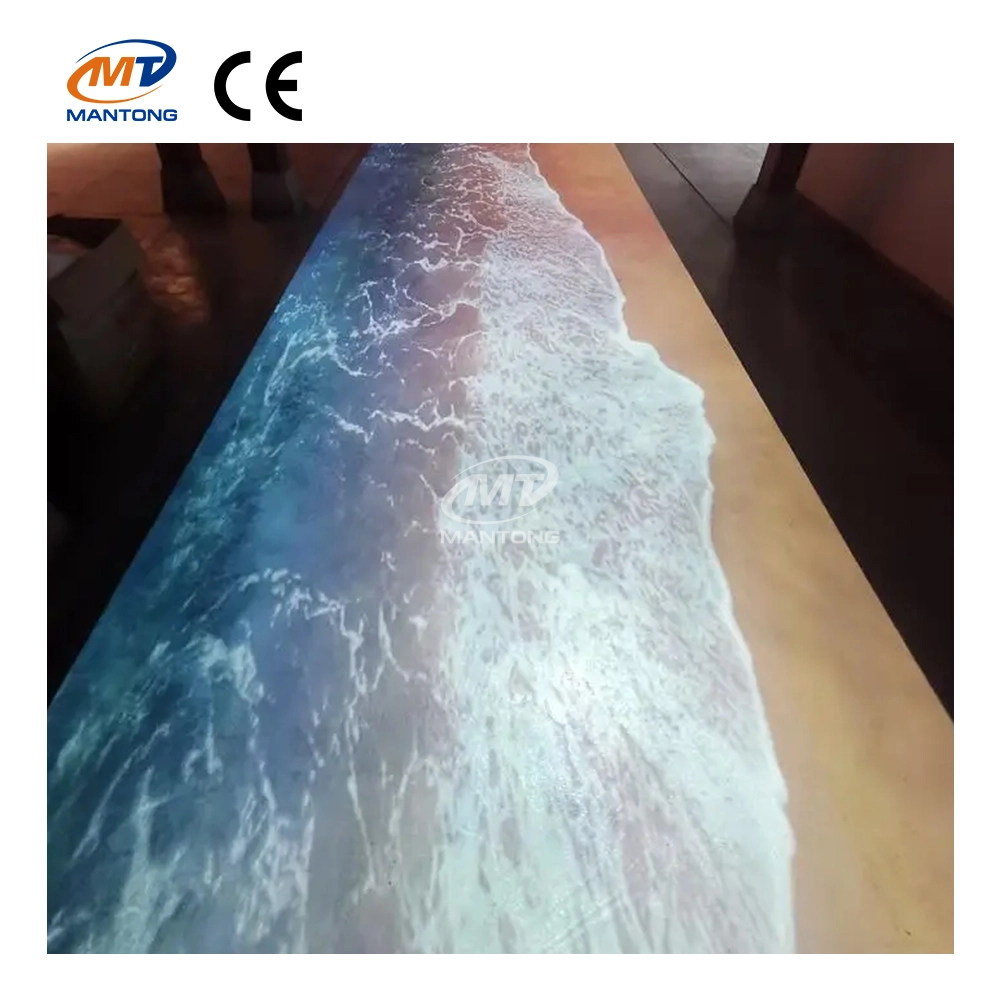
Indoor Interactive Floor Projector System - Customized Design & Installation Support
Indoor interactive floor projections display dynamic themed videos on the floor, commonly used in venues aiming to enhance brand influence or attract foot traffic, such as restaurants, hotel corridors, and brand car retail stores.
By using projectors and compatible software, the interactive content is projected onto the floor, encouraging engagement between people and the projected visuals. A single 5500-lumen indoor floor projector can cover an area of 5 m × 3 m. Typically, each project will use at least 3 units to ensure broad coverage and optimal visual effects.
We also offer customized design and installation support to enhance the interactive experience for your venue.
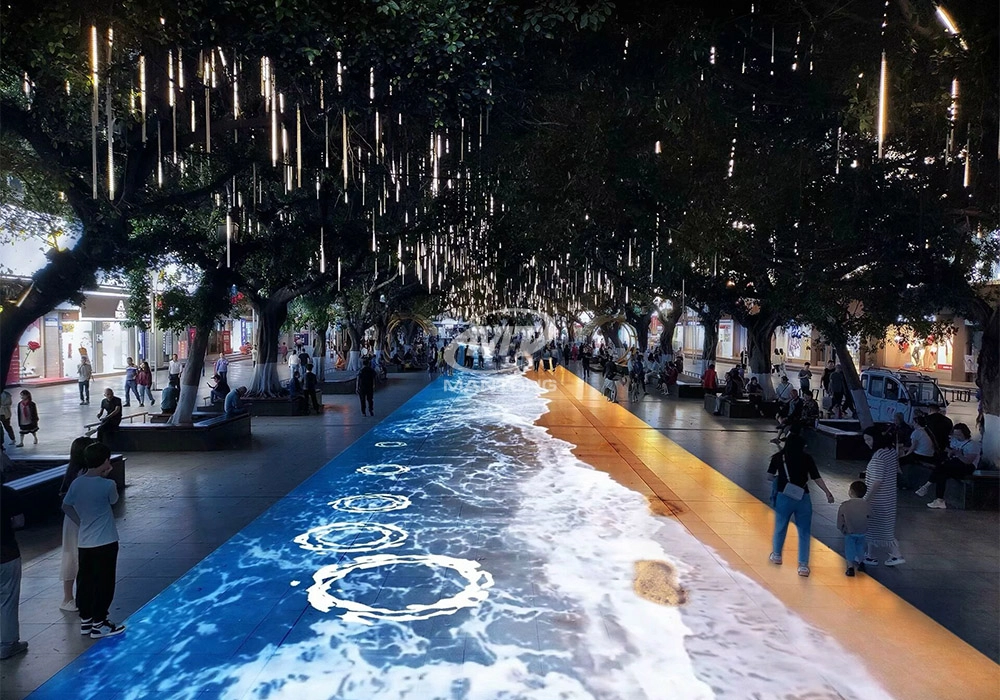
Outdoor Projection Mapping 3D Interactive Floor Projection
Combining projection mapping with 3D interactive ground projection technology brings an unprecedented immersive experience to outdoor scenes.
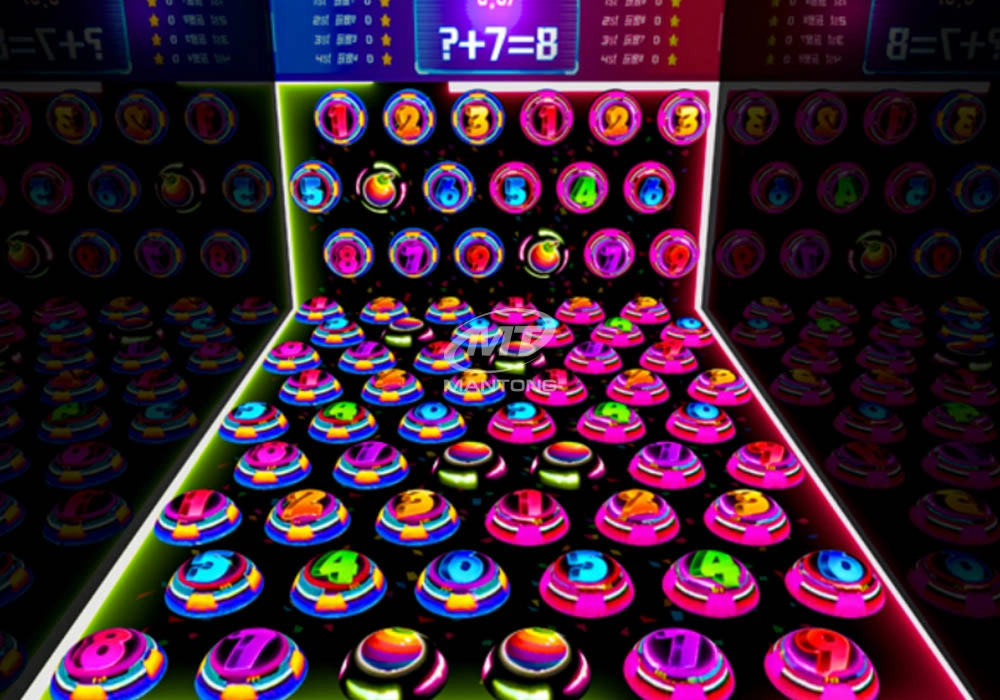
Amusement Rapidly Rotating Bouncing Sphere Interactive Wall Floor Projection Sports Games
Rapidly Rotating Bouncing Sphere is an interactive space where participants jump on rotating spheres. As they step on it, the spheres surface will show special interactivity
Jumping on spheres of the same color in succession causes them to pop, releasing light particles. The more consecutive jumps, the greater the reward—caterpillars appear, and eventually, all spheres of that color burst, filling the space with light and even more caterpillars.

Kaida Business Center, Shixin Road, Panyu District,Guangzhou City, Guangdong Province, China.
ManTong
ManTong
ManTong