
Interactive Floor Projection Cost: Commercial vs Home Use
- Why organizations and homeowners evaluate interactive floor projection
- Cost components you must budget for (and why they matter)
- Component cost ranges (practical guide)
- Typical total installed cost: home vs small commercial vs large commercial
- Why commercial projects cost more (and where you get value)
- How to estimate ROI and justify interactive floor projection system cost
- Financing and procurement options
- Home buyer checklist: how to spend smarter
- Commercial buyer checklist: requirements that matter
- Comparing options: commercial vs home (at a glance)
- Mantong Digital: one-stop interactive projection solutions and why it matters
- Mantong advantages and main products
- Selecting the right vendor and negotiating price
- FAQs
- 1. How much does an interactive floor projection system cost for a small retail store?
- 2. Can I build an interactive floor projection at home for under $2,000?
- 3. What ongoing costs should I expect after installation?
- 4. How long do commercial projectors last in high-usage environments?
- 5. Is custom software necessary?
- 6. How do I compare warranty and SLA terms?
- Contact and next steps
- References and data sources
Why organizations and homeowners evaluate interactive floor projection
interactive floor projection system cost is often the first question buyers ask when considering adding immersive, touch-free experiences to a space. Whether a museum wants an attention-grabbing exhibit, a retail store seeks longer dwell time, or a homeowner plans a dedicated playroom, the price depends on hardware choices, software complexity, installation scale and service model. This article provides a practical, evidence-based cost framework, comparison between commercial and home deployments, and guidance on how to budget, procure and justify an investment.
Cost components you must budget for (and why they matter)
To estimate an interactive floor projection system cost accurately, break the project into discrete components: projector, sensor/tracking hardware, computing/media server, software & licensing, installation & mounting, custom content design, and ongoing maintenance. Each component has wide price variance driven by performance (lumens, optics), reliability (commercial-grade vs consumer), and how tailored the interactive experience must be.
Component cost ranges (practical guide)
| Component | Typical Home Range (USD) | Typical Commercial Range (USD) | Notes / Sources |
|---|---|---|---|
| Projector (short/ultra-short throw) | $700 - $5,000 | $5,000 - $30,000+ | Home models vs commercial laser, higher lumen & reliability (ProjectorCentral; manufacturer pages) |
| Sensor / Depth camera | $100 - $600 | $500 - $5,000 | Consumer depth cameras vs industrial sensors (Orbbec, stereolabs) |
| Computer / Media server | $600 - $2,500 | $2,000 - $15,000+ | From NUCs/Gaming PCs to dedicated media servers |
| Software & licensing | $0 - $5,000 | $2,000 - $100,000+ | Off-the-shelf tools to fully custom interactive engines |
| Installation & mounting | $200 - $2,000 | $1,000 - $20,000+ | Ceiling mounts, structural work, AV integration |
| Content design & creative | $300 - $5,000 | $2,000 - $50,000+ | Templates vs bespoke interactive content |
| Maintenance & support (annual) | $50 - $500 | $500 - $10,000+ | Warranties, on-site SLAs, spare parts |
Sources for component categories include projector price guides, depth-camera manufacturers, and software vendors (see references). These ranges reflect market reality in 2024–2025 and should be used as starting points for vendor quotes.
Typical total installed cost: home vs small commercial vs large commercial
When buyers ask What will it cost?, it's useful to consider three common project sizes. These estimated ranges include hardware, basic installation and one-off content:
| Deployment Type | Typical Initial Cost (USD) | What drives the price |
|---|---|---|
| Home (playroom / home theater) | $2,000 - $12,000 | Consumer short-throw projector, single sensor, template software |
| Small commercial (retail, classroom, small museum) | $8,000 - $40,000 | Commercial projector, robust sensors, custom content, modest installation |
| Large commercial (attractions, museums, flagship retail) | $40,000 - $200,000+ | Multiple projectors, professional media servers, bespoke software, high-availability SLAs |
Note: These are typical market ranges. A single high-performance commercial system with specialized projection mapping, multiple interaction zones and IP-grade sensors will sit at the upper end of the spectrum.
Why commercial projects cost more (and where you get value)
Commercial systems carry higher cost because they require:
- Higher-lumen and commercial-grade projectors for ambient-light resilience and longer duty cycles
- Redundancy and service-level agreements to minimize downtime
- Certification, safety, and compliance for public spaces
- Custom interactive software and content designed for brand or educational outcomes
- Professional installation, calibration and on-site testing
These investments reduce risk, improve visitor experience, increase lifetime value and often create measurable business benefits such as higher dwell time, ticket revenue, or sales conversion. For attractions and retail, the cost can be amortized against increased revenue or marketing value.
How to estimate ROI and justify interactive floor projection system cost
Estimating ROI depends on use case. Common KPIs include increased footfall, dwell time, ticket sales, event bookings, or retail conversion. A practical approach:
- Define measurable goals (e.g., +10% dwell time; +5% conversion in 6 months).
- Model incremental revenue or savings tied to those goals.
- Compare to total cost of ownership (initial + 3–5 years maintenance & content refresh).
Example: a retail store spends $25,000 on an interactive floor attraction that increases average basket size by $2 and attracts 10,000 incremental visitors over a year — that incremental revenue can offset the investment within months. For museums, sponsorships and event rentals can accelerate payback.
Financing and procurement options
Vendors often offer alternatives to an upfront purchase: leasing, revenue-share models, or managed-service subscriptions that bundle software and support. These options reduce initial cash outlay and shift some maintenance responsibility to the provider—important when evaluating total cost.
Home buyer checklist: how to spend smarter
If you are a homeowner considering an interactive floor projection, follow this checklist to control the interactive floor projection system cost:
- Choose a projector whose lumen output suits your ambient light. For dim rooms, a mid-range short-throw projector is sufficient.
- Pick a consumer-grade depth camera or motion sensor compatible with your chosen software.
- Use template-based or open-source software (e.g., TouchDesigner non-commercial tier) to reduce development fees.
- Prioritize safety and floor finish compatibility—projected content should not create hazardous glare.
- Plan for content updates; reusable templates avoid repeated design costs.
Commercial buyer checklist: requirements that matter
Commercial procurement should emphasize uptime, scalability and measurable outcomes. Key considerations:
- Specify commercial-grade projectors (laser light source, sealed optics) for reduced maintenance.
- Require professional calibration and QA; demand service-level agreements and spare parts availability.
- Insist on analytics: user counts, dwell time, interaction heatmaps to validate impact.
- Ensure software is maintainable and supports remote management and content scheduling.
- Get a full bill of materials and lifecycle costs before signing—don’t focus only on upfront price.
Comparing options: commercial vs home (at a glance)
| Factor | Home | Commercial |
|---|---|---|
| Initial cost | Lower ($2k–$12k) | Higher ($8k–$200k+) |
| Durability | Consumer grade; suitable for occasional use | Built for continuous operation |
| Content | Template or hobbyist content | Custom, brand-aligned and analytics-driven |
| Support | Limited warranty; DIY maintenance | On-site SLA, remote monitoring |
| ROI model | Quality of life, family entertainment | Direct revenue, marketing, education outcomes |
Mantong Digital: one-stop interactive projection solutions and why it matters
Mantong Digital is a one-stop interactive projection solution provider and direct manufacturer based in Guangzhou, China, with over 10 years of industry experience. We are dedicated to providing innovative, flexible and cost-effective projection solutions, offering both hardware and software to meet various needs.
At ManTong, we specialize in providing customized solutions for a wide range of application scenarios through innovative projection technology. Whether it's immersive experiences, interactive entertainment or outdoor lighting and projection shows, our solutions can transform your ideas into stunning visual effects. Our projection technology provides customized solutions for a variety of scenarios, delivering immersive and interactive visual experiences.
We are now looking for business partnerships worldwide. Our vision is to become the world's leading interactive projection manufacturer. Our website is https://www.mtprojection.com/
Mantong advantages and main products
Mantong is a direct manufacturer with strengths that matter when evaluating interactive floor projection system cost:
- Vertical integration: in-house hardware and software reduces markup and shortens lead times.
- Custom engineering: tailored optics, sensor integration and media servers for reliable installation.
- Comprehensive portfolio: immersive projection, interactive floor projection, interactive wall projection, immersive rooms, 3D projection, interactive projection games, projection shows, and interactive projection mapping.
- Global partnerships and project experience across use cases—education, museums, retail, events and outdoor shows.
Choosing a manufacturer like Mantong can compress project timelines and reduce total cost of ownership by offering bundled solutions, predictable warranties and local support options via channel partners.
Selecting the right vendor and negotiating price
When comparing quotes, require the following in writing: detailed BOM, warranty terms, response and repair SLAs, content ownership (who owns the code and assets), and remote-management capabilities. Ask vendors to provide references and, where possible, visit a live installation. Getting three competitive bids will reveal where costs are fixed (hardware) versus negotiable (software customization, support terms).
FAQs
1. How much does an interactive floor projection system cost for a small retail store?
A typical small retail installation ranges from $8,000 to $40,000 depending on projector brightness, number of interaction zones, custom content and analytical features. Budget carefully for warranty and content refresh.
2. Can I build an interactive floor projection at home for under $2,000?
Yes — a basic system using a consumer short-throw projector, an entry-level depth camera, free or low-cost software templates can be assembled for around $1,500–$2,000. This approach suits smaller rooms and casual use.
3. What ongoing costs should I expect after installation?
Expect annual costs for maintenance, occasional content updates and possible spare parts. For commercial systems plan 5–10% of initial cost per year for maintenance and software updates; home systems are typically lower.
4. How long do commercial projectors last in high-usage environments?
Commercial laser projectors typically run 20,000+ hours before major degradation; lamp projectors have shorter lifespans and higher recurring lamp costs. Choose laser sources for continuous public-space use.
5. Is custom software necessary?
Not always. Template-based or modular software can work for many applications with lower cost. However, brands and museums frequently choose custom software for unique experiences, branding and analytics, which increases cost but delivers measurable differentiation.
6. How do I compare warranty and SLA terms?
Look beyond the length of warranty: check response time, who covers shipping, availability of loaner units, and whether software updates are included. For commercial deployments, require a written SLA that matches your operational needs.
Contact and next steps
Ready to get a tailored quote or discuss tradeoffs between home and commercial deployments? Contact Mantong Digital to explore turnkey packages, custom builds, and worldwide partnerships. Visit https://www.mtprojection.com/ to view products, case studies and request a proposal. Our team can provide a site survey, ROI model and staged options to match your budget.
References and data sources
- ProjectorCentral — Projector Buying Guide. Accessed 2025-12-09. https://www.projectorcentral.com/projector-buying-guide.cfm
- Epson — product and short-throw projector specifications. Accessed 2025-12-09. https://epson.com/
- Orbbec — 3D sensor product pages (consumer & industrial depth cameras). Accessed 2025-12-09. https://orbbec3d.com/
- Stereolabs — ZED depth camera details. Accessed 2025-12-09. https://www.stereolabs.com/zed/
- Derivative (TouchDesigner) — licensing and product tiers. Accessed 2025-12-09. https://derivative.ca/
- Grand View Research — Projection Mapping / Interactive Display market insights (industry report). Accessed 2025-12-09. https://www.grandviewresearch.com/
- IAAPA — trends in immersive and experiential attractions. Accessed 2025-12-09. https://www.iaapa.org/
For custom quotes, product details and international partnerships, visit Mantong Digital: https://www.mtprojection.com/
Best professional water curtain projection mapping manufacturers and supplier brands in China
Measuring Engagement: Analytics for Interactive Floor Games
Best The Future of Business Meetings: Exploring Immersive Meeting Room Technology manufacturers and supplier brands
Best Interactive Projection Software and Hardware in 2025
One-Stop Projection Solution Provider Since 2011
How to install the projection equipment ?
1) Install the projector in a suitable position. We will provide you with a hanger, which you need to fix on the ceiling with
screws.
2) Connect projectors, computers and other accessories through wires.
3) After completing the above 2 steps, we will carry out the edge blending steps. Our team can complete it through remote
control.
In general, installation instructions for each project need to be specified on a project-by-project basis. The above is for
reference only.
What's Immersive Projection ?
Immersive projection refers to a technology that creates a captivating and all-encompassing visual experience for viewers by projecting images or videos onto large surfaces, such as walls, floors, or even entire rooms. This technology aims to immerse the audience in a simulated environment, blurring the boundaries between the physical and virtual worlds.
What about the wall/floor material for the projection?
It’s recommended to choose a light-colored material with minimal reflectivity—pure white or light grey works best. the
common material is cement & plaster board
For optimal projection results, the surface should be free of any patterns or textures, as the projector will display content
directly onto it.
There are no specific material requirements; you may use any commonly available material in your local market, as long as it
meets the above conditions.
Are you trader or manufacturer ?
We are direct manufacturer who specialize in providing one-stop solution for different outdoor & indoor projection project with our stable software and qualified projectors
What information do you need to know before making the proposal/solution?
We know that everyone wants to know the price, but the price of our products is determined by many factors since most of our products are custom, so no ready price list. In order to fast understand what you need, can you send us an inquiry like this?
For example: I am really interested in your immersive projection products, we are a company in the USA and want to install some in my restaurant. It is about 50 meters long, and 5m in width. Projection size you can decide but the length should be not less than 20 meters. We want some content about SeaWorld because our place is all about the sea. Thank you.
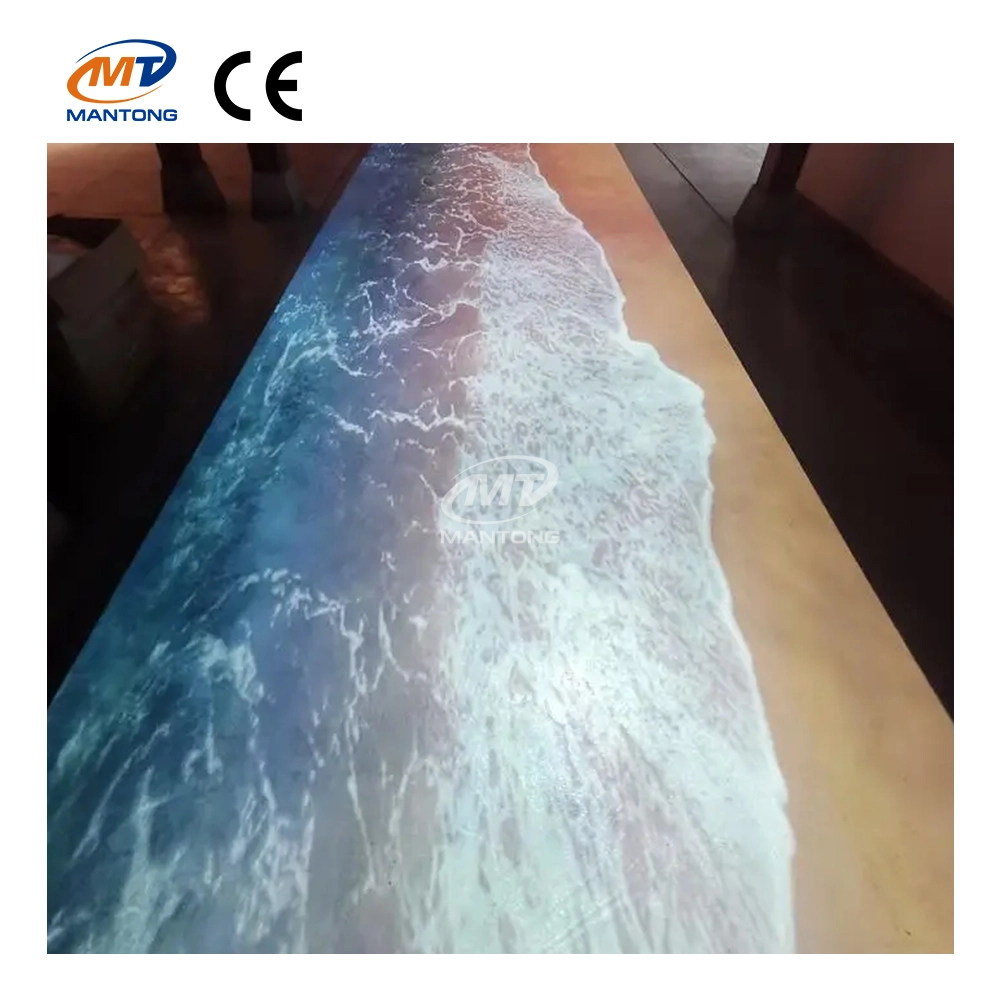
Indoor Interactive Floor Projector System - Customized Design & Installation Support
Indoor interactive floor projections display dynamic themed videos on the floor, commonly used in venues aiming to enhance brand influence or attract foot traffic, such as restaurants, hotel corridors, and brand car retail stores.
By using projectors and compatible software, the interactive content is projected onto the floor, encouraging engagement between people and the projected visuals. A single 5500-lumen indoor floor projector can cover an area of 5 m × 3 m. Typically, each project will use at least 3 units to ensure broad coverage and optimal visual effects.
We also offer customized design and installation support to enhance the interactive experience for your venue.
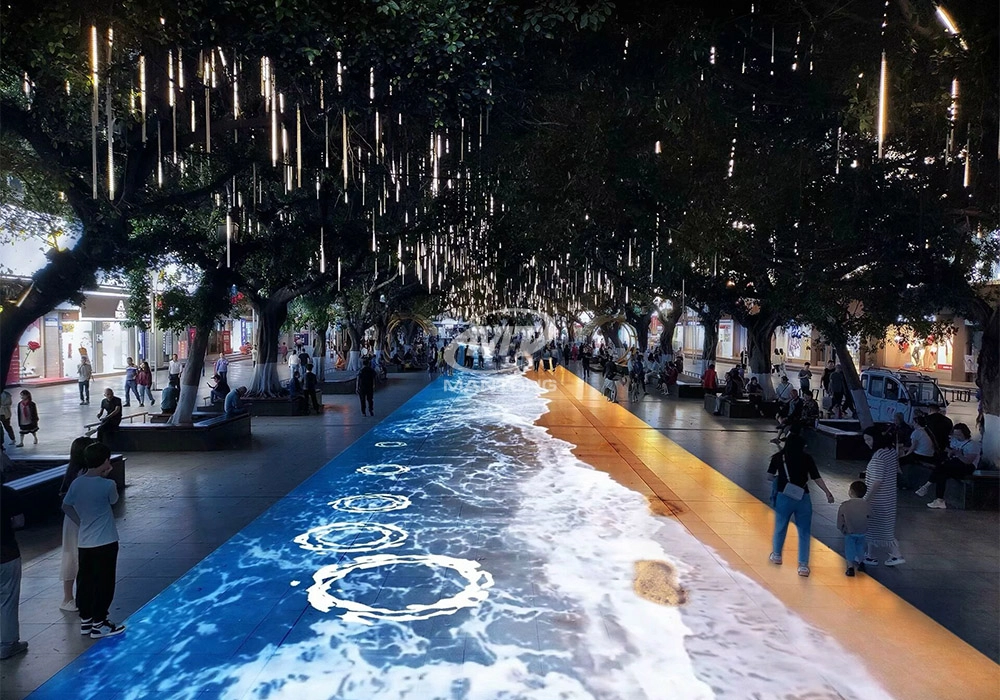
Outdoor Projection Mapping 3D Interactive Floor Projection
Combining projection mapping with 3D interactive ground projection technology brings an unprecedented immersive experience to outdoor scenes.
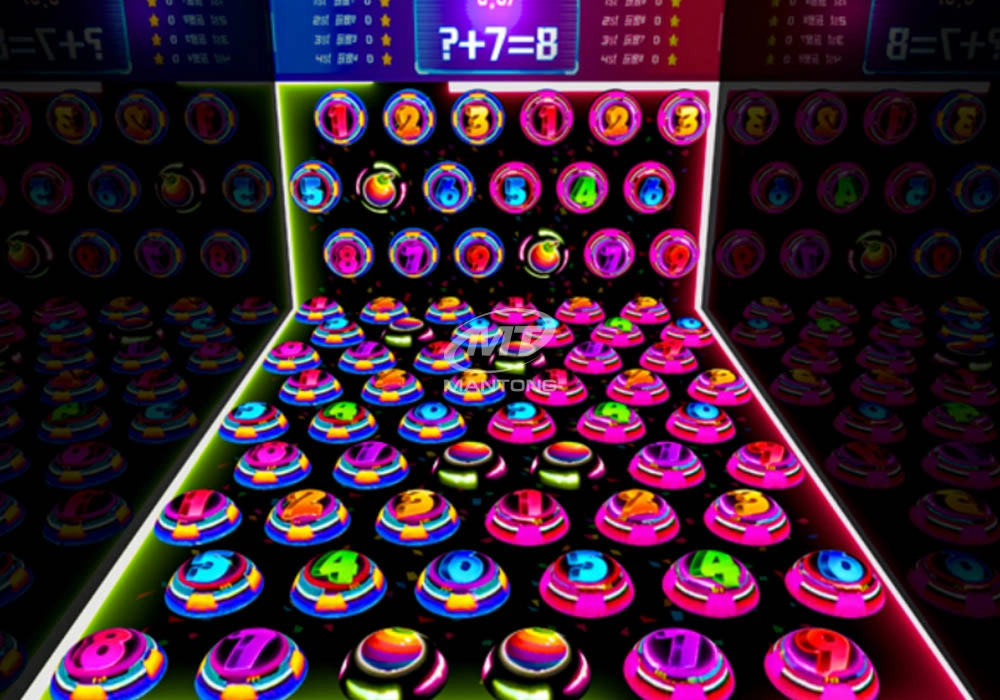
Amusement Rapidly Rotating Bouncing Sphere Interactive Wall Floor Projection Sports Games
Rapidly Rotating Bouncing Sphere is an interactive space where participants jump on rotating spheres. As they step on it, the spheres surface will show special interactivity
Jumping on spheres of the same color in succession causes them to pop, releasing light particles. The more consecutive jumps, the greater the reward—caterpillars appear, and eventually, all spheres of that color burst, filling the space with light and even more caterpillars.
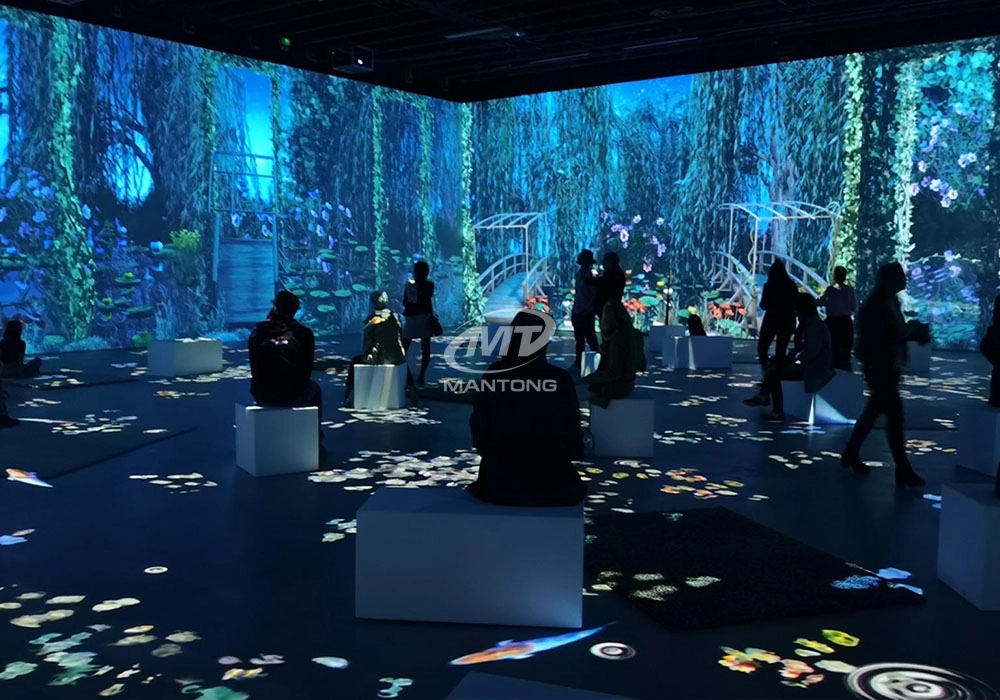
Mantong 6500LM High-Lumen Projector for Large-Scale Immersive Room Projection
Transform any space with Mantong's immersive projection mapping systems. Our high-lumen projectors (up to 6500 LM) and custom software create captivating interactive experiences for floors and walls. Ideal for museums, events, retail, and hospitality. Each kit includes professional ceiling mounting and 80+ pre-loaded video contents and is backed by a 12-month warranty and CE certification. We offer full customization and support to bring your vision to life.

Kaida Business Center, Shixin Road, Panyu District,Guangzhou City, Guangdong Province, China.
ManTong
ManTong
ManTong