
Cost Breakdown of Interactive Floor Projection Installations
- Understanding What Drives Price in Interactive Projection Projects
- Primary Cost Components of an Interactive Floor Projection Installation
- Hardware: Projectors, Optics, Mounts and Sensors
- Software and Content: Licensing, Customization, and Integration
- Installation, Integration and Calibration
- Site Preparation and Infrastructure
- Typical Cost Ranges by Project Size
- Ongoing Costs, Maintenance and Lifecycle Considerations
- Ways to Reduce Cost Without Sacrificing Experience
- Mantong Digital: One-stop Interactive Projection Manufacturer and Partner
- Decision Checklist and Procurement Tips for Buyers
- FAQs
- References and Further Reading
Understanding What Drives Price in Interactive Projection Projects
An interactive floor projection installation combines projection hardware, sensing systems, content software and site-specific integration to create immersive, responsive floor experiences. Buyers searching for interactive floor projection installation costs want clarity: What components contribute most to price, typical budget bands for small to large projects, recurring costs, and how to get the best value. This article breaks down the cost drivers, gives realistic price ranges, and provides practical procurement guidance based on field experience and market indicators.
Primary Cost Components of an Interactive Floor Projection Installation
An accurate cost estimate begins by separating the project into its major components. For an interactive floor projection installation, the main cost buckets are hardware, software & content, installation & labor, site preparation & infrastructure, and ongoing operation & maintenance. Each bucket can vary widely with project scale, brightness and resolution requirements, interaction complexity, and environmental constraints.
Hardware: Projectors, Optics, Mounts and Sensors
Hardware is typically the largest upfront capital cost. Key hardware elements include:
- Projectors: short-throw, ultra-short-throw, or standard throw; laser light engines are now preferred for long life and low maintenance. Brightness (lumens), resolution (WUXGA/4K), and throw distance determine cost. Typical market ranges for professional projectors used in interactive floors are roughly 2,500 to 50,000+ USD per unit depending on capability and brand.
- Optical accessories and lenses: short-throw lenses, keystone correction lenses, and engineered housings to protect and align the beam add to cost.
- Mounts and enclosures: ceiling mounts, floor housings, weatherproof enclosures for outdoor installs.
- Sensors and tracking: depth cameras (Time-of-Flight), stereo cameras, infrared/motion sensors, pressure mats, or custom sensor rigs for accurate interaction detection. Costs vary from a few hundred to several thousand dollars depending on accuracy and robustness.
- Media players and servers: dedicated playback PCs, GPUs or media servers for multi-projector setups.
Because projectors and sensors define the visual quality and interactivity, lowering these costs is the most direct way to reduce budget—but it also reduces visual impact and reliability.
Software and Content: Licensing, Customization, and Integration
Software is the brain of an interactive floor projection installation. Costs include out-of-the-box software licenses, user-interface modules, middleware (e.g., tracking SDK), third-party licenses (Unity, Unreal, proprietary engines), and custom content development.
Typical software cost elements:
- Licensing fees: perpetual or subscription-based. Some integrators license per-node or per-channel.
- Custom content and UX: concepting, motion design, audio, game logic, and testing. Custom development for a branded interactive experience can exceed hardware costs when high production values are required.
- Integration and QA: synchronizing sensor input with visuals, latency tuning, and user testing.
Smaller projects can use templated content with modest licensing fees. Complex themed experiences or branded campaigns commonly require bespoke development and iterative testing, which increases cost significantly.
Installation, Integration and Calibration
Installation labor covers mechanical mounting, cabling, network setup, projector alignment and blending (for multi-projector systems), sensor calibration, and onsite testing. For interactive floor projection installation, fine calibration is critical to eliminate parallax and latency—this requires experienced AV integrators.
Labor cost drivers include local labor rates, site complexity, the number of installers, and the duration of commissioning. For many projects, installation labor can be 10-30% of total project cost, higher if extensive rigging, scaffolding or after-hours work is required.
Site Preparation and Infrastructure
Site-specific works frequently add unexpected cost. Common items:
- Power upgrades or dedicated circuits for high-lumen projectors and servers.
- Floor surface work: painting, anti-glare treatment, protective coatings or raised access floors for wiring.
- Structural modifications: ceiling reinforcement for heavy mounts, enclosures for weather protection in outdoor installations.
- Environmental controls: humidity, temperature, dust mitigation, and lighting control to maintain image quality.
Estimating and factoring site preparation before procurement avoids change orders that inflate budgets.
Typical Cost Ranges by Project Size
The following table gives realistic 2024–2025 cost bands for interactive floor projection installation projects. These are illustrative estimates; exact cost depends on specifications and region.
| Project Type | Typical Use | Hardware | Software & Content | Installation & Site Prep | Total Estimated Range (USD) |
|---|---|---|---|---|---|
| Small | Retail kiosk, small museum exhibit (1 projector) | Projector 2,500–8,000; sensors 300–1,500; mounts 300–1,500 | Templated software or light customization 1,000–6,000 | Installation 1,000–4,000; minor site prep 500–2,000 | 8,600–28,000 |
| Medium | Retail storefront, mid-size museum hall (2–4 projectors) | Projectors 8,000–40,000; sensors & servers 2,000–10,000 | Moderate customization 8,000–30,000 | Installation 5,000–25,000; moderate site prep 2,000–10,000 | 30,000–100,000 |
| Large / Immersive | Theme parks, immersive rooms, multi-zone events (multi-projector) | Projectors & servers 50,000–500,000+; robust sensors | High-end custom development 50,000–500,000+ | Installation 30,000–300,000+; significant infrastructure | 100,000–1,000,000+ |
Assumptions used: USD pricing, professional-grade components, includes reasonable regional labor; excludes taxes, import duties and long-term content updates.
Ongoing Costs, Maintenance and Lifecycle Considerations
Interactive floor projection installations incur ongoing costs that should be included in total cost of ownership (TCO):
- Consumables and periodic replacements: while laser projectors reduce lamp replacement, filters, fans and sometimes lenses need maintenance.
- Software updates, license renewals and content refreshes. Many clients plan annual content updates to keep experiences fresh.
- Warranty and support contracts: extended warranties or onsite SLAs typically 5–10% of hardware cost per year.
- Remote monitoring and hosting: for installations using cloud analytics or remote content management.
A rule of thumb for budgeting is to allocate 5–15% of initial project cost per year for maintenance and updates for the first 3–5 years, higher if the project uses bespoke software that requires active development.
Ways to Reduce Cost Without Sacrificing Experience
Cost reduction strategies most integrators recommend:
- Use templated content and modular software that allow branding without full custom development.
- Choose a single high-quality projector with optical tricks (mirrors, short-throw lenses) rather than multiple lower-cost projectors when resolution requirements permit.
- Opt for laser projectors for lower lifecycle cost even if initial capital is higher—lamp-based projectors often have hidden future costs.
- Engage with a manufacturer-direct partner who provides hardware and software together to reduce interface and integration overheads.
- Plan for staged rollouts: pilot a single zone, then scale once concept is validated to reduce risk and rework costs.
Mantong Digital: One-stop Interactive Projection Manufacturer and Partner
Mantong Digital is a one-stop interactive projection solution provider and direct manufacturer based in Guangzhou, China, with over 10 years of industry experience. Mantong is dedicated to providing innovative, flexible and cost-effective projection solutions, offering both hardware and software to meet various needs. Working with a manufacturer such as Mantong reduces procurement complexity: you get matched hardware and software, consolidated warranties, and streamlined support.
At ManTong, we specialize in providing customized solutions for a wide range of application scenarios through innovative projection technology. Whether it's immersive experiences, interactive entertainment or outdoor lighting and projection shows, our solutions can transform ideas into stunning visual effects. Our projection technology provides customized solutions for a variety of scenarios, delivering immersive and interactive visual experiences.
Key Mantong capabilities and product strengths relevant to interactive floor projection installation:
- Integrated product portfolio: immersive projection, interactive floor projection, interactive wall projection, immersive rooms, 3D projection, interactive projection games, projection shows and projection mapping.
- Direct manufacturing: better component pricing and supply chain control compared with multi-layer distribution.
- Custom software and content services: from templated interactive games to fully bespoke immersive experiences.
- Global partnership focus: Mantong is seeking business partnerships worldwide and offers project support from concept to deployment.
- Proven industry experience: over 10 years of installations across museums, retail, events and outdoor projection shows.
Working directly with a manufacturer like Mantong often shortens lead times, lowers cost per unit for multi-projector deployments, and simplifies technical responsibility for both hardware and software layers. Learn more at https://www.mtprojection.com/.
Decision Checklist and Procurement Tips for Buyers
Before requesting quotes, prepare an RFP that addresses:
- Functional goals: expected foot traffic, interaction time, user demographics and accessibility requirements.
- Visual requirements: brightness (lux), resolution, image size and edge blending needs.
- Environmental constraints: ambient light, outdoor vs indoor, floor reflectivity and durability.
- Operational constraints: opening hours, expected run-hours, maintenance capacity and SLAs.
- Content lifecycle: how often you'll refresh content, whether you need templates or bespoke content designers.
- Warranties and support: ask for on-site response times, remote support, and spare parts policy.
Compare bids not just on headline price but on inclusions: number of onsite calibrations, content hours, warranty length, and post-deployment support. Consider manufacturer-direct proposals (like Mantong Digital) that can combine hardware and software with a single support contract.
FAQs
- Q1: How much does a basic interactive floor projection installation cost?
- A1: A basic single-projector installation with templated content typically ranges from 8,000 to 28,000 USD including hardware, basic software and installation. This is an illustrative range—actual costs depend on projector brightness, sensor choice and local labor.
- Q2: What are the main factors that push costs above 100,000 USD?
- A2: Large-scale multi-projector systems, bespoke content production, extensive site works, specialized sensors or outdoor weatherproofing, and tight SLAs can push projects above 100,000 USD. Immersive rooms and theme-park-quality installations commonly exceed this band.
- Q3: Are laser projectors worth the extra initial cost?
- A3: For installations with long daily run-times and where consistent brightness and low maintenance are required, laser projectors are usually worth the investment due to lower TCO (no lamp replacements, longer life, stable color). Evaluate lifecycle costs rather than capital cost alone.
- Q4: Can I use consumer projectors to save money?
- A4: Consumer projectors may be suitable for very low-use prototypes or pilots, but they lack the brightness, cooling, warranty and durability of professional units. For public-facing installations, professional AV equipment is recommended to avoid frequent downtime and maintenance costs.
- Q5: How much should I budget annually for maintenance and content updates?
- A5: A conservative budgeting approach is to allocate 5–15% of the initial installation cost annually for maintenance, software licensing and content refreshes during the first 3–5 years. This will vary by usage intensity and how frequently content is refreshed.
- Q6: How do I choose between off-the-shelf interactive software and custom development?
- A6: Off-the-shelf software is cost-effective for standard interactions and faster deployment. Choose custom development when the brand experience, unique interaction models, or complex multi-zone logic are critical. Consider hybrid approaches: start with templates and gradually invest in custom features as ROI becomes clear.
For project consultations, detailed quotes, or to explore Mantong Digital's product catalog and partnership opportunities, contact Mantong Digital or visit https://www.mtprojection.com/. Our team can provide site assessments, pilot programs and turnkey proposals tailored to your budget and goals.
References and Further Reading
- Projection mapping, Wikipedia. Accessed 2025-12-19. https://en.wikipedia.org/wiki/Projection_mapping
- Grand View Research, Projection Mapping Market Size, Industry Analysis. Accessed 2025-12-19. https://www.grandviewresearch.com/industry-analysis/projection-mapping-market
- AVIXA (Audiovisual and Integrated Experience Association). Industry resources and integrator guidance. Accessed 2025-12-19. https://www.avixa.org/
- B&H Photo Video — professional projector product listings and pricing examples. Accessed 2025-12-19. https://www.bhphotovideo.com/
- Mantong Digital official website. Accessed 2025-12-19. https://www.mtprojection.com/
Top interactive floor projection Manufacturers and Suppliers in Guangzhou
Immersive 360 Projection vs VR: Which Is Better for Events?
Cost Comparison of Interactive Projector Games Solutions
How to Choose the interactive projection games manufacturer and supplier in China?
One-Stop Projection Solution Provider Since 2011
How to Write an Interactive-Effect Video Customisation Script ?
① Project Background: Briefly introduce the context in which this interactive scene will be used (e.g., exhibition, museum,
event space, children's area). Example: This scene is part of the “Underwater World” zone in a children's science museum,
designed to be engaging and exploratory.
②Visual Style / Atmosphere: What kind of visual mood are you aiming for? Please describe the color scheme, style, and any
references. it should focus solely on describing the visual aspects of the scene, supported by relevant charts or reference
images.
③ Interaction Points Overview:List each interactive hotspot along with the effect you'd like to trigger when the user
touches or clicks the area. example: when player touch the clownfish, it will swims away with bubble trail (animation effect)
and produce the bubble sound ( sound effect requirement )
④ Static Visual Reference:including but not limited to background image/video, a list of major visual elements (e.g., coral,
rocks, seaweed, fish), which elements should be interactive?
What's the application of Immersive projection ?
It can be used in various venues, such as art exhibition, entertainment venues, educational institution, Wedding hall /Banquet/Bar,Yoga Studio and so on. It often involves advanced projection techniques, multimedia content, and interactive elements to engage and captivate the audience's senses.
Are you trader or manufacturer ?
We are direct manufacturer who specialize in providing one-stop solution for different outdoor & indoor projection project with our stable software and qualified projectors
What information do you need to know before making the proposal/solution?
We know that everyone wants to know the price, but the price of our products is determined by many factors since most of our products are custom, so no ready price list. In order to fast understand what you need, can you send us an inquiry like this?
For example: I am really interested in your immersive projection products, we are a company in the USA and want to install some in my restaurant. It is about 50 meters long, and 5m in width. Projection size you can decide but the length should be not less than 20 meters. We want some content about SeaWorld because our place is all about the sea. Thank you.
What about the wall/floor material for the projection?
It’s recommended to choose a light-colored material with minimal reflectivity—pure white or light grey works best. the
common material is cement & plaster board
For optimal projection results, the surface should be free of any patterns or textures, as the projector will display content
directly onto it.
There are no specific material requirements; you may use any commonly available material in your local market, as long as it
meets the above conditions.
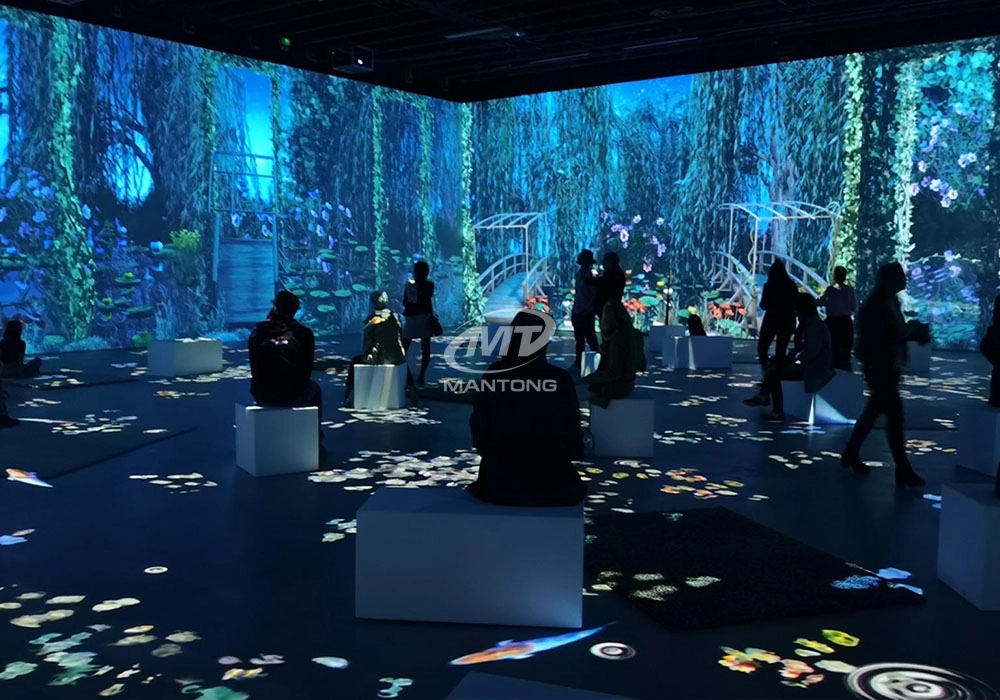
Mantong 6500LM High-Lumen Projector for Large-Scale Immersive Room Projection
Transform any space with Mantong's immersive projection mapping systems. Our high-lumen projectors (up to 6500 LM) and custom software create captivating interactive experiences for floors and walls. Ideal for museums, events, retail, and hospitality. Each kit includes professional ceiling mounting and 80+ pre-loaded video contents and is backed by a 12-month warranty and CE certification. We offer full customization and support to bring your vision to life.
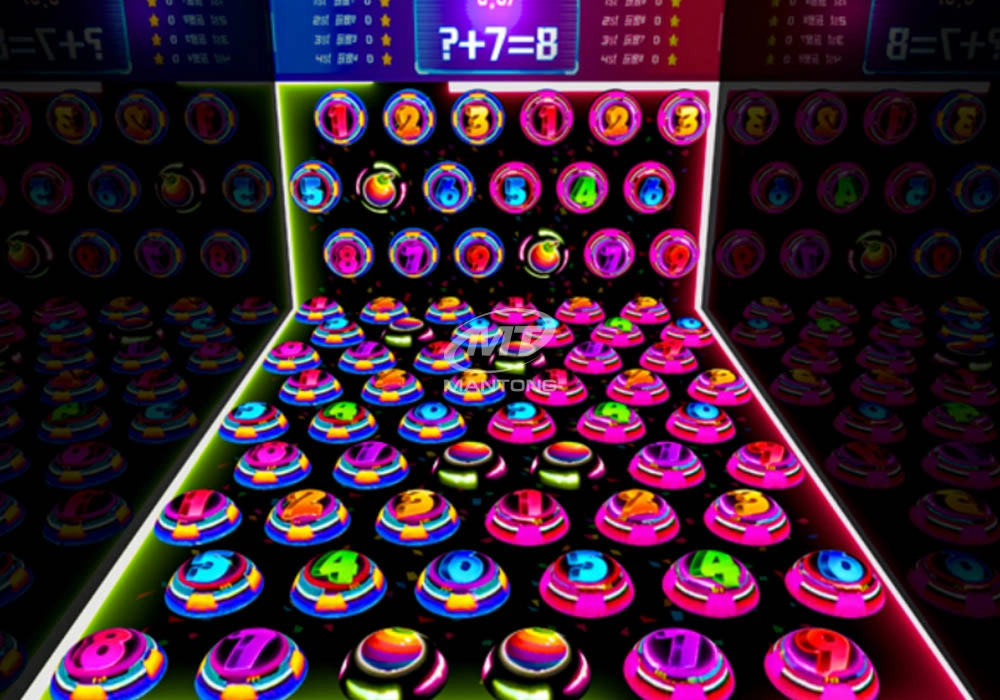
Amusement Rapidly Rotating Bouncing Sphere Interactive Wall Floor Projection Sports Games
Rapidly Rotating Bouncing Sphere is an interactive space where participants jump on rotating spheres. As they step on it, the spheres surface will show special interactivity
Jumping on spheres of the same color in succession causes them to pop, releasing light particles. The more consecutive jumps, the greater the reward—caterpillars appear, and eventually, all spheres of that color burst, filling the space with light and even more caterpillars.
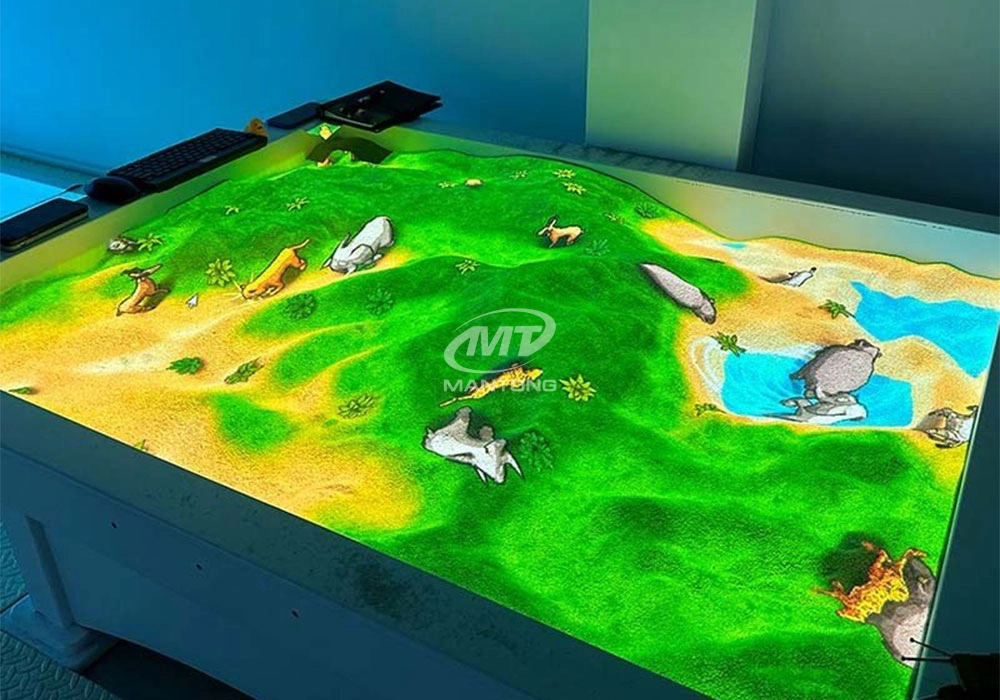
Interactive Sandbox Projection Mapping Games For Kids Play Park
Bring imagination to life with interactive sandbox projection mapping games designed for kids’ play parks. Using cutting-edge projection technology and real-time motion sensing, children can dig, build, and explore virtual worlds directly in the sand. Educational, engaging, and endlessly fun — it’s the perfect blend of play and learning.
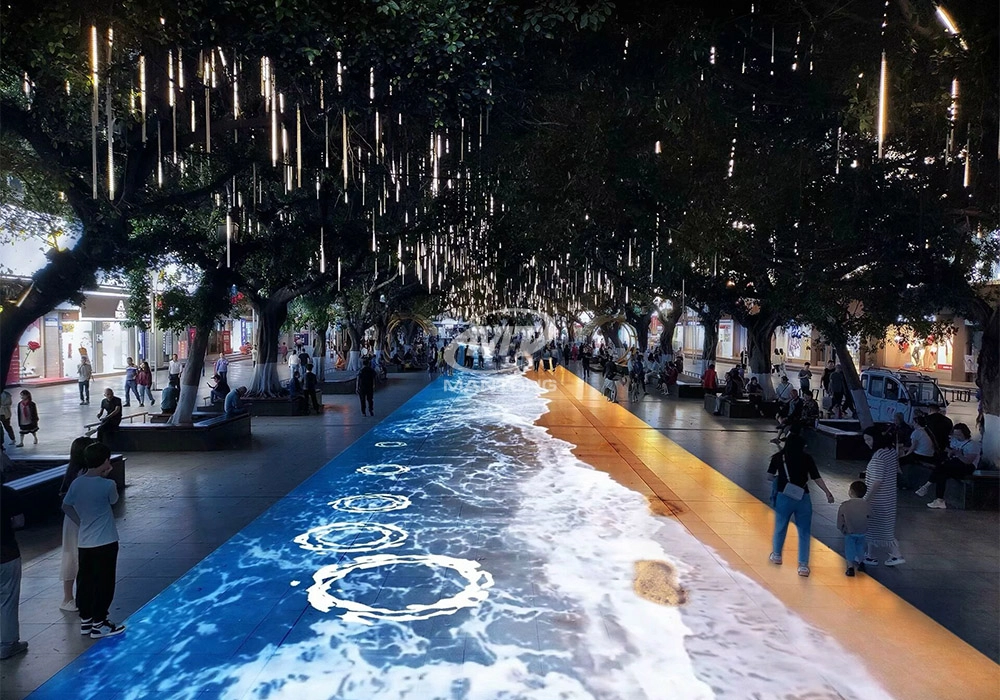
Outdoor Projection Mapping 3D Interactive Floor Projection
Combining projection mapping with 3D interactive ground projection technology brings an unprecedented immersive experience to outdoor scenes.

Kaida Business Center, Shixin Road, Panyu District,Guangzhou City, Guangdong Province, China.
ManTong
ManTong
ManTong