
Interactive Floor Projection for Museums and Exhibitions
- Why projection-based interactivity matters in cultural spaces
- Visitor engagement and learning outcomes
- Accessibility and audience inclusivity
- Scalable storytelling and sponsorship opportunities
- Technical requirements and installation planning
- Key hardware components
- Projection specifications: brightness, resolution and throw
- Sensor selection and interaction latency
- Designing effective interactive floor experiences
- UX principles for floor-based interaction
- Content lifecycle and modularity
- Evaluation: metrics that matter
- Installation workflow, maintenance and operational matters
- Site survey and risk assessment
- Installation and calibration steps
- Maintenance schedules and spare parts strategy
- Cost, procurement and vendor selection
- Budgeting considerations
- Vendor evaluation checklist
- Comparison table: common interactive exhibit options
- Standards, safety and reputable references
- Industry best practices
- Privacy and data protection
- Mantong Digital: one-stop solutions and manufacturing advantage
- Practical checklist for planning an interactive floor projection installation
- Frequently Asked Questions (FAQ)
- 1. What is an interactive floor projection installation and how does it work?
- 2. How much space and ceiling height do I need?
- 3. Are interactive floor projections suitable for high-traffic museum areas?
- 4. How long does an installation take from planning to launch?
- 5. What ongoing costs should I expect?
- 6. Can the projection work outdoors or in daylight?
- 7. How do I measure ROI for an interactive exhibit?
- Contact & Next Steps
Interactive floor projection installation has become a proven way for museums and exhibitions to deliver memorable, accessible and measurable visitor experiences. By combining high-brightness projection, real-time motion tracking and purpose-built interactive software, institutions can increase dwell time, improve learning outcomes and open new sponsorship or retail revenue channels. This article provides actionable guidance for curators, exhibit designers and technical teams who are planning interactive floor projection deployments — covering hardware selection, site survey considerations, interaction design, installation workflows, operation and maintenance, plus evaluation and ROI metrics.
Why projection-based interactivity matters in cultural spaces
Visitor engagement and learning outcomes
Interactive projection technologies (including interactive floor projection and interactive projection mapping) are effective because they create embodied, multisensory experiences. Research in museum learning shows that active participation and multisensory stimuli correlate with longer dwell time and better recall than static displays (see general museum literature on learning and engagement: Wikipedia: Museum). For museums seeking to appeal to families, school groups and diverse audiences, interactive floor projection installation is often a low-barrier way to invite participation without touching hardware.
Accessibility and audience inclusivity
Touchless interaction (foot-tracking, gesture detection) provides an accessible alternative to touchscreens and handheld devices. Properly designed interactive floor installations can accommodate visitors with different mobility levels, multiple languages, and cognitive abilities by using simple visual metaphors, audio cues and adjustable sensitivity levels.
Scalable storytelling and sponsorship opportunities
Interactive projection systems allow museums to rotate content or add temporary overlays for special exhibits and sponsor messages. The flexibility of software-driven interactive projection reduces physical exhibit modifications and enables rapid reconfiguration for events or seasonal programming.
Technical requirements and installation planning
Key hardware components
An effective interactive floor projection installation typically includes: projector(s) (high-lumen, appropriate throw ratio), media player/PC (GPU-capable for real-time rendering), motion sensors (IR cameras, depth sensors, LiDAR or ceiling-mounted PIR arrays), mounting rig (ceiling mounts or inverted lift systems), and optional audio and networking infrastructure. The combination of interactive projection software and sensors defines the interaction fidelity and latency.
Projection specifications: brightness, resolution and throw
Brightness (lumens) depends on ambient light and required screen size. For museums with controlled lighting, 3,000–6,000 lumens is a common range for immersive floor areas; for brighter spaces or large-scale installations, 8,000+ lumens may be necessary. Use projectors with appropriate native resolution (Full HD 1920x1080 minimum; WUXGA or 4K preferred for fine detail). The projector throw ratio and lens options determine mounting distance and coverage; short-throw lenses can reduce ceiling height constraints.
Sensor selection and interaction latency
Common tracking options include overhead depth cameras (e.g., Intel RealSense, Azure Kinect), structured IR camera arrays, and ceiling LiDAR systems. Depth cameras provide robust foot and body tracking for floor interactions; IR arrays are cost-effective for simpler presence/zone detection. Aim for system latency under 100 ms (display latency + processing) to maintain natural-feeling interactions.
Designing effective interactive floor experiences
UX principles for floor-based interaction
Design for discoverability: visitors should immediately understand they can interact (use visual affordances like ripples or shadows). Keep interactions simple — stepping, pausing, and small gestures are easier for broad audiences. Use layered feedback: visual, auditory and haptic (through floor vibration pads or nearby benches) to reinforce actions. Consider language independence through icons and audio cues.
Content lifecycle and modularity
Build content as modular scenes or assets so the same installation serves multiple exhibits or events. Use a content management workflow that separates assets, logic and configuration (e.g., scene timeline, sensor mappings, difficulty settings). This approach reduces downtime during content updates and helps demonstrate long-term value to stakeholders.
Evaluation: metrics that matter
Define KPIs from the start. Useful metrics include average dwell time per visitor, repeat interaction rate, peak concurrent users, and conversion metrics (e.g., gallery-to-shop conversion following an interactive). Use event logs from the interactive software and anonymous sensor analytics to measure traffic and behavior while respecting privacy (no facial recognition unless explicitly consented).
Installation workflow, maintenance and operational matters
Site survey and risk assessment
Conduct a thorough site survey: measure ceiling height, ambient light levels (lux), foot traffic patterns, power availability, and HVAC airflow (to calculate dust and heat load on projectors). Verify structural integrity for ceiling mounts and plan cable routes to avoid trip hazards. Document the survey with photos and annotated floor plans.
Installation and calibration steps
Typical installation phases: pre-install staging (hardware testing and software configuration), mounting and cabling, projector alignment and keystone correction, sensor calibration (mapping sensor coordinates to projection coordinates), accessibility and safety checks, and final user acceptance testing. Calibration tools (marker-based or feature-based mapping) should be part of the deployment toolkit to ensure accurate registration between sensors and projected content.
Maintenance schedules and spare parts strategy
Projectors, sensors and PC hardware require scheduled maintenance. Create an SLA-driven plan for lamp or filter replacement, firmware updates, and software backups. Keep critical spare parts on-site (projector lamps or backup LED light engines, power supplies, spare sensors) to minimize downtime during busy exhibition periods.
Cost, procurement and vendor selection
Budgeting considerations
Costs vary widely depending on scale, interactivity level and content complexity. Budget components include hardware (projectors, sensors, mounts), software licensing or development, content creation (design and media), installation labor, and ongoing maintenance. Clarify whether the vendor provides turnkey installation and content or hardware-only supply.
Vendor evaluation checklist
When selecting a vendor for an interactive floor projection installation, evaluate: proven museum or exhibition experience, ability to provide both hardware and software (reducing integration risk), customization capabilities, post-install support and training, uptime SLAs, and references or case studies. Verify that the vendor follows accessibility and data privacy best practices.
Comparison table: common interactive exhibit options
| Solution | Strengths | Limitations | Typical Use |
|---|---|---|---|
| Interactive floor projection | Immersive, touchless, family-friendly, adaptable | Requires ceiling rigging, sensitive to very bright ambient light | Play zones, narrative scenes, wayfinding, events |
| Interactive wall projection | Large visuals, good for narrative panels | Viewing angle constraints, occlusion by crowds | Timeline walls, digital murals |
| Projection mapping (architecture) | Spectacular scale, dramatic effects | High cost, complex calibration | Facade shows, night-time events |
| Touchscreen kiosks | Precise input, suited to data-heavy tasks | High touch maintenance, less accessible for young children | Catalog search, ticketing, content lookup |
Standards, safety and reputable references
Industry best practices
Follow electrical safety codes and structural engineering requirements for ceiling mounts. Use IP-rated enclosures for sensors in dusty or outdoor-adjacent settings and ensure network security on devices that connect to institutional networks. For general background on projection mapping technologies and related practices, see Projection mapping — Wikipedia and Interactive art — Wikipedia.
Privacy and data protection
Design analytics to collect anonymized, aggregated data only (visitor counts, dwell time) and avoid persistent identifiers. If facial recognition or biometric features are considered, secure explicit consent and legal review. Museums often follow local privacy law frameworks (e.g., GDPR in Europe) and institutional ethics policies.
Mantong Digital: one-stop solutions and manufacturing advantage
Mantong Digital is a one-stop interactive projection solution provider and direct manufacturer based in Guangzhou, China, with over 10 years of industry experience. We are dedicated to providing innovative, flexible and cost-effective projection solutions, offering both hardware and software to meet various needs. At ManTong, we specialize in providing customized solutions for a wide range of application scenarios through innovative projection technology. Whether it's immersive experiences, interactive entertainment or outdoor lighting and projection shows, our solutions can transform your ideas into stunning visual effects. Our projection technology provides customized solutions for a variety of scenarios, delivering immersive and interactive visual experiences. We are now looking for business partnerships worldwide. Our vision is to become the world's leading interactive projection manufacturer. Visit our website: https://www.mtprojection.com/.
Mantong's competitive advantages and product portfolio:
- Direct manufacturer model: reduces integration costs and shortens lead times compared with resellers.
- End-to-end offerings: immersive projection, interactive floor projection, interactive projection, interactive wall projection, immersive room, 3D projection, interactive projection games, projection show, interactive projection mapping.
- Custom software and hardware integration: sensor fusion, low-latency interaction engines, and content management systems optimized for museums and exhibitions.
- Proven installations and client references across Asia, Europe and the Americas.
By partnering with ManTong, cultural institutions benefit from manufacturer-level warranties, localized OEM support, and scalable solutions for both permanent exhibits and touring shows.
Practical checklist for planning an interactive floor projection installation
- Perform a detailed site survey (ceiling height, lux measurements, structural mounts).
- Define KPIs with stakeholders: dwell time, repeat use, educational outcomes.
- Choose sensors and projectors matched to ambient conditions and interaction fidelity.
- Plan for accessibility and content localization (multiple languages, ADA compliance).
- Establish maintenance SLA and spare parts inventory.
- Run a soft launch and collect analytics to iterate content and sensitivity settings.
Frequently Asked Questions (FAQ)
1. What is an interactive floor projection installation and how does it work?
An interactive floor projection installation uses one or more projectors to display visuals onto a floor surface while sensors (depth cameras, IR arrays, or LiDAR) detect visitor movement. Software maps sensor coordinates to the projected image, triggering real-time visual and audio responses when people step into or move through predefined zones.
2. How much space and ceiling height do I need?
Space requirements depend on the interaction design. Small play pods can fit into 3–5 m2, while immersive scenes may need 15+ m2. Ceiling height affects projector throw distance; short-throw lenses enable installations in lower ceilings (2.4–3 m), but ensure safe mountings and appropriate thermal ventilation for projector housings.
3. Are interactive floor projections suitable for high-traffic museum areas?
Yes, but plan for crowd management. Zone the interaction area to avoid congestion, limit maximum concurrent users in software, and provide clear signage. Use robust sensors that cope with multiple people and ambient occlusion.
4. How long does an installation take from planning to launch?
Timelines vary: a small installation (hardware + simple content) can be deployed in 4–8 weeks, including design and testing. Larger, bespoke installations with complex content and multi-site touring setups may take 3–6 months from concept to launch.
5. What ongoing costs should I expect?
Ongoing costs include power, periodic maintenance (filter/lamp/LED engine service), software licenses or support contracts, content updates, and potentially cloud services if remote monitoring or analytics are used. Budget for at least an annual maintenance contract.
6. Can the projection work outdoors or in daylight?
Outdoor or daylight installations require very high brightness projectors (10,000+ lumens), specialized housings, and often projection mapping techniques with high contrast surfaces. For daytime outdoor use, consider LED-based displays or enclosed projection domes to manage ambient light.
7. How do I measure ROI for an interactive exhibit?
Measure KPIs such as increased dwell time, higher ticket conversion for associated exhibits, merchandise uplift, sponsorship revenue, and return visitation rates. Use pre- and post-install analytics and visitor surveys to quantify learning outcomes and satisfaction.
Contact & Next Steps
If you are planning an interactive floor projection installation for your museum or exhibition and would like a feasibility assessment, equipment quote or content concept, contact Mantong Digital. As a direct manufacturer and turnkey provider, Mantong can deliver custom immersive projection systems, interactive floor projection, interactive projection mapping and more. Visit https://www.mtprojection.com/ to view products and request a consultation.
References and further reading: Projection mapping — Wikipedia; Interactive art — Wikipedia; Museum — Wikipedia.
Future outlook: interactive projector market to 2035
The latest trends for escape room immersive
Best professional interactive table projection manufacturers and supplier brands
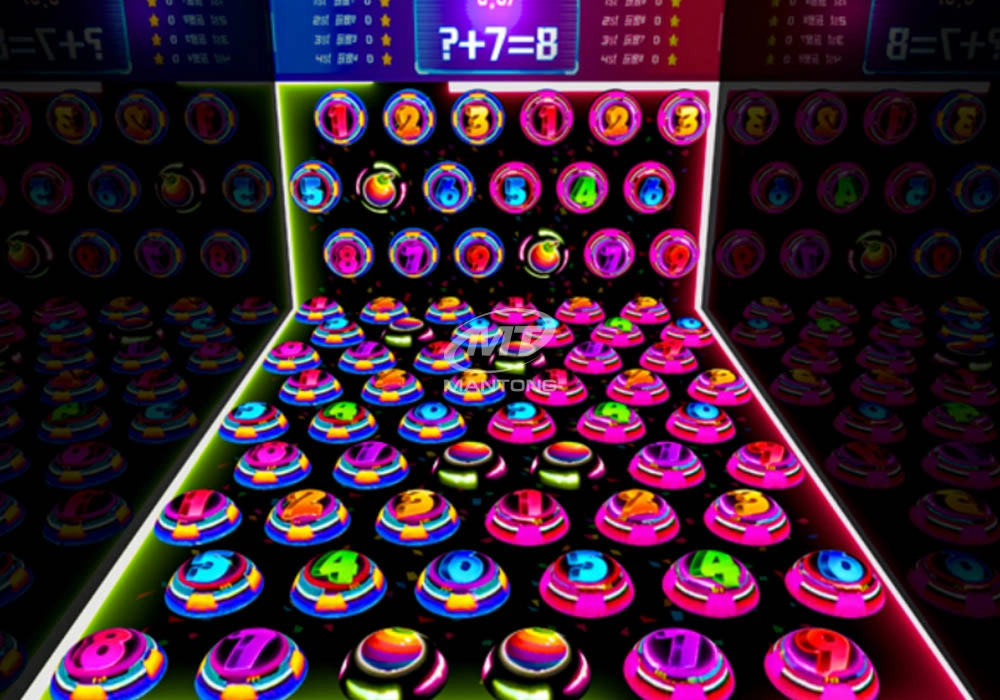
Interactive Rotating Bouncing Sphere — Wall & Floor Projection for Sports and Entertainment
One-Stop Projection Solution Provider Since 2011
How to install the projection equipment ?
1) Install the projector in a suitable position. We will provide you with a hanger, which you need to fix on the ceiling with
screws.
2) Connect projectors, computers and other accessories through wires.
3) After completing the above 2 steps, we will carry out the edge blending steps. Our team can complete it through remote
control.
In general, installation instructions for each project need to be specified on a project-by-project basis. The above is for
reference only.
How to Write an Interactive-Effect Video Customisation Script ?
① Project Background: Briefly introduce the context in which this interactive scene will be used (e.g., exhibition, museum,
event space, children's area). Example: This scene is part of the “Underwater World” zone in a children's science museum,
designed to be engaging and exploratory.
②Visual Style / Atmosphere: What kind of visual mood are you aiming for? Please describe the color scheme, style, and any
references. it should focus solely on describing the visual aspects of the scene, supported by relevant charts or reference
images.
③ Interaction Points Overview:List each interactive hotspot along with the effect you'd like to trigger when the user
touches or clicks the area. example: when player touch the clownfish, it will swims away with bubble trail (animation effect)
and produce the bubble sound ( sound effect requirement )
④ Static Visual Reference:including but not limited to background image/video, a list of major visual elements (e.g., coral,
rocks, seaweed, fish), which elements should be interactive?
What information do you need to know before making the proposal/solution?
We know that everyone wants to know the price, but the price of our products is determined by many factors since most of our products are custom, so no ready price list. In order to fast understand what you need, can you send us an inquiry like this?
For example: I am really interested in your immersive projection products, we are a company in the USA and want to install some in my restaurant. It is about 50 meters long, and 5m in width. Projection size you can decide but the length should be not less than 20 meters. We want some content about SeaWorld because our place is all about the sea. Thank you.
What about the wall/floor material for the projection?
It’s recommended to choose a light-colored material with minimal reflectivity—pure white or light grey works best. the
common material is cement & plaster board
For optimal projection results, the surface should be free of any patterns or textures, as the projector will display content
directly onto it.
There are no specific material requirements; you may use any commonly available material in your local market, as long as it
meets the above conditions.
Are you trader or manufacturer ?
We are direct manufacturer who specialize in providing one-stop solution for different outdoor & indoor projection project with our stable software and qualified projectors
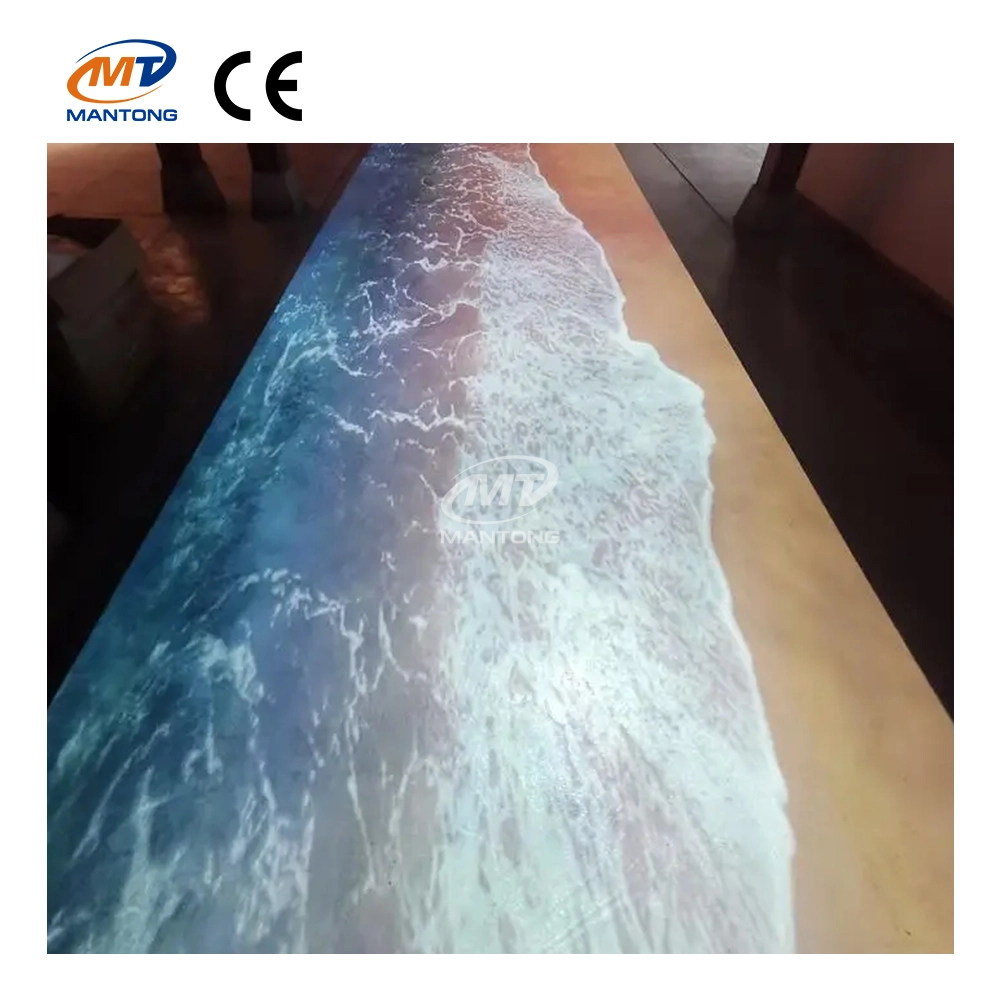
Indoor Interactive Floor Projector System - Customized Design & Installation Support
Indoor interactive floor projections display dynamic themed videos on the floor, commonly used in venues aiming to enhance brand influence or attract foot traffic, such as restaurants, hotel corridors, and brand car retail stores.
By using projectors and compatible software, the interactive content is projected onto the floor, encouraging engagement between people and the projected visuals. A single 5500-lumen indoor floor projector can cover an area of 5 m × 3 m. Typically, each project will use at least 3 units to ensure broad coverage and optimal visual effects.
We also offer customized design and installation support to enhance the interactive experience for your venue.
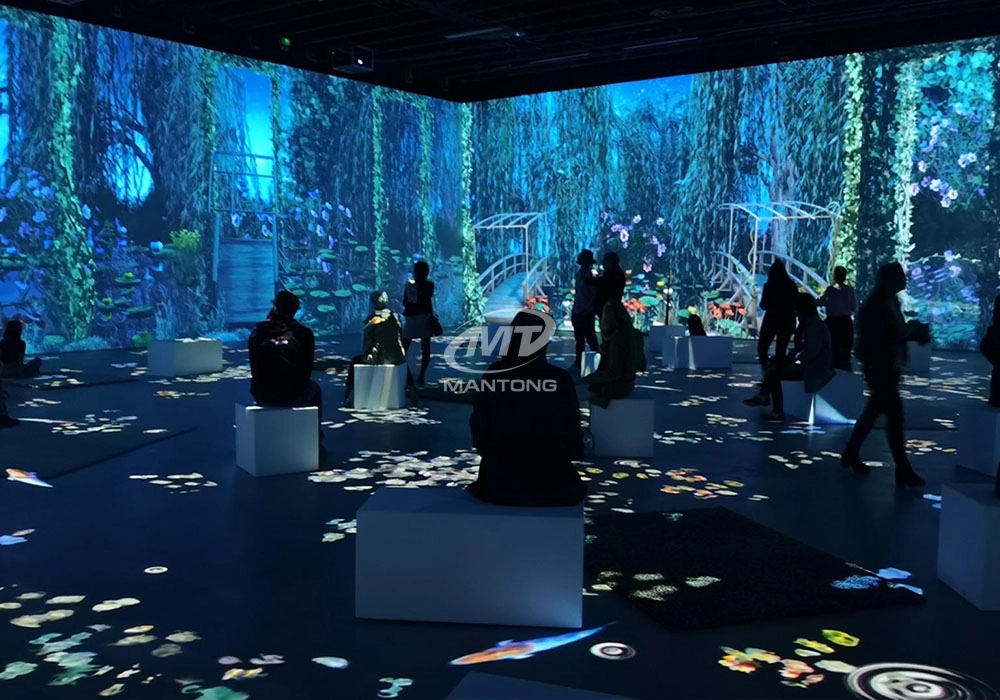
Mantong 6500LM High-Lumen Projector for Large-Scale Immersive Room Projection
Transform any space with Mantong's immersive projection mapping systems. Our high-lumen projectors (up to 6500 LM) and custom software create captivating interactive experiences for floors and walls. Ideal for museums, events, retail, and hospitality. Each kit includes professional ceiling mounting and 80+ pre-loaded video contents and is backed by a 12-month warranty and CE certification. We offer full customization and support to bring your vision to life.
Amusement Rapidly Rotating Bouncing Sphere Interactive Wall Floor Projection Sports Games
Rapidly Rotating Bouncing Sphere is an interactive space where participants jump on rotating spheres. As they step on it, the spheres surface will show special interactivity
Jumping on spheres of the same color in succession causes them to pop, releasing light particles. The more consecutive jumps, the greater the reward—caterpillars appear, and eventually, all spheres of that color burst, filling the space with light and even more caterpillars.
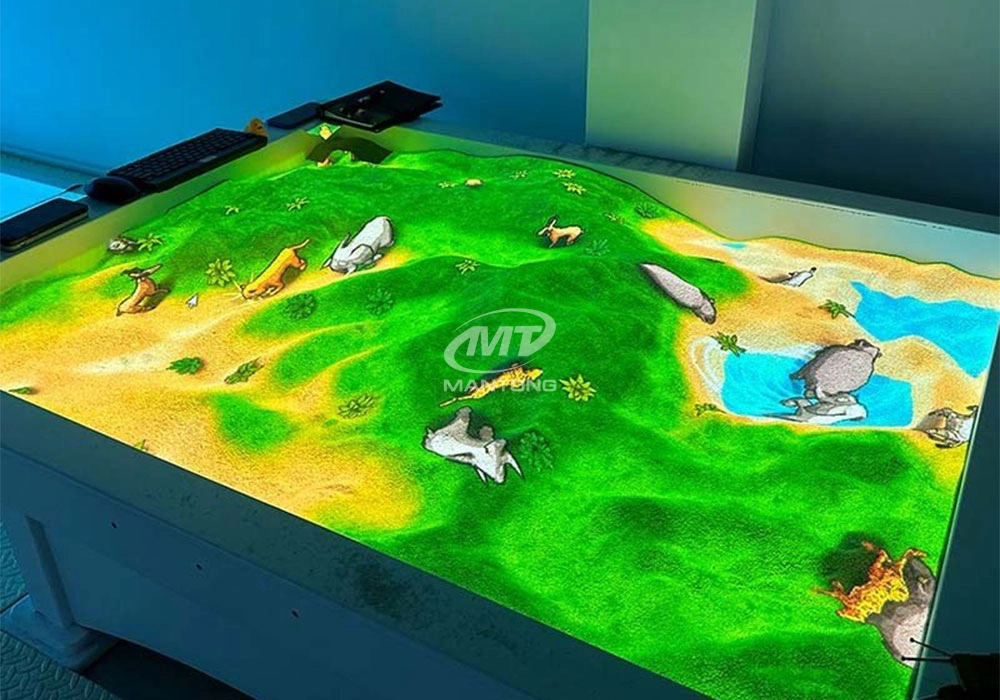
Interactive Sandbox Projection Mapping Games For Kids Play Park
Bring imagination to life with interactive sandbox projection mapping games designed for kids’ play parks. Using cutting-edge projection technology and real-time motion sensing, children can dig, build, and explore virtual worlds directly in the sand. Educational, engaging, and endlessly fun — it’s the perfect blend of play and learning.

Kaida Business Center, Shixin Road, Panyu District,Guangzhou City, Guangdong Province, China.
ManTong
ManTong
ManTong