
Interactive Floor Projection Installation: Buyer’s ROI Guide
- How Interactive Floor Projection Drives Measurable ROI
- What buyers really want — outcomes over features
- Key performance indicators (KPIs) to track
- How interactive floor projection differs from other touchpoints
- Cost Components and Budgeting for Installation
- Typical cost categories
- Representative cost ranges (global averages)
- Ongoing costs and depreciation
- Calculating ROI: Methodology and Scenario Models
- ROI fundamentals and formula
- Three scenario examples (conservative, realistic, aggressive)
- How to build your own ROI model (step-by-step)
- Vendor Selection, Technical Choices, and Risk Mitigation
- Key selection criteria for suppliers
- Technical choices that affect ROI
- Risk mitigation and procurement tips
- Mantong Digital and Why Manufacturer Partnership Matters
- Who Mantong Digital is
- Mantong’s capabilities and product strengths
- Competitive advantages and partnership proposition
- Best Practices to Maximize ROI after Installation
- Content strategy and lifecycle
- Integration with broader marketing & operations
- Measurement and optimization routine
- FAQ — Interactive Floor Projection Installation
- 1. How long does it take to install an interactive floor projection system?
- 2. What is the typical lifespan of the hardware?
- 3. How measurable is the ROI — can I link projection engagement to sales?
- 4. Are there privacy concerns with sensors and cameras?
- 5. How much does content customization cost?
- 6. Can this technology be used outdoors?
- Contact & Next Steps
- References
How Interactive Floor Projection Drives Measurable ROI
What buyers really want — outcomes over features
When organizations evaluate an interactive floor projection installation, they are buying outcomes: increased footfall, longer dwell time, higher conversion, improved brand perception, or differentiated visitor experience. The core buyer intent is commercial — to justify expenditure through measurable business outcomes. This guide focuses on translating technical decisions into measurable financial impact.
Key performance indicators (KPIs) to track
Use KPIs to convert engagement into monetary value. Common KPIs include footfall lift, dwell time increase, conversion rate change, average transaction value (ATV) uplift, repeat visits, and media impressions (for sponsorship-driven installations). Before installation, set baseline metrics from analytics or POS reports so change over time is attributable to the projection installation.
How interactive floor projection differs from other touchpoints
Compared with static signage or audio announcements, interactive projection adds dynamic, proximity-based engagement and novelty. It creates a sensory trigger that encourages pause and active interaction — valuable in retail, museums, hospitality, events, and experiential marketing.
Cost Components and Budgeting for Installation
Typical cost categories
Budget items for an interactive floor projection installation generally include:
- Hardware: projector (short throw/laser), media player, sensors (depth cameras, PIR, LIDAR), mounts
- Software: interactive content engine, content license, analytics module, CMS
- Content: design, animation, game logic, branding
- Installation: civil works, cabling, mounts, image calibration, on-site integration
- Maintenance & support: SLA, spare parts, periodic recalibration
Representative cost ranges (global averages)
Costs vary by scale and quality. Typical installed project ranges (illustrative):
| Project Size | Typical Installed Cost (USD) | Main Use Cases |
|---|---|---|
| Small | $6,000 – $20,000 | Retail pop-ups, small museum exhibits, events |
| Medium | $20,000 – $80,000 | Midsize retail stores, showrooms, themed attractions |
| Large / Permanent | $80,000 – $350,000+ | Malls, flagship stores, airports, entertainment venues |
These numbers are aggregated from industry supplier ranges and market reports; actual quotes depend on resolution, brightness, customization level, and local labor costs (see references).
Ongoing costs and depreciation
Plan for 3–5 years of lifecycle budget: software licensing, periodic content refresh, projector lamp or service (though laser projectors reduce lamp replacement), and occasional recalibration. In financial models use straight-line depreciation over expected useful life (typically 3–7 years depending on hardware quality).
Calculating ROI: Methodology and Scenario Models
ROI fundamentals and formula
Return on investment (ROI) is calculated as:
ROI (%) = (Net Benefit / Total Investment) × 100
Where Net Benefit = (Gross incremental revenue + cost savings + marketing value) − ongoing costs. For experiential installs, quantify conservative revenue drivers: increased conversion, ATV uplift, and incremental visits.
Three scenario examples (conservative, realistic, aggressive)
Below are modeled annual outcomes for a medium installation in a retail context. Assumptions are explicit so you can replace with your own data.
| Scenario | Installed Cost (Year 0) | Annual Incremental Revenue | Annual Ongoing Costs | Net Annual Benefit | ROI Year 1 (%) | Payback Period (yrs) |
|---|---|---|---|---|---|---|
| Conservative | $35,000 | $10,000 | $4,000 | $6,000 | 17% | 5.8 |
| Realistic | $35,000 | $40,000 | $6,000 | $34,000 | 97% | 1.06 |
| Aggressive | $35,000 | $80,000 | $8,000 | $72,000 | 206% | 0.49 |
Explanation of inputs:
- Installed Cost includes hardware, software, and content for the initial deployment.
- Annual Incremental Revenue combines increased sales from higher conversion/dwell time plus measurable sponsorship or media value if applicable.
- Annual Ongoing Costs include SaaS licensing, maintenance, and periodic content refresh.
How to build your own ROI model (step-by-step)
- Establish baseline weekly footfall, average transaction value (ATV), and conversion rate.
- Estimate realistic percent uplift in footfall and conversion attributable to the installation (use pilot data if possible).
- Compute incremental revenue = baseline revenue × uplift percent.
- Add non-sales value (sponsorship, PR equivalent media value) conservatively.
- Subtract ongoing costs to find net benefit; apply ROI formula and compute payback.
Vendor Selection, Technical Choices, and Risk Mitigation
Key selection criteria for suppliers
When selecting an installer or manufacturer for interactive floor projection installation, prioritize:
- Proven installation references in your target vertical (retail, museum, events)
- Content production capability and a CMS for remote updates
- Hardware quality and warranty (laser projectors reduce lamp costs and downtime)
- Analytics & measurement tools integrated with the system
- Local support or global partner network to minimize downtime
Technical choices that affect ROI
These choices materially change cost and performance:
- Projector type: laser vs lamp (laser has higher initial cost, lower lifecycle maintenance)
- Projection surface and ambient light: use brighter projectors or surface treatments to preserve image contrast
- Sensor type: camera-based systems provide richer interaction data than PIR but may require privacy considerations
- Content complexity: templated content lowers costs; custom gamification increases engagement but requires investment
Risk mitigation and procurement tips
Mitigate deployment risk with pilot programs, phased rollouts, and measurable success criteria. Include SLAs in contracts for uptime, response time, and replacement parts. Ask vendors for A/B test examples and analytics reports from existing installs.
Mantong Digital and Why Manufacturer Partnership Matters
Who Mantong Digital is
Mantong Digital is a one-stop interactive projection solution provider and direct manufacturer based in Guangzhou, China, with over 10 years of industry experience. We are dedicated to providing innovative, flexible and cost-effective projection solutions, offering both hardware and software to meet various needs. Our website: https://www.mtprojection.com/
Mantong’s capabilities and product strengths
At ManTong, we specialize in providing customized solutions for a wide range of application scenarios through innovative projection technology. Whether it's immersive experiences, interactive entertainment or outdoor lighting and projection shows, our solutions can transform your ideas into stunning visual effects. Our projection technology provides customized solutions for a variety of scenarios, delivering immersive and interactive visual experiences.
Main product & solution categories:
- Immersive projection
- Interactive floor projection
- Interactive projection (wall, mapping)
- Immersive room installations
- 3D projection and projection shows
- Interactive projection games and mapping
Competitive advantages and partnership proposition
Mantong operates as both manufacturer and solutions integrator, giving buyers advantages: lower BOM costs, faster customization, control over quality, and direct technical support. Mantong is actively pursuing global business partnerships and aims to become a world-leading interactive projection manufacturer. Their combined hardware and content expertise reduces time-to-market and improves long-term TCO (total cost of ownership).
Best Practices to Maximize ROI after Installation
Content strategy and lifecycle
Fresh content sustains novelty and repeat visits. Create a content calendar: seasonal themes, promotions, and user-generated content loops. Track which content variants produce better KPIs and iterate using A/B tests.
Integration with broader marketing & operations
Integrate projection analytics with POS and CRM so you can attribute revenue. Use promotional triggers (e.g., coupon release upon interaction) to create measurable conversion pathways. Cross-promote via social channels: encourage visitors to share short videos taken with the projection experience — earned media is part of ROI.
Measurement and optimization routine
Define a 90-day measurement plan: baseline measurement, launch, week-by-week KPI tracking, and a formal 3-month review. Optimize based on data: adjust sensitivity, content length, or placement to improve conversion and dwell time.
FAQ — Interactive Floor Projection Installation
1. How long does it take to install an interactive floor projection system?
Small pilot installs can be completed in 1–3 days. Medium permanent installations typically require 1–4 weeks accounting for hardware delivery, mounting, cabling, content creation and calibration. Large multi-zone projects may take several months due to civil works and custom content.
2. What is the typical lifespan of the hardware?
High-quality laser projectors and industrial-grade sensors typically have useful lives of 3–7 years or more. Consumables like lamp-based projectors may require lamp replacement every 2,000–4,000 hours. Software platforms should be evaluated for ongoing license and support costs.
3. How measurable is the ROI — can I link projection engagement to sales?
Yes — when analytics are integrated with POS and footfall counters, you can create attribution models showing incremental revenue and conversion lift. Use control zones (areas without projection) to compare performance and isolate impact.
4. Are there privacy concerns with sensors and cameras?
Sensor choice affects privacy. PIR and proximity sensors are low-risk because they do not collect images. Camera-based systems can be privacy-compliant if edge-processing aggregates anonymized metrics without storing personally identifiable images. Always follow local privacy laws and disclose usage if necessary.
5. How much does content customization cost?
Content costs vary: templated packages can be a few hundred to a few thousand dollars; fully custom gamified experiences can cost $10,000–$100,000 depending on complexity, animations, and interaction logic. Factor ongoing content refresh into your annual budget.
6. Can this technology be used outdoors?
Yes — outdoor interactive projection is possible but requires higher-lumen projectors, weatherproof enclosures, and surface preparation. Outdoor scenarios often target evening events, façades, or controlled plazas.
Contact & Next Steps
If you'd like a tailored ROI model or a proposal for your space, Mantong Digital provides end-to-end services from design to global deployment. Contact Mantong for product details, datasheets, or to request a quote and pilot program: https://www.mtprojection.com/.
References
- Projection mapping — Wikipedia. https://en.wikipedia.org/wiki/Projection_mapping (accessed 2026-01-10)
- MarketsandMarkets — Projection Mapping Market press releases & overview. https://www.marketsandmarkets.com/PressReleases/projection-mapping.asp (accessed 2026-01-10)
- Digital Signage Federation — Industry resources. https://www.digitalsignagefederation.org/ (accessed 2026-01-10)
- McKinsey & Company — Customer experience importance. https://www.mckinsey.com/business-functions/marketing-and-sales/our-insights/the-three-cs-of-customer-satisfaction-consistency-consistency-consistency (accessed 2026-01-10)
For vendor-specific quotes, pilot planning, and ROI modeling assistance, reach out to Mantong Digital at https://www.mtprojection.com/.
How to Plan an Immersive 360 Projection Experience for Museums
Interactive Floor Game Installation and Maintenance Checklist
Top interactive projection mapping Manufacturers and Suppliers in China
Custom Interactive Projection: Specs, Timelines, Costs
One-Stop Projection Solution Provider Since 2011
What about the wall/floor material for the projection?
It’s recommended to choose a light-colored material with minimal reflectivity—pure white or light grey works best. the
common material is cement & plaster board
For optimal projection results, the surface should be free of any patterns or textures, as the projector will display content
directly onto it.
There are no specific material requirements; you may use any commonly available material in your local market, as long as it
meets the above conditions.
How to install the projection equipment ?
1) Install the projector in a suitable position. We will provide you with a hanger, which you need to fix on the ceiling with
screws.
2) Connect projectors, computers and other accessories through wires.
3) After completing the above 2 steps, we will carry out the edge blending steps. Our team can complete it through remote
control.
In general, installation instructions for each project need to be specified on a project-by-project basis. The above is for
reference only.
What's the application of Immersive projection ?
It can be used in various venues, such as art exhibition, entertainment venues, educational institution, Wedding hall /Banquet/Bar,Yoga Studio and so on. It often involves advanced projection techniques, multimedia content, and interactive elements to engage and captivate the audience's senses.
How to Write an Interactive-Effect Video Customisation Script ?
① Project Background: Briefly introduce the context in which this interactive scene will be used (e.g., exhibition, museum,
event space, children's area). Example: This scene is part of the “Underwater World” zone in a children's science museum,
designed to be engaging and exploratory.
②Visual Style / Atmosphere: What kind of visual mood are you aiming for? Please describe the color scheme, style, and any
references. it should focus solely on describing the visual aspects of the scene, supported by relevant charts or reference
images.
③ Interaction Points Overview:List each interactive hotspot along with the effect you'd like to trigger when the user
touches or clicks the area. example: when player touch the clownfish, it will swims away with bubble trail (animation effect)
and produce the bubble sound ( sound effect requirement )
④ Static Visual Reference:including but not limited to background image/video, a list of major visual elements (e.g., coral,
rocks, seaweed, fish), which elements should be interactive?
What's Immersive Projection ?
Immersive projection refers to a technology that creates a captivating and all-encompassing visual experience for viewers by projecting images or videos onto large surfaces, such as walls, floors, or even entire rooms. This technology aims to immerse the audience in a simulated environment, blurring the boundaries between the physical and virtual worlds.
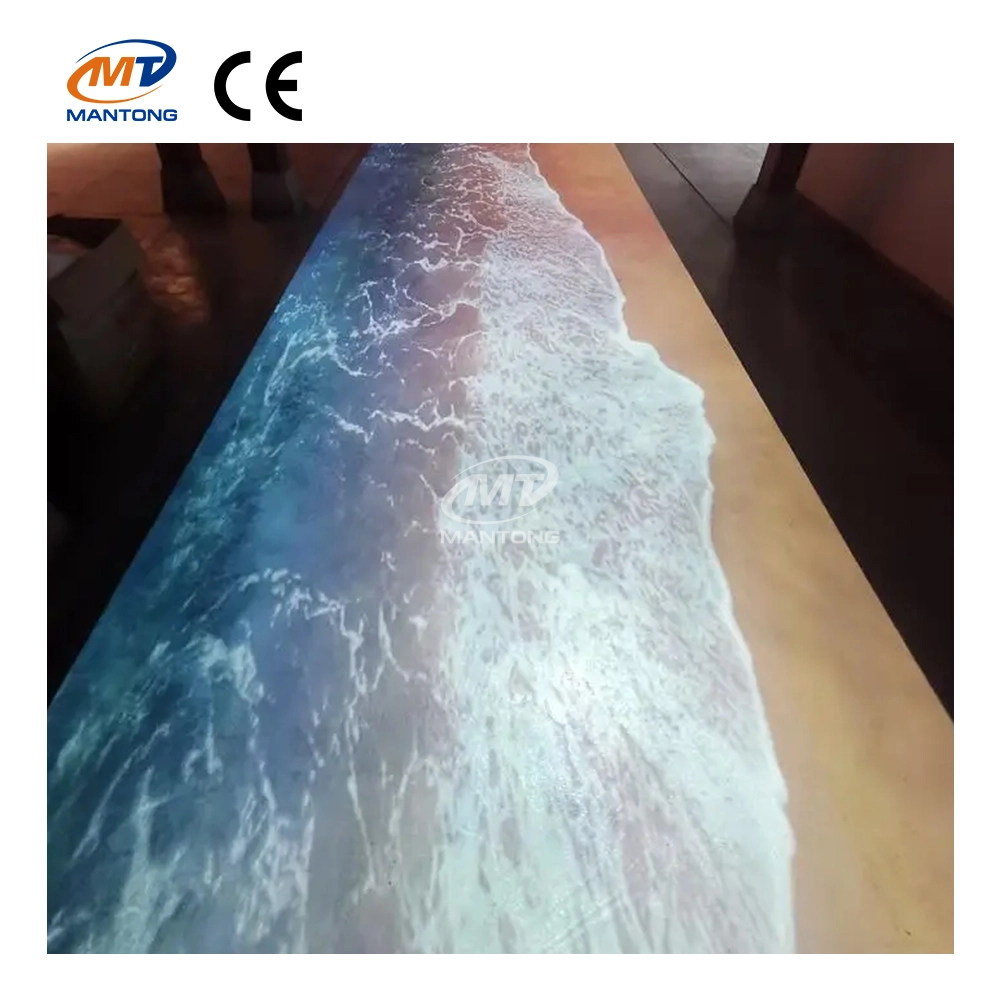
Indoor Interactive Floor Projector System - Customized Design & Installation Support
Indoor interactive floor projections display dynamic themed videos on the floor, commonly used in venues aiming to enhance brand influence or attract foot traffic, such as restaurants, hotel corridors, and brand car retail stores.
By using projectors and compatible software, the interactive content is projected onto the floor, encouraging engagement between people and the projected visuals. A single 5500-lumen indoor floor projector can cover an area of 5 m × 3 m. Typically, each project will use at least 3 units to ensure broad coverage and optimal visual effects.
We also offer customized design and installation support to enhance the interactive experience for your venue.
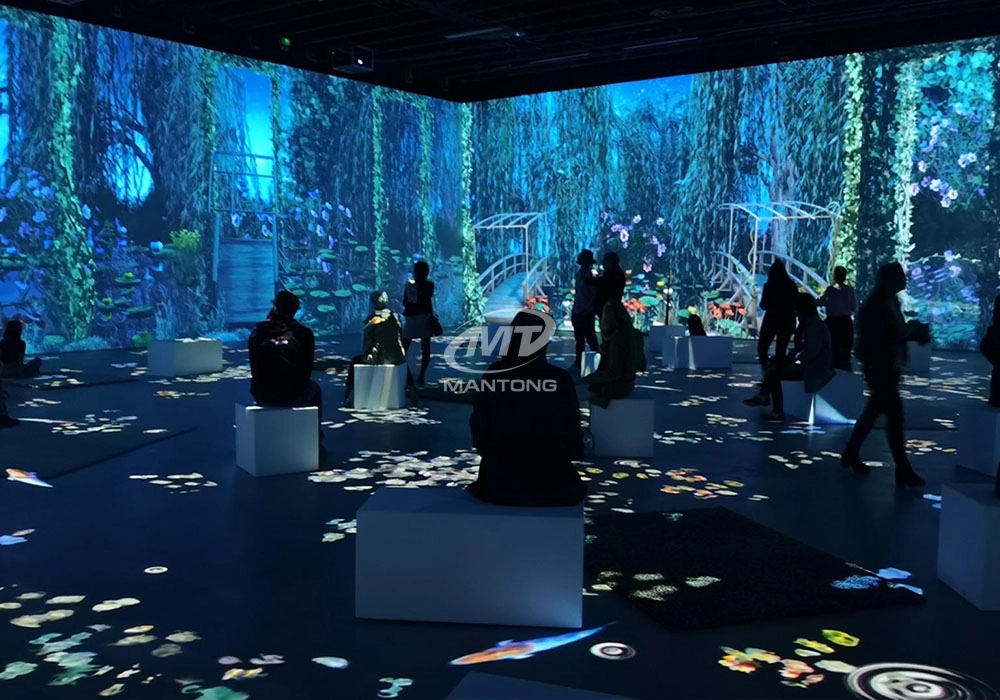
Mantong 6500LM High-Lumen Projector for Large-Scale Immersive Room Projection
Transform any space with Mantong's immersive projection mapping systems. Our high-lumen projectors (up to 6500 LM) and custom software create captivating interactive experiences for floors and walls. Ideal for museums, events, retail, and hospitality. Each kit includes professional ceiling mounting and 80+ pre-loaded video contents and is backed by a 12-month warranty and CE certification. We offer full customization and support to bring your vision to life.
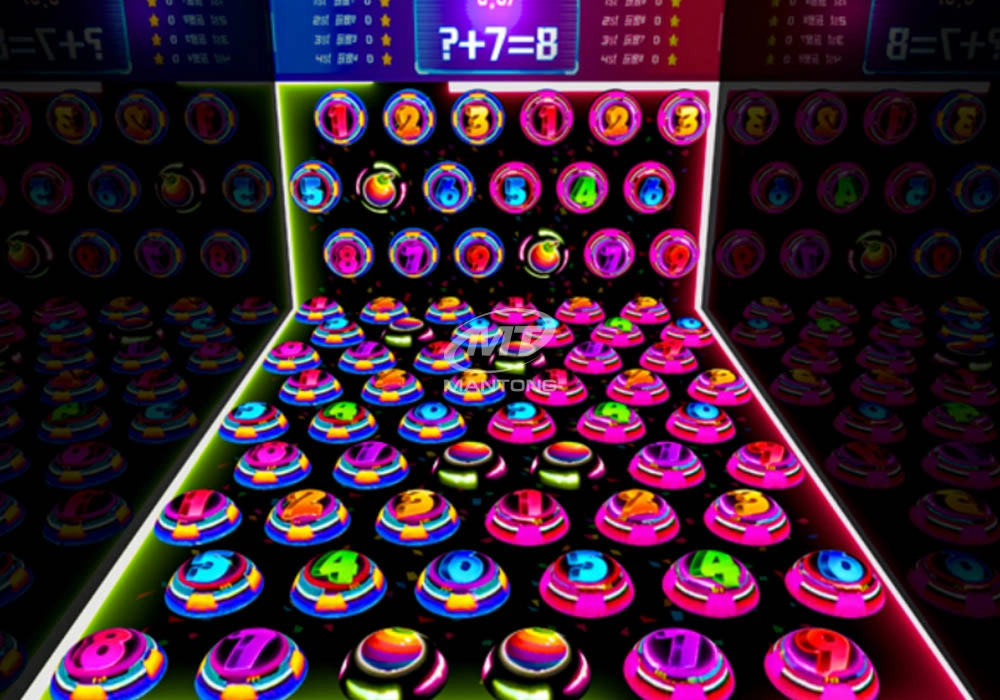
Amusement Rapidly Rotating Bouncing Sphere Interactive Wall Floor Projection Sports Games
Rapidly Rotating Bouncing Sphere is an interactive space where participants jump on rotating spheres. As they step on it, the spheres surface will show special interactivity
Jumping on spheres of the same color in succession causes them to pop, releasing light particles. The more consecutive jumps, the greater the reward—caterpillars appear, and eventually, all spheres of that color burst, filling the space with light and even more caterpillars.
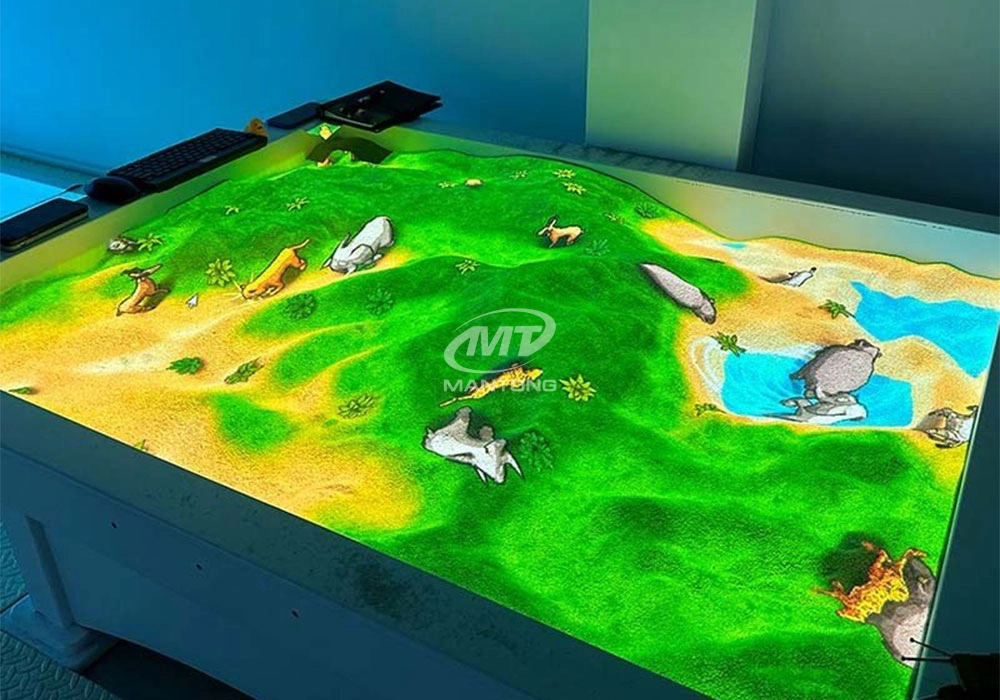
Interactive Sandbox Projection Mapping Games For Kids Play Park
Bring imagination to life with interactive sandbox projection mapping games designed for kids’ play parks. Using cutting-edge projection technology and real-time motion sensing, children can dig, build, and explore virtual worlds directly in the sand. Educational, engaging, and endlessly fun — it’s the perfect blend of play and learning.

Kaida Business Center, Shixin Road, Panyu District,Guangzhou City, Guangdong Province, China.
ManTong
ManTong
ManTong