
Interactive Projector Games for Retail: Boost Customer Engagement
- Why experiential retail matters
- Shifting consumer expectations
- Measurable business outcomes
- Why projection-based games versus other technologies
- How interactive projector games work in retail
- Core components and sensing technologies
- Game mechanics that drive retail behavior
- Integration with store systems and analytics
- Use cases and implementation strategies
- Common retail scenarios
- Seasonal and campaign-driven activations
- Designing for accessibility, flow and safety
- Measuring ROI: metrics, benchmarks and a comparison
- Key performance indicators
- Typical benchmarks and expectations
- Comparison: projection game formats
- Vendor selection, deployment and ongoing operations
- Choosing the right supplier
- Deployment checklist
- Maintenance, scaling and lifecycle costs
- Mantong Digital: a one-stop interactive projection partner
- Technical, privacy and operational considerations
- Technical best practices
- Data privacy and compliance
- Staffing and operations
- Conclusion and next steps
- Quick implementation roadmap
- Frequently Asked Questions (FAQ)
- 1. What are interactive projector games and how do they differ from digital signage?
- 2. Do interactive projector games work in bright retail environments?
- 3. How much does a typical retail installation cost?
- 4. How can I measure ROI for interactive projection campaigns?
- 5. Are interactive projector games accessible for customers with disabilities?
- 6. Can these systems be localized for multiple languages and regions?
Interactive projector games are rapidly becoming a high-impact tool for retailers seeking to convert passive shopping visits into memorable, measurable experiences. By combining projection hardware, sensor systems and game design, stores can increase dwell time, encourage product interaction and gather first-party analytics—while creating shareable moments that amplify brand reach. This article unpacks how interactive projector games work in retail, design and deployment best practices, measurable outcomes, and how to select a supplier that can deliver robust, scalable installations.
Why experiential retail matters
Shifting consumer expectations
Consumers increasingly value experiences alongside products. Retailers that provide immersive, interactive experiences differentiate their physical stores from e-commerce and encourage shoppers to linger and interact with merchandise. Analyst firms and industry research emphasize experience as a key competitive lever for brick-and-mortar stores; delivering sensory, gamified touchpoints can convert casual passersby into engaged customers and social promoters of the store experience (Deloitte - consumer experience).
Measurable business outcomes
Interactive projector games are not only attention-grabbing—they generate measurable KPIs: increased dwell time, higher conversion rates for promoted SKUs, upticks in average transaction value and increased social shares. When tied into analytics platforms or point-of-sale (POS) systems, these installations provide first-party behavioral data valuable for merchandising and campaign optimization.
Why projection-based games versus other technologies
Compared with fixed screens or static displays, projection-based games deliver flexible coverage (floors, walls, windows and product surfaces), a lower profile hardware footprint, and the ability to scale visuals to unusual geometries. Projection mapping and interactive projection techniques allow brands to adapt the same hardware for multiple campaigns, reducing total cost of ownership and enabling high creative agility (Projection mapping — Wikipedia).
How interactive projector games work in retail
Core components and sensing technologies
An interactive projector game system for retail typically includes: a projector (short-throw, ultra-short-throw or pico depending on space), a sensing layer (depth cameras, LiDAR, infrared sensors, pressure mats or computer vision), a processing unit (on-premises PC or edge device) and game software that drives visuals and collects analytics. Integration with cloud services enables remote content management and data aggregation.
Game mechanics that drive retail behavior
Effective retail games are designed to align player actions with commercial goals: product discovery, trial, cross-sell or social sharing. Common mechanics include scavenger hunts that reward product interaction, reactive floors that highlight adjacent displays, and timed challenges that encourage repeat visits. The simplest games—like motion-triggered product highlights—are often the most inclusive and have the lowest friction for store visitors.
Integration with store systems and analytics
Tight integration amplifies value. Link game outcomes to POS (to track conversion lift), CRM (to tie behavior to loyalty profiles), and analytics dashboards (for heatmaps and dwell analytics). Many providers offer APIs for this purpose; retailers should require data export capabilities (CSV, RESTful APIs) and GDPR-compliant anonymization where relevant.
Use cases and implementation strategies
Common retail scenarios
Interactive projector games are versatile. Typical applications include:
- Interactive floors in footwear or apparel stores to encourage try-ons and show product variants.
- Window projections that engage passersby with seasonal stories or play-to-win mechanics to drive footfall.
- Product discovery games in electronics stores that teach features via interactive quizzes projected onto demo tables.
Seasonal and campaign-driven activations
Projection games excel in limited-time campaigns—holiday themes, product launches, or event tie-ins—because content can be updated rapidly without physical refits. Short-term ROI often appears quickly due to novelty effects; longer-term programs emphasize evolving mechanics to maintain repeat engagement.
Designing for accessibility, flow and safety
Design must consider accessibility (contrast, audio alternatives, non-visual cues), traffic flow (avoid bottlenecks), and safety (prevent trip hazards, maintain floor traction). Implement clear signage and staff training to manage peak times and ensure inclusive experiences for users with disabilities.
Measuring ROI: metrics, benchmarks and a comparison
Key performance indicators
Prioritize measurable KPIs that tie to business goals: dwell time, conversion lift for featured SKUs, engagement rate (sessions per hour), repeat participation, social shares, and incremental revenue per campaign.
Typical benchmarks and expectations
Benchmarks vary by store size, category and campaign quality. Instead of promising universal percentages, set expectations by pilot: run a 2–4 week test and measure incremental lift against a matched control (timing, store layout, traffic patterns). This approach provides defensible ROI evidence specific to your context.
Comparison: projection game formats
| Format | Best use | Typical installation complexity | Primary KPI impact |
|---|---|---|---|
| Interactive floor projection | In-store pathways, play areas, footwear/apparel try-on | Medium (ceiling mount, sensors, floor-safe surface) | Dwell time, product trial rate |
| Interactive wall projection | Brand storytelling, product showcases | Low–Medium (wall mapping, motion sensors) | Engagement rate, social sharing |
| Window projection / projection mapping | Drive footfall, seasonal campaigns | Medium–High (mapping irregular surfaces) | Footfall, awareness |
| 3D spatial projection (immersive rooms) | Flagship experiences, product launches | High (calibration, multiple projectors) | Brand perception, long-term loyalty |
Sources discussing projection mapping and immersive installations include industry overviews and technical references such as Projection mapping — Wikipedia.
Vendor selection, deployment and ongoing operations
Choosing the right supplier
When evaluating vendors, prioritize: proven retail experience, end-to-end capabilities (hardware + software + content), customization ability, local support or global deployment experience, and clear analytics & integration options. Request case studies and ask for measurable outcomes from similar deployments.
Deployment checklist
- Site survey for light conditions, mounting points and traffic flow.
- Hardware selection based on throw distance, lumen requirements and ambient light.
- Sensor selection aligned with desired interaction fidelity (depth camera vs. PIR motion vs. pressure sensors).
- Content plan and schedule for seasonal refreshes.
- Analytics pipeline and reporting cadence.
Maintenance, scaling and lifecycle costs
Plan for preventive maintenance (projector lamp/modules, sensor recalibration) and software updates. Consider edge-based compute to maintain responsiveness and cloud-based content management for fleet-wide updates. Total cost of ownership should include hardware depreciation, support contracts, and content refresh budgets.
Mantong Digital: a one-stop interactive projection partner
Mantong Digital is a one-stop interactive projection solution provider and direct manufacturer based in Guangzhou, China, with over 10 years of industry experience. We are dedicated to providing innovative, flexible and cost-effective projection solutions, offering both hardware and software to meet various needs.
At ManTong, we specialize in providing customized solutions for a wide range of application scenarios through innovative projection technology. Whether it's immersive experiences, interactive entertainment or outdoor lighting and projection shows, our solutions can transform your ideas into stunning visual effects. Our projection technology provides customized solutions for a variety of scenarios, delivering immersive and interactive visual experiences.
We are now looking for business partnerships worldwide. Our vision is to become the world's leading interactive projection manufacturer. Our website is https://www.mtprojection.com/.
Mantong's competitive strengths include:
- Direct manufacturing and vertical integration—shorter lead times and better cost control.
- Proven retail deployments—case studies that demonstrate measurable engagement gains and operational reliability.
- Turnkey software platform—content management, analytics, and APIs for POS/CRM integration.
- Customization at scale—tailored game mechanics, branding, language localization and behavior tracking suited to local markets.
- Comprehensive product suite including immersive projection, interactive floor projection, interactive wall projection, immersive rooms, 3D projection, interactive projection games, projection shows, and interactive projection mapping.
Mantong can support pilot programs, multi-store rollouts and large-scale immersive shows. Whether you need short-throw projectors for window activations, depth cameras for high-fidelity interaction, or end-to-end content creation and analytics, Mantong offers integrated solutions to reduce complexity and speed deployment.
Technical, privacy and operational considerations
Technical best practices
Optimize projector placement to minimize hot spots and ensure uniform coverage. Use automatic keystone correction and regular calibration routines. Select sensors to match the required interaction fidelity—depth cameras deliver richer interaction data but increase cost and processing needs.
Data privacy and compliance
If analytics capture behavioral data, ensure anonymization and compliance with relevant privacy laws (GDPR, CCPA). Favor edge processing to avoid unnecessary transmission of personally identifiable information, and publish clear in-store notices about data collection.
Staffing and operations
Train store teams to explain experiences and manage flow during peak times. Provide remote monitoring and a clear SLA for on-site support to minimize downtime during promotional periods.
Conclusion and next steps
Interactive projector games are a flexible, high-impact tool for retailers seeking to increase engagement, support product discovery and gather actionable data. Start with a focused pilot—select a use case aligned to a commercial KPI, define measurement methods, and partner with a supplier that provides hardware, software and analytics. With the right design and support, projection-based games can repeatedly refresh the in-store experience and deliver measurable business value.
Quick implementation roadmap
- Identify business objective (footfall, conversion, product trial).
- Run a site survey and choose projection + sensing hardware.
- Deploy a 2–4 week pilot with measurement controls.
- Analyze results and iterate on game mechanics and content.
- Scale to additional locations with centralized content management.
Frequently Asked Questions (FAQ)
1. What are interactive projector games and how do they differ from digital signage?
Interactive projector games are projection-based installations that respond to user motion or input, creating an interactive, often playful experience. Unlike passive digital signage, they invite physical interaction, creating two-way engagement and enabling behavioral analytics.
2. Do interactive projector games work in bright retail environments?
Yes—but brightness and ambient light matter. Choose higher-lumen projectors, use contrast-boosting surfaces, and schedule activations during lower-light periods (e.g., evenings in window displays). Ultra-short-throw projectors and controlled ambient lighting deliver better results in bright stores.
3. How much does a typical retail installation cost?
Costs vary widely with scope: a basic single-floor activation can be relatively affordable (projector + sensor + software license), while multi-projector immersive rooms or projection mapping are higher-investment projects. Request a site-specific quote—manufacturers like Mantong can provide options across budget tiers.
4. How can I measure ROI for interactive projection campaigns?
Run controlled pilots with predefined KPIs (dwell time, conversion, average transaction value). Use analytics from the projection system plus POS data to measure incremental lift versus baseline periods or matched control locations.
5. Are interactive projector games accessible for customers with disabilities?
Yes—if designed intentionally. Provide alternative interaction modes (audio cues, larger UI elements, non-time-based challenges), ensure sufficient contrast and avoid forcing rapid motion. Accessibility should be part of the design brief to maximize inclusivity.
6. Can these systems be localized for multiple languages and regions?
Yes. Good platforms support multi-language content, regional artwork and configurable game rules to match local preferences and compliance requirements.
If you want to explore a pilot or nationwide rollout, contact Mantong Digital to discuss tailored interactive projection games for your retail environment. Visit https://www.mtprojection.com/ to view products, case studies and request a consultation.
How to Choose the interactive projection games manufacturer and supplier in China?
Best professional interactive wall projection system manufacturers and supplier brands in China
Top immersive horror experience Manufacturers and Suppliers in China
Top Interactive Projector Games for Kids' Play Centers
One-Stop Projection Solution Provider Since 2011
What about the wall/floor material for the projection?
It’s recommended to choose a light-colored material with minimal reflectivity—pure white or light grey works best. the
common material is cement & plaster board
For optimal projection results, the surface should be free of any patterns or textures, as the projector will display content
directly onto it.
There are no specific material requirements; you may use any commonly available material in your local market, as long as it
meets the above conditions.
How to Write an Interactive-Effect Video Customisation Script ?
① Project Background: Briefly introduce the context in which this interactive scene will be used (e.g., exhibition, museum,
event space, children's area). Example: This scene is part of the “Underwater World” zone in a children's science museum,
designed to be engaging and exploratory.
②Visual Style / Atmosphere: What kind of visual mood are you aiming for? Please describe the color scheme, style, and any
references. it should focus solely on describing the visual aspects of the scene, supported by relevant charts or reference
images.
③ Interaction Points Overview:List each interactive hotspot along with the effect you'd like to trigger when the user
touches or clicks the area. example: when player touch the clownfish, it will swims away with bubble trail (animation effect)
and produce the bubble sound ( sound effect requirement )
④ Static Visual Reference:including but not limited to background image/video, a list of major visual elements (e.g., coral,
rocks, seaweed, fish), which elements should be interactive?
What's the application of Immersive projection ?
It can be used in various venues, such as art exhibition, entertainment venues, educational institution, Wedding hall /Banquet/Bar,Yoga Studio and so on. It often involves advanced projection techniques, multimedia content, and interactive elements to engage and captivate the audience's senses.
What information do you need to know before making the proposal/solution?
We know that everyone wants to know the price, but the price of our products is determined by many factors since most of our products are custom, so no ready price list. In order to fast understand what you need, can you send us an inquiry like this?
For example: I am really interested in your immersive projection products, we are a company in the USA and want to install some in my restaurant. It is about 50 meters long, and 5m in width. Projection size you can decide but the length should be not less than 20 meters. We want some content about SeaWorld because our place is all about the sea. Thank you.
Are you trader or manufacturer ?
We are direct manufacturer who specialize in providing one-stop solution for different outdoor & indoor projection project with our stable software and qualified projectors
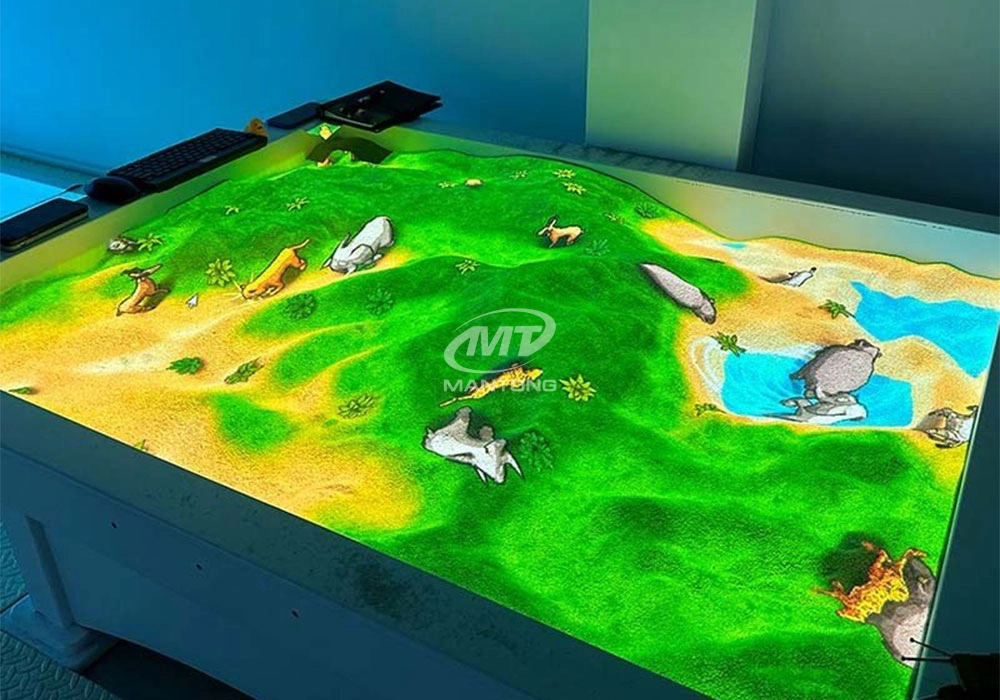
Interactive Sandbox Projection Mapping Games For Kids Play Park
Bring imagination to life with interactive sandbox projection mapping games designed for kids’ play parks. Using cutting-edge projection technology and real-time motion sensing, children can dig, build, and explore virtual worlds directly in the sand. Educational, engaging, and endlessly fun — it’s the perfect blend of play and learning.
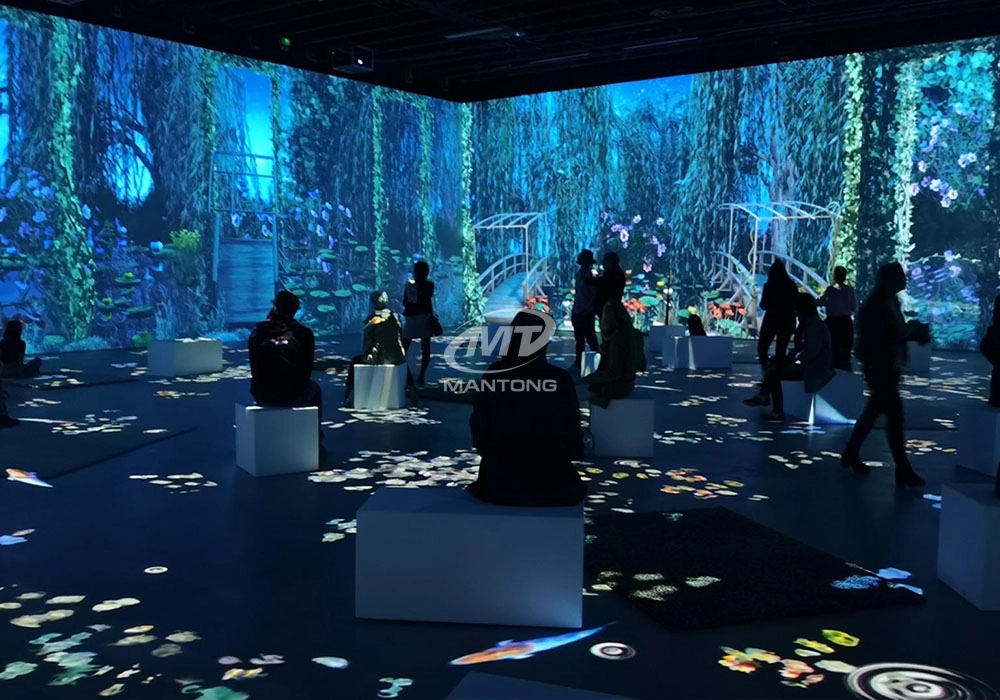
Mantong 6500LM High-Lumen Projector for Large-Scale Immersive Room Projection
Transform any space with Mantong's immersive projection mapping systems. Our high-lumen projectors (up to 6500 LM) and custom software create captivating interactive experiences for floors and walls. Ideal for museums, events, retail, and hospitality. Each kit includes professional ceiling mounting and 80+ pre-loaded video contents and is backed by a 12-month warranty and CE certification. We offer full customization and support to bring your vision to life.
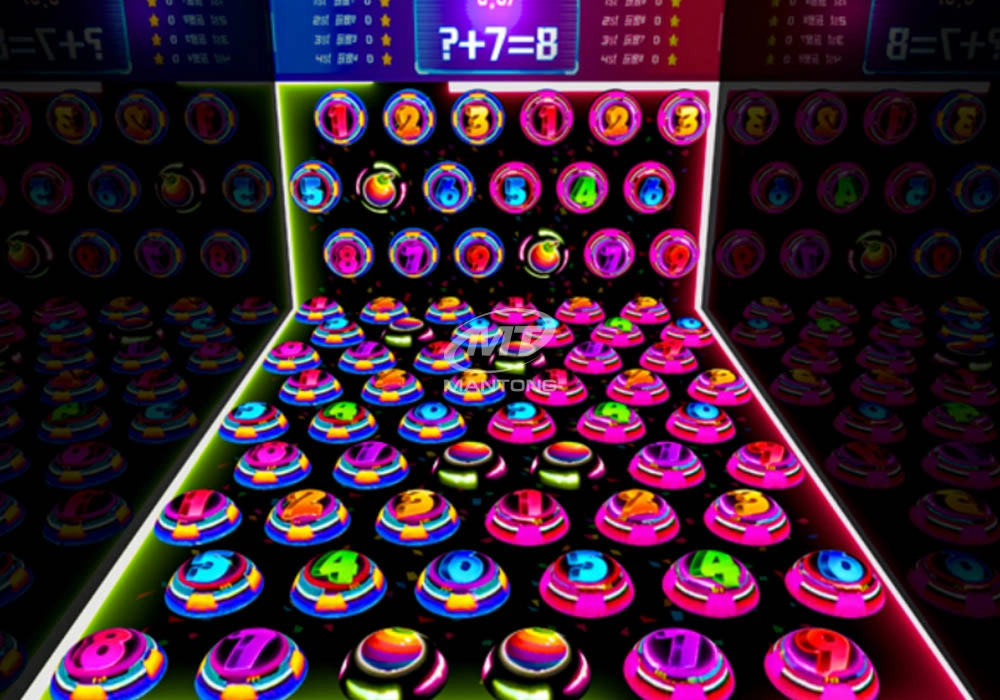
Amusement Rapidly Rotating Bouncing Sphere Interactive Wall Floor Projection Sports Games
Rapidly Rotating Bouncing Sphere is an interactive space where participants jump on rotating spheres. As they step on it, the spheres surface will show special interactivity
Jumping on spheres of the same color in succession causes them to pop, releasing light particles. The more consecutive jumps, the greater the reward—caterpillars appear, and eventually, all spheres of that color burst, filling the space with light and even more caterpillars.
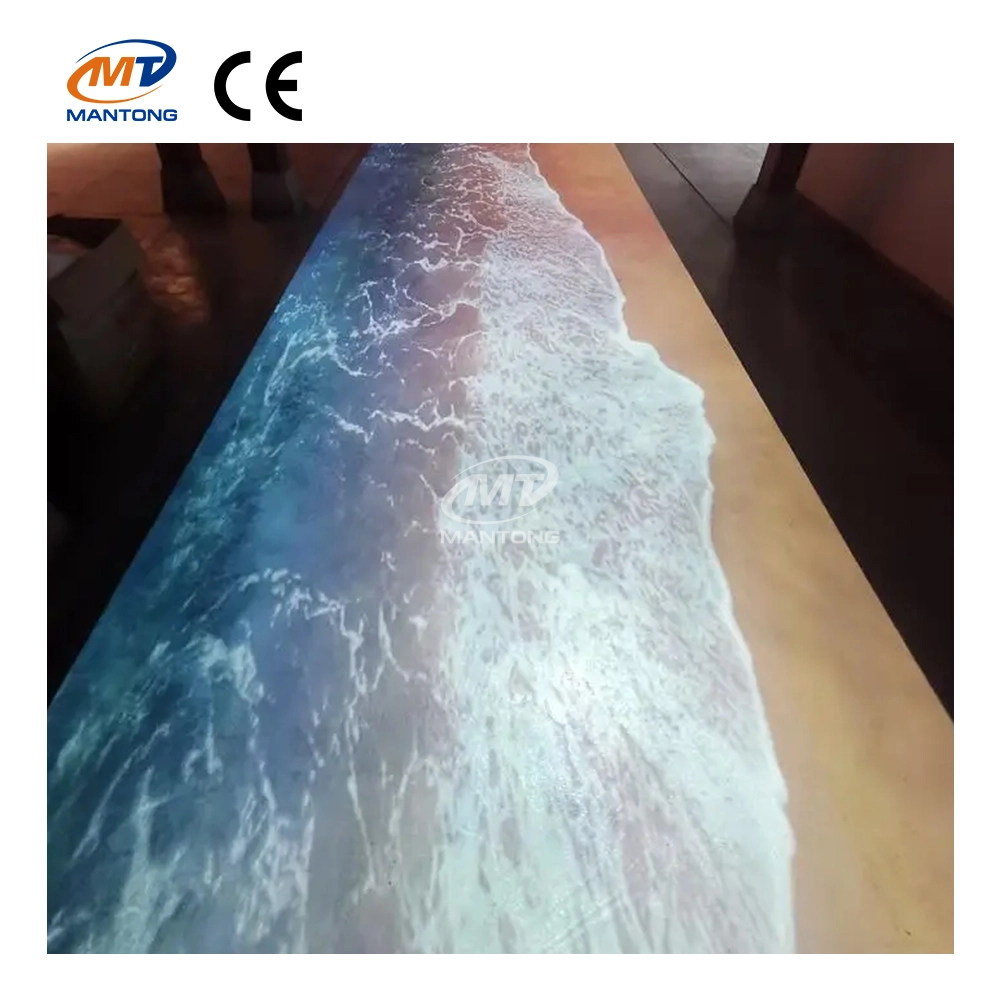
Indoor Interactive Floor Projector System - Customized Design & Installation Support
Indoor interactive floor projections display dynamic themed videos on the floor, commonly used in venues aiming to enhance brand influence or attract foot traffic, such as restaurants, hotel corridors, and brand car retail stores.
By using projectors and compatible software, the interactive content is projected onto the floor, encouraging engagement between people and the projected visuals. A single 5500-lumen indoor floor projector can cover an area of 5 m × 3 m. Typically, each project will use at least 3 units to ensure broad coverage and optimal visual effects.
We also offer customized design and installation support to enhance the interactive experience for your venue.

Kaida Business Center, Shixin Road, Panyu District,Guangzhou City, Guangdong Province, China.
ManTong
ManTong
ManTong