
Top Interactive Projector Games for Kids' Play Centers
- Why interactive projection works for kids
- Developmental and learning benefits
- Engagement and behavioral outcomes
- Safety and parental concerns
- Top interactive projector games for kids' play centers
- Floor games — movement and sensory play
- Wall games — creativity and interaction
- Group and competitive games
- Choosing hardware and software for play centers
- Projector types and key specs
- Sensors and tracking options
- Software platforms and content management
- Installation, safety, maintenance and ROI
- Installation best practices
- Safety, accessibility and compliance
- Maintenance, uptime and staffing
- Measuring ROI
- Mantong Digital: partner, manufacturer and solution provider
- How Mantong supports deployment
- FAQ
- 1. What age groups are best suited to interactive projector games?
- 2. How much space do I need for an interactive floor installation?
- 3. What are realistic costs to install and operate an interactive projection zone?
- 4. How do I ensure games are safe and accessible?
- 5. Can I update or change games after installation?
- 6. How do I measure whether the installation is successful?
- Next steps & contact
Interactive projector games are transforming kids' play centers by turning floors, walls and entire rooms into dynamic, responsive play surfaces. This article highlights proven game concepts, deployment best practices, hardware and software selection guidance, safety and maintenance considerations, and measurable ROI strategies so operators can choose and run high-impact interactive projection experiences that increase dwell time, repeat visits and per-capita spend. The recommendations below are rooted in industry practice, user-experience metrics and manufacturer-grade technical requirements for robust installations.
Why interactive projection works for kids
Developmental and learning benefits
Interactive projection games combine motion, audio and visual feedback to create multisensory play. Research on play shows that active, sensorimotor experiences improve gross motor skills, spatial reasoning and social interaction in early childhood (Play (activity) — Wikipedia). For play centers, interactive projector games extend these benefits by adding adaptive difficulty, visual rewards and contextual narration — features that support scaffolding and repeat engagement.
Engagement and behavioral outcomes
Compared to static attractions, projection-based interactive games typically increase dwell time and encourage cooperative play. Case studies from leisure venues indicate increases of 15–40% in average session length after adding interactive floor or wall installations (industry reports such as the projection mapping market overview provide market-level growth context). Well-designed games also drive repeat visits because content can be regularly updated without structural changes.
Safety and parental concerns
Operators must balance high-energy play with safety and screen-time best practices. The U.S. Consumer Product Safety Commission (CPSC) and child-safety guidelines recommend clear sightlines, soft surfacing and active staff supervision for interactive installations. Game designers should avoid overstimulation (constant flashing lights, excessive contrast) and offer low-intensity modes for younger children.
Top interactive projector games for kids' play centers
Below are curated, field-tested interactive projector game concepts broken into floor, wall and group categories. Each game entry includes objectives, typical age range, hardware requirements and customization tips so you can match content to your venue and audience.
Floor games — movement and sensory play
Floor projection is ideal for open play areas. Examples:
- Catch the Bugs — Animated insects crawl across the floor; kids step on or tag them before they disappear. Objectives: gross-motor coordination, reaction time. Ages: 2–8. Hardware: short-throw projector (3000–6000 lumens indoors), overhead mount, camera or IR tracking for hit detection.
- Treasure Hunt — A map-style game where stepping on revealed tiles uncovers clues and collectables. Objectives: problem solving, cooperative play. Ages: 4–10. Customization: timed challenges and multi-player scoring.
- Color Maze / Path Follow — Children follow a moving colored path; path speed and complexity scale with age. Great for structured activity sessions or birthday-party programming.
Wall games — creativity and interaction
Wall projection encourages upper-body movement, drawing and cooperative interactions.
- Shadow Dance — Children’s silhouettes interact with on-screen characters (e.g., mimic a dinosaur or create shapes to solve puzzles). Objectives: body awareness, rhythm, storytelling. Sensors: depth camera or silhouette algorithm (Kinect-style or 2D camera).
- Balloon Pop & Paint Wall — Tap-to-pop balloon animations with confetti or a paint wall where gestures leave colorful marks. Ideal for blending free play with event programming.
Group and competitive games
Designed for parties, schools or after-hours events where collaborative and competitive play increases throughput and social engagement.
- Cooperative Puzzle — Multiple players operate different parts of the projected puzzle; collaboration unlocks new levels. Good for team-building and parent-child play.
- Relay & Score Challenges — Time-based relays where teams score by triggering targets. Tie scores to leaderboards or printable certificates to boost repeat visits.
Choosing hardware and software for play centers
Selecting the right projector, sensors and software platform is critical: the wrong choices increase downtime and lower user satisfaction. Below are practical criteria and a comparison table to help operators decide.
Projector types and key specs
Key specs to prioritize:
- Lumens: Indoor play centers generally need 3000–8000 lumens depending on ambient lighting. Higher lumen counts maintain color vibrancy under brighter conditions.
- Throw type: Short-throw or ultra short-throw projectors reduce shadows and allow ceiling or near-ceiling mounts close to the play surface.
- Resolution: 1080p (Full HD) is common; 4K improves detail for projection mapping or large surfaces but increases cost.
- Durability: Industrial-grade projectors with sealed optics resist dust and require less maintenance.
Sensors and tracking options
Common tracking types:
- 2D camera (RGB): Cost-effective for silhouette and color-tracking games but sensitive to lighting.
- Infrared (IR) systems: Reliable in varied light, commonly used in interactive floors.
- Depth cameras (e.g., Kinect-style): Provide robust skeleton and depth data for advanced interaction; good for Shadow Dance and body-tracking games (Kinect — Wikipedia).
Software platforms and content management
Choose platforms that offer:
- Centralized content management (scheduling, remote updates)
- Analytics for session length, game popularity and user counts
- Customization tools or APIs for branding and custom games
| Component | Pros | Cons | Typical cost range (USD) |
|---|---|---|---|
| Short-throw projector (3000–6000 lm) | Minimal shadows, good brightness | Higher upfront cost vs standard | $1,500–$6,000 |
| Ultra short-throw projector (>=6000 lm) | Very low shadow, compact installs | High Quality pricing | $4,000–$12,000 |
| Depth camera (Kinect-style) | Accurate body tracking | Integration complexity | $150–$1,000 |
| Interactive software & CMS | Remote updates, analytics | Subscription or license fees | $50–$500+/month |
Cost ranges above are indicative; vendor quotes will vary by region and customization level.
Installation, safety, maintenance and ROI
Installation best practices
Plan for sightlines, mounting height and cable routing. Use tamper-resistant mounts and ceiling enclosures for projectors and sensors. Confirm projection geometry during commissioning and calibrate sensors with real users (children) to ensure detection accuracy across heights and movement styles.
Safety, accessibility and compliance
Design with safety front-of-mind: padded flooring under high-activity zones, clear zone marking, supervised sessions, and accessible game modes for children with limited mobility. Follow child-safety guidance from authoritative sources such as the U.S. Consumer Product Safety Commission (CPSC) for general play equipment safety and local building codes for installations.
Maintenance, uptime and staffing
Routine maintenance tasks: lens cleaning, filter replacement, software updates and sensor recalibration. Keep spare bulbs or backup projectors for high-traffic venues. Train staff on simple troubleshooting and safe shutdown procedures to minimize downtime.
Measuring ROI
Key metrics to track:
- Average session length before and after installation
- Repeat visitation rate
- Revenue per guest / per-session spend (merchandise, food, party bookings)
- Operational uptime (%)
| Metric | Why it matters | Target |
|---|---|---|
| Average session length | Longer visits typically increase ancillary spend | +10–30% after install |
| Repeat visits | Shows customer loyalty | +5–15% annually |
| Uptime | Low downtime preserves guest experience | >95% |
Track metrics through integrated analytics from your interactive software or via manual counts and POS integration.
Mantong Digital: partner, manufacturer and solution provider
Mantong Digital is a one-stop interactive projection solution provider and direct manufacturer based in Guangzhou, China, with over 10 years of industry experience. We are dedicated to providing innovative, flexible and cost-effective projection solutions, offering both hardware and software to meet various needs.
At ManTong, we specialize in providing customized solutions for a wide range of application scenarios through innovative projection technology. Whether it's immersive experiences, interactive entertainment or outdoor lighting and projection shows, our solutions can transform your ideas into stunning visual effects. Our projection technology provides customized solutions for a variety of scenarios, delivering immersive and interactive visual experiences.
Why choose Mantong Digital for play centers?
- Direct manufacturing: As a manufacturer, Mantong controls production quality and lead times, reducing procurement layers and costs.
- End-to-end solutions: Hardware, bespoke interactive software, content creation, installation and after-sales support are available under one contract.
- Proven portfolio: Deployments across immersive projection, interactive floor projection, interactive wall projection, immersive rooms and projection mapping demonstrate both creative and technical capability.
- Customization & scalability: From single-zone game modules to multi-room immersive playscapes, solutions scale with venue size and operational goals.
- Global partnerships: Mantong is actively seeking business partnerships worldwide and supports international compliance and localization.
Main products and capabilities: immersive projection, interactive floor projection, interactive projection, interactive wall projection, immersive room, 3D projection, interactive projection games, projection show, interactive projection mapping. Visit Mantong Digital's website to learn more: https://www.mtprojection.com/
How Mantong supports deployment
- Site surveys and CAD-based installation planning
- Turnkey hardware supply (projectors, mounts, sensors)
- Custom game development and CMS integration
- Training, warranty and remote monitoring
Mantong’s combination of manufacturing scale, content expertise and in-house R&D makes it an efficient partner for play-center operators who need reliable, repeatable and attractive interactive projection solutions.
FAQ
1. What age groups are best suited to interactive projector games?
Interactive projector games can be designed for all ages; common segmentation is toddlers (2–4) for low-intensity sensory games, preschool (4–6) for guided puzzles and motor-skill activities, and school-age kids (7–12) for competitive and cooperative challenges. Design content to fit developmental goals and provide options for different age groups within the same space.
2. How much space do I need for an interactive floor installation?
Small single-player modules can work in areas as small as 2.5m x 2.5m. For multi-player, party or maze-style games, plan 6m x 6m or larger depending on the game design. Site surveys help optimize projection geometry and safety zones.
3. What are realistic costs to install and operate an interactive projection zone?
Initial hardware and software for a basic single-zone installation (projector, sensor, mounting, software license) typically starts from $5k–$12k. Mid-range multi-player installations range $15k–$40k. Ongoing costs include software subscriptions, maintenance and staff. Prices vary by region and customization; request vendor quotes for accurate budgeting.
4. How do I ensure games are safe and accessible?
Follow local safety codes and child-safety best practices: provide padded flooring, anti-slip surfaces, clear signage, staff supervision, and adjustable difficulty modes. Include accessibility modes (larger targets, seated play options) and validate games with diverse user tests.
5. Can I update or change games after installation?
Yes. A good interactive projection CMS allows remote updates, scheduling and A/B testing of new games. Regularly refreshing content keeps experiences novel and encourages repeat visits.
6. How do I measure whether the installation is successful?
Measure success with KPIs such as average session length, repeat visitation rate, revenue per guest and uptime. Use built-in analytics from your interactive platform or integrate with POS and CRM systems for a fuller picture.
Next steps & contact
If you’re planning to add or upgrade interactive projection in your play center, start with a site survey and pilot zone to validate concept, hardware choices and game design. For turnkey solutions, hardware supply, custom content or global partnership inquiries, contact Mantong Digital — a direct manufacturer and interactive projection specialist with over 10 years of experience: https://www.mtprojection.com/. Request a consultation, project quote or product catalog to explore immersive projection, interactive floor and wall solutions tailored to your venue.
References: Projection mapping market overview (Grand View Research); Play (activity) — educational context (Wikipedia); Kinect — depth-sensing overview (Wikipedia); U.S. Consumer Product Safety Commission (CPSC).
Evaluating Interactive Floor Game Hardware and Sensors
Top 10 interactive sensory floor projector Manufacturers and Supplier Brands in China
Top 10 immersive projection system Manufacturers and Supplier Brands in China
Immersive Projection Room Applications in Corporate Events and Conferences
One-Stop Projection Solution Provider Since 2011
How to install the projection equipment ?
1) Install the projector in a suitable position. We will provide you with a hanger, which you need to fix on the ceiling with
screws.
2) Connect projectors, computers and other accessories through wires.
3) After completing the above 2 steps, we will carry out the edge blending steps. Our team can complete it through remote
control.
In general, installation instructions for each project need to be specified on a project-by-project basis. The above is for
reference only.
What's the application of Immersive projection ?
It can be used in various venues, such as art exhibition, entertainment venues, educational institution, Wedding hall /Banquet/Bar,Yoga Studio and so on. It often involves advanced projection techniques, multimedia content, and interactive elements to engage and captivate the audience's senses.
What's Immersive Projection ?
Immersive projection refers to a technology that creates a captivating and all-encompassing visual experience for viewers by projecting images or videos onto large surfaces, such as walls, floors, or even entire rooms. This technology aims to immerse the audience in a simulated environment, blurring the boundaries between the physical and virtual worlds.
What information do you need to know before making the proposal/solution?
We know that everyone wants to know the price, but the price of our products is determined by many factors since most of our products are custom, so no ready price list. In order to fast understand what you need, can you send us an inquiry like this?
For example: I am really interested in your immersive projection products, we are a company in the USA and want to install some in my restaurant. It is about 50 meters long, and 5m in width. Projection size you can decide but the length should be not less than 20 meters. We want some content about SeaWorld because our place is all about the sea. Thank you.
What about the wall/floor material for the projection?
It’s recommended to choose a light-colored material with minimal reflectivity—pure white or light grey works best. the
common material is cement & plaster board
For optimal projection results, the surface should be free of any patterns or textures, as the projector will display content
directly onto it.
There are no specific material requirements; you may use any commonly available material in your local market, as long as it
meets the above conditions.
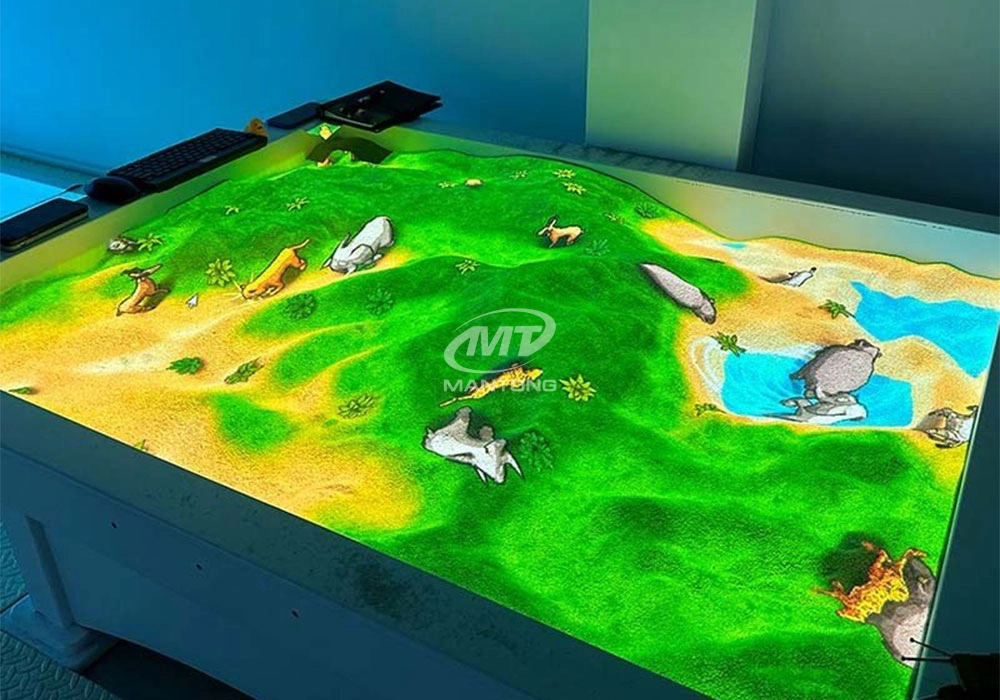
Interactive Sandbox Projection Mapping Games For Kids Play Park
Bring imagination to life with interactive sandbox projection mapping games designed for kids’ play parks. Using cutting-edge projection technology and real-time motion sensing, children can dig, build, and explore virtual worlds directly in the sand. Educational, engaging, and endlessly fun — it’s the perfect blend of play and learning.
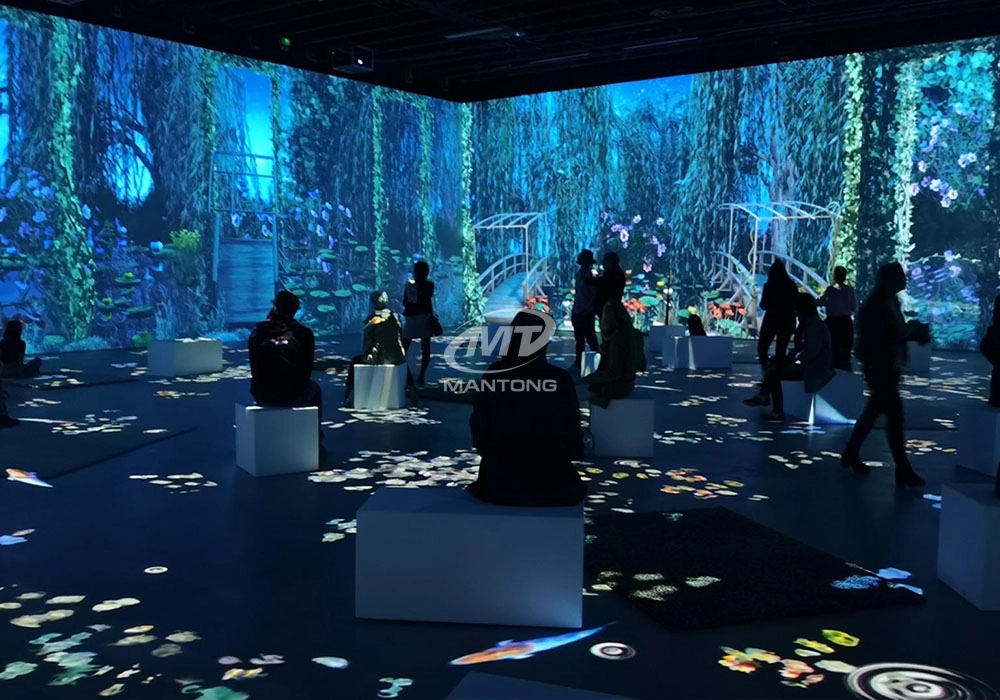
Mantong 6500LM High-Lumen Projector for Large-Scale Immersive Room Projection
Transform any space with Mantong's immersive projection mapping systems. Our high-lumen projectors (up to 6500 LM) and custom software create captivating interactive experiences for floors and walls. Ideal for museums, events, retail, and hospitality. Each kit includes professional ceiling mounting and 80+ pre-loaded video contents and is backed by a 12-month warranty and CE certification. We offer full customization and support to bring your vision to life.
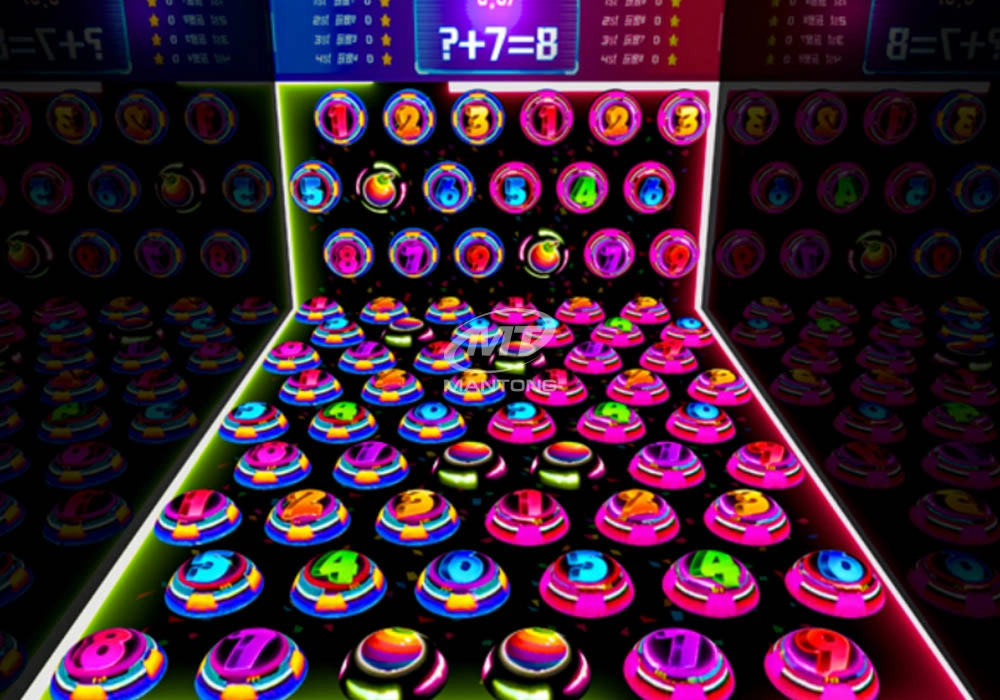
Amusement Rapidly Rotating Bouncing Sphere Interactive Wall Floor Projection Sports Games
Rapidly Rotating Bouncing Sphere is an interactive space where participants jump on rotating spheres. As they step on it, the spheres surface will show special interactivity
Jumping on spheres of the same color in succession causes them to pop, releasing light particles. The more consecutive jumps, the greater the reward—caterpillars appear, and eventually, all spheres of that color burst, filling the space with light and even more caterpillars.
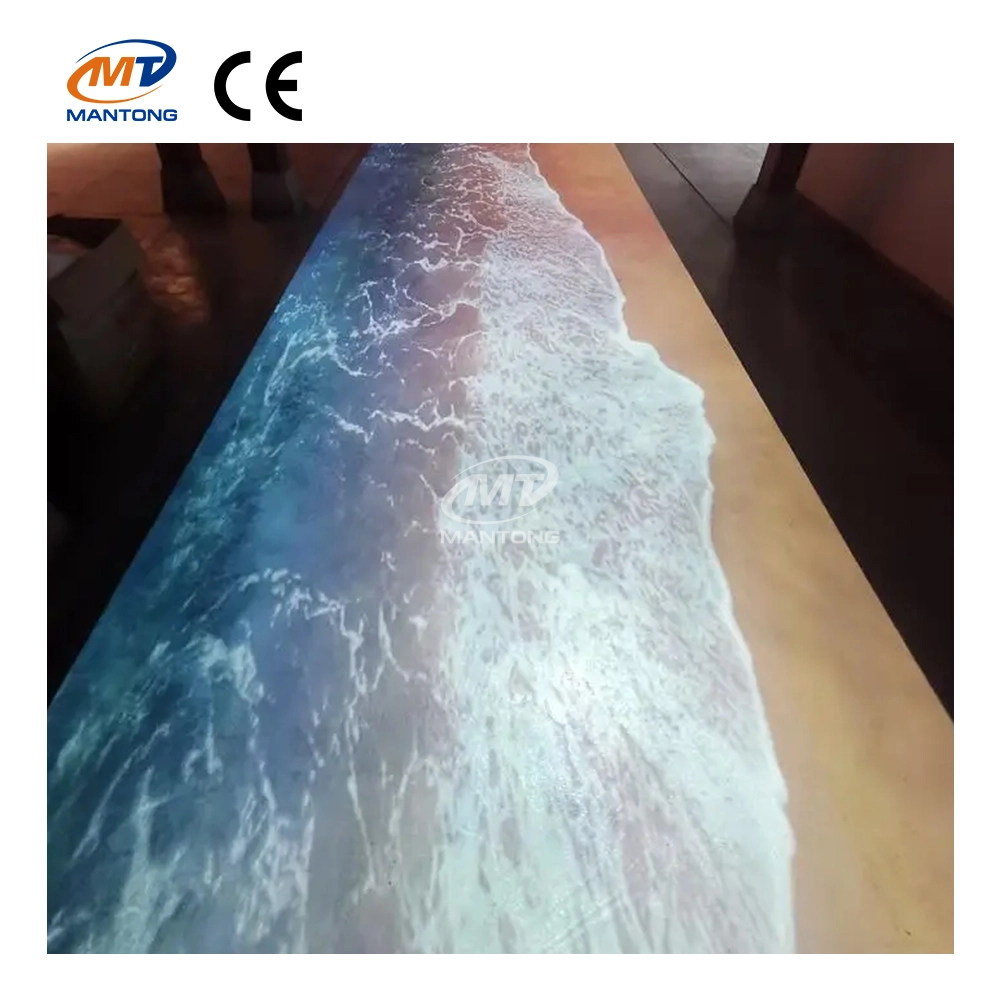
Indoor Interactive Floor Projector System - Customized Design & Installation Support
Indoor interactive floor projections display dynamic themed videos on the floor, commonly used in venues aiming to enhance brand influence or attract foot traffic, such as restaurants, hotel corridors, and brand car retail stores.
By using projectors and compatible software, the interactive content is projected onto the floor, encouraging engagement between people and the projected visuals. A single 5500-lumen indoor floor projector can cover an area of 5 m × 3 m. Typically, each project will use at least 3 units to ensure broad coverage and optimal visual effects.
We also offer customized design and installation support to enhance the interactive experience for your venue.

Kaida Business Center, Shixin Road, Panyu District,Guangzhou City, Guangdong Province, China.
ManTong
ManTong
ManTong