
Interactive Floor Projection Software Options Compared
- Why choose interactive floor projection installation over static displays?
- Understanding the goals of an interactive floor projection installation
- Key metrics to measure for interactive floor projection installation success
- Software families for interactive floor projection installation: technical overview
- Turnkey commercial suites (best for fast deployment)
- Creative engines and middleware (best for custom interactions)
- Projection-mapping toolkits (precision and mapping)
- Custom-engineered platforms (full control and scale)
- Comparing leading software options for interactive floor projection installation
- Hardware and sensor considerations for interactive floor projection installation
- Projector selection
- Tracking and sensors
- Processing and networking
- How to evaluate interactive floor projection installation software: a decision checklist
- Implementation roadmap for interactive floor projection installation
- 1. Discovery and requirements
- 2. Proof of concept (PoC)
- 3. Pilot deployment
- 4. Full deployment and training
- 5. Maintenance and iteration
- Cost & ROI considerations for interactive floor projection installation
- Mantong Digital — one-stop interactive floor projection installation solutions
- Mantong's competitive advantages for interactive floor projection installation
- Key products and use cases from Mantong for interactive floor projection installation
- Case studies & practical lessons for interactive floor projection installation
- FAQ — Interactive Floor Projection Installation
- What is the typical timeline for an interactive floor projection installation project?
- Which sensors are most reliable for interactive floor projection installation?
- Can I use Unity or Unreal for an interactive floor projection installation?
- How do I manage content updates for an interactive floor projection installation?
- What ongoing maintenance is required after an interactive floor projection installation?
- How do I budget for long-term operation?
- Next steps & contact
- References
Why choose interactive floor projection installation over static displays?
Interactive floor projection installations convert passive spaces into engaging, sensor-driven experiences. For museums, retail, education, or events, interactivity boosts dwell time, brand recall, and user satisfaction. This article compares the principal software approaches available today, outlines hardware and integration requirements, and gives practical advice to select and deploy the right solution for your project.
Understanding the goals of an interactive floor projection installation
Before choosing software, define the user and commercial goals for your interactive floor projection installation: Is the priority immersive storytelling, crowd engagement, wayfinding, gamified learning, or branded entertainment? Goal clarity determines which software architecture, content pipeline, and sensor integration you need. For example, museums typically favor content-rich, granular interaction and precise tracking, while retail activations prioritize turnkey reliability and fast content swaps.
Key metrics to measure for interactive floor projection installation success
Choose software and analytics that expose these metrics: unique users, average dwell time, interactions per minute, conversion (if retail), and system uptime. Software that supports event logging, remote diagnostics, and optional cloud analytics will make evaluating ROI and optimizing content far easier.
Software families for interactive floor projection installation: technical overview
Interactive floor projection software generally falls into four families: turnkey commercial suites, creative engines, projection-mapping toolkits, and custom-engineered platforms. Each has trade-offs in flexibility, time-to-deploy, cost, and technical skill required.
Turnkey commercial suites (best for fast deployment)
These are packaged systems (software + often hardware drivers) offering templates, content libraries, and simple editors. Pros: quick set-up, vendor support, and predictable behavior. Cons: limited customization and potential vendor lock-in. Ideal for retail activations, short-term events, and organizations without in-house developers.
Creative engines and middleware (best for custom interactions)
Engines like Unity or Unreal are used when complex physics, 3D visuals, or multi-user interactions are required. They require developers but offer near-unlimited flexibility, cross-platform deployment, and advanced rendering. When used for an interactive floor projection installation, you typically pair the engine with sensor SDKs (depth camera, optical tracking, IR) and a projection warp/correction layer.
Projection-mapping toolkits (precision and mapping)
Toolkits that focus on warping, edge blending, and geometry correction (e.g., TouchDesigner, Resolume with plugins) are chosen when projection surfaces are irregular or multi-projector arrays are needed. For floor installations, they ensure imagery is undistorted across non-flat surfaces and compensate for projector placement constraints.
Custom-engineered platforms (full control and scale)
Large-scale or permanent installations often require custom platforms that integrate content, hardware management, analytics, and remote maintenance. These are higher initial cost but provide the best long-term control, SLAs, and integration with business systems like CRM or POS.
Comparing leading software options for interactive floor projection installation
The table below summarizes representative options across categories. Prices and specific features vary by licensing, number of outputs, and support levels—always confirm at purchase.
| Software / Category | Best for | Sensor support | Customization | Typical cost | Notes |
|---|---|---|---|---|---|
| Proprietary Turnkey Suites (various vendors) | Retail, events, museums (fast deployment) | Standard infrared/pressure/optical | Low | $1k–$15k (license + hardware) | Templates, support, limited APIs |
| Unity / Unreal (creative engines) | Interactive games, multi-user experiences | Depth cameras, Kinect, LiDAR, IR arrays | Very high | Free–$xk (dev cost) | Requires developers; strong community & plugins |
| TouchDesigner / Isadora / Notch | Real-time visuals, responsive installations | Optical, OSC, MIDI, DMX | High | $500–$5k+ | Excellent for VJ/stage and complex signal routing |
| Projection mapping toolkits (Warping/Blend) | Multi-projector floors, complex geometry | Depends on integration | Medium–High | $0–$5k+ | Often paired with engine-based content |
| Custom enterprise platforms | Permanent attractions, branded installations | Full sensor suite, analytics | Full | $10k–$100k+ | Includes service contracts and remote management |
Sources: vendor pricing pages and industry averages; actual quotes vary. See References for links.
Hardware and sensor considerations for interactive floor projection installation
Software choice is inseparable from hardware. The three critical hardware domains are projection, tracking, and processing.
Projector selection
Key specs: brightness (lumens), throw ratio, resolution, and reliability. Floors exposed to daylight or high ambient light require high lumen output (6,000+ lm for larger activations). Edge blending and multi-projector arrays demand consistent color calibration and compatible lens options. Consider short-throw or ultra-short-throw projectors to minimize shadowing and ceiling space.
Tracking and sensors
Common options: infrared (IR) floor sensors, depth cameras (Azure Kinect, Intel RealSense), overhead optical cameras, and pressure mats. Depth cameras paired with SDKs (e.g., Microsoft Kinect SDK or Intel RealSense SDK) provide robust multi-user detection and skeletal tracking; IR systems are reliable for simple proximity/footstep detection. Choose sensors that integrate with your chosen software or provide usable SDKs/APIs.
Processing and networking
Real-time interaction needs adequate GPU and CPU resources; engines like Unity or Notch are GPU-intensive, while turnkey suites may run on modest hardware. For multi-projector setups or distributed sensors, plan a reliable local network and remote monitoring (VPN or secure cloud) for maintenance.
How to evaluate interactive floor projection installation software: a decision checklist
Use the checklist below when assessing vendors and software packages:
- Compatibility: Does the software support your chosen sensors and projectors?
- Content Pipeline: How easily can you update or swap content? Is there a content management system (CMS)?
- Scalability: Can it manage multi-projector arrays or multi-site deployments?
- Analytics & Logging: Are interaction metrics captured and exportable?
- Support & SLA: What level of on-site/remote support is provided?
- Costs: Licensing model (perpetual, subscription, per-site) and expected maintenance costs.
- Security: Remote access, software patches, and data privacy for any user data collected.
- Future-proofing: Is the platform actively developed and compatible with emerging sensors?
Implementation roadmap for interactive floor projection installation
Practical deployment follows a phased approach. Skipping steps increases risk and costs.
1. Discovery and requirements
Document user journeys, environmental constraints (ambient light, ceiling height), and business goals. Identify KPIs and budget constraints.
2. Proof of concept (PoC)
Build a small-scale prototype: one projector + one sensor + representative content. Validate detection reliability, latency, and user behavior.
3. Pilot deployment
Expand to production configuration but limited runtime to collect real-world data. Use this to refine interaction logic and content pacing.
4. Full deployment and training
Install full hardware, configure network and remote monitoring, train on-site staff, and provide documentation for routine maintenance and content updates.
5. Maintenance and iteration
Monitor analytics, perform periodic calibration, and iterate on content. Plan for software updates and hardware servicing contracts.
Cost & ROI considerations for interactive floor projection installation
Costs vary widely: a simple rental system might be under $5k, while a permanent branded installation can exceed $100k including hardware, custom software, content development, and warranties. Calculate ROI from increased footfall, longer dwell times, sponsorship revenue, or direct sales uplift. Trackable metrics (dwell time, interactions, conversions) enable payback modeling.
Mantong Digital — one-stop interactive floor projection installation solutions
Mantong Digital is a one-stop interactive projection solution provider and direct manufacturer based in Guangzhou, China, with over 10 years of industry experience. We are dedicated to providing innovative, flexible and cost-effective projection solutions, offering both hardware and software to meet various needs.
At ManTong, we specialize in providing customized solutions for a wide range of application scenarios through innovative projection technology. Whether it's immersive experiences, interactive entertainment or outdoor lighting and projection shows, our solutions can transform your ideas into stunning visual effects. Our projection technology provides customized solutions for a variety of scenarios, delivering immersive and interactive visual experiences.
We are now looking for business partnerships worldwide. Our vision is to become the world's leading interactive projection manufacturer. Our website is https://www.mtprojection.com/.
Mantong's competitive advantages for interactive floor projection installation
- Direct manufacturer: vertical control of hardware production reduces unit cost and improves component consistency across multi-unit deployments.
- End-to-end solutions: hardware, software, content, and installation services reduce integration friction and accelerate timelines.
- Customization expertise: 10+ years delivering immersive projection, interactive floor projection, interactive walls, and 3D projection solutions for exhibitions, retail, and events.
- Global partnership readiness: established manufacturing facility in Guangzhou with export and project delivery experience.
- Technical depth: experience integrating depth cameras, IR systems, and multi-projector blending with content engines to achieve reliable interactions.
Key products and use cases from Mantong for interactive floor projection installation
- Immersive projection systems for galleries and brand experiences
- Interactive floor projection packages with sensor integration and CMS
- Interactive wall projection and immersive rooms for education and entertainment
- 3D projection and projection shows for events and large-scale mapping
- Interactive projection games and mapping solutions for family entertainment centers
If you plan a project and want a partner who can supply hardware, software, and installation services, Mantong can assist from PoC to global deployment. Visit ManTong Projection to view products and request a quote.
Case studies & practical lessons for interactive floor projection installation
Several consistent lessons emerge from field deployments:
- Simpler interactions often perform better in public spaces—users gravitate to intuitive, immediately responsive content.
- Calibration and ambient-light planning are critical: poor color or latency undermines perceived quality faster than content complexity.
- Maintenance plans and remote monitoring reduce downtime and operational costs significantly.
Documented case studies from vendors and museums usually show a 20–60% increase in dwell time and measurable uplift in engagement when interactive floors are well-designed and supported. Use analytics to validate those gains for your context.
FAQ — Interactive Floor Projection Installation
What is the typical timeline for an interactive floor projection installation project?
Small-scale PoC: 2–4 weeks. Pilot: 4–8 weeks. Full permanent installation (custom): 8–20+ weeks depending on content complexity, approvals, and manufacturing lead times.
Which sensors are most reliable for interactive floor projection installation?
Depth cameras (Azure Kinect or Intel RealSense) and overhead optical systems offer reliable multi-user tracking. For simple footstep interactions, infrared arrays or pressure sensors are robust and cost-effective.
Can I use Unity or Unreal for an interactive floor projection installation?
Yes. Unity and Unreal provide powerful rendering, physics, and multi-platform deployment. Expect increased development time and the need for sensor SDK integration and projection warp/correction layers.
How do I manage content updates for an interactive floor projection installation?
Prefer a CMS-capable platform or a scheduled content pipeline. Turnkey suites often include web-based content management, while custom solutions can expose APIs for automated content swaps and analytics-driven updates.
What ongoing maintenance is required after an interactive floor projection installation?
Routine tasks: projector lamp or laser maintenance, periodic sensor calibration, software updates, and content refreshes. Remote monitoring and SLAs reduce on-site visits and increase uptime.
How do I budget for long-term operation?
Include annual maintenance (~10–20% of initial hardware/software cost), content refresh budget, and potential replacement cycles for consumable parts (projector lamps if not laser-based). Consider extended warranties.
Next steps & contact
If you are planning an interactive floor projection installation and need help selecting software or building a PoC, contact Mantong Digital for a consultation, product catalogue, and quotes: https://www.mtprojection.com/. Whether you need off-the-shelf software for a fast activation or a fully customized enterprise platform, partnering with an experienced manufacturer like Mantong reduces risk and shortens time-to-launch.
References
- Projection mapping — Wikipedia. https://en.wikipedia.org/wiki/Projection_mapping (accessed 2025-12-19)
- Microsoft Kinect — Wikipedia. https://en.wikipedia.org/wiki/Kinect (accessed 2025-12-19)
- Global Projection Mapping Market Analysis — Grand View Research. https://www.grandviewresearch.com/industry-analysis/projection-mapping-market (accessed 2025-12-19)
- AVIXA (Audiovisual and Integrated Experience Association) resources on immersive experiences. https://www.avixa.org/ (accessed 2025-12-19)
- ManTong Projection official website — product and company information. https://www.mtprojection.com/ (accessed 2025-12-19)
Interactive Floor Projection Installation: Buyer’s ROI Guide
Choosing Interactive Projector Games for Museums
How to Choose the best interactive projection manufacturer and supplier in China?
Integrating AR with Interactive Projection Mapping Suppliers
One-Stop Projection Solution Provider Since 2011
What information do you need to know before making the proposal/solution?
We know that everyone wants to know the price, but the price of our products is determined by many factors since most of our products are custom, so no ready price list. In order to fast understand what you need, can you send us an inquiry like this?
For example: I am really interested in your immersive projection products, we are a company in the USA and want to install some in my restaurant. It is about 50 meters long, and 5m in width. Projection size you can decide but the length should be not less than 20 meters. We want some content about SeaWorld because our place is all about the sea. Thank you.
What's the application of Immersive projection ?
It can be used in various venues, such as art exhibition, entertainment venues, educational institution, Wedding hall /Banquet/Bar,Yoga Studio and so on. It often involves advanced projection techniques, multimedia content, and interactive elements to engage and captivate the audience's senses.
How to Write an Interactive-Effect Video Customisation Script ?
① Project Background: Briefly introduce the context in which this interactive scene will be used (e.g., exhibition, museum,
event space, children's area). Example: This scene is part of the “Underwater World” zone in a children's science museum,
designed to be engaging and exploratory.
②Visual Style / Atmosphere: What kind of visual mood are you aiming for? Please describe the color scheme, style, and any
references. it should focus solely on describing the visual aspects of the scene, supported by relevant charts or reference
images.
③ Interaction Points Overview:List each interactive hotspot along with the effect you'd like to trigger when the user
touches or clicks the area. example: when player touch the clownfish, it will swims away with bubble trail (animation effect)
and produce the bubble sound ( sound effect requirement )
④ Static Visual Reference:including but not limited to background image/video, a list of major visual elements (e.g., coral,
rocks, seaweed, fish), which elements should be interactive?
How to install the projection equipment ?
1) Install the projector in a suitable position. We will provide you with a hanger, which you need to fix on the ceiling with
screws.
2) Connect projectors, computers and other accessories through wires.
3) After completing the above 2 steps, we will carry out the edge blending steps. Our team can complete it through remote
control.
In general, installation instructions for each project need to be specified on a project-by-project basis. The above is for
reference only.
What's Immersive Projection ?
Immersive projection refers to a technology that creates a captivating and all-encompassing visual experience for viewers by projecting images or videos onto large surfaces, such as walls, floors, or even entire rooms. This technology aims to immerse the audience in a simulated environment, blurring the boundaries between the physical and virtual worlds.
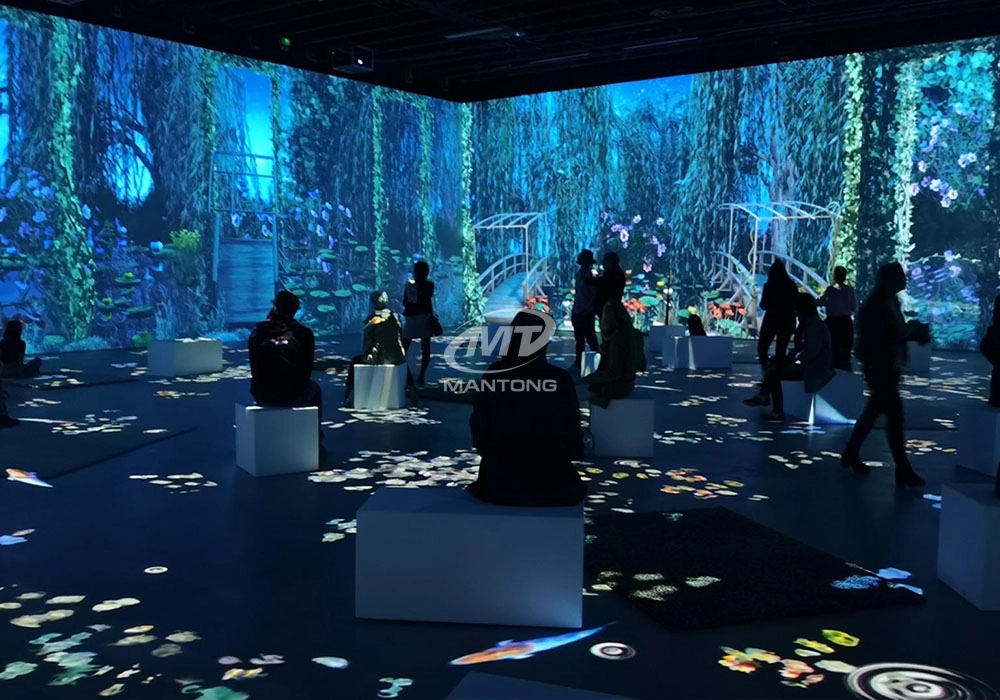
Mantong 6500LM High-Lumen Projector for Large-Scale Immersive Room Projection
Transform any space with Mantong's immersive projection mapping systems. Our high-lumen projectors (up to 6500 LM) and custom software create captivating interactive experiences for floors and walls. Ideal for museums, events, retail, and hospitality. Each kit includes professional ceiling mounting and 80+ pre-loaded video contents and is backed by a 12-month warranty and CE certification. We offer full customization and support to bring your vision to life.
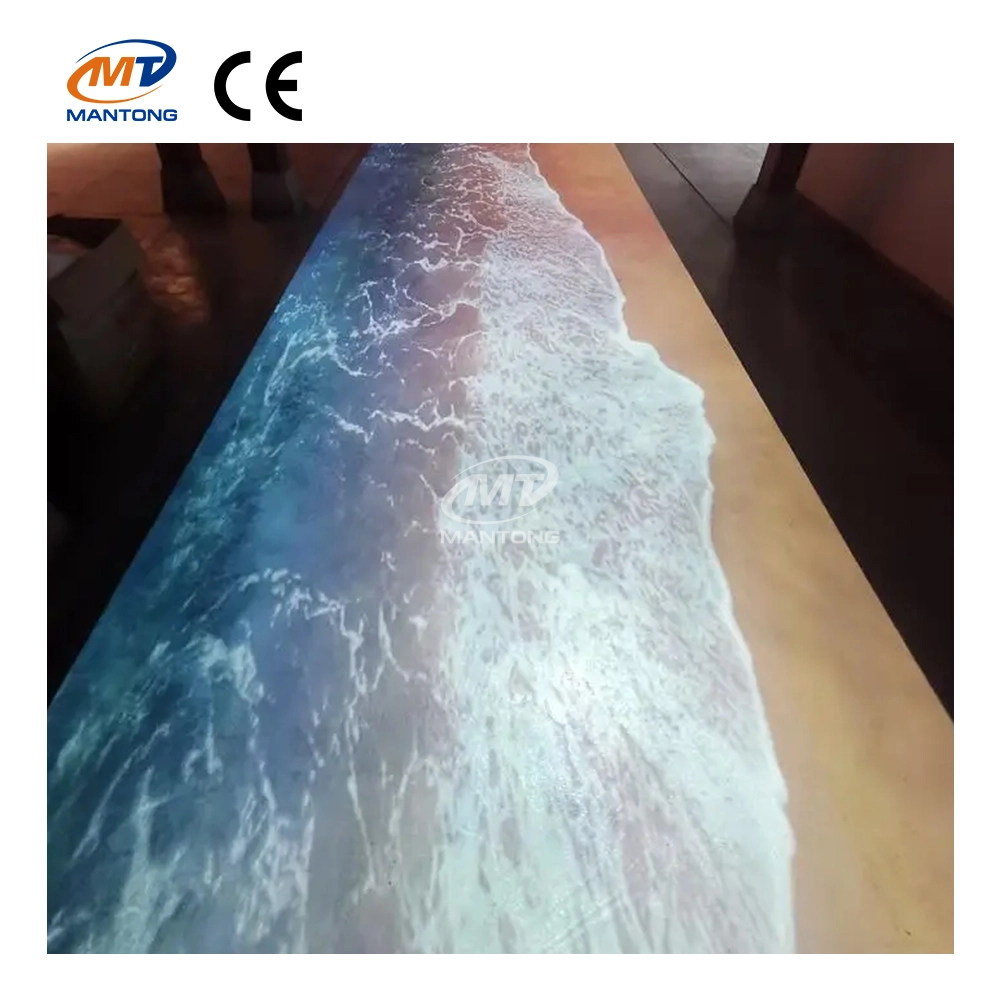
Indoor Interactive Floor Projector System - Customized Design & Installation Support
Indoor interactive floor projections display dynamic themed videos on the floor, commonly used in venues aiming to enhance brand influence or attract foot traffic, such as restaurants, hotel corridors, and brand car retail stores.
By using projectors and compatible software, the interactive content is projected onto the floor, encouraging engagement between people and the projected visuals. A single 5500-lumen indoor floor projector can cover an area of 5 m × 3 m. Typically, each project will use at least 3 units to ensure broad coverage and optimal visual effects.
We also offer customized design and installation support to enhance the interactive experience for your venue.
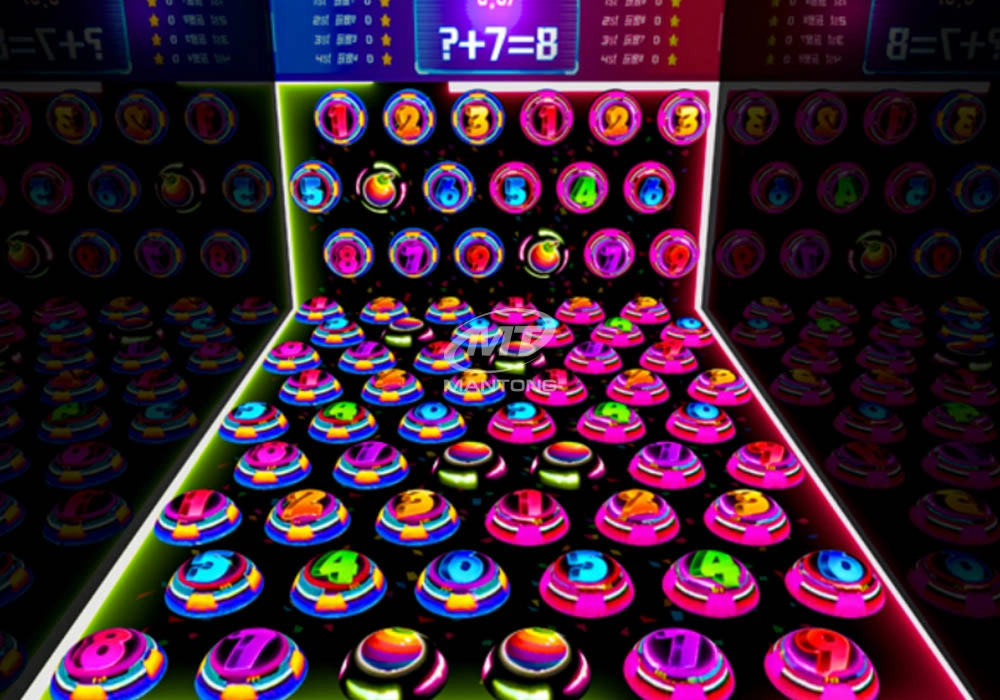
Amusement Rapidly Rotating Bouncing Sphere Interactive Wall Floor Projection Sports Games
Rapidly Rotating Bouncing Sphere is an interactive space where participants jump on rotating spheres. As they step on it, the spheres surface will show special interactivity
Jumping on spheres of the same color in succession causes them to pop, releasing light particles. The more consecutive jumps, the greater the reward—caterpillars appear, and eventually, all spheres of that color burst, filling the space with light and even more caterpillars.
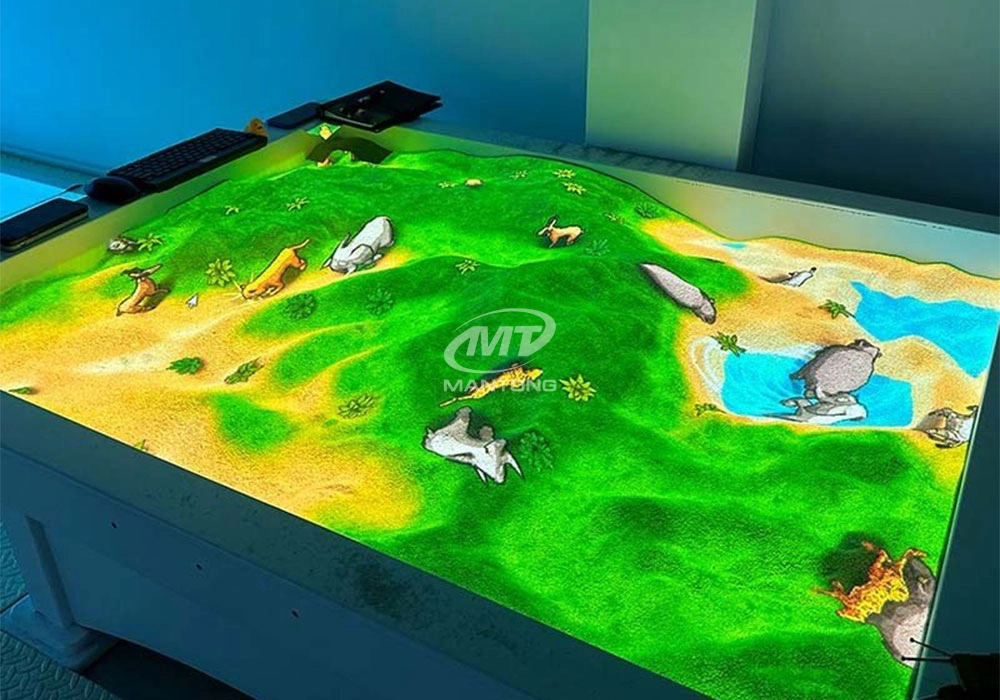
Interactive Sandbox Projection Mapping Games For Kids Play Park
Bring imagination to life with interactive sandbox projection mapping games designed for kids’ play parks. Using cutting-edge projection technology and real-time motion sensing, children can dig, build, and explore virtual worlds directly in the sand. Educational, engaging, and endlessly fun — it’s the perfect blend of play and learning.

Kaida Business Center, Shixin Road, Panyu District,Guangzhou City, Guangdong Province, China.
ManTong
ManTong
ManTong