
How pricing varies by interactive floor projector features
- Understanding costs when choosing an interactive projection solution
- Primary cost drivers for interactive floor projection systems (interactive floor projection system cost)
- Projector hardware: brightness, resolution, and throw (interactive floor projection system cost)
- Interaction sensors and tracking technologies (interactive floor projection system cost)
- Software platform and licensing (interactive floor projection system cost)
- Content creation and custom experiences (interactive floor projection system cost)
- Installation, structural work & mounting (interactive floor projection system cost)
- Support, warranty & lifecycle management (interactive floor projection system cost)
- Feature-to-cost comparison: typical price impacts (interactive floor projection system cost)
- Typical turnkey budget tiers (interactive floor projection system cost)
- How to evaluate total cost of ownership (interactive floor projection system cost)
- Procurement checklist to control costs (interactive floor projection system cost)
- Real-world scenarios and cost examples (interactive floor projection system cost)
- ROI and KPIs to justify interactive floor investment (interactive floor projection system cost)
- Manufacturer selection and vendor negotiation tips (interactive floor projection system cost)
- Mantong Digital — manufacturer profile and competitive advantages
- Mantong capabilities and product strengths (interactive floor projection system cost)
- Why choose Mantong for price-sensitive and high-performance projects (interactive floor projection system cost)
- Partnership invitation and contact (interactive floor projection system cost)
- Practical tips to reduce interactive floor projection system cost without sacrificing performance
- FAQs
- Contact and next steps
- References
Understanding costs when choosing an interactive projection solution
The question of interactive floor projection system cost is rarely answered with a single number. Buyers — from museums and retail chains to schools and event producers — need a feature-aware cost model to estimate true project budgets. This article explains how individual features drive price, offers typical cost ranges, and gives practical purchasing guidance so you can plan budgets, evaluate vendors, and forecast ROI with confidence.
Primary cost drivers for interactive floor projection systems (interactive floor projection system cost)
When forecasting an interactive floor projection system cost, focus on these primary drivers: projector hardware, interaction sensors, software & licensing, content creation, installation & mounting, and ongoing support & warranty. Each driver affects both upfront capital expenditure (CapEx) and recurring operational expense (OpEx). Understanding their relative impact helps prioritize investment for performance and longevity.
Projector hardware: brightness, resolution, and throw (interactive floor projection system cost)
Projectors often account for 30–50% of initial hardware spend. Key specs that change price rapidly are brightness (lumens), resolution (WUXGA, 4K), and throw type (ultra-short-throw vs standard/long-throw). Higher brightness and 4K resolution increase costs but also expand venue flexibility (ambient light tolerance and large projection areas). Ultra-short-throw lenses and laser light sources add High Quality but reduce installation complexity and maintenance.
Interaction sensors and tracking technologies (interactive floor projection system cost)
Sensors convert physical movement into system input. Options include overhead RGB or depth cameras (e.g., Intel RealSense, Microsoft Kinect-class), infrared arrays, LIDAR, and floor pressure mats. Camera-based systems provide rich tracking and multi-user scenarios but require more processing and calibration. Sensor choice affects both hardware cost and software complexity—camera suites and depth sensors typically raise system cost more than simple IR or mat sensors.
Software platform and licensing (interactive floor projection system cost)
Software drives interactivity and content logic. Commercial-grade interactive platforms include content engines, tracking fusion, calibration tools, and management dashboards. Licensing models vary: perpetual license + maintenance, subscription SaaS, or per-seat/per-install fees. Custom software or bespoke integrations increase upfront development costs and ongoing maintenance obligations. Factor anticipated updates and multi-site management when estimating software costs.
Content creation and custom experiences (interactive floor projection system cost)
Content ranges from templated games to bespoke, brand-aligned experiences with 3D assets and audio design. Simple templates lower cost dramatically; custom content creation (storyboarding, animation, sound design, UX testing) can exceed hardware costs for a single installation. Many organizations allocate an ongoing content budget to refresh experiences seasonally, which should be included in total cost of ownership (TCO).
Installation, structural work & mounting (interactive floor projection system cost)
Installation costs depend on site complexity: ceiling height, environmental constraints (outdoor, wet floors), required housings, safety compliance, and cabling. Ultra-short-throw systems may reduce structural costs; long-throw setups can require rigging or custom housings that add labor fees. Professional calibration and on-site testing are critical and typically charged separately from hardware.
Support, warranty & lifecycle management (interactive floor projection system cost)
Extended warranties, remote monitoring, and SLAs affect OpEx. Manufacturer-backed service contracts reduce downtime risk but increase annual costs. Consider spare parts strategy (hot-swappable components) for high-uptime environments; this raises initial inventory costs but reduces event-critical failure risk.
Feature-to-cost comparison: typical price impacts (interactive floor projection system cost)
The table below summarizes how specific features typically influence purchase price. Use it to map your required capabilities to realistic budget tiers.
| Feature | Low-end impact (approx.) | Mid-range impact (approx.) | High-end impact (approx.) | Cost driver notes |
|---|---|---|---|---|
| Projector (lumens/resolution) | $500–$2,000 | $2,000–$8,000 | $8,000–$30,000+ | Higher lumens & 4K/laser are expensive but enable larger/ambient-lit spaces. |
| Sensors (tracking) | $200–$800 | $800–$3,000 | $3,000–$10,000+ | Depth cameras and multi-camera fusion cost more than single IR sensors or mats. |
| Software & licenses | $0–$1,000 | $1,000–$10,000 | $10,000–$50,000+ | Perpetual vs subscription vs custom; multi-site management increases price. |
| Content & UX | $0–$2,000 | $2,000–$15,000 | $15,000–$100,000+ | Custom narratives, 3D assets and testing raise costs significantly. |
| Installation & calibration | $200–$1,000 | $1,000–$8,000 | $8,000–$40,000+ | Site complexity and safety requirements increase labor and materials. |
| Support & warranty (annual) | $50–$300 | $300–$2,000 | $2,000–$10,000+ | Higher SLAs and onsite support costs more; remote monitoring reduces price. |
Typical turnkey budget tiers (interactive floor projection system cost)
Below are typical turnkey cost ranges for a full interactive floor projection installation (hardware, basic software, installation, and one content package). These are representative market brackets for planning — refine with vendor quotes.
| Tier | Suitable for | Estimated turnkey cost |
|---|---|---|
| Entry | Small classrooms, pop-up events, small retail | $1,000–$6,000 |
| Professional | Museums, mid-size retail, themed entertainment | $6,000–$35,000 |
| Enterprise / Large Scale | Immersive rooms, projection shows, permanent exhibits | $35,000–$250,000+ |
How to evaluate total cost of ownership (interactive floor projection system cost)
TCO includes CapEx and OpEx across a defined lifecycle (commonly 3–7 years). Key elements to model: initial purchase, installation, training, annual software subscriptions, content refresh cycles, maintenance/service contracts, consumables (if lamps used), and depreciation for capital budgeting. For public-facing installations, factor opportunity costs such as downtime during maintenance and seasonal variations in use.
Procurement checklist to control costs (interactive floor projection system cost)
Use a procurement checklist to avoid hidden costs: 1) Define interaction goals and user capacity; 2) Specify ambient light and projection size to pick projector lumen/resolution; 3) Choose sensor tech matching tracking resolution and multi-user needs; 4) Clarify software license model and update cadence; 5) Budget for content refresh and A/B testing; 6) Require SLAs and spare parts; 7) Ask vendors for itemized quotes with installation, travel, and calibration fees; 8) Compare total lifecycle costs not just initial price.
Real-world scenarios and cost examples (interactive floor projection system cost)
Scenario pricing helps translate features into budgets. Below are three anonymized examples reflecting common use cases and cost drivers.
| Scenario | Key features | Estimated turnkey cost | >
|---|---|---|
| Small classroom install | 1 x 4,000-lumen short-throw projector, single IR sensor, template software, basic install | $1,500–$4,500 |
| Museum interactive floor | 1 x 8,000-lumen WUXGA laser projector, depth camera, custom content, professional install | $12,000–$45,000 |
| Large immersive space | Multi-projector blend, redundancy, multi-camera tracking fusion, custom 3D content, show control | $75,000–$300,000+ |
ROI and KPIs to justify interactive floor investment (interactive floor projection system cost)
Measure ROI using KPIs aligned to your objective: dwell time (museums/retail), conversion uplift (retail/brand activations), engagement sessions per day (parks/events), education outcomes (schools), and media exposure value. For commercial deployments, estimate incremental revenue per visit and compare against amortized system cost over expected life (e.g., 5 years). High-engagement installations often justify higher initial spend through measurable behavioral lift.
Manufacturer selection and vendor negotiation tips (interactive floor projection system cost)
Choose vendors with relevant case studies for your vertical. Ask for site visits, references, and uptime statistics. Negotiate bundled pricing (hardware + first-year software + content) and include acceptance testing milestones. Insist on calibration training and remote diagnostics tools. For multi-site rollouts, request volume discounts and standardized BOMs to reduce per-site cost.
Mantong Digital — manufacturer profile and competitive advantages
Mantong Digital is a one-stop interactive projection solution provider and direct manufacturer based in Guangzhou, China, with over 10 years of industry experience. We are dedicated to providing innovative, flexible and cost-effective projection solutions, offering both hardware and software to meet various needs.
Mantong capabilities and product strengths (interactive floor projection system cost)
At ManTong, we specialize in providing customized solutions for a wide range of application scenarios through innovative projection technology. Whether it's immersive experiences, interactive entertainment or outdoor lighting and projection shows, our solutions can transform your ideas into stunning visual effects. Our projection technology provides customized solutions for a variety of scenarios, delivering immersive and interactive visual experiences.
Why choose Mantong for price-sensitive and high-performance projects (interactive floor projection system cost)
Mantong’s advantages include direct manufacturing (which reduces middleman markups), integrated hardware-software bundles (simplifying TCO), and deep experience across immersive projection, interactive floor projection, interactive wall projection, immersive rooms, 3D projection, interactive projection games, projection shows, and interactive projection mapping. These strengths make Mantong competitive for both single installations and multi-site rollouts, and attractive for clients seeking both cost control and technical reliability.
Partnership invitation and contact (interactive floor projection system cost)
We are now looking for business partnerships worldwide. Our vision is to become the world's leading interactive projection manufacturer. Visit our website to view product lines and request quotes: https://www.mtprojection.com/.
Practical tips to reduce interactive floor projection system cost without sacrificing performance
1) Start with a pilot using mid-range hardware and template content to validate engagement metrics. 2) Choose laser projectors where uptime and low maintenance offset higher upfront cost. 3) Use modular designs so upgrades (e.g., adding cameras) are incremental. 4) Negotiate bundled service and content refresh packages. 5) Plan for remote diagnostic tools to lower onsite service calls.
FAQs
Q1: How much does an interactive floor projection system cost on average?
A1: Average turnkey costs typically range from $1,000 for very small installs to $250,000+ for large immersive experiences. Mid-range museum or retail installations commonly fall between $6,000 and $35,000. Exact costs depend on projector specs, sensor systems, software licensing, content, and installation complexity.
Q2: Which feature increases price the most?
A2: High-end projection hardware (high lumen counts and 4K resolution) and bespoke content production usually have the largest single impact. Multi-camera tracking fusion and enterprise-class software licensing can also contribute substantially.
Q3: Can I reduce costs by using consumer projectors?
A3: Consumer projectors lower upfront costs but often lack brightness, ruggedness, warranty coverage, and uptime required for public installations. For low-use or trial deployments, they are acceptable; for permanent, high-traffic sites, commercial/installation-grade projectors are recommended to reduce long-term OpEx.
Q4: How should I budget for content updates?
A4: Budget for at least one content refresh per year for public or retail deployments. Costs vary widely: template refreshes can be <$2,000, while major seasonal campaigns or custom 3D content can exceed $15,000.
Q5: Is subscription software more cost-effective than perpetual licensing?
A5: Subscription models lower upfront capital, include updates, and can be ideal for smaller budgets. Perpetual licenses with maintenance fees can be cheaper long-term if you plan many years of use. Model both options over your expected lifecycle to decide.
Q6: Where can I get a reliable quote?
A6: Contact experienced integrators or manufacturers with your site details (dimensions, ambient light, expected daily users, interactivity goals). Include Mantong Digital (https://www.mtprojection.com/) among bidders to compare direct-manufacturer pricing and bundled options.
Contact and next steps
If you’re planning a pilot, roll-out, or full immersive installation, begin by documenting site conditions and engagement goals. For direct manufacturer quotes, turnkey solutions, and customized proposals, visit Mantong Digital at https://www.mtprojection.com/ or contact their sales team to discuss project scope and receive a tailored estimate. Partnering with a manufacturer experienced in both hardware and software often yields the best balance of performance and predictable interactive floor projection system cost.
References
- Projection mapping — Wikipedia. https://en.wikipedia.org/wiki/Projection_mapping (Accessed 2025-12-29)
- MarketsandMarkets — Projection Mapping Market Overview. https://www.marketsandmarkets.com/Market-Reports/projection-mapping-market-152052042. (Accessed 2025-12-29)
- Grand View Research — Projection Mapping Market Size. https://www.grandviewresearch.com/industry-analysis/projection-mapping-market (Accessed 2025-12-29)
- AVIXA — Pro AV market insights and trends. https://www.avixa.org/ (Accessed 2025-12-29)
- Mantong Digital — Company site and product information. https://www.mtprojection.com/ (Accessed 2025-12-29)
Measuring ROI from Interactive Floor Projection Projects
Best How Interactive Projector Games Are Changing Entertainment Spaces manufacturers and supplier brands
The latest trends for interactive floor projection software
The immersive escape room Cost Guide
One-Stop Projection Solution Provider Since 2011
What information do you need to know before making the proposal/solution?
We know that everyone wants to know the price, but the price of our products is determined by many factors since most of our products are custom, so no ready price list. In order to fast understand what you need, can you send us an inquiry like this?
For example: I am really interested in your immersive projection products, we are a company in the USA and want to install some in my restaurant. It is about 50 meters long, and 5m in width. Projection size you can decide but the length should be not less than 20 meters. We want some content about SeaWorld because our place is all about the sea. Thank you.
What's Immersive Projection ?
Immersive projection refers to a technology that creates a captivating and all-encompassing visual experience for viewers by projecting images or videos onto large surfaces, such as walls, floors, or even entire rooms. This technology aims to immerse the audience in a simulated environment, blurring the boundaries between the physical and virtual worlds.
How to Write an Interactive-Effect Video Customisation Script ?
① Project Background: Briefly introduce the context in which this interactive scene will be used (e.g., exhibition, museum,
event space, children's area). Example: This scene is part of the “Underwater World” zone in a children's science museum,
designed to be engaging and exploratory.
②Visual Style / Atmosphere: What kind of visual mood are you aiming for? Please describe the color scheme, style, and any
references. it should focus solely on describing the visual aspects of the scene, supported by relevant charts or reference
images.
③ Interaction Points Overview:List each interactive hotspot along with the effect you'd like to trigger when the user
touches or clicks the area. example: when player touch the clownfish, it will swims away with bubble trail (animation effect)
and produce the bubble sound ( sound effect requirement )
④ Static Visual Reference:including but not limited to background image/video, a list of major visual elements (e.g., coral,
rocks, seaweed, fish), which elements should be interactive?
What about the wall/floor material for the projection?
It’s recommended to choose a light-colored material with minimal reflectivity—pure white or light grey works best. the
common material is cement & plaster board
For optimal projection results, the surface should be free of any patterns or textures, as the projector will display content
directly onto it.
There are no specific material requirements; you may use any commonly available material in your local market, as long as it
meets the above conditions.
What's the application of Immersive projection ?
It can be used in various venues, such as art exhibition, entertainment venues, educational institution, Wedding hall /Banquet/Bar,Yoga Studio and so on. It often involves advanced projection techniques, multimedia content, and interactive elements to engage and captivate the audience's senses.
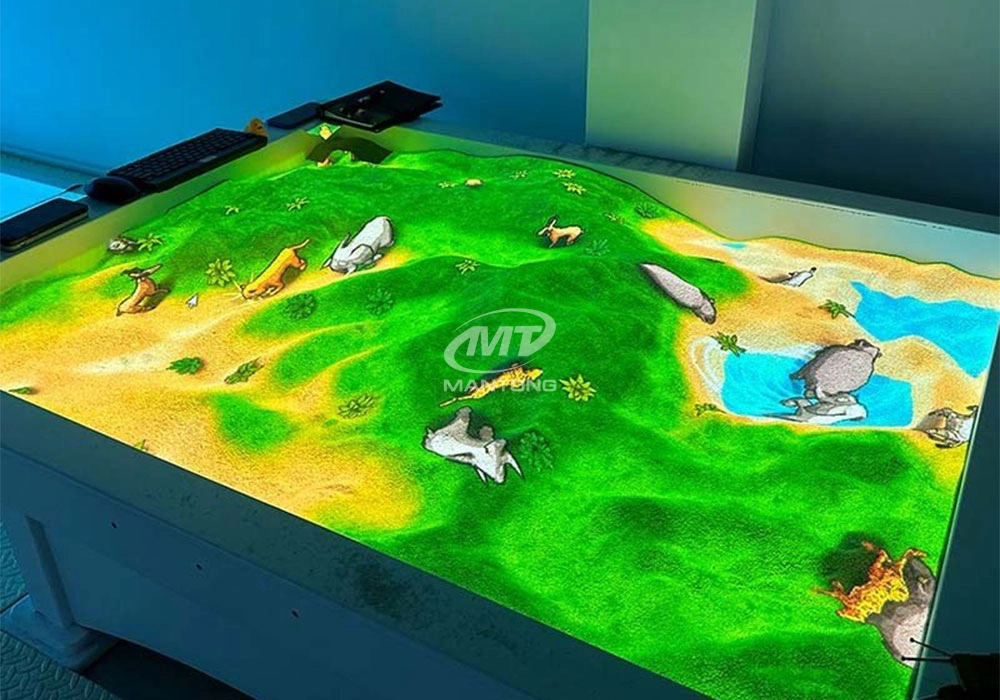
Interactive Sandbox Projection Mapping Games For Kids Play Park
Bring imagination to life with interactive sandbox projection mapping games designed for kids’ play parks. Using cutting-edge projection technology and real-time motion sensing, children can dig, build, and explore virtual worlds directly in the sand. Educational, engaging, and endlessly fun — it’s the perfect blend of play and learning.
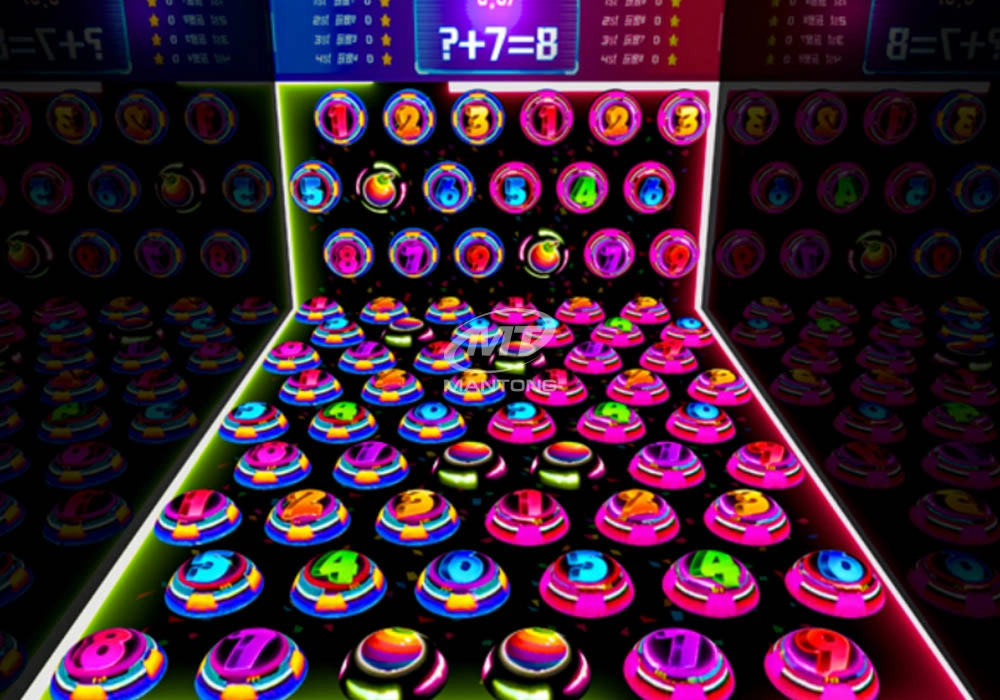
Amusement Rapidly Rotating Bouncing Sphere Interactive Wall Floor Projection Sports Games
Rapidly Rotating Bouncing Sphere is an interactive space where participants jump on rotating spheres. As they step on it, the spheres surface will show special interactivity
Jumping on spheres of the same color in succession causes them to pop, releasing light particles. The more consecutive jumps, the greater the reward—caterpillars appear, and eventually, all spheres of that color burst, filling the space with light and even more caterpillars.
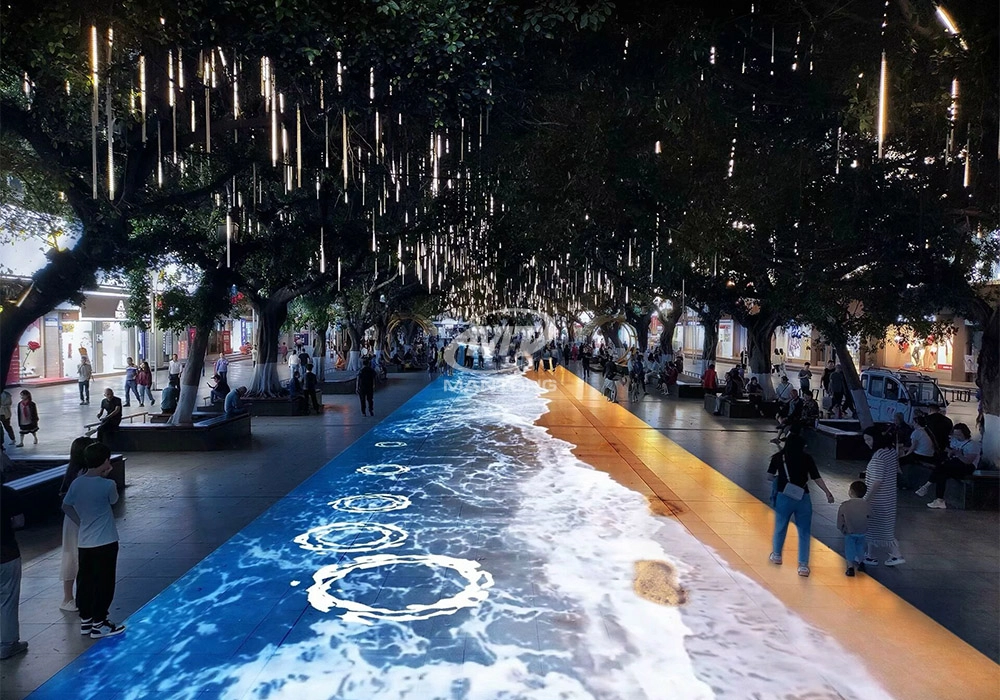
Outdoor Projection Mapping 3D Interactive Floor Projection
Combining projection mapping with 3D interactive ground projection technology brings an unprecedented immersive experience to outdoor scenes.
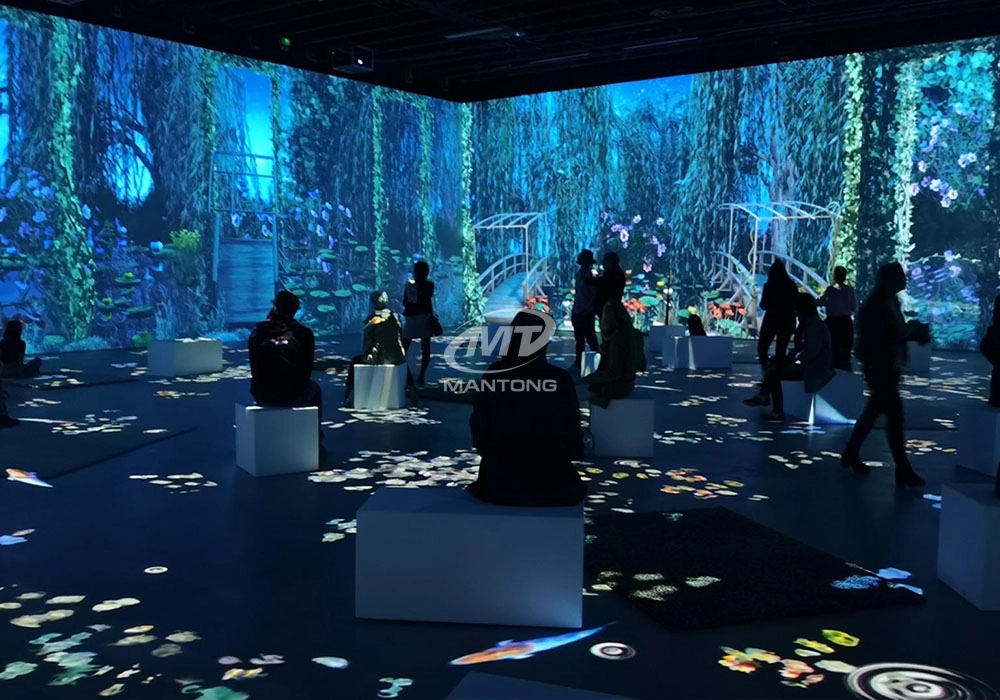
Mantong 6500LM High-Lumen Projector for Large-Scale Immersive Room Projection
Transform any space with Mantong's immersive projection mapping systems. Our high-lumen projectors (up to 6500 LM) and custom software create captivating interactive experiences for floors and walls. Ideal for museums, events, retail, and hospitality. Each kit includes professional ceiling mounting and 80+ pre-loaded video contents and is backed by a 12-month warranty and CE certification. We offer full customization and support to bring your vision to life.

Kaida Business Center, Shixin Road, Panyu District,Guangzhou City, Guangdong Province, China.
ManTong
ManTong
ManTong