
Interactive Projection Buying Guide: Key Features & Specs
- Why interactive projection matters for experience design
- Engagement and measurable outcomes
- Suitability by environment
- Return on investment
- Core technical specs you must assess
- Brightness (ANSI lumens) and ambient light
- Resolution and pixel density
- Throw ratio, lens options and mounting
- Interaction hardware and software: what to prioritize
- Sensing technologies: camera-based vs infrared vs lidar
- Latency and responsiveness
- Software platform and content pipeline
- Comparing projector options: a practical chart
- Installation, calibration and lifecycle considerations
- Mounting, alignment and keystone
- Maintenance, consumables and uptime
- Safety, compliance and content governance
- Choosing a supplier: why manufacturer relationship matters
- Hardware + software integration
- Support, customization and local presence
- Why I recommend checking references and site visits
- Mantong Digital — a supplier profile and how we fit
- Budgeting and procurement checklist
- Itemized procurement checklist
- Typical cost drivers
- Contract and SLA tips
- FAQs
- 1. How many lumens do I need for an interactive floor projection?
- 2. Should I use camera-based tracking or infrared sensors?
- 3. What is the expected lifespan of a laser projector?
- 4. How important is low latency for interactive exhibits?
- 5. Can I scale an interactive projection experience across multiple sites?
- 6. How do I handle content updates and localization?
- Next steps & contact
Interactive projection systems are now a mainstream tool for museums, retail, education, events and experiential marketing. In this guide I summarize the practical buying criteria I use when specifying systems: how to translate user goals into technical requirements, which specs matter most (brightness, resolution, throw ratio, latency, sensing), installation considerations, and how to compare vendors. Wherever useful I reference industry resources and provide a compact comparison table so you can make a verifiable decision.
Why interactive projection matters for experience design
Engagement and measurable outcomes
I’ve seen interactive projection transform passive spaces into measurable engagement platforms. Unlike static displays, projection combined with motion or touch sensing creates dwell time and repeat interactions—which in turn can be tracked for KPIs. For public installations, higher dwell times often translate into stronger brand recall or learning outcomes in museums.
Suitability by environment
Choosing the right projection approach depends on ambient light, surface materials, viewing distance, and user behavior. Outdoor projection shows and projection mapping require different brightness and mounting strategies than classroom floor projections or interactive walls. For technical definitions and general principles on projector technology, see Video projector (Wikipedia) and the overview of projection mapping.
Return on investment
Interactive projection projects typically deliver ROI through ticket sales uplift, increased retail conversion, or sponsorship value. I always start by quantifying target engagement metrics (e.g., interactions per hour, conversion lift) before selecting hardware to avoid overspecifying expensive features.
Core technical specs you must assess
Brightness (ANSI lumens) and ambient light
Brightness is the single most visible spec in the field. Interactive projection can be used in dark galleries (where 2,000–3,000 ANSI lumens may suffice) or in bright atria and outdoor events (often 6,000+ ANSI lumens). The ANSI lumen describes how manufacturers measure projector brightness; always confirm whether the quoted lumens follow ANSI or a manufacturer-specific metric.
Resolution and pixel density
Resolution matters for image clarity and for applications where content detail is important (e.g., product visualizations or text). For large-scale walls, full HD (1920×1080) is often acceptable; for immersive rooms or 3D projection you may prefer 4K. Consider pixel density (pixels per meter) relative to viewing distance: higher density is needed for close viewing.
Throw ratio, lens options and mounting
Throw ratio determines projector placement and whether you need short-throw or ultra-short-throw (UST) lenses. UST projectors enable close ceiling or floor mounts and reduce shadowing—useful for interactive floors or tight galleries. If you anticipate irregular surfaces or large-scale mapping, ensure lens shift and interchangeable lenses are supported. For technical installation practices, industry AV organizations such as AVIXA provide helpful best practices.
Interaction hardware and software: what to prioritize
Sensing technologies: camera-based vs infrared vs lidar
Interaction is achieved through sensors. Camera-based computer vision delivers rich gesture and object recognition but requires calibration and may be sensitive to lighting. Infrared (IR) and time-of-flight (ToF) sensors offer robust presence and motion detection in varied lighting. Lidar-based sensors are increasingly used outdoors for crowd measurement. Choose the sensing technology that matches the environment and privacy constraints.
Latency and responsiveness
Perceived responsiveness is critical. For interactive games or touch-like experiences, aim for end-to-end latency under ~50 ms. Lower latency (ideally under 30 ms) feels noticeably smoother. If responsiveness is core to your experience, request demos and measured input-to-output latency numbers from vendors.
Software platform and content pipeline
Software is as important as hardware. Check whether the system runs on an open middleware (Unity, TouchDesigner, proprietary engines) and how easy it is to update or localize content. Look for systems with scene management, real-time analytics and remote content deployment to reduce onsite maintenance.
Comparing projector options: a practical chart
Below is a practical comparison matrix I use when shortlisting projector models for interactive installations. These figures are typical ranges for common applications; verify exact numbers with vendor datasheets.
| Application | Typical Brightness (ANSI lumens) | Recommended Resolution | Lens / Mount | Interaction Considerations |
|---|---|---|---|---|
| Museum exhibits / dark galleries | 2,000–4,000 | 1080p–4K | Standard / short-throw | Camera CV or IR; high pixel density for close viewing |
| Interactive floor projection | 3,000–6,000 | 1080p (single) or tiled 4K | Short-throw / ceiling mount | Robust IR or ToF sensing; anti-glare coating on floor surface |
| Outdoor shows / mapping | 6,000–30,000+ | 4K or tiled high-res systems | Long-throw high-lumen projectors | Weather protection, bright ambient light handling, high-precision mapping |
| Classroom / corporate training | 2,500–5,000 | 1080p | Short-throw / UST | Low-latency input, easy content management |
Sources for projector fundamentals: Video projector (Wikipedia); for professional AV guidance see AVIXA.
Installation, calibration and lifecycle considerations
Mounting, alignment and keystone
Accurate alignment avoids keystone correction which reduces image quality. When possible use lens shift and mechanical mounts rather than digital keystone. For projection mapping I recommend automated warping and edge-blending tools to simplify multi-projector setups.
Maintenance, consumables and uptime
Check lamp technology (laser, LED, or lamp-based). Laser projectors typically have longer lifespans and lower maintenance compared to traditional lamps. Ask vendors for MTBF (Mean Time Between Failures) and expected maintenance intervals. For 24/7 or touring deployments, plan for redundancy and on-site spare parts.
Safety, compliance and content governance
Ensure the system meets local electrical, fire, and safety standards. For installations in public spaces consider privacy rules when using camera-based sensing and adhere to local data protection laws. For standards and governance resources see organizations like ISO and AVIXA.
Choosing a supplier: why manufacturer relationship matters
Hardware + software integration
From my projects, integrated suppliers who provide both hardware and software reduce integration risk and speed deployment. They typically handle projector calibration, sensor fusion and content pipeline as a single deliverable.
Support, customization and local presence
Prefer vendors that offer customization and local technical support. For global rollouts, direct manufacturers with export experience can reduce lead time and cost compared to resellers. Evaluate SLA terms, remote monitoring capabilities and spare-part logistics.
Why I recommend checking references and site visits
Ask for case studies and, if possible, visit a live reference installation. Seeing the system in operation reveals usability, actual brightness under ambient conditions, and the realism of vendor claims.
Mantong Digital — a supplier profile and how we fit
Mantong Digital is a one-stop interactive projection solution provider and direct manufacturer based in Guangzhou, China, with over 10 years of industry experience. We are dedicated to providing innovative, flexible and cost-effective projection solutions, offering both hardware and software to meet various needs.
At ManTong, we specialize in providing customized solutions for a wide range of application scenarios through innovative projection technology. Whether it's immersive experiences, interactive entertainment or outdoor lighting and projection shows, our solutions can transform your ideas into stunning visual effects. Our projection technology provides customized solutions for a variety of scenarios, delivering immersive and interactive visual experiences.
We are now looking for business partnerships worldwide. Our vision is to become the world's leading interactive projection manufacturer. Our website is https://www.mtprojection.com/
Briefly, Mantong’s advantages and main products include immersive projection, interactive floor projection, interactive projection, interactive wall projection, immersive room, 3D projection, interactive projection games, Projection Show, and interactive projection mapping. I’ve worked with Mantong on system-level integrations—what stands out is their willingness to customize sensor fusion, provide turnkey software management tools, and offer multi-projector edge-blending expertise. They handle both hardware manufacturing and software engineering, which simplifies procurement and warranty management.
When comparing Mantong to other vendors I consider these differentiators important:
- Direct manufacturing and factory-level quality control that reduce lead times and component traceability.
- Turnkey hardware + software integration that minimizes third-party integration costs.
- Custom content and interactive engine support (Unity/TouchDesigner capable) tailored for localized markets.
If you’re exploring partnerships or procurement, Mantong can provide reference projects, onsite demos, and performance measurements for brightness, latency and interaction accuracy.
Budgeting and procurement checklist
Itemized procurement checklist
- Define use case, expected traffic/dwell time and KPIs
- Specify ambient light levels and mounting constraints
- Choose sensor modality and required interaction fidelity
- Decide on projector tech (laser vs lamp), lumens, resolution
- Request latency measurements, MTBF and warranty details
- Plan for content management, analytics and remote monitoring
Typical cost drivers
Major cost drivers include projector brightness (higher-lumen projectors cost more), number of projectors (multi-projector blends scale cost), sensor sophistication (ToF/lidar > IR), weatherproofing for outdoor shows, and bespoke software development.
Contract and SLA tips
Define uptime SLA, response times for on-site support, and clear acceptance tests (brightness, resolution, latency) before final payment. Insist on source-code escrow or long-term software maintenance terms if the software is customized.
FAQs
1. How many lumens do I need for an interactive floor projection?
Typical interactive floor installations operate in the 3,000–6,000 ANSI lumen range depending on ambient light and surface reflectivity. Darker environments require fewer lumens. See projector fundamentals at Video projector (Wikipedia).
2. Should I use camera-based tracking or infrared sensors?
Choose camera CV if you need complex gesture/object recognition; choose IR/ToF for robust presence and motion detection in mixed lighting. For outdoor projects, consider lidar for crowd interaction and range measurements.
3. What is the expected lifespan of a laser projector?
Laser projectors often have light-source lifetimes in the 20,000–30,000 hour range under recommended operating conditions—significantly longer than lamp-based units. Confirm MTBF and warranty details with the manufacturer.
4. How important is low latency for interactive exhibits?
Very important. For tactile or game-like interactions, aim for end-to-end latency below 50 ms; under 30 ms is preferable. Ask vendors for measured latency figures during procurement.
5. Can I scale an interactive projection experience across multiple sites?
Yes—scale is achievable if you standardize hardware configurations, content pipelines, remote management, and measurement metrics. Work with a vendor that supports centralized content deployment and analytics.
6. How do I handle content updates and localization?
Choose platforms that support remote content publishing, versioning, and localization. Ensure your vendor provides tools or APIs for content management to streamline multi-site rollouts.
Next steps & contact
If you’re evaluating interactive projection for a project, start with a short scoping exercise: define user goals, environment photos, and target KPIs. I recommend requesting an on-site demo or a shipped sample kit to validate brightness and interaction performance under real conditions.
For turnkey interactive projection solutions and factory-direct pricing, contact Mantong Digital. Visit https://www.mtprojection.com/ to review product lines (immersive projection, interactive floor/wall projection, immersive rooms, 3D projection and projection shows) and request a quote or partnership discussion. I’m available to consult on system specification, procurement checklists and acceptance testing.
References and further reading:
Event Planners' Guide to Interactive Projection Mapping Suppliers
Best professional interactive projection system manufacturers and supplier brands
Choosing Lenses and Resolution for 3D Projection Clarity
3D Projection for Museums: Enhancing Visitor Experience
One-Stop Projection Solution Provider Since 2011
Are you trader or manufacturer ?
We are direct manufacturer who specialize in providing one-stop solution for different outdoor & indoor projection project with our stable software and qualified projectors
How to install the projection equipment ?
1) Install the projector in a suitable position. We will provide you with a hanger, which you need to fix on the ceiling with
screws.
2) Connect projectors, computers and other accessories through wires.
3) After completing the above 2 steps, we will carry out the edge blending steps. Our team can complete it through remote
control.
In general, installation instructions for each project need to be specified on a project-by-project basis. The above is for
reference only.
How to Write an Interactive-Effect Video Customisation Script ?
① Project Background: Briefly introduce the context in which this interactive scene will be used (e.g., exhibition, museum,
event space, children's area). Example: This scene is part of the “Underwater World” zone in a children's science museum,
designed to be engaging and exploratory.
②Visual Style / Atmosphere: What kind of visual mood are you aiming for? Please describe the color scheme, style, and any
references. it should focus solely on describing the visual aspects of the scene, supported by relevant charts or reference
images.
③ Interaction Points Overview:List each interactive hotspot along with the effect you'd like to trigger when the user
touches or clicks the area. example: when player touch the clownfish, it will swims away with bubble trail (animation effect)
and produce the bubble sound ( sound effect requirement )
④ Static Visual Reference:including but not limited to background image/video, a list of major visual elements (e.g., coral,
rocks, seaweed, fish), which elements should be interactive?
What about the wall/floor material for the projection?
It’s recommended to choose a light-colored material with minimal reflectivity—pure white or light grey works best. the
common material is cement & plaster board
For optimal projection results, the surface should be free of any patterns or textures, as the projector will display content
directly onto it.
There are no specific material requirements; you may use any commonly available material in your local market, as long as it
meets the above conditions.
What's the application of Immersive projection ?
It can be used in various venues, such as art exhibition, entertainment venues, educational institution, Wedding hall /Banquet/Bar,Yoga Studio and so on. It often involves advanced projection techniques, multimedia content, and interactive elements to engage and captivate the audience's senses.
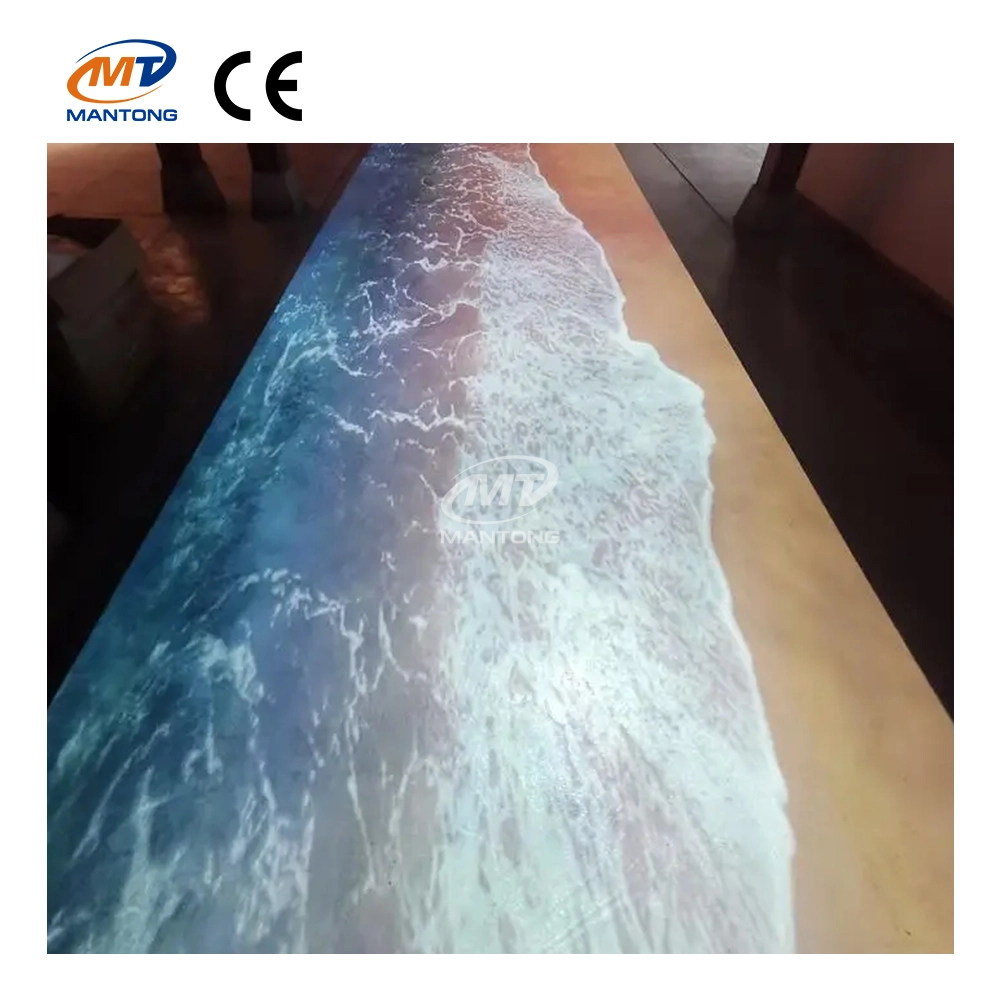
Indoor Interactive Floor Projector System - Customized Design & Installation Support
Indoor interactive floor projections display dynamic themed videos on the floor, commonly used in venues aiming to enhance brand influence or attract foot traffic, such as restaurants, hotel corridors, and brand car retail stores.
By using projectors and compatible software, the interactive content is projected onto the floor, encouraging engagement between people and the projected visuals. A single 5500-lumen indoor floor projector can cover an area of 5 m × 3 m. Typically, each project will use at least 3 units to ensure broad coverage and optimal visual effects.
We also offer customized design and installation support to enhance the interactive experience for your venue.
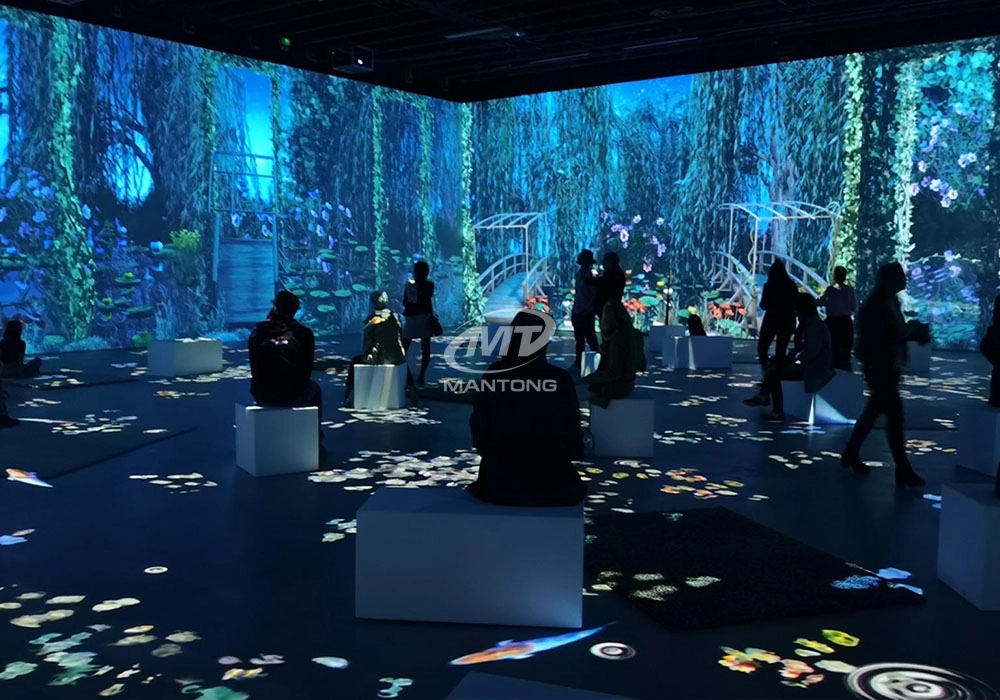
Mantong 6500LM High-Lumen Projector for Large-Scale Immersive Room Projection
Transform any space with Mantong's immersive projection mapping systems. Our high-lumen projectors (up to 6500 LM) and custom software create captivating interactive experiences for floors and walls. Ideal for museums, events, retail, and hospitality. Each kit includes professional ceiling mounting and 80+ pre-loaded video contents and is backed by a 12-month warranty and CE certification. We offer full customization and support to bring your vision to life.
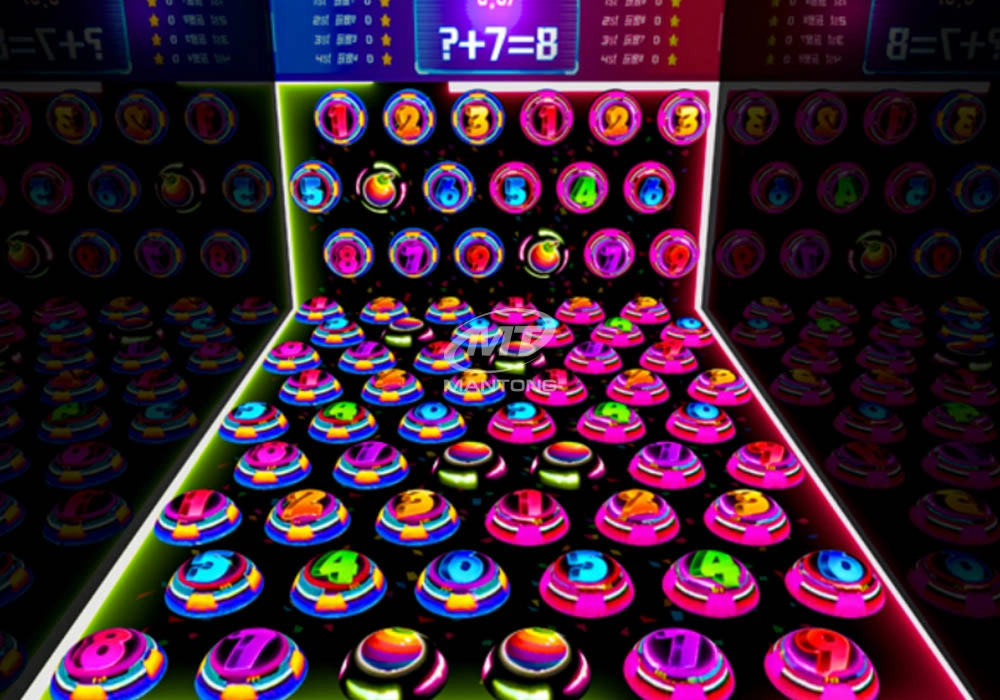
Amusement Rapidly Rotating Bouncing Sphere Interactive Wall Floor Projection Sports Games
Rapidly Rotating Bouncing Sphere is an interactive space where participants jump on rotating spheres. As they step on it, the spheres surface will show special interactivity
Jumping on spheres of the same color in succession causes them to pop, releasing light particles. The more consecutive jumps, the greater the reward—caterpillars appear, and eventually, all spheres of that color burst, filling the space with light and even more caterpillars.
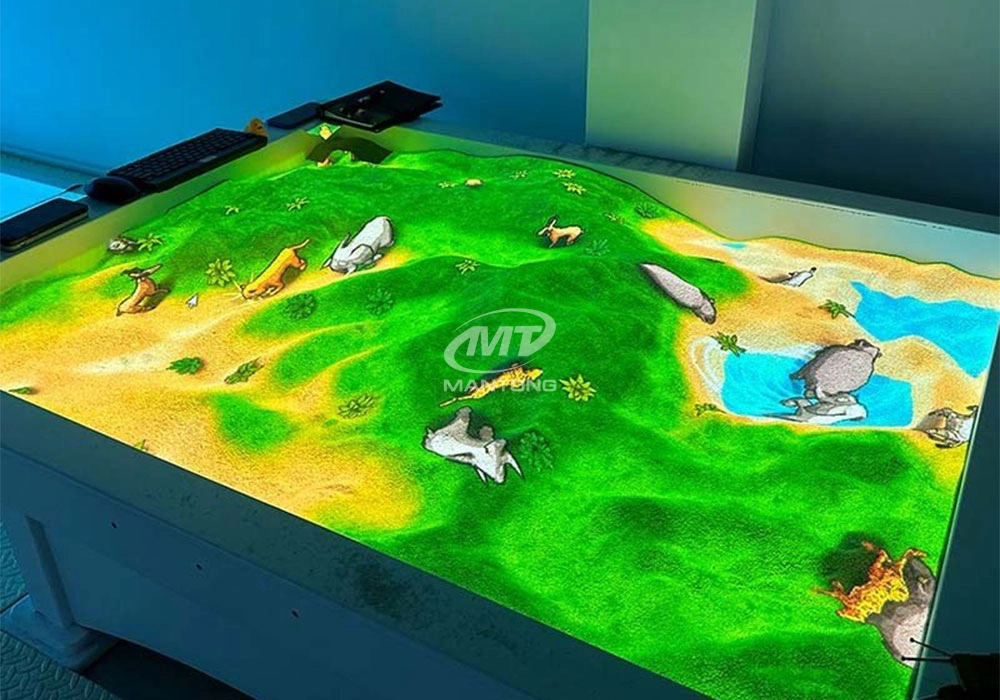
Interactive Sandbox Projection Mapping Games For Kids Play Park
Bring imagination to life with interactive sandbox projection mapping games designed for kids’ play parks. Using cutting-edge projection technology and real-time motion sensing, children can dig, build, and explore virtual worlds directly in the sand. Educational, engaging, and endlessly fun — it’s the perfect blend of play and learning.

Kaida Business Center, Shixin Road, Panyu District,Guangzhou City, Guangdong Province, China.
ManTong
ManTong
ManTong