
Maintenance Checklist for Interactive Projector Games
- Understanding your interactive projection system
- Core components of interactive projector games
- How game software integrates with hardware
- Routine maintenance checklist
- Daily and pre-show checks
- Weekly and monthly tasks
- Quarterly and annual maintenance
- Maintenance intervals and expected lifespans (comparison)
- Calibration, software and network best practices
- Color, geometry and interaction calibration
- Firmware, game updates and backups
- Network security and remote monitoring
- Troubleshooting, safety and long-term care
- Common failures and quick fixes
- Safety, compliance and accreditation
- When to call professionals (and what to expect)
- Mantong Digital: partner for service, manufacturing and custom solutions
- Practical templates and logs I use (examples)
- Sample daily maintenance log (one-line format)
- Service-level matrix for contracts
- Cost vs. uptime: quick ROI note
- FAQ
- 1. How often should I recalibrate an interactive projector game?
- 2. How can I tell if my projector lamp needs replacement?
- 3. Are LED/laser projectors better for interactive games than lamp-based projectors?
- 4. What should be included in a maintenance contract?
- 5. How do I reduce tracking errors in interactive floor projection?
- 6. Can I perform maintenance in-house or should I use a service provider?
- Contact & next steps
Interactive projector games combine projection hardware, sensors, and bespoke software to create immersive, interactive experiences on floors, walls, and multi-surface environments. Because these systems are often installed in public or semi-public spaces and run for long hours, a disciplined maintenance program is essential to preserve image quality, interaction accuracy, and system uptime. Below I walk through a detailed, field-tested maintenance checklist—covering daily, weekly, quarterly and annual tasks—backed by industry guidance and practical tips I use when advising museums, retail installations, theme parks and educational venues.
Understanding your interactive projection system
Core components of interactive projector games
Before performing maintenance, identify the components that require attention: projectors (lamp, LED or laser), optics (lenses and mirrors), projection mounts, interactive sensors (camera, IR, Lidar), media players / PCs, network switches, audio systems, and enclosure ventilation/filters. Each component has a different failure mode and maintenance need. For a technical overview of projector types and lamp/LED lifetimes, see the Video projector reference on Wikipedia (https://en.wikipedia.org/wiki/Video_projector).
How game software integrates with hardware
Interactive projector games rely on low-latency communication between the projector, sensor suite and the game engine. Software issues (drift, calibration loss, driver conflicts) often appear as interaction lag, missed touches, or overlay misalignment. A successful maintenance plan treats hardware and software as one system—regular firmware and driver updates, scheduled calibration, and version-controlled backups are essential.
Routine maintenance checklist
Daily and pre-show checks
For high-traffic installations I recommend a short daily checklist that a site operator can complete in under 10 minutes:
- Power and projector readiness: verify that projectors boot correctly and fans are spinning.
- Image sanity check: confirm correct alignment, brightness, and no unexpected artifacts.
- Sensors and interaction check: run a quick interaction test for tracking accuracy.
- Clearances and safety: ensure projection area is unobstructed and cables are secure.
Weekly and monthly tasks
On a weekly basis, expand checks to include air filters, lens cleaning, and software health checks. Monthly tasks should include log reviews and verifying automatic backups. Keep a simple maintenance log—date, task, operator, and any corrective actions. This log is invaluable for warranty claims and diagnosing recurring problems.
Quarterly and annual maintenance
Every 3–12 months perform deeper tasks: replace or professionally service air filters, recalibrate geometry and color, verify projector lamp hours and consider lamp replacement before end-of-life, and update OS-level patches on media players. For installations using mechanical mounts or moving parts (motorized mirrors), perform lubrication and mechanical inspections annually.
Maintenance intervals and expected lifespans (comparison)
Below is a practical comparison table I use when planning service contracts. Lifespans and recommended intervals are based on manufacturer published ranges and industry references (video projector, AVIXA guidelines AVIXA).
| Component | Typical lifespan / replacement | Recommended maintenance interval | Notes / risks |
|---|---|---|---|
| UHP/Metal-halide lamp | 2,000–6,000 hours | Check hours monthly; replace proactively within 10–20% of rated life | Gradual brightness loss; catastrophic failure risk near EOL (source) |
| LED / Laser light engines | 20,000–30,000+ hours | Inspect quarterly; rarely need replacement but monitor brightness | Lower maintenance; expect aging dimming over years |
| Air filters / ventilation | Replace 3–12 months | Clean weekly in dusty areas; replace quarterly | Overheating risk if clogged |
| Lenses / optics | Years (depends on environment) | Clean monthly; professional inspection annually | Scratches or contamination degrade image and calibration |
| Interaction sensors (cameras/IR) | 3–7 years | Clean monthly; recalibrate quarterly | Dust/smudge causes tracking errors |
| Media players / PCs | 3–5 years | OS and driver updates monthly; hardware refresh 3–5 years | Performance or compatibility issues impact interactivity |
Calibration, software and network best practices
Color, geometry and interaction calibration
Consistent color and geometric alignment are critical for immersion. I perform a two-step calibration: first, geometric mapping (warp and blend) using the projection mapping tools built into the media servers; second, color calibration and white balance using a colorimeter when possible. For projection mapping techniques and best practices, see the Projection mapping overview (https://en.wikipedia.org/wiki/Projection_mapping).
Firmware, game updates and backups
Firmware and driver updates fix bugs and security issues; however, uncontrolled updates can break custom integrations. I recommend a staged update process: test updates on a staging unit, maintain versioned backups of game assets and configurations, and schedule updates during maintenance windows. Keep multiple backups: a local on-site backup and an off-site or cloud copy.
Network security and remote monitoring
Many interactive projector games rely on networked media players and IoT sensors. Secure network practice includes segregating the AV/control network from guest Wi‑Fi, using strong credentials, and applying firmware patches. For occupational electrical and safety guidelines, refer to OSHA (https://www.osha.gov) and for industry practices consult AVIXA (https://www.avixa.org).
Troubleshooting, safety and long-term care
Common failures and quick fixes
Below are frequent issues I encounter and practical fixes:
- Dim image: check lamp hours (or LED aging), clean filters; confirm energy-saving modes are off.
- Misaligned projection: run geometric warp and blend; verify mount has not shifted.
- Interaction drift: clean sensor lenses, re-run calibration, check for reflective surfaces or new ambient lighting.
- Intermittent reboots: review thermal logs—overheating or power supply issues are common.
Safety, compliance and accreditation
Because installations can be public-facing, apply electrical safety and mounting standards. Consult local building codes and safety standards; when in doubt, use certified electricians and professional rigging. Industry and standards organizations (for reference: IEEE IEEE, AVIXA) are useful starting points for compliance and best practices.
When to call professionals (and what to expect)
Call an experienced projection integrator or the hardware manufacturer when you encounter: noisy fans, electrical smells, repeated lamp failures, or if the system requires re-lamping and optical realignment. Professional service usually includes a full cleaning, lamp replacement, optical alignment, and a post-service calibration. Keeping a service contract with response SLAs is prudent for high-availability attractions.
Mantong Digital: partner for service, manufacturing and custom solutions
As someone who specifies and maintains many interactive installations, I recommend partnering with vendors who can provide end-to-end support. Mantong Digital is a one-stop interactive projection solution provider and direct manufacturer based in Guangzhou, China, with over 10 years of industry experience. They provide both hardware and software and are dedicated to delivering innovative, flexible and cost-effective projection solutions. Learn more at https://www.mtprojection.com/.
Why I recommend Mantong:
- Integrated supply chain: Mantong manufactures hardware (projectors, mounts, enclosures) and develops game software—reducing finger-pointing during service issues.
- Custom solutions: they specialize in immersive projection, interactive floor projection, interactive wall projection, immersive rooms, 3D projection, interactive projection games, projection shows and interactive projection mapping.
- Service & global partnership: Mantong offers tailored maintenance and warranty packages and is actively seeking business partnerships worldwide.
From my experience, choosing a partner with direct manufacturing capabilities reduces lead time for spare parts and ensures quicker, more compatible firmware and hardware updates. Mantong's decade of experience helps them deliver deployments that are robust in public spaces and easier to maintain over time.
Practical templates and logs I use (examples)
Sample daily maintenance log (one-line format)
Date | Operator | Projector ID | Lamp hours | Observations | Actions taken
Service-level matrix for contracts
A strong contract should define response times, included preventative maintenance (PM) visits, parts coverage, and upgrade paths. For example, Bronze (annual PM), Silver (quarterly PM + 24-hr response), Gold (monthly PM + onsite spare projector + 4-hr response).
Cost vs. uptime: quick ROI note
Spending 1–3% of capital cost annually on preventive maintenance often reduces emergency service calls and downtime by 30–60%—a typical rule-of-thumb in AV lifecycle planning. For high-traffic interactive exhibits the ROI on preventative maintenance is frequently realized within the first year through increased uptime and fewer emergency replacements.
FAQ
1. How often should I recalibrate an interactive projector game?
I recommend a quick calibration check weekly and a full geometric and color calibration quarterly. High-use, public installations may require monthly full calibrations.
2. How can I tell if my projector lamp needs replacement?
Watch for reduced brightness, color shifts, or a sudden lamp failure warning from the projector. Check the lamp hours in the projector menu; replace proactively near the rated end-of-life to avoid unplanned downtime.
3. Are LED/laser projectors better for interactive games than lamp-based projectors?
LED and laser projectors have significantly longer light source lifetimes (20,000+ hours) and lower maintenance, making them attractive for interactive games. However, initial cost and color/brightness requirements will influence the decision. See projector type guidance on Wikipedia.
4. What should be included in a maintenance contract?
Look for defined response times, scheduled preventive maintenance, parts coverage (lamps, filters), calibration services, software/firmware support, and options for on-site spares or loaner equipment.
5. How do I reduce tracking errors in interactive floor projection?
Regularly clean sensor lenses, minimize reflective surfaces in the play area, manage ambient lighting, and recalibrate the sensor-to-projector mapping. For complex spaces, consider multi-sensor setups and professional calibration.
6. Can I perform maintenance in-house or should I use a service provider?
Basic tasks—cleaning filters, lens wiping, daily checks—are suitable for trained in-house staff. For lamp replacement, optical realignment, and firmware-level issues, I advise certified service providers to ensure warranty and safety compliance.
Contact & next steps
If you need a maintenance checklist tailored to your installation, or would like commercial support, I recommend contacting Mantong Digital. As a direct manufacturer and solution provider, Mantong can supply hardware, custom interactive software and maintenance packages designed for immersive projection, interactive floor projection, interactive projection games and projection mapping. Visit https://www.mtprojection.com/ to request a quote or discuss partnership opportunities. I'm available to help you translate the checklist above into a site-specific plan and to advise on SLA structuring.
Quick CTA: For service quotes, spare parts, or to explore bespoke interactive projection games and immersive deployments, contact Mantong Digital via their website (mtprojection.com). I can assist with technical scoping and maintenance program design.
Top Interactive Projector Trends to Watch in 2025
Best professional floor projection system manufacturers and supplier brands
Cost Breakdown of Interactive Floor Projection Installations
How to Choose the interactive projection manufacturer and supplier in China?
One-Stop Projection Solution Provider Since 2011
What's Immersive Projection ?
Immersive projection refers to a technology that creates a captivating and all-encompassing visual experience for viewers by projecting images or videos onto large surfaces, such as walls, floors, or even entire rooms. This technology aims to immerse the audience in a simulated environment, blurring the boundaries between the physical and virtual worlds.
What about the wall/floor material for the projection?
It’s recommended to choose a light-colored material with minimal reflectivity—pure white or light grey works best. the
common material is cement & plaster board
For optimal projection results, the surface should be free of any patterns or textures, as the projector will display content
directly onto it.
There are no specific material requirements; you may use any commonly available material in your local market, as long as it
meets the above conditions.
What's the application of Immersive projection ?
It can be used in various venues, such as art exhibition, entertainment venues, educational institution, Wedding hall /Banquet/Bar,Yoga Studio and so on. It often involves advanced projection techniques, multimedia content, and interactive elements to engage and captivate the audience's senses.
How to install the projection equipment ?
1) Install the projector in a suitable position. We will provide you with a hanger, which you need to fix on the ceiling with
screws.
2) Connect projectors, computers and other accessories through wires.
3) After completing the above 2 steps, we will carry out the edge blending steps. Our team can complete it through remote
control.
In general, installation instructions for each project need to be specified on a project-by-project basis. The above is for
reference only.
Are you trader or manufacturer ?
We are direct manufacturer who specialize in providing one-stop solution for different outdoor & indoor projection project with our stable software and qualified projectors
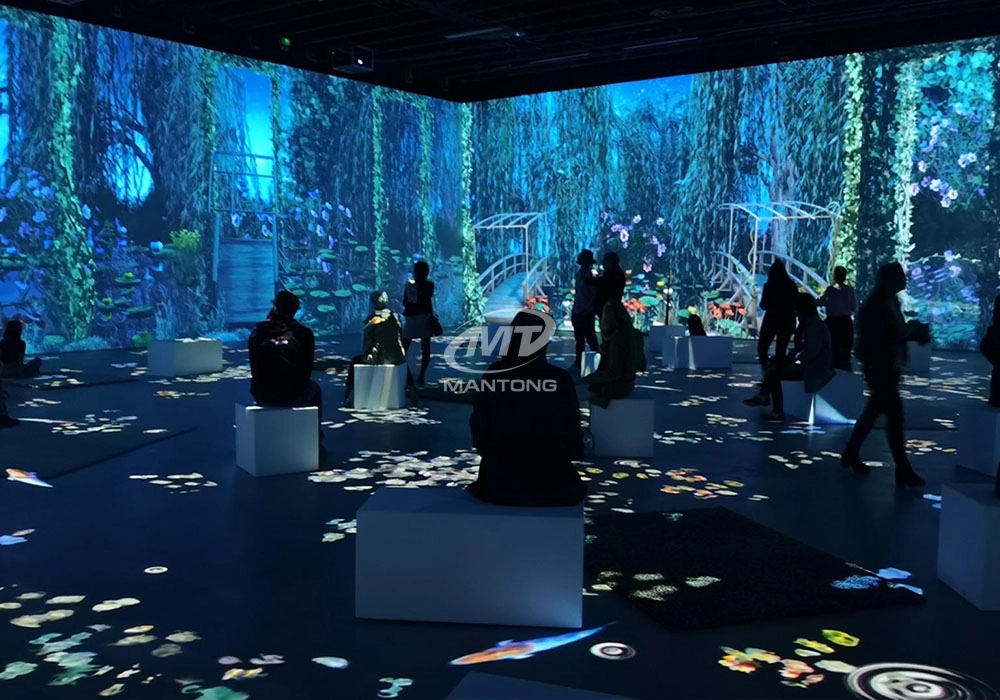
Mantong 6500LM High-Lumen Projector for Large-Scale Immersive Room Projection
Transform any space with Mantong's immersive projection mapping systems. Our high-lumen projectors (up to 6500 LM) and custom software create captivating interactive experiences for floors and walls. Ideal for museums, events, retail, and hospitality. Each kit includes professional ceiling mounting and 80+ pre-loaded video contents and is backed by a 12-month warranty and CE certification. We offer full customization and support to bring your vision to life.
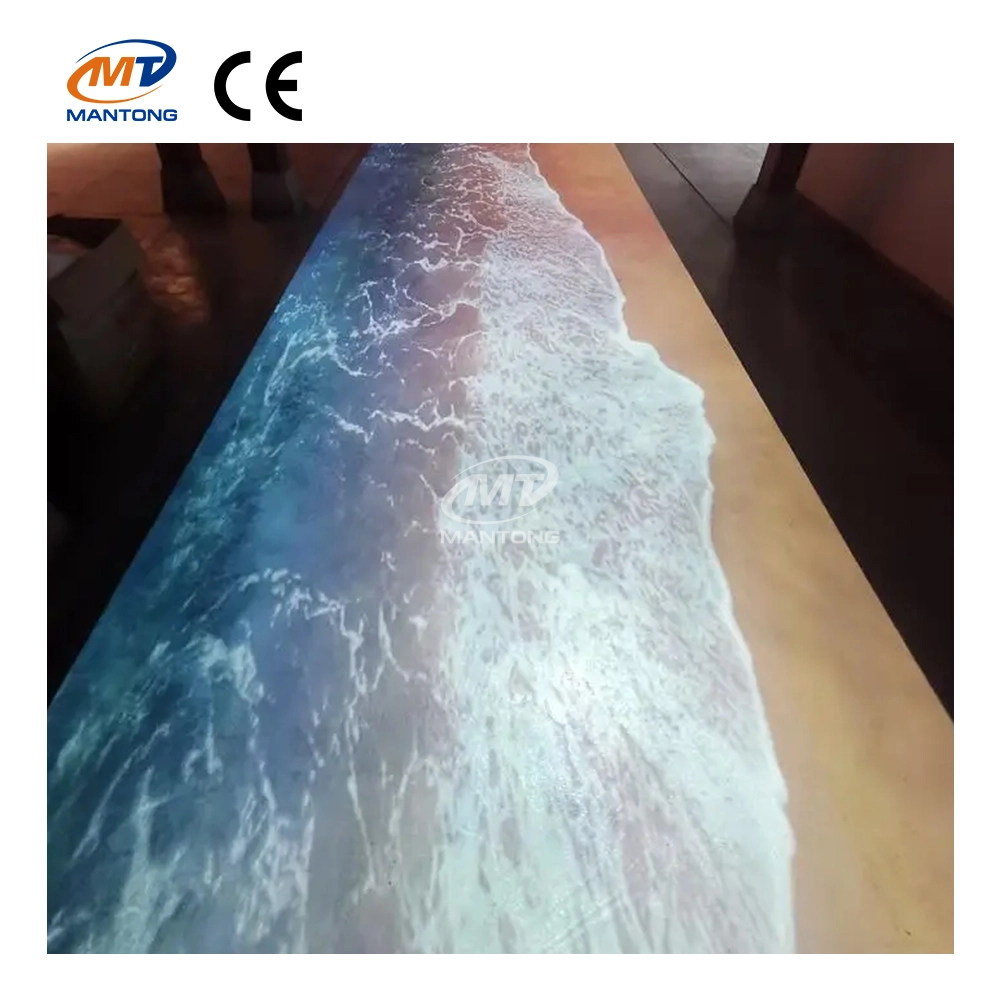
Indoor Interactive Floor Projector System - Customized Design & Installation Support
Indoor interactive floor projections display dynamic themed videos on the floor, commonly used in venues aiming to enhance brand influence or attract foot traffic, such as restaurants, hotel corridors, and brand car retail stores.
By using projectors and compatible software, the interactive content is projected onto the floor, encouraging engagement between people and the projected visuals. A single 5500-lumen indoor floor projector can cover an area of 5 m × 3 m. Typically, each project will use at least 3 units to ensure broad coverage and optimal visual effects.
We also offer customized design and installation support to enhance the interactive experience for your venue.
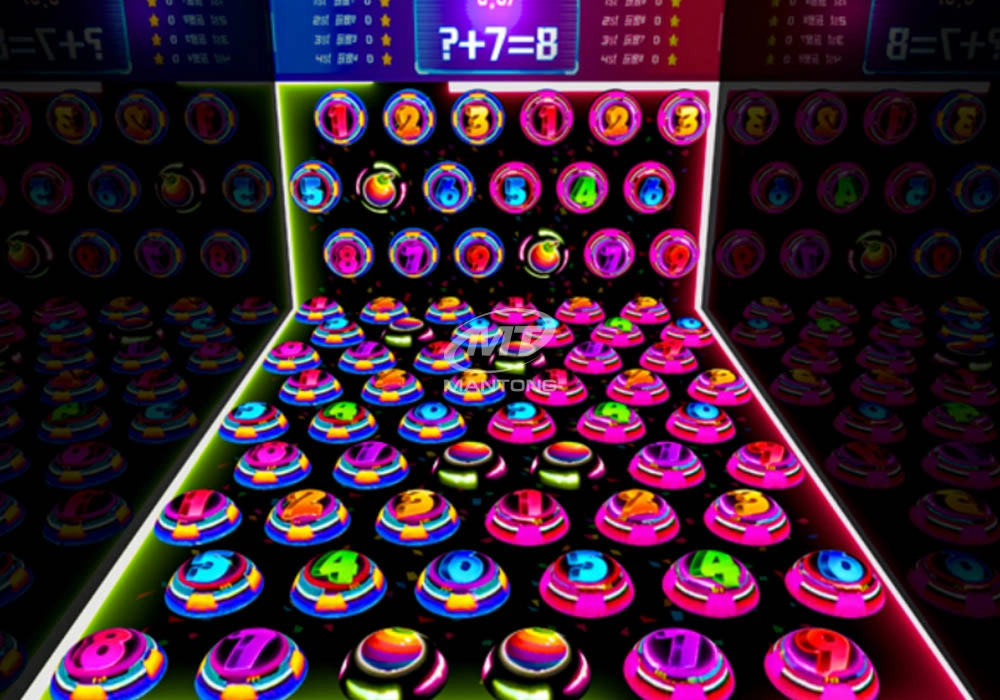
Amusement Rapidly Rotating Bouncing Sphere Interactive Wall Floor Projection Sports Games
Rapidly Rotating Bouncing Sphere is an interactive space where participants jump on rotating spheres. As they step on it, the spheres surface will show special interactivity
Jumping on spheres of the same color in succession causes them to pop, releasing light particles. The more consecutive jumps, the greater the reward—caterpillars appear, and eventually, all spheres of that color burst, filling the space with light and even more caterpillars.
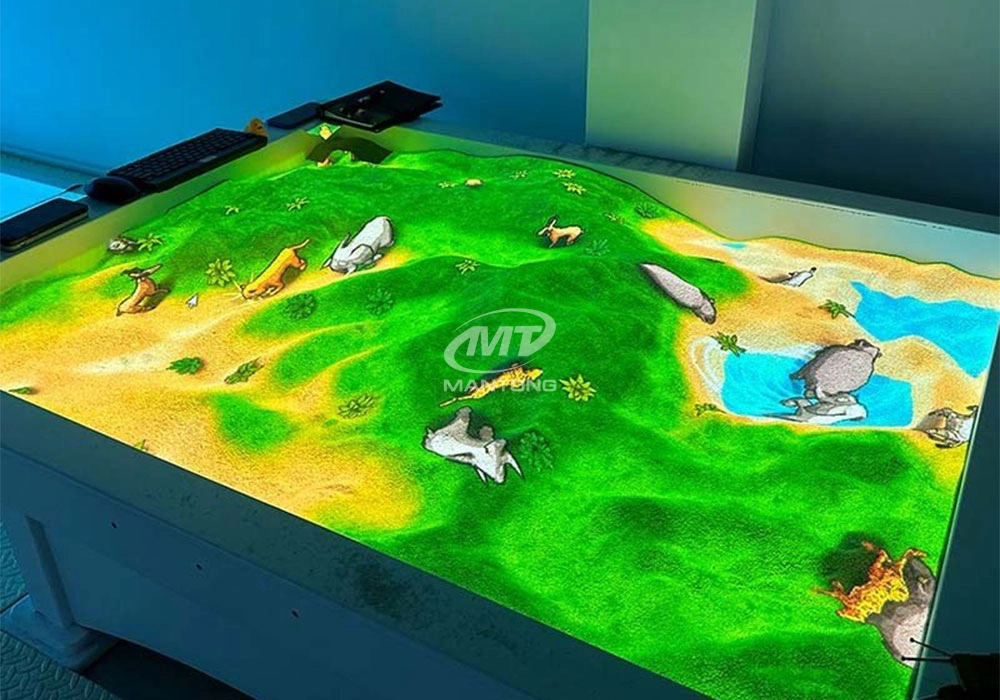
Interactive Sandbox Projection Mapping Games For Kids Play Park
Bring imagination to life with interactive sandbox projection mapping games designed for kids’ play parks. Using cutting-edge projection technology and real-time motion sensing, children can dig, build, and explore virtual worlds directly in the sand. Educational, engaging, and endlessly fun — it’s the perfect blend of play and learning.

Kaida Business Center, Shixin Road, Panyu District,Guangzhou City, Guangdong Province, China.
ManTong
ManTong
ManTong