
Interactive Projector Games Trends Buyers Must Know
- Market drivers and common application scenarios
- Why demand for interactive experiences is rising
- Top use cases and user expectations
- Evidence and industry references
- Technology trends shaping interactive projector games
- Sensor fusion: cameras, LiDAR and depth sensors
- Advances in projection hardware: lasers, brightness and edge blending
- Software platforms and real-time engines
- Buying guide: technical specs, costs and operational considerations
- Key technical specifications to prioritize
- Comparing common projection approaches
- Cost structure and ROI considerations
- Operational best practices and content strategy
- Designing for resilience and uptime
- Content lifecycle: templates, analytics and A/B testing
- Accessibility, safety and compliance
- Mantong Digital — Manufacturer profiles and why it matters
- Who we are and what we offer
- Core competencies and product lines
- Why choose a vertically integrated manufacturer
- FAQ — Common buyer questions
- 1. What exactly are interactive projector games and where work best?
- 2. How do I choose between floor projection and wall projection?
- 3. What are the maintenance needs of interactive projector games?
- 4. Can these systems run outdoors?
- 5. How do I measure ROI for interactive projector games?
- 6. How long does it take to deploy a typical installation?
- 7. Are there standard safety and accessibility guidelines to follow?
I have spent over a decade working with museums, retail brands, entertainment venues and education providers to design and deploy immersive systems. In this article I summarize the trends every buyer should know about interactive projector games, focusing on practical selection criteria, technology trade-offs, and measurable business outcomes. My goal is to help you evaluate options, avoid common pitfalls, and specify systems that deliver consistent, scalable experiences.
Market drivers and common application scenarios
Why demand for interactive experiences is rising
Engagement metrics across retail, museums and public entertainment are increasingly tied to interactive experiences. My clients consistently report longer dwell times and higher conversion when audiences can touch, move or otherwise affect projected content. This is especially true for interactive projector games in family entertainment centers, children’s museums and experiential retail, where the direct interaction drives repeat visits and social sharing.
Top use cases and user expectations
The most successful use cases blend physical activity, social interaction and clear goals. Typical deployments include interactive floors for active play, wall installations for collaborative storytelling, and projection mapping in pop-up activations. Buyers expect seamless detection, robust tracking under variable lighting, and content that is easy to update. When I design solutions I prioritize intuitive interactions and measurable KPIs such as time-on-activity, repeat plays and social shares.
Evidence and industry references
Projection mapping and projection-based experiences are now well-established in both research and practice; see the general overview on projection mapping at Wikipedia and broader augmented reality implications at Wikipedia. These sources help contextualize how interactive projection integrates with AR and experiential design.
Technology trends shaping interactive projector games
Sensor fusion: cameras, LiDAR and depth sensors
Modern interactive projector games rely on sensor fusion to detect players and interpret gestures. I often combine wide-angle RGB cameras with depth sensors (structured light or time-of-flight) for reliable tracking across crowded scenes. For outdoor or high-ambient-light situations I recommend LiDAR or active IR systems to maintain consistent performance.
Advances in projection hardware: lasers, brightness and edge blending
Laser light sources have become mainstream for commercial projection, offering longer life, better color stability and higher usable lumen output. When specifying systems for interactive projector games, prioritize ANSI lumen ratings and contrast that match your installation scale. For large canvases or multi-projector setups, robust edge blending and geometric correction are essential. Technical overview on projectors and lumen standards is available at Video projector (Wikipedia).
Software platforms and real-time engines
Real-time graphics engines (Unity, Unreal) and specialized middleware for projection mapping now enable rapid iteration of interactive content. I recommend platforms that support modular update workflows so operators can push content changes without deep developer involvement. Open standards and APIs accelerate integration with third-party sensors, POS systems and analytics.
Buying guide: technical specs, costs and operational considerations
Key technical specifications to prioritize
When evaluating systems for interactive projector games, I focus on these specifications: brightness (ANSI lumens), throw ratio, resolution, latency, tracking accuracy, and IP rating for outdoor use. Low-latency rendering and sub-30ms tracking loop are crucial to avoid perceptible lag in kinetic interactions. Also consider maintenance: laser projectors reduce lamp-replacement downtime and total cost of ownership.
Comparing common projection approaches
Below is a concise comparison of common interactive projection approaches I advise clients to review before purchase:
| Approach | Typical use | Strengths | Limitations |
|---|---|---|---|
| Interactive floor projection | Playgrounds, museums, malls | High engagement, encourages movement; scalable | Requires flat surfaces; sensitive to ambient light and occlusion |
| Interactive wall projection | Exhibits, ads, education | Good for collaboration and storytelling; easy installation | Limited throw distance in small spaces; shadowing can occur |
| Projection mapping (3D) | Events, facades, product launches | Striking visuals; works on complex geometry | Complex calibration; higher setup cost |
| Augmented projection (AR hybrid) | Interactive retail, training | Combines physical props with digital layers; adaptable | Integration complexity; higher software development effort |
These categories often overlap in projects that include multiple zones or mixed-interaction formats. For specific lumen, throw ratio, and optical specs consult manufacturer datasheets and independent reviews; video projector basics are summarized at Wikipedia.
Cost structure and ROI considerations
Costs break down into hardware, installation/calibration, content creation, ongoing support, and analytics. In my experience the smartest investments are modular hardware that allows content reuse, and platforms that simplify content updates. Measure ROI via increased ticket sales, dwell time, or ancillary revenue (merchandise, F&B). Establish baseline KPIs before deployment to quantify uplift.
Operational best practices and content strategy
Designing for resilience and uptime
Operational reliability is non-negotiable in high-traffic installations. I mandate redundant network paths, scheduled health checks for projector brightness and sensor calibration, and accessible mounting for maintenance. For outdoor interactive projector games, choose enclosures rated for weather (IP65+) and consider temperature management for projector electronics.
Content lifecycle: templates, analytics and A/B testing
Successful deployments are data-driven. I set up analytics to track participation, session length, and interaction heatmaps. Use these metrics to iterate content—A/B test themes, difficulty levels, and reward mechanics. Reusable templates and modular assets reduce content costs and let operators localize or seasonalize experiences quickly.
Accessibility, safety and compliance
Design interactions with accessibility in mind: provide low-effort modes, clear visual contrast, and alternatives for users with mobility challenges. For child-focused interactive projector games, verify safety standards and ensure surfaces are slip-resistant and projectors are mounted out of reach. Consult applicable local regulations and building codes for public installations.
Mantong Digital — Manufacturer profiles and why it matters
Who we are and what we offer
Mantong Digital is a one-stop interactive projection solution provider and direct manufacturer based in Guangzhou, China, with over 10 years of industry experience. We are dedicated to providing innovative, flexible and cost-effective projection solutions, offering both hardware and software to meet various needs. Our website is https://www.mtprojection.com/.
Core competencies and product lines
At ManTong, we specialize in providing customized solutions for a wide range of application scenarios through innovative projection technology. Whether it's immersive experiences, interactive entertainment or outdoor lighting and projection shows, our solutions can transform your ideas into stunning visual effects. Our projection technology provides customized solutions for a variety of scenarios, delivering immersive and interactive visual experiences.
- Immersive projection
- Interactive floor projection
- Interactive projection and wall projection
- Immersive rooms and 3D projection
- Interactive projector games and projection shows
- Interactive projection mapping
We are now looking for business partnerships worldwide. Our vision is to become the world's leading interactive projection manufacturer. As a direct manufacturer, Mantong offers competitive pricing, OEM capabilities, and tighter quality control compared with resellers. We also provide end-to-end services including site survey, system design, content production and after-sales support—advantages clients repeatedly cite when choosing us over fragmented suppliers.
Why choose a vertically integrated manufacturer
Choosing a manufacturer like Mantong reduces risk: shortened lead times, customized optics or mounting solutions, and firmware-level support that third-party resellers cannot easily provide. I’ve seen projects succeed where manufacturers were willing to iterate on software for stability and where hardware tolerances were adjusted to site constraints. That level of cooperation materially improves uptime and guest experience.
For consultations, custom quotes or partnership discussions, contact us via Mantong Digital.
FAQ — Common buyer questions
1. What exactly are interactive projector games and where work best?
Interactive projector games are projection-based experiences that respond to user presence or actions—typically through cameras, sensors or touchless interaction. They work best in public venues that prioritize engagement: family entertainment centers, museums, retail pop-ups, and events.
2. How do I choose between floor projection and wall projection?
Choose floor projection for active play and movement-based interactions; choose wall projection for collaboration and storytelling. Consider ambient light, available mounting height, and flooring material. I recommend prototyping both if your budget allows.
3. What are the maintenance needs of interactive projector games?
Maintenance includes periodic sensor recalibration, projector cleaning, firmware updates, and content refreshes. Laser projectors reduce lamp maintenance. Establish SLAs with your supplier for rapid on-site service or hot-swappable components for high-traffic venues.
4. Can these systems run outdoors?
Yes—if you specify weatherproof enclosures, higher brightness (ANSI lumens), and sensors suited for variable ambient light. Outdoor deployments often use laser projectors, higher IP-rated housings, and active cooling strategies.
5. How do I measure ROI for interactive projector games?
Define KPIs such as dwell time, ticket conversion, average spend per guest, and repeat visitation. Instrument the system with analytics to capture session counts, durations and interaction types; run A/B tests to quantify lift from new content or placement.
6. How long does it take to deploy a typical installation?
Small installations (single floor or wall) can be deployed in 2–6 weeks including content adaptation. Larger multi-projector or mapped installations typically require 8–16 weeks for engineering, content creation and calibration.
7. Are there standard safety and accessibility guidelines to follow?
Yes—consult local building codes and accessibility standards. I also recommend following ergonomic best practices to avoid overstimulation and to provide alternative interaction modes for visitors with differing abilities.
If you have more specific use cases or would like a tailored consultation, contact Mantong Digital for a custom proposal. Visit https://www.mtprojection.com/ to view products and request a quote.
Contact us now to discuss partnerships, custom solutions, or to schedule a site survey. Let’s design interactive projector games that delight your audience and deliver measurable business value.
Best Immersive Meeting Room Design Ideas to Transform Team Collaboration manufacturers and supplier brands
How to Choose the 3d building projection manufacturer and supplier in China?
Buyer's Guide: Interactive Floor Projector for Home Installations
How to Choose the immersive projection rooms manufacturer and supplier in China?
One-Stop Projection Solution Provider Since 2011
How to Write an Interactive-Effect Video Customisation Script ?
① Project Background: Briefly introduce the context in which this interactive scene will be used (e.g., exhibition, museum,
event space, children's area). Example: This scene is part of the “Underwater World” zone in a children's science museum,
designed to be engaging and exploratory.
②Visual Style / Atmosphere: What kind of visual mood are you aiming for? Please describe the color scheme, style, and any
references. it should focus solely on describing the visual aspects of the scene, supported by relevant charts or reference
images.
③ Interaction Points Overview:List each interactive hotspot along with the effect you'd like to trigger when the user
touches or clicks the area. example: when player touch the clownfish, it will swims away with bubble trail (animation effect)
and produce the bubble sound ( sound effect requirement )
④ Static Visual Reference:including but not limited to background image/video, a list of major visual elements (e.g., coral,
rocks, seaweed, fish), which elements should be interactive?
How to install the projection equipment ?
1) Install the projector in a suitable position. We will provide you with a hanger, which you need to fix on the ceiling with
screws.
2) Connect projectors, computers and other accessories through wires.
3) After completing the above 2 steps, we will carry out the edge blending steps. Our team can complete it through remote
control.
In general, installation instructions for each project need to be specified on a project-by-project basis. The above is for
reference only.
What's Immersive Projection ?
Immersive projection refers to a technology that creates a captivating and all-encompassing visual experience for viewers by projecting images or videos onto large surfaces, such as walls, floors, or even entire rooms. This technology aims to immerse the audience in a simulated environment, blurring the boundaries between the physical and virtual worlds.
Are you trader or manufacturer ?
We are direct manufacturer who specialize in providing one-stop solution for different outdoor & indoor projection project with our stable software and qualified projectors
What information do you need to know before making the proposal/solution?
We know that everyone wants to know the price, but the price of our products is determined by many factors since most of our products are custom, so no ready price list. In order to fast understand what you need, can you send us an inquiry like this?
For example: I am really interested in your immersive projection products, we are a company in the USA and want to install some in my restaurant. It is about 50 meters long, and 5m in width. Projection size you can decide but the length should be not less than 20 meters. We want some content about SeaWorld because our place is all about the sea. Thank you.
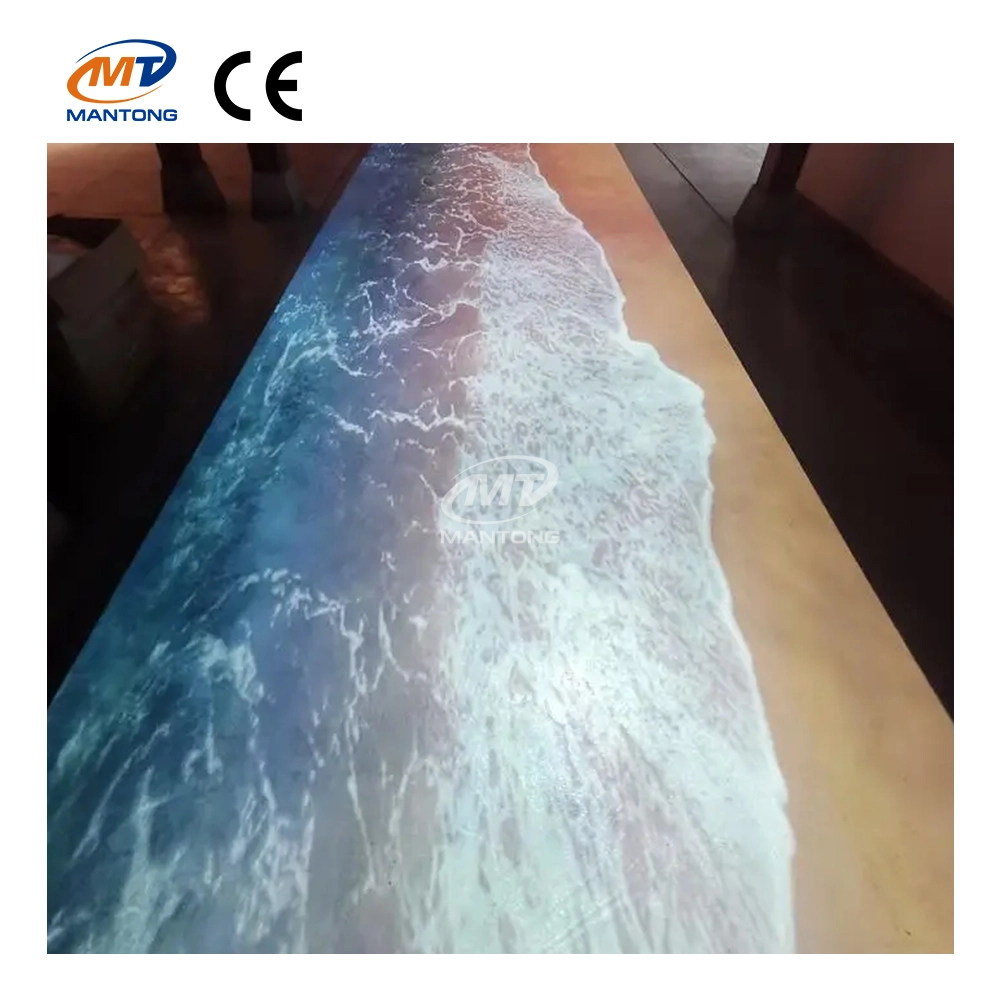
Indoor Interactive Floor Projector System - Customized Design & Installation Support
Indoor interactive floor projections display dynamic themed videos on the floor, commonly used in venues aiming to enhance brand influence or attract foot traffic, such as restaurants, hotel corridors, and brand car retail stores.
By using projectors and compatible software, the interactive content is projected onto the floor, encouraging engagement between people and the projected visuals. A single 5500-lumen indoor floor projector can cover an area of 5 m × 3 m. Typically, each project will use at least 3 units to ensure broad coverage and optimal visual effects.
We also offer customized design and installation support to enhance the interactive experience for your venue.
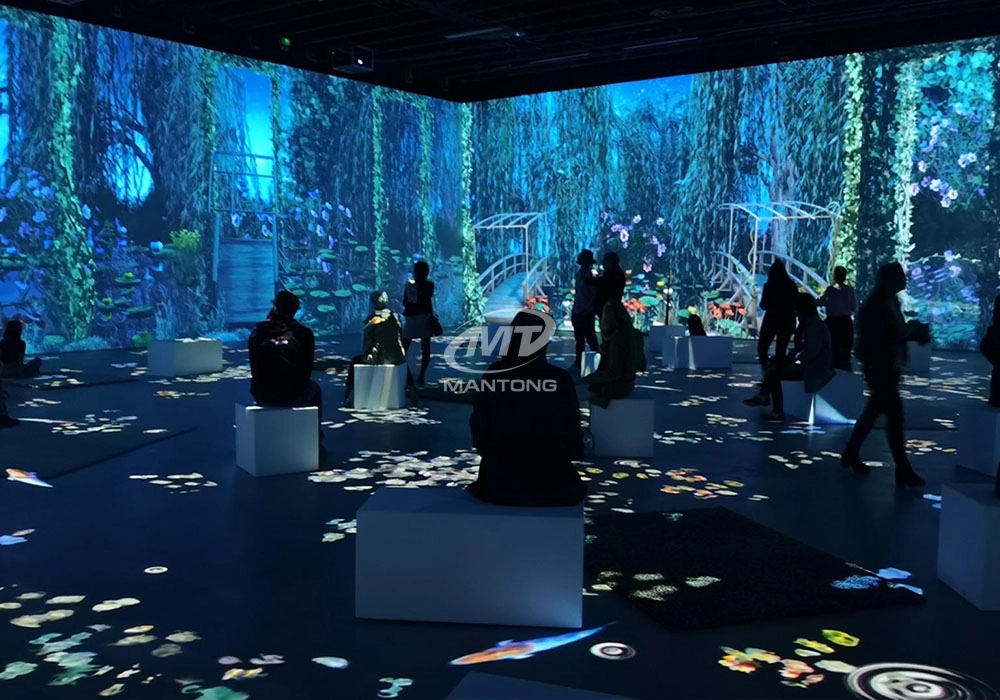
Mantong 6500LM High-Lumen Projector for Large-Scale Immersive Room Projection
Transform any space with Mantong's immersive projection mapping systems. Our high-lumen projectors (up to 6500 LM) and custom software create captivating interactive experiences for floors and walls. Ideal for museums, events, retail, and hospitality. Each kit includes professional ceiling mounting and 80+ pre-loaded video contents and is backed by a 12-month warranty and CE certification. We offer full customization and support to bring your vision to life.
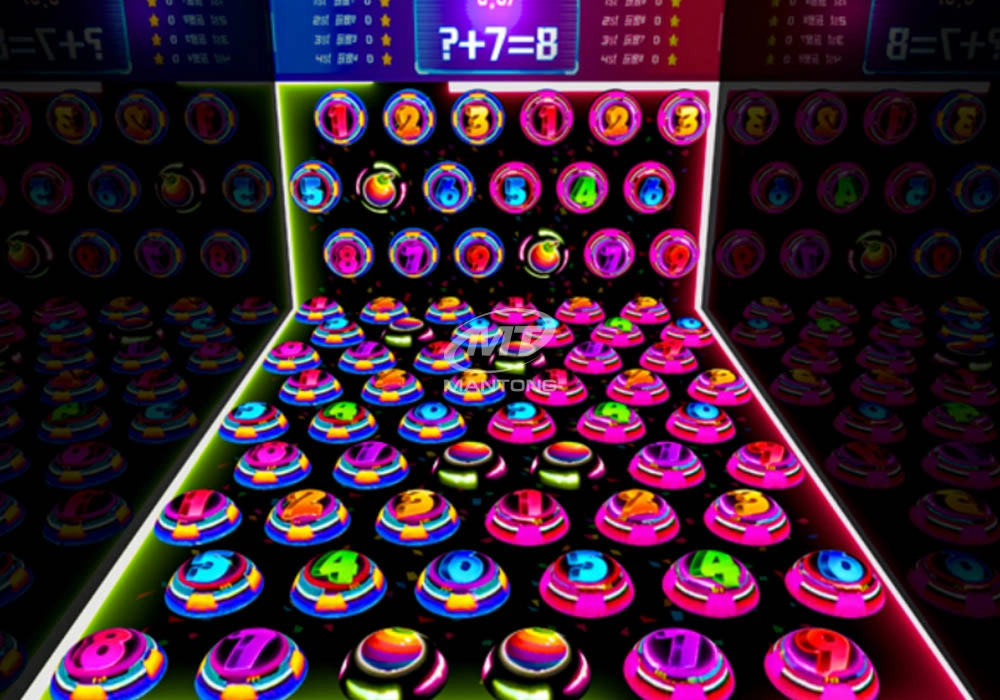
Amusement Rapidly Rotating Bouncing Sphere Interactive Wall Floor Projection Sports Games
Rapidly Rotating Bouncing Sphere is an interactive space where participants jump on rotating spheres. As they step on it, the spheres surface will show special interactivity
Jumping on spheres of the same color in succession causes them to pop, releasing light particles. The more consecutive jumps, the greater the reward—caterpillars appear, and eventually, all spheres of that color burst, filling the space with light and even more caterpillars.
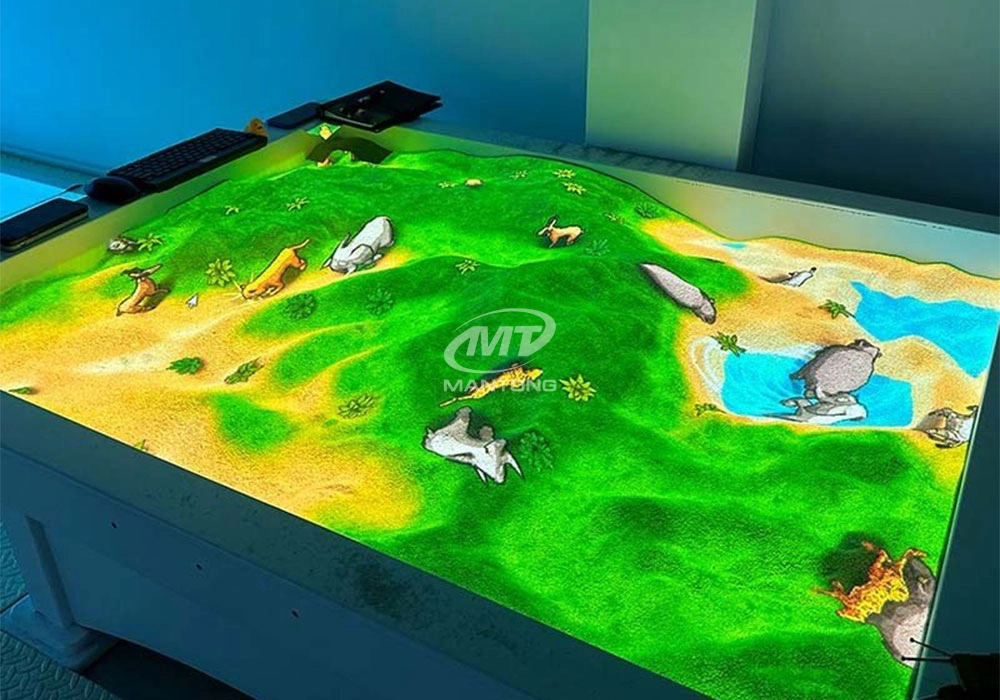
Interactive Sandbox Projection Mapping Games For Kids Play Park
Bring imagination to life with interactive sandbox projection mapping games designed for kids’ play parks. Using cutting-edge projection technology and real-time motion sensing, children can dig, build, and explore virtual worlds directly in the sand. Educational, engaging, and endlessly fun — it’s the perfect blend of play and learning.

Kaida Business Center, Shixin Road, Panyu District,Guangzhou City, Guangdong Province, China.
ManTong
ManTong
ManTong