
Future outlook: interactive projector market to 2035
- Why the interactive projector market matters to businesses and integrators
- Market definition and scope: what we mean by interactive projector market
- Key demand drivers shaping the interactive projector market to 2035
- Technology trends and innovations affecting market growth
- Applications and verticals: where interactive projectors will gain ground
- Comparing interactive projector use-cases
- Competitive landscape: projector OEMs, integrators and software players
- Supply chain and manufacturing considerations to 2035
- Scenario-based outlook to 2035 for the interactive projector market
- Investment priorities for vendors and integrators in the interactive projector market
- Mantong Digital — profile, strengths and product focus (integration for buyers and partners)
- Strategic recommendations for buyers and investors
- Risks and headwinds for the interactive projector market
- Frequently Asked Questions (FAQ)
- Contact and next steps
- References and data sources
Why the interactive projector market matters to businesses and integrators
The interactive projector market is at the intersection of projection hardware, computer vision, and immersive software. For enterprises, educators, museums, and venue operators, interactive projection offers a cost-effective path to large-scale, engaging displays without the weight and footprint of dedicated LED walls or banks of flat panels. Understanding the market to 2035 helps procurement teams, product managers, and technology investors plan capital expenditure, product roadmaps and partnerships in an era of faster technological change.
Market definition and scope: what we mean by interactive projector market
When this article refers to the interactive projector market, it covers projection systems (laser, LED, or lamp-based engines) combined with interaction layers—typically camera-based sensing, structured light, infrared sensors, or embedded touch-on-projection software—that enable users to interact with projected content. This includes:
- Interactive floor projection and interactive wall projection systems
- Immersive projection rooms and 3D projection mapping with interactivity
- Interactive projection games and public-engagement installations
- Projection shows and outdoor mapped projection systems when paired with interaction modules
These solutions can be sold as turnkey systems (hardware + software), OEM modules for integrators, or bespoke installations for events and attractions.
Key demand drivers shaping the interactive projector market to 2035
Several secular trends will drive demand for interactive projectors over the next decade and beyond:
- Cost-effective large-format engagement: Compared to LED walls, projection scales more cheaply to very large sizes, making it attractive for museums, retail façades and themed entertainment.
- Education and hybrid learning: Schools and universities continue to invest in interactive learning environments that support collaborative, tactile experiences.
- Experiential retail and brand activations: Brands use projection for immersive storytelling that adapts to audiences in real time.
- Improving projection technology: Laser light sources, higher lumen efficiency, and built-in edge blending make long-term operation simpler and maintenance cheaper.
- Advances in sensing and software: Computer vision, low-latency tracking and AI-driven content adaptation improve interaction fidelity and reduce calibration time.
- Environmental considerations: Laser and LED projectors consume less energy and reduce consumable waste versus lamp-based systems, aligning with sustainability goals.
Technology trends and innovations affecting market growth
The next generation of interactive projection systems will be influenced by both component-level improvements and software/platform advances:
- Laser and solid-state light engines: Longer life, stable color and higher brightness will expand projection use outdoors and in ambient-lit environments.
- Embedded sensing and AI: Onboard depth sensors and machine-learning algorithms will enable touchless interaction, gesture recognition and audience analytics.
- Content platforms and SDKs: Easier-to-use development tools will lower integration costs and increase customization for verticals like edutainment and retail.
- Cloud and networked experiences: Distributed projection networks will support synchronized shows and remote content management.
- Projection mapping automation: Faster surface scanning and auto-warp/auto-blend will reduce installation time and labor costs.
Applications and verticals: where interactive projectors will gain ground
The most active verticals through 2035 will be:
- Education: Interactive floors and walls for early childhood, K-12 and higher education labs.
- Museums, science centers and attractions: Immersive exhibits that respond to visitor motion and behavior.
- Retail and brand activations: Window mapping, in-store floors, and pop-up experiential campaigns.
- Entertainment and themed environments: Projection shows, immersive rooms, and location-based entertainment (LBE) centers.
- Events and live shows: Scalable projection for stages and outdoor façades with interactive audience elements.
Comparing interactive projector use-cases
| Use-case | Value delivered | Typical technology stack | Buyer priorities |
|---|---|---|---|
| Education (classrooms/labs) | Collaborative learning, engagement, low cost per sq. m. | Short-throw laser projector + floor/wall interaction SDK + camera sensor | Reliability, low maintenance, ease of use |
| Museums & attractions | Immersive storytelling, audience dwell-time increase | Multiple blended projectors + mapping server + tracking sensors | Image quality, content flexibility, uptime |
| Retail activations | Brand impact, real-time analytics, social sharing | High-lumen projector + interactive middleware + analytics | Deployment speed, visual impact, ROI measurement |
Competitive landscape: projector OEMs, integrators and software players
The interactive projector market is comprised of several types of players:
- Projection engine manufacturers: Provide the optical/light engine — laser technologies are now mainstream for commercial systems.
- Interactive system integrators: Combine projectors, sensors and software into turnkey installations.
- Software and content providers: Offer SDKs, content libraries and experience platforms that enable interactivity and analytics.
- OEM module suppliers: Provide compact interactive modules for AV integrators and furniture makers.
Success factors for suppliers include: reliability of optics, ease of calibration, latency of interaction, openness of APIs, and cost of ownership. Manufacturers that combine hardware and software with strong service capabilities will win in large-scale and repeatable deployments.
Supply chain and manufacturing considerations to 2035
Manufacturing and supply-chain resilience will be a competitive differentiator. Key considerations:
- Component sourcing: Laser diodes, optics and sensors can be constrained; suppliers with diversified sourcing mitigate risk.
- Local manufacturing: Regional manufacturing hubs reduce logistics cost and shorten lead times for large installations.
- After-sales service: Field-replaceable modules and remote diagnostics reduce total cost of ownership.
Scenario-based outlook to 2035 for the interactive projector market
Absolute market sizing depends on starting baselines and adoption rates. Below is a scenario matrix to help planners stress-test strategies. These scenarios are illustrative and based on transparent CAGR assumptions (no single third-party report was used as the sole input):
| Scenario | Assumed CAGR (2024–2035) | Projected growth multiplier (11 years) | Implication for vendors |
|---|---|---|---|
| Conservative | 4% CAGR | ~1.58x | Focus on cost control and aftermarket services |
| Baseline | 8% CAGR | ~2.33x | Invest in productized solutions and channel partnerships |
| Aggressive | 12% CAGR | ~3.48x | Scale production, expand R&D in sensing and cloud platforms |
Use these multipliers to convert any credible 2024 baseline market size into a 2035 estimate consistent with different adoption trajectories. Always treat absolute dollar figures as dependent on initial baselines and segmentation definitions.
Investment priorities for vendors and integrators in the interactive projector market
To compete through 2035, leading vendors should prioritize:
- Modular, serviceable hardware: Reduce field downtime and extend lifecycle value.
- Open, well-documented SDKs: Encourage a developer ecosystem for vertical applications and rapid customization.
- Edge intelligence and analytics: Provide usage metrics and adapt experiences to audience behavior.
- Turnkey content libraries: Lower buyer friction by offering ready-to-deploy experiences for common verticals.
- Global logistics and local partners: Combine manufacturing efficiency with local installation and maintenance networks.
Mantong Digital — profile, strengths and product focus (integration for buyers and partners)
Mantong Digital is a one-stop interactive projection solution provider and direct manufacturer based in Guangzhou, China, with over 10 years of industry experience. We are dedicated to providing innovative, flexible and cost-effective projection solutions, offering both hardware and software to meet various needs.
At ManTong, we specialize in providing customized solutions for a wide range of application scenarios through innovative projection technology. Whether it's immersive experiences, interactive entertainment or outdoor lighting and projection shows, our solutions can transform your ideas into stunning visual effects. Our projection technology provides customized solutions for a variety of scenarios, delivering immersive and interactive visual experiences.
Core product and capability highlights:
- Immersive projection systems and immersive room solutions designed for museums and themed attractions.
- Interactive floor projection and interactive wall projection systems optimized for low-latency touch and gesture response.
- 3D projection and interactive projection mapping services for façades and events.
- Interactive projection games and packaged content for education and retail experiences.
- Projection shows and outdoor systems with weather-hardened components.
Mantong's competitive advantages:
- Direct manufacturing: Cost control and faster iteration cycles versus non-manufacturer resellers.
- End-to-end offering: Hardware + software + installation support reduces vendor management for buyers.
- Customization capability: Deep experience in bespoke mapping and interactive content production.
- Global partnership focus: Seeking distributors, integrators and content partners worldwide.
Our vision is to become the world's leading interactive projection manufacturer. We are now looking for business partnerships worldwide. Learn more or contact us at https://www.mtprojection.com/
Strategic recommendations for buyers and investors
For buyers and investors planning through 2035:
- Prioritize total cost of ownership (light source lifespan, field serviceability) over simple upfront price.
- Choose suppliers with software roadmaps and APIs to avoid vendor lock-in and to support future content upgrades.
- Consider modular installations that can be scaled or re-purposed as use cases evolve.
- For integrators: invest in a content library and automation tools to reduce installation time and increase repeatability.
Risks and headwinds for the interactive projector market
Potential challenges include:
- Competition from increasingly affordable LED options for medium-sized installations.
- Sensory privacy and data-protection concerns when analytics and camera-based tracking are used in public spaces.
- Component supply constraints for laser diodes and sensors during cyclical demand spikes.
- Need for skilled integration labor for complex mapping and calibration projects.
Frequently Asked Questions (FAQ)
1. What is an interactive projector and how is it different from a regular projector?
An interactive projector pairs projection optics with sensing and software so users can interact (touch, gesture or movement) with the projected content. Unlike a regular projector that is a passive display, an interactive projector enables two-way engagement and often includes SDKs for custom content.
2. Which sectors will drive the most growth in the interactive projector market through 2035?
Education, museums and attractions, retail experiential, and live events are expected to be the primary growth sectors due to their need for large-format, high-impact interactive experiences.
3. Are interactive projectors suitable for outdoor use?
Yes—modern high-lumen, laser-based projectors can be used outdoors, and with appropriate housings and mapping technology, interactive outdoor installations and façade projections are feasible. Weatherproofing and safety must be planned.
4. How should buyers evaluate total cost of ownership (TCO) for interactive projection systems?
Consider light-source lifetime, maintenance and spare-part strategy, software licensing, installation and calibration costs, and expected content refresh cadence. Systems with modular, field-replaceable parts and remote diagnostics usually reduce TCO.
5. Can interactive projection replace LED walls and interactive flat panels?
It depends on the use-case. Projection offers a cost-effective way to achieve very large displays and flexible surface mapping, while LED walls and flat panels may be preferable for pixel-critical signage or direct-view applications in bright ambient light. Many deployments are hybrid, mixing projection with LED and touch panels.
6. How can partners work with Mantong Digital?
Mantong seeks distribution, system integration and content partnerships worldwide. Visit https://www.mtprojection.com/ for product details and contact information to discuss OEM supply or turnkey solutions.
Contact and next steps
For procurement teams, integrators or investors seeking detailed product specs, case studies or partnership inquiries, contact Mantong Digital through our site: https://www.mtprojection.com/. Mantong can provide pilot projects, customized proposals and global deployment support.
References and data sources
- AVIXA (Audiovisual and Integrated Experience Association) — Industry trends and deployment guidance. https://www.avixa.org/ (accessed 2025-12-18)
- Wikipedia — Projector (display device). https://en.wikipedia.org/wiki/Projector_(display_device) (accessed 2025-12-18)
- Statista — Projection market and display technology trends. https://www.statista.com/ (accessed 2025-12-18)
- MarketsandMarkets — Reports on projection and display markets (for broad market trend context). https://www.marketsandmarkets.com/ (accessed 2025-12-18)
- Grand View Research — Projector market research and technology analysis. https://www.grandviewresearch.com/ (accessed 2025-12-18)
Note on data: The forecasts and scenarios in this article are qualitative and scenario-based to reflect uncertainty in baselines, segmentation and adoption rates. Readers planning capital or strategic decisions should commission a tailored market sizing using their own definitional boundaries and up-to-date third-party market reports.
Best How Interactive Projector Games Are Changing Entertainment Spaces manufacturers and supplier brands
Where to Buy interactive floor projection mapping
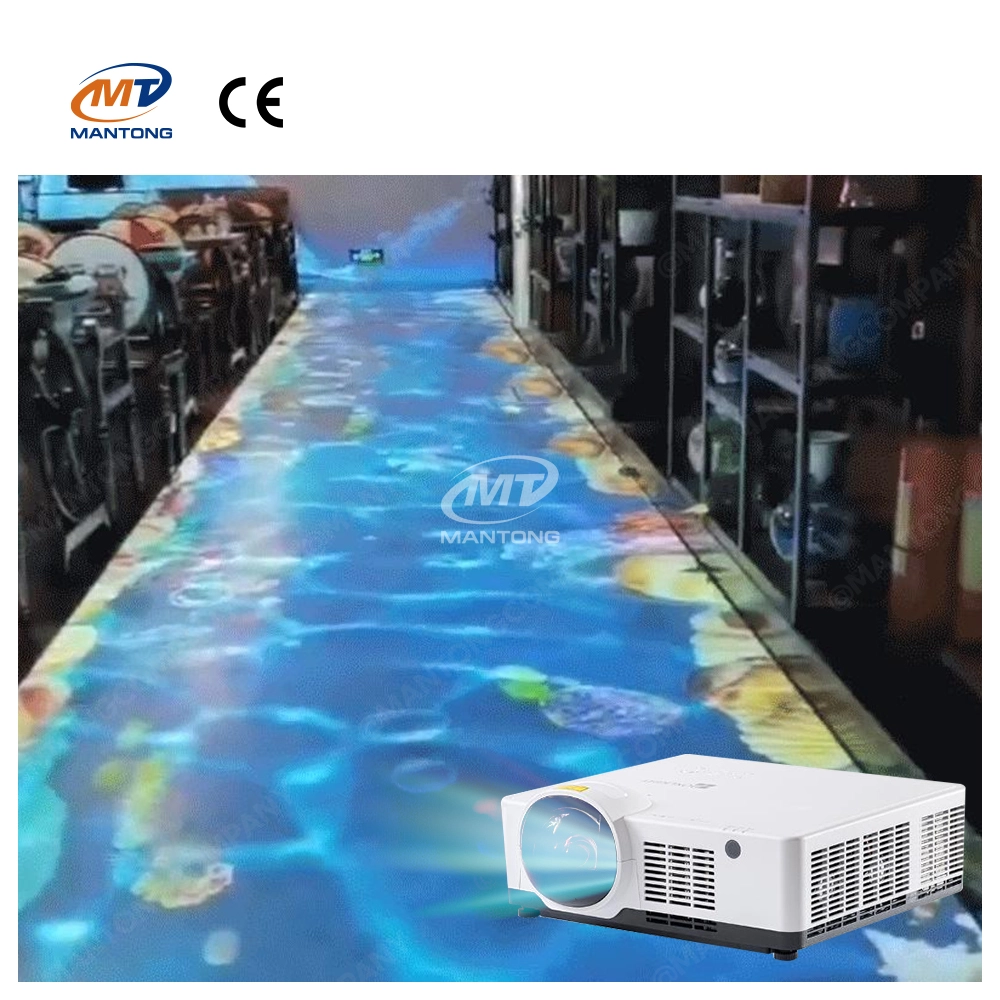
Interactive Floor Projector Solutions: Custom Design & Professional Installation
Interactive projector pricing trends and buyer's guide 2026
One-Stop Projection Solution Provider Since 2011
How to Write an Interactive-Effect Video Customisation Script ?
① Project Background: Briefly introduce the context in which this interactive scene will be used (e.g., exhibition, museum,
event space, children's area). Example: This scene is part of the “Underwater World” zone in a children's science museum,
designed to be engaging and exploratory.
②Visual Style / Atmosphere: What kind of visual mood are you aiming for? Please describe the color scheme, style, and any
references. it should focus solely on describing the visual aspects of the scene, supported by relevant charts or reference
images.
③ Interaction Points Overview:List each interactive hotspot along with the effect you'd like to trigger when the user
touches or clicks the area. example: when player touch the clownfish, it will swims away with bubble trail (animation effect)
and produce the bubble sound ( sound effect requirement )
④ Static Visual Reference:including but not limited to background image/video, a list of major visual elements (e.g., coral,
rocks, seaweed, fish), which elements should be interactive?
What information do you need to know before making the proposal/solution?
We know that everyone wants to know the price, but the price of our products is determined by many factors since most of our products are custom, so no ready price list. In order to fast understand what you need, can you send us an inquiry like this?
For example: I am really interested in your immersive projection products, we are a company in the USA and want to install some in my restaurant. It is about 50 meters long, and 5m in width. Projection size you can decide but the length should be not less than 20 meters. We want some content about SeaWorld because our place is all about the sea. Thank you.
What's the application of Immersive projection ?
It can be used in various venues, such as art exhibition, entertainment venues, educational institution, Wedding hall /Banquet/Bar,Yoga Studio and so on. It often involves advanced projection techniques, multimedia content, and interactive elements to engage and captivate the audience's senses.
What about the wall/floor material for the projection?
It’s recommended to choose a light-colored material with minimal reflectivity—pure white or light grey works best. the
common material is cement & plaster board
For optimal projection results, the surface should be free of any patterns or textures, as the projector will display content
directly onto it.
There are no specific material requirements; you may use any commonly available material in your local market, as long as it
meets the above conditions.
What's Immersive Projection ?
Immersive projection refers to a technology that creates a captivating and all-encompassing visual experience for viewers by projecting images or videos onto large surfaces, such as walls, floors, or even entire rooms. This technology aims to immerse the audience in a simulated environment, blurring the boundaries between the physical and virtual worlds.
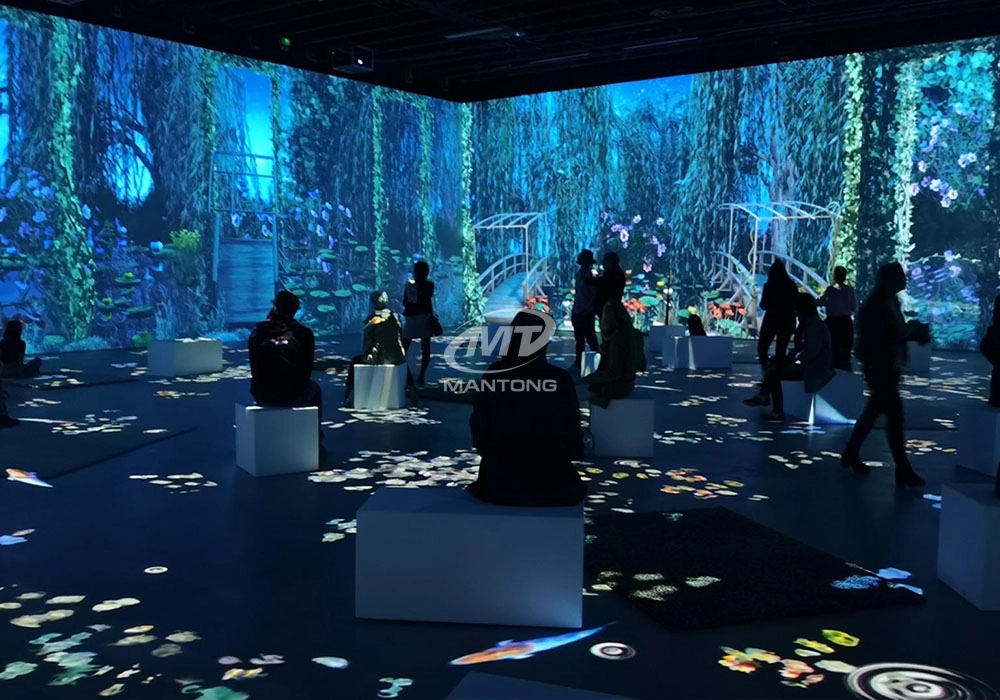
Mantong 6500LM High-Lumen Projector for Large-Scale Immersive Room Projection
Transform any space with Mantong's immersive projection mapping systems. Our high-lumen projectors (up to 6500 LM) and custom software create captivating interactive experiences for floors and walls. Ideal for museums, events, retail, and hospitality. Each kit includes professional ceiling mounting and 80+ pre-loaded video contents and is backed by a 12-month warranty and CE certification. We offer full customization and support to bring your vision to life.
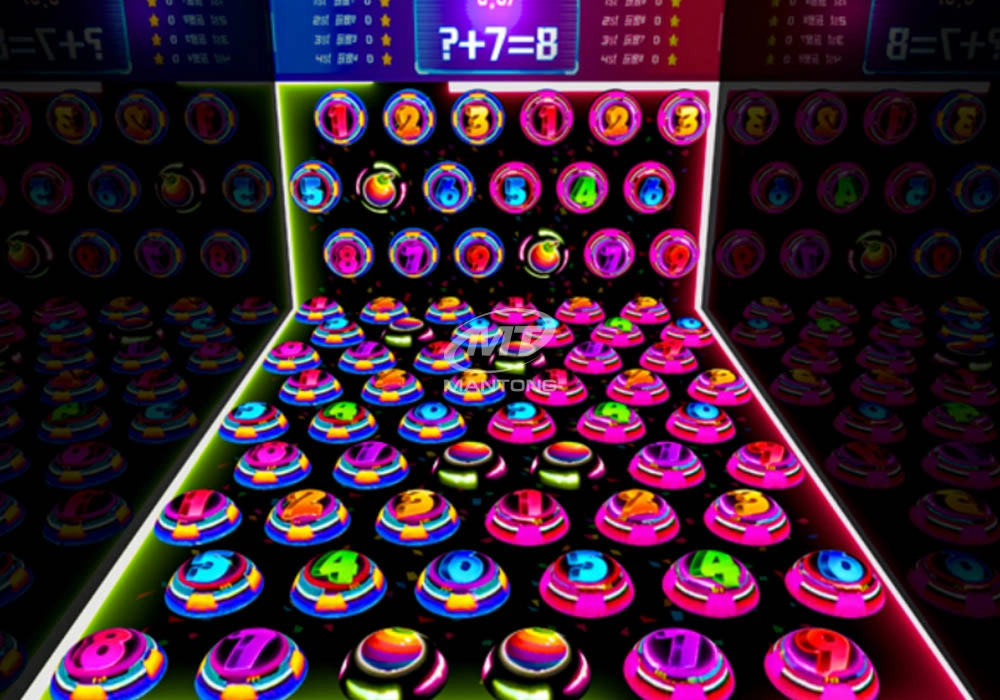
Amusement Rapidly Rotating Bouncing Sphere Interactive Wall Floor Projection Sports Games
Rapidly Rotating Bouncing Sphere is an interactive space where participants jump on rotating spheres. As they step on it, the spheres surface will show special interactivity
Jumping on spheres of the same color in succession causes them to pop, releasing light particles. The more consecutive jumps, the greater the reward—caterpillars appear, and eventually, all spheres of that color burst, filling the space with light and even more caterpillars.
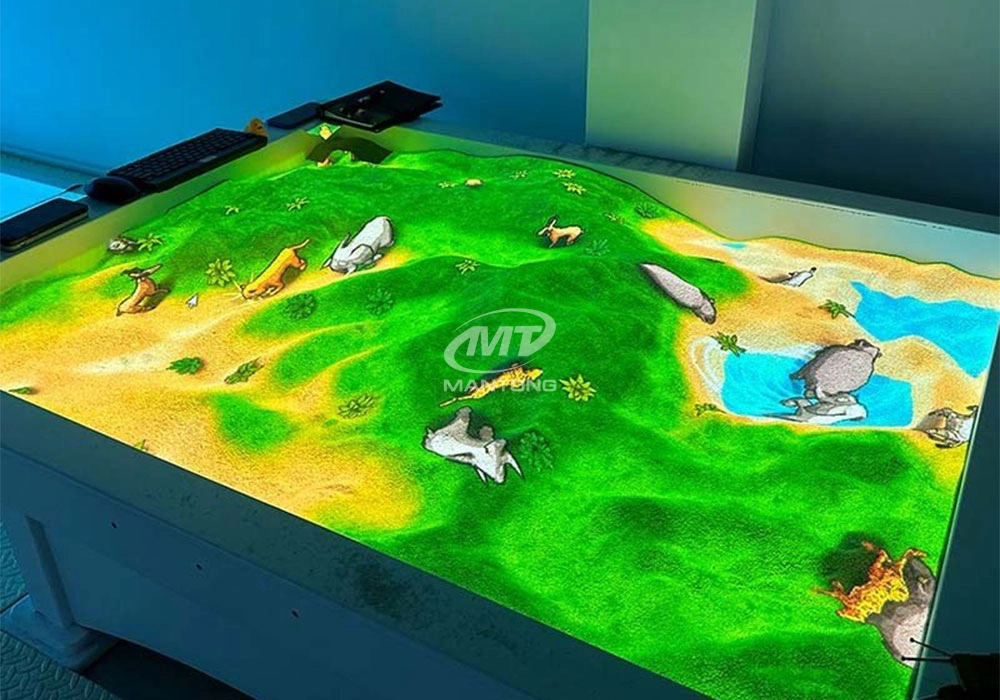
Interactive Sandbox Projection Mapping Games For Kids Play Park
Bring imagination to life with interactive sandbox projection mapping games designed for kids’ play parks. Using cutting-edge projection technology and real-time motion sensing, children can dig, build, and explore virtual worlds directly in the sand. Educational, engaging, and endlessly fun — it’s the perfect blend of play and learning.
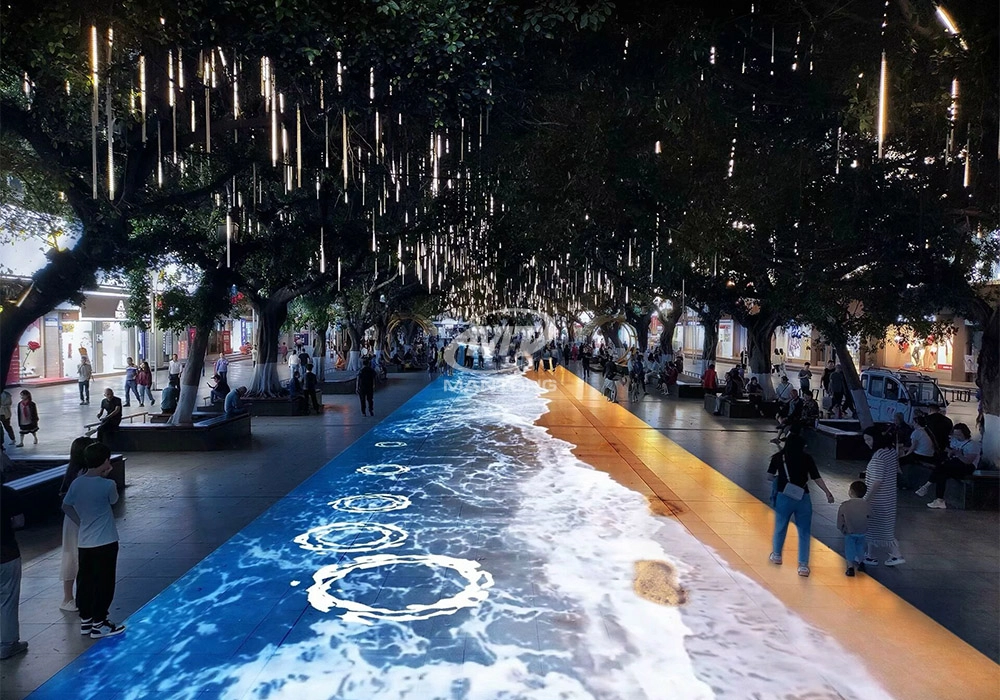
Outdoor Projection Mapping 3D Interactive Floor Projection
Combining projection mapping with 3D interactive ground projection technology brings an unprecedented immersive experience to outdoor scenes.

Kaida Business Center, Shixin Road, Panyu District,Guangzhou City, Guangdong Province, China.
ManTong
ManTong
ManTong