
Top Use Cases for Immersive Rooms in Museums and Exhibitions
- Transforming Visitor Experience with Immersive Rooms
- Why institutions choose immersive rooms
- Core technologies behind immersive rooms
- Top Use Cases for Immersive Rooms
- 1. Permanent and rotating narrative exhibitions
- 2. Educational programming and school groups
- 3. Accessibility and inclusive interpretation
- Design, Implementation and Measurement
- Technical considerations
- Content strategy and storytelling
- Measuring impact and ROI
- Operational Use Cases, Comparisons and Costs
- Special events, fundraising and corporate engagement
- Temporary tourism and pop-up activations
- Comparison: immersive room vs. traditional exhibit
- Vendor Selection and Case Study: Mantong Digital
- What to look for in an immersive-room partner
- Mantong Digital — one-stop interactive projection partner
- Implementation Checklist and Best Practices
- Pre-project scoping
- During installation
- Post-launch operations
- Frequently Asked Questions (FAQ)
- 1. What is an immersive room and how is it different from ordinary projection?
- 2. How much does it cost to build an immersive room?
- 3. How do we measure educational impact?
- 4. Can immersive rooms be made accessible for visitors with disabilities?
- 5. How long does content last before needing an update?
- 6. What environmental controls are required for immersive rooms?
- Contact & Next Steps
- References and Further Reading
Transforming Visitor Experience with Immersive Rooms
Immersive rooms are controlled environments that combine projection, sound, interactivity and environmental design to create multi-sensory storytelling experiences. Museums and exhibition organizers are deploying immersive rooms to improve visitor engagement, support education objectives, extend accessibility, and create revenue-generating special exhibitions. This article outlines the leading use cases, technical considerations, measurement methods and vendor selection criteria for building successful immersive-room projects.
Why institutions choose immersive rooms
Museums adopt immersive rooms to turn passive viewing into active participation, increase dwell time, and provide memorable narratives that deepen understanding of collections and themes. Immersive environments can also address physical constraints of collections by using digital surrogates to present fragile or dispersed artifacts without risk to originals. Many institutions report improved visitor satisfaction and repeat visitation after introducing immersive experiences (see references).
Core technologies behind immersive rooms
Typical immersive-room technology stacks include high-lumen projection systems or LED walls, multi-channel audio, environmental controls (lighting, haze), motion or proximity sensors, touch or gesture interfaces, and real-time media servers for content playback and interactivity. The integration of hardware and software is critical: content must be synchronized across channels and responsive at low latency to maintain immersion.
Top Use Cases for Immersive Rooms
1. Permanent and rotating narrative exhibitions
Immersive rooms can host permanent galleries that reinterpret a museum's core narratives using dynamic media, as well as rotating exhibits that attract new visitors. For permanent installations, the ability to update content digitally keeps storytelling fresh without major physical refits. For temporary exhibits, immersive rooms enable highly shareable spectacles that drive marketing and ticket sales.
2. Educational programming and school groups
Schools and families benefit from immersive learning: interactive simulations, simulated reconstructions of historical sites, and STEAM-focused activities make abstract concepts tangible. Immersive rooms can be programmed with curriculum-aligned modules that scale by age group and learning objective. Institutions often pair immersive sessions with teacher guides and pre/post-visit resources to maximize learning outcomes.
3. Accessibility and inclusive interpretation
Immersive rooms provide multiple sensory pathways—visual, auditory, tactile, and spatial—that improve accessibility for visitors with different needs. Captioning, audio description tracks, tactile stations and simplified interactive modes can be integrated to meet diverse accessibility requirements. Careful UX design ensures that experiences are usable by visitors with mobility, vision or hearing differences.
Design, Implementation and Measurement
Technical considerations
Key technical decisions include projection type (laser projectors vs. LED walls), lumen output, resolution, throw distance, screen geometry, audio system design (distributed vs. point-source), and sensors for interactivity. Important operational considerations are system redundancy, content-management workflows, ease of maintenance, and HVAC integration for visitor comfort and equipment cooling.
Content strategy and storytelling
Successful immersive rooms combine dramaturgy with interaction design. Narrative pacing, visual composition, and interaction affordances should be tested with representative audiences. Content must be optimized for the installation's technical capabilities and for sustainable updates (file formats, versioning, localization). Consider accessibility, language options, and modular content blocks to facilitate reuse.
Measuring impact and ROI
Define success metrics before deployment. Typical KPIs include: visitor dwell time, repeat visitation, ticket conversion for paid exhibits, visitor satisfaction (surveys and Net Promoter Score), educational outcomes (pre/post assessments), and social media reach. Use a mix of quantitative sensors (people counters, dwell-time analytics) and qualitative feedback (interviews, observation) to evaluate performance and guide iterative improvements.
Operational Use Cases, Comparisons and Costs
Special events, fundraising and corporate engagement
Immersive rooms are adaptable venues for evening events, donor receptions, corporate hospitality and product launches. Their flexibility allows museums to monetize space outside regular hours while offering partners a high-impact setting for brand storytelling. Custom content and dynamic lighting transform the same physical room for multiple audiences.
Temporary tourism and pop-up activations
Portable or rapidly deployable immersive rooms support city-wide cultural trails, tourism activations and festival programming. Lightweight projection systems and modular set elements reduce installation time and cost, providing a tested approach to expanding reach beyond a museum's physical footprint.
Comparison: immersive room vs. traditional exhibit
| Dimension | Immersive Room | Traditional Exhibit |
|---|---|---|
| Visitor engagement | High – multi-sensory, interactive | Variable – often observational |
| Content flexibility | High – digital updates & localization | Low – physical changes costly |
| Accessibility options | Multiple channels for inclusive design | Depends on retrofit |
| Upfront cost | Medium–High (hardware + content) | Low–Medium (cases, labels) |
| Operating cost | Moderate (maintenance, staffing) | Low (passive) |
Notes: Costs depend on scale, resolution, redundancy and content complexity. Operational savings can come from reduced object handling and improved program revenue.
Vendor Selection and Case Study: Mantong Digital
What to look for in an immersive-room partner
Choose vendors with proven museum or exhibition experience, strong integration capabilities, and a demonstrable track record of warranty and service. Important criteria include:
- End-to-end capability: hardware, software, content pipeline and installation services
- Customization: capacity to adapt projection mapping, interaction logic and content localization
- Technical support and spare-part logistics, especially for international partnerships
- Compliance with accessibility standards and safety regulations
- Transparent TCO modeling and measurable KPIs
Mantong Digital — one-stop interactive projection partner
Mantong Digital is a one-stop interactive projection solution provider and direct manufacturer based in Guangzhou, China, with over 10 years of industry experience. We are dedicated to providing innovative, flexible and cost-effective projection solutions, offering both hardware and software to meet various needs. At ManTong, we specialize in providing customized solutions for a wide range of application scenarios through innovative projection technology. Whether it's immersive experiences, interactive entertainment or outdoor lighting and projection shows, our solutions can transform your ideas into stunning visual effects. Our projection technology provides customized solutions for a variety of scenarios, delivering immersive and interactive visual experiences. We are now looking for business partnerships worldwide. Our vision is to become the world's leading interactive projection manufacturer. Our website is https://www.mtprojection.com/.
Mantong's core strengths and product offerings include:
- immersive projection systems and full-room projection design
- interactive floor projection and interactive wall projection solutions
- interactive projection games and 3D projection content pipelines
- projection shows and interactive projection mapping for special events
- custom hardware manufacturing, software integration and global support
Competitive advantages: Mantong combines manufacturing scale with specialized R&D in interactive projection, enabling faster prototyping, cost control and deeper systems integration compared with integrators that rely on third-party hardware. The company emphasizes turnkey delivery—content, playback servers, sensors and maintenance—making it suitable for museums seeking a single accountable partner.
Implementation Checklist and Best Practices
Pre-project scoping
- Define learning goals, target audiences and accessibility requirements
- Determine schedule windows for installation and commissioning
- Budget for both capital and recurring costs (content updates, maintenance)
During installation
- Run user testing sessions with representative visitors and educators
- Validate audio-visual tuning under load and with different group sizes
- Document content-management workflows and handover procedures
Post-launch operations
- Track KPIs and schedule quarterly content refreshes
- Maintain a spare-parts inventory for critical components
- Train front-line staff on operations, inclusivity modes and basic troubleshooting
Frequently Asked Questions (FAQ)
1. What is an immersive room and how is it different from ordinary projection?
An immersive room is a purpose-built space that uses multiple synchronized audio-visual channels, environmental design and interaction systems to create a cohesive, enveloping experience. Unlike single-screen projection, immersive rooms prioritize spatial storytelling, low-latency interactivity and multi-sensory engagement.
2. How much does it cost to build an immersive room?
Cost varies widely by scale and specification. A small single-wall immersive installation with interactive sensors might start at a modest budget, while a full 360-degree multi-projector room with custom content, acoustics and redundancy will be significantly higher. Budget planning should include hardware, content production, installation, staff training and a multi-year maintenance reserve.
3. How do we measure educational impact?
Measure learning through mixed methods: pre/post assessments for knowledge gain, observational studies of engagement, structured interviews with teachers and learners, and data from interactive systems (task completion rates, time-on-activity). Align measurement instruments with the exhibit's stated learning objectives.
4. Can immersive rooms be made accessible for visitors with disabilities?
Yes. Accessibility best practices include multi-channel information (captions, audio description), adjustable interaction modes (simplified controls), physical access routes, and staff training. Design with universal-access principles from the start to avoid costly retrofits.
5. How long does content last before needing an update?
Content lifecycle depends on narrative relevance and technology change. Strategically, many institutions schedule content refreshes every 2–5 years for permanent installations and more frequently for rotating exhibits. Designing modular content reduces refresh cost and effort.
6. What environmental controls are required for immersive rooms?
Good HVAC, controlled lighting, acoustic treatment and appropriate fire-safety systems are essential. Projectors and playback servers need cooling and dust control. Environmental design should prioritize visitor comfort and equipment longevity.
Contact & Next Steps
If you are planning an immersive room for a museum or exhibition, start with a clear statement of learning and business goals, target audience profiles, and a realistic budget that includes lifecycle costs. For turnkey hardware and software solutions, custom content pipelines, and global partnership opportunities, visit Mantong Digital at https://www.mtprojection.com/ to request a consultation. Mantong offers project scoping, pilot installations and international support—ideal for cultural institutions seeking an experienced interactive projection partner.
References and Further Reading
- International Council of Museums (ICOM) — Official site. Accessed 2024-05-10. https://icom.museum/en/
- UNESCO — Museums and the future of culture. Accessed 2024-05-10. https://en.unesco.org/themes/museums
- Google Arts & Culture — Digital exhibitions and resources. Accessed 2024-05-10. https://artsandculture.google.com/
- AVIXA (formerly InfoComm) — Professional audiovisual industry resources. Accessed 2024-05-10. https://www.avixa.org/
- New York Times — Coverage of large-scale immersive exhibitions (e.g., Van Gogh immersive shows). Accessed 2024-05-10. https://www.nytimes.com/
- American Alliance of Museums — Center for the Future of Museums resources and trends. Accessed 2024-05-10. https://www.aam-us.org/programs/center-for-the-future-of-museums/
For vendor inquiries and tailored proposals for immersive rooms, interactive floors, walls, projection mapping or projection shows, contact Mantong Digital via https://www.mtprojection.com/.
Interactive Projection Technology vs AR/VR: Key Differences
Measuring Engagement: Analytics for 3D Projection Installs
How to Choose the 3d hologram projection manufacturer and supplier in China?
Best Immersive Meeting Room Design Ideas to Transform Team Collaboration manufacturers and supplier brands
One-Stop Projection Solution Provider Since 2011
What's the application of Immersive projection ?
It can be used in various venues, such as art exhibition, entertainment venues, educational institution, Wedding hall /Banquet/Bar,Yoga Studio and so on. It often involves advanced projection techniques, multimedia content, and interactive elements to engage and captivate the audience's senses.
Are you trader or manufacturer ?
We are direct manufacturer who specialize in providing one-stop solution for different outdoor & indoor projection project with our stable software and qualified projectors
How to install the projection equipment ?
1) Install the projector in a suitable position. We will provide you with a hanger, which you need to fix on the ceiling with
screws.
2) Connect projectors, computers and other accessories through wires.
3) After completing the above 2 steps, we will carry out the edge blending steps. Our team can complete it through remote
control.
In general, installation instructions for each project need to be specified on a project-by-project basis. The above is for
reference only.
What's Immersive Projection ?
Immersive projection refers to a technology that creates a captivating and all-encompassing visual experience for viewers by projecting images or videos onto large surfaces, such as walls, floors, or even entire rooms. This technology aims to immerse the audience in a simulated environment, blurring the boundaries between the physical and virtual worlds.
How to Write an Interactive-Effect Video Customisation Script ?
① Project Background: Briefly introduce the context in which this interactive scene will be used (e.g., exhibition, museum,
event space, children's area). Example: This scene is part of the “Underwater World” zone in a children's science museum,
designed to be engaging and exploratory.
②Visual Style / Atmosphere: What kind of visual mood are you aiming for? Please describe the color scheme, style, and any
references. it should focus solely on describing the visual aspects of the scene, supported by relevant charts or reference
images.
③ Interaction Points Overview:List each interactive hotspot along with the effect you'd like to trigger when the user
touches or clicks the area. example: when player touch the clownfish, it will swims away with bubble trail (animation effect)
and produce the bubble sound ( sound effect requirement )
④ Static Visual Reference:including but not limited to background image/video, a list of major visual elements (e.g., coral,
rocks, seaweed, fish), which elements should be interactive?
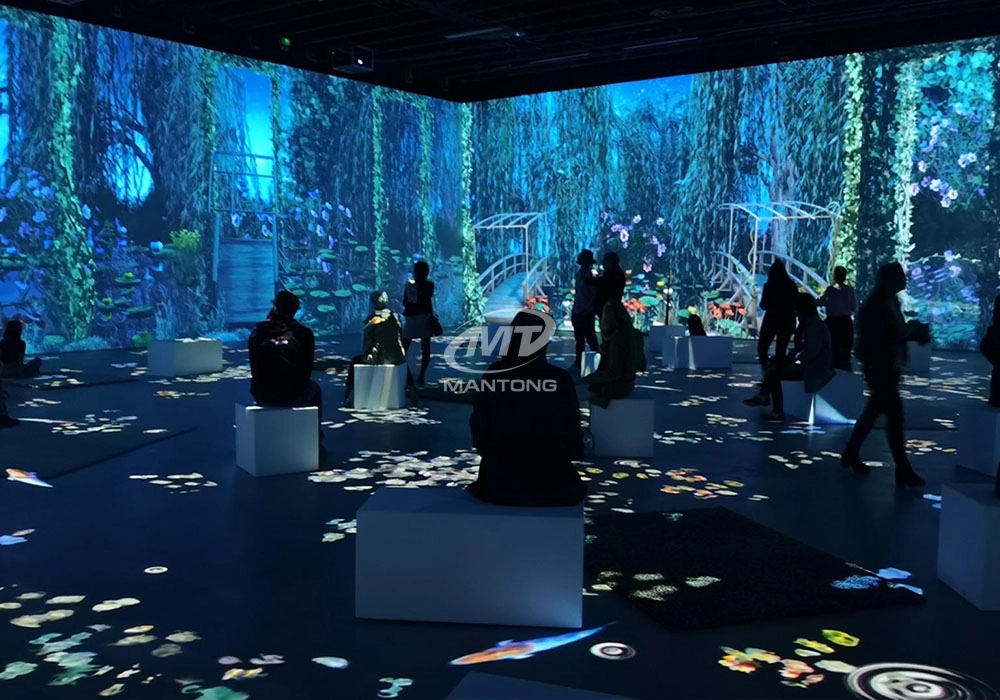
Mantong 6500LM High-Lumen Projector for Large-Scale Immersive Room Projection
Transform any space with Mantong's immersive projection mapping systems. Our high-lumen projectors (up to 6500 LM) and custom software create captivating interactive experiences for floors and walls. Ideal for museums, events, retail, and hospitality. Each kit includes professional ceiling mounting and 80+ pre-loaded video contents and is backed by a 12-month warranty and CE certification. We offer full customization and support to bring your vision to life.
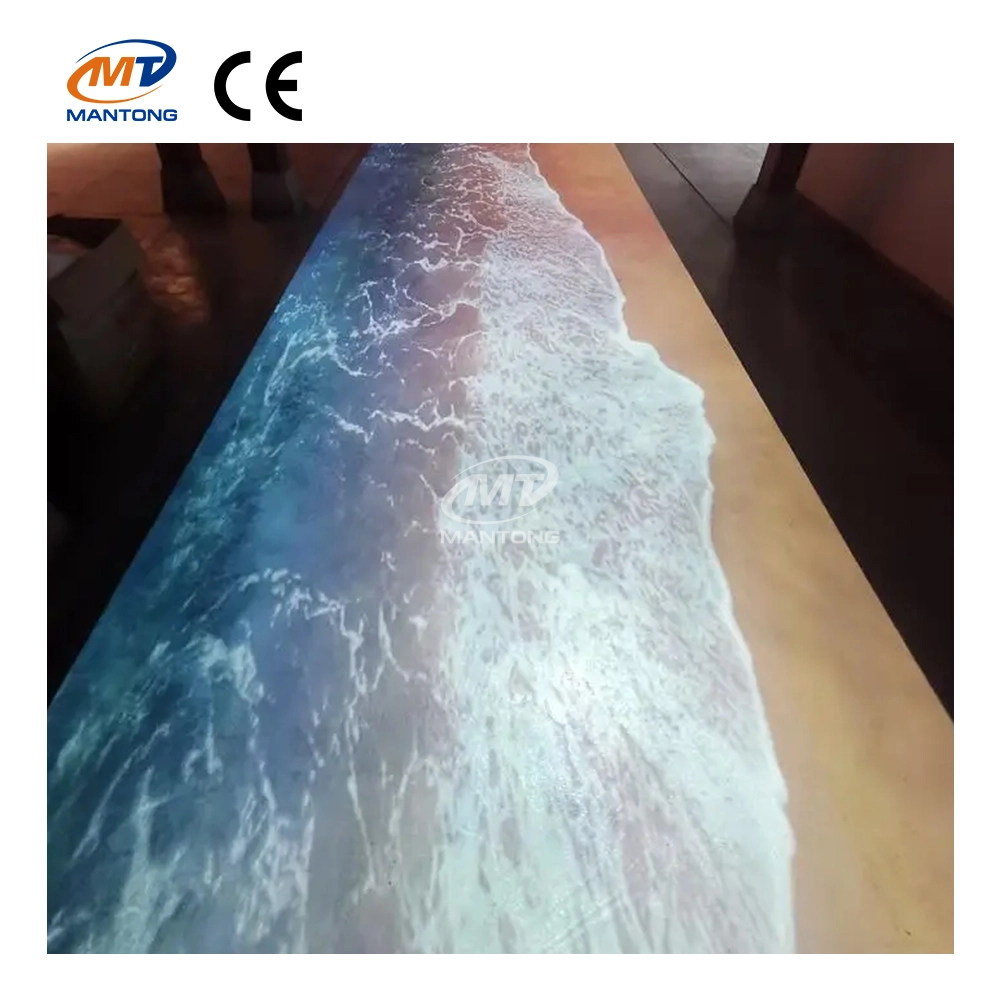
Indoor Interactive Floor Projector System - Customized Design & Installation Support
Indoor interactive floor projections display dynamic themed videos on the floor, commonly used in venues aiming to enhance brand influence or attract foot traffic, such as restaurants, hotel corridors, and brand car retail stores.
By using projectors and compatible software, the interactive content is projected onto the floor, encouraging engagement between people and the projected visuals. A single 5500-lumen indoor floor projector can cover an area of 5 m × 3 m. Typically, each project will use at least 3 units to ensure broad coverage and optimal visual effects.
We also offer customized design and installation support to enhance the interactive experience for your venue.
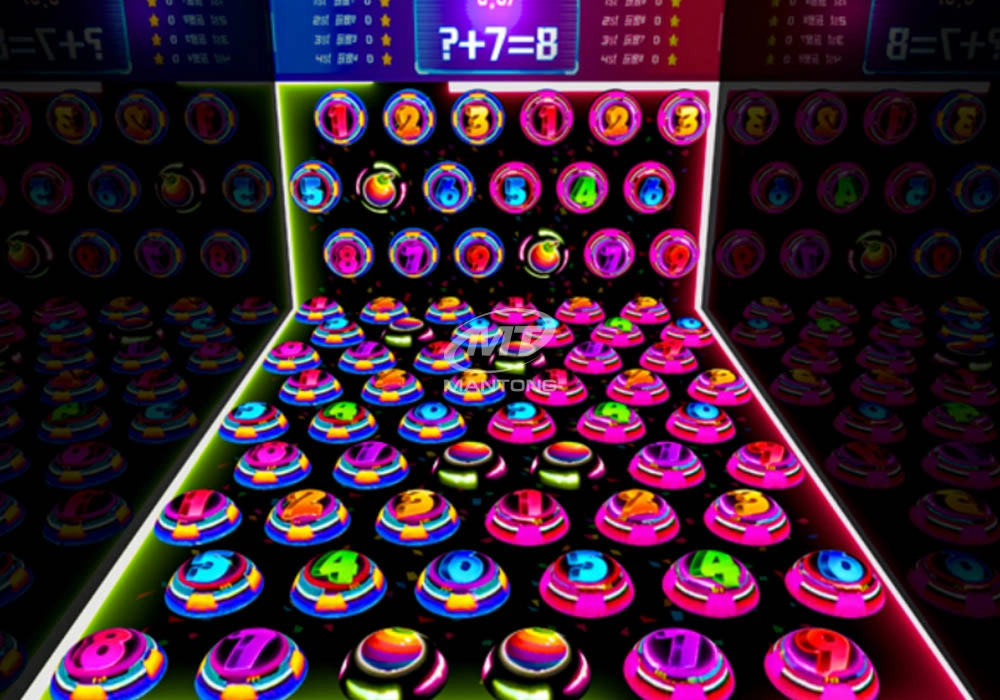
Amusement Rapidly Rotating Bouncing Sphere Interactive Wall Floor Projection Sports Games
Rapidly Rotating Bouncing Sphere is an interactive space where participants jump on rotating spheres. As they step on it, the spheres surface will show special interactivity
Jumping on spheres of the same color in succession causes them to pop, releasing light particles. The more consecutive jumps, the greater the reward—caterpillars appear, and eventually, all spheres of that color burst, filling the space with light and even more caterpillars.
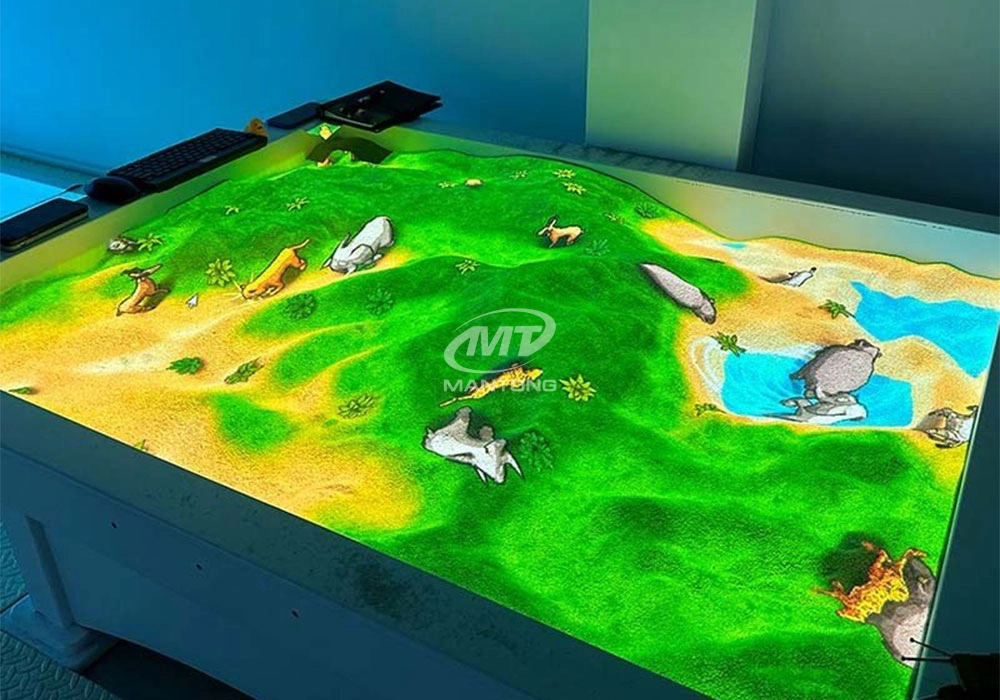
Interactive Sandbox Projection Mapping Games For Kids Play Park
Bring imagination to life with interactive sandbox projection mapping games designed for kids’ play parks. Using cutting-edge projection technology and real-time motion sensing, children can dig, build, and explore virtual worlds directly in the sand. Educational, engaging, and endlessly fun — it’s the perfect blend of play and learning.

Kaida Business Center, Shixin Road, Panyu District,Guangzhou City, Guangdong Province, China.
ManTong
ManTong
ManTong