
Interactive projector pricing trends and buyer's guide 2026
- How interactive projection is reshaping buying decisions in 2026
- Interactive projector market overview and pricing drivers
- 2024–2026 pricing trend summary in the interactive projector market
- How to choose an interactive projector — buyer’s checklist for the interactive projector market
- Example 5-year TCO model for a mid-range interactive classroom installation
- Comparing vendors in the interactive projector market — what differentiates suppliers
- Mantong Digital — interactive projection manufacturing and solution expertise
- Negotiation tips and procurement strategies within the interactive projector market
- When to rent vs. buy in 2026
- FAQ — common questions for buyers in the interactive projector market
- 1. What is the typical lifespan of an interactive projector, and how does light source affect it?
- 2. How bright does an interactive projector need to be for classroom vs. retail?
- 3. Are interactive projectors compatible with existing AV ecosystems?
- 4. What ongoing costs should I budget for besides the projector price?
- 5. How to evaluate a supplier’s claims about “interactive” accuracy?
- 6. Can projection mapping be achieved with consumer-grade interactive projectors?
- 7. How do I ensure accessibility and multi-user interaction?
- References and sources
How interactive projection is reshaping buying decisions in 2026
The interactive projector market has matured rapidly over the past five years. Buyers are no longer choosing based solely on lumen counts; they weigh usability, software integration, lifecycle costs and content capabilities. This guide unpacks 2026 pricing trends, gives a practical buyer’s checklist, compares common product classes, and shows how to evaluate suppliers and calculate return on investment (ROI). If you are purchasing for education, retail, museums, corporate training or events, this article helps you buy smarter and budget more accurately.
Interactive projector market overview and pricing drivers
The interactive projector market is influenced by several converging trends: falling component costs (LED/laser light engines, sensors), wider adoption of interactive content platforms, and the rise of projection-mapping and immersive installations. Key pricing drivers include:
- Light source technology: Laser and LED engines command a price High Quality over older lamp-based models but lower operating costs and longer life.
- Throw type: Ultra-short-throw (UST) interactive projectors cost more than standard short-throw units due to optics and safety features for classroom use.
- Sensors & interactivity: Built-in infrared/TOF sensors, camera-based tracking or integrated touch frames affect product cost and reliability.
- Software and licensing: Turnkey interactive suites, content libraries and SaaS analytics add recurring costs that are often overlooked.
- Integration & installation complexity: Large-scale projection mapping and immersive rooms require design, calibration and custom mounts that increase project budgets.
Understanding which factors matter for your use case is the single most important way to control costs without sacrificing outcomes.
2024–2026 pricing trend summary in the interactive projector market
Broadly speaking, base hardware prices have softened slightly due to manufacturing scale and component commoditization, while system-level costs (software, integration, content creation) have become a larger share of total project budgets. Adoption of laser/LED engines has increased initial hardware price but reduced total cost of ownership (TCO) over 3–7 years.
| Product category | Typical 2024 price (USD) | Forecast 2026 price (USD) | Notes |
|---|---|---|---|
| Entry interactive UST projector (education) | $800–$2,500 | $700–$2,200 | More competition, growing LED/laser options; bundled software varies. |
| Mid-range interactive projectors (retail, corporate) | $1,200–$6,000 | $1,000–$5,000 | Better sensors, brighter engines; increased emphasis on integrated content platforms. |
| Interactive floor / kiosk projection systems | $3,000–$20,000 | $2,500–$18,000 | Includes sensor packages, protective housings and content licensing. |
| Professional projection mapping & immersive systems | $20,000–$150,000+ | $18,000–$130,000+ | Project-specific: multiple projectors, servers, content creation and rigging dominate cost. |
Sources for industry movement and product availability include market reports and manufacturer catalogs; product-specific prices will vary by geography, warranty and after-sales services.
How to choose an interactive projector — buyer’s checklist for the interactive projector market
Rather than chasing specs alone, frame requirements around outcomes. Use this checklist to align purchase decisions with business goals:
- Define the application: classroom instruction, retail engagement, museum exhibit, event mapping, or corporate training. Each has different brightness, throw, durability and content needs.
- Decide on installation type: fixed ceiling, portable, floor kiosk or projection mapping. Installation complexity affects budget sharply.
- Prioritize light source: laser/LED for low maintenance and long life; lamp-based if upfront budget is constrained.
- Assess interactive method: touch-enabled (infrared or capacitive), camera-tracked gestures, or smartphone integration. Match to expected user behavior.
- Plan for software and content: native apps, SDK availability, third-party integrations, and licensing models (perpetual vs. subscription).
- Calculate TCO: hardware + installation + software/licenses + annual maintenance + content refresh over 3–5 years.
- Vendor support & warranty: look for on-site service options and spare-part availability in your region.
Example 5-year TCO model for a mid-range interactive classroom installation
| Item | Year 0 | Yearly recurring | 5-year total (USD) |
|---|---|---|---|
| Interactive projector (hardware) | $2,500 | $0 | $2,500 |
| Mounting & install | $400 | $0 | $400 |
| Software license / content | $300 | $100 | $700 |
| Maintenance & support | $0 | $150 | $750 |
| Replacement parts / contingencies | $0 | $100 | $500 |
| Total | $3,200 | $350 | $4,850 |
This example highlights that software and support commonly add 20–35% to a projector’s 5-year lifecycle cost. For large deployments, negotiate multi-year licensing and volume support discounts.
Comparing vendors in the interactive projector market — what differentiates suppliers
When evaluating vendors, consider these differentiators that affect price and long-term value:
- Manufacturing model: direct manufacturers (ODM/OEM) can offer more cost-effective customization than resellers.
- Integrated solutions vs. component sellers: Suppliers that bundle hardware, software and content reduce integration risk but may limit flexibility.
- R&D and technology depth: Companies investing in sensor fusion, edge processing and dedicated interactive engines will deliver more robust experiences.
- Global support footprint: Local service centers and spare parts inventory shorten downtime and reduce running costs.
- Case studies & references: Proven deployments in your vertical (education, retail, attractions) are strong indicators of maturity.
Mantong Digital — interactive projection manufacturing and solution expertise
Mantong Digital is a one-stop interactive projection solution provider and direct manufacturer based in Guangzhou, China, with over 10 years of industry experience. We are dedicated to providing innovative, flexible and cost-effective projection solutions, offering both hardware and software to meet various needs.
At ManTong, we specialize in providing customized solutions for a wide range of application scenarios through innovative projection technology. Whether it's immersive experiences, interactive entertainment or outdoor lighting and projection shows, our solutions can transform your ideas into stunning visual effects. Our projection technology provides customized solutions for a variety of scenarios, delivering immersive and interactive visual experiences.
Mantong’s core strengths and product overview:
- Manufacturing & customization: Direct factory production in Guangzhou enables fast prototyping, tailored housings, and control over component sourcing to reduce lead times and costs.
- Comprehensive product range: immersive projection, interactive floor projection, interactive wall projection, immersive rooms, 3D projection, interactive projection games, projection shows, and interactive projection mapping.
- Integrated hardware + software: Mantong supplies projectors, sensor modules, content engines and management platforms to simplify deployment.
- Industry credibility: 10+ years delivering museum exhibits, retail activations and outdoor projection shows for global clients.
- Global partnership focus: Mantong is actively seeking business partnerships worldwide and can support local integrators and system houses.
Contact and partnership: Visit https://www.mtprojection.com/ to view product portfolios and to request a consultation. Mantong’s vision is to become the world’s leading interactive projection manufacturer and they offer OEM/ODM cooperation for large projects.
Negotiation tips and procurement strategies within the interactive projector market
To get the best value:
- Request package pricing that includes hardware, mounting, calibration and at least 12 months of support.
- Ask for a staged delivery or pilot—test one unit before scaling to full deployment.
- Negotiate multi-year license caps and content refresh schedules to avoid surprise renewals.
- Validate real-world lumen performance and color accuracy (not just spec sheets) through demo rooms or on-site trials.
- Factor in uptime requirements and ask about regional spare-part availability and lead times.
When to rent vs. buy in 2026
For one-off events and short-run installations, renting interactive projection systems from a reputable rental house is often more cost-effective than purchasing. For permanent installations (education, museums, long-term retail activations), buying with a service contract yields lower TCO over 3–5 years. Consider hybrid models: purchase core hardware and outsource high-end content or seasonal upgrades.
FAQ — common questions for buyers in the interactive projector market
1. What is the typical lifespan of an interactive projector, and how does light source affect it?
Laser and LED light sources typically last 20,000–30,000+ hours with minimal lumen degradation. Lamp-based projectors often require lamp replacement every 2,000–5,000 hours. Although laser/LED models have higher upfront costs, they lower maintenance and downtime over the projector’s life.
2. How bright does an interactive projector need to be for classroom vs. retail?
Classrooms usually perform well with 2,500–4,000 ANSI lumens (depending on ambient light and screen size). Retail spaces or areas with heavy ambient light often require 5,000+ lumens or a combination of ambient control and higher-gain screens.
3. Are interactive projectors compatible with existing AV ecosystems?
Many modern interactive projectors offer HDMI, HDBaseT, USB, and networked management. Integration is easier if you confirm available inputs, control protocols (Crestron, AMX) and whether the vendor offers APIs or SDKs for custom integration.
4. What ongoing costs should I budget for besides the projector price?
Budget for software licensing, content creation/refresh, calibration, periodic maintenance, spare parts and potential site upgrades. These recurring costs can be 15–35% of initial hardware spend over five years.
5. How to evaluate a supplier’s claims about “interactive” accuracy?
Request live demos with real-world content, ask for latency numbers and tracking ranges, and check references for similar deployments. Insist on a pilot installation where possible to validate accuracy with your target audience and environment.
6. Can projection mapping be achieved with consumer-grade interactive projectors?
Small-scale mapping can use mid-range projectors, but large or outdoor mapping requires professional-grade projectors (higher lumen output, weatherproof housings), servers for content playback and experienced installers to manage warping and blending.
7. How do I ensure accessibility and multi-user interaction?
Choose systems that support multiple simultaneous touch points or gesture tracking, provide clear UI design for accessibility (contrast, text size) and consider companion mobile interactions for inclusive experiences.
If you have a specific project in mind and want a tailored cost estimate or technical consultation, contact Mantong Digital for a free consultation or demo. Visit https://www.mtprojection.com/ to learn more or request a quote.
References and sources
- Projection displays market reports — MarketsandMarkets (accessed 2025-12-17): https://www.marketsandmarkets.com/Market-Reports/projection-displays-market-150900270.
- Projector market overview — Statista (accessed 2025-12-17): https://www.statista.com/topics/980/projectors/
- Projection mapping and immersive technologies — Wikipedia (accessed 2025-12-17): https://en.wikipedia.org/wiki/Projection_mapping
- Laser & LED projector trends — Fortune Business Insights (accessed 2025-12-17): https://www.fortunebusinessinsights.com
- Education technology purchasing considerations — EDUCAUSE and industry procurement guides (general practices, accessed 2025-12-17): https://www.educause.edu
Note: Product prices and market forecasts above are based on publicly available market reports, manufacturer pricing trends and standard procurement experience as of late 2025. For project-specific quotations, request a tailored proposal from vendors including Mantong Digital at https://www.mtprojection.com/.
The floor projection games Cost Guide
Best The Role of Immersive Meeting Rooms in Hybrid Work Environments manufacturers and supplier brands
Best Interactive Projector Games for Kids: Fun Meets Education manufacturers and supplier brands
The latest trends for interactive projector
One-Stop Projection Solution Provider Since 2011
What about the wall/floor material for the projection?
It’s recommended to choose a light-colored material with minimal reflectivity—pure white or light grey works best. the
common material is cement & plaster board
For optimal projection results, the surface should be free of any patterns or textures, as the projector will display content
directly onto it.
There are no specific material requirements; you may use any commonly available material in your local market, as long as it
meets the above conditions.
How to install the projection equipment ?
1) Install the projector in a suitable position. We will provide you with a hanger, which you need to fix on the ceiling with
screws.
2) Connect projectors, computers and other accessories through wires.
3) After completing the above 2 steps, we will carry out the edge blending steps. Our team can complete it through remote
control.
In general, installation instructions for each project need to be specified on a project-by-project basis. The above is for
reference only.
What information do you need to know before making the proposal/solution?
We know that everyone wants to know the price, but the price of our products is determined by many factors since most of our products are custom, so no ready price list. In order to fast understand what you need, can you send us an inquiry like this?
For example: I am really interested in your immersive projection products, we are a company in the USA and want to install some in my restaurant. It is about 50 meters long, and 5m in width. Projection size you can decide but the length should be not less than 20 meters. We want some content about SeaWorld because our place is all about the sea. Thank you.
What's Immersive Projection ?
Immersive projection refers to a technology that creates a captivating and all-encompassing visual experience for viewers by projecting images or videos onto large surfaces, such as walls, floors, or even entire rooms. This technology aims to immerse the audience in a simulated environment, blurring the boundaries between the physical and virtual worlds.
Are you trader or manufacturer ?
We are direct manufacturer who specialize in providing one-stop solution for different outdoor & indoor projection project with our stable software and qualified projectors
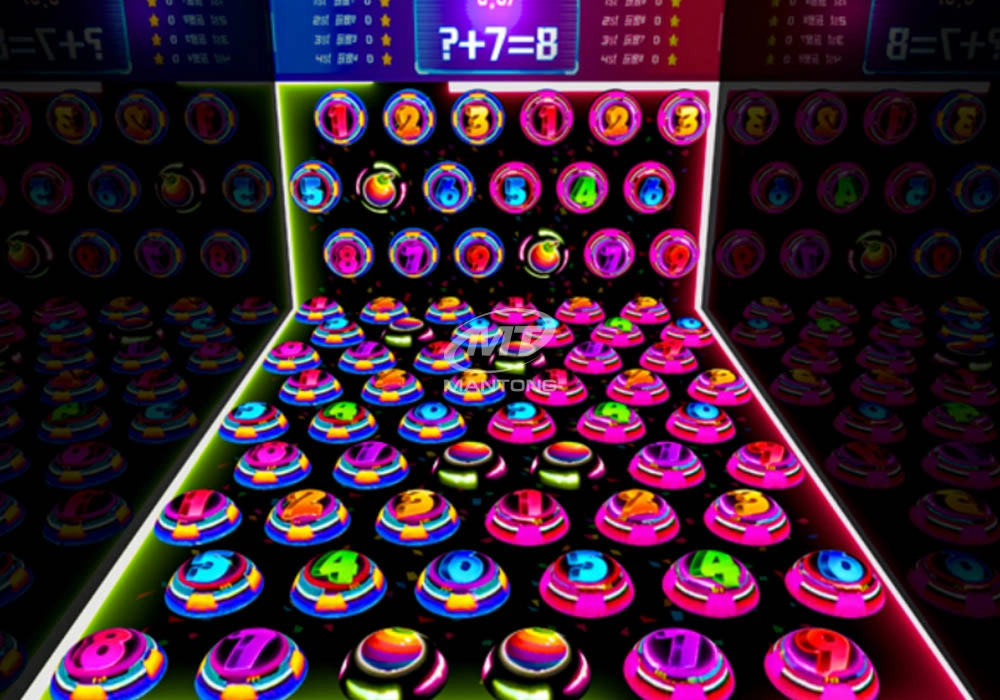
Amusement Rapidly Rotating Bouncing Sphere Interactive Wall Floor Projection Sports Games
Rapidly Rotating Bouncing Sphere is an interactive space where participants jump on rotating spheres. As they step on it, the spheres surface will show special interactivity
Jumping on spheres of the same color in succession causes them to pop, releasing light particles. The more consecutive jumps, the greater the reward—caterpillars appear, and eventually, all spheres of that color burst, filling the space with light and even more caterpillars.
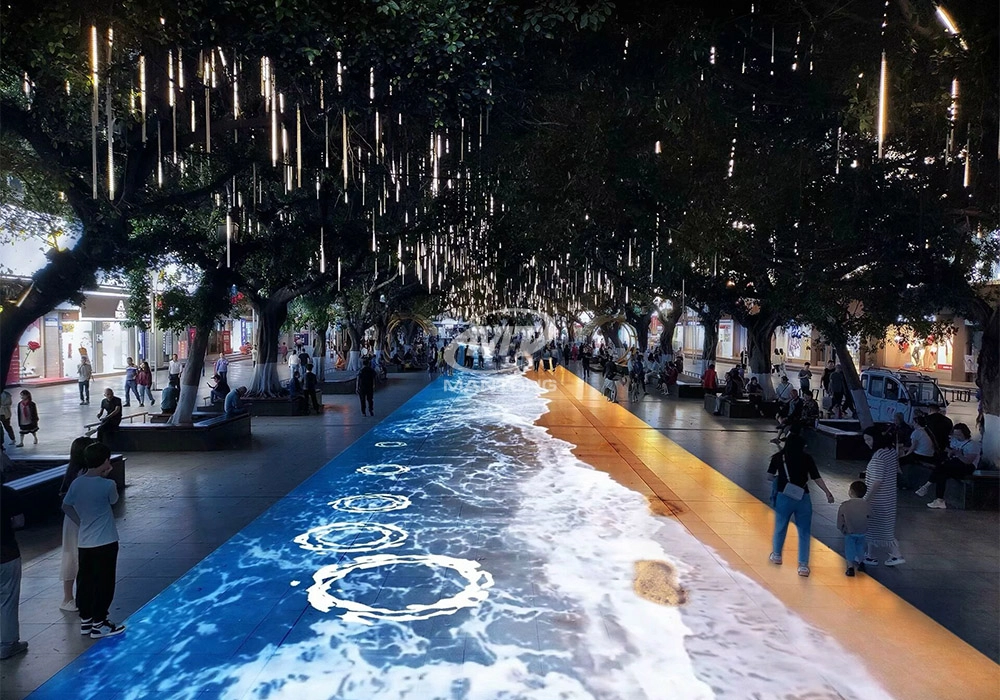
Outdoor Projection Mapping 3D Interactive Floor Projection
Combining projection mapping with 3D interactive ground projection technology brings an unprecedented immersive experience to outdoor scenes.
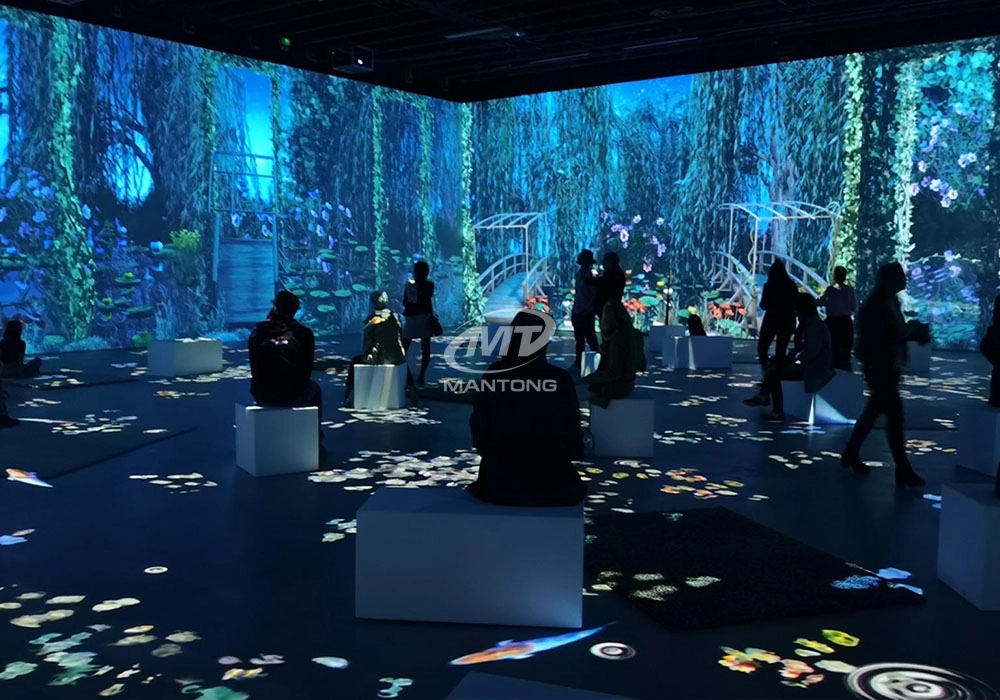
Mantong 6500LM High-Lumen Projector for Large-Scale Immersive Room Projection
Transform any space with Mantong's immersive projection mapping systems. Our high-lumen projectors (up to 6500 LM) and custom software create captivating interactive experiences for floors and walls. Ideal for museums, events, retail, and hospitality. Each kit includes professional ceiling mounting and 80+ pre-loaded video contents and is backed by a 12-month warranty and CE certification. We offer full customization and support to bring your vision to life.
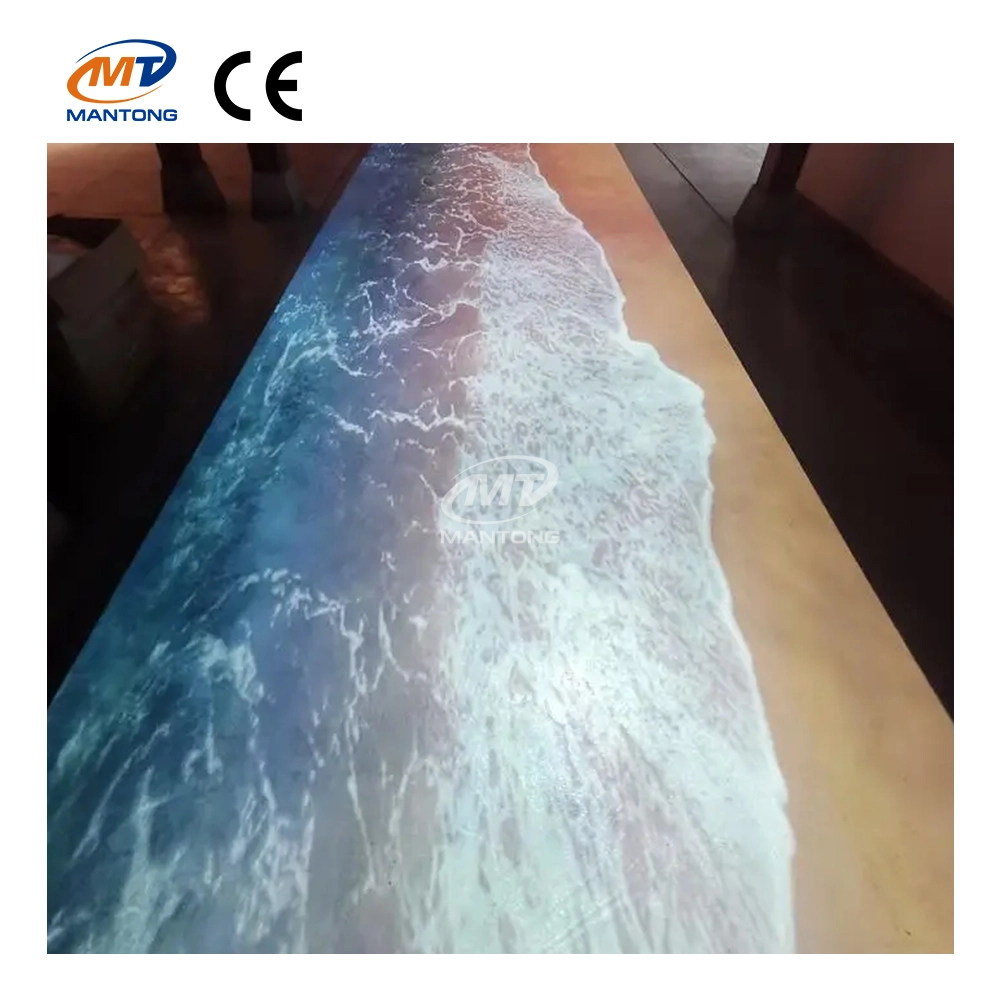
Indoor Interactive Floor Projector System - Customized Design & Installation Support
Indoor interactive floor projections display dynamic themed videos on the floor, commonly used in venues aiming to enhance brand influence or attract foot traffic, such as restaurants, hotel corridors, and brand car retail stores.
By using projectors and compatible software, the interactive content is projected onto the floor, encouraging engagement between people and the projected visuals. A single 5500-lumen indoor floor projector can cover an area of 5 m × 3 m. Typically, each project will use at least 3 units to ensure broad coverage and optimal visual effects.
We also offer customized design and installation support to enhance the interactive experience for your venue.

Kaida Business Center, Shixin Road, Panyu District,Guangzhou City, Guangdong Province, China.
ManTong
ManTong
ManTong