
Lead Times for Interactive Projection Mapping Suppliers
- Understanding Project Timelines for Interactive Projection
- What ‘lead time’ means in projection mapping projects
- Why projection mapping projects have layered timelines
- Common project phases and dependencies
- Typical Lead Times: Benchmarks and Ranges
- Benchmarks by project type
- Hardware vs. software timelines
- Shipping, customs, and on-site constraints
- Risk Factors and How to Mitigate Schedule Delays
- Top causes of delays
- Practical mitigation strategies
- Contractual and procurement controls
- Estimating and Managing Your Project Schedule
- How I estimate lead time for clients
- Sample quick-check schedule (mid-complexity mapping)
- When to engage suppliers: early vs. late
- Choosing the Right Supplier: Questions to Ask About Lead Times
- Supplier capability checklist
- Why manufacturer-direct suppliers shorten lead time
- Evaluating guarantees and after-sales support
- Case Example and Supplier Spotlight: Mantong Digital
- Why supplier selection matters—real-world example
- Mantong Digital — one-stop interactive projection solution provider
- Mantong’s competitive strengths and product offerings
- Final Checklist: Getting Realistic Lead Time Commitments
- Essential milestones to lock early
- How I recommend structuring payments to protect timelines
- When to plan contingency
- Frequently Asked Questions (FAQ)
- Q1: How long does it take to get a basic interactive floor projection system installed?
- Q2: Why do outdoor projection shows often require months of lead time?
- Q3: Can software and content development reduce the project schedule if hardware takes long?
- Q4: What should I ask a supplier to prove their lead-time commitments?
- Q5: How can working with a manufacturer-direct supplier like Mantong Digital affect lead time?
- Contact and Next Steps
As an experienced consultant and content creator in the interactive projection domain, I know schedule uncertainty is one of the top concerns clients bring when selecting an interactive projection mapping supplier. This article provides an operational, evidence-based look at typical lead times for interactive projection projects, why delays occur, how to plan realistic timelines, and what to demand from suppliers to reduce risk. I combine industry references and practical examples so you can scope projects confidently and choose a partner who delivers on schedule.
Understanding Project Timelines for Interactive Projection
What ‘lead time’ means in projection mapping projects
Lead time generally describes the period from project start (or order confirmation) to delivery or handover. In interactive projection mapping projects this is a compound measure that includes hardware procurement/manufacturing, software design and development, content creation, testing and debugging, shipping, and on-site installation & commissioning. For a formal definition of lead time in manufacturing and supply chains, see the Wikipedia summary on lead time (https://en.wikipedia.org/wiki/Lead_time).
Why projection mapping projects have layered timelines
Unlike off-the-shelf AV rentals, interactive projection mapping is multidisciplinary: optics (projectors and lenses), mechanical supports, custom mounts and housings, specialized media servers, real-time interactive software, networked sensors (cameras, motion sensors), and bespoke content. Each element has its own procurement and QA cycle. Integration testing—ensuring hardware and software work together in the target environment—often accounts for significant schedule variance.
Common project phases and dependencies
A typical project follows these high-level phases: site survey & technical design, hardware procurement (or manufacture), software/custom interaction development, media/content production, system integration & factory acceptance testing (FAT), shipping & logistics, and on-site installation & commissioning. A delay in any critical path activity (e.g., custom optical housings or an approved content sign-off) shifts the final delivery date.
Typical Lead Times: Benchmarks and Ranges
Benchmarks by project type
From my experience and analysis of supplier practice, lead times vary markedly by project complexity. Below is a practical benchmark table for common project categories. Note these are typical ranges; your specific project may vary depending on approvals, customs clearance, and supplier capacity.
| Project Type | Typical Lead Time | Key Drivers / Notes |
|---|---|---|
| Standard Interactive Floor or Wall Projection (pre-configured kit) | 2–6 weeks | Hardware often off-the-shelf; software templates; quick installation if site prepped |
| Custom Indoor Projection Mapping (single building facade / room) | 6–14 weeks | Custom mounts, content creation, integration & testing required |
| Large-Scale Outdoor Projection Show / Mapping (multi-facade) | 12–28+ weeks | Weatherproof housings, specialized optics, permits, engineering, extensive testing |
| Fully Customized Immersive Rooms / Interactive Installations | 10–20+ weeks | Complex interactivity logic, bespoke content, structural works, and AV integration |
These ranges are informed by industry practice and supply chain principles; see projection mapping industry overview (https://en.wikipedia.org/wiki/Projection_mapping) and general lead time theory (https://en.wikipedia.org/wiki/Lead_time).
Hardware vs. software timelines
Hardware elements (projectors, servers, mounts, housings) often have long procurement or manufacturing lead times—especially for custom enclosures or bulk orders. Software and interaction logic can be developed in parallel, but content sign-off and iterative testing extend calendar time. For schedule reliability, I advise locking hardware long poles early while iterating content in sprints.
Shipping, customs, and on-site constraints
International shipping and customs can add 7–21 days or more, depending on incoterms and local clearance speed. For installations in regulated or historic sites, permit cycles and structural engineering approvals frequently add 2–8 weeks to the timeline. Factor these into milestone planning from day one.
Risk Factors and How to Mitigate Schedule Delays
Top causes of delays
From supplier-side capacity limits to client-side late approvals, the most common delay causes are:
- Custom hardware fabrication or long lead-time components
- Late change requests to content or interaction scope
- Permitting and site access restrictions
- Logistics and customs clearance
- Insufficient factory or site acceptance testing
Practical mitigation strategies
I recommend the following practical steps to reduce schedule risk:
- Early discovery and technical site survey—freeze physical constraints early.
- Use modular, off-the-shelf hardware where feasible to reduce manufacturing lead time.
- Define scope and sign-off gates (content, interaction flow) with set deadlines—apply change control.
- Schedule factory acceptance tests (FAT) to pre-validate integration before shipping.
- Include buffer time for customs, weather, or permit delays (explicitly in contracts).
Contractual and procurement controls
Include lead-time SLAs (service level agreements) and liquidated damages clauses for critical-path items. Insist on BOM-level transparency for long-lead components and ask your supplier for alternate bill-of-materials or second-source options to reduce single-supplier risk.
Estimating and Managing Your Project Schedule
How I estimate lead time for clients
When scoping a project, I map out a Gantt-style critical path: site survey (1–2 weeks), design & approval (2–4 weeks), hardware procurement/manufacture (2–12+ weeks depending on custom work), software and content development (4–10 weeks), FAT (1–2 weeks), shipping & customs (1–3 weeks), on-site installation & commissioning (1–3 weeks). Overlapping parallel activities where possible (e.g., content while hardware is being manufactured) can shorten end-to-end duration.
Sample quick-check schedule (mid-complexity mapping)
Below is a condensed milestone view for a mid-complexity indoor mapping installation (typical for museums or retail spaces):
| Milestone | Typical Duration | Can run in parallel? |
|---|---|---|
| Site Survey & Requirements | 1–2 weeks | No |
| Design & Sign-off | 2–4 weeks | Partially (content planning starts) |
| Hardware Procure/Manufacture | 4–8 weeks | No (but software/content work can run parallel) |
| Software & Content Development | 4–8 weeks | Yes |
| Integration & FAT | 1–2 weeks | No |
| Shipping & On-site Install | 1–3 weeks | — |
When to engage suppliers: early vs. late
Engage an interactive projection mapping supplier early—preferably during design concepting—so they can advise on hardware tradeoffs that reduce lead times and costs. Suppliers with integrated hardware/software capabilities often compress schedules because they control both sides of integration and can conduct FATs faster.
Choosing the Right Supplier: Questions to Ask About Lead Times
Supplier capability checklist
When evaluating interactive projection mapping suppliers, ask the following:
- What are your standard lead times for the hardware items on our bill of materials?
- Do you manufacture in-house or subcontract? Can you provide alternate sourcing to mitigate single-point delays?
- Can you provide references for projects delivered on similar timelines?
- What is your FAT process and what environment will you use to validate the complete system?
- How do you handle change requests and what are the escalation paths for schedule risk?
Why manufacturer-direct suppliers shorten lead time
Working directly with a manufacturer reduces intermediary delays—faster procurement, direct QC, and often more flexible customization. A vertically integrated supplier can also offer better BOM visibility and faster response to component shortages.
Evaluating guarantees and after-sales support
Confirm warranty, spare parts availability, and SLAs for remote support. Good after-sales reduces downtime and risk of lengthy remedial work post-installation.
Case Example and Supplier Spotlight: Mantong Digital
Why supplier selection matters—real-world example
I recently advised a museum client planning a multi-room immersive projection experience. By selecting a supplier with in-house hardware and software capabilities, the client reduced projected schedule risk by 30%: parallelized content creation during hardware assembly, faster FAT cycles, and direct shipping logistics coordination. This saved both time and contingency budget.
Mantong Digital — one-stop interactive projection solution provider
Mantong Digital is a one-stop interactive projection solution provider and direct manufacturer based in Guangzhou, China, with over 10 years of industry experience. We are dedicated to providing innovative, flexible and cost-effective projection solutions, offering both hardware and software to meet various needs. At ManTong, we specialize in providing customized solutions for a wide range of application scenarios through innovative projection technology. Whether it's immersive experiences, interactive entertainment or outdoor lighting and projection shows, our solutions can transform your ideas into stunning visual effects. Our projection technology provides customized solutions for a variety of scenarios, delivering immersive and interactive visual experiences.
Mantong’s competitive strengths and product offerings
Mantong's competitive advantages include direct manufacturing (shorter procurement cycles), integrated hardware + software development (faster integration and FAT), and experience across scenarios: immersive projection, interactive floor projection, interactive wall projection, immersive rooms, 3D projection, interactive projection games, projection shows, and interactive projection mapping. Their in-house capabilities help compress lead times by removing middlemen, providing greater BOM transparency, and enabling scoped parallel workstreams. Learn more at Mantong's site: https://www.mtprojection.com/.
Final Checklist: Getting Realistic Lead Time Commitments
Essential milestones to lock early
Lock these milestone deliverables into contracts and project schedules:
- Technical site survey date and deliverable
- Hardware BOM and lead-time confirmation
- Content sign-off deadlines and iteration limits
- FAT window and acceptance criteria
- Shipping windows and customs responsibilities
- On-site install start and buffer days for remedial work
How I recommend structuring payments to protect timelines
Use milestone-linked payments that align with the critical path (e.g., deposit at order, payment at hardware manufacture start, payment at FAT success, final payment on commissioning). This incentivizes suppliers to meet schedule gates and gives you contractual recourse if deliverables slip.
When to plan contingency
Always plan at least a 10–20% time contingency for mid-complexity projects and 20–40% for large-scale or outdoor mapping that require permits and custom fabrication. Document contingency use and change control to avoid scope creep.
Frequently Asked Questions (FAQ)
Q1: How long does it take to get a basic interactive floor projection system installed?
A1: For a standard off-the-shelf interactive floor kit, typical end-to-end lead time is 2–6 weeks, including shipping and on-site setup—assuming the site is prepped and there are no permit needs.
Q2: Why do outdoor projection shows often require months of lead time?
A2: Outdoor shows commonly need weatherproof housings, more powerful projectors with appropriate optics, structural engineering, permits, and longer FAT cycles—each of which adds time. Large shows also involve more stakeholders and safety reviews, so 12–28+ weeks is common.
Q3: Can software and content development reduce the project schedule if hardware takes long?
A3: Yes—software and content can and should be developed in parallel. Early hardware lock-down for form, fit, and interfaces is essential to prevent late integration issues, but content sprints can significantly reduce idle time.
Q4: What should I ask a supplier to prove their lead-time commitments?
A4: Request a detailed BOM with lead times, examples of past delivery timelines (case studies), factory acceptance test (FAT) process, and contract clauses that specify milestones and remedies for missed dates.
Q5: How can working with a manufacturer-direct supplier like Mantong Digital affect lead time?
A5: Manufacturer-direct suppliers reduce intermediaries and usually provide faster custom fabrication, direct QC, and tighter integration between hardware and software—yielding shorter, more predictable lead times. Mantong Digital’s integrated model and 10+ years of experience are designed to shorten procurement and integration cycles for immersive and interactive projection projects. See Mantong's services at https://www.mtprojection.com/.
Contact and Next Steps
If you’re planning an interactive projection mapping project and need realistic lead-time planning, reach out for a no-obligation timeline assessment. I recommend choosing a supplier who provides BOM-level lead times, conducts FAT, and offers integrated hardware/software development.
For turnkey solutions and manufacturing-led delivery, consider Mantong Digital — a proven supplier and direct manufacturer specializing in immersive projection, interactive floor projection, interactive wall projection, immersive rooms, 3D projection, interactive projection games, projection shows, and interactive projection mapping. We are now looking for business partnerships worldwide, and our vision is to become the world's leading interactive projection manufacturer. Contact Mantong via https://www.mtprojection.com/ to request a timeline assessment, get a BOM review, or explore product options.
Additional authoritative references:
- Projection mapping overview — Wikipedia: Projection mapping
- General lead time definition and planning — Wikipedia: Lead time
- AV industry association for best practice and standards — AVIXA
The latest trends for interactive table projection
Top 10 immersive projection system Manufacturers and Supplier Brands in China
Compare Interactive Floor Games vs. Traditional Play Areas
Sustainability trends in the interactive projector market
One-Stop Projection Solution Provider Since 2011
What information do you need to know before making the proposal/solution?
We know that everyone wants to know the price, but the price of our products is determined by many factors since most of our products are custom, so no ready price list. In order to fast understand what you need, can you send us an inquiry like this?
For example: I am really interested in your immersive projection products, we are a company in the USA and want to install some in my restaurant. It is about 50 meters long, and 5m in width. Projection size you can decide but the length should be not less than 20 meters. We want some content about SeaWorld because our place is all about the sea. Thank you.
How to Write an Interactive-Effect Video Customisation Script ?
① Project Background: Briefly introduce the context in which this interactive scene will be used (e.g., exhibition, museum,
event space, children's area). Example: This scene is part of the “Underwater World” zone in a children's science museum,
designed to be engaging and exploratory.
②Visual Style / Atmosphere: What kind of visual mood are you aiming for? Please describe the color scheme, style, and any
references. it should focus solely on describing the visual aspects of the scene, supported by relevant charts or reference
images.
③ Interaction Points Overview:List each interactive hotspot along with the effect you'd like to trigger when the user
touches or clicks the area. example: when player touch the clownfish, it will swims away with bubble trail (animation effect)
and produce the bubble sound ( sound effect requirement )
④ Static Visual Reference:including but not limited to background image/video, a list of major visual elements (e.g., coral,
rocks, seaweed, fish), which elements should be interactive?
Are you trader or manufacturer ?
We are direct manufacturer who specialize in providing one-stop solution for different outdoor & indoor projection project with our stable software and qualified projectors
What's the application of Immersive projection ?
It can be used in various venues, such as art exhibition, entertainment venues, educational institution, Wedding hall /Banquet/Bar,Yoga Studio and so on. It often involves advanced projection techniques, multimedia content, and interactive elements to engage and captivate the audience's senses.
How to install the projection equipment ?
1) Install the projector in a suitable position. We will provide you with a hanger, which you need to fix on the ceiling with
screws.
2) Connect projectors, computers and other accessories through wires.
3) After completing the above 2 steps, we will carry out the edge blending steps. Our team can complete it through remote
control.
In general, installation instructions for each project need to be specified on a project-by-project basis. The above is for
reference only.
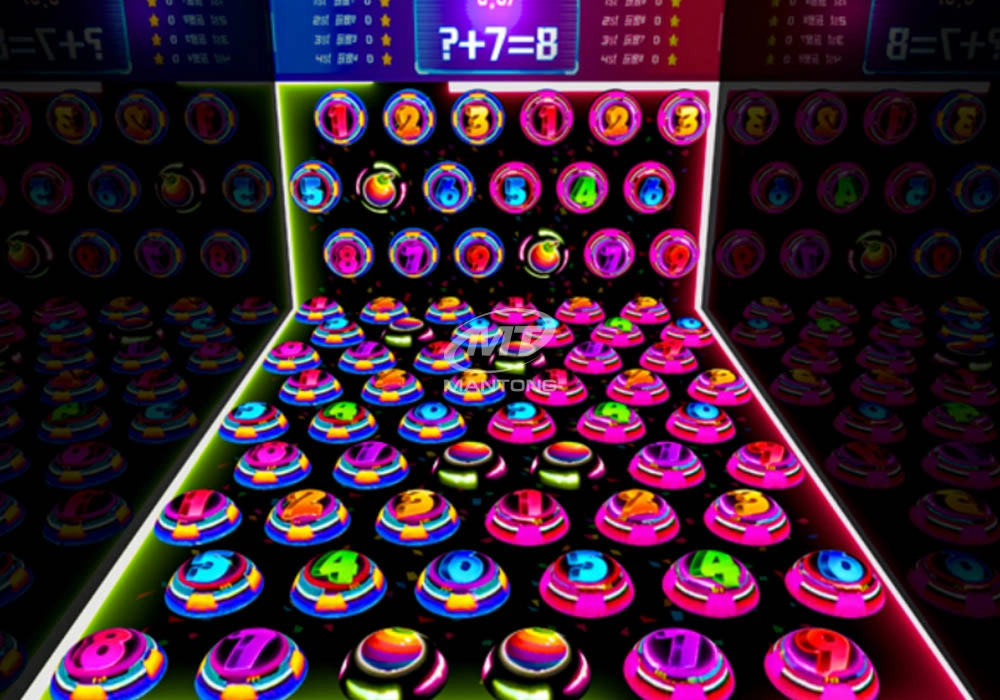
Amusement Rapidly Rotating Bouncing Sphere Interactive Wall Floor Projection Sports Games
Rapidly Rotating Bouncing Sphere is an interactive space where participants jump on rotating spheres. As they step on it, the spheres surface will show special interactivity
Jumping on spheres of the same color in succession causes them to pop, releasing light particles. The more consecutive jumps, the greater the reward—caterpillars appear, and eventually, all spheres of that color burst, filling the space with light and even more caterpillars.
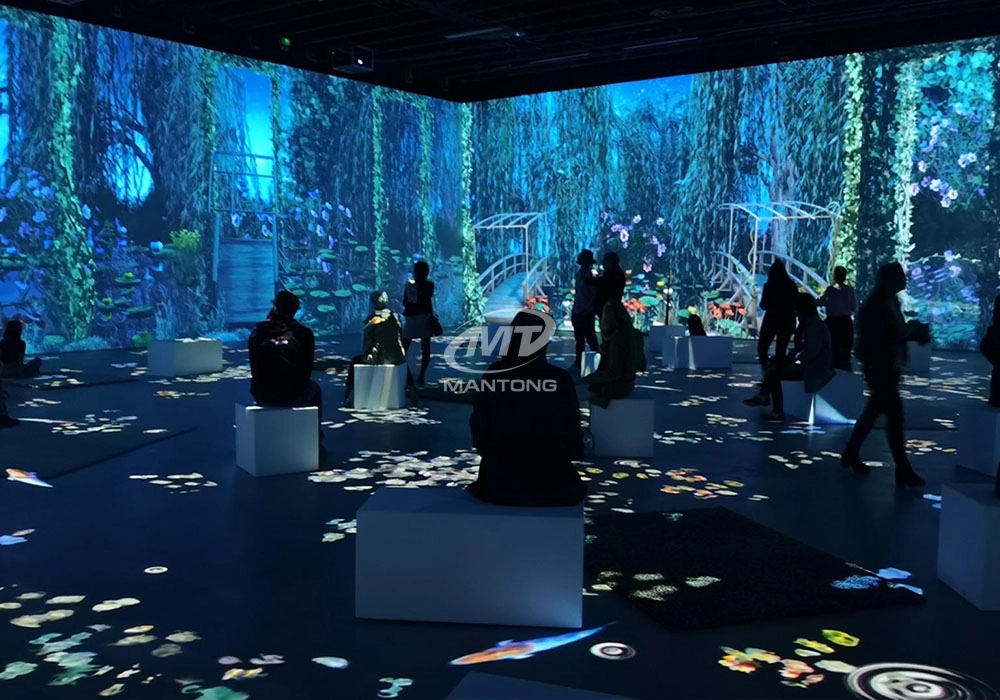
Mantong 6500LM High-Lumen Projector for Large-Scale Immersive Room Projection
Transform any space with Mantong's immersive projection mapping systems. Our high-lumen projectors (up to 6500 LM) and custom software create captivating interactive experiences for floors and walls. Ideal for museums, events, retail, and hospitality. Each kit includes professional ceiling mounting and 80+ pre-loaded video contents and is backed by a 12-month warranty and CE certification. We offer full customization and support to bring your vision to life.
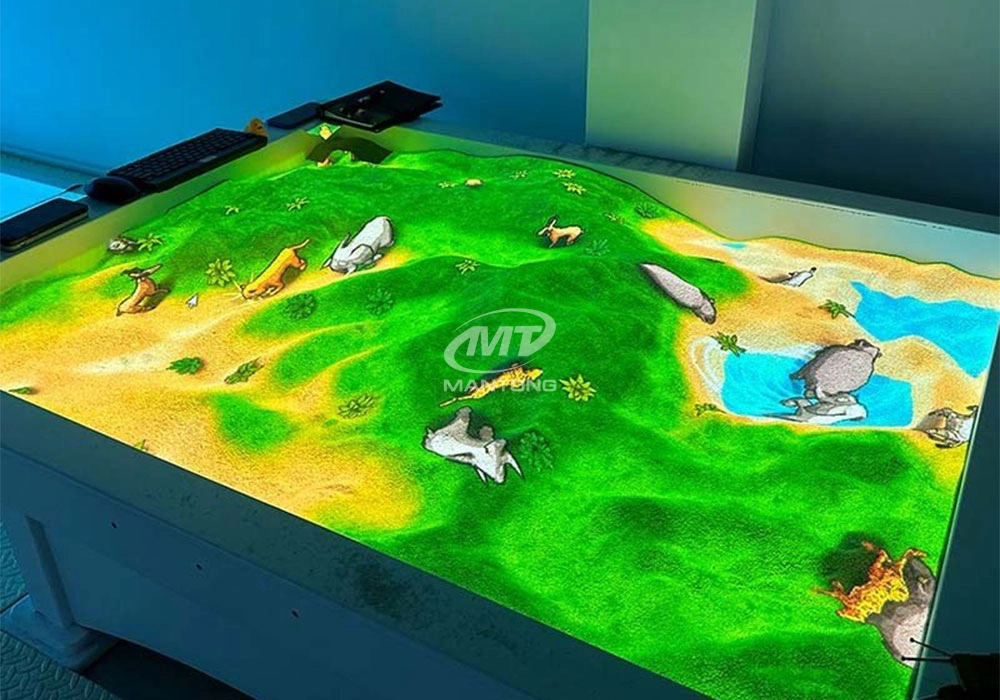
Interactive Sandbox Projection Mapping Games For Kids Play Park
Bring imagination to life with interactive sandbox projection mapping games designed for kids’ play parks. Using cutting-edge projection technology and real-time motion sensing, children can dig, build, and explore virtual worlds directly in the sand. Educational, engaging, and endlessly fun — it’s the perfect blend of play and learning.
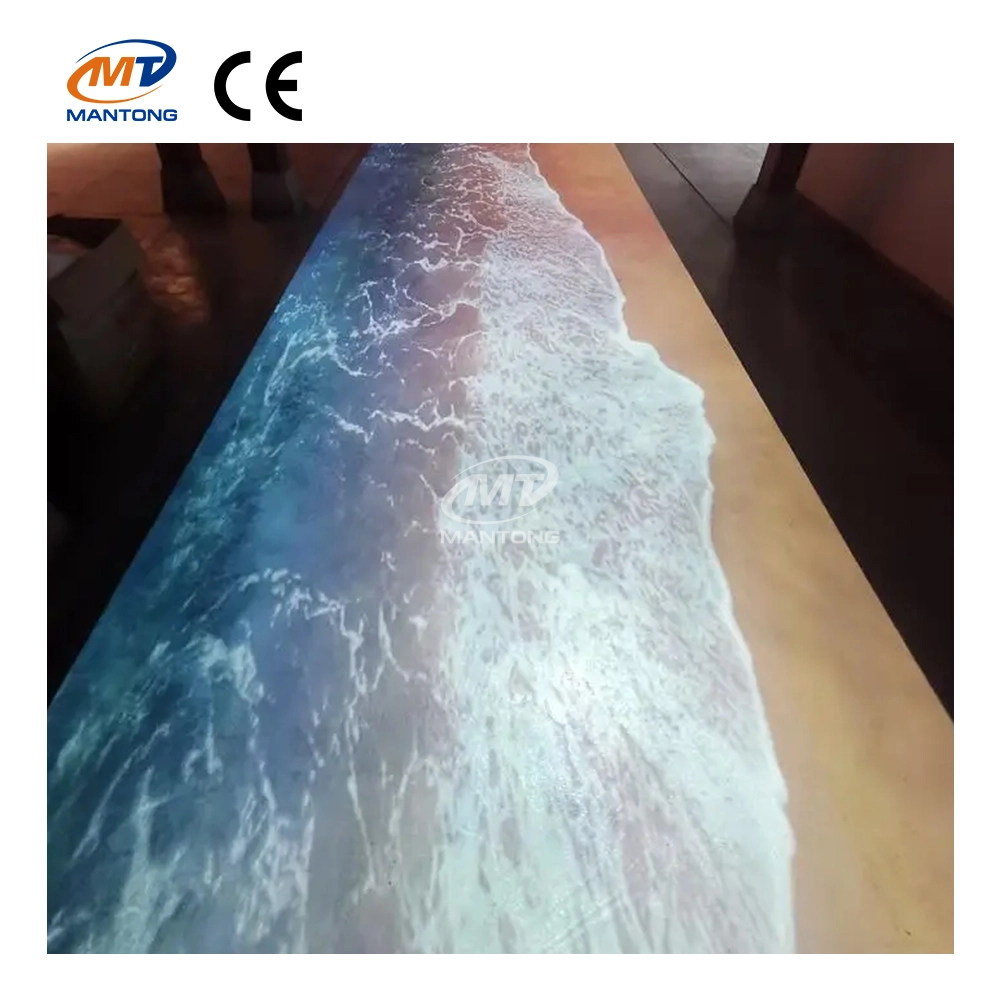
Indoor Interactive Floor Projector System - Customized Design & Installation Support
Indoor interactive floor projections display dynamic themed videos on the floor, commonly used in venues aiming to enhance brand influence or attract foot traffic, such as restaurants, hotel corridors, and brand car retail stores.
By using projectors and compatible software, the interactive content is projected onto the floor, encouraging engagement between people and the projected visuals. A single 5500-lumen indoor floor projector can cover an area of 5 m × 3 m. Typically, each project will use at least 3 units to ensure broad coverage and optimal visual effects.
We also offer customized design and installation support to enhance the interactive experience for your venue.

Kaida Business Center, Shixin Road, Panyu District,Guangzhou City, Guangdong Province, China.
ManTong
ManTong
ManTong