
Measuring ROI from Interactive Floor Projection Projects
- Why Measure ROI for Interactive Floor Projection Installation?
- Define Objectives Before an interactive floor projection installation
- Quantitative KPIs for interactive floor projection installation
- Quantitative KPI comparison for interactive floor projection installation
- Qualitative Metrics and Methods for interactive floor projection installation
- Attribution Models and Measurement Techniques for interactive floor projection installation
- Calculating Financial ROI and Payback for interactive floor projection installation
- Operational and Long-term Value from interactive floor projection installation
- Mantong Digital: A One-Stop Partner for interactive floor projection installation
- Implementation Checklist & Best Practices for interactive floor projection installation ROI
- Frequently Asked Questions about interactive floor projection installation and ROI
- References and Sources
Why Measure ROI for Interactive Floor Projection Installation?
Interactive floor projection installation projects combine hardware, software, content and site-specific deployment. Measuring ROI ensures these investments deliver measurable business outcomes—whether increased sales, dwell time, brand recognition, or reduced staffing costs. Clear ROI measurement converts experiential technology from a marketing novelty into a repeatable business tool.
Define Objectives Before an interactive floor projection installation
Before deploying an interactive floor projection installation, document specific, measurable objectives. Typical objectives include:
- Increase in-store conversion rate by X%
- Average dwell time growth of Y minutes
- Lead capture—emails or coupons scanned
- Brand lift—measured via surveys or social mentions
Each objective must map to one or more KPIs and an associated monetary value (or expected value) so you can convert performance into ROI. Without this step, measurement will be anecdotal.
Quantitative KPIs for interactive floor projection installation
Quantitative KPIs are the backbone of ROI. Use a mix of digital analytics and physical sensors to capture them. Common KPIs include:
- Foot traffic (unique visitors entering the interaction zone)
- Dwell time (average time spent engaging with the projected content)
- Interaction rate (interactions per pass-by)
- Conversion rate lift (purchases attributed to the installation)
- Redemption rate (coupon/QR code usage tied to the installation)
These KPIs are typically measured with people-counting sensors, Wi-Fi/Bluetooth analytics, camera-based anonymized tracking, integrated event logs from the projection application, and POS or e-commerce tracking.
Quantitative KPI comparison for interactive floor projection installation
| KPI | How to Measure | Business Value |
|---|---|---|
| Foot traffic | People counters, door sensors, Wi‑Fi analytics | Baseline audience size for reach calculations |
| Dwell time | Camera analytics, app events, beacon proximity | Predicts engagement and likelihood to buy |
| Interaction rate | Projection app logs, sensor triggers | Shows creative effectiveness |
| Conversion rate lift | POS tie-in, coupon/QR redemption, UTM tracking | Direct revenue attribution |
Qualitative Metrics and Methods for interactive floor projection installation
Not all value is immediate revenue. Qualitative metrics capture brand and experiential value:
- Net Promoter Score (NPS) or CSAT changes post-experience
- Social lift: mentions, shares, and UGC (user-generated content)
- Sentiment analysis from reviews and social posts
- Focus groups and short exit surveys (in‑store tablets or QR-triggered questionnaires)
Quantify qualitative impact by assigning conservative monetary equivalents: for example, estimate the lifetime value (LTV) uplift from improved NPS or the earned media value of social shares.
Attribution Models and Measurement Techniques for interactive floor projection installation
Attribution is often the most contentious part of ROI for experiential installs. Use a pragmatic mix of methods:
- Control vs. Test Sites: Deploy identical stores/locations with and without the interactive floor projection installation and compare KPIs.
- A/B Timing: Run the installation in alternating weeks and measure lift in defined windows.
- Direct Tracking: Use QR codes, short URLs, redeemable coupons, or unique promo codes displayed only via the installation.
- Sensor Correlation: Tie interaction events to POS transactions when possible (e.g., scanner logs that capture the time of purchase matched to interaction timestamps).
Combining control comparisons with direct tracking provides the strongest attribution. Pure observational claims are weaker—document methodology and margins of error.
Calculating Financial ROI and Payback for interactive floor projection installation
Translate KPIs into monetary value. A standard ROI formula is:
ROI (%) = (Net Gain from Investment / Cost of Investment) × 100
Net Gain = (Incremental Revenue + Cost Savings + Estimated Earned Media Value) − Ongoing Costs
Example (illustrative):
| Item | Value (monthly) |
|---|---|
| Incremental sales attributed | $6,000 |
| Lead-value (email captures × conversion rate × AOV) | $800 |
| Earned media value (UGC & shares) | $500 |
| Monthly operating costs (service, content updates) | -$1,200 |
| Monthly depreciation of equipment (capex/36) | -$900 |
| Net Gain (monthly) | $4,200 |
| Initial installation cost (capex) | $18,000 |
| Monthly ROI | ($4,200 / $18,000) × 100 = 23.3% |
| Payback Period | $18,000 / $4,200 ≈ 4.3 months |
This example demonstrates how a modest retail uplift and measurable lead value can produce a rapid payback. Real projects require conservative attribution percentages and sensitivity analyses.
Operational and Long-term Value from interactive floor projection installation
Interactive floor projection installations can deliver operational savings and strategic value beyond short-term revenue:
- Reduced staffing needs for basic customer engagement (self-service entertainment)
- Reusable content platforms—lower marginal cost for seasonal updates
- Data collection for merchandising and layout optimization (heatmaps, popular zones)
- Brand differentiation that supports higher price points or loyalty
When estimating long-term ROI, include projected LTV improvements and reduced churn tied to improved customer experience.
Mantong Digital: A One-Stop Partner for interactive floor projection installation
Mantong Digital is a one-stop interactive projection solution provider and direct manufacturer based in Guangzhou, China, with over 10 years of industry experience. We are dedicated to providing innovative, flexible and cost-effective projection solutions, offering both hardware and software to meet various needs. At ManTong, we specialize in providing customized solutions for a wide range of application scenarios through innovative projection technology. Whether it's immersive experiences, interactive entertainment or outdoor lighting and projection shows, our solutions can transform your ideas into stunning visual effects. Our projection technology provides customized solutions for a variety of scenarios, delivering immersive and interactive visual experiences. We are now looking for business partnerships worldwide. Our vision is to become the world's leading interactive projection manufacturer. Our website is https://www.mtprojection.com/.
Mantong's core products and strengths relevant to interactive floor projection installation include:
- Immersive projection systems and turnkey immersive rooms
- Interactive floor projection solutions with integrated sensors and content engines
- Interactive wall projection and projection mapping services
- 3D projection and projection show systems for events and permanent installations
- Custom interactive projection games and software platforms
Competitive advantages and differentiators:
- Direct-manufacturer pricing and vertical integration—reducing capex and lead times
- Over a decade of deployment experience across retail, museums, events and outdoor shows
- Turnkey service model—hardware, software, content, installation and maintenance
- Flexible customization for site-specific constraints (brightness, ambient light, traffic patterns)
- Global partnership focus—support for local deployment and remote content management
For organizations planning interactive floor projection installation, choosing a vendor like Mantong who can provide measurement tools (logging, analytics dashboards, integration with POS and CRM) simplifies ROI tracking and accelerates payback.
Implementation Checklist & Best Practices for interactive floor projection installation ROI
Follow these steps to ensure measurable success:
- Set SMART objectives (Specific, Measurable, Achievable, Relevant, Time-bound).
- Define KPIs and required instrumentation (counters, cameras, POS integrations, QR codes).
- Establish control groups or baseline periods for valid comparisons.
- Implement privacy‑first data collection—anonymize video analytics and respect local regulations.
- Assign monetary values to each KPI (revenue per conversion, LTV uplift, earned media value).
- Run a pilot and iterate creative and technical parameters before full roll-out.
- Create a dashboard consolidating interaction logs, footfall, POS data, and survey results.
- Perform post-launch sensitivity analysis and report payback scenarios to stakeholders.
Frequently Asked Questions about interactive floor projection installation and ROI
- Q1: How quickly can I expect to see ROI from an interactive floor projection installation?
- A1: Typical payback ranges from 3–12 months depending on installation cost, traffic volume, and conversion uplift. A well-targeted retail pilot often pays back within 3–6 months; larger exhibition or museum projects may focus on long-term engagement and brand value.
- Q2: What is the most reliable way to attribute sales to the interactive floor projection installation?
- A2: Combine control/test locations with direct-tracking mechanisms (unique QR codes, promo codes) and timestamp correlation between interaction logs and POS transactions. This hybrid approach yields the strongest attribution.
- Q3: How do privacy rules affect measuring interactive floor projection installation performance?
- A3: Use anonymized analytics (no facial recognition or PII storage), post clear signage about analytics where required, and follow local laws (GDPR, CCPA, etc.). Mantong and professional integrators design privacy-first solutions.
- Q4: Can interactive floor projection installation be scaled across multiple sites with consistent measurement?
- A4: Yes—use standardized instrumentation (same sensors, same tracking codes, unified dashboards) and run synchronized pilot windows. Centralized content and remote monitoring simplify scale while preserving measurement consistency.
- Q5: What are common mistakes that reduce ROI for interactive floor projection installation projects?
- A5: Common mistakes include: unclear objectives, insufficient instrumentation for attribution, ignoring ambient light and placement, underestimating content refresh needs, and failing to integrate with POS/CRM for revenue correlation.
- Q6: How should I budget for ongoing costs vs. initial capex for an interactive floor projection installation?
- A6: Budget itemization should include hardware capex (projectors, mounts, sensors), software/licensing, installation and calibration, content creation, and recurring maintenance & content refresh. A typical split might be 60–70% capex and 30–40% first-year opex, then lower annual opex thereafter.
- Q7: Which environments are best suited for interactive floor projection installation?
- A7: High-footfall retail zones, museums and exhibits, family entertainment centers, trade-show booths, hotel lobbies, and experiential marketing activations are excellent candidates. Outdoor installations require weatherproof hardware and higher-lumen projection.
Ready to evaluate or deploy an interactive floor projection installation? Contact Mantong Digital for a site assessment, pilot program, and ROI modeling: https://www.mtprojection.com/. Our team can help define measurable objectives, integrate tracking, and deliver turnkey installations worldwide.
References and Sources
- Projection mapping — Wikipedia. https://en.wikipedia.org/wiki/Projection_mapping (accessed 2025-12-21)
- Grand View Research — Projection Mapping Market Size, Share & Trends Analysis. https://www.grandviewresearch.com/industry-analysis/projection-mapping-market (accessed 2025-12-21)
- Statista — Digital Out-of-Home (DOOH) Advertising Market. https://www.statista.com/topics/oo/digital-out-of-home/ (accessed 2025-12-21)
- AVIXA (InfoComm) — AV Industry resources and whitepapers. https://www.avixa.org/ (accessed 2025-12-21)
- Google Analytics Help — Event tracking and measurement best practices. https://support.google.com/analytics/ (accessed 2025-12-21)
- Event Marketer — Experiential marketing insights and case studies. https://www.eventmarketer.com/ (accessed 2025-12-21)
Interactive Projector Market Drivers and Challenges 2026
Interactive Floor Projection for Museums and Exhibitions
Custom Interactive Floor Games: Design & Integration Tips
Integrating AR with Interactive Projector Games
One-Stop Projection Solution Provider Since 2011
Are you trader or manufacturer ?
We are direct manufacturer who specialize in providing one-stop solution for different outdoor & indoor projection project with our stable software and qualified projectors
What's the application of Immersive projection ?
It can be used in various venues, such as art exhibition, entertainment venues, educational institution, Wedding hall /Banquet/Bar,Yoga Studio and so on. It often involves advanced projection techniques, multimedia content, and interactive elements to engage and captivate the audience's senses.
What information do you need to know before making the proposal/solution?
We know that everyone wants to know the price, but the price of our products is determined by many factors since most of our products are custom, so no ready price list. In order to fast understand what you need, can you send us an inquiry like this?
For example: I am really interested in your immersive projection products, we are a company in the USA and want to install some in my restaurant. It is about 50 meters long, and 5m in width. Projection size you can decide but the length should be not less than 20 meters. We want some content about SeaWorld because our place is all about the sea. Thank you.
How to Write an Interactive-Effect Video Customisation Script ?
① Project Background: Briefly introduce the context in which this interactive scene will be used (e.g., exhibition, museum,
event space, children's area). Example: This scene is part of the “Underwater World” zone in a children's science museum,
designed to be engaging and exploratory.
②Visual Style / Atmosphere: What kind of visual mood are you aiming for? Please describe the color scheme, style, and any
references. it should focus solely on describing the visual aspects of the scene, supported by relevant charts or reference
images.
③ Interaction Points Overview:List each interactive hotspot along with the effect you'd like to trigger when the user
touches or clicks the area. example: when player touch the clownfish, it will swims away with bubble trail (animation effect)
and produce the bubble sound ( sound effect requirement )
④ Static Visual Reference:including but not limited to background image/video, a list of major visual elements (e.g., coral,
rocks, seaweed, fish), which elements should be interactive?
What's Immersive Projection ?
Immersive projection refers to a technology that creates a captivating and all-encompassing visual experience for viewers by projecting images or videos onto large surfaces, such as walls, floors, or even entire rooms. This technology aims to immerse the audience in a simulated environment, blurring the boundaries between the physical and virtual worlds.
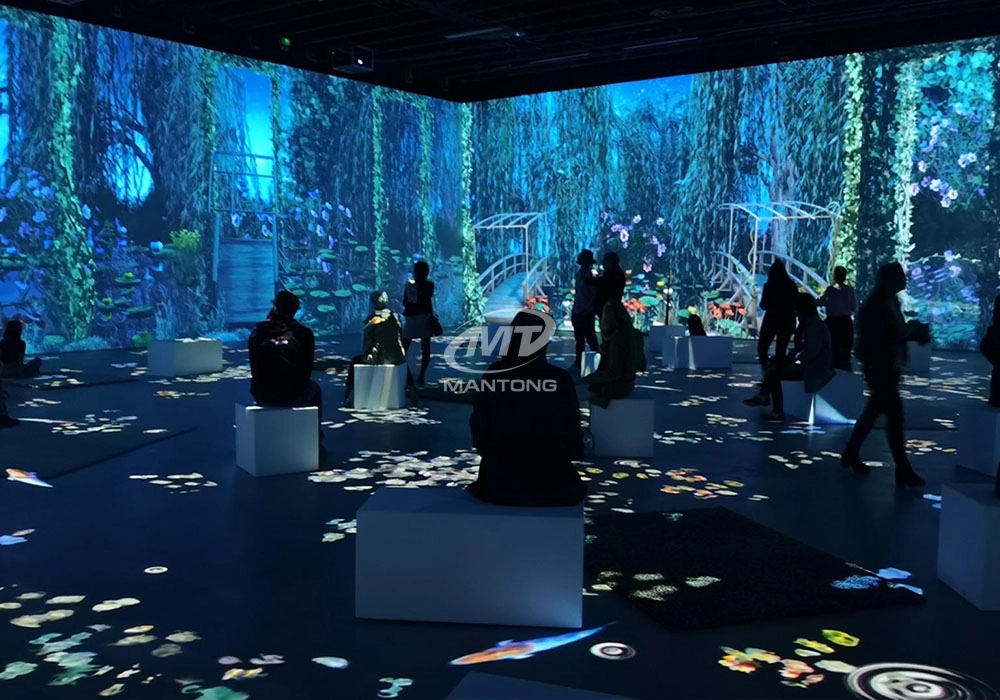
Mantong 6500LM High-Lumen Projector for Large-Scale Immersive Room Projection
Transform any space with Mantong's immersive projection mapping systems. Our high-lumen projectors (up to 6500 LM) and custom software create captivating interactive experiences for floors and walls. Ideal for museums, events, retail, and hospitality. Each kit includes professional ceiling mounting and 80+ pre-loaded video contents and is backed by a 12-month warranty and CE certification. We offer full customization and support to bring your vision to life.
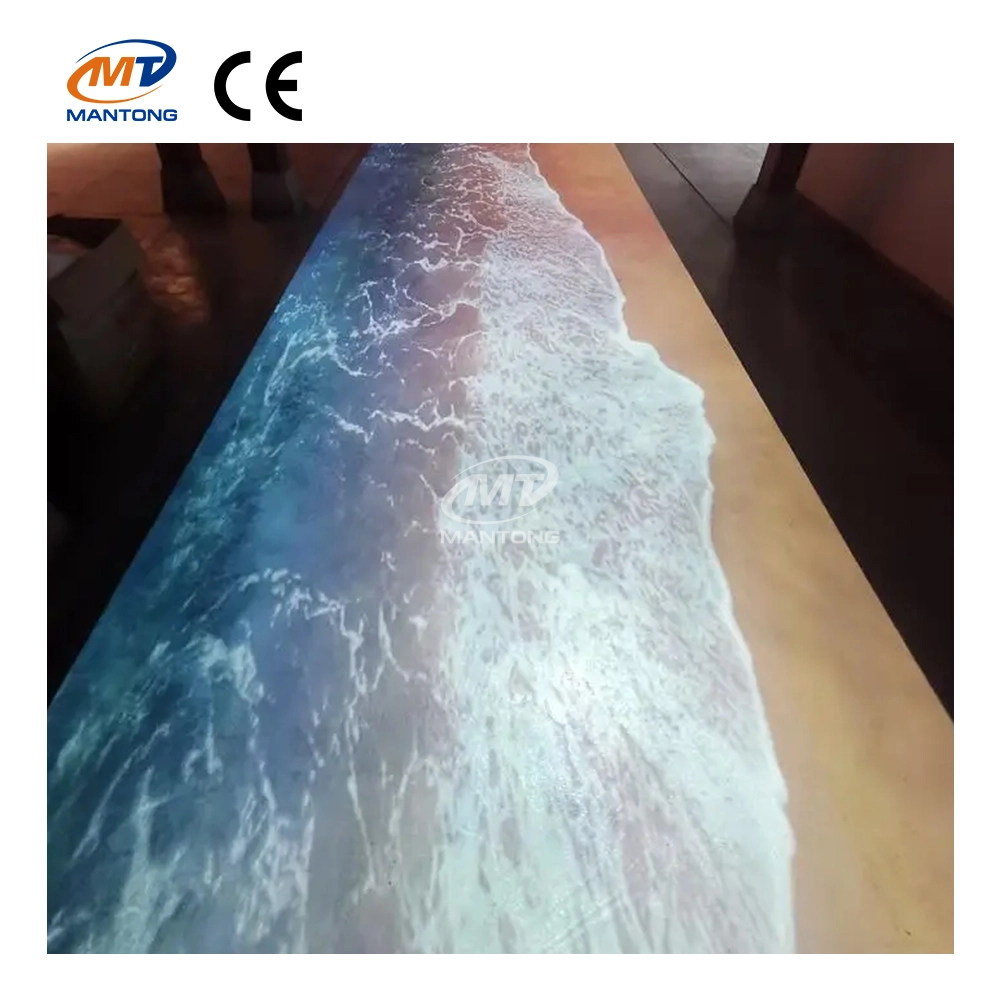
Indoor Interactive Floor Projector System - Customized Design & Installation Support
Indoor interactive floor projections display dynamic themed videos on the floor, commonly used in venues aiming to enhance brand influence or attract foot traffic, such as restaurants, hotel corridors, and brand car retail stores.
By using projectors and compatible software, the interactive content is projected onto the floor, encouraging engagement between people and the projected visuals. A single 5500-lumen indoor floor projector can cover an area of 5 m × 3 m. Typically, each project will use at least 3 units to ensure broad coverage and optimal visual effects.
We also offer customized design and installation support to enhance the interactive experience for your venue.
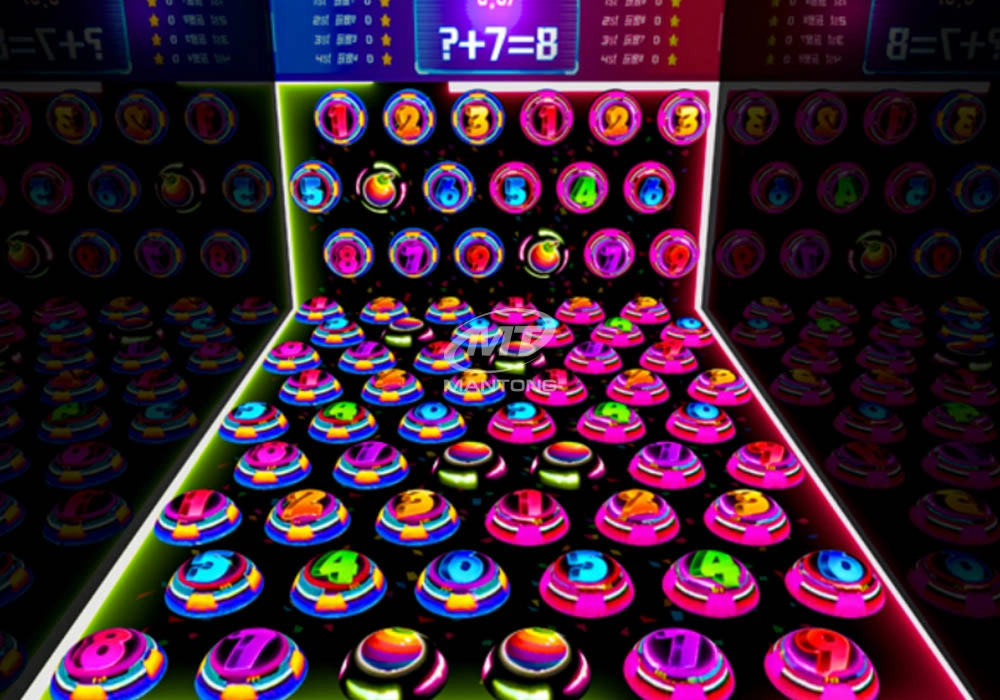
Amusement Rapidly Rotating Bouncing Sphere Interactive Wall Floor Projection Sports Games
Rapidly Rotating Bouncing Sphere is an interactive space where participants jump on rotating spheres. As they step on it, the spheres surface will show special interactivity
Jumping on spheres of the same color in succession causes them to pop, releasing light particles. The more consecutive jumps, the greater the reward—caterpillars appear, and eventually, all spheres of that color burst, filling the space with light and even more caterpillars.
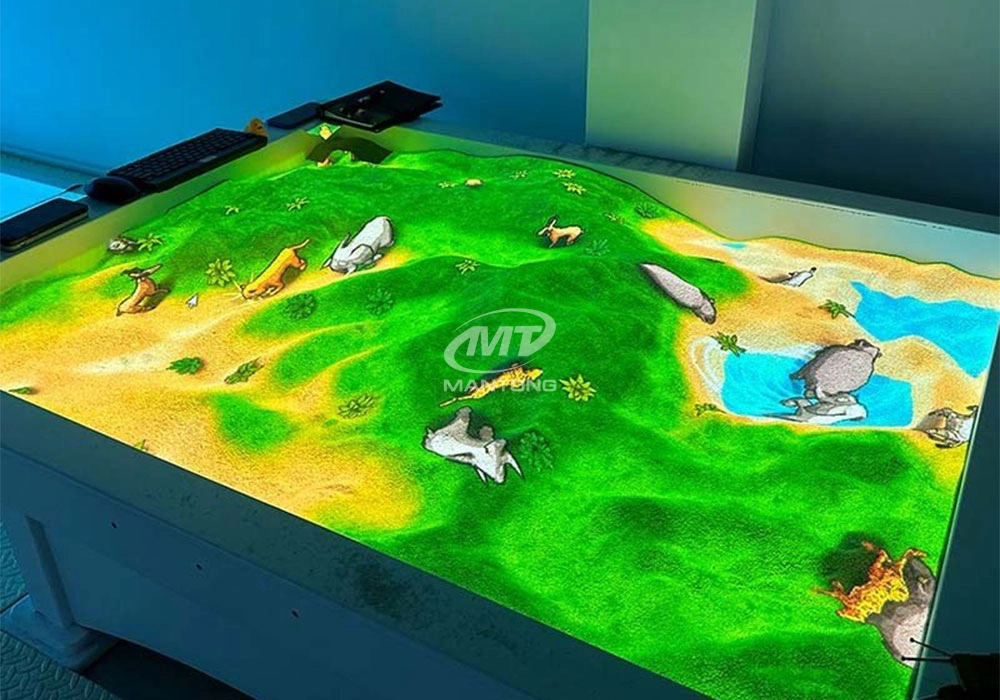
Interactive Sandbox Projection Mapping Games For Kids Play Park
Bring imagination to life with interactive sandbox projection mapping games designed for kids’ play parks. Using cutting-edge projection technology and real-time motion sensing, children can dig, build, and explore virtual worlds directly in the sand. Educational, engaging, and endlessly fun — it’s the perfect blend of play and learning.

Kaida Business Center, Shixin Road, Panyu District,Guangzhou City, Guangdong Province, China.
ManTong
ManTong
ManTong