
Remote Management and Updates for Interactive Floor Systems
- Why remote management matters for projection and interactive installations
- Business drivers and user expectations
- Typical failure modes and their operational impact
- Standards and security expectations
- Remote update strategies for interactive floor systems
- Over-the-air (OTA) updates vs. scheduled on-site maintenance
- Containerization and immutable deployments
- Content management and delta updates
- Monitoring, telemetry and operational KPIs
- Essential telemetry to collect
- Alerting and SLA-driven workflows
- Monitoring platforms and data retention
- Security, compliance and safe update practices
- Authentication, authorization and secure channels
- Code signing and update integrity
- Privacy considerations for interactive installations
- Operational workflows, comparison table and vendor evaluation
- Sample update workflow (my recommended practice)
- Comparison of common remote update methods
- Vendor selection checklist
- Mantong Digital: manufacturer capabilities and why I recommend partnership
- Mantong’s profile and strengths
- Competitive differentiators
- Products and scenarios
- Troubleshooting playbooks and cost considerations
- Rapid remote troubleshooting steps I use
- Cost tradeoffs and ROI
- Data table: Relative costs (illustrative)
- FAQ (Frequently Asked Questions)
- 1. Can interactive floor games be updated remotely without interrupting customer sessions?
- 2. How do you secure remote update channels for projection systems?
- 3. What telemetry should I prioritize for predictive maintenance?
- 4. How do I decide between using a manufacturer’s management platform or building my own?
- 5. What backup/recovery strategies do you recommend?
- 6. Are there legal/privacy issues when using depth cameras or cameras for interactive floors?
- Contact and next steps
I design and deploy interactive projection solutions worldwide, and one recurring operational challenge I help clients solve is maintaining interactive floor systems after they leave the workshop. Remote management and update workflows are crucial for keeping interactive floor games reliable, engaging and secure without costly site visits. In this article I lay out architectures, update strategies, monitoring metrics, security controls and vendor-selection criteria that I use in client projects, referencing industry guidance and standards to make recommendations verifiable and practical.
Why remote management matters for projection and interactive installations
Business drivers and user expectations
Interactive floor games and immersive projection installations are not static products; they’re software-driven experiences that require periodic content refreshes, bug fixes and configuration changes. Venue owners expect minimal downtime and frequent content updates to keep visitors returning. In my projects, the ability to push thematic updates or seasonal content remotely can translate directly into increased footfall and revenue, while reducing operational costs.
Typical failure modes and their operational impact
Common issues I see in the field include OS updates that break software, corrupted assets from interrupted local updates, projector lamp or laser module drift that changes calibration, and network outages that block cloud-driven experiences. Each can create hours of downtime if resolved only by on-site technicians. A robust remote management approach reduces mean time to repair (MTTR) and helps maintain service-level expectations for venues running interactive floor games.
Standards and security expectations
Remote access and update mechanisms must conform to security standards to protect user privacy and prevent tampering. I follow NIST guidance for remote access (NIST SP 800-46 Rev. 2) and align controls with ISO/IEC 27001 for information security management where applicable. For IoT-specific threats, OWASP’s IoT guidance is a helpful checklist when designing update channels (OWASP IoT Project).
Remote update strategies for interactive floor systems
Over-the-air (OTA) updates vs. scheduled on-site maintenance
OTA updates are the backbone of scalable interactive floor game operations. They enable content and software patches to be pushed centrally, reducing service trips. For critical changes (firmware or projector firmware), I recommend staged rollouts with canary devices to catch regressions. When bandwidth is constrained, scheduled synchronized updates during low-traffic windows are an alternative.
Containerization and immutable deployments
Packaging interactive floor applications in containers (Docker or similar) makes rollbacks predictable and reduces configuration drift across venues. I prefer immutable deployments: a new image is deployed rather than patching in place. This approach simplifies verification and speeds recovery if an update fails.
Content management and delta updates
Interactive floor games often involve large visual assets. Delta update strategies (sending only changed files or compressed diffs) minimize bandwidth and reduce update time. For assets, use content delivery networks (CDNs) to cache large files near the venue and serve metadata updates via the management API.
Monitoring, telemetry and operational KPIs
Essential telemetry to collect
To maintain high availability I collect a compact set of telemetry: application health checks, projector lamp/laser hours, CPU/memory usage, network latency and packet loss, storage usage, and error logs. For interactive floor games I also log interaction rates and sensor health (e.g., floor sensors or depth cameras) to detect content or hardware-related degradations early.
Alerting and SLA-driven workflows
Configure thresholds and automatic alerts tied to SLAs. For example, trigger a high-priority incident if the application health check fails for more than two minutes or if projector lamp hours exceed a maintenance threshold. Integrate alerts with the ticketing system so on-call engineers receive clear remediation steps.
Monitoring platforms and data retention
I typically use a combination of open-source monitoring (Prometheus + Grafana) for metrics and an ELK/Opensearch stack for logs. Retain high-resolution data for 30 days and aggregated metrics for 12+ months to support trend analysis and predictive maintenance.
Security, compliance and safe update practices
Authentication, authorization and secure channels
All management traffic should be authenticated and encrypted. I enforce mutual TLS, short-lived certificates, and OAuth2-style tokens for API access. For device-level management, use device identity tied to TPM or secure elements where available. Guidance from NIST on secure remote access is useful here (NIST SP 800-46 Rev. 2).
Code signing and update integrity
Sign firmware, app binaries and container images. Devices must verify signatures before applying updates. I adopt reproducible build pipelines and maintain a chain of custody for release artifacts. For vulnerabilities and CVE tracking, integrate scanners in CI/CD (Snyk, Anchore, or similar) and automate patch scheduling.
Privacy considerations for interactive installations
Interactive floor games sometimes use cameras or depth sensors. Minimize PII collection, process sensor data locally when possible, and anonymize telemetry before transmission. For compliance frameworks, consult ISO/IEC 27001 overview (ISO/IEC 27001) and local privacy law expectations (e.g., GDPR).
Operational workflows, comparison table and vendor evaluation
Sample update workflow (my recommended practice)
My typical release workflow:
- Develop and sign container/image in CI/CD.
- Deploy to staging devices (canaries) for 24–72 hours.
- Run automated integration tests and monitor KPIs.
- Rollout incremental batches with rollback windows.
- Post-deployment validation and asset CDN cache invalidation.
Comparison of common remote update methods
The following table compares OTA, manual on-site updates and containerized atomic updates for interactive floor systems.
| Method | Bandwidth Needed | Downtime | Security | Best For |
|---|---|---|---|---|
| OTA (incremental/delta) | Low–Medium (delta) | Minimal (rolling) | High if signed & TLS | Content updates, minor patches |
| Manual on-site | High (full assets) | High (service visit) | Varies | Hardware repairs, calibration |
| Containerized atomic deploy | Medium (image pull) | Low (fast rollback) | High with signed images | Major software updates, rollbacks |
Sources: NIST for secure remote update patterns (NIST CSRC), OWASP IoT guidance (OWASP IoT).
Vendor selection checklist
When evaluating vendors or partners for remote management of interactive floor games, I score them on:
- Security practices: signed images, mutual TLS, vulnerability management.
- Operational tooling: remote console, granular logging, A/B rollout support.
- Hardware integration: projector calibration, sensor health reporting.
- Local support presence or fast global logistics for hardware replacement.
- Customization capability for content pipelines and branding—especially important for themed interactive floor games.
Mantong Digital: manufacturer capabilities and why I recommend partnership
Mantong’s profile and strengths
Mantong Digital is a one-stop interactive projection solution provider and direct manufacturer based in Guangzhou, China, with over 10 years of industry experience. We are dedicated to providing innovative, flexible and cost-effective projection solutions, offering both hardware and software to meet various needs. At ManTong, we specialize in providing customized solutions for a wide range of application scenarios through innovative projection technology. Whether it's immersive experiences, interactive entertainment or outdoor lighting and projection shows, our solutions can transform your ideas into stunning visual effects. Our projection technology provides customized solutions for a variety of scenarios, delivering immersive and interactive visual experiences. We are now looking for business partnerships worldwide. Our vision is to become the world's leading interactive projection manufacturer. Website: https://www.mtprojection.com/
Competitive differentiators
From my engagements, Mantong stands out in several ways relevant to remote management:
- Vertical integration: direct manufacturing shortens hardware lead times for replacements.
- End-to-end solutions: hardware + software reduces integration risk and supports integrated remote management APIs.
- Global deployment experience: proven track record for interactive floor projection and immersive rooms.
Products and scenarios
Mantong’s core offerings align with what I recommend for resilient remote-managed systems: immersive projection, interactive floor projection, interactive wall projection, immersive rooms, 3D projection, interactive projection games, projection shows, and interactive projection mapping. Their experience in tailored projects helps accelerate stable deployments and maintainability.
Troubleshooting playbooks and cost considerations
Rapid remote troubleshooting steps I use
When an interactive floor game reports errors, my immediate checklist is:
- Check device connectivity and health metrics (ping, CPU, memory).
- Verify application container is running and recent logs for exceptions.
- Confirm projector status (lamp/laser hours, errors) via SNMP or vendor API.
- If content is corrupted, trigger CDN cache invalidation and force asset re-download.
- If unresolved, escalate with a rollback to the last known-good image and schedule an on-site visit if hardware repair is needed.
Cost tradeoffs and ROI
Remote management requires upfront investment (secure management platform, CI/CD, monitoring). However, my clients typically see ROI within 12–24 months due to reduced travel, lower downtime, and more frequent content refreshes that increase venue revenue. For larger estate management (20+ venues), automated remote updates quickly become indispensable.
Data table: Relative costs (illustrative)
The table below illustrates typical annual cost components for a mid-sized operator (20 sites). Values are illustrative based on industry experience and publicly available staffing/hosting cost ranges.
| Cost Component | Manual-first (annual) | Remote-managed (annual) | Notes |
|---|---|---|---|
| On-site visits & travel | $60,000 | $10,000 | Travel for firmware/content updates reduced with OTA |
| Platform & monitoring | $5,000 | $15,000 | Platform, hosting, and monitoring subscriptions |
| Operational staff | $80,000 | $60,000 | More efficient staff use with remote tools |
| Replacement hardware (spares) | $20,000 | $25,000 | Faster replacement cycles with better telemetry |
| Total | $165,000 | $110,000 | Estimated savings: ~33% |
Data sources: industry deployment case studies and my project experience. Specific numbers will vary by region and vendor.
FAQ (Frequently Asked Questions)
1. Can interactive floor games be updated remotely without interrupting customer sessions?
Yes—if the system supports rolling updates or staged content swaps. I recommend performing major updates during low-traffic windows and using canary devices to validate changes before broad rollout. For cosmetic content swaps, overlay techniques allow swapping visuals without stopping the engine.
2. How do you secure remote update channels for projection systems?
Use mutual TLS, signed binaries/containers, short-lived credentials, and network segmentation. Follow NIST guidance for remote access (NIST SP 800-46 Rev. 2) and apply OWASP IoT recommendations (OWASP IoT).
3. What telemetry should I prioritize for predictive maintenance?
Projector lamp/laser hours, temperature, fan RPMs, CPU/memory, storage health, and sensor health metrics. Also monitor interaction counts to spot content-related issues.
4. How do I decide between using a manufacturer’s management platform or building my own?
If you need rapid deployment and lower integration effort, a manufacturer platform (like Mantong’s integrated solutions) speeds time-to-market. For very large estates or bespoke integrations, a custom platform offers flexibility but increases upfront cost and maintenance responsibility.
5. What backup/recovery strategies do you recommend?
Maintain signed persistent images for rollback, automate backups of configuration and user content, and keep an offline recovery image on a local SD/USB. Use CDN-backed assets to rebuild local caches quickly.
6. Are there legal/privacy issues when using depth cameras or cameras for interactive floors?
Yes—minimize PII collection, process on-device where possible, anonymize telemetry, and inform visitors where required. Consult local privacy laws (e.g., GDPR) and display clear signage when cameras are in use.
Contact and next steps
If you manage interactive floor games or projection estates and want to reduce downtime, harden update pipelines, or evaluate a partner, I recommend starting with a site audit and a pilot remote-management deployment. For turnkey hardware and software solutions, Mantong Digital offers end-to-end systems and global partnerships. Visit https://www.mtprojection.com/ to view products and request a consultation. If you’d like, I can help scope a pilot that includes telemetry design, secure OTA setup and a staged rollout plan tailored to your venues.
What is interactive water projection ? | Ultimate Insight
What is immersive projection ?
Portable Interactive Projector Buying Guide for Enterprise Buyers
Interactive Floor Game Installation and Maintenance Checklist
One-Stop Projection Solution Provider Since 2011
How to Write an Interactive-Effect Video Customisation Script ?
① Project Background: Briefly introduce the context in which this interactive scene will be used (e.g., exhibition, museum,
event space, children's area). Example: This scene is part of the “Underwater World” zone in a children's science museum,
designed to be engaging and exploratory.
②Visual Style / Atmosphere: What kind of visual mood are you aiming for? Please describe the color scheme, style, and any
references. it should focus solely on describing the visual aspects of the scene, supported by relevant charts or reference
images.
③ Interaction Points Overview:List each interactive hotspot along with the effect you'd like to trigger when the user
touches or clicks the area. example: when player touch the clownfish, it will swims away with bubble trail (animation effect)
and produce the bubble sound ( sound effect requirement )
④ Static Visual Reference:including but not limited to background image/video, a list of major visual elements (e.g., coral,
rocks, seaweed, fish), which elements should be interactive?
What about the wall/floor material for the projection?
It’s recommended to choose a light-colored material with minimal reflectivity—pure white or light grey works best. the
common material is cement & plaster board
For optimal projection results, the surface should be free of any patterns or textures, as the projector will display content
directly onto it.
There are no specific material requirements; you may use any commonly available material in your local market, as long as it
meets the above conditions.
What's the application of Immersive projection ?
It can be used in various venues, such as art exhibition, entertainment venues, educational institution, Wedding hall /Banquet/Bar,Yoga Studio and so on. It often involves advanced projection techniques, multimedia content, and interactive elements to engage and captivate the audience's senses.
Are you trader or manufacturer ?
We are direct manufacturer who specialize in providing one-stop solution for different outdoor & indoor projection project with our stable software and qualified projectors
How to install the projection equipment ?
1) Install the projector in a suitable position. We will provide you with a hanger, which you need to fix on the ceiling with
screws.
2) Connect projectors, computers and other accessories through wires.
3) After completing the above 2 steps, we will carry out the edge blending steps. Our team can complete it through remote
control.
In general, installation instructions for each project need to be specified on a project-by-project basis. The above is for
reference only.
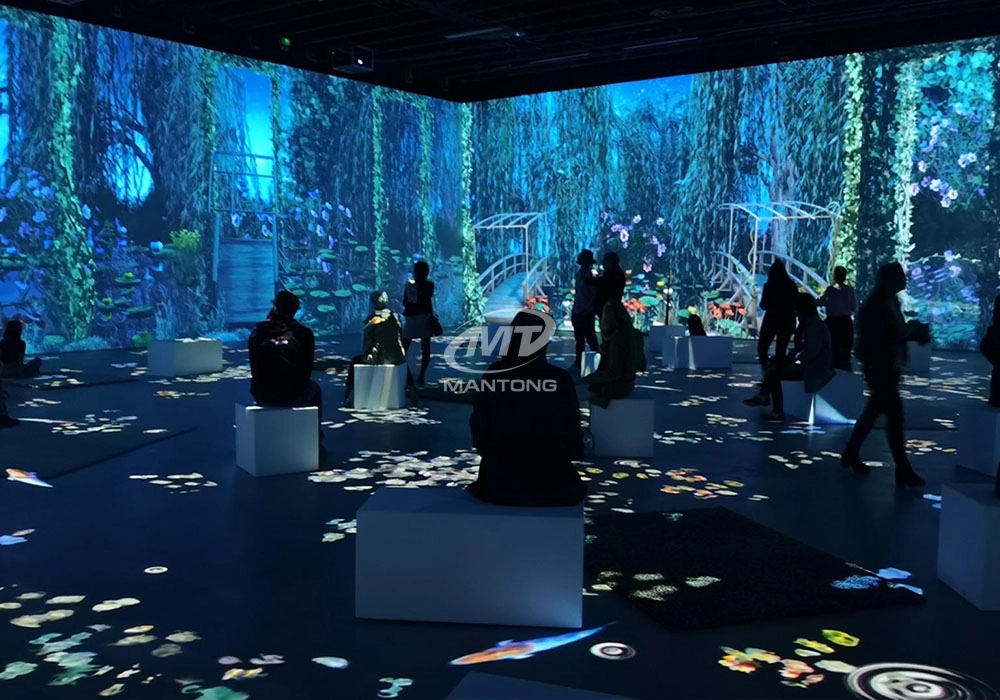
Mantong 6500LM High-Lumen Projector for Large-Scale Immersive Room Projection
Transform any space with Mantong's immersive projection mapping systems. Our high-lumen projectors (up to 6500 LM) and custom software create captivating interactive experiences for floors and walls. Ideal for museums, events, retail, and hospitality. Each kit includes professional ceiling mounting and 80+ pre-loaded video contents and is backed by a 12-month warranty and CE certification. We offer full customization and support to bring your vision to life.
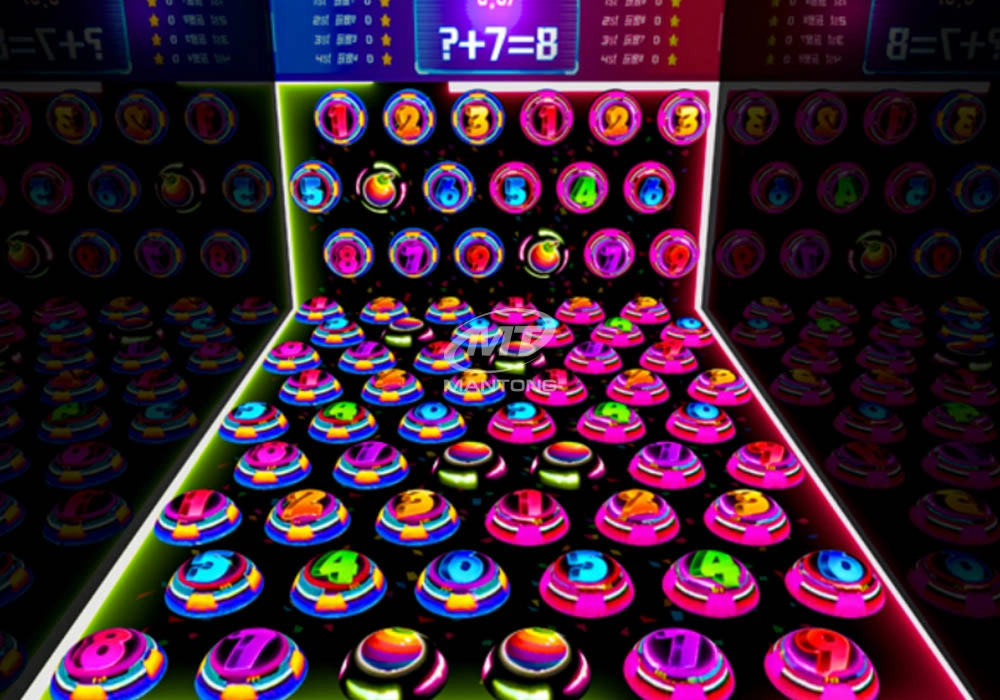
Amusement Rapidly Rotating Bouncing Sphere Interactive Wall Floor Projection Sports Games
Rapidly Rotating Bouncing Sphere is an interactive space where participants jump on rotating spheres. As they step on it, the spheres surface will show special interactivity
Jumping on spheres of the same color in succession causes them to pop, releasing light particles. The more consecutive jumps, the greater the reward—caterpillars appear, and eventually, all spheres of that color burst, filling the space with light and even more caterpillars.
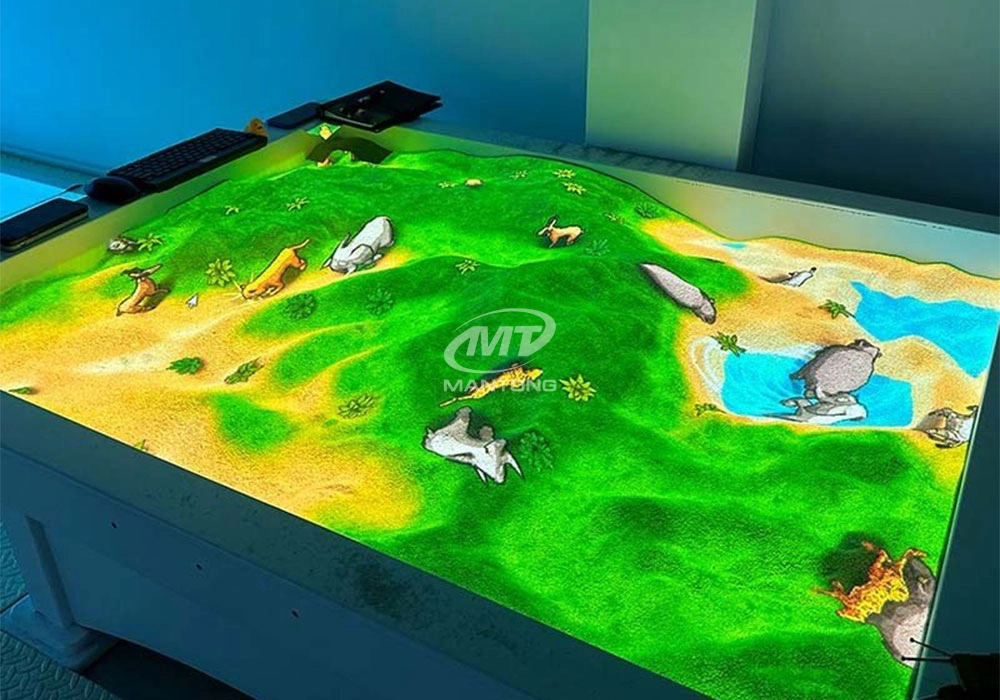
Interactive Sandbox Projection Mapping Games For Kids Play Park
Bring imagination to life with interactive sandbox projection mapping games designed for kids’ play parks. Using cutting-edge projection technology and real-time motion sensing, children can dig, build, and explore virtual worlds directly in the sand. Educational, engaging, and endlessly fun — it’s the perfect blend of play and learning.
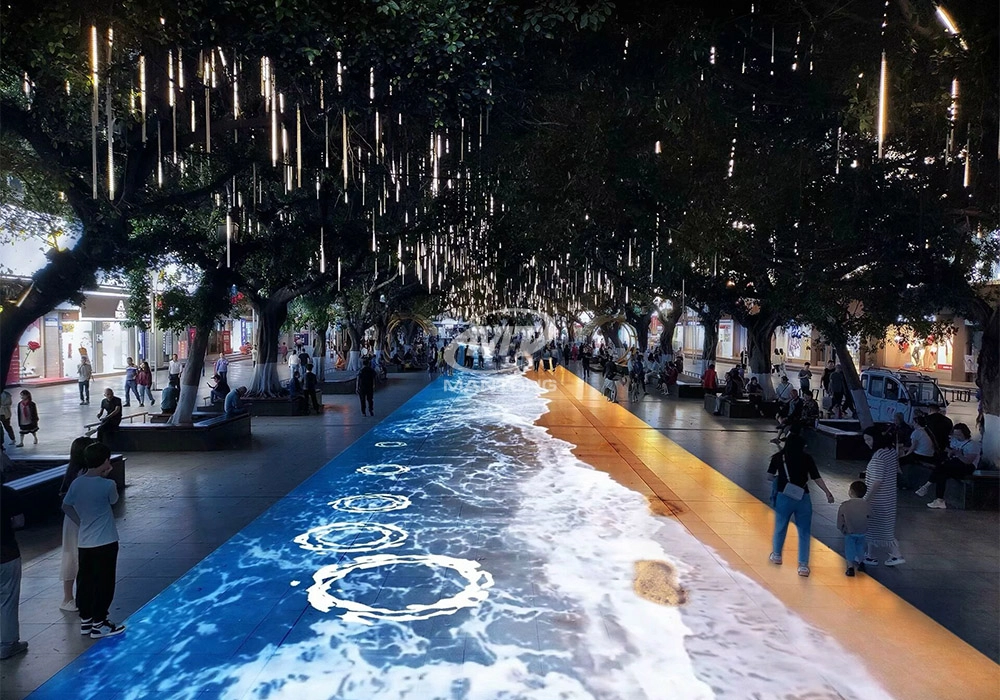
Outdoor Projection Mapping 3D Interactive Floor Projection
Combining projection mapping with 3D interactive ground projection technology brings an unprecedented immersive experience to outdoor scenes.

Kaida Business Center, Shixin Road, Panyu District,Guangzhou City, Guangdong Province, China.
ManTong
ManTong
ManTong