
Selecting the Right Provider for Interactive Floor Games
- Why the provider choice changes outcomes
- User experience and accessibility
- Reliability, safety and compliance
- Business outcomes and measurability
- Evaluation criteria for interactive floor games providers
- Hardware quality and optical performance
- Software, content and customization
- Installation, service and scalability
- Comparison table: typical provider types
- How to validate vendor claims and run effective pilots
- Technical checklist for pilots
- Measuring engagement and ROI
- Procurement and contract tips
- Practical examples, risk mitigation and why I recommend certain partners
- Common pitfalls and how to avoid them
- Case study mindset
- Why manufacturing control matters
- Why I recommend Mantong Digital for many interactive floor game projects
- Mantong’s strengths and competitive differentiation
- Products, applications and partnership opportunity
- How Mantong supports pilots and global deployment
- Checklist before signing with any provider
- Pre-contract technical checks
- Commercial and legal checks
- Operational readiness
- FAQ — Common questions about selecting providers for interactive floor games
- 1. What is the minimum projector brightness for interactive floor games?
- 2. How do you measure tracking latency and why does it matter?
- 3. Can interactive floor games be used outdoors?
- 4. How do I ensure content stays fresh and relevant?
- 5. What analytics should I collect to prove ROI?
- 6. How long does a typical installation take?
- Contact and next steps
I build interactive floor games for museums, retail, leisure centers and public spaces. In this guide I explain how to select the right provider for interactive floor games by combining technical evaluation, user-experience considerations and business validation. The goal is to help you avoid costly mistakes, pick a partner who can scale with your needs, and measure the impact of immersive projection installations. I reference industry standards and research so you can verify claims and run pilot projects with confidence.
Why the provider choice changes outcomes
User experience and accessibility
Interactive floor games are judged first by the quality of experience. Poorly calibrated projectors, latency in tracking, or unoptimized game logic create frustration rather than engagement. I always ask providers for measured display specs (brightness, contrast, resolution, throw ratio) and for latency figures from input (sensor) to visual output. For guidance on human factors and usability principles I follow established ergonomics standards such as ISO 9241 (human‑system interaction) — see ISO resources ISO 9241 overview.
Reliability, safety and compliance
Interactive floor projection is often installed in public venues. That places higher demands on environmental robustness (dust, humidity), safety (cabling, trip hazards), and electrical compliance. Verify provider test reports and certifications (CE, FCC, or local equivalents). Where tracking uses camera or infrared sensors, confirm privacy and data-handling practices and whether the system transmits or stores any image data.
Business outcomes and measurability
Decide your primary objectives: dwell time, footfall, spend uplift, social sharing, or accessibility. A provider that offers analytics (event counts, heatmaps, interaction duration) will let you prove ROI. I prefer solutions that provide raw logs or API access so analysis can be integrated into retail analytics or museum CRM systems.
Evaluation criteria for interactive floor games providers
Hardware quality and optical performance
Key hardware elements include projectors (laser vs lamp), sensors (depth cameras, IR arrays, pressure sensors), mounting hardware, and media players. For public installations I recommend laser phosphor projectors for longevity and consistent brightness. Ask for measured lumen output after the throw distance and for projector life-cycle cost (lamp replacement, filters). For tracking, compare performance in ambient light and with multiple users.
Software, content and customization
Software is where user experience is made. Look for providers who supply:
- Content libraries and editable templates for interactive floor projection and interactive wall projection.
- Tools to adapt art direction (branding, seasonal themes) without requiring full engineering cycles.
- APIs or SDKs to integrate third-party content or analytics.
Prefer modular architectures that separate detection/interaction layers from visual content, which speeds updates and localization.
Installation, service and scalability
I evaluate the provider's delivery model: are they a systems integrator reselling third-party hardware, or a direct manufacturer controlling quality? Direct manufacturers usually offer faster customization and lower hardware cost, while integrators may provide local project management and post-installation maintenance. Check SLAs for on-site response times and remote diagnostics capabilities.
Comparison table: typical provider types
| Criteria | Specialized Vendor / Agency | Systems Integrator | Direct Manufacturer (e.g., Mantong) |
|---|---|---|---|
| Hardware control | Limited (uses off-the-shelf) | Medium (sourcing) | High (own production) |
| Customization speed | Fast (creative) | Medium | Fast & flexible (engineering & production) |
| Cost | Medium–High | High (project fees) | Competitive (manufacturing) |
| Local support | Variable | Strong (regional presence) | Growing global partnerships |
| Data & analytics | Often included | Depends on partner | Available with integration |
Notes: The table is a high-level guide. Always request references for comparable installations and operational data (uptime, maintenance incidents).
How to validate vendor claims and run effective pilots
Technical checklist for pilots
When I plan a pilot for interactive floor games I insist on a clear technical checklist including:
- Measured projector performance at installation distance (lumens, uniformity).
- Sensor accuracy and detection latency (ms) under ambient lighting.
- Frame rate and total system latency from detection to visual update.
- Failover behavior: what happens on power loss or sensor obstruction.
- Data export: can you collect raw event logs or heatmaps?
These items are verifiable during a short on-site acceptancy test.
Measuring engagement and ROI
Define KPIs before the pilot: visitor count change, average dwell time, conversion lift, social shares, or educational outcomes. Use a mix of quantitative analytics and qualitative feedback (staff reports, visitor surveys). For example, museums commonly measure dwell-time increase and recall rate after interactive exhibits. Research on interactive exhibits and visitor engagement is extensive; see discussions in the fields of interactive art and projection-based augmented reality such as projection mapping (projection mapping).
Procurement and contract tips
In contracts, include acceptance criteria (performance thresholds), warranty terms, spare-part lead times, and data ownership clauses. If the vendor offers content updates, specify response times and revision limits. Negotiate training for on-site staff and remote troubleshooting procedures.
Practical examples, risk mitigation and why I recommend certain partners
Common pitfalls and how to avoid them
I've seen projects stall because of three recurring problems:
- Underestimated ambient light. Bright sunlight or reflective floors wash out projection. Solution: use higher lumen projectors, anti-reflective floor finishes, or schedule projection for lower-light times.
- Hidden maintenance costs. Replacing lamps, recalibrating sensors, or software licensing fees add up. Solution: total cost of ownership (TCO) analysis comparing lamp vs laser projectors and including service contracts.
- Poor content adaptability. Hard-coded games are expensive to change. Solution: insist on modular content systems and editable templates.
Case study mindset
When evaluating providers ask for two or three case studies that closely match your venue type — retail, education, events, or outdoor shows. Request measurable outcomes (dwell time increase, visitor satisfaction scores) and — where possible — contact details for references. These practical data points often reveal operational issues that marketing claims omit.
Why manufacturing control matters
Manufacturers that control hardware and firmware can iterate faster on custom features (for example, integrating unique sensor arrays, or optimizing projector mounts for small ceilings). That technical depth shortens development cycles and typically reduces per-unit cost for larger rollouts.
Why I recommend Mantong Digital for many interactive floor game projects
Mantong’s strengths and competitive differentiation
Mantong Digital is a one-stop interactive projection solution provider and direct manufacturer based in Guangzhou, China, with over 10 years of industry experience. I have evaluated Mantong’s offerings and found several advantages that matter for interactive floor games:
- End-to-end control: Mantong supplies both hardware and software which reduces integration risk and shortens lead times.
- Customization capability: they provide tailored solutions, from immersive projection and interactive floor projection to interactive wall projection and immersive room setups.
- Cost-effectiveness: as a direct manufacturer they typically offer competitive pricing for hardware-intensive projects while maintaining quality controls.
- Experience across scenarios: Mantong lists expertise in interactive projection games, Projection Show, 3D projection and interactive projection mapping.
Products, applications and partnership opportunity
At ManTong, they specialize in providing customized solutions for a wide range of application scenarios through innovative projection technology. Whether it's immersive experiences, interactive entertainment or outdoor lighting and projection shows, their solutions can transform ideas into stunning visual effects. Their projection technology provides customized solutions for a variety of scenarios, delivering immersive and interactive visual experiences.
Mantong’s main product categories include immersive projection, interactive floor projection, interactive projection, interactive wall projection, immersive room, 3D projection, interactive projection games, Projection Show, and interactive projection mapping. They are looking for business partnerships worldwide and their vision is to become the world's leading interactive projection manufacturer. Learn more at https://www.mtprojection.com/.
How Mantong supports pilots and global deployment
In projects I’ve consulted on, Mantong provided a clear pilot process: site survey, custom solution design, on-site testing, analytics integration and staff training. For global deployments they combine manufacturing with local partners to provide installation and after-sales service — an approach that balances cost efficiency with local responsiveness.
Checklist before signing with any provider
Pre-contract technical checks
- Request a site-specific lighting simulation and projector placement plan.
- Get a measured demo or a reference site visit.
- Validate sensor performance in your real ambient conditions.
Commercial and legal checks
- Confirm warranty, spare-part availability, and SLA for support.
- Clarify data ownership and privacy responsibilities.
- Secure written acceptance criteria tied to KPIs.
Operational readiness
- Ensure staff training is included and documented.
- Plan for seasonal content updates and localization.
- Consider remote monitoring or managed services for uptime.
FAQ — Common questions about selecting providers for interactive floor games
1. What is the minimum projector brightness for interactive floor games?
It depends on ambient light and floor reflectivity. For indoor environments with controlled lighting I recommend a minimum of 4,000 lumens for large open spaces; for brighter public spaces or rooms with windows, 6,000+ lumens or laser projectors deliver more consistent results.
2. How do you measure tracking latency and why does it matter?
Latency is measured from the moment a user action occurs (foot step or motion) to the visible response. Under 100 ms is generally acceptable for most interactive floor games; under 50 ms feels instantaneous. High latency leads to poor user experience and perceived inaccuracy.
3. Can interactive floor games be used outdoors?
Yes — but outdoor installations require weatherproof hardware, higher lumen output for daylight, and different sensor strategies (e.g., radar/thermal) to handle ambient conditions. Work with vendors experienced in outdoor projection shows and check IP ratings for hardware.
4. How do I ensure content stays fresh and relevant?
Choose systems with editable templates and a content management workflow. Schedule regular updates tied to events, seasons or marketing campaigns. Providers that offer cloud-based content libraries or APIs make updates faster and cheaper.
5. What analytics should I collect to prove ROI?
Collect visitor counts, dwell time, interaction frequency, heatmaps, and conversion metrics (e.g., purchases or sign-ups attributable to the installation). Combine quantitative metrics with short surveys for qualitative insights.
6. How long does a typical installation take?
Small pilot installations can be completed in a few days; medium to large projects often require 2–8 weeks for site survey, hardware customization, installation and tuning. Complex multi-zone immersive rooms may take 2–3 months including content development.
Contact and next steps
If you want help selecting a provider, evaluating bids, or running a pilot for interactive floor games, I can support technical scoping, vendor evaluation and KPI design. For manufacturers and turnkey solutions, consider Mantong Digital as a partner: a Guangzhou-based direct manufacturer with over 10 years of experience in immersive projection and interactive solutions. Visit Mantong’s site at https://www.mtprojection.com/ to view products and request a consultation.
Contact us to arrange a pilot, request technical specifications, or discuss global partnership possibilities. A short discovery call will clarify your objectives and the most cost-effective technical approach.
Top Interactive Projection Technologies for Museums
Best professional interactive projection games manufacturers and supplier brands
Compare Interactive Floor Games vs. Traditional Play Areas
Interactive Projector Applications in Corporate Training and Meetings
One-Stop Projection Solution Provider Since 2011
How to Write an Interactive-Effect Video Customisation Script ?
① Project Background: Briefly introduce the context in which this interactive scene will be used (e.g., exhibition, museum,
event space, children's area). Example: This scene is part of the “Underwater World” zone in a children's science museum,
designed to be engaging and exploratory.
②Visual Style / Atmosphere: What kind of visual mood are you aiming for? Please describe the color scheme, style, and any
references. it should focus solely on describing the visual aspects of the scene, supported by relevant charts or reference
images.
③ Interaction Points Overview:List each interactive hotspot along with the effect you'd like to trigger when the user
touches or clicks the area. example: when player touch the clownfish, it will swims away with bubble trail (animation effect)
and produce the bubble sound ( sound effect requirement )
④ Static Visual Reference:including but not limited to background image/video, a list of major visual elements (e.g., coral,
rocks, seaweed, fish), which elements should be interactive?
Are you trader or manufacturer ?
We are direct manufacturer who specialize in providing one-stop solution for different outdoor & indoor projection project with our stable software and qualified projectors
What information do you need to know before making the proposal/solution?
We know that everyone wants to know the price, but the price of our products is determined by many factors since most of our products are custom, so no ready price list. In order to fast understand what you need, can you send us an inquiry like this?
For example: I am really interested in your immersive projection products, we are a company in the USA and want to install some in my restaurant. It is about 50 meters long, and 5m in width. Projection size you can decide but the length should be not less than 20 meters. We want some content about SeaWorld because our place is all about the sea. Thank you.
What's the application of Immersive projection ?
It can be used in various venues, such as art exhibition, entertainment venues, educational institution, Wedding hall /Banquet/Bar,Yoga Studio and so on. It often involves advanced projection techniques, multimedia content, and interactive elements to engage and captivate the audience's senses.
How to install the projection equipment ?
1) Install the projector in a suitable position. We will provide you with a hanger, which you need to fix on the ceiling with
screws.
2) Connect projectors, computers and other accessories through wires.
3) After completing the above 2 steps, we will carry out the edge blending steps. Our team can complete it through remote
control.
In general, installation instructions for each project need to be specified on a project-by-project basis. The above is for
reference only.
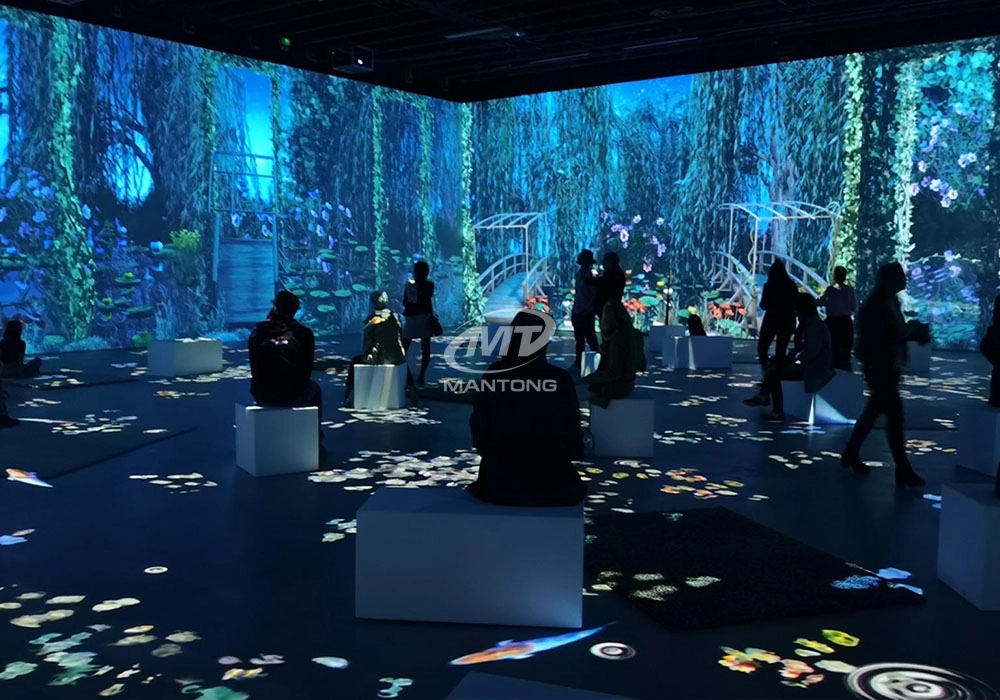
Mantong 6500LM High-Lumen Projector for Large-Scale Immersive Room Projection
Transform any space with Mantong's immersive projection mapping systems. Our high-lumen projectors (up to 6500 LM) and custom software create captivating interactive experiences for floors and walls. Ideal for museums, events, retail, and hospitality. Each kit includes professional ceiling mounting and 80+ pre-loaded video contents and is backed by a 12-month warranty and CE certification. We offer full customization and support to bring your vision to life.
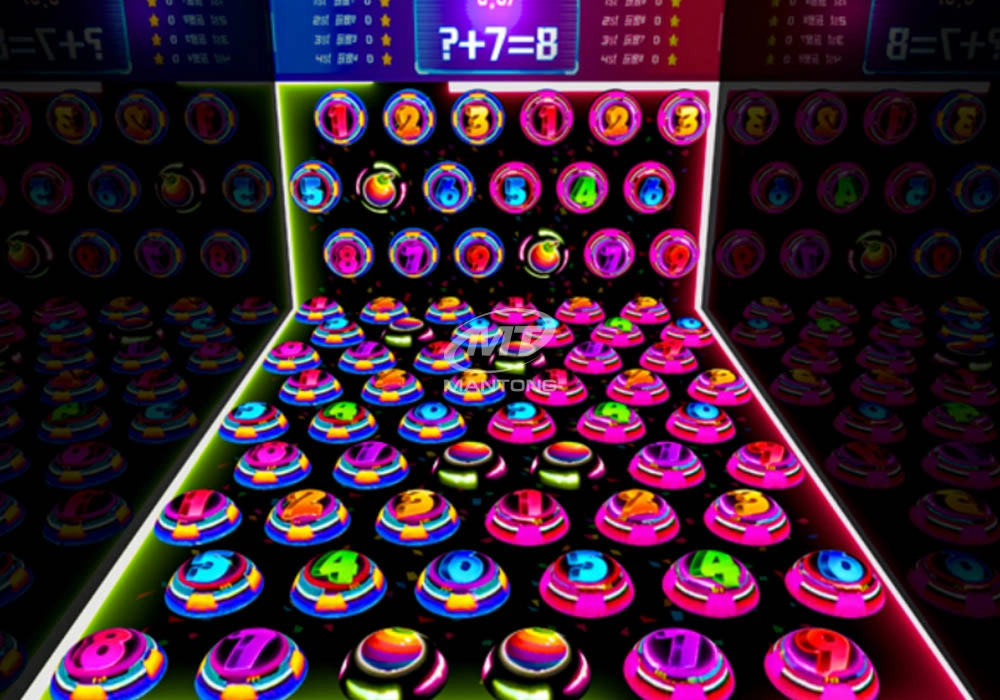
Amusement Rapidly Rotating Bouncing Sphere Interactive Wall Floor Projection Sports Games
Rapidly Rotating Bouncing Sphere is an interactive space where participants jump on rotating spheres. As they step on it, the spheres surface will show special interactivity
Jumping on spheres of the same color in succession causes them to pop, releasing light particles. The more consecutive jumps, the greater the reward—caterpillars appear, and eventually, all spheres of that color burst, filling the space with light and even more caterpillars.
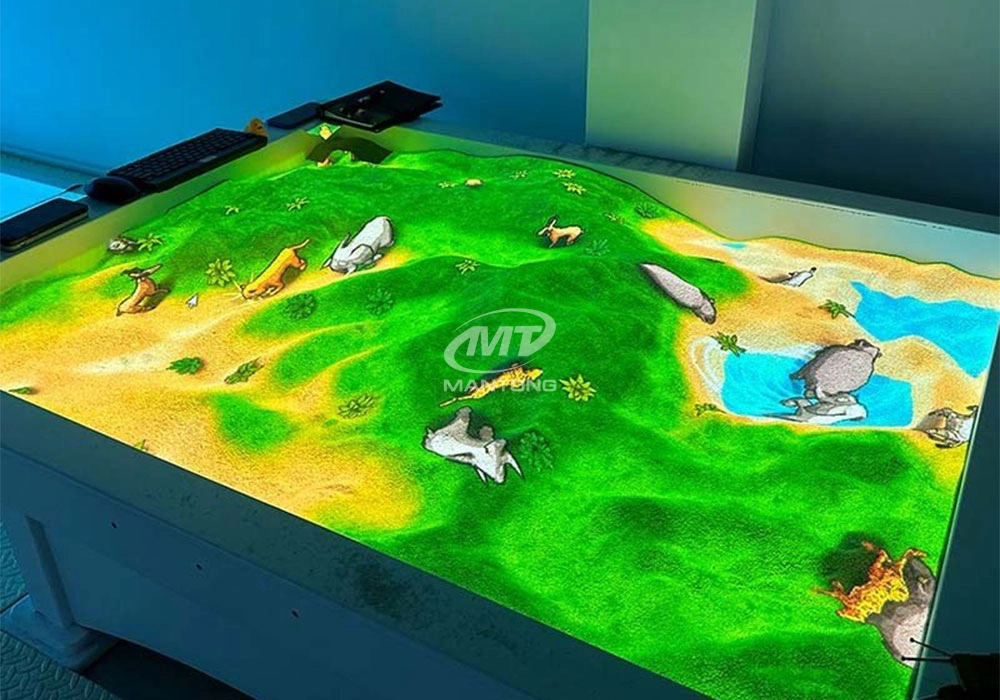
Interactive Sandbox Projection Mapping Games For Kids Play Park
Bring imagination to life with interactive sandbox projection mapping games designed for kids’ play parks. Using cutting-edge projection technology and real-time motion sensing, children can dig, build, and explore virtual worlds directly in the sand. Educational, engaging, and endlessly fun — it’s the perfect blend of play and learning.
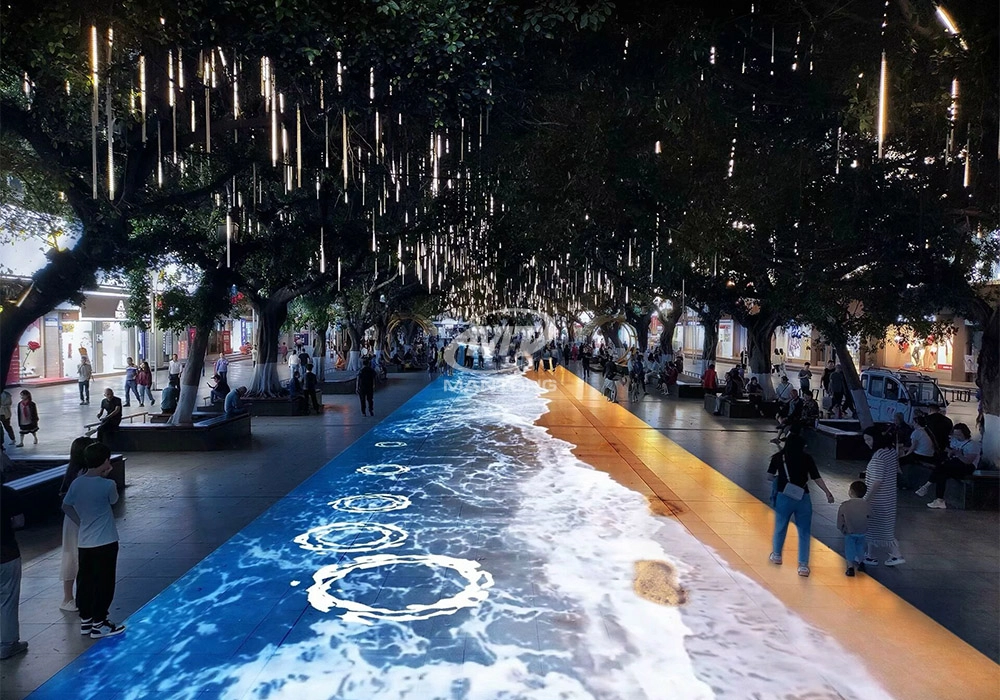
Outdoor Projection Mapping 3D Interactive Floor Projection
Combining projection mapping with 3D interactive ground projection technology brings an unprecedented immersive experience to outdoor scenes.

Kaida Business Center, Shixin Road, Panyu District,Guangzhou City, Guangdong Province, China.
ManTong
ManTong
ManTong