
Troubleshooting Common Interactive Floor Projection Issues
- Understanding challenges in interactive floor projection installation
- Diagnosing hardware faults for interactive floor projection installation
- Resolving software and tracking problems in interactive floor projection installation
- Calibration and alignment best practices for interactive floor projection installation
- Environmental and surface considerations for interactive floor projection installation
- Projector selection and configuration for interactive floor projection installation
- Common connectivity and latency fixes for interactive floor projection installation
- Preventive maintenance strategy for interactive floor projection installation
- ManTong Digital: integrated solutions for interactive floor projection installation
- Troubleshooting checklist and step-by-step guide for interactive floor projection installation
- When to engage professional support for interactive floor projection installation
- FAQ — Common questions about interactive floor projection installation
- References and further reading
Understanding challenges in interactive floor projection installation
Interactive floor projection installation projects aim to create immersive, responsive surfaces that engage visitors. Yet deployment often runs into technical and operational issues — dim or uneven images, tracking failures, latency, misalignment, projection artifacts and rapid wear. This guide breaks down the most common problems, root causes and practical fixes. Each section focuses on a specific failure mode and provides hands-on steps you can take to restore stable operation or decide when to escalate to specialist service.
Diagnosing hardware faults for interactive floor projection installation
Hardware defects account for a large share of installation problems. Typical symptoms: projector won’t power on, overheating shutdowns, fan noise, color shifts, or sudden loss of image. First-line checks:
- Power and cabling: verify the projector and ancillary devices share correct voltage and stable power. Use an uninterruptible power supply (UPS) where possible to prevent spikes during shows.
- Lamp vs laser: if lamp-based, check lamp hours and replace at recommended intervals. Laser projectors have different failure modes (driver or cooling), so consult vendor logs.
- Cooling and dust: clogged filters and heat-sink dust cause thermal throttling. Clean according to manufacturer guidance and maintain ambient ventilation.
- Projection path: inspect lenses for scratches, dirt, or condensation; replace or clean with appropriate optical supplies.
Tools that accelerate diagnosis: a handheld lux meter to check brightness, a multimeter for voltage validation, and the projector’s firmware logs (if available) to read error codes.
Resolving software and tracking problems in interactive floor projection installation
Interactive tracking and software are often the most complex failure points. Symptoms include unresponsive touches, jittery cursor, or ghost interactions. Causes vary from camera misconfiguration to software bugs or network latency. Troubleshooting steps:
- Reboot sequence: restart tracking cameras, middleware, and the content engine in order. Many tracking frameworks cache states that require a clean restart.
- Camera calibration: confirm cameras are correctly positioned and focused. Re-run intrinsic and extrinsic calibration routines and verify that the floor plane is correctly registered.
- Ambient IR/lighting interference: for infrared-based tracking, shield cameras from direct sunlight or strong warm lighting and remove reflective objects in the field of view.
- Software logs and versions: check for mismatched versions between interactive software, middleware, and drivers. Patch known bugs and keep a version-control baseline for stable builds.
When using consumer-grade cameras or low-cost sensors, consider upgrading to industrial-grade trackers for consistent performance in public installations.
Calibration and alignment best practices for interactive floor projection installation
Proper geometric calibration is critical. Misalignment causes doubled images, distorted interactive regions, and inconsistent touch mapping. Follow this calibration workflow:
- Establish physical anchor points on the floor and in projector space to serve as calibration fiducials.
- Project a high-contrast calibration grid and use calibration software to compute homography between projector and floor plane.
- Perform keystone and warping adjustments in the projector or through mapping software; prefer software warping if frequent small adjustments are needed.
- Validate with dynamic tests: move a tracked object across the floor and confirm the projected reaction follows within acceptable latency and accuracy thresholds.
Document calibration parameters and store configuration backups so you can restore a working state after maintenance or power cycles.
Environmental and surface considerations for interactive floor projection installation
Floor material, ambient light, and site layout strongly influence image quality and tracking accuracy.
- Surface reflectivity: matte, lightly textured surfaces perform best. Highly reflective floors (polished marble) cause hot spots and confuse optical trackers.
- Ambient light: aim to reduce competing light where possible. For daylight environments, increase projector lumen output or use higher-contrast content palettes.
- Foot traffic and wear: choose durable floor materials and protective coatings; anticipate scratches that scatter light and schedule surface inspections.
Choosing the right surface and controlling lighting are often more cost-effective than upgrading projector hardware.
Projector selection and configuration for interactive floor projection installation
Selecting the correct projector family is a strategic decision. Consider brightness (ANSI lumens), throw ratio, resolution, contrast, and light source (lamp, LED, or laser). The table below summarizes typical options:
| Technology | Strengths | Weaknesses | Approx. Best Use |
|---|---|---|---|
| DLP (Digital Light Processing) | High contrast, compact, reliable; good for crisp motion | Possible rainbow effect; lamp hours on older models | Interactive floors requiring fast refresh and compact installation |
| LCD | Accurate colors and strong brightness at mid-range cost | Lower black level; bulkier | Color-critical installations with moderate budgets |
| Laser (LCOS or Laser-phosphor) | Stable brightness, low maintenance, long life | Higher upfront cost | High uptime, 24/7 exhibits, outdoor or bright spaces |
Reference data on projector technologies is available from manufacturers and industry sources (see references).
Common connectivity and latency fixes for interactive floor projection installation
Interactive experiences require low-latency data flow between sensors, compute nodes and projectors. If you see input lag or stuttering, check:
- Network topology: prefer wired Gigabit Ethernet for main components; avoid using Wi‑Fi for critical sensor streams.
- Frame rates and buffering: ensure cameras and renderers use compatible frame rates (e.g., 60 fps consistent) and limit excessive buffering in middleware.
- GPU and CPU load: monitor system resources; reduce rendering complexity or upgrade hardware if frame drops coincide with high utilization.
- USB and capture device bandwidth: multiple high-resolution cameras can saturate controllers—use separate host controllers or dedicated capture cards.
Document baseline latency measurements post-install (input-to-photon time) and check these after maintenance to detect regressions.
Preventive maintenance strategy for interactive floor projection installation
A proactive maintenance program lowers downtime and extends system life. Recommended schedule:
- Daily: quick visual inspection for loose cables, surface damage, and obvious dust accumulation.
- Weekly: confirm proper focus and alignment, check logs for warning flags, monitor lamp/laser hours.
- Quarterly: clean filters, lenses, and camera optics; re-run calibration and test interaction accuracy.
- Annually: full service including thermal paste checks (if applicable), firmware updates and performance benchmarking.
Maintain an incident log for every fault and repair to enable pattern recognition and improve reliability over time.
ManTong Digital: integrated solutions for interactive floor projection installation
Mantong Digital is a one-stop interactive projection solution provider and direct manufacturer based in Guangzhou, China, with over 10 years of industry experience. We are dedicated to providing innovative, flexible and cost-effective projection solutions, offering both hardware and software to meet various needs. At ManTong, we specialize in providing customized solutions for a wide range of application scenarios through innovative projection technology. Whether it's immersive experiences, interactive entertainment or outdoor lighting and projection shows, our solutions can transform your ideas into stunning visual effects. Our projection technology provides customized solutions for a variety of scenarios, delivering immersive and interactive visual experiences. We are now looking for business partnerships worldwide. Our vision is to become the world's leading interactive projection manufacturer. Our website is https://www.mtprojection.com/
Why consider ManTong for interactive floor projection installation?
- Direct manufacturer: reduces cost and shortens lead time compared with multi-layer distribution.
- End-to-end offering: hardware (projectors, mounting, optics), software (tracking, interactive content), and service packages.
- Customization expertise: tailored solutions for immersive projection rooms, interactive floor projection, interactive wall projection, interactive projection mapping and projection shows.
- Proven projects: over a decade of deployments across museums, malls, corporate events and outdoor shows.
Primary product and solution lines: immersive projection, interactive floor projection, interactive wall projection, immersive room, 3D projection, interactive projection games, projection show systems, and interactive projection mapping. ManTong focuses on delivering reliable hardware, optimized software stacks, and deployment services that simplify on-site installation and long-term maintenance.
Troubleshooting checklist and step-by-step guide for interactive floor projection installation
Use this condensed workflow when an installation exhibits problems:
- Symptom statement: capture a concise description and take photos/videos.
- Safety and uptime: if the device smells or emits smoke, power down and contact service.
- Basic checks: power, cabling, and visible wear.
- Isolate layers: test projector output using local input, test tracking separately, then test integrated flow.
- Calibration: re-run projector and tracker calibration and validate with test patterns.
- Logs and versions: collect software logs, firmware versions and error codes for escalation.
- Fix or escalate: perform low-risk fixes (cleaning, cable swap) and schedule professional intervention for hardware replacement or complex software bugs.
When to engage professional support for interactive floor projection installation
Call specialists when:
- Hardware faults persist after basic troubleshooting (power supply failures, projector internal errors).
- Tracking errors are systemic and calibration cannot stabilize interaction accuracy.
- Site constraints require custom mounts, weatherproofing, or specialized optical lenses.
- Project requires integration with external building systems or networked content delivery at scale.
ManTong and similar experienced integrators provide field service, on-site calibration, and SLA-backed maintenance plans that reduce operational risk for enterprise customers.
FAQ — Common questions about interactive floor projection installation
- 1. Why is my interactive floor projection not registering touches accurately?
- Most commonly due to calibration drift, camera misalignment, or interference from reflective surfaces. Re-run calibration, check camera mounts and remove strong reflective objects from the field.
- 2. How bright should a projector be for busy public spaces?
- For moderately lit indoor public spaces, aim for 4,000–8,000 ANSI lumens. Brighter or laser-based systems are advisable where daylight or high ambient light is present. Verify with site-specific lux measurements.
- 3. Can I use consumer projectors for permanent interactive floor projection installation?
- Consumer projectors can work for temporary exhibits, but for permanent, high-uptime installations choose commercial or professional projectors with long-life light sources, robust cooling and serviceable components.
- 4. How often should I recalibrate an interactive floor projection system?
- Recalibrate after any physical change (projector or camera moves), monthly for high-use sites, and quarterly in standard use. Always recalibrate after servicing lenses or sensors.
- 5. What maintenance tasks reduce downtime the most?
- Regular filter and lens cleaning, monitoring lamp/laser hours, firmware updates, and keeping a documented configuration backup enable faster recovery and fewer surprises.
- 6. How do I reduce latency in my interactive floor projection installation?
- Use wired networking, match frame rates across cameras and renderers, minimize buffering, and ensure sufficient GPU capacity. Profile latency end-to-end to locate bottlenecks.
- 7. When should I consider ManTong as a partner for my project?
- If you need a turnkey solution combining hardware, software, customization and global deployment support, ManTong’s direct-manufacturer model and decade of experience make them a practical choice. Visit https://www.mtprojection.com/ for contact and portfolio.
Need help diagnosing a persistent issue or planning a new interactive floor projection installation? Contact ManTong Digital for tailored advice, on-site service and full-solution quotes. Visit https://www.mtprojection.com/ to request a consultation or view product portfolios.
References and further reading
- Projection mapping — Wikipedia. https://en.wikipedia.org/wiki/Projection_mapping (accessed 2025-12-22)
- Video projector — Wikipedia. https://en.wikipedia.org/wiki/Video_projector (accessed 2025-12-22)
- DLP Technology overview — Texas Instruments. https://www.ti.com/dlp/ (accessed 2025-12-22)
- Throw distance & projector selection guides — ProjectorCentral. https://www.projectorcentral.com/throw-distance-calculator.cfm (accessed 2025-12-22)
- Epson projector maintenance and cleaning support. https://epson.com/Support/sl/s (accessed 2025-12-22)
- ManTong Digital official site — product and solutions. https://www.mtprojection.com/ (accessed 2025-12-22)
Top interactive projection mapping Manufacturers and Suppliers in China
Case Study: Immersive Projection Room for Museums and Exhibits
How to Choose the interactive projection games manufacturer and supplier in China?
Immersive Room ROI: Cost-Benefit Analysis for Enterprises
One-Stop Projection Solution Provider Since 2011
How to install the projection equipment ?
1) Install the projector in a suitable position. We will provide you with a hanger, which you need to fix on the ceiling with
screws.
2) Connect projectors, computers and other accessories through wires.
3) After completing the above 2 steps, we will carry out the edge blending steps. Our team can complete it through remote
control.
In general, installation instructions for each project need to be specified on a project-by-project basis. The above is for
reference only.
What's the application of Immersive projection ?
It can be used in various venues, such as art exhibition, entertainment venues, educational institution, Wedding hall /Banquet/Bar,Yoga Studio and so on. It often involves advanced projection techniques, multimedia content, and interactive elements to engage and captivate the audience's senses.
What information do you need to know before making the proposal/solution?
We know that everyone wants to know the price, but the price of our products is determined by many factors since most of our products are custom, so no ready price list. In order to fast understand what you need, can you send us an inquiry like this?
For example: I am really interested in your immersive projection products, we are a company in the USA and want to install some in my restaurant. It is about 50 meters long, and 5m in width. Projection size you can decide but the length should be not less than 20 meters. We want some content about SeaWorld because our place is all about the sea. Thank you.
Are you trader or manufacturer ?
We are direct manufacturer who specialize in providing one-stop solution for different outdoor & indoor projection project with our stable software and qualified projectors
What about the wall/floor material for the projection?
It’s recommended to choose a light-colored material with minimal reflectivity—pure white or light grey works best. the
common material is cement & plaster board
For optimal projection results, the surface should be free of any patterns or textures, as the projector will display content
directly onto it.
There are no specific material requirements; you may use any commonly available material in your local market, as long as it
meets the above conditions.
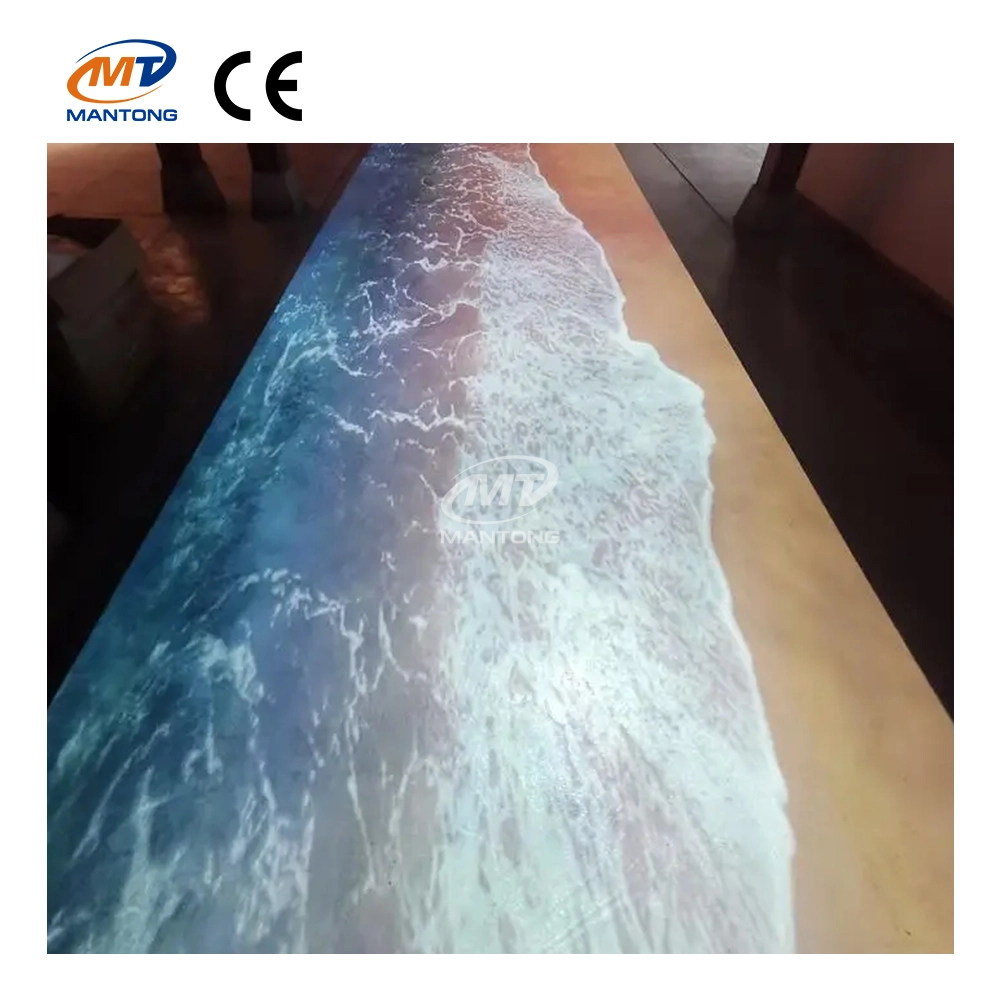
Indoor Interactive Floor Projector System - Customized Design & Installation Support
Indoor interactive floor projections display dynamic themed videos on the floor, commonly used in venues aiming to enhance brand influence or attract foot traffic, such as restaurants, hotel corridors, and brand car retail stores.
By using projectors and compatible software, the interactive content is projected onto the floor, encouraging engagement between people and the projected visuals. A single 5500-lumen indoor floor projector can cover an area of 5 m × 3 m. Typically, each project will use at least 3 units to ensure broad coverage and optimal visual effects.
We also offer customized design and installation support to enhance the interactive experience for your venue.
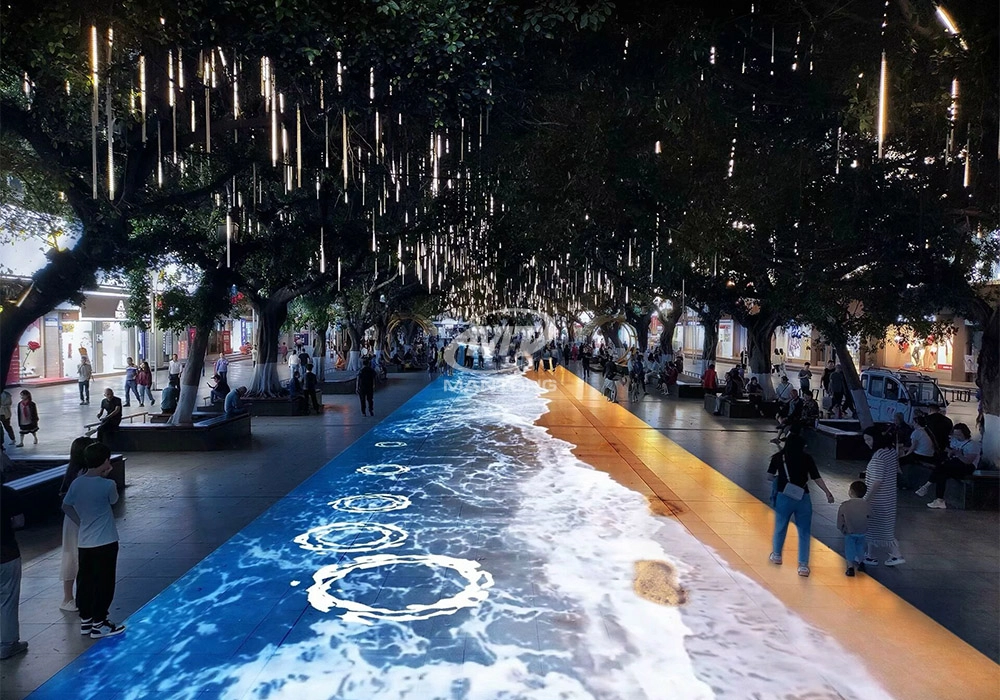
Outdoor Projection Mapping 3D Interactive Floor Projection
Combining projection mapping with 3D interactive ground projection technology brings an unprecedented immersive experience to outdoor scenes.
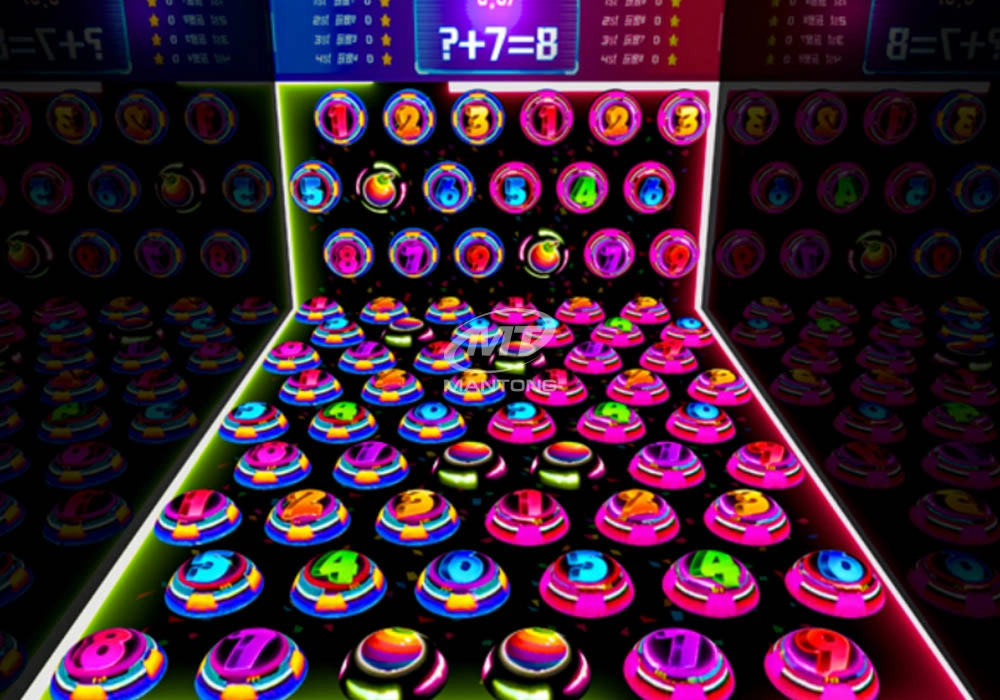
Amusement Rapidly Rotating Bouncing Sphere Interactive Wall Floor Projection Sports Games
Rapidly Rotating Bouncing Sphere is an interactive space where participants jump on rotating spheres. As they step on it, the spheres surface will show special interactivity
Jumping on spheres of the same color in succession causes them to pop, releasing light particles. The more consecutive jumps, the greater the reward—caterpillars appear, and eventually, all spheres of that color burst, filling the space with light and even more caterpillars.
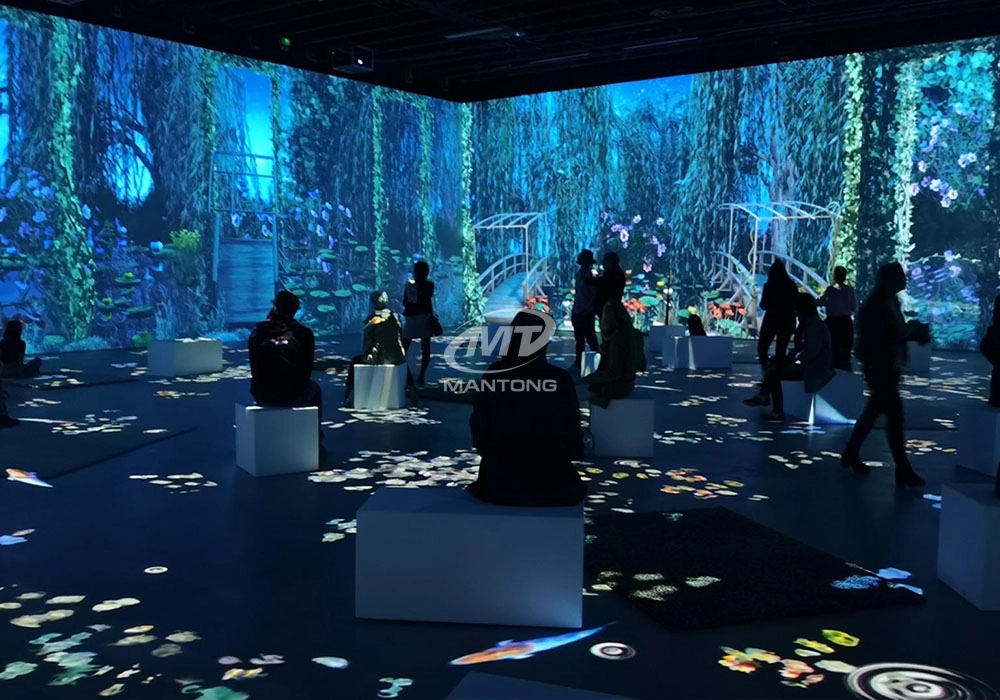
Mantong 6500LM High-Lumen Projector for Large-Scale Immersive Room Projection
Transform any space with Mantong's immersive projection mapping systems. Our high-lumen projectors (up to 6500 LM) and custom software create captivating interactive experiences for floors and walls. Ideal for museums, events, retail, and hospitality. Each kit includes professional ceiling mounting and 80+ pre-loaded video contents and is backed by a 12-month warranty and CE certification. We offer full customization and support to bring your vision to life.

Kaida Business Center, Shixin Road, Panyu District,Guangzhou City, Guangdong Province, China.
ManTong
ManTong
ManTong