
3D Projection for Museums: Enhancing Visitor Experience
- Why museums need digital storytelling
- Changing visitor expectations and behavior
- Learning outcomes and accessibility
- Measurable impact: metrics that matter
- Technical approaches to 3D projection in museums
- Projection mapping, volumetric projection and holographic illusions
- Hardware: projectors, optics, mounts and media servers
- Software pipeline and content formats
- Design principles for effective 3D projection exhibits
- Narrative and spatial design: storytelling first
- Interactivity and multisensory integration
- Preservation, safety and accessibility
- Implementation, costs, ROI and case studies
- Typical cost components
- Measuring ROI and ongoing value
- Case studies and lessons learned
- Practical checklist for commissioning a 3D projection exhibit
- Site survey and technical feasibility
- Content strategy and accessibility plan
- Operational readiness and maintenance
- Mantong Digital: a turnkey partner for museum projection
- Frequently Asked Questions (FAQ)
- 1. What is the difference between 3d projection and projection mapping?
- 2. Will projection damage sensitive artifacts?
- 3. How long do projection systems last and what maintenance is needed?
- 4. What is a realistic timeline from concept to opening?
- 5. How do we measure success after installation?
- 6. Can we update content seasonally or for temporary exhibitions?
- Next steps and contact
As a consultant with years of experience in interactive projection and museum installations, I have seen firsthand how 3d projection, immersive projection and projection mapping convert static displays into living experiences. This article synthesizes technical options, design principles, measurable outcomes and implementation steps tailored for museums seeking to improve visitor engagement, learning outcomes and operational flexibility. I combine industry references and practical estimates so curators, exhibit designers and facilities managers can evaluate, plan and commission projection-driven experiences that are cost-effective, accessible and repeatable.
Why museums need digital storytelling
Changing visitor expectations and behavior
Visitors today expect multi-sensory, contextual and participatory experiences. The rise of smartphones and platforms like Google Arts & Culture has conditioned audiences to expect narrative layering and interactive discovery. Museums that use 3d projection and interactive projection techniques can present contested, dynamic or fragile content in ways physical objects alone cannot — for example, reconstructing a ruined building with projection mapping or animating microscopic processes at large scale.
Learning outcomes and accessibility
Research in museum education consistently shows that multi-modal exhibits — combining visual, auditory and kinesthetic elements — improve recall and comprehension. Projection-based exhibits enable adjustable contrast, multiple language overlays and synchronized audio descriptions to support accessibility for low-vision visitors or non-native speakers. For baseline context about museums as institutions, see the general overview on museums at Wikipedia.
Measurable impact: metrics that matter
When advocating for 3d projection projects, I focus on measurable KPIs: dwell time, repeat visitation, social shares, ticket conversion uplift and education program outcomes. Many museums report a 20–50% increase in dwell time at interactive exhibits when interactivity and storytelling are combined (institutional reports and evaluations frequently available via museum association websites such as ICOM).
Technical approaches to 3D projection in museums
Projection mapping, volumetric projection and holographic illusions
Projection mapping (also called spatial augmented reality) is the most flexible approach for architectural façades, sculpture and irregular surfaces. See a technical overview at Projection mapping — Wikipedia. Volumetric solutions (multiple projectors and scattering media) can create perceived 3d objects in mid-air, while foil-based or Pepper's Ghost configurations deliver holographic-like effects for single artifacts without touching them. Choice depends on desired effect, footprint and budget.
Hardware: projectors, optics, mounts and media servers
Key hardware considerations include lumen output (for ambient-light environments), resolution, contrast ratio, lens throw ratio and color uniformity. For interactive floor projection, short-throw and ultra-short-throw projectors paired with IR depth sensors or camera overlays are common. Media servers (e.g., BrightSign, Resolume, Disguise) manage surfaces, warping, blending and pixel maps; they are the backbone of multi-projector 3d projection arrays.
Software pipeline and content formats
Content workflows typically move from 3D modeling (Blender, Maya) and texturing to real-time engines (Unity, Unreal Engine) or pre-render pipelines that output warping-ready video. For interactive experiences, middleware handles sensor input, triggers and content branching. When integrating interactive projection games or interactive wall projection, low-latency input handling (sub-50ms) is crucial for perceived responsiveness.
Design principles for effective 3D projection exhibits
Narrative and spatial design: storytelling first
I advise starting with the story and user journey before selecting technology. Determine the narrative beats, viewpoint changes and whether visitors should control pacing. Projection best serves exhibits where sequential reveal, scale transformation or temporal layering (e.g., showing a building across centuries) are essential to the message.
Interactivity and multisensory integration
Interactivity can be passive (motion-triggered media) or active (touch, gesture, mobile control). Interactive floor projection and interactive wall projection are effective for family learning spaces because they invite play and social participation. Pair visuals with directional audio and haptic floor feedback where appropriate to deepen immersion.
Preservation, safety and accessibility
Projection is non-contact and therefore inherently compatible with conservation goals. However, designers must account for light exposure limits for sensitive artifacts, glare control, sightline management and ADA-compliant circulation. Include adjustable luminance and timed dark periods in programming for sensitive cases.
Implementation, costs, ROI and case studies
Typical cost components
Major cost areas are hardware (projectors, servers, sensors), custom content production, mounting and installation, software licenses, maintenance and ongoing content updates. Below I provide a conservative cost comparison table based on industry projects I’ve scoped and Mantong Digital's decade of delivery experience.
| Project Type | Typical Budget Range (USD) | Primary Drivers |
|---|---|---|
| Small interactive projection (single room, short-throw) | $15,000 – $50,000 | 1–2 projectors, basic sensors, 2–4 min custom content |
| Medium immersive room or projection mapping | $50,000 – $250,000 | Multi-projector arrays, media server, complex content, structural work |
| Large-scale façade or permanent projection show | $250,000+ | High-lumen projectors, weatherproofing, long-term content roadmap |
These ranges are estimates informed by multiple installations; exact pricing depends on site survey, ambient light conditions and content complexity. For reference on projector categories and specifications, vendor datasheets and manufacturer white papers provide the most reliable figures.
Measuring ROI and ongoing value
ROI is a mix of quantitative and qualitative metrics. Quantitatively, track ticket sales uplift, time-on-exhibit and membership conversions associated with the exhibit. Qualitatively, gather visitor feedback, educator adoption rates and social engagement. A/B testing with content variants (e.g., static vs. interactive projection) can reveal the most effective formats for your audience segments.
Case studies and lessons learned
From my consulting work and reviews of public cases, successful projects share several traits: alignment with institutional goals, iterative content testing with target audiences, robust provisioning for maintenance and a clear lifecycle plan for content updates. Public examples of projection-driven museum experiences can be found through major museum digital programs and public arts organizations; for inspiration explore projects archived by organizations such as NEMO or the Google Arts & Culture platform.
Practical checklist for commissioning a 3D projection exhibit
Site survey and technical feasibility
- Perform lux measurements and structural assessment.
- Document sightlines and visitor flow patterns.
- Map electrical and network needs for each projector and server.
Content strategy and accessibility plan
- Define narrative goals and audience segments.
- Plan for multilingual overlays and audio description tracks.
- Schedule iterative user testing sessions for content clarity and engagement.
Operational readiness and maintenance
- Define SLAs for hardware failure and content updates.
- Train operations staff in basic warping/blending checks and projector maintenance.
- Budget for spare bulbs/modules and remote monitoring tools.
Mantong Digital: a turnkey partner for museum projection
Mantong Digital is a one-stop interactive projection solution provider and direct manufacturer based in Guangzhou, China, with over 10 years of industry experience. We are dedicated to providing innovative, flexible and cost-effective projection solutions, offering both hardware and software to meet various needs.
At ManTong, we specialize in providing customized solutions for a wide range of application scenarios through innovative projection technology. Whether it's immersive experiences, interactive entertainment or outdoor lighting and projection shows, our solutions can transform your ideas into stunning visual effects. Our projection technology provides customized solutions for a variety of scenarios, delivering immersive and interactive visual experiences.
Our experience working with museums and cultural institutions means we understand the balance between spectacle and scholarship. We can provide turnkey services across the project lifecycle: consultation, design, content production, hardware supply (projectors, mounts, media servers), installation and after-sales support. Typical Mantong offerings include immersive projection, interactive floor projection, interactive projection, interactive wall projection, immersive room, 3d projection, interactive projection games, Projection Show, and interactive projection mapping.
Why choose Mantong? I recommend partners who can demonstrate direct manufacturing capacity (cost control and faster lead times), a portfolio of previous museum or public installations, and a robust service agreement. ManTong's combination of in-house production, decade-long experience and a global partnership strategy positions them as a competitive supplier for institutions seeking measurable results and operational reliability.
We are now looking for business partnerships worldwide. Our vision is to become the world's leading interactive projection manufacturer. Our website is https://www.mtprojection.com/
Frequently Asked Questions (FAQ)
1. What is the difference between 3d projection and projection mapping?
Projection mapping is a technique that projects imagery onto irregular surfaces and buildings, warping and blending the image to fit the physical geometry. '3d projection' in museum contexts often refers to approaches that create a strong perception of three-dimensionality — this can be done via projection mapping, volumetric projection, or stereoscopic methods combined with tracking and interaction.
2. Will projection damage sensitive artifacts?
Properly managed projection is non-contact and generally safe. However, some artifacts are sensitive to light exposure; you should consult conservation staff and control illuminance, spectral output and duty cycles. There are industry standards and conservation guidelines to follow; work with conservators during design.
3. How long do projection systems last and what maintenance is needed?
Modern projectors can run thousands of hours (many specify 10,000+ hours in eco modes). Critical maintenance includes routine cleaning, firmware updates, lamp/replacement schedules for non-laser models, and periodic recalibration of warping/blending. Service contracts with manufacturers or suppliers reduce downtime.
4. What is a realistic timeline from concept to opening?
For a small interactive projection installation expect 3–6 months. Medium immersive rooms typically require 6–12 months for content production, procurement and installation. Large façade projection shows can take 9–18 months depending on permitting and structural work.
5. How do we measure success after installation?
Measure dwell time, conversion to paid programs or memberships, repeat visitation, qualitative visitor feedback and social media reach. Instrument the exhibit with discreet sensors or Wi-Fi analytics and compare baseline metrics collected before installation.
6. Can we update content seasonally or for temporary exhibitions?
Yes — one of the strongest advantages of projection-based exhibits is content flexibility. With a proper content management workflow and modular assets, you can refresh narratives for seasonal themes, special exhibitions or educational programs with relatively low incremental cost.
Next steps and contact
If you are planning a new exhibit or upgrading an existing one, start with a short feasibility assessment: site photos, visitor flow data and your learning goals. I (and partners such as Mantong Digital) can help translate those goals into technical briefs, budgets and phased implementation plans.
For consultations, bespoke solutions and partnership inquiries, visit https://www.mtprojection.com/ or contact our team to discuss how immersive projection, interactive floor projection, interactive projection mapping and 3d projection can realize your museum's storytelling ambitions.
Asia-Pacific interactive projector market growth outlook
Best Immersive Meeting Room Setup Guide: From Concept to Reality manufacturers and supplier brands
Outdoor Projection: Tips from Interactive Projection Mapping Suppliers
Top 10 Interactive Projector Games for Classrooms
One-Stop Projection Solution Provider Since 2011
Are you trader or manufacturer ?
We are direct manufacturer who specialize in providing one-stop solution for different outdoor & indoor projection project with our stable software and qualified projectors
How to Write an Interactive-Effect Video Customisation Script ?
① Project Background: Briefly introduce the context in which this interactive scene will be used (e.g., exhibition, museum,
event space, children's area). Example: This scene is part of the “Underwater World” zone in a children's science museum,
designed to be engaging and exploratory.
②Visual Style / Atmosphere: What kind of visual mood are you aiming for? Please describe the color scheme, style, and any
references. it should focus solely on describing the visual aspects of the scene, supported by relevant charts or reference
images.
③ Interaction Points Overview:List each interactive hotspot along with the effect you'd like to trigger when the user
touches or clicks the area. example: when player touch the clownfish, it will swims away with bubble trail (animation effect)
and produce the bubble sound ( sound effect requirement )
④ Static Visual Reference:including but not limited to background image/video, a list of major visual elements (e.g., coral,
rocks, seaweed, fish), which elements should be interactive?
How to install the projection equipment ?
1) Install the projector in a suitable position. We will provide you with a hanger, which you need to fix on the ceiling with
screws.
2) Connect projectors, computers and other accessories through wires.
3) After completing the above 2 steps, we will carry out the edge blending steps. Our team can complete it through remote
control.
In general, installation instructions for each project need to be specified on a project-by-project basis. The above is for
reference only.
What's the application of Immersive projection ?
It can be used in various venues, such as art exhibition, entertainment venues, educational institution, Wedding hall /Banquet/Bar,Yoga Studio and so on. It often involves advanced projection techniques, multimedia content, and interactive elements to engage and captivate the audience's senses.
What information do you need to know before making the proposal/solution?
We know that everyone wants to know the price, but the price of our products is determined by many factors since most of our products are custom, so no ready price list. In order to fast understand what you need, can you send us an inquiry like this?
For example: I am really interested in your immersive projection products, we are a company in the USA and want to install some in my restaurant. It is about 50 meters long, and 5m in width. Projection size you can decide but the length should be not less than 20 meters. We want some content about SeaWorld because our place is all about the sea. Thank you.
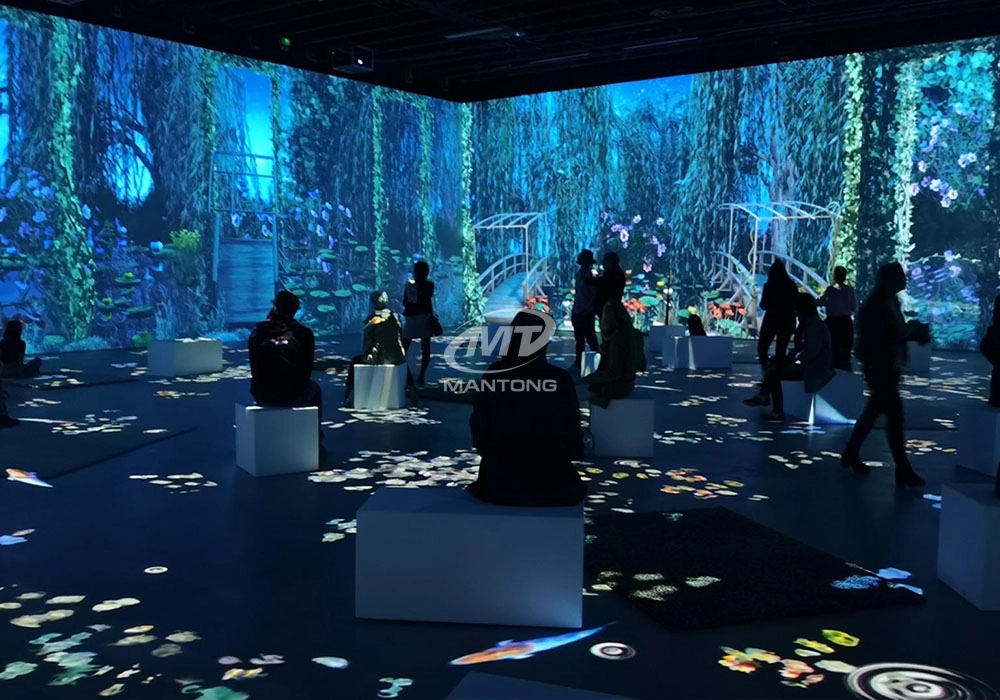
Mantong 6500LM High-Lumen Projector for Large-Scale Immersive Room Projection
Transform any space with Mantong's immersive projection mapping systems. Our high-lumen projectors (up to 6500 LM) and custom software create captivating interactive experiences for floors and walls. Ideal for museums, events, retail, and hospitality. Each kit includes professional ceiling mounting and 80+ pre-loaded video contents and is backed by a 12-month warranty and CE certification. We offer full customization and support to bring your vision to life.
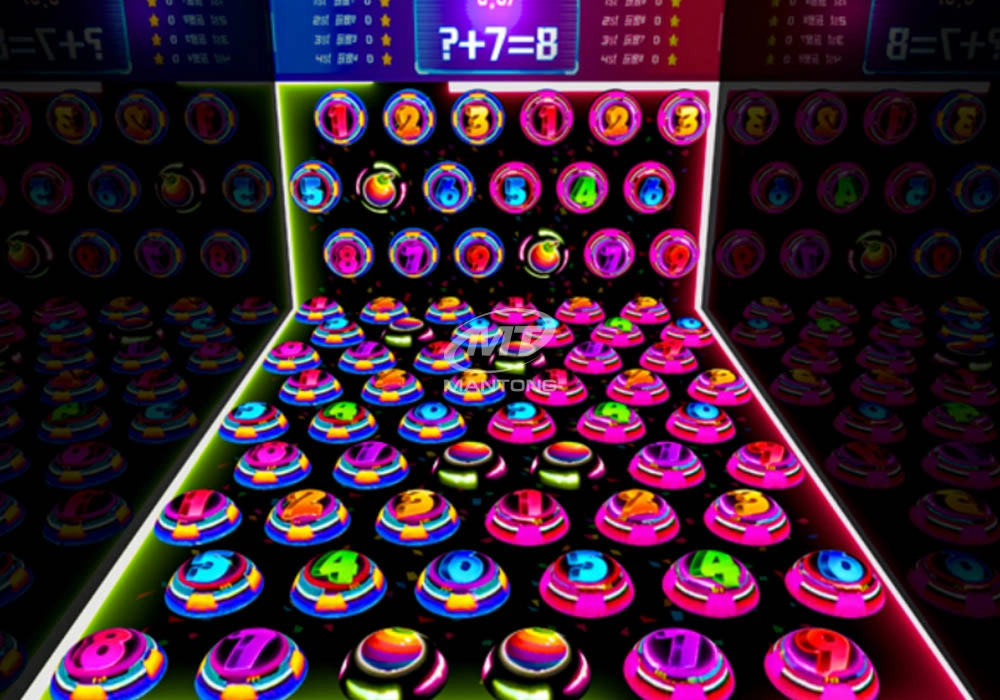
Amusement Rapidly Rotating Bouncing Sphere Interactive Wall Floor Projection Sports Games
Rapidly Rotating Bouncing Sphere is an interactive space where participants jump on rotating spheres. As they step on it, the spheres surface will show special interactivity
Jumping on spheres of the same color in succession causes them to pop, releasing light particles. The more consecutive jumps, the greater the reward—caterpillars appear, and eventually, all spheres of that color burst, filling the space with light and even more caterpillars.
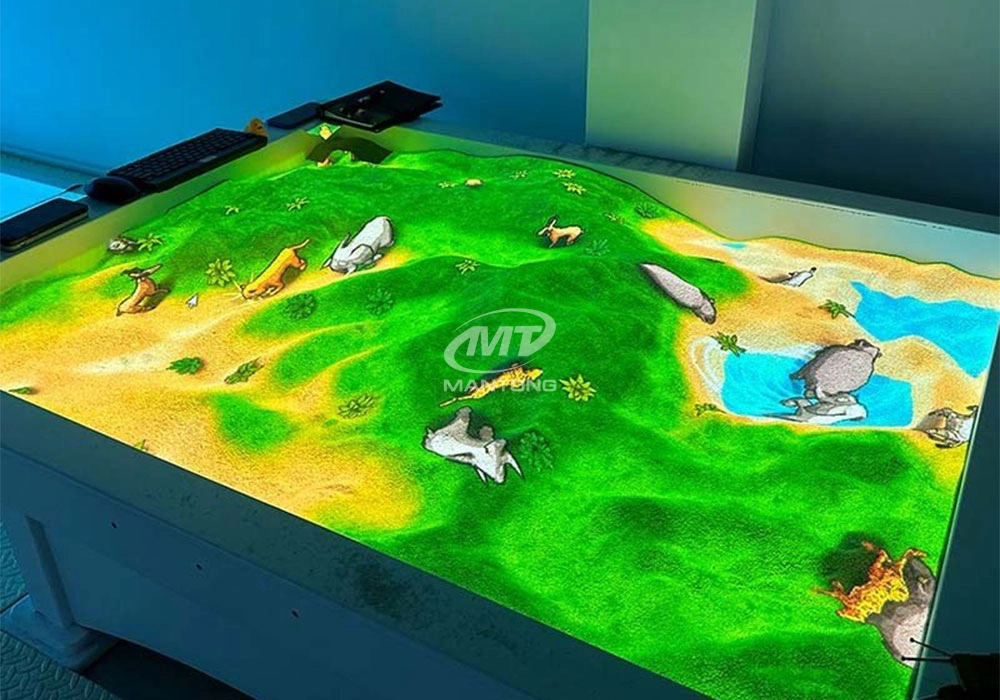
Interactive Sandbox Projection Mapping Games For Kids Play Park
Bring imagination to life with interactive sandbox projection mapping games designed for kids’ play parks. Using cutting-edge projection technology and real-time motion sensing, children can dig, build, and explore virtual worlds directly in the sand. Educational, engaging, and endlessly fun — it’s the perfect blend of play and learning.
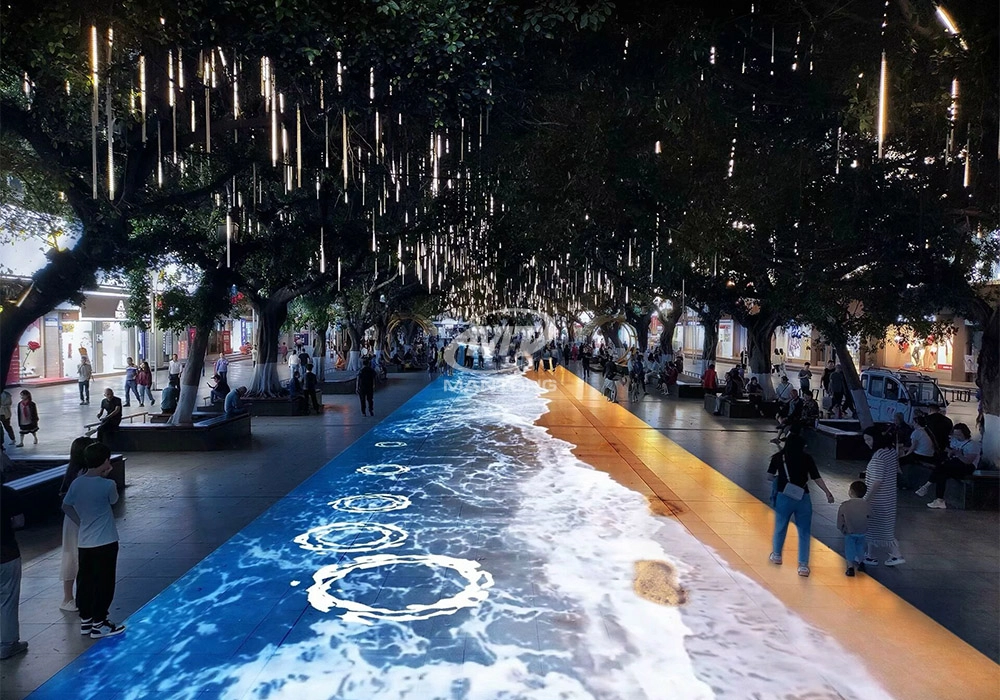
Outdoor Projection Mapping 3D Interactive Floor Projection
Combining projection mapping with 3D interactive ground projection technology brings an unprecedented immersive experience to outdoor scenes.

Kaida Business Center, Shixin Road, Panyu District,Guangzhou City, Guangdong Province, China.
ManTong
ManTong
ManTong