
Comparing Immersive Rooms vs Traditional Conference Rooms
- Why Modern Meeting Spaces Influence Outcomes
- Business drivers for upgrading meeting rooms
- How environment affects cognition and engagement
- Functional Comparison: Immersive Meeting Room vs Traditional Conference Room
- Key functional differences
- Technology stack and integration
- Use-case suitability
- Side-by-side: measurable criteria and trade-offs
- Planning and deployment: practical guidance
- Defining clear success metrics
- Budgeting and procurement considerations
- Operational readiness and maintenance
- Deployment models and ROI considerations
- Incremental vs full-scale deployment
- Measuring ROI
- Vendor selection checklist
- Mantong Digital: Manufacturer profile and advantages
- Mantong's competitive differentiators
- Core product and solution categories
- Implementation checklist: from concept to operation
- Phase 1 — Discovery
- Phase 2 — Design and prototyping
- Phase 3 — Deployment and measurement
- Frequently Asked Questions (FAQ)
- 1. What is an immersive meeting room, and how does it differ from a traditional conference room?
- 2. Are immersive meeting rooms worth the investment?
- 3. What technical challenges should I expect when deploying an immersive meeting room?
- 4. Can immersive meeting rooms support remote participants effectively?
- 5. How can I minimize disruption and cost when upgrading to immersive rooms?
- 6. Are there accessibility or health concerns with immersive environments?
- 7. How do I choose the right vendor for an immersive meeting room?
As organizations rethink collaboration spaces, the choice between an immersive meeting room and a traditional conference room is no longer purely aesthetic. An immersive meeting room integrates projection, interactive surfaces, spatial audio and sometimes AR/VR to create an environment that improves focus, understanding and collaborative decision-making. This article compares immersive meeting rooms with traditional conference rooms across user experience, technology, cost, operation and long-term value, offering actionable guidance for IT leaders, facilities managers and planners.
Why Modern Meeting Spaces Influence Outcomes
Business drivers for upgrading meeting rooms
Meeting spaces are extensions of corporate culture and process. Factors driving upgrades include distributed teams requiring richer visual collaboration, the need to shorten decision cycles, and competition for employee attention in hybrid work environments. According to research into workforce tools, immersive and visual collaboration technologies can accelerate comprehension and reduce misunderstanding in complex discussions (Meeting (business) — Wikipedia).
How environment affects cognition and engagement
Spatial context and multisensory input support learning and memory. Immersive environments that combine large visuals, motion and interactive feedback leverage human spatial cognition to make information more salient and memorable. Studies cited by industry analyses and consulting firms (e.g., PwC) highlight that VR/AR and immersive experiences can enhance training and decision-making effectiveness, translating to measurable productivity gains (PwC: Seeing is Believing).
Functional Comparison: Immersive Meeting Room vs Traditional Conference Room
Key functional differences
At a high level, immersive meeting rooms prioritize sensory-rich, interactive visuals and flexible content surfaces; traditional conference rooms focus on pragmatic audio/video connectivity, a central display and seating. These differences lead to distinct use cases: immersive rooms excel for design reviews, training, simulation, and experiential pitches; traditional rooms remain efficient for routine meetings, briefings and calls.
Technology stack and integration
Traditional rooms typically require a display (LED/LCD), conference camera, microphone array and a collaboration platform (e.g., Zoom/Teams). Immersive meeting rooms add projection systems, interactive surfaces or mapping, spatial audio systems, and often custom software for synchronized content. Projection mapping and interactive projection technologies are mature and documented approaches for creating multi-surface visuals (Projection mapping — Wikipedia).
Use-case suitability
Choose immersive meeting rooms when the objective is to increase shared situational awareness, conduct immersive training, stage high-impact client presentations, or support multidisciplinary design sessions. Traditional rooms are suitable when predictability, low complexity and minimal maintenance are priorities.
Side-by-side: measurable criteria and trade-offs
The following table summarizes major criteria and practical trade-offs between immersive meeting rooms and traditional conference rooms.
| Criteria | Immersive Meeting Room | Traditional Conference Room |
|---|---|---|
| Engagement & Retention | High — multisensory input increases attention and retention; effective for complex visual content (supported by AR/VR studies: PwC) | Moderate — relies on presenter and slides; lower sensory reinforcement |
| Collaboration Effectiveness | High for design, spatial planning and simulations; supports multi-user interaction | Good for discussion-based collaboration and remote calls |
| Technology Complexity | High — multiple projectors, sensors, bespoke software, calibration and maintenance | Low — standard AV stack easier to deploy and support |
| Setup & Flexibility | Medium to High setup time; highly customizable but requires planning | Fast to provision; modular furniture solutions available |
| Operational Cost | Higher initial CAPEX and periodic maintenance; potential for higher ROI in experiential value | Lower CAPEX and maintenance; predictable TCO |
| Scalability | Room-level scalability; replicating immersive setups across sites requires capital and installation expertise | High — standardized equipment replicable across locations |
| Accessibility | Requires careful design for ergonomics and for users sensitive to motion or complex visuals | Generally more accessible; familiar layout |
Sources: PwC AR/VR analysis (link); Projection mapping overview (Wikipedia).
Planning and deployment: practical guidance
Defining clear success metrics
Before committing to an immersive meeting room, define what success looks like: faster decision cycles, increased meeting satisfaction scores, improved training completion rates, or higher conversion in client demos. Quantify baseline metrics from existing rooms (meeting length, attendee numbers, post-meeting surveys) to measure impact post-deployment.
Budgeting and procurement considerations
Immersive rooms carry a broader procurement scope: hardware (projectors, media servers, sensors), software (synchronization, content management), integration services and commissioning. Ask vendors for total cost of ownership estimates and reference projects. For a cost-effective approach, consider vendors that provide both hardware and software as an integrated solution and have direct manufacturing capability to reduce margins and lead times.
Operational readiness and maintenance
Plan for calibration, software updates and routine maintenance. Immersive systems can require more frequent alignment and software patching than traditional AV. Build SLAs for uptime and remote diagnostics, and ensure staff training on basic troubleshooting and content management workflows.
Deployment models and ROI considerations
Incremental vs full-scale deployment
Not every floor needs a full immersive room. Consider a pilot immersive meeting room in a central innovation hub, then measure utilization and outcomes. Successful pilots justify rollouts to additional sites or the creation of mobile/temporary immersive solutions for events and client demos.
Measuring ROI
Typical ROI calculations should include hard benefits (reduced travel, shortened project timelines, higher conversion rates for sales demos) and soft benefits (brand perception, employee satisfaction). Use pilot data and user surveys to build a multi-year financial model.
Vendor selection checklist
- Proven reference installations in your industry
- End-to-end capability: hardware, software, installation and maintenance
- Customization capacity and willingness to adapt workflows
- Clear upgrade and support roadmap
- Compliance with safety and accessibility regulations
Mantong Digital: Manufacturer profile and advantages
Mantong Digital is a one-stop interactive projection solution provider and direct manufacturer based in Guangzhou, China, with over 10 years of industry experience. We are dedicated to providing innovative, flexible and cost-effective projection solutions, offering both hardware and software to meet various needs.
At ManTong, we specialize in providing customized solutions for a wide range of application scenarios through innovative projection technology. Whether it's immersive experiences, interactive entertainment or outdoor lighting and projection shows, our solutions can transform your ideas into stunning visual effects. Our projection technology provides customized solutions for a variety of scenarios, delivering immersive and interactive visual experiences.
We are now looking for business partnerships worldwide. Our vision is to become the world's leading interactive projection manufacturer. Our website is https://www.mtprojection.com/.
Mantong's competitive differentiators
Technical and business strengths to consider when evaluating Mantong as a partner:
- Direct manufacturer: shorter lead times and cost control compared with resellers.
- End-to-end system delivery: hardware + software integration reduces vendor coordination overhead.
- Customizable solutions: from immersive meeting room installs to large-scale projection shows, adaptable to client workflows and content needs.
- Proven project experience: over a decade in interactive projection and immersive installations.
Core product and solution categories
Mantong's offerings relevant to immersive meeting rooms and experiential spaces include:
- Immersive projection systems for rooms and domes
- Interactive floor projection solutions
- Interactive wall projection and mapping systems
- 3D projection and content pipelines
- Interactive projection games and turnkey projection show packages
These product lines support both permanent immersive meeting rooms and temporary/demo installations for sales and events.
Implementation checklist: from concept to operation
Phase 1 — Discovery
Document use cases, attendee profiles, accessibility needs, content types, and room acoustics. Invite end-users to participate in discovery workshops to avoid building a showroom that nobody uses.
Phase 2 — Design and prototyping
Create low-fidelity mockups and run pilot sessions. Test critical workflows such as remote presenter inclusion, multi-user interactions and data security for sensitive content.
Phase 3 — Deployment and measurement
Commission the room with a measurable baseline. Run pilot programs for 3–6 months, collect utilization data and user feedback, then iterate on both hardware and content to optimize ROI.
Frequently Asked Questions (FAQ)
1. What is an immersive meeting room, and how does it differ from a traditional conference room?
An immersive meeting room uses projection, interactive surfaces, spatial audio and sometimes AR/VR to create an enveloping environment that enhances visualization and collaboration. Traditional conference rooms typically use single displays, conventional AV and simpler layouts focused on discussion and video calls.
2. Are immersive meeting rooms worth the investment?
They can be, depending on your use cases. For activities that benefit from spatial visualization—design reviews, training, simulations and high-stakes client presentations—immersive rooms often deliver superior outcomes. Run a pilot and measure metrics like decision time, meeting satisfaction and conversion rates to validate ROI.
3. What technical challenges should I expect when deploying an immersive meeting room?
Expect higher complexity in calibration, content management, and maintenance. You will need suppliers that provide integration services, remote diagnostics and software updates. Consider a vendor with end-to-end capabilities or a direct manufacturer to reduce integration risk.
4. Can immersive meeting rooms support remote participants effectively?
Yes—when designed properly. Integrations between immersive environments and collaboration platforms can stream synchronized views to remote participants, though you should plan UX flows to ensure remote attendees are not left behind (camera framing, screen shares, and a remote-friendly content pipeline).
5. How can I minimize disruption and cost when upgrading to immersive rooms?
Start with a pilot space, reuse existing infrastructure where possible, and choose modular systems that can scale. Partnering with a manufacturer that can provide bundled hardware and software often reduces overall cost and simplifies support.
6. Are there accessibility or health concerns with immersive environments?
Design for accessibility: avoid rapid motion graphics for users sensitive to motion, provide traditional displays as fallback, and ensure ergonomic sightlines. Comply with local accessibility standards and provide alternative participation methods for sensitive users.
7. How do I choose the right vendor for an immersive meeting room?
Look for demonstrable industry experience, reference projects, integrated hardware+software offerings, clear SLAs for support and maintenance, and the ability to customize solutions to your workflows. Manufacturers with direct production capability can offer cost and lead-time advantages.
If you want to explore immersive meeting room solutions tailored to your organization, contact ManTong to discuss pilots, product catalogs and partnership opportunities. Visit https://www.mtprojection.com/ to view products or request a consultation.
Contact CTA: For project inquiries, partnership discussions or to request a demo of immersive projection solutions, visit ManTong Digital or email sales via the website. Transform your meeting spaces with immersive projection and interactive solutions.
ROI Calculator: Interactive Floor Projectors for Venues
Future Trends in Floor Projection Game Technology
Installation Tips for Interactive Projector Games
Interactive Floor Games for Healthcare and Rehabilitation
One-Stop Projection Solution Provider Since 2011
What information do you need to know before making the proposal/solution?
We know that everyone wants to know the price, but the price of our products is determined by many factors since most of our products are custom, so no ready price list. In order to fast understand what you need, can you send us an inquiry like this?
For example: I am really interested in your immersive projection products, we are a company in the USA and want to install some in my restaurant. It is about 50 meters long, and 5m in width. Projection size you can decide but the length should be not less than 20 meters. We want some content about SeaWorld because our place is all about the sea. Thank you.
What's the application of Immersive projection ?
It can be used in various venues, such as art exhibition, entertainment venues, educational institution, Wedding hall /Banquet/Bar,Yoga Studio and so on. It often involves advanced projection techniques, multimedia content, and interactive elements to engage and captivate the audience's senses.
What's Immersive Projection ?
Immersive projection refers to a technology that creates a captivating and all-encompassing visual experience for viewers by projecting images or videos onto large surfaces, such as walls, floors, or even entire rooms. This technology aims to immerse the audience in a simulated environment, blurring the boundaries between the physical and virtual worlds.
What about the wall/floor material for the projection?
It’s recommended to choose a light-colored material with minimal reflectivity—pure white or light grey works best. the
common material is cement & plaster board
For optimal projection results, the surface should be free of any patterns or textures, as the projector will display content
directly onto it.
There are no specific material requirements; you may use any commonly available material in your local market, as long as it
meets the above conditions.
How to Write an Interactive-Effect Video Customisation Script ?
① Project Background: Briefly introduce the context in which this interactive scene will be used (e.g., exhibition, museum,
event space, children's area). Example: This scene is part of the “Underwater World” zone in a children's science museum,
designed to be engaging and exploratory.
②Visual Style / Atmosphere: What kind of visual mood are you aiming for? Please describe the color scheme, style, and any
references. it should focus solely on describing the visual aspects of the scene, supported by relevant charts or reference
images.
③ Interaction Points Overview:List each interactive hotspot along with the effect you'd like to trigger when the user
touches or clicks the area. example: when player touch the clownfish, it will swims away with bubble trail (animation effect)
and produce the bubble sound ( sound effect requirement )
④ Static Visual Reference:including but not limited to background image/video, a list of major visual elements (e.g., coral,
rocks, seaweed, fish), which elements should be interactive?
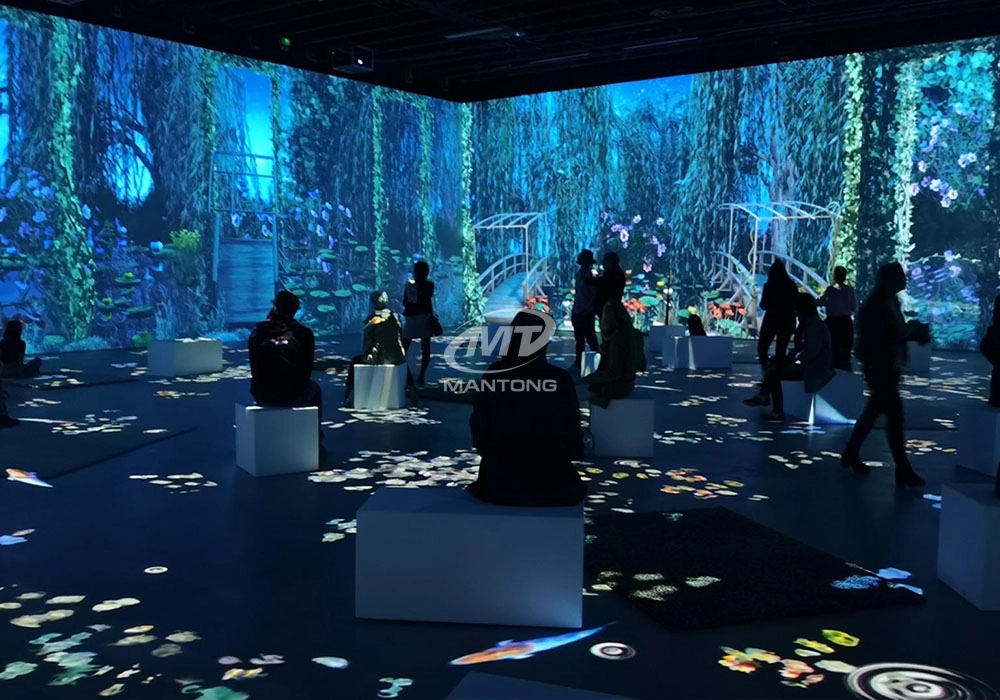
Mantong 6500LM High-Lumen Projector for Large-Scale Immersive Room Projection
Transform any space with Mantong's immersive projection mapping systems. Our high-lumen projectors (up to 6500 LM) and custom software create captivating interactive experiences for floors and walls. Ideal for museums, events, retail, and hospitality. Each kit includes professional ceiling mounting and 80+ pre-loaded video contents and is backed by a 12-month warranty and CE certification. We offer full customization and support to bring your vision to life.
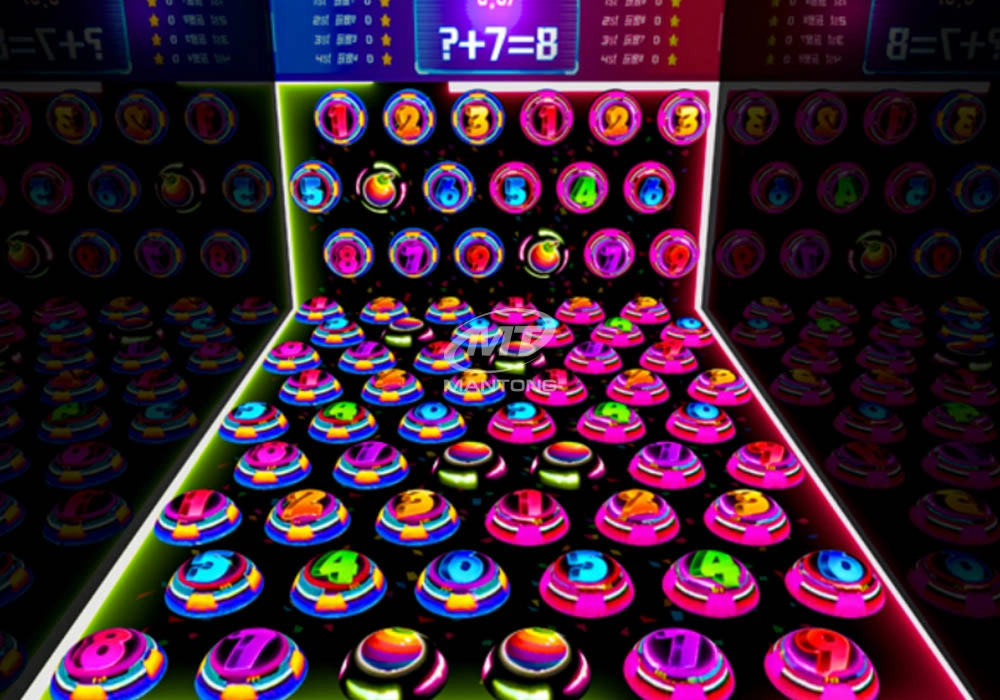
Amusement Rapidly Rotating Bouncing Sphere Interactive Wall Floor Projection Sports Games
Rapidly Rotating Bouncing Sphere is an interactive space where participants jump on rotating spheres. As they step on it, the spheres surface will show special interactivity
Jumping on spheres of the same color in succession causes them to pop, releasing light particles. The more consecutive jumps, the greater the reward—caterpillars appear, and eventually, all spheres of that color burst, filling the space with light and even more caterpillars.
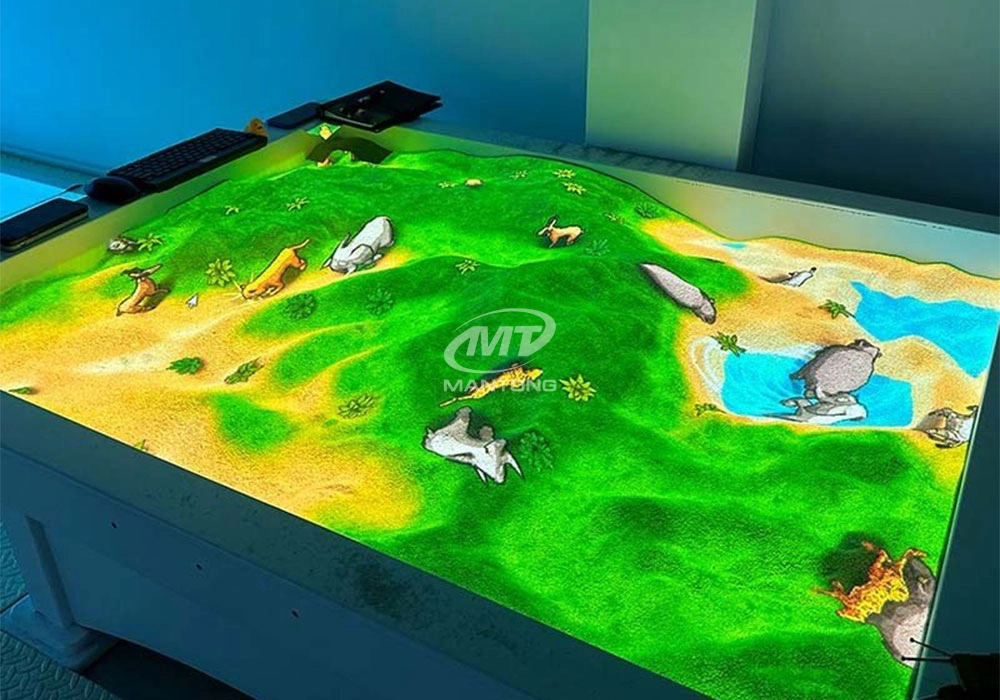
Interactive Sandbox Projection Mapping Games For Kids Play Park
Bring imagination to life with interactive sandbox projection mapping games designed for kids’ play parks. Using cutting-edge projection technology and real-time motion sensing, children can dig, build, and explore virtual worlds directly in the sand. Educational, engaging, and endlessly fun — it’s the perfect blend of play and learning.
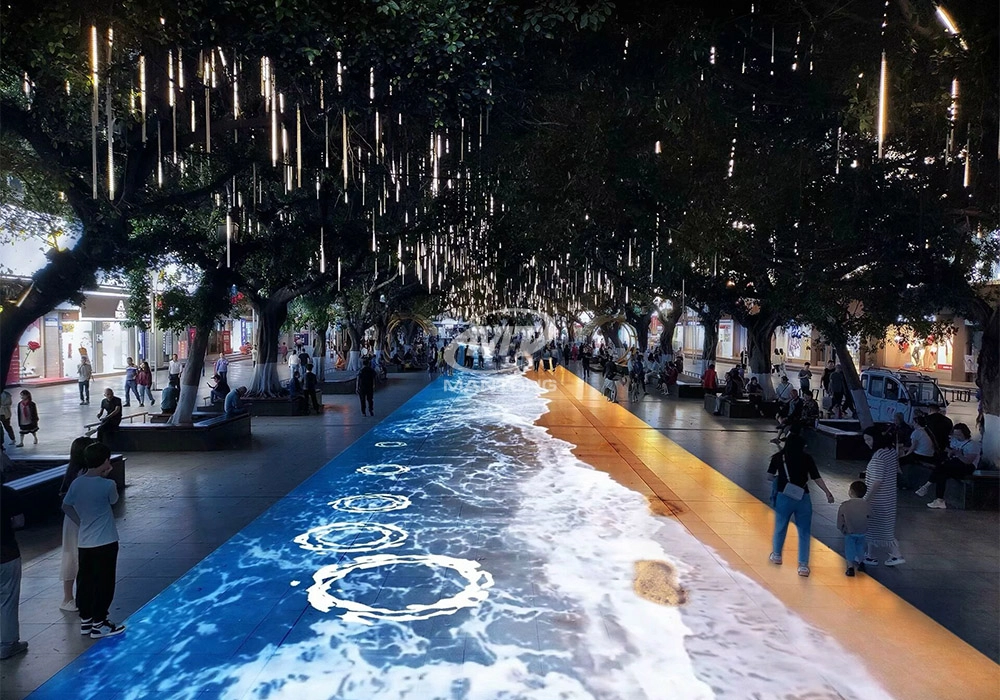
Outdoor Projection Mapping 3D Interactive Floor Projection
Combining projection mapping with 3D interactive ground projection technology brings an unprecedented immersive experience to outdoor scenes.

Kaida Business Center, Shixin Road, Panyu District,Guangzhou City, Guangdong Province, China.
ManTong
ManTong
ManTong