
3D Projection for Outdoor Events: Weatherproofing Tips
- Understanding environmental risks and project requirements
- Assess the event site and weather profile
- Define visual performance targets
- Identify risk tolerance and redundancy needs
- Choosing weatherproof equipment and components
- Projector selection: IP ratings and sealed optics
- Brightness, lenses and environmental compensation
- Compare equipment options (quick reference)
- Enclosures, mounting and mechanical protection
- Designing enclosures with thermal management
- Mounting, wind loads and structural engineering
- Protecting optics and projection surfaces
- Cabling, power protection and operational procedures
- Outdoor cabling best practices
- Power conditioning, surge protection and backup
- Operational checklist and remote monitoring
- Testing, contingency planning and regulatory considerations
- Field testing and dry runs
- Contingency plans for severe weather
- Permits, safety and standards
- Mantong Digital: a practical partner for weatherproofed projection solutions
- FAQ — Common questions about outdoor 3D projection weatherproofing
- 1. Can I run a standard indoor projector in light rain?
- 2. What IP rating should I choose for a week-long outdoor festival?
- 3. How many lumens do I need for a 3d projection on a building façade?
- 4. How do I prevent condensation inside an enclosure?
- 5. What are quick steps if a projector starts overheating during the show?
- 6. Do I need special insurance or permits for outdoor projections?
I often get asked by event producers and technical directors how to keep a 3D projection show running smoothly when the event moves outdoors. Outdoor 3D projection introduces variables—humidity, rain, wind, temperature swings, and dust—that can disrupt mapping accuracy, damage equipment, or reduce image quality. In this article I provide a practical, step-by-step approach to weatherproofing your outdoor 3d projection installations, emphasizing equipment choices, enclosures, mounting engineering, cabling & power strategies, and operational procedures. I base recommendations on industry standards, product design principles and field experience with large-scale immersive projection and projection mapping projects.
Understanding environmental risks and project requirements
Assess the event site and weather profile
I always begin with a site survey and historical weather check. Use local meteorological data and forecasts to understand wind speeds, precipitation probability, humidity ranges, and temperature extremes for the scheduled dates. For U.S. and global climate data, official sources like the NOAA National Centers for Environmental Information are reliable. Knowing whether you expect light drizzle, thunderstorms, or freezing conditions determines material and electrical protection levels.
Define visual performance targets
Outdoor ambient light drastically impacts required projector brightness. For 3d projection mapping onto buildings or objects, I calculate required ANSI lumens from target lux on the surface: as a rule of thumb, bright daytime or twilight projections often need tens of thousands of lumens; nighttime events might function with 10k–20k depending on screen reflectance. For general projector technology background see the Video projector overview.
Identify risk tolerance and redundancy needs
Decide on acceptable downtime and visual degradation. For high-profile shows I design redundancy: duplicate projectors, parallel media servers, and quick-swap mounts. For community events I may accept single-point equipment but add fast-recovery plans. Redundancy planning affects budget, logistics, and weatherproofing complexity.
Choosing weatherproof equipment and components
Projector selection: IP ratings and sealed optics
Standard cinema and stage projectors are not built for rain or dust exposure. For outdoor 3d projection choose projectors or housings rated for moisture and particulate ingress. The IEC IP Code (Ingress Protection) classification gives a base for selection; see the IP code (IP ratings) summary. In practice:
- IP54: splash-proof and dust-protected—acceptable for light rain with sheltered installations.
- IP65: dust-tight and water-jet resistant—suitable for prolonged outdoor exposure with direct rain risk.
- IP66/IP67: for the harshest exposure (powerful jets, temporary submersion) but usually overkill for projections.
Some manufacturers supply projectors with sealed optical engines and forced-air systems that can operate in higher humidity. When a weather-rated projector is unavailable, pair a bright indoor projector with an IP65-rated enclosure and internal climate control.
Brightness, lenses and environmental compensation
Choose lenses that tolerate temperature shifts without losing focus; motorized lens shift and remote focus are critical so you can tweak geometry without exposing technicians to weather. Consider short-throw and long-throw options depending on mounting distance and to minimize wind-loading on lenses and housings.
Compare equipment options (quick reference)
| Component | Typical spec | Outdoor suitability | Notes |
|---|---|---|---|
| Indoor projector | 5k–30k ANSI lumens | Low without enclosure | Use with IP-rated enclosure and temp control |
| Outdoor-rated projector | 5k–30k ANSI lumens, sealed optics | High | Built for humidity and dust |
| IP65 enclosure | Dust-tight, water jets | High | Use with filtered airflow and heating |
Sources: IP Code guidance via Wikipedia (IEC/IP Code) and manufacturer datasheets for outdoor projector housings.
Enclosures, mounting and mechanical protection
Designing enclosures with thermal management
An enclosure must protect the projector from water and dust while managing heat. I specify enclosures with filtered air intake, thermostatically controlled fans, and internal heaters for sub-zero environments. Transparent optical windows must be anti-reflective and heated to prevent condensation. For standards on electrical enclosures and outdoor equipment consider general guidance found on industry sites and IEC resources.
Mounting, wind loads and structural engineering
Mounting and bracing are as critical as the enclosure. Wind exerts force on housings and screens—calculate wind load using local design wind speeds and mounting height. For temporary truss-mounted projectors secure with redundant safety chains and rated hardware. For façade projection, use fixed, load-rated brackets. If in doubt, consult a structural engineer for high-wind venues.
Protecting optics and projection surfaces
Cover lenses with hydrophobic coatings or thin transparent windows that are easily replaceable. Use weatherproof projection screens (PVC-coated fabrics with tight weave) or rigid aluminum-backed screens for long events. Avoid porous surfaces that absorb moisture and change color under wet conditions; test surface reflectance across moisture states when practical.
Cabling, power protection and operational procedures
Outdoor cabling best practices
Use outdoor-rated power and data cables, gel-filled connectors for video to prevent moisture ingress, and waterproof junction boxes. Route cables in raised cable ramps or through conduits to protect from foot traffic and standing water. For fiber optics, select outdoor armored fiber with proper terminations and weatherproof housings.
Power conditioning, surge protection and backup
Protect equipment from voltage spikes and brownouts with industrial surge protectors and UPS units sized for the projector and controllers. For extended runs, use UPS with automatic bypass and generator-ready transfer switches for longer power failures. Grounding and bonding must follow local electrical code; for system reliability use UPS units with cold-start ability so the projector can be powered up during complete outage if generator is available.
Operational checklist and remote monitoring
Create a pre-show checklist (sealed enclosure inspection, window cleaning, heater/fan function, cable taping, lens alignment test). Implement remote monitoring of projector internal temperature, lamp/LED module health, and networked media servers so technical staff can diagnose issues off-site. Maintain a spare parts kit: spare lamp/module, quick-disconnect power and data cables, gasket seals, backup media server and configuration files.
Testing, contingency planning and regulatory considerations
Field testing and dry runs
Run full dress rehearsals in the environmental conditions you expect. If possible, perform night-time and day-to-night transitions to check exposure and brightness compensation. Rehearsals surface any alignment drift caused by thermal expansion or wind sway so you can add bracing or automated keystone corrections.
Contingency plans for severe weather
Define clear weather thresholds for show delay, pause or cancellation (e.g., sustained wind > certain m/s, lightning within a radius). Local authorities or venue operators may have rules—coordinate with them. For sudden storms, ensure safe egress for technicians and a secure shutdown procedure for equipment stored in housings or shelters.
Permits, safety and standards
Obtain necessary permits for outdoor installations and temporary structures. Follow local electrical codes and occupational safety regulations for rigging and crowd protection. For projection mapping onto public buildings be mindful of permissions and content restrictions. For technical standards reference IEC/ISO where applicable and consult local authorities for permit details.
Mantong Digital: a practical partner for weatherproofed projection solutions
As projects scale, partnering with an experienced manufacturer and integrator makes a measurable difference. Mantong Digital is a one-stop interactive projection solution provider and direct manufacturer based in Guangzhou, China, with over 10 years of industry experience. We are dedicated to providing innovative, flexible and cost-effective projection solutions, offering both hardware and software to meet various needs.
At ManTong, we specialize in providing customized solutions for a wide range of application scenarios through innovative projection technology. Whether it's immersive experiences, interactive entertainment or outdoor lighting and projection shows, our solutions can transform your ideas into stunning visual effects. Our projection technology provides customized solutions for a variety of scenarios, delivering immersive and interactive visual experiences.
Key strengths I’ve worked with in Mantong projects include:
- Custom IP-rated housings and climate-controlled enclosures matched to projector power and event duration.
- Integrated media server to projector workflows allowing real-time mapping corrections and remote monitoring.
- Full turnkey delivery: design, manufacturing, onsite commissioning and after-sales support.
Mantong’s product range and expertise (immersive projection, interactive floor projection, interactive projection, interactive wall projection, immersive room, 3d projection, interactive projection games, Projection Show, interactive projection mapping) make them a strong partner for events that need reliable outdoor performance and creative control. We are now looking for business partnerships worldwide. Our vision is to become the world's leading interactive projection manufacturer.
Visit Mantong Digital at https://www.mtprojection.com/ to explore product options or request a quote. I’ve collaborated with Mantong on multiple outdoor builds; their ability to unify hardware enclosure engineering with mapping software reduced field troubleshooting time significantly.
FAQ — Common questions about outdoor 3D projection weatherproofing
1. Can I run a standard indoor projector in light rain?
Not safely without protection. Indoor projectors lack sealing against moisture and dust. If you expect any precipitation, either use a projector designed for outdoor use or place the projector in an IP-rated enclosure with appropriate thermal control.
2. What IP rating should I choose for a week-long outdoor festival?
For multi-day outdoor events exposed to rain, IP65-rated housings are a practical minimum. IP65 protects against dust and water jets and withstands most rain conditions. For harsh coastal or extreme weather zones, consider IP66/67 options.
3. How many lumens do I need for a 3d projection on a building façade?
That depends on ambient light and surface reflectance. Night events on matte surfaces may work with 10k–20k lumens per projector. For significant ambient light or large surfaces you may require 20k–50k lumens or multi-projector blends. Perform a site photometric calculation or test on-site when possible.
4. How do I prevent condensation inside an enclosure?
Use internal heaters and thermostatically controlled ventilation. Desiccant packs and internal humidity sensors help. Transparent windows should be heated slightly above dew point to prevent fogging.
5. What are quick steps if a projector starts overheating during the show?
Initiate remote monitoring alarms first. If not available, pause the show and perform a controlled shutdown. Check enclosure filters, fan operation and ambient temperature. Replace clogged filters and verify thermostatic controls before restarting. Keep a spare projector or hot-swap plan for immediate recovery in high-profile events.
6. Do I need special insurance or permits for outdoor projections?
Most venues require permits for temporary structures and electrical installations. Event insurance that covers equipment damage from weather and liability is strongly recommended. Check local regulations for public building projections to avoid legal issues.
If you’d like a checklist, site-assessment template or a custom quotation for a weatherproof 3D projection system, contact Mantong Digital. We offer consulting, custom enclosure manufacturing, hardware and software integration, and worldwide partnerships to deliver reliable outdoor projection shows. Visit https://www.mtprojection.com/ to request a consultation or view product lines.
Sources and further reading: Projection mapping (Wikipedia), IP Code (Ingress Protection), NOAA climate data, and manufacturer technical datasheets for outdoor projector housings.
Tips for Wholesale water curtain projection
The latest trends for interactive projection technology in 2026 | Mantong Ultimate Insights
Sustainable Practices for Interactive Projection Mapping Suppliers
Choosing interactive projection for museums and exhibitions
One-Stop Projection Solution Provider Since 2011
What about the wall/floor material for the projection?
It’s recommended to choose a light-colored material with minimal reflectivity—pure white or light grey works best. the
common material is cement & plaster board
For optimal projection results, the surface should be free of any patterns or textures, as the projector will display content
directly onto it.
There are no specific material requirements; you may use any commonly available material in your local market, as long as it
meets the above conditions.
How to install the projection equipment ?
1) Install the projector in a suitable position. We will provide you with a hanger, which you need to fix on the ceiling with
screws.
2) Connect projectors, computers and other accessories through wires.
3) After completing the above 2 steps, we will carry out the edge blending steps. Our team can complete it through remote
control.
In general, installation instructions for each project need to be specified on a project-by-project basis. The above is for
reference only.
What's the application of Immersive projection ?
It can be used in various venues, such as art exhibition, entertainment venues, educational institution, Wedding hall /Banquet/Bar,Yoga Studio and so on. It often involves advanced projection techniques, multimedia content, and interactive elements to engage and captivate the audience's senses.
How to Write an Interactive-Effect Video Customisation Script ?
① Project Background: Briefly introduce the context in which this interactive scene will be used (e.g., exhibition, museum,
event space, children's area). Example: This scene is part of the “Underwater World” zone in a children's science museum,
designed to be engaging and exploratory.
②Visual Style / Atmosphere: What kind of visual mood are you aiming for? Please describe the color scheme, style, and any
references. it should focus solely on describing the visual aspects of the scene, supported by relevant charts or reference
images.
③ Interaction Points Overview:List each interactive hotspot along with the effect you'd like to trigger when the user
touches or clicks the area. example: when player touch the clownfish, it will swims away with bubble trail (animation effect)
and produce the bubble sound ( sound effect requirement )
④ Static Visual Reference:including but not limited to background image/video, a list of major visual elements (e.g., coral,
rocks, seaweed, fish), which elements should be interactive?
What information do you need to know before making the proposal/solution?
We know that everyone wants to know the price, but the price of our products is determined by many factors since most of our products are custom, so no ready price list. In order to fast understand what you need, can you send us an inquiry like this?
For example: I am really interested in your immersive projection products, we are a company in the USA and want to install some in my restaurant. It is about 50 meters long, and 5m in width. Projection size you can decide but the length should be not less than 20 meters. We want some content about SeaWorld because our place is all about the sea. Thank you.
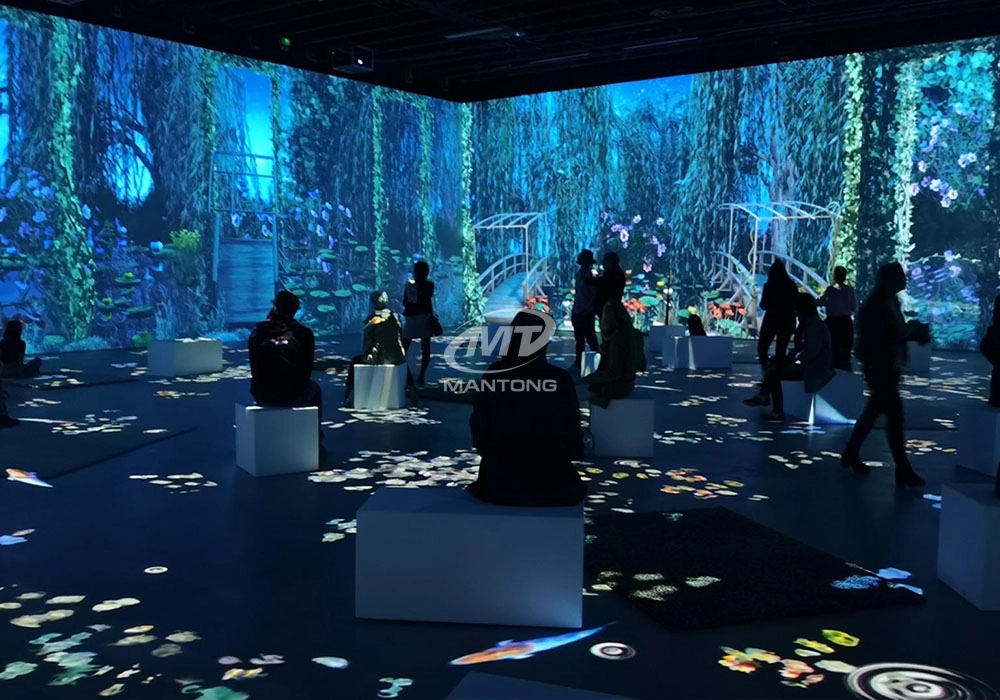
Mantong 6500LM High-Lumen Projector for Large-Scale Immersive Room Projection
Transform any space with Mantong's immersive projection mapping systems. Our high-lumen projectors (up to 6500 LM) and custom software create captivating interactive experiences for floors and walls. Ideal for museums, events, retail, and hospitality. Each kit includes professional ceiling mounting and 80+ pre-loaded video contents and is backed by a 12-month warranty and CE certification. We offer full customization and support to bring your vision to life.
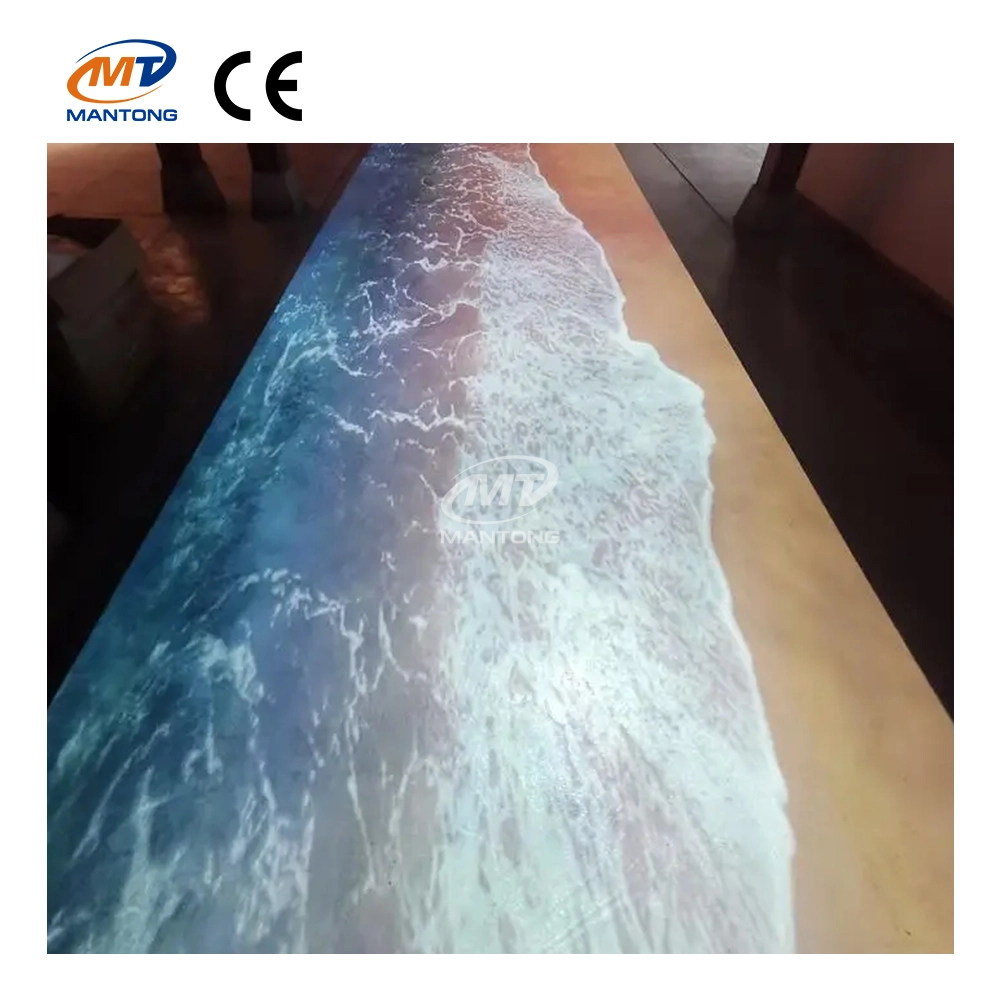
Indoor Interactive Floor Projector System - Customized Design & Installation Support
Indoor interactive floor projections display dynamic themed videos on the floor, commonly used in venues aiming to enhance brand influence or attract foot traffic, such as restaurants, hotel corridors, and brand car retail stores.
By using projectors and compatible software, the interactive content is projected onto the floor, encouraging engagement between people and the projected visuals. A single 5500-lumen indoor floor projector can cover an area of 5 m × 3 m. Typically, each project will use at least 3 units to ensure broad coverage and optimal visual effects.
We also offer customized design and installation support to enhance the interactive experience for your venue.
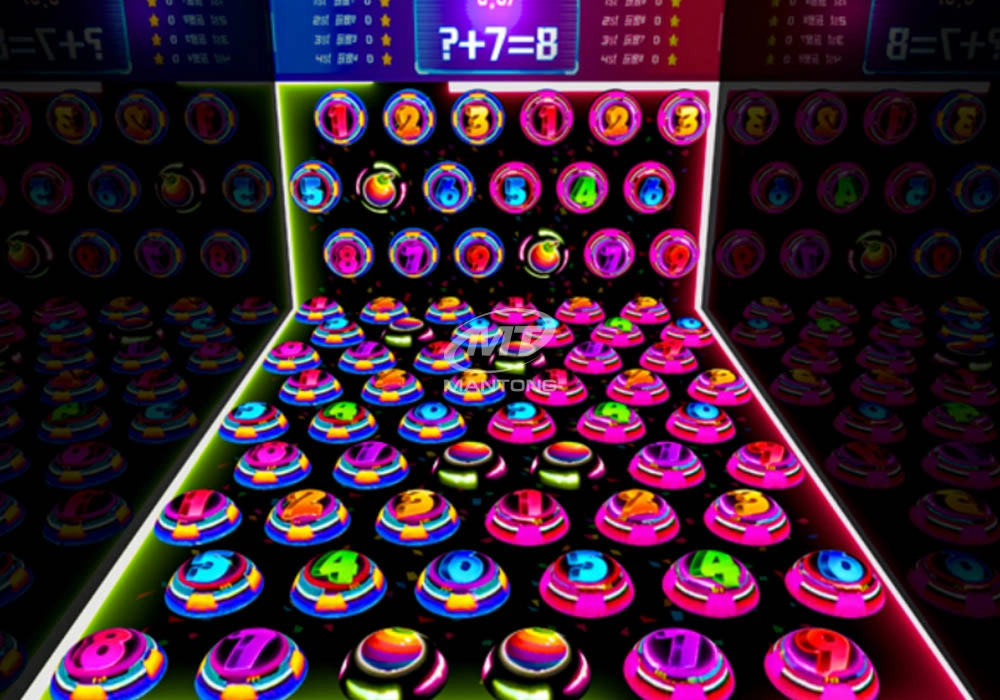
Amusement Rapidly Rotating Bouncing Sphere Interactive Wall Floor Projection Sports Games
Rapidly Rotating Bouncing Sphere is an interactive space where participants jump on rotating spheres. As they step on it, the spheres surface will show special interactivity
Jumping on spheres of the same color in succession causes them to pop, releasing light particles. The more consecutive jumps, the greater the reward—caterpillars appear, and eventually, all spheres of that color burst, filling the space with light and even more caterpillars.
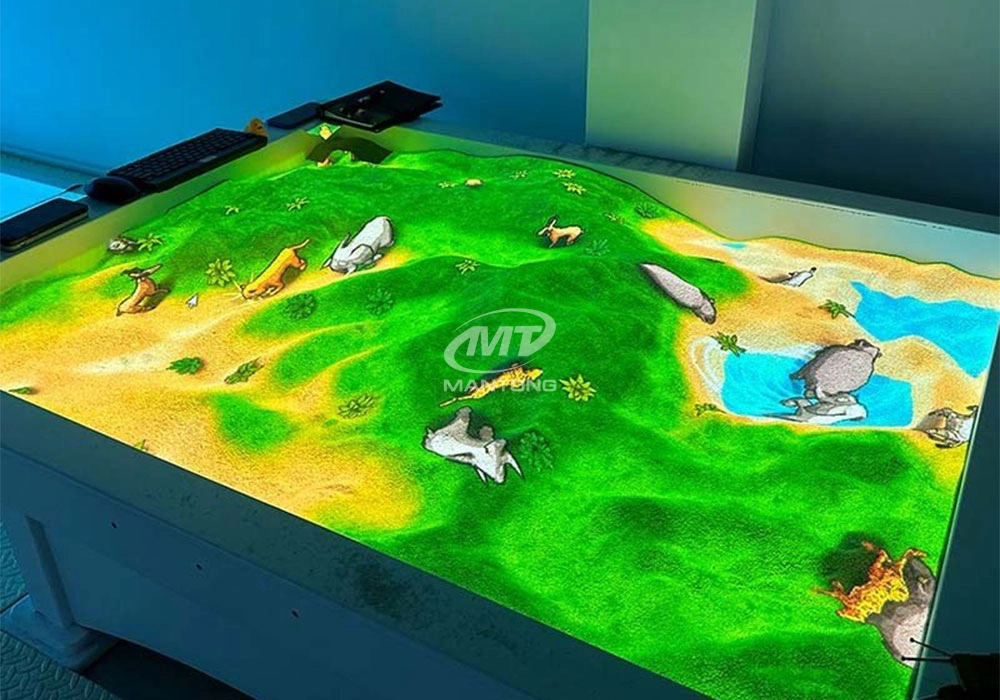
Interactive Sandbox Projection Mapping Games For Kids Play Park
Bring imagination to life with interactive sandbox projection mapping games designed for kids’ play parks. Using cutting-edge projection technology and real-time motion sensing, children can dig, build, and explore virtual worlds directly in the sand. Educational, engaging, and endlessly fun — it’s the perfect blend of play and learning.

Kaida Business Center, Shixin Road, Panyu District,Guangzhou City, Guangdong Province, China.
ManTong
ManTong
ManTong