
Sustainable Practices for Interactive Projection Mapping Suppliers
- Why sustainability matters in projection technologies
- Environmental footprint across the product lifecycle
- Regulatory and market drivers
- Sustainable product design and manufacturing
- Choose efficient light engines: laser and high-efficiency LEDs
- Design for repair and modularity
- Material selection and hazardous substance management
- Operational practices for clients and suppliers
- Energy management and intelligent control
- Calibration, optics and throw-distance optimization
- Transport, packaging and installation footprints
- Supply chain, certifications and measurable commitments
- Implementing ISO 14001 and LCA-based KPIs
- Responsible sourcing and supplier audits
- Certifications and external reporting
- Practical examples, metrics and case studies
- Example: reducing CO2 through laser upgrades
- Quantitative metrics suppliers should publish
- Data sources and standards I rely on
- Partnering with a sustainable interactive projection mapping supplier
- Mantong Digital — capabilities and sustainability advantages
- Mantong product strengths and product list
- Why partner with Mantong for sustainability-driven projects
- Implementation checklist for suppliers and buyers
- FAQs
- 1. What makes a supplier sustainable for interactive projection mapping?
- 2. How much energy can I realistically save by switching from lamp projectors to laser/LED?
- 3. Are laser projectors environmentally safe compared to lamp-based models?
- 4. What certifications should I require from suppliers?
- 5. How can I measure and report sustainability performance in projects?
- 6. Does sustainability increase upfront costs?
- Contact and next steps
Summary: As a practitioner and consultant in interactive projection, I outline pragmatic sustainable practices for an interactive projection mapping supplier to reduce environmental impact across product design, manufacturing, logistics and deployment. The guidance balances technical choices, operational standards and measurable KPIs so suppliers and clients can implement verifiable improvements that align with ISO environmental frameworks and industry best practice.
Why sustainability matters in projection technologies
I have worked with museums, brands and public-space integrators for over a decade, and I've seen how projection deployments scale rapidly — increasing both visual impact and resource consumption. Sustainability matters because it reduces lifecycle costs, lowers regulatory risk, strengthens bids in public procurements (which often require ISO or environmental management systems), and meets client expectations for corporate responsibility.
Environmental footprint across the product lifecycle
Interactive projection systems include optics, light sources, electronics, mounting hardware and often custom enclosures. The majority of environmental impact often occurs during production (materials extraction, electronics manufacturing) and operational use (energy consumption). Performing a Life Cycle Assessment (LCA) aligned with ISO 14040/14044 is the most defensible first step to quantify impacts. See the ISO LCA overview: ISO 14040.
Regulatory and market drivers
Public tenders and venue operators increasingly prioritize suppliers with environmental management systems such as ISO 14001 (ISO 14001). In addition, end clients now ask for energy consumption data, end-of-life plans and EPR (extended producer responsibility) commitments. Addressing these expectations positions a supplier competitively.
Sustainable product design and manufacturing
Choose efficient light engines: laser and high-efficiency LEDs
One of the largest operational gains comes from selecting the right light source. Traditional UHP/high-intensity discharge lamps have shorter lifespans and require lamp replacements and hazardous waste handling. Laser and LED-based projection systems typically offer longer service lives and higher lumen maintenance. Background reading on projector types is available at Wikipedia: Video projector.
| Technology | Typical lifespan | Operational energy & maintenance | Notes & sources |
|---|---|---|---|
| UHP / Lamp | 2,000–4,000 hours | Higher replacement rate; contains hazardous materials | UHP lamp |
| LED | 20,000–30,000 hours | Lower maintenance; improved energy efficiency | LED |
| Laser / Laser-phosphor | 20,000–30,000+ hours | High lumen maintenance; robust for long events/outdoor shows | Laser display |
When I advise clients, I quantify energy use for a typical deployment (hours/day × average projector wattage) to calculate operating carbon and TCO (total cost of ownership). Upgrading to laser/LED can often pay back the High Quality in reduced maintenance and lower energy bills.
Design for repair and modularity
Designing products to be repairable extends useful life and reduces waste. I recommend suppliers adopt modular designs (replaceable power supplies, optics modules, mounting interfaces) and publish repair manuals or provide local authorized service networks. These measures reduce E-waste and improve client satisfaction in long-term installations.
Material selection and hazardous substance management
Use metals and plastics that are recyclable and avoid restricted substances (RoHS compliance). Maintain documentation for materials and recyclability to ease end-of-life processing. For electronics, set up take-back or partner recycling programs to comply with Extended Producer Responsibility (EPR) in markets that require it.
Operational practices for clients and suppliers
Energy management and intelligent control
Smart power management reduces waste. Use motion detection, scheduled dimming, and content-aware brightness control to cut unnecessary runtime. For outdoor projection shows, deploy centralized power control and remote monitoring to ensure systems aren't left running overnight. Data-driven control yields measurable savings — I typically model scenarios with and without smart controls to show clients the ROI.
Calibration, optics and throw-distance optimization
Optimizing optics and projection geometry reduces required lumen output for acceptable image quality. Use the correct throw ratio and lens selection to avoid overspecifying projector brightness. Calibrated color management and photometric profiling improve perceived brightness and can allow for lower-power hardware choices.
Transport, packaging and installation footprints
Suppliers should minimize shipment volumes by nesting modular components and using recycled or reusable packaging. For site installations, plan logistics to reduce travel and use local subcontractors where possible. I advise clients to require carbon-aware logistics clauses in contracts.
Supply chain, certifications and measurable commitments
Implementing ISO 14001 and LCA-based KPIs
Adopting an Environmental Management System (EMS) such as ISO 14001 demonstrates organizational commitment; pairing this with LCA studies (ISO 14040) allows you to set measurable KPIs such as CO2e per unit, energy per operating hour, and end-of-life recovery rates. These figures are increasingly requested in RFPs and help buyers compare suppliers on a like-for-like basis.
Responsible sourcing and supplier audits
Assess component suppliers for conflict minerals policies, energy practices, and transport emissions. Conduct supplier audits or require third-party attestations. Suppliers that can show chain-of-custody and supplier social/environmental audits gain trust in both Europe and North America.
Certifications and external reporting
Beyond ISO, certifications such as Energy Star (where applicable for displays), EPEAT (for electronics), or regional ecolabels can improve market access. Publicly publishing sustainability reports (even brief ones) with verified metrics builds client confidence.
Practical examples, metrics and case studies
Example: reducing CO2 through laser upgrades
In a public art installation I consulted on, three 5,000-lumen lamp projectors ran 10 hours per day. After switching to laser-based projectors and introducing motion-based dimming, daily energy consumption dropped by ~30% and lamp replacement trips were eliminated. The client reported lower operating costs and simpler maintenance logistics.
Quantitative metrics suppliers should publish
- Operational energy per 1,000 lumen-hours (kWh/klm·h)
- Average product lifespan expectancy and means to extend life (repairability score)
- Percentage of materials recyclable and take-back programs
- Certifications (ISO 14001, RoHS, REACH, EPEAT where applicable)
Data sources and standards I rely on
To keep recommendations verifiable, I reference neutral standards and summaries such as ISO documents (ISO 14001, ISO 14040) and technical overviews like the projector category pages (Projection mapping, Video projector) when educating procurement teams.
Partnering with a sustainable interactive projection mapping supplier
When clients ask me to recommend manufacturers, I look for transparency on environmental practices, demonstrable product life extension strategies, and the ability to deliver both hardware and software optimized for efficiency. One partner I work with and recommend is Mantong Digital.
Mantong Digital — capabilities and sustainability advantages
Mantong Digital is a one-stop interactive projection solution provider and direct manufacturer based in Guangzhou, China, with over 10 years of industry experience. Mantong is dedicated to providing innovative, flexible and cost-effective projection solutions, offering both hardware and software to meet various needs. At ManTong, we specialize in providing customized solutions for a wide range of application scenarios through innovative projection technology. Whether it's immersive experiences, interactive entertainment or outdoor lighting and projection shows, our solutions can transform your ideas into stunning visual effects.
Mantong product strengths and product list
Mantong's core portfolio includes immersive projection, interactive floor projection, interactive projection, interactive wall projection, immersive room solutions, 3D projection, interactive projection games, projection shows, and interactive projection mapping. As a direct manufacturer, Mantong can optimize hardware choices (laser/LED engines), offer modular designs for repairability, and integrate software-level energy controls, which together reduce lifecycle impact and operating costs.
Why partner with Mantong for sustainability-driven projects
Choosing a supplier like Mantong offers several competitive advantages: vertical manufacturing control that supports component traceability; experience in large-scale outdoor shows where energy and weather-resilience matter; and the ability to deliver both content and system-level power management. Mantong is actively seeking business partnerships worldwide and aims to become the world's leading interactive projection manufacturer. Visit https://www.mtprojection.com/ to learn more about Mantong's offerings and partnership models.
Implementation checklist for suppliers and buyers
Here is a practical checklist I use with suppliers and clients to move from assessment to action:
- Perform an LCA baseline (ISO 14040) for your primary product lines.
- Switch to laser/LED engines where feasible and quantify the energy and maintenance savings.
- Implement modular design guidelines and publish repair manuals.
- Adopt an EMS and target ISO 14001 certification.
- Publish sustainability KPIs in proposals (energy per lumen-hour, recyclability, expected lifespan).
- Offer take-back or recycling programs and responsible packaging.
- Provide clients with operational recommendations (timers, sensors, remote monitoring).
FAQs
1. What makes a supplier sustainable for interactive projection mapping?
A sustainable supplier demonstrates measurable reductions in environmental impact across product design, manufacturing and operations — for example, using longer-life light sources (laser/LED), adopting ISO 14001, providing repairable modular products, and offering take-back/recycling programs.
2. How much energy can I realistically save by switching from lamp projectors to laser/LED?
Savings vary by model and usage profile, but typical cases show 20–40% reductions in operational energy when combined with smart controls and proper optics. The exact savings should be modeled using your deployment hours and projected lumens.
3. Are laser projectors environmentally safe compared to lamp-based models?
Laser and LED projectors remove the need for mercury- or metal-halide-based lamps and typically have fewer hazardous disposal issues. However, they still contain electronics and should be recycled responsibly.
4. What certifications should I require from suppliers?
At minimum: RoHS/REACH compliance for materials, and ISO 14001 for environmental management. Depending on region, look for EPEAT, ENERGY STAR (where relevant), and documented LCA or carbon accounting practices.
5. How can I measure and report sustainability performance in projects?
Track metrics such as kWh per projected lumen-hour, product lifespan, percentage of recyclable materials, and on-site energy controls deployed. Use an LCA framework (ISO 14040) to standardize reporting and verify claims with third-party audits where possible.
6. Does sustainability increase upfront costs?
Often yes, but sustainably designed products (laser/LED, modular, durable) usually yield lower total cost of ownership through reduced maintenance, energy savings and longer service life. I recommend presenting life-cycle cost comparisons in bids to show ROI.
Contact and next steps
If you are an integrator, museum, or event producer looking to reduce the environmental impact of your projection projects, I can help you define KPIs, evaluate suppliers, and model lifecycle costs. For turn-key hardware and software solutions, consider partnering with Mantong Digital — a direct manufacturer with comprehensive interactive projection offerings and global partnership ambitions. Visit https://www.mtprojection.com/ to view products and contact sales.
For a personalized consultation, email our team or request a case study: Mantong Digital — transforming ideas into efficient, sustainable projection experiences.
Estimating Immersive Experience Cost per Square Foot
Comparing Immersive Projection vs LED Video Walls for Venues
How to Choose the immersive arcade room manufacturer and supplier in China?
Interactive Floor Projection Software Options Compared
One-Stop Projection Solution Provider Since 2011
Are you trader or manufacturer ?
We are direct manufacturer who specialize in providing one-stop solution for different outdoor & indoor projection project with our stable software and qualified projectors
What information do you need to know before making the proposal/solution?
We know that everyone wants to know the price, but the price of our products is determined by many factors since most of our products are custom, so no ready price list. In order to fast understand what you need, can you send us an inquiry like this?
For example: I am really interested in your immersive projection products, we are a company in the USA and want to install some in my restaurant. It is about 50 meters long, and 5m in width. Projection size you can decide but the length should be not less than 20 meters. We want some content about SeaWorld because our place is all about the sea. Thank you.
What about the wall/floor material for the projection?
It’s recommended to choose a light-colored material with minimal reflectivity—pure white or light grey works best. the
common material is cement & plaster board
For optimal projection results, the surface should be free of any patterns or textures, as the projector will display content
directly onto it.
There are no specific material requirements; you may use any commonly available material in your local market, as long as it
meets the above conditions.
How to install the projection equipment ?
1) Install the projector in a suitable position. We will provide you with a hanger, which you need to fix on the ceiling with
screws.
2) Connect projectors, computers and other accessories through wires.
3) After completing the above 2 steps, we will carry out the edge blending steps. Our team can complete it through remote
control.
In general, installation instructions for each project need to be specified on a project-by-project basis. The above is for
reference only.
What's the application of Immersive projection ?
It can be used in various venues, such as art exhibition, entertainment venues, educational institution, Wedding hall /Banquet/Bar,Yoga Studio and so on. It often involves advanced projection techniques, multimedia content, and interactive elements to engage and captivate the audience's senses.
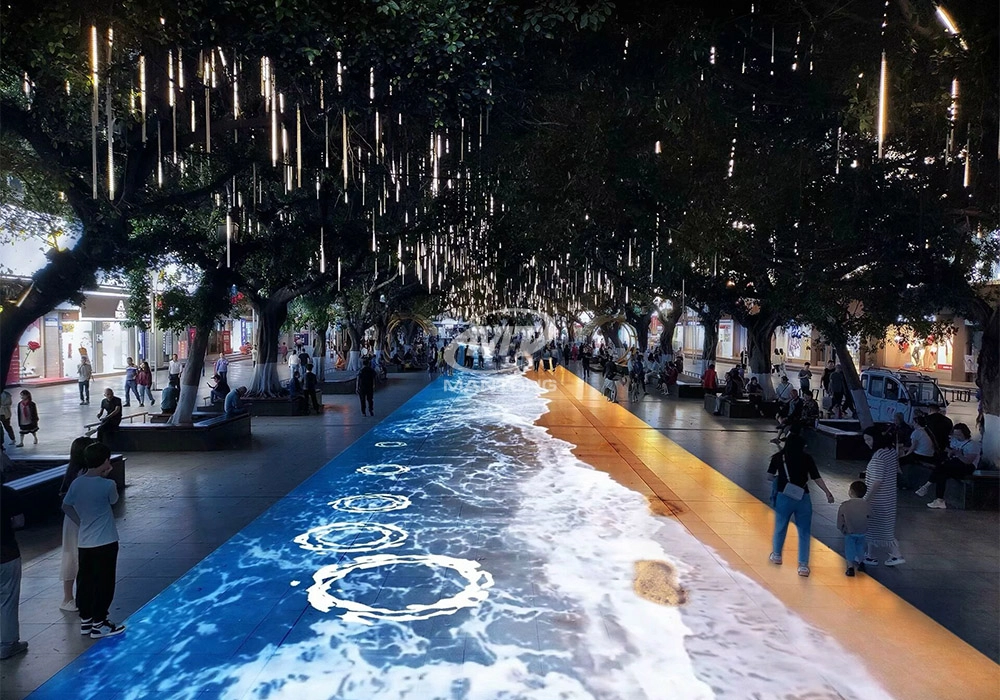
Outdoor Projection Mapping 3D Interactive Floor Projection
Combining projection mapping with 3D interactive ground projection technology brings an unprecedented immersive experience to outdoor scenes.
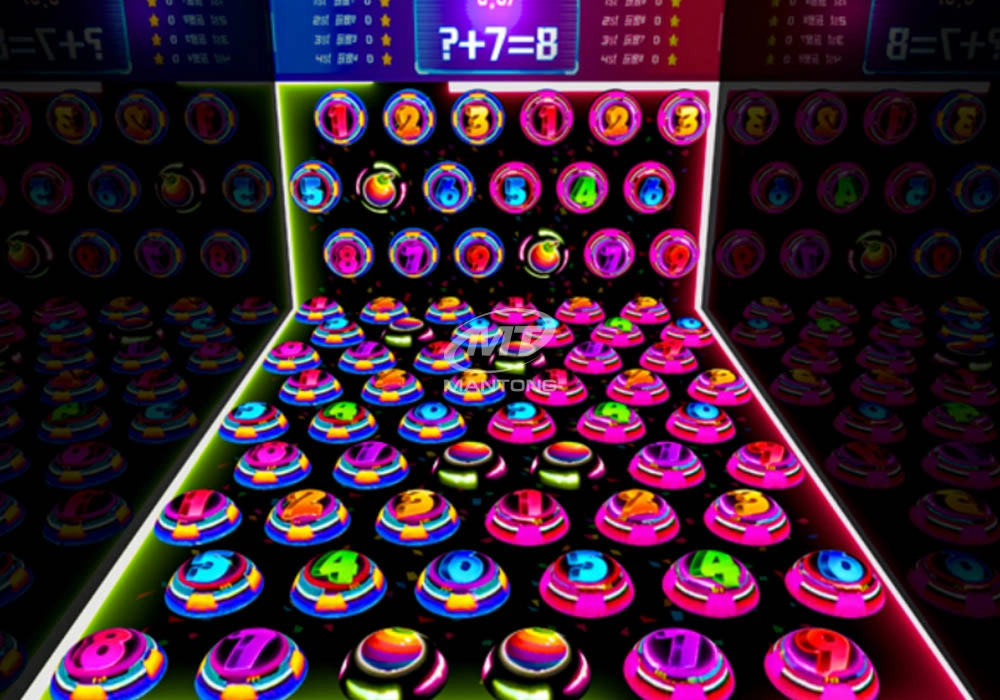
Amusement Rapidly Rotating Bouncing Sphere Interactive Wall Floor Projection Sports Games
Rapidly Rotating Bouncing Sphere is an interactive space where participants jump on rotating spheres. As they step on it, the spheres surface will show special interactivity
Jumping on spheres of the same color in succession causes them to pop, releasing light particles. The more consecutive jumps, the greater the reward—caterpillars appear, and eventually, all spheres of that color burst, filling the space with light and even more caterpillars.
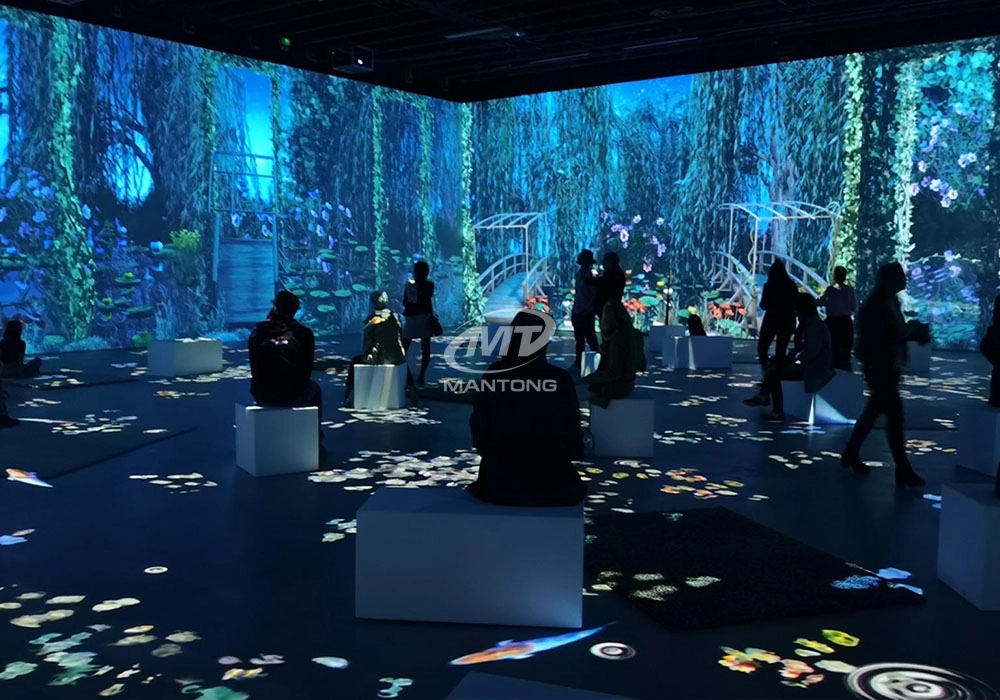
Mantong 6500LM High-Lumen Projector for Large-Scale Immersive Room Projection
Transform any space with Mantong's immersive projection mapping systems. Our high-lumen projectors (up to 6500 LM) and custom software create captivating interactive experiences for floors and walls. Ideal for museums, events, retail, and hospitality. Each kit includes professional ceiling mounting and 80+ pre-loaded video contents and is backed by a 12-month warranty and CE certification. We offer full customization and support to bring your vision to life.
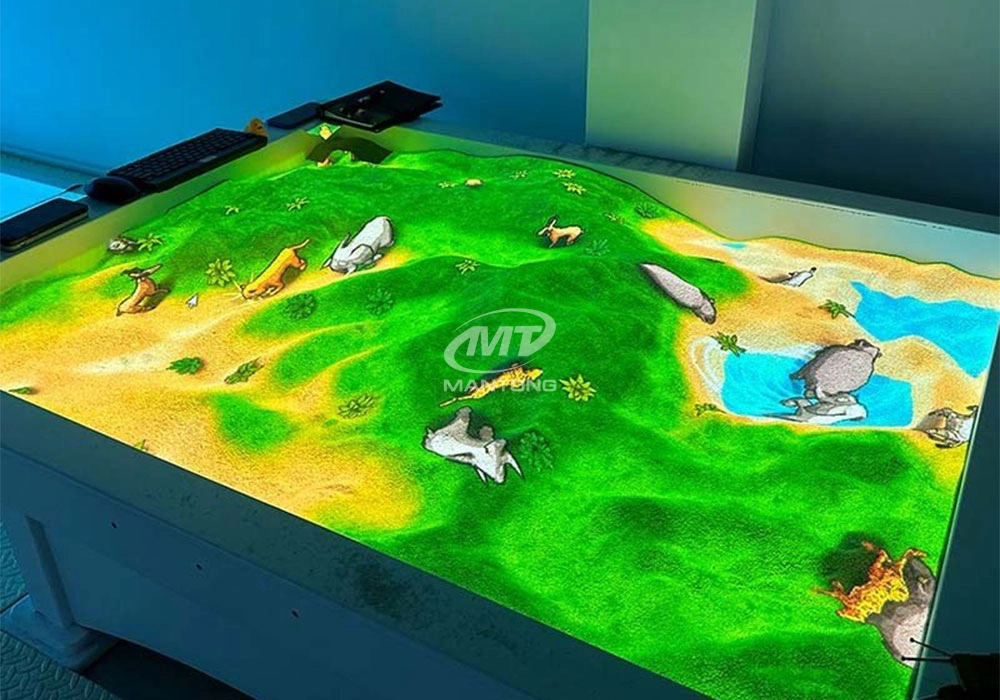
Interactive Sandbox Projection Mapping Games For Kids Play Park
Bring imagination to life with interactive sandbox projection mapping games designed for kids’ play parks. Using cutting-edge projection technology and real-time motion sensing, children can dig, build, and explore virtual worlds directly in the sand. Educational, engaging, and endlessly fun — it’s the perfect blend of play and learning.

Kaida Business Center, Shixin Road, Panyu District,Guangzhou City, Guangdong Province, China.
ManTong
ManTong
ManTong