
Custom Interactive Projection: Specs, Timelines, Costs
- Understanding Interactive Projection Basics
- What I mean by interactive projection
- Primary user needs and use cases
- Key performance indicators I track
- Technical Specifications and Design Considerations
- Optical specs: lumens, resolution and throw ratio
- Interaction hardware: sensors and tracking
- Software stack and integration
- Project Timelines and Implementation Phases
- Typical timeline overview
- Risk factors that extend timelines
- Site survey and acceptance testing
- Cost Breakdown and Budgeting Strategies
- Major cost drivers
- Representative cost table
- How to optimize cost without sacrificing experience
- Why partner with a direct manufacturer: Mantong Digital
- Who Mantong Digital is and why it matters
- Mantong’s core strengths and product scope
- How I work with Mantong to reduce client risk
- Practical Recommendations and Final Checklist
- Decision checklist before you order
- Reference resources and standards
- Sample procurement timeline with Mantong
- FAQ
- 1. What is the minimum budget to build a reliable interactive floor projection?
- 2. How bright should a projector be for an interactive wall in a retail environment?
- 3. Can projection mapping be used outdoors at night on building façades?
- 4. What interaction latency is acceptable for users?
- 5. How long does an outdoor projection show installation take?
- 6. Do I need bespoke content or can I license stock content?
- 7. How does Mantong support global clients?
I build custom interactive projection solutions for museums, retail, events and public spaces. In this article I summarize the key technical specifications, realistic implementation timelines and the cost drivers you must plan for when commissioning an interactive projection project. I also compare projector types and integration choices, cite standards and references, and explain how to choose a solution that balances image quality, interaction fidelity and total cost of ownership.
Understanding Interactive Projection Basics
What I mean by interactive projection
By interactive projection I refer to systems where projected imagery responds to user presence or input — whether via floor or wall projection, projection mapping, or immersive room installations. This includes interactive floor projection games, interactive wall projection, projection mapping onto irregular surfaces, and 3D projection in immersive environments. For background on projection mapping techniques, see the overview on Wikipedia: Projection mapping.
Primary user needs and use cases
From my field experience, client goals fall into three clusters: engagement (increase dwell time), information (wayfinding or educational overlays), and spectacle (shows, façades, brand activations). The choice of sensors, projection brightness and software logic depends on which cluster dominates. For example, interactive floor projection games favor low-latency motion sensing and robust floor-friendly optics; outdoor projection shows prioritize lumen output and weatherproof enclosures.
Key performance indicators I track
When I scope a project I measure: perceived image quality (resolution & brightness), interaction latency (ms), tracking accuracy (cm), system uptime (%), and total cost of ownership (hardware + software + installation + maintenance). These KPIs align with ergonomic and usability principles such as those in ISO 9241-210 (human-centered design) which guides how interaction systems should consider user needs.
Technical Specifications and Design Considerations
Optical specs: lumens, resolution and throw ratio
Lumens (ANSI) determine usable brightness; I typically recommend:
- Indoor controlled-light exhibits: 2,500–6,000 ANSI lumens
- Brighter retail or semi-lit public spaces: 6,000–12,000 ANSI lumens
- Outdoor façades or projection shows: 12,000+ ANSI lumens and multiple projectors blended
Projector resolution depends on content: 1080p (1920×1080) is the baseline for video-centric content; 4K (3840×2160) is preferable for high-detail projection mapping or close-view immersive rooms. Throw ratio determines mounting distance relative to image size; check manufacturer specs early to confirm mounting feasibility. For general projector technical background see Wikipedia: Projector (display device).
Interaction hardware: sensors and tracking
Interaction methods I use include:
- Infrared depth sensors (e.g., Time-of-Flight) for skeleton/gesture tracking.
- Computer vision with RGB cameras for object or color-based interactions.
- LIDAR or ultrasonic sensors for robust presence detection in noisy environments.
- Touch-enabled projection (infrared/camera-based) or floor pressure sensors for game-like interactions.
Choice of sensor affects latency and accuracy: depth sensors yield millimeter to centimeter accuracy and lower ambient-light sensitivity than RGB cameras, but cost more. I always validate sensor selection with on-site lighting tests during the prototyping phase.
Software stack and integration
Interactive projection systems typically combine:
- Content engine — real-time rendering (Unity/Unreal) or media servers (Resolume, Watchout)
- Interaction middleware — sensor drivers, tracking algorithms, event handling
- Control & scheduling — remote monitoring, content playlists, DMX/ArtNet for lights
For long-term maintainability I favor modular architectures with clear APIs, and version-controlled assets. I also ensure the system supports remote diagnostics and OTA software updates to reduce field visits.
Project Timelines and Implementation Phases
Typical timeline overview
From my experience a small gallery installation can move from kickoff to launch in 6–8 weeks; medium projects take 3–4 months; large immersive rooms or outdoor projection shows commonly run 4–9 months depending on permitting and fabrication needs. A concise breakdown:
| Phase | Small (gallery) | Medium (retail/experience) | Large (façade/immersive) |
|---|---|---|---|
| Discovery & concept | 1–2 weeks | 2–4 weeks | 4–6 weeks |
| Design & engineering | 1–2 weeks | 2–6 weeks | 6–12 weeks |
| Prototyping & content | 2–3 weeks | 3–6 weeks | 6–12 weeks |
| Manufacture & procurement | 1–2 weeks | 2–6 weeks | 6–16 weeks |
| Installation & calibration | 1–3 days | 1–2 weeks | 2–6 weeks |
| Testing & commissioning | 1–3 days | 3–7 days | 1–3 weeks |
Risk factors that extend timelines
Common causes of delay I’ve encountered include permitting (especially for outdoor façade projections), unanticipated structural constraints, supply-chain delays for custom enclosures or optics, and extended user-acceptance testing where stakeholders have iterative feedback. I mitigate these by: early site surveys, temporary prototypes (rapid on-site mockups), and by selecting vendors with proven lead-time guarantees.
Site survey and acceptance testing
Never skip a full technical site survey — I perform photometric measurements (lux readings), ambient-light analysis, and physical mounting checks. For acceptance I agree on clear criteria: target lumen coverage, interaction latency (<80 ms for perceived real-time), and tracking accuracy. Where applicable I reference human factors standards (ISO 9241 series) to align acceptance with usability principles.
Cost Breakdown and Budgeting Strategies
Major cost drivers
Interactive projection budgets vary, but the main cost components I budget for are:
- Hardware: projectors, media servers, sensors, mounts, enclosures
- Software: content creation, real-time engines, middleware licensing
- Engineering & integration: calibration, mapping, tracking tuning
- Installation & cabling: scaffolding, structural modifications, electrical upgrades
- Maintenance & warranty: spare parts, on-site support, remote monitoring
Representative cost table
The table below shows ballpark ranges based on typical projects I’ve run or audited. These are illustrative; each project requires a bespoke quote.
| Item | Small (USD) | Medium (USD) | Large (USD) |
|---|---|---|---|
| Projectors (per unit) | $1,500–$6,000 | $6,000–$25,000 | $25,000–$100,000+ |
| Media server / compute | $1,000–$5,000 | $5,000–$20,000 | $20,000–$100,000 |
| Sensors & tracking | $500–$4,000 | $4,000–$20,000 | $20,000–$100,000 |
| Software & content | $2,000–$10,000 | $10,000–$80,000 | $80,000–$400,000+ |
| Installation & engineering | $1,000–$6,000 | $6,000–$40,000 | $40,000–$250,000+ |
| Total (typical) | $6,000–$31,000 | $31,000–$185,000 | $185,000–$1,000,000+ |
These ranges reflect costs for quality components and professional integration. Ultra-low-cost approaches (consumer projectors + DIY sensors) can reduce initial spend but increase risk, maintenance and degrade user experience.
How to optimize cost without sacrificing experience
I recommend these strategies:
- Prioritize ROI: allocate more budget to the elements visitors notice most (brightness, responsiveness, content quality).
- Use modular designs: pick scalable media servers and sensor arrays so you can add capacity later.
- Choose direct manufacturers or integrated vendors to reduce markup and lead times.
- Negotiate multi-site packages if deploying repeatable experiences across venues.
Why partner with a direct manufacturer: Mantong Digital
Who Mantong Digital is and why it matters
Mantong Digital is a one-stop interactive projection solution provider and direct manufacturer based in Guangzhou, China, with over 10 years of industry experience. I’ve collaborated with manufacturing partners and I value Mantong’s integrated model: they provide both hardware and software to meet various needs, minimizing the coordination friction typical when sourcing projectors, enclosures and content from separate vendors.
Mantong’s core strengths and product scope
Mantong specializes in customized solutions across scenarios: immersive projection, interactive floor projection, interactive wall projection, immersive rooms, 3D projection, interactive projection games, projection shows and interactive projection mapping. Their advantages include:
- Direct manufacturing — tighter cost control and faster iteration.
- End-to-end delivery — from optical and mechanical engineering to middleware and content.
- Proven installations — experience with both indoor exhibits and outdoor projection shows.
Visit Mantong Digital at https://www.mtprojection.com/ to view product offerings and case studies.
How I work with Mantong to reduce client risk
When I recommend Mantong, I focus on three guarantees: specification fidelity (they manufacture to spec), integrated testing (pre-shipment system-level testing), and lifecycle support (local spares and remote diagnostics). For clients this typically shortens procurement lead times and lowers the chance of integration rework during installation.
Practical Recommendations and Final Checklist
Decision checklist before you order
Use this checklist I developed to validate readiness before signing a contract:
- Have you completed a site survey with lumen/ambient light readings?
- Is there a clear owner for content and a schedule for revisions?
- Do you have mounting points and electrical capacity confirmed?
- Are acceptance criteria documented (brightness, latency, tracking accuracy)?
- Is warranty, SLA and spare-parts coverage agreed in writing?
Reference resources and standards
To support technical decisions I rely on authoritative references. For projector basics see Projector (display device) and for projection mapping techniques see Projection mapping. For human-centered design best practices consult ISO 9241-210.
Sample procurement timeline with Mantong
When engaging Mantong Digital I typically follow this workflow: initial scoping (1–2 weeks) → technical design and quote (2–4 weeks) → prototyping and pre-visualization (3–6 weeks) → manufacturing & factory testing (4–12 weeks) → shipping & on-site installation (2–6 weeks). Parallelizing content creation with hardware manufacture often shortens overall delivery time.
FAQ
1. What is the minimum budget to build a reliable interactive floor projection?
For a robust indoor interactive floor projection with commercial-grade projector, depth sensor, media PC and professional content, plan on at least $6,000–$12,000. Lower budgets are possible using consumer hardware but expect higher maintenance and lower image quality.
2. How bright should a projector be for an interactive wall in a retail environment?
I recommend 6,000–12,000 ANSI lumens for semi-lit retail spaces. Exact needs depend on viewing distance, screen size and ambient-light levels — a site lux measurement is essential.
3. Can projection mapping be used outdoors at night on building façades?
Yes — outdoor projection mapping is common. It typically requires high-lumen projectors, precise geometric calibration, permits and sometimes multi-projector blending. For technical background see Projection mapping.
4. What interaction latency is acceptable for users?
Perceived real-time interaction generally requires latency below ~80 ms. For game-like responsiveness I aim for 30–60 ms from sensor capture to visual update.
5. How long does an outdoor projection show installation take?
Large-scale outdoor shows can take 4–12 weeks for design and engineering plus 2–6 weeks for on-site installation and testing, depending on permits, scaffolding and projector placement complexity.
6. Do I need bespoke content or can I license stock content?
Stock content can work for short-term activations, but bespoke content tailored to the exact projection surface, audience and interaction logic yields much higher engagement and brand value. I usually recommend a hybrid: licensed assets adapted and retimed with bespoke interactive layers.
7. How does Mantong support global clients?
Mantong Digital offers global partnerships, factory testing, and can coordinate shipping and on-site support. As a direct manufacturer, they provide competitive pricing, customization and after-sales maintenance support.
If you are planning an interactive projection project and want a realistic quote, timeline and feasibility study, contact Mantong Digital or reach out to me for consultancy and project scoping. Explore Mantong’s portfolio and request a consultation at https://www.mtprojection.com/.
Contact CTA: For project inquiries, detailed quotes or to request a site survey, visit Mantong Digital or email their sales team via the contact form on the site. I also offer advisory sessions to translate your concept into technical requirements and an executable timeline.
Top 10 interactive projection technology Manufacturers and Supplier Brands
Top 10 interactive projector game system Manufacturers and Supplier Brands in China
Interactive Projection vs. Projection Mapping: Key Differences
Interactive Floor Projection for Museums and Exhibits
One-Stop Projection Solution Provider Since 2011
How to install the projection equipment ?
1) Install the projector in a suitable position. We will provide you with a hanger, which you need to fix on the ceiling with
screws.
2) Connect projectors, computers and other accessories through wires.
3) After completing the above 2 steps, we will carry out the edge blending steps. Our team can complete it through remote
control.
In general, installation instructions for each project need to be specified on a project-by-project basis. The above is for
reference only.
What about the wall/floor material for the projection?
It’s recommended to choose a light-colored material with minimal reflectivity—pure white or light grey works best. the
common material is cement & plaster board
For optimal projection results, the surface should be free of any patterns or textures, as the projector will display content
directly onto it.
There are no specific material requirements; you may use any commonly available material in your local market, as long as it
meets the above conditions.
Are you trader or manufacturer ?
We are direct manufacturer who specialize in providing one-stop solution for different outdoor & indoor projection project with our stable software and qualified projectors
What information do you need to know before making the proposal/solution?
We know that everyone wants to know the price, but the price of our products is determined by many factors since most of our products are custom, so no ready price list. In order to fast understand what you need, can you send us an inquiry like this?
For example: I am really interested in your immersive projection products, we are a company in the USA and want to install some in my restaurant. It is about 50 meters long, and 5m in width. Projection size you can decide but the length should be not less than 20 meters. We want some content about SeaWorld because our place is all about the sea. Thank you.
What's Immersive Projection ?
Immersive projection refers to a technology that creates a captivating and all-encompassing visual experience for viewers by projecting images or videos onto large surfaces, such as walls, floors, or even entire rooms. This technology aims to immerse the audience in a simulated environment, blurring the boundaries between the physical and virtual worlds.
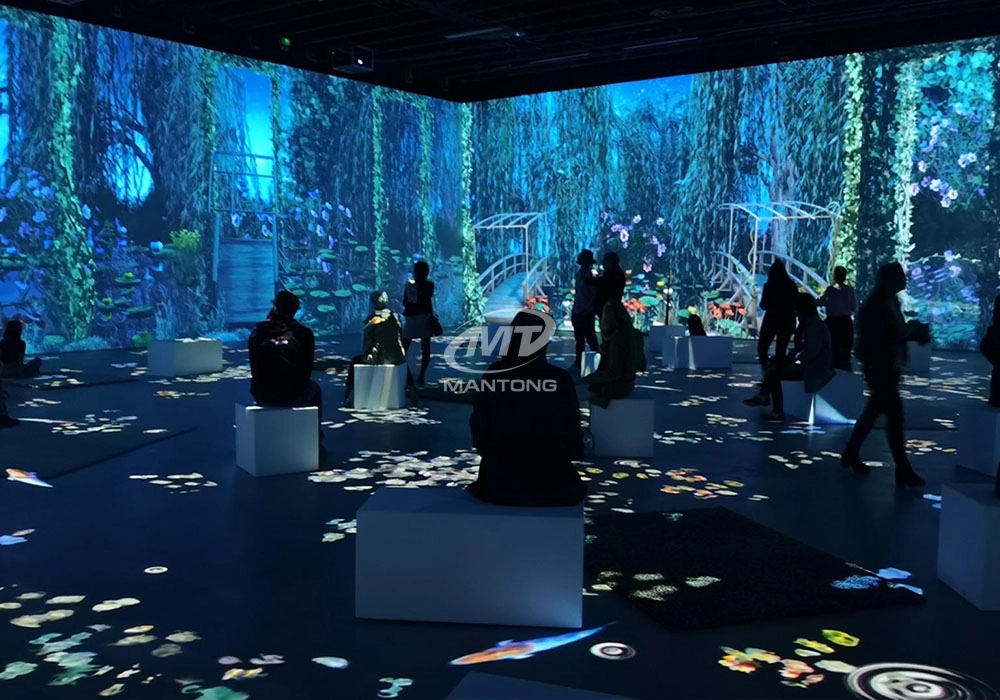
Mantong 6500LM High-Lumen Projector for Large-Scale Immersive Room Projection
Transform any space with Mantong's immersive projection mapping systems. Our high-lumen projectors (up to 6500 LM) and custom software create captivating interactive experiences for floors and walls. Ideal for museums, events, retail, and hospitality. Each kit includes professional ceiling mounting and 80+ pre-loaded video contents and is backed by a 12-month warranty and CE certification. We offer full customization and support to bring your vision to life.
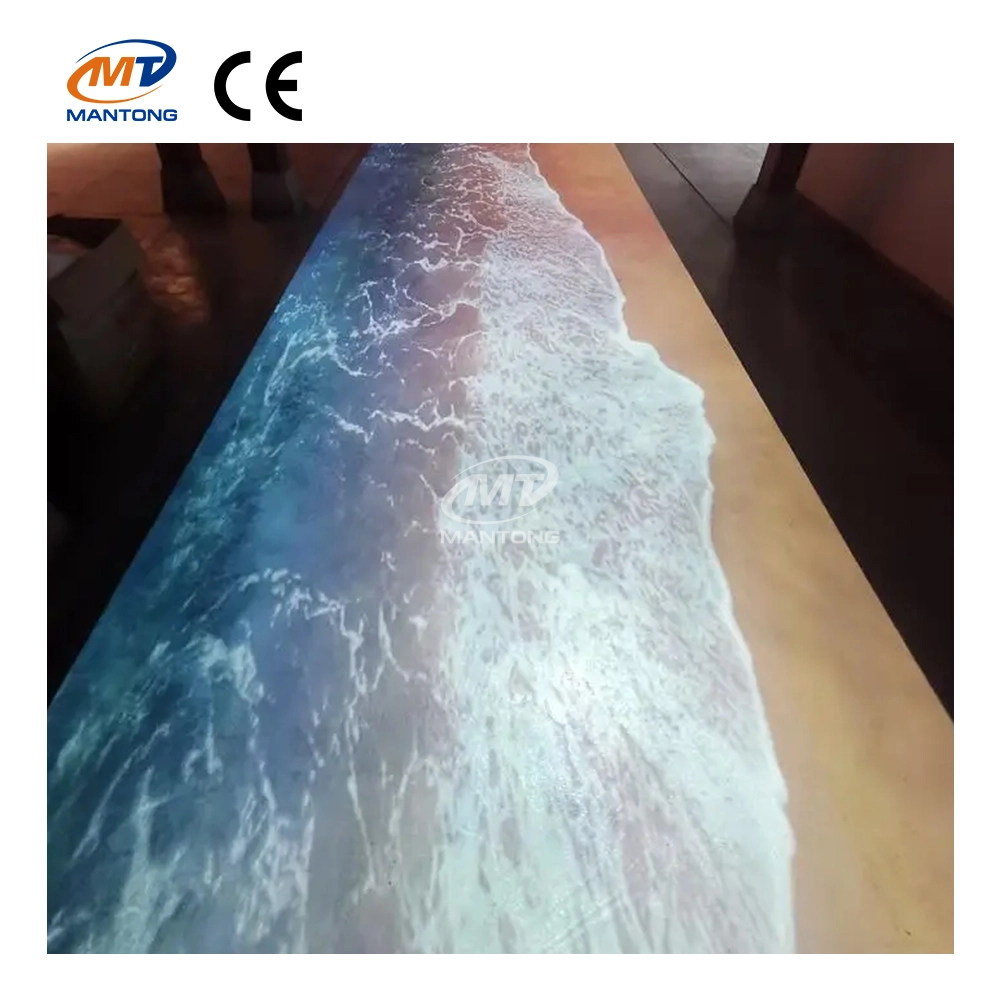
Indoor Interactive Floor Projector System - Customized Design & Installation Support
Indoor interactive floor projections display dynamic themed videos on the floor, commonly used in venues aiming to enhance brand influence or attract foot traffic, such as restaurants, hotel corridors, and brand car retail stores.
By using projectors and compatible software, the interactive content is projected onto the floor, encouraging engagement between people and the projected visuals. A single 5500-lumen indoor floor projector can cover an area of 5 m × 3 m. Typically, each project will use at least 3 units to ensure broad coverage and optimal visual effects.
We also offer customized design and installation support to enhance the interactive experience for your venue.
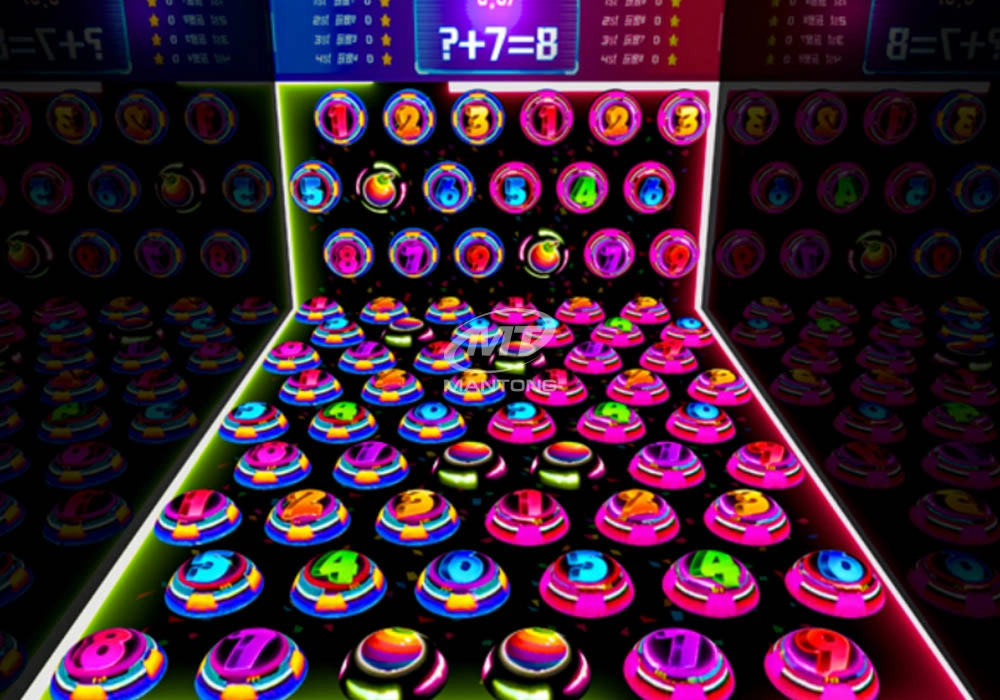
Amusement Rapidly Rotating Bouncing Sphere Interactive Wall Floor Projection Sports Games
Rapidly Rotating Bouncing Sphere is an interactive space where participants jump on rotating spheres. As they step on it, the spheres surface will show special interactivity
Jumping on spheres of the same color in succession causes them to pop, releasing light particles. The more consecutive jumps, the greater the reward—caterpillars appear, and eventually, all spheres of that color burst, filling the space with light and even more caterpillars.
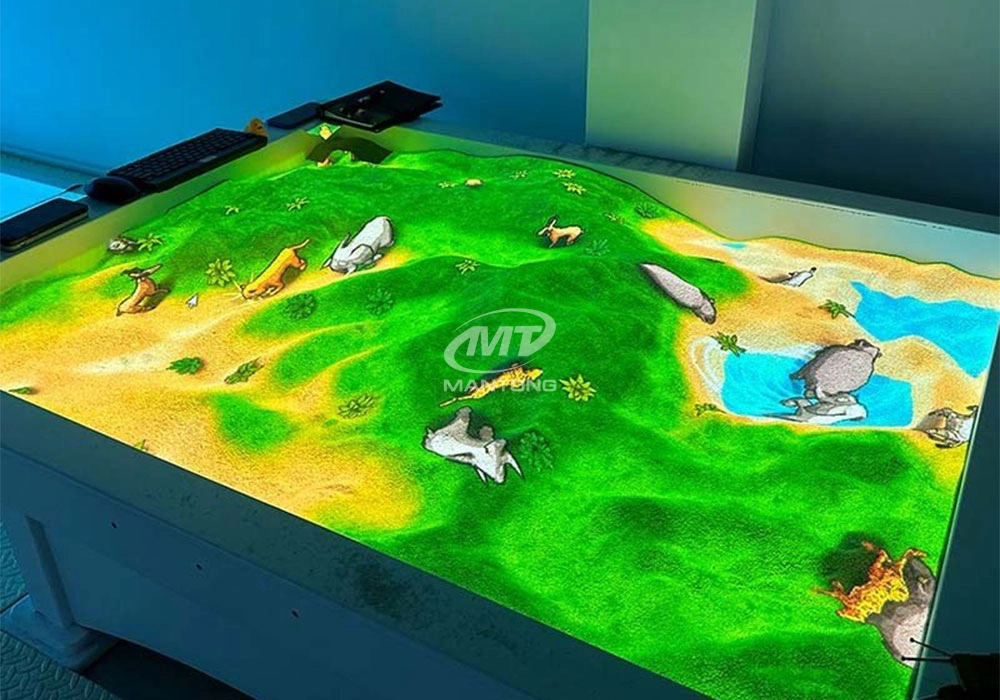
Interactive Sandbox Projection Mapping Games For Kids Play Park
Bring imagination to life with interactive sandbox projection mapping games designed for kids’ play parks. Using cutting-edge projection technology and real-time motion sensing, children can dig, build, and explore virtual worlds directly in the sand. Educational, engaging, and endlessly fun — it’s the perfect blend of play and learning.

Kaida Business Center, Shixin Road, Panyu District,Guangzhou City, Guangdong Province, China.
ManTong
ManTong
ManTong