
How Interactive Floor Games Boost Foot Traffic and Sales
- Why sensory engagement drives retail performance
- How engagement affects behavior
- Why floors are powerful canvases
- Evidence linking experience to sales lift
- Designing effective interactive floor game experiences
- Aligning experience with business goals
- Choosing mechanics that convert
- Accessibility, hygiene and safety considerations
- Technology choices: projection, sensing and software
- Projection hardware options
- Sensing and interactivity layers
- Software, analytics and content management
- Measuring ROI: KPIs, experiments and benchmarks
- Key metrics to track
- Designing A/B tests and attribution
- Sample benchmark table
- Implementation roadmap: from pilot to scale
- Phase 1 — Pilot and learn
- Phase 2 — Optimize and integrate
- Phase 3 — Scale and localize
- Mantong Digital: a vendor perspective and why vendor choice matters
- About Mantong Digital
- Core strengths and differentiators
- Product and solution highlights
- Practical case examples and quick-win deployments
- Retail window activation
- Mall atrium experiences
- Events and pop-ups
- Common pitfalls and how to avoid them
- Pitfall: Poor placement
- Pitfall: Overly complex mechanics
- Pitfall: Lack of measurement
- FAQs
- 1. What are interactive floor games and how do they work?
- 2. Do interactive floor games actually increase sales?
- 3. How much does a deployment cost?
- 4. How do you measure ROI for interactive floor installations?
- 5. Are interactive floors safe and hygienic?
- 6. Can interactive floor games be localized for different markets?
- Contact and next steps
Interactive floor games are now a proven tool for retailers, entertainment venues, malls and public spaces to convert curiosity into measurable business outcomes. By combining immersive projection, responsive sensors, and game design, these systems transform floors into dynamic engagement canvases that increase dwell time, encourage social sharing and influence purchase decisions. This article explains the behavioral and technical mechanics behind interactive floor games, how to plan and measure deployments, implementation best practices, and a practical vendor view for organizations seeking scalable, cost-effective solutions.
Why sensory engagement drives retail performance
How engagement affects behavior
Human attention is limited. Experiences that combine motion, sound and visual novelty capture attention more effectively than static displays. Research on customer experience and behavioral economics shows that memorable experiences create emotional connections that influence purchase intent and loyalty. For example, the PwC Consumer Intelligence Series found that customers are willing to pay more and engage more with brands that deliver superior experiences (PwC, 2018).
Why floors are powerful canvases
Floors occupy a unique place in physical spaces: they are immediately within the sightline and gait of visitors, influence navigation paths and are shared social surfaces. Interactive floor projection converts transit space into entertainment or wayfinding, increasing dwell time and creating moments of delight. Projection-based floor games are non-invasive (no wearables necessary), scalable across large areas and accessible to broad demographics, from families to tech-savvy shoppers.
Evidence linking experience to sales lift
Industry and consulting reports tie improved customer experience to concrete financial metrics. McKinsey highlights that small improvements in customer experience metrics often translate into outsized revenue gains because engaged customers make more frequent purchases and recommend brands more often (McKinsey). While uplift varies by context, conservative industry estimates show meaningful increases in footfall, dwell time and conversion when interactive digital experiences are deployed thoughtfully.
Designing effective interactive floor game experiences
Aligning experience with business goals
Start by defining precise objectives: increase average dwell time, drive a particular product category, grow loyalty signups or generate social media impressions. Objectives determine game mechanics, session length, and KPIs. For example, a short 30–60 second leaderboard-style game near a product display can boost immediate product interaction, while a longer immersive floor experience in a mall atrium can increase overall visitation and brand recall.
Choosing mechanics that convert
Game elements that typically drive conversion include: reward triggers linked to purchases (discount codes displayed after play), branded mini-challenges tied to product features, social/photo moments designed for sharing, and leaderboards to encourage repeat play. Importantly, mechanics should be inclusive (easy initial interaction), with optional depth for repeat visitors.
Accessibility, hygiene and safety considerations
Design for universal accessibility: provide visual, auditory and subtle haptic cues; ensure clear markings to avoid crowding; and use low-glare projection for customers with visual sensitivities. During health-sensitive periods, touchless interactive floor games are particularly valuable — they deliver engagement without physical contact while still enabling measurable interactions.
Technology choices: projection, sensing and software
Projection hardware options
Interactive floor projection solutions typically use short-throw or ultra-short-throw projectors, robust mounting, and sometimes outdoor-rated housings for external installations. Key hardware considerations are lumen output (brightness vs. ambient light), resolution, and maintenance cycles. Projection mapping techniques let brands wrap graphics across irregular floor geometries and are documented in technical overviews of projection mapping (Projection mapping — Wikipedia).
Sensing and interactivity layers
Sensors convert physical movement into game input. Popular sensing technologies include depth cameras (e.g., Intel RealSense or Kinect-class sensors), infrared arrays, pressure mats and LiDAR for larger installations. Depth cameras provide high fidelity at medium cost and enable multi-user tracking and gesture recognition — ideal for interactive floor games that must distinguish individual players.
Software, analytics and content management
Robust CMS and analytics platforms are critical for scaling. Software should offer remote content updates, A/B testing of game content, real-time telemetry (session counts, dwell time, conversions), and integration with POS or CRM systems to track downstream sales impact. Open, modular software stacks reduce lock-in and accelerate customization.
Measuring ROI: KPIs, experiments and benchmarks
Key metrics to track
Measure a mix of engagement and business KPIs:
- Footfall and unique visits in the activation area
- Dwell time per visitor
- Interaction rate (visitors who engage)
- Conversion lift (product sales, sign-ups, redemption of incentivized codes)
- Social impressions and earned media
Designing A/B tests and attribution
Run experiments comparing matched time periods with and without the interactive floor in place. If possible, enable direct attribution by tying a digital voucher or QR code given after play to a purchase. Combining footfall sensors, POS data and CRM enables a multi-touch attribution model for more accurate ROI calculations.
Sample benchmark table
Below is a conservative comparison of typical uplifts observed in industry deployments. Figures are directional and depend on implementation quality and context. Sources: PwC and McKinsey (contextual industry research).
| Impact Metric | Typical Uplift | Source |
|---|---|---|
| Average dwell time in activation area | +10% to +40% | PwC |
| Interaction-to-visit conversion (engagement rate) | 10% to 35% (varies with placement) | McKinsey |
| Sales lift for adjacent product categories | +5% to +20% | Industry case studies / deployment reports |
Implementation roadmap: from pilot to scale
Phase 1 — Pilot and learn
Start with a small, measurable pilot. Choose a high-traffic but controllable location, define success metrics, and run the experience for 2–6 weeks to collect baseline comparisons. Use quick content iterations: simple games that require minimal instruction often achieve the best early adoption.
Phase 2 — Optimize and integrate
After pilot validation, focus on optimization: improve motion-tracking accuracy, reduce false positives/negatives, add reward mechanics that feed into your loyalty program, and integrate analytics with POS/CRM. Ensure the CMS supports remote updates so marketing teams can iterate content without vendor intervention.
Phase 3 — Scale and localize
Scale across multiple sites with templated hardware and content bundles while allowing local teams to localize copy and campaigns. Implement centralized monitoring for uptime and remote troubleshooting, and standardize metrics to evaluate performance across locations.
Mantong Digital: a vendor perspective and why vendor choice matters
About Mantong Digital
Mantong Digital is a one-stop interactive projection solution provider and direct manufacturer based in Guangzhou, China, with over 10 years of industry experience. Mantong provides both hardware and software — from projectors and mounts to depth-sensing solutions and content management — enabling end-to-end interactive projection deployments. Visit https://www.mtprojection.com/ for product information and inquiries.
Core strengths and differentiators
Mantong’s competitive advantages include:
- Direct manufacturing control — lower total cost of ownership through vertical integration.
- End-to-end solutions — hardware, software, and content services for immersive projection, interactive floor projection, interactive wall projection, immersive rooms and 3D projection.
- Customization expertise — tailored interactive projection games, projection shows and interactive projection mapping for diverse scenarios.
- Global partnership readiness — experience with international projects and export-ready product lines.
Product and solution highlights
Mantong specializes in immersive projection, interactive floor projection, interactive projection, interactive wall projection, immersive rooms, 3D projection, interactive projection games, projection shows, and interactive projection mapping. Their solutions can transform retail windows, mall atriums, museums and outdoor events into interactive stages, with scalable telemetry and remote content management.
Practical case examples and quick-win deployments
Retail window activation
Simple interactive floor games placed just inside a store entrance or window can convert passersby into entrants. For storefronts, campaign goals often include generating immediate footfall and capturing contact information (e.g., an email or phone number via a QR reward after play).
Mall atrium experiences
Larger projection and motion tracking installations in mall atriums act as destination experiences — they increase overall visitation and time-on-site across the mall. Linking the game to mall-wide promotions or a centralized loyalty program amplifies cross-store conversions.
Events and pop-ups
At trade shows and pop-ups, interactive floor projection reduces booth friction: passersby can engage without staff, creating viral moments and measurable lead capture via integrated forms or QR codes shown at the end of play sessions.
Common pitfalls and how to avoid them
Pitfall: Poor placement
Placing an interactive floor game in a dead zone or against a back wall limits exposure. Best practice: place experiences in natural flow paths or near complementary product displays to maximize context-driven conversion.
Pitfall: Overly complex mechanics
Complex onboarding reduces engagement. Keep first-time interactions short (under 60 seconds) and provide obvious visual cues that invite play. Offer deeper layers for repeat visitors.
Pitfall: Lack of measurement
Not instrumenting the deployment makes ROI impossible to prove. Ensure analytics are in place from day one and use direct attribution tactics (vouchers, QR codes, POS integration) to measure downstream sales.
FAQs
1. What are interactive floor games and how do they work?
Interactive floor games are projection-based experiences that map dynamic visuals onto the floor and use sensors (depth cameras, infrared or pressure mats) to detect movement. Software translates movement into game input, creating responsive visuals and audio that react in real time.
2. Do interactive floor games actually increase sales?
Yes — when aligned with clear business objectives. Interactive floor experiences increase dwell time and engagement, which are correlated with higher conversion rates. Attribution is strongest when rewards or QR codes are linked to purchases and when analytics integrate with POS/CRM systems.
3. How much does a deployment cost?
Costs vary by size, hardware quality, and integration depth. A small store-level solution (single short-throw projector + depth camera + basic content) can be installed for a modest investment, while large atrium or outdoor projection mapping projects require higher-spec projectors, weatherproof housings and more advanced sensor arrays. Working with a direct manufacturer like Mantong can reduce hardware and integration costs.
4. How do you measure ROI for interactive floor installations?
Combine footfall counters, dwell time metrics, interaction rates, and direct purchase attribution (digital vouchers, POS integration). Run A/B tests and compare matched time periods to isolate the impact of the interactive floor from other variables.
5. Are interactive floors safe and hygienic?
Interactive floors are inherently touchless, which improves hygiene compared to touchscreens. Key safety considerations include clear space management, signage to avoid crowding, and ensuring projection brightness and contrast are safe for public viewing.
6. Can interactive floor games be localized for different markets?
Yes. Content should be localized for language, cultural references and local promotions. A scalable CMS with templating allows global rollouts while enabling local teams to modify assets and messages.
Contact and next steps
If you are evaluating interactive floor games to boost foot traffic and sales, Mantong Digital offers end-to-end solutions and global partnership opportunities. As a direct manufacturer and one-stop provider based in Guangzhou with 10+ years of experience, Mantong can deliver customized immersive projection, interactive floor projection, interactive wall projection, interactive projection games, 3D projection, immersive rooms and projection shows tailored to your objectives. Learn more or request a consultation at https://www.mtprojection.com/.
Ready to pilot an interactive floor experience? Contact Mantong Digital to discuss requirements, budget, and a pilot roadmap — from content design and hardware specification to analytics and scaling.
Top Interactive Projector Games for Kids' Play Centers
Best professional immersive projection room manufacturers and supplier brands in China
Top interactive wall projection Manufacturers and Suppliers in Guangzhou
Safety and Compliance for Interactive Floor Projection Installations
One-Stop Projection Solution Provider Since 2011
What information do you need to know before making the proposal/solution?
We know that everyone wants to know the price, but the price of our products is determined by many factors since most of our products are custom, so no ready price list. In order to fast understand what you need, can you send us an inquiry like this?
For example: I am really interested in your immersive projection products, we are a company in the USA and want to install some in my restaurant. It is about 50 meters long, and 5m in width. Projection size you can decide but the length should be not less than 20 meters. We want some content about SeaWorld because our place is all about the sea. Thank you.
How to install the projection equipment ?
1) Install the projector in a suitable position. We will provide you with a hanger, which you need to fix on the ceiling with
screws.
2) Connect projectors, computers and other accessories through wires.
3) After completing the above 2 steps, we will carry out the edge blending steps. Our team can complete it through remote
control.
In general, installation instructions for each project need to be specified on a project-by-project basis. The above is for
reference only.
How to Write an Interactive-Effect Video Customisation Script ?
① Project Background: Briefly introduce the context in which this interactive scene will be used (e.g., exhibition, museum,
event space, children's area). Example: This scene is part of the “Underwater World” zone in a children's science museum,
designed to be engaging and exploratory.
②Visual Style / Atmosphere: What kind of visual mood are you aiming for? Please describe the color scheme, style, and any
references. it should focus solely on describing the visual aspects of the scene, supported by relevant charts or reference
images.
③ Interaction Points Overview:List each interactive hotspot along with the effect you'd like to trigger when the user
touches or clicks the area. example: when player touch the clownfish, it will swims away with bubble trail (animation effect)
and produce the bubble sound ( sound effect requirement )
④ Static Visual Reference:including but not limited to background image/video, a list of major visual elements (e.g., coral,
rocks, seaweed, fish), which elements should be interactive?
What's Immersive Projection ?
Immersive projection refers to a technology that creates a captivating and all-encompassing visual experience for viewers by projecting images or videos onto large surfaces, such as walls, floors, or even entire rooms. This technology aims to immerse the audience in a simulated environment, blurring the boundaries between the physical and virtual worlds.
Are you trader or manufacturer ?
We are direct manufacturer who specialize in providing one-stop solution for different outdoor & indoor projection project with our stable software and qualified projectors
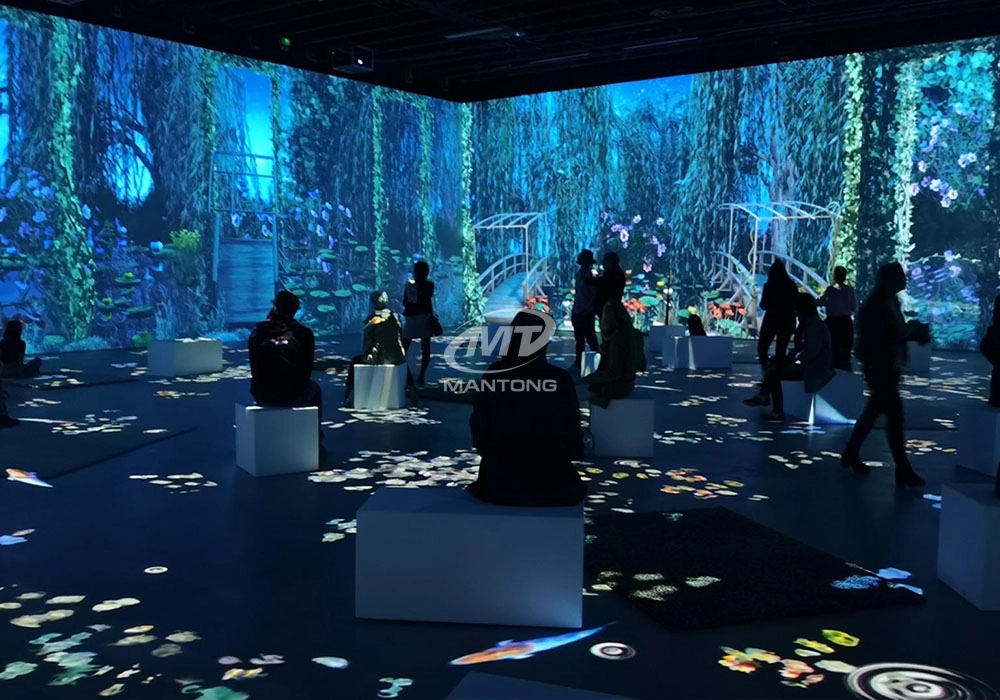
Mantong 6500LM High-Lumen Projector for Large-Scale Immersive Room Projection
Transform any space with Mantong's immersive projection mapping systems. Our high-lumen projectors (up to 6500 LM) and custom software create captivating interactive experiences for floors and walls. Ideal for museums, events, retail, and hospitality. Each kit includes professional ceiling mounting and 80+ pre-loaded video contents and is backed by a 12-month warranty and CE certification. We offer full customization and support to bring your vision to life.
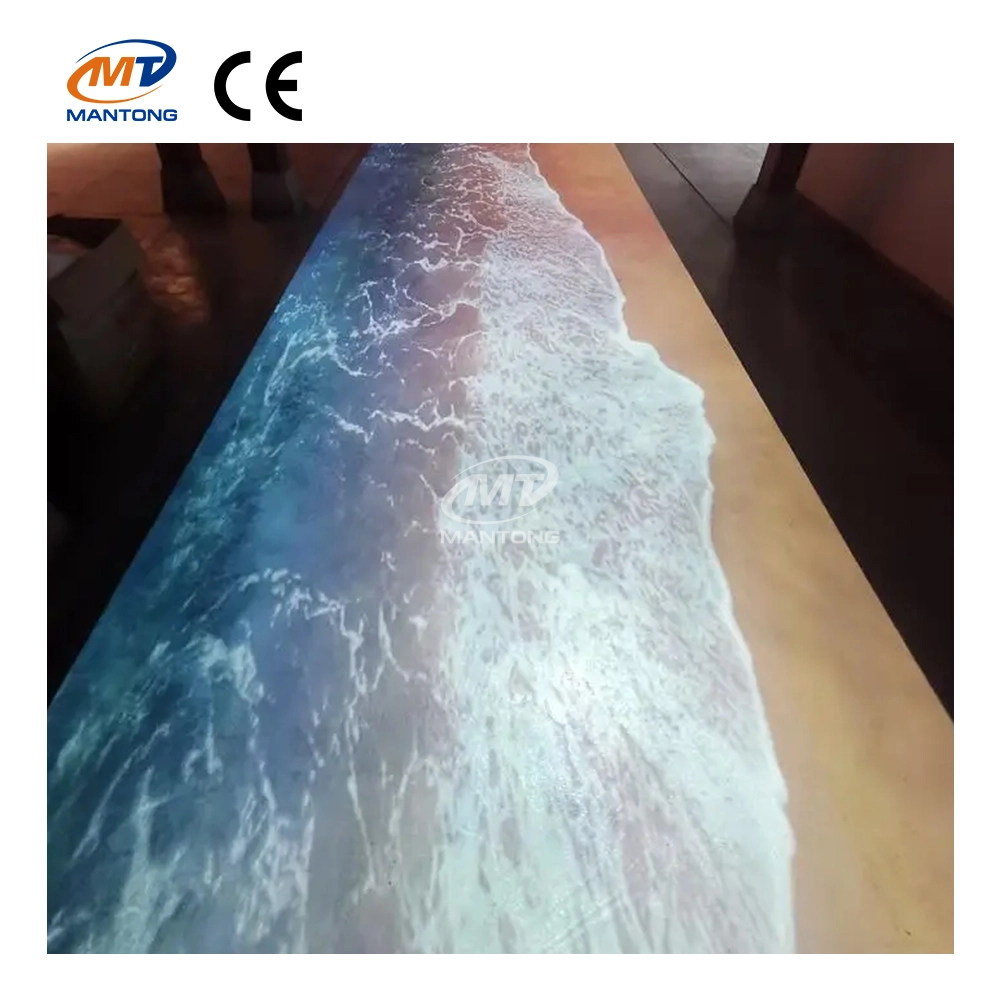
Indoor Interactive Floor Projector System - Customized Design & Installation Support
Indoor interactive floor projections display dynamic themed videos on the floor, commonly used in venues aiming to enhance brand influence or attract foot traffic, such as restaurants, hotel corridors, and brand car retail stores.
By using projectors and compatible software, the interactive content is projected onto the floor, encouraging engagement between people and the projected visuals. A single 5500-lumen indoor floor projector can cover an area of 5 m × 3 m. Typically, each project will use at least 3 units to ensure broad coverage and optimal visual effects.
We also offer customized design and installation support to enhance the interactive experience for your venue.
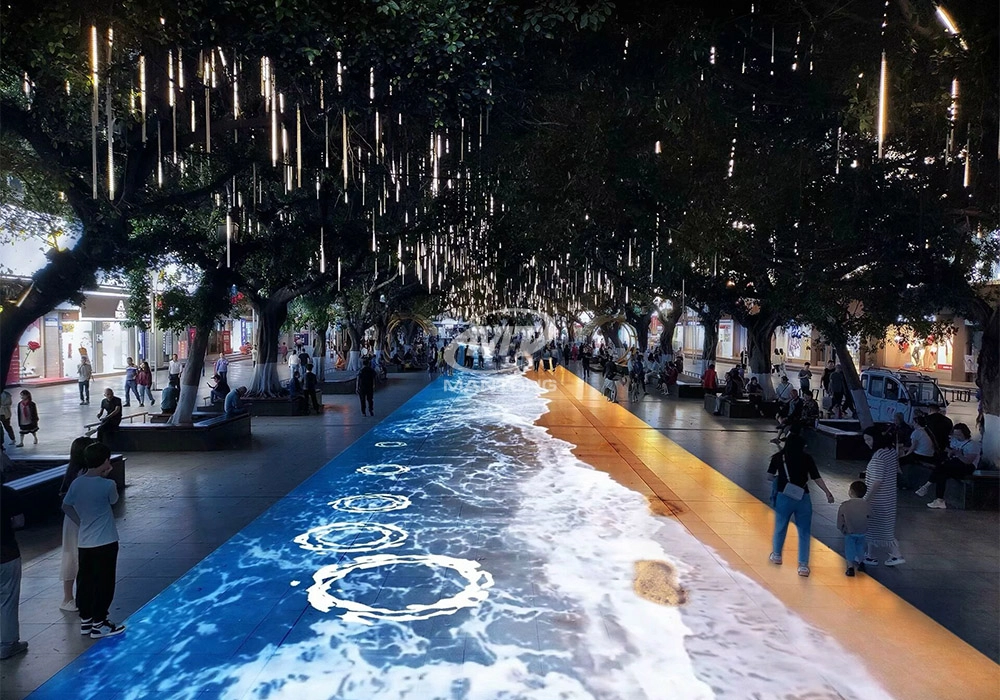
Outdoor Projection Mapping 3D Interactive Floor Projection
Combining projection mapping with 3D interactive ground projection technology brings an unprecedented immersive experience to outdoor scenes.
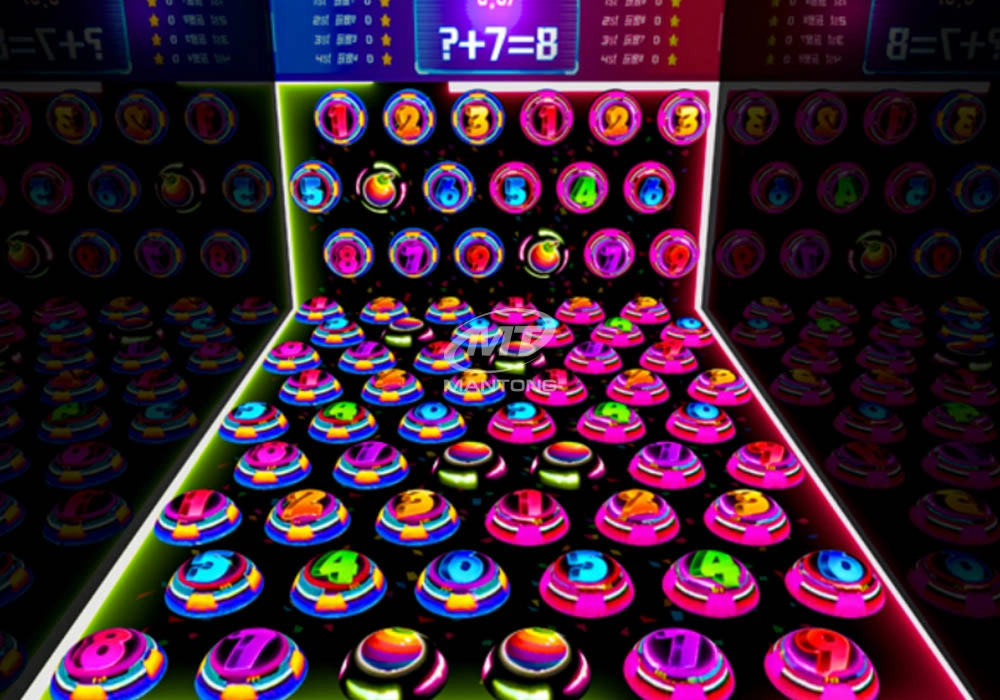
Amusement Rapidly Rotating Bouncing Sphere Interactive Wall Floor Projection Sports Games
Rapidly Rotating Bouncing Sphere is an interactive space where participants jump on rotating spheres. As they step on it, the spheres surface will show special interactivity
Jumping on spheres of the same color in succession causes them to pop, releasing light particles. The more consecutive jumps, the greater the reward—caterpillars appear, and eventually, all spheres of that color burst, filling the space with light and even more caterpillars.

Kaida Business Center, Shixin Road, Panyu District,Guangzhou City, Guangdong Province, China.
ManTong
ManTong
ManTong