
Safety and Compliance for Interactive Floor Projection Installations
- Practical Safety Framework for Interactive Floor Projection
- What constitutes an interactive floor projection installation?
- Risk categories and primary control objectives
- and procurement checkpoints
- Electrical, Fire and Thermal Safety
- Electrical code compliance and safe power distribution
- Projector thermal management and fire risk
- Recommended electrical safety checklist
- Mounting, Cable Management and Trip/Slip Hazards
- Mounting options and comparative risk
- Cable management and surface transitions
- Accessibility, User Safety and Public Health
- ADA and accessible design considerations
- Slip resistance and surface selection
- Hygiene, cleaning and infection control
- Data Privacy, Sensor Safety and Cybersecurity
- When sensors collect personal data
- Secure device configuration and network segmentation
- Incident response and logging
- Inspection, Maintenance and Documentation
- Recommended inspection and preventive maintenance schedule
- Documentation and handover for owners/operators
- Training and signage
- Vendor Selection, Procurement Clauses and Contractual Risk Mitigation
- Essential procurement clauses
- Inspections and third-party verification
- Performance and liability differentiation
- FAQ
- 1. What certifications should I require for projectors and enclosures?
- 2. Are interactive floor projections considered accessible under ADA?
- 3. How can I protect privacy if the system uses cameras?
- 4. What are the top causes of failures in public installations?
- 5. How often should a professional inspect the installation?
- 6. What immediate steps should staff take if a thermal or smoke alarm is triggered?
- References
This article outlines practical safety controls, compliance checkpoints and operational best practices for commercial interactive floor projection installation projects. It is optimized for site-level search signals and AI GEO indexing: it summarizes installation risk areas (electrical, fire, slip/trip, accessibility, hygiene, data security), maps them to recognized standards and authorities, and delivers clear checklists, maintenance schedules and vendor-selection questions to help facilities managers, architects and AV integrators reduce liability and deliver reliable, engaging installations.
Practical Safety Framework for Interactive Floor Projection
What constitutes an interactive floor projection installation?
An interactive floor projection installation typically includes: a projection source (projector or laser projector), interactive sensors (cameras, infrared, LIDAR or pressure sensors), a mounting system (ceiling mounts, recessed housings, or enclosures), cabling and power distribution, control electronics/computing, and the projected surface (floor finish or mat). Each subsystem introduces specific safety and compliance requirements.
Risk categories and primary control objectives
Key risk categories are: electrical shock and wiring code compliance, fire and thermal risk from projectors and power supplies, trip and slip hazards from cabling and surface changes, accessibility and egress interference, hygiene and cross-contamination in public spaces, and data/privacy risks when interactive sensors record or stream data. Control objectives: eliminate hazards where possible, reduce remaining risk by design, protect with validated devices and certified installers, and maintain through documented inspections and training.
and procurement checkpoints
When procuring interactive floor projection installation services or equipment, include these commercial checkpoints in RFPs: evidence of product safety certification (UL/CE/IEC), installer qualifications and insurance, compliance with local electrical and building codes (NEC/NFPA), ADA accessibility plan, data protection measures (GDPR, local privacy law), and a documented maintenance and inspection plan. These checkpoints protect owner liability and ensure reliable operations.
Electrical, Fire and Thermal Safety
Electrical code compliance and safe power distribution
Projectors and control systems must be installed to meet local electrical codes (for the U.S., NEC/NFPA 70). Use licensed electricians for permanent power connections; avoid temporary power runs in public spaces. Ensure circuits have proper overcurrent protection and, where required, ground-fault circuit interrupters (GFCIs). Follow manufacturer guidance for maximum ambient temperature and ventilation clearances.
Projector thermal management and fire risk
Projectors generate heat; enclosed housings or recessed installations must provide rated cooling and clearances. Choose enclosures tested for thermal dissipation and, where appropriate, include thermal cutouts or temperature sensors tied to control logic that safely shuts down equipment before thermal runaway. For installations in high-traffic or combustible environments, consult local fire code authorities and NFPA guidance.
Recommended electrical safety checklist
- Use only certified power supplies and cords (UL/CE).
- Route permanent power inside conduit or raceways; avoid exposed cabling across walkways.
- Confirm grounding of all metal housings and mounts.
- Install overcurrent protection sized to equipment and wiring run.
- Document load calculations and breaker labeling for facility records.
Mounting, Cable Management and Trip/Slip Hazards
Mounting options and comparative risk
Select a mounting approach that minimizes interaction of users with the hardware. Ceiling-mounted projectors and recessed housings keep equipment off circulation planes; floor-level enclosures must be robust and flush to avoid trip hazards. Below is a comparison table summarizing common mounting types and associated risks.
| Mount Type | Primary Risks | Mitigations |
|---|---|---|
| Ceiling-mounted projector | Falling objects if mount fails; thermal buildup in ceiling cavity | Use rated mounts, safety cables, structural attachment to building members; follow thermal clearance specs |
| Recessed ceiling housing | Restricted airflow, dust accumulation | Use ventilated enclosures with filtered airflow; schedule cleaning and temperature monitoring |
| Floor-level enclosure | Trip hazard; vandalism; ingress of liquids | Flush-mounted designs, rated covers, IP-rated enclosures, tamper-resistant fasteners |
| Portable/temporary setup | Exposed cables, unstable placement | Cable ramps, cord covers, signage, supervision, trained staff |
Cable management and surface transitions
Never run live power cords across open walking routes. Use floor raceways, cable ramps, or embed cabling under floor finishes where permitted. Where surface changes occur (mat edges, transition strips), select anti-slip materials and high-contrast edging to aid visually impaired pedestrians. All transitions should comply with ADA thresholds (max allowable changes in level without a ramp).
Accessibility, User Safety and Public Health
ADA and accessible design considerations
Interactive floor projections are often used in public spaces and must not obstruct egress routes or create hazards for people with disabilities. Ensure projected content does not create a visual illusion that could confuse sight-impaired users near steps or openings. Maintain clear widths for required accessible routes, and provide alternative ways to access the same information or engagement for people who cannot use a floor projection (e.g., wall-based or touchless kiosks).
Slip resistance and surface selection
Projected content should be displayed on floor finishes with appropriate coefficient of friction for the expected traffic and footwear. For temporary projection mats, choose materials with tested slip-resistance ratings (ASTM D2047 or equivalent). Avoid high-gloss finishes that reduce friction when combined with dim lighting or wet conditions.
Hygiene, cleaning and infection control
Interactive floor projections are often promoted as touchless solutions, which reduces direct contact transmission risk. Nevertheless, sensors, housings, and nearby high-touch surfaces require routine cleaning. Follow CDC guidance for cleaning and disinfection in public spaces; use manufacturer-approved cleaning agents for electronic housings to avoid damage. Develop a cleaning schedule and log that is part of the maintenance documentation.
Data Privacy, Sensor Safety and Cybersecurity
When sensors collect personal data
Many interactive installations use cameras or depth sensors for motion tracking. If any captured data can be considered personal information (faces, identifiable behavior), ensure compliance with applicable privacy laws (GDPR in EU, CCPA in California, or local privacy laws). Implement data minimization: process only what is necessary, anonymize or aggregate data, and avoid storage of raw video unless required and justified with documented legal basis.
Secure device configuration and network segmentation
Treat interactive systems as IoT devices: enforce strong passwords, disable unused services, apply vendor security patches promptly, and place systems on segmented networks with limited egress. Follow NIST IoT guidance for baseline security controls. Maintain an inventory of device firmware versions and a patching schedule.
Incident response and logging
Establish logging for critical events (sensor failures, unauthorized access attempts, thermal shutdowns) and define an incident response plan that includes vendor contacts, on-site shutdown procedures, and communication protocols for data breaches involving recorded personal information.
Inspection, Maintenance and Documentation
Recommended inspection and preventive maintenance schedule
Consistent maintenance reduces failures and safety incidents. A typical schedule:
| Interval | Tasks |
|---|---|
| Daily (for high-traffic installations) | Visual check of projected area for obstructions, check for tripping hazards, confirm normal operation |
| Monthly | Clean projector intake/exhaust filters, inspect mounts and safety cables, verify cable routing and covers |
| Quarterly | Test thermal sensors and safeties, validate software updates on control systems, check for firmware updates |
| Annually | Full electrical inspection by licensed electrician, verify compliance with updated codes, review risk assessment and update signage if needed |
Documentation and handover for owners/operators
At project completion, deliver: as-built drawings showing conduit and cable runs; product datasheets and safety certificates; wiring diagrams; risk assessments; maintenance manual and schedule; contact information for vendors and certified service providers; and training records for staff. Maintain a digital copy accessible to facilities and safety teams.
Training and signage
Train on-site staff in basic troubleshooting, emergency shutdown, thermal events and safe cleaning procedures. Post clear signage for areas with projection hardware and for any temporary changes to circulation. For installations capturing data, post privacy notices where required by law and link to a privacy policy.
Vendor Selection, Procurement Clauses and Contractual Risk Mitigation
Essential procurement clauses
Include clauses requiring: proof of device safety certification (UL/CE/IEC where applicable), installer licensing and insurance limits, warranty and SLA terms for uptime and response times, cybersecurity warranty and patching commitments, data processing addendum if personal data is processed, and acceptance criteria tied to successful FAT (Factory Acceptance Test) and SAT (Site Acceptance Test).
Inspections and third-party verification
Consider third-party inspections for structural mounting, electrical work and fire safety where risk is high. Use certified inspectors familiar with audiovisual and interactive exhibits to verify that installations meet the specified standards and local codes.
Performance and liability differentiation
When evaluating vendors, weigh product reliability (MTBF), post-sales support footprint, documentation quality, and references from installations in similar sectors (museums, retail, healthcare). Higher initial cost for properly certified equipment and experienced integrators often reduces long-term liability and maintenance costs.
FAQ
1. What certifications should I require for projectors and enclosures?
Require relevant safety certifications such as UL or ETL for electrical safety, CE for European markets, and compliance with IEC 62368-1 for audio/video equipment where applicable. For laser projectors, ensure compliance with IEC 60825 (laser safety). Request copies of certificates from the vendor.
2. Are interactive floor projections considered accessible under ADA?
Interactive floor projections can be accessible if they do not obstruct required accessible routes, do not create hazardous illusions for people with visual impairments, and if equivalent information or interaction channels are provided. Consult local ADA guidance and include accessibility experts during design review.
3. How can I protect privacy if the system uses cameras?
Adopt data minimization (process only motion vectors or anonymized metrics), avoid storing raw video, perform on-device processing where feasible, and publish a clear privacy notice. Where legal frameworks require consent or notices, comply with those laws (GDPR, CCPA, etc.).
4. What are the top causes of failures in public installations?
Common causes: dust-clogged cooling causing thermal shutdowns, exposed cabling causing physical damage, firmware vulnerabilities or unpatched software, and incorrect mounting leading to alignment drift. Prevent with scheduled maintenance and robust physical protection.
5. How often should a professional inspect the installation?
At minimum annually for electrical and structural inspections; higher-traffic or mission-critical sites should plan quarterly professional inspections in addition to daily/monthly operational checks conducted by on-site staff.
6. What immediate steps should staff take if a thermal or smoke alarm is triggered?
Execute the emergency shutdown procedure defined in the site operations manual: cut power to the affected circuit if safe to do so, evacuate the area per building procedures, alert facility management and call emergency services if there is visible smoke or fire. Document the incident and preserve device logs for vendor troubleshooting.
If you need assistance with site risk assessments, specification writing, vendor selection or compliance confirmation for an interactive floor projection installation, contact our team to schedule a consultation or request a product demo. View our product solutions and certified installer network on our website or request a project quote today.
References
- U.S. Occupational Safety and Health Administration (OSHA) — Retrieved 2026-01-12
- National Fire Protection Association (NFPA) — NFPA 70 (NEC) and NFPA 101 — Retrieved 2026-01-12
- Americans with Disabilities Act (ADA) Accessibility Guidelines — Retrieved 2026-01-12
- Centers for Disease Control and Prevention (CDC) — Cleaning and Disinfecting Guidance — Retrieved 2026-01-12
- General Data Protection Regulation (GDPR) — Full Text and Guidance — Retrieved 2026-01-12
- NIST — IoT and Cybersecurity Guidance — Retrieved 2026-01-12
- IEC 62368-1 (audio/video equipment safety) — background (Wikipedia) — Retrieved 2026-01-12
- IEC 60825 (laser safety) — background (Wikipedia) — Retrieved 2026-01-12
Top Vendors of Interactive Projector Games in 2026
How to Build an Immersive Projection Room: A Practical Guide
Troubleshooting Common Interactive Floor Projection Issues
Selecting the Right Provider for Interactive Floor Games
One-Stop Projection Solution Provider Since 2011
What's Immersive Projection ?
Immersive projection refers to a technology that creates a captivating and all-encompassing visual experience for viewers by projecting images or videos onto large surfaces, such as walls, floors, or even entire rooms. This technology aims to immerse the audience in a simulated environment, blurring the boundaries between the physical and virtual worlds.
How to install the projection equipment ?
1) Install the projector in a suitable position. We will provide you with a hanger, which you need to fix on the ceiling with
screws.
2) Connect projectors, computers and other accessories through wires.
3) After completing the above 2 steps, we will carry out the edge blending steps. Our team can complete it through remote
control.
In general, installation instructions for each project need to be specified on a project-by-project basis. The above is for
reference only.
Are you trader or manufacturer ?
We are direct manufacturer who specialize in providing one-stop solution for different outdoor & indoor projection project with our stable software and qualified projectors
What about the wall/floor material for the projection?
It’s recommended to choose a light-colored material with minimal reflectivity—pure white or light grey works best. the
common material is cement & plaster board
For optimal projection results, the surface should be free of any patterns or textures, as the projector will display content
directly onto it.
There are no specific material requirements; you may use any commonly available material in your local market, as long as it
meets the above conditions.
What information do you need to know before making the proposal/solution?
We know that everyone wants to know the price, but the price of our products is determined by many factors since most of our products are custom, so no ready price list. In order to fast understand what you need, can you send us an inquiry like this?
For example: I am really interested in your immersive projection products, we are a company in the USA and want to install some in my restaurant. It is about 50 meters long, and 5m in width. Projection size you can decide but the length should be not less than 20 meters. We want some content about SeaWorld because our place is all about the sea. Thank you.
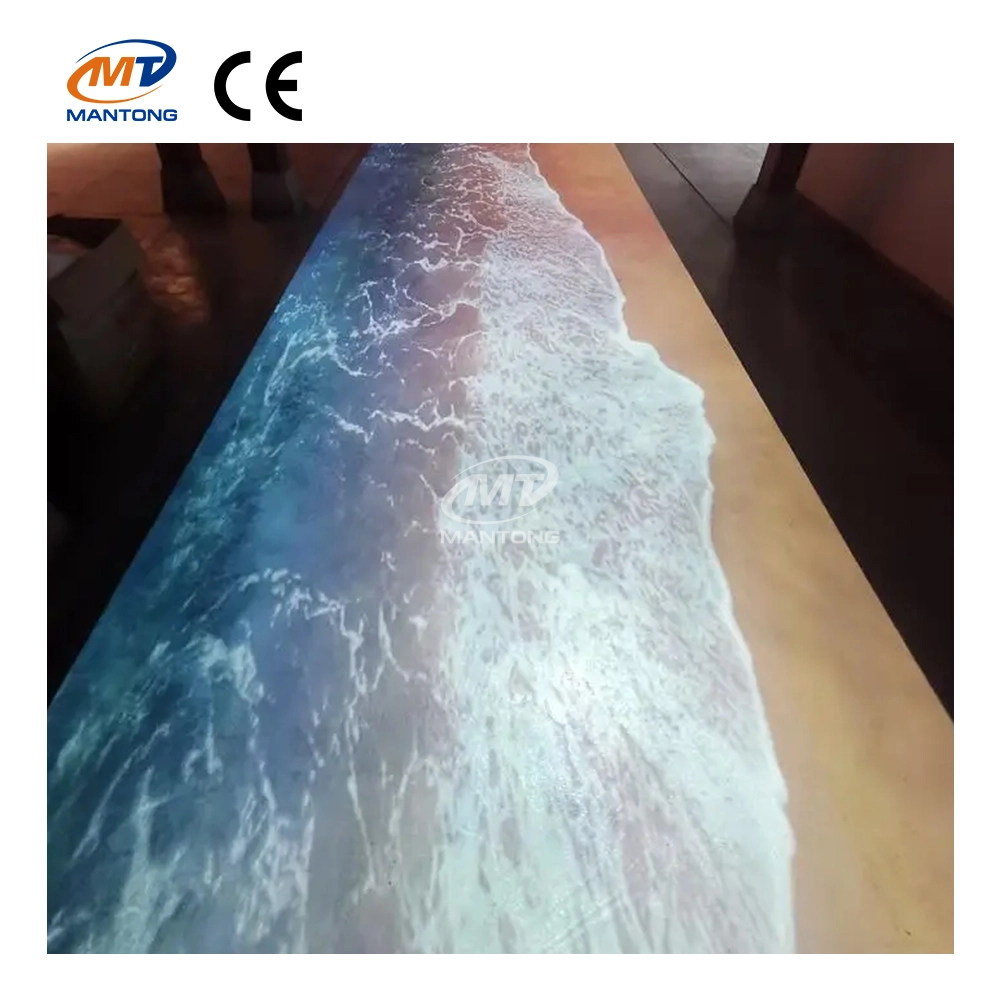
Indoor Interactive Floor Projector System - Customized Design & Installation Support
Indoor interactive floor projections display dynamic themed videos on the floor, commonly used in venues aiming to enhance brand influence or attract foot traffic, such as restaurants, hotel corridors, and brand car retail stores.
By using projectors and compatible software, the interactive content is projected onto the floor, encouraging engagement between people and the projected visuals. A single 5500-lumen indoor floor projector can cover an area of 5 m × 3 m. Typically, each project will use at least 3 units to ensure broad coverage and optimal visual effects.
We also offer customized design and installation support to enhance the interactive experience for your venue.
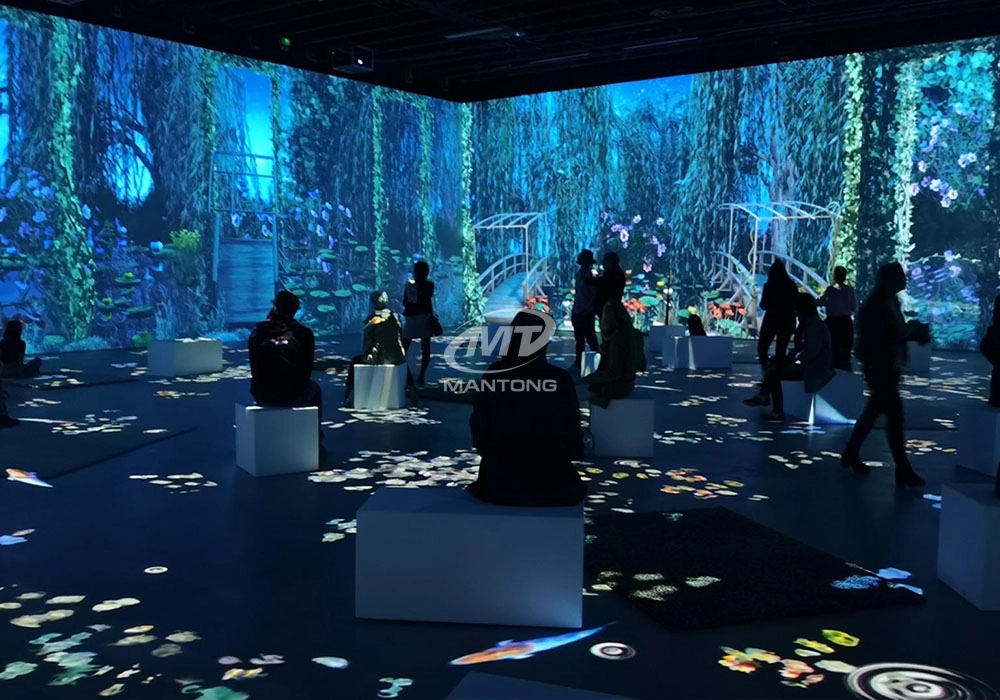
Mantong 6500LM High-Lumen Projector for Large-Scale Immersive Room Projection
Transform any space with Mantong's immersive projection mapping systems. Our high-lumen projectors (up to 6500 LM) and custom software create captivating interactive experiences for floors and walls. Ideal for museums, events, retail, and hospitality. Each kit includes professional ceiling mounting and 80+ pre-loaded video contents and is backed by a 12-month warranty and CE certification. We offer full customization and support to bring your vision to life.
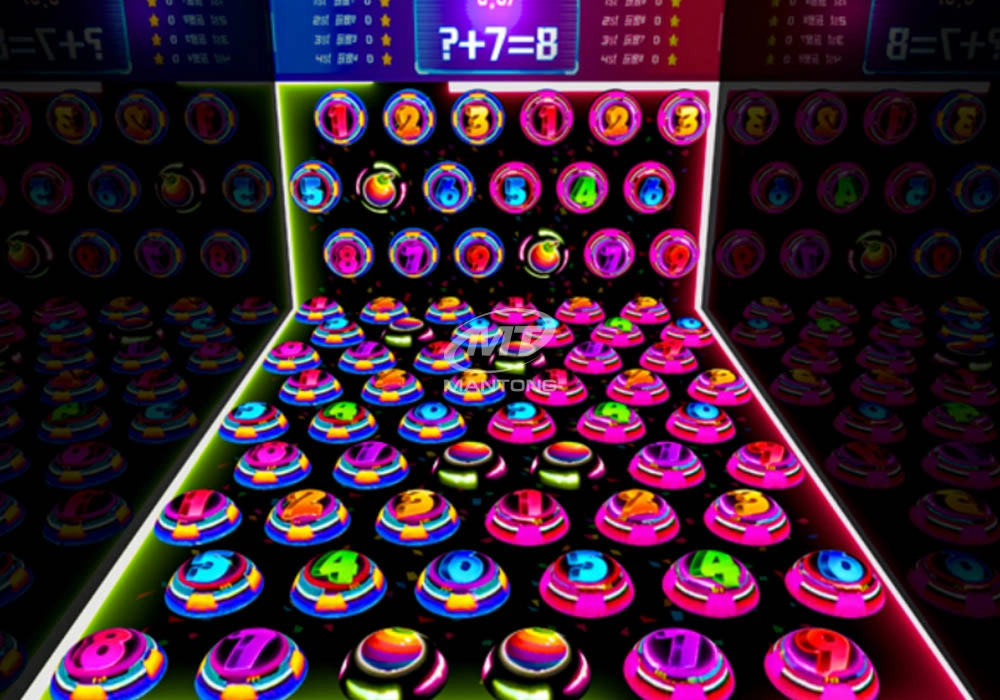
Amusement Rapidly Rotating Bouncing Sphere Interactive Wall Floor Projection Sports Games
Rapidly Rotating Bouncing Sphere is an interactive space where participants jump on rotating spheres. As they step on it, the spheres surface will show special interactivity
Jumping on spheres of the same color in succession causes them to pop, releasing light particles. The more consecutive jumps, the greater the reward—caterpillars appear, and eventually, all spheres of that color burst, filling the space with light and even more caterpillars.
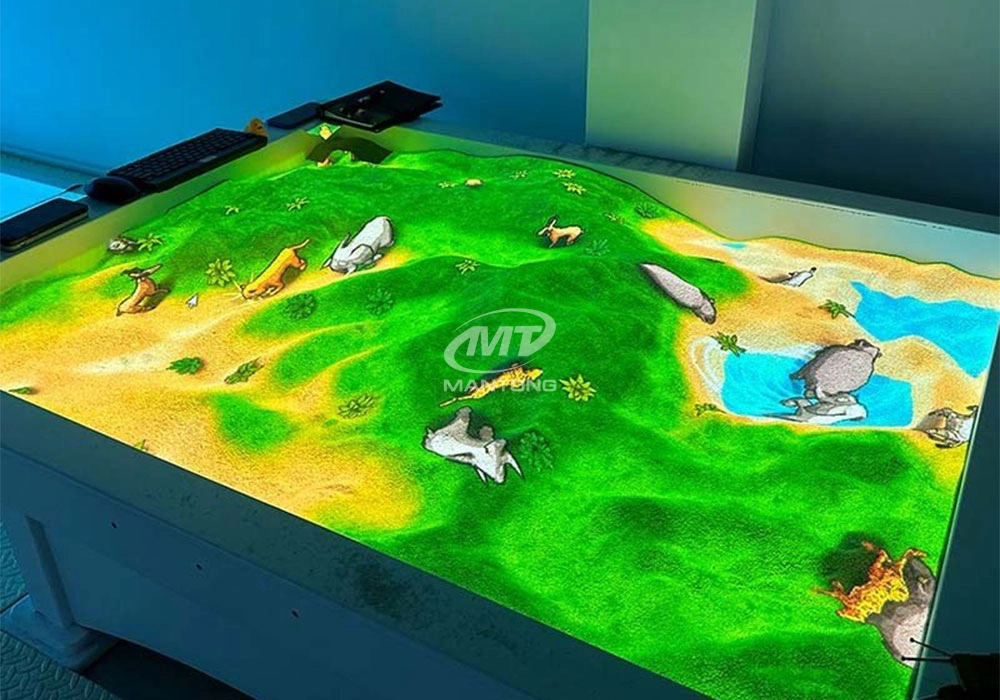
Interactive Sandbox Projection Mapping Games For Kids Play Park
Bring imagination to life with interactive sandbox projection mapping games designed for kids’ play parks. Using cutting-edge projection technology and real-time motion sensing, children can dig, build, and explore virtual worlds directly in the sand. Educational, engaging, and endlessly fun — it’s the perfect blend of play and learning.

Kaida Business Center, Shixin Road, Panyu District,Guangzhou City, Guangdong Province, China.
ManTong
ManTong
ManTong