
Top Interactive Floor Games for Retail Stores and Malls
- Benefits and business goals for interactive projection in retail
- Why interactive floor projections matter for retailers
- KPIs and measurable outcomes
- Customer segments and placement strategy
- Top interactive floor games and how they perform
- 1. Reactive Step & Stomp Games
- 2. Virtual Pond / Ripple & Catch
- 3. Directional Wayfinding Games & Scavenger Hunts
- 4. Branded Product Interaction & Virtual Try-ons
- 5. Projection Mapping Stage Games
- Technical setup, hardware choices and implementation checklist
- Essential hardware components
- Projection and ambient light considerations
- Software platforms and analytics
- Safety, accessibility and maintenance
- Comparing game types, expected engagement and cost factors
- Quick comparison table
- ROI considerations
- Choosing a vendor and why Mantong Digital stands out
- Vendor selection checklist
- Mantong Digital: capabilities and differentiators
- Partnerships, support and vision
- Implementation roadmap and best practices
- Pilot, measure, scale
- Content and brand alignment
- Data privacy and GDPR considerations
- References and further reading
- FAQ — Frequently Asked Questions
- 1. How long does an interactive floor installation take?
- 2. What is the lifespan and maintenance needs of projection hardware?
- 3. Are interactive floor games safe for high-traffic areas?
- 4. Can interactive floor games integrate with loyalty programs or POS systems?
- 5. What budget should a mid-size retail chain expect per location?
- 6. How do I measure success post-deployment?
- Contact & next steps
Interactive floor games blend projected visuals, motion tracking and playful interaction to transform corridors, atriums and storefronts into engaging branded experiences. For retail stores and malls, well-designed floor interactions increase foot traffic, extend dwell time, and create shareable moments that amplify marketing reach. This article examines the best interactive floor games for retail environments, practical implementation advice, hardware considerations, and how to choose a vendor. It also highlights Mantong Digital, a Guangzhou-based one-stop interactive projection solution provider and manufacturer, and how their offerings can be applied in retail installations.
Benefits and business goals for interactive projection in retail
Why interactive floor projections matter for retailers
Interactive projection converts passive walkthroughs into memorable experiences. According to experiential marketing research, immersive in-store elements are linked to increased customer loyalty and higher purchase intent (Experiential marketing — Wikipedia). Retailers use interactive floor projection to: increase dwell time, create social media moments, support wayfinding, entertain children (increasing adult shopping time), and reinforce seasonal or campaign messaging.
KPIs and measurable outcomes
Key performance indicators commonly tracked for interactive floor projects include: dwell time (avg. increase in minutes), interaction count per day, social shares or UGC mentions, conversion lift in proximate stores, and footfall distribution. These KPIs should be set before deployment and measured via analytics modules in the interactive system or third-party sensors.
Customer segments and placement strategy
Different games target different audiences: family-friendly motion games suit children’s play areas and larger mall atriums; AR treasure hunts drive exploration across larger footprints; branded product discovery mini-games work best at store entrances or window displays. Placement should align with safety, sightlines, and traffic flow planning to avoid bottlenecks.
Top interactive floor games and how they perform
1. Reactive Step & Stomp Games
Description: Players step on projected targets that animate and score points. These are intuitive, require no physical controllers, and are highly visible. Ideal for quick, repeat interactions that appeal to families and teens.
Use cases: seasonal promotions (e.g., stomp the snowflake), brand mascots, quick challenges tied to coupons or QR code rewards.
2. Virtual Pond / Ripple & Catch
Description: A calm projected surface reacts with ripples, fish, or interactive elements when people move. Gamification can include catching items by standing in place to trigger virtual nets or by guiding a cursor with body movement.
Use cases: relaxing moments near luxury or wellness stores, or child-friendly zones where adults can continue browsing nearby.
3. Directional Wayfinding Games & Scavenger Hunts
Description: Integrates interactive floor projection with a mall map or store directory. Gamified scavenger hunts reward shoppers for visiting partner stores, scanning QR codes, or completing location-based challenges.
Use cases: driving cross-store traffic, promoting mall-wide events, or supporting omnichannel loyalty programs.
4. Branded Product Interaction & Virtual Try-ons
Description: Floors can project product visuals or paths that lead to stands, encouraging users to follow or interact to reveal discounts. When combined with wall or mirror projection, brands can simulate try-ons or product demos that start from the floor interaction.
Use cases: footwear brands where foot-tracking can suggest sizes/styles, cosmetics brands directing shoppers to testers.
5. Projection Mapping Stage Games
Description: For larger atriums, synchronized multi-surface projection (floor + walls) can host live shows, coordinated games, or scheduled interactive performances that become destination experiences.
Use cases: weekend family shows or evening projection events that increase evening footfall and dwell time.
Technical setup, hardware choices and implementation checklist
Essential hardware components
Typical interactive floor systems combine:
- Projection engine: short-throw or ultra-short-throw projectors (lumens and resolution based on ambient light and desired image size).
- Sensors: depth cameras (e.g., time-of-flight, infrared), stereoscopic cameras, or LiDAR for precise body tracking. Gaming-grade depth sensors (e.g., Azure Kinect or similar) are commonly used.
- Processing unit: edge PC or media server running interactive software and analytics modules.
- Mounting and enclosures: ceiling mounts, housings with cooling and tamper protection for public spaces.
Projection and ambient light considerations
Projection brightness must overcome ambient lighting. Table below gives typical guidance by installation environment:
| Environment | Recommended Projector Brightness (ANSI lumens) | Typical Throw |
|---|---|---|
| Indoor, low ambient light (mall atrium evenings) | 4,000–8,000 lm | Short/Ultra-short throw |
| Indoor, moderate ambient light (daytime corridors) | 8,000–15,000 lm | Short/Long throw, depending on mounting |
| Outdoor covered plazas | 15,000+ lm | Long throw with weather-protected housings |
Sources: industry projector specifications and typical integrator guidelines; actual lumen needs should be validated in an on-site lighting study.
Software platforms and analytics
Interactive software ranges from turnkey libraries for simple games to fully customized engines that handle multi-user interaction, mapping and analytics. Critical features: multi-touch/object tracking, ROI analytics (session length, repeat users), CMS for content scheduling, and integration with CRM or loyalty systems via APIs.
Safety, accessibility and maintenance
Safety standards require non-slip surfaces where foot interaction is expected, clear sightlines for emergency egress, and protective housings for repeat high-traffic use. Accessibility options include visual contrast, alternative audio prompts for visually impaired guests, and low-difficulty modes to include older adults.
Comparing game types, expected engagement and cost factors
Quick comparison table
| Game Type | Ideal Space | Average Engagement (est.) | Hardware Complexity | Estimated Cost Range (USD) |
|---|---|---|---|---|
| Reactive Step & Stomp | Entrance, window, small plaza | 30–90s per interaction, repeat plays | Low–Medium | $8k–$25k |
| Virtual Pond / Ripple | Kids area, boutique front | 1–3 min per session | Low | $7k–$20k |
| Scavenger Hunt / Wayfinding | Mall-wide, multi-level | 10–40 min (multi-stop) | Medium–High (integration) | $20k–$100k+ |
| Branded Product Interaction | Storefronts, category displays | 1–5 min, high conversion potential | Medium | $15k–$60k |
| Multi-Surface Projection Show | Large atrium, event space | Scheduled 10–30 min shows | High | $50k–$300k+ |
Note: Cost estimates include hardware, software, content creation and basic installation; recurring costs may include maintenance, content updates and analytics subscriptions.
ROI considerations
Calculate ROI using metrics: incremental sales lift in proximate stores, increased average transaction value (ATV) from longer dwell times, campaign-driven conversions (coupon redemptions), and earned media value from social sharing. Pilot deployments with A/B testing provide the most reliable estimates for long-term ROI.
Choosing a vendor and why Mantong Digital stands out
Vendor selection checklist
- Proven retail case studies with measurable KPIs.
- Ability to provide hardware + software + content (single-source accountability).
- Customization capabilities and API integrations with POS/CRM.
- Local support or global installation network and warranties.
- Compliance with safety and accessibility requirements.
Mantong Digital: capabilities and differentiators
Mantong Digital is a one-stop interactive projection solution provider and direct manufacturer based in Guangzhou, China, with over 10 years of industry experience. We are dedicated to providing innovative, flexible and cost-effective projection solutions, offering both hardware and software to meet various needs. At ManTong, we specialize in providing customized solutions for a wide range of application scenarios through innovative projection technology. Whether it's immersive experiences, interactive entertainment or outdoor lighting and projection shows, our solutions can transform your ideas into stunning visual effects. Our projection technology provides customized solutions for a variety of scenarios, delivering immersive and interactive visual experiences.
Core product and service highlights: immersive projection, interactive floor projection, interactive projection, interactive wall projection, immersive room systems, 3D projection, interactive projection games, projection shows, and interactive projection mapping. Mantong's advantages include direct manufacturing (cost control), an in-house R&D team for bespoke interactive experiences, and a decade of installations worldwide. We provide both off-the-shelf game modules for quick rollouts and fully-customized projects for flagship retail deployments.
Partnerships, support and vision
Mantong is actively seeking global business partnerships and aims to become the world's leading interactive projection manufacturer. The company offers end-to-end services from site survey and lighting analysis to hardware, software, content creation and post-deployment analytics. Visit Mantong's website for product catalogs and case studies: https://www.mtprojection.com/.
Implementation roadmap and best practices
Pilot, measure, scale
Start with a 4–8 week pilot in a high-visibility location to validate game mechanics and measure KPIs. Use the following steps: site survey → concept prototyping → hardware selection → content creation → soft launch → analytics-driven optimization → scale across sites.
Content and brand alignment
Games must align with brand tone and campaign goals. For example, a luxury brand benefits from subtle interactive effects (elegant ripples, product reveals) rather than loud arcade-style games. Content localization and seasonal updates keep experiences fresh.
Data privacy and GDPR considerations
When tracking interactions or storing analytics, anonymize personal data, display privacy notices where required, and ensure compliance with local laws such as the EU's GDPR if processing personal data of EU citizens. For analytics, rely on aggregated metrics rather than individual-level tracking unless explicit consent is obtained.
References and further reading
FAQ — Frequently Asked Questions
1. How long does an interactive floor installation take?
Typical small-to-medium installations (single storefront or small atrium) take 2–6 weeks from site survey to launch, depending on custom content and mounting complexity. Large multi-site or atrium projects can take 8–16+ weeks due to custom content and coordination.
2. What is the lifespan and maintenance needs of projection hardware?
Commercial projectors typically have lamp or laser life between 10,000–30,000+ hours depending on technology (lamp vs. laser). Routine maintenance includes lens cleaning, firmware updates, and periodic calibration. Mantong and other reputable manufacturers offer maintenance contracts and remote support options.
3. Are interactive floor games safe for high-traffic areas?
Yes, when designed with safety in mind. Use non-slip flooring, avoid intense flashing patterns that may trigger photosensitive reactions, maintain clear egress routes, and install tamper-proof housings for overhead hardware.
4. Can interactive floor games integrate with loyalty programs or POS systems?
Yes. Modern interactive systems support API integrations that enable reward triggers, coupon generation, or CRM events when users complete certain interactions. This capability is essential for measuring conversion-related ROI.
5. What budget should a mid-size retail chain expect per location?
For a reliable mid-range interactive floor setup (projector, sensor, processing unit, basic content, installation), budgets typically start at $15k–$35k per location. Volume discounts and standardized templates can lower per-site costs for rollouts.
6. How do I measure success post-deployment?
Track dwell time, interaction counts, repeat users, coupon redemptions, and correlated sales lift in areas near the installation. Use A/B testing where possible (with and without the interactive feature) to isolate impact.
Contact & next steps
If you are planning an interactive floor project—whether a pilot in a single store or a mall-wide roll-out—ManTong can provide turnkey solutions from concept to analytics. As a direct manufacturer and solution provider with over 10 years' experience in immersive projection, interactive floor projection, interactive projection games, and projection shows, Mantong combines technical R&D, content creation and global installation capabilities to deliver measurable retail outcomes.
Visit us to learn more or request a consultation: https://www.mtprojection.com/. We are open to global partnerships and look forward to transforming retail spaces with immersive, interactive projection technology.
How to Choose the interactive projection games manufacturer and supplier in China?
Top 10 interactive tabletop projector Manufacturers and Supplier Brands in 2026
How Suppliers Handle Interactive Projection Mapping Maintenance
How to Choose the floor projection games manufacturer and supplier ?
One-Stop Projection Solution Provider Since 2011
What information do you need to know before making the proposal/solution?
We know that everyone wants to know the price, but the price of our products is determined by many factors since most of our products are custom, so no ready price list. In order to fast understand what you need, can you send us an inquiry like this?
For example: I am really interested in your immersive projection products, we are a company in the USA and want to install some in my restaurant. It is about 50 meters long, and 5m in width. Projection size you can decide but the length should be not less than 20 meters. We want some content about SeaWorld because our place is all about the sea. Thank you.
How to install the projection equipment ?
1) Install the projector in a suitable position. We will provide you with a hanger, which you need to fix on the ceiling with
screws.
2) Connect projectors, computers and other accessories through wires.
3) After completing the above 2 steps, we will carry out the edge blending steps. Our team can complete it through remote
control.
In general, installation instructions for each project need to be specified on a project-by-project basis. The above is for
reference only.
What's the application of Immersive projection ?
It can be used in various venues, such as art exhibition, entertainment venues, educational institution, Wedding hall /Banquet/Bar,Yoga Studio and so on. It often involves advanced projection techniques, multimedia content, and interactive elements to engage and captivate the audience's senses.
What's Immersive Projection ?
Immersive projection refers to a technology that creates a captivating and all-encompassing visual experience for viewers by projecting images or videos onto large surfaces, such as walls, floors, or even entire rooms. This technology aims to immerse the audience in a simulated environment, blurring the boundaries between the physical and virtual worlds.
What about the wall/floor material for the projection?
It’s recommended to choose a light-colored material with minimal reflectivity—pure white or light grey works best. the
common material is cement & plaster board
For optimal projection results, the surface should be free of any patterns or textures, as the projector will display content
directly onto it.
There are no specific material requirements; you may use any commonly available material in your local market, as long as it
meets the above conditions.
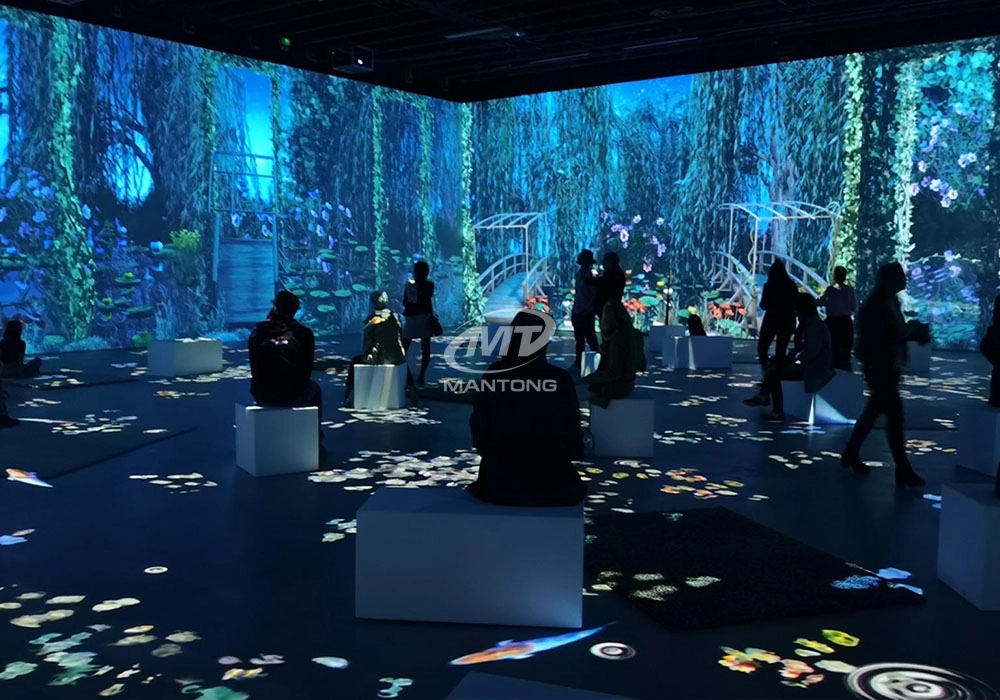
Mantong 6500LM High-Lumen Projector for Large-Scale Immersive Room Projection
Transform any space with Mantong's immersive projection mapping systems. Our high-lumen projectors (up to 6500 LM) and custom software create captivating interactive experiences for floors and walls. Ideal for museums, events, retail, and hospitality. Each kit includes professional ceiling mounting and 80+ pre-loaded video contents and is backed by a 12-month warranty and CE certification. We offer full customization and support to bring your vision to life.
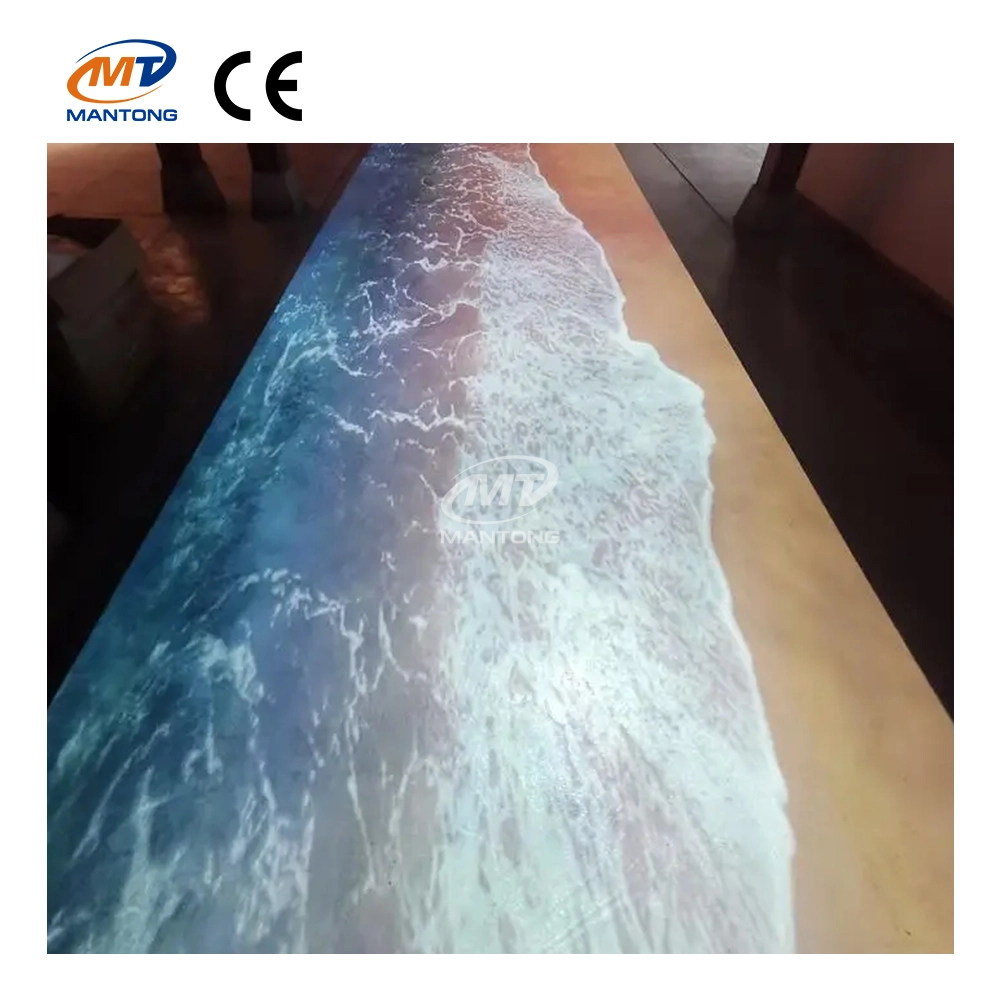
Indoor Interactive Floor Projector System - Customized Design & Installation Support
Indoor interactive floor projections display dynamic themed videos on the floor, commonly used in venues aiming to enhance brand influence or attract foot traffic, such as restaurants, hotel corridors, and brand car retail stores.
By using projectors and compatible software, the interactive content is projected onto the floor, encouraging engagement between people and the projected visuals. A single 5500-lumen indoor floor projector can cover an area of 5 m × 3 m. Typically, each project will use at least 3 units to ensure broad coverage and optimal visual effects.
We also offer customized design and installation support to enhance the interactive experience for your venue.
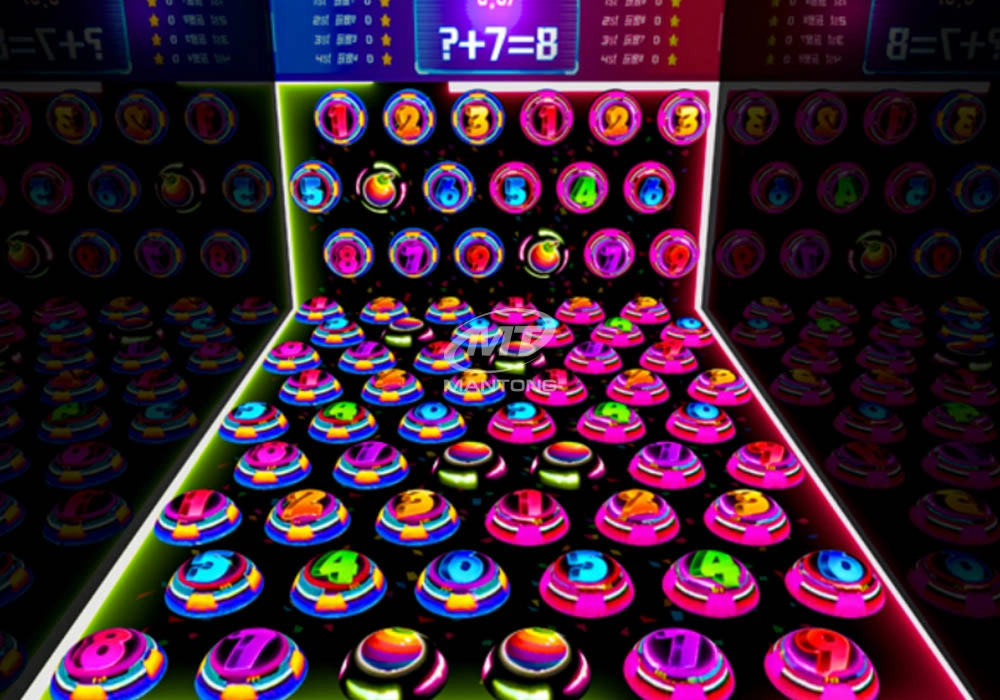
Amusement Rapidly Rotating Bouncing Sphere Interactive Wall Floor Projection Sports Games
Rapidly Rotating Bouncing Sphere is an interactive space where participants jump on rotating spheres. As they step on it, the spheres surface will show special interactivity
Jumping on spheres of the same color in succession causes them to pop, releasing light particles. The more consecutive jumps, the greater the reward—caterpillars appear, and eventually, all spheres of that color burst, filling the space with light and even more caterpillars.
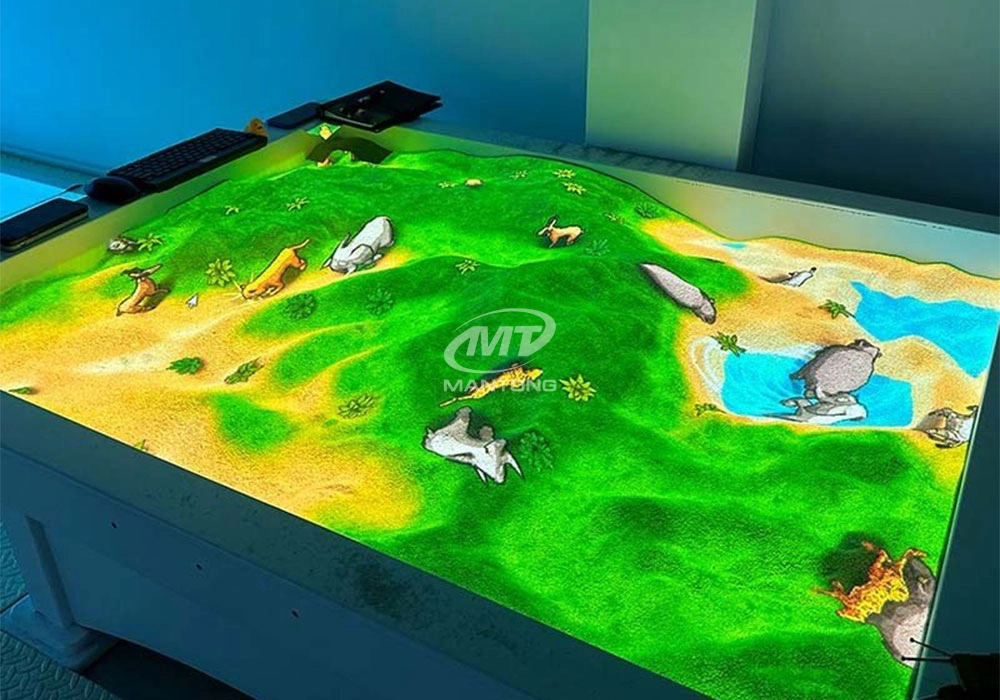
Interactive Sandbox Projection Mapping Games For Kids Play Park
Bring imagination to life with interactive sandbox projection mapping games designed for kids’ play parks. Using cutting-edge projection technology and real-time motion sensing, children can dig, build, and explore virtual worlds directly in the sand. Educational, engaging, and endlessly fun — it’s the perfect blend of play and learning.

Kaida Business Center, Shixin Road, Panyu District,Guangzhou City, Guangdong Province, China.
ManTong
ManTong
ManTong