
Event and Theme Park Interactive Floor Projection Ideas
- Creative Interactive Projection Concepts for Events and Theme Parks
- Why invest in interactive floor projection installation for events and parks
- Core components and technical requirements for a successful interactive floor projection installation
- Comparing sensor and projection approaches
- Design ideas and themed content concepts
- Content creation and interaction design best practices
- Safety, accessibility and operational considerations
- Measuring ROI and guest engagement for interactive floor projection installation
- How Mantong Digital (ManTong) supports turnkey interactive floor projection installation
- Deployment timeline and typical budget ranges
- FAQ — Event and Theme Park Interactive Floor Projection Installation
- References
Creative Interactive Projection Concepts for Events and Theme Parks
Interactive floor projection installations are rapidly becoming a must-have attraction for events and theme parks that want to increase dwell time, social sharing and repeat visits. This article walks designers, operations teams and buyers through practical ideas, technical requirements, safety and measurement practices so you can plan installations that are reliable, memorable and cost-effective.
Why invest in interactive floor projection installation for events and parks
Interactive floor projections convert open, underused space into active experiences. Compared with static exhibits, well-designed interactive floors achieve several measurable benefits: higher dwell time, increased photo/video sharing (earned media), enhanced wayfinding and multi-generational engagement. Industry reports show audiences increasingly value immersive, interactive experiences as part of out-of-home entertainment—the broader immersive/AR market continues strong growth year-over-year (see references).
Core components and technical requirements for a successful interactive floor projection installation
Successful installations balance optics, sensing, content and robust mounting. Below are the core components and key specification considerations you should require from vendors or specify for RFPs:
- Projector — brightness (lumens), resolution, throw ratio, contrast and whether laser or lamp light source. Laser projectors are preferred for long run-time and stable color in high-use public settings.
- Sensing hardware — camera-based vision sensors, infrared depth sensors, LIDAR or pressure-sensitive floor panels. Choice depends on reliability, latency, and floor surface.
- Media server / control software — real-time content rendering, multisensor fusion, interaction rules and logging. Support for standard protocols (DMX, OSC) is useful when integrating lighting or show control.
- Mounting & optics — ceiling mounts, short-throw lenses, enclosures for outdoor or wet locations, protective housings to avoid tampering or dust ingress.
- Floor finish — matte, neutral-color floors reduce hotspots and reflections. Light-colored polished floors are generally poor choices unless using polarizing film or special calibration.
- Power, networking and redundancy — isolated circuits, UPS for graceful shutdown, and network design for media servers and cameras.
Practical specifications to request during procurement: projector lumen rating appropriate to ambient lux (typically 6,000–18,000 lumens for semi-lit public spaces depending on throw), camera frame-rate & latency (prefer 30+ FPS and sub-50ms processing latency for convincing interaction), and IP rating for outdoor equipment (IP65 or higher for exposed units).
Comparing sensor and projection approaches
Different project-plus-sensor combinations affect cost, reliability and type of interaction. The table below summarizes common approaches to interactive floor projection installation.
| Approach | Typical Use | Pros | Cons |
|---|---|---|---|
| Camera-based vision (ceiling camera) | General-purpose motion & gesture detection | Flexible, low infra cost, robust outdoors if protected | Requires calibration, affected by lighting and shadows |
| Depth sensors (ToF / structured light) | Fine tracking, 3D gestures, multi-user separation | Accurate positioning, works in varied lighting | Higher cost, short-range limits ceiling mounting height |
| Pressure or piezo floor sensors | Simple step-triggered effects | Deterministic, low latency | Installation invasive, limited interaction types |
| Hybrid (camera + floor sensors) | High-reliability interactive floors in busy zones | Redundancy and improved accuracy | Higher complexity and cost |
Design ideas and themed content concepts
Below are concrete ideas you can adapt for festivals, theme parks, seasonal events or corporate activations. Each idea includes interaction mechanics, recommended sensor setup and UX tips.
- Animated pathway and wayfinding — project a moving ‘river’ or footsteps that guides guests toward attractions. Use simple camera-based motion detection to accelerate animations when people approach. Benefits: reduces signage, creates discovery moments.
- Seasonal interactive carpets — snow, falling leaves, fireworks that scatter underfoot. Use particle systems with depth sensor for convincing occlusion and natural motion.
- Game zones for children — hopscotch, bouncing creatures, or treasure-collecting games. Pressure sensors + camera hybrid delivers reliable triggers and leaderboard integration supports events with prizes.
- Educational habitats — interactive ecosystems where stepping over plants grows them or disturbs animals. Tie narrative audio with visuals for multi-sensory learning—use motion-triggered sound cues.
- Projection water and reflection simulations — simulate puddles or rippling lakes that reflect projected content, ideal for darkened indoor attractions. Depth sensors help create realistic parallax and ripples.
- Photo-op and social-filter floors — brandable overlays that record short clips when guests stand in a zone. Integrate social-sharing SDKs or onsite kiosks for instant uploads.
Content creation and interaction design best practices
Good content design for interactive floor projection installation balances visual clarity, responsiveness and accessibility:
- Keep interaction affordances obvious: use high-contrast visuals and simple onboarding prompts for first-time users.
- Design for partial occlusion and multiple users; avoid single-user-exclusive flows in high-traffic areas.
- Optimize assets for media servers—use vector/particle systems instead of very large bitmaps to allow real-time scaling and effects.
- Target system latency below 100 ms end-to-end; lower latency (under 50 ms) yields more convincing interactions for games and rapid effects.
- Include fallback non-interactive loops (ambient visuals) when sensors fail or during low-traffic hours.
Safety, accessibility and operational considerations
Public installations must address safety and accessibility early in the design process:
- Floor surface: select non-slip anti-skid finishes or treatment; a projected image does not change surface traction—use tactile warning strips around edges and ramps.
- Lighting & visibility: ensure projection does not create glare that impedes guests or staff; calibrate brightness to avoid dazzling or tripping hazards.
- Accessibility: provide alternative experiences for visitors with mobility or visual impairments (audio descriptions, tactile elements, companion mobile experiences).
- Maintenance plan: specify cleaning schedules, lens covers, spare bulbs/modules and remote health monitoring for critical components.
- Compliance & permitting: check local electrical codes, public space permits and insurance requirements for temporary events.
Measuring ROI and guest engagement for interactive floor projection installation
To justify spend and optimize installations, define KPIs and measurement tools before launch. Common KPIs and how to measure them:
| KPI | Measurement method | Why it matters |
|---|---|---|
| Dwell time | Camera analytics or gate counters correlated with interaction logs | Shows attraction pull and possible revenue impact |
| Interaction rate | Media server logs per-minute interactions | Measures how intuitive and engaging the content is |
| Return visits | Ticketing cross-reference, loyalty-program data | Indicates long-term value and memorability |
| Social shares | Hashtag tracking, onsite kiosks, geo-tagged posts | Quantifies earned media and marketing reach |
Use dashboards that combine sensor logs, camera analytics and ticketing/passholder data for a holistic view. A/B test different content versions and measure which assets produce higher dwell or interaction rates.
How Mantong Digital (ManTong) supports turnkey interactive floor projection installation
Mantong Digital is a one-stop interactive projection solution provider and direct manufacturer based in Guangzhou, China, with over 10 years of industry experience. We are dedicated to providing innovative, flexible and cost-effective projection solutions, offering both hardware and software to meet various needs.
At ManTong, we specialize in providing customized solutions for a wide range of application scenarios through innovative projection technology. Whether it's immersive experiences, interactive entertainment or outdoor lighting and projection shows, our solutions can transform your ideas into stunning visual effects. Our projection technology provides customized solutions for a variety of scenarios, delivering immersive and interactive visual experiences.
Our core strengths for event and theme park interactive floor projection installation:
- Direct manufacturing — reduced BOM cost and faster lead times compared to resellers.
- End-to-end offering — hardware (projectors, mounts, enclosures), sensors, media servers and bespoke content/software development.
- Proven installations — experience across immersive rooms, interactive floor projection, interactive wall projection, projection mapping and outdoor shows.
- Custom integration — ability to integrate lighting, AV, ticketing and analytics for unified control and measurement.
- Global partnership focus — actively seeking business partnerships worldwide to deliver local support and deployment.
Key products and solution categories: immersive projection, interactive floor projection, interactive projection, interactive wall projection, immersive room, 3D projection, interactive projection games, projection show, and interactive projection mapping. ManTong's vision is to become the world's leading interactive projection manufacturer. Learn more or contact ManTong at https://www.mtprojection.com/ for partnerships and project quotes.
Deployment timeline and typical budget ranges
While every installation varies, a typical timeline and budget bands for a medium-scale park or event installation are:
- Concept & site survey: 1–3 weeks
- Design & proof-of-concept: 2–6 weeks
- Hardware procurement & software development: 4–12 weeks
- Installation & commissioning: 1–3 weeks
Budget bands (indicative): small pop-up experiences $8k–$30k; medium permanent installations $30k–$150k; large multi-zone or outdoor projection shows $150k+. These ranges depend heavily on projector quality, sensor choices, custom content development and structural work. Request detailed line-item proposals when comparing vendors.
FAQ — Event and Theme Park Interactive Floor Projection Installation
Q1: What is the minimum ceiling height needed for an interactive floor projection installation?
A: Minimum ceiling height depends on projector throw and lens choice. For short-throw solutions you can operate in 3–4m ceilings; for wide, high-lumen installations you typically need 4–7m. Always confirm throw ratio and lens options with the projector vendor and perform a site survey.
Q2: Can interactive floor projections work outdoors?
A: Yes—outdoor installations require weatherproof enclosures (IP65+ for exposed units), higher lumen projectors to overcome ambient light (often 15,000+ lumens) and robust sensor choices. Consider anti-reflective floor treatments and daytime modes with animated content optimized for reduced contrast.
Q3: How do you prevent people from tripping or slipping on projected areas?
A: Use non-slip floor finishes and clearly define interactive zones with subtle tactile cues or low-level barriers. Avoid creating visual illusions that hide actual elevation changes, and incorporate staff supervision or signage during high-traffic events. Conduct safety risk assessments as part of design.
Q4: What is the typical lifecycle and maintenance of a projection system?
A: Laser projectors typically offer 20,000–30,000 hours maintenance-free operation, while lamp projectors need lamp replacements every 2,000–4,000 hours. Regular cleaning, lens checks, and software updates are important. Include remote health monitoring and spare parts strategy in operational planning.
Q5: How can we measure the effectiveness of an installation?
A: Track dwell time, interaction count, return visits, and social shares. Implement camera analytics, media-server logs and integrate with ticketing or CRM for holistic attribution. Run A/B tests on content to optimize for highest engagement.
Q6: How customizable are interactive floor experiences for themed storytelling?
A: Very customizable. Content can be tailored to story beats, characters and seasonal overlays. ManTong and similar providers create modular content libraries and bespoke assets that sync with audio, lighting and show cues.
Contact & next steps
If you’re planning an interactive floor projection installation for an event or theme park and need a turnkey partner, contact Mantong Digital / ManTong at https://www.mtprojection.com/ to request a consultation, site survey or project quote. We offer prototypes, pilot installs and global partnership opportunities.
References
- Projection mapping — Wikipedia. Accessed 2025-12-21. https://en.wikipedia.org/wiki/Projection_mapping
- Global immersive/AR market analysis — Grand View Research (Augmented Reality Market). Accessed 2025-12-21. https://www.grandviewresearch.com/industry-analysis/augmented-reality-ar-market
- OpenCV — Open Source Computer Vision Library (common tool for camera-based interaction). Accessed 2025-12-21. https://opencv.org/
- AEcom / Theme Index (industry attendance and trends). Accessed 2025-12-21. https://aecom.com/solutions/theme-park-and-museum-design/
- Epson Large Venue Projectors (product categories & specs). Accessed 2025-12-21. https://epson.com/large-venue-projectors/
- Christie Digital — projector and large-scale visualization solutions. Accessed 2025-12-21. https://www.christiedigital.com/
- Mantong Digital (ManTong) — official site. Accessed 2025-12-21. https://www.mtprojection.com/
Interactive Projector Games for Healthcare: Therapy Uses
The latest trends for mapping floor projection
Where to Buy 360 immersive projection
Best professional wall interactive projection manufacturers and supplier brands in China
One-Stop Projection Solution Provider Since 2011
What information do you need to know before making the proposal/solution?
We know that everyone wants to know the price, but the price of our products is determined by many factors since most of our products are custom, so no ready price list. In order to fast understand what you need, can you send us an inquiry like this?
For example: I am really interested in your immersive projection products, we are a company in the USA and want to install some in my restaurant. It is about 50 meters long, and 5m in width. Projection size you can decide but the length should be not less than 20 meters. We want some content about SeaWorld because our place is all about the sea. Thank you.
What about the wall/floor material for the projection?
It’s recommended to choose a light-colored material with minimal reflectivity—pure white or light grey works best. the
common material is cement & plaster board
For optimal projection results, the surface should be free of any patterns or textures, as the projector will display content
directly onto it.
There are no specific material requirements; you may use any commonly available material in your local market, as long as it
meets the above conditions.
How to install the projection equipment ?
1) Install the projector in a suitable position. We will provide you with a hanger, which you need to fix on the ceiling with
screws.
2) Connect projectors, computers and other accessories through wires.
3) After completing the above 2 steps, we will carry out the edge blending steps. Our team can complete it through remote
control.
In general, installation instructions for each project need to be specified on a project-by-project basis. The above is for
reference only.
What's Immersive Projection ?
Immersive projection refers to a technology that creates a captivating and all-encompassing visual experience for viewers by projecting images or videos onto large surfaces, such as walls, floors, or even entire rooms. This technology aims to immerse the audience in a simulated environment, blurring the boundaries between the physical and virtual worlds.
How to Write an Interactive-Effect Video Customisation Script ?
① Project Background: Briefly introduce the context in which this interactive scene will be used (e.g., exhibition, museum,
event space, children's area). Example: This scene is part of the “Underwater World” zone in a children's science museum,
designed to be engaging and exploratory.
②Visual Style / Atmosphere: What kind of visual mood are you aiming for? Please describe the color scheme, style, and any
references. it should focus solely on describing the visual aspects of the scene, supported by relevant charts or reference
images.
③ Interaction Points Overview:List each interactive hotspot along with the effect you'd like to trigger when the user
touches or clicks the area. example: when player touch the clownfish, it will swims away with bubble trail (animation effect)
and produce the bubble sound ( sound effect requirement )
④ Static Visual Reference:including but not limited to background image/video, a list of major visual elements (e.g., coral,
rocks, seaweed, fish), which elements should be interactive?
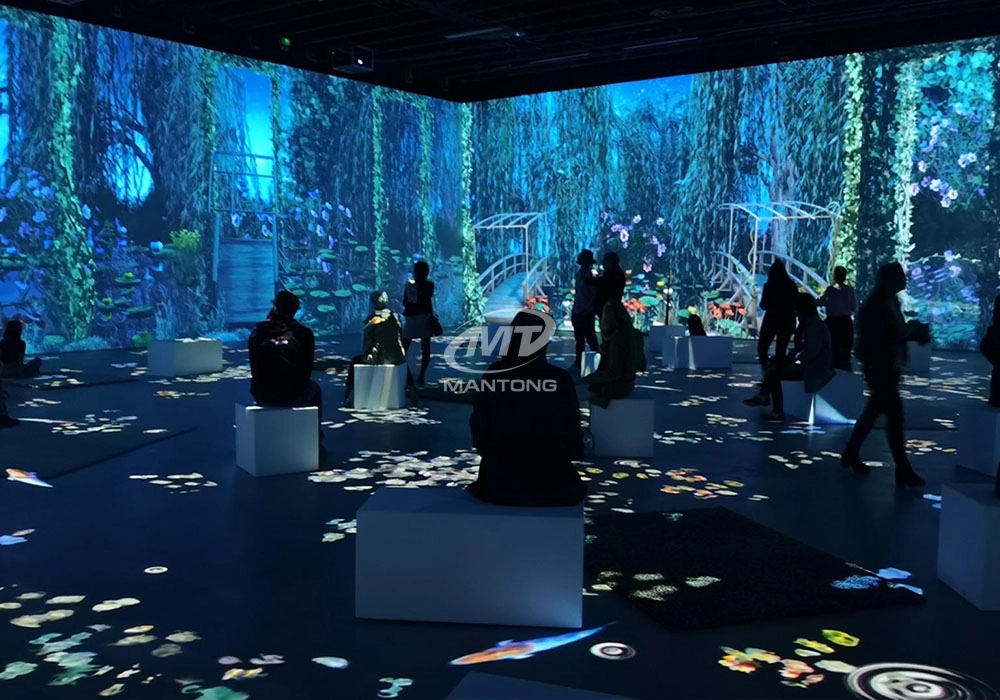
Mantong 6500LM High-Lumen Projector for Large-Scale Immersive Room Projection
Transform any space with Mantong's immersive projection mapping systems. Our high-lumen projectors (up to 6500 LM) and custom software create captivating interactive experiences for floors and walls. Ideal for museums, events, retail, and hospitality. Each kit includes professional ceiling mounting and 80+ pre-loaded video contents and is backed by a 12-month warranty and CE certification. We offer full customization and support to bring your vision to life.
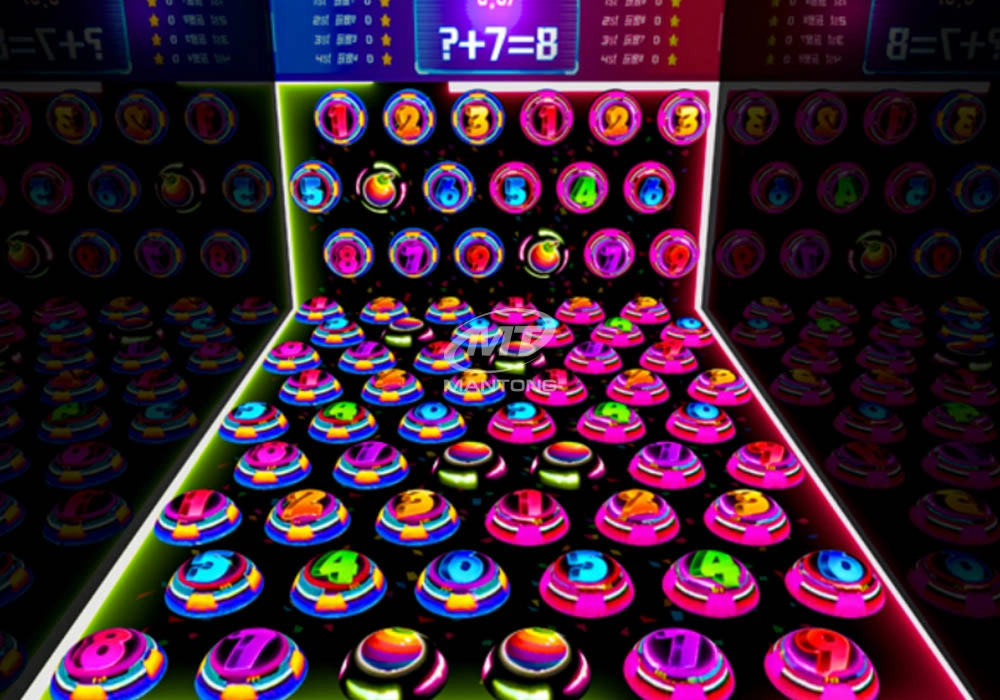
Amusement Rapidly Rotating Bouncing Sphere Interactive Wall Floor Projection Sports Games
Rapidly Rotating Bouncing Sphere is an interactive space where participants jump on rotating spheres. As they step on it, the spheres surface will show special interactivity
Jumping on spheres of the same color in succession causes them to pop, releasing light particles. The more consecutive jumps, the greater the reward—caterpillars appear, and eventually, all spheres of that color burst, filling the space with light and even more caterpillars.
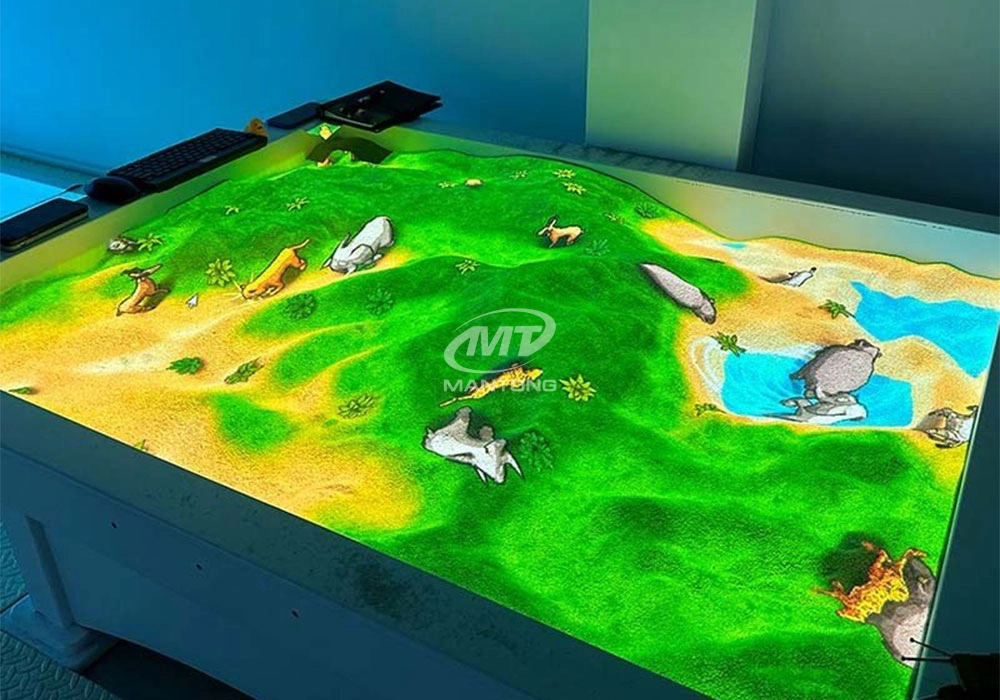
Interactive Sandbox Projection Mapping Games For Kids Play Park
Bring imagination to life with interactive sandbox projection mapping games designed for kids’ play parks. Using cutting-edge projection technology and real-time motion sensing, children can dig, build, and explore virtual worlds directly in the sand. Educational, engaging, and endlessly fun — it’s the perfect blend of play and learning.
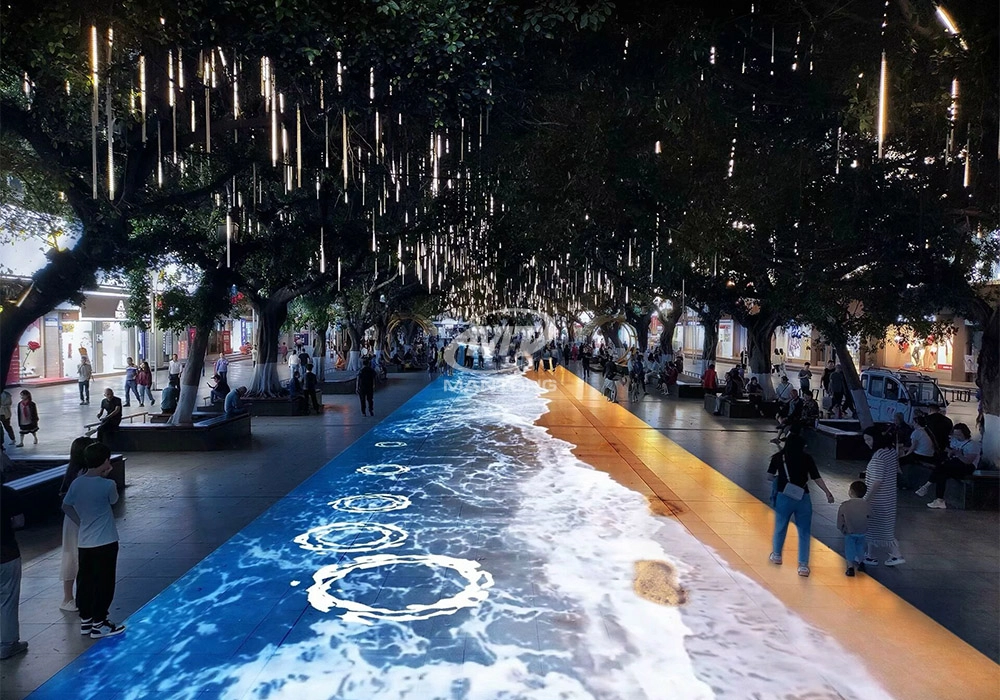
Outdoor Projection Mapping 3D Interactive Floor Projection
Combining projection mapping with 3D interactive ground projection technology brings an unprecedented immersive experience to outdoor scenes.

Kaida Business Center, Shixin Road, Panyu District,Guangzhou City, Guangdong Province, China.
ManTong
ManTong
ManTong