
Software Options Offered by Interactive Projection Mapping Suppliers
- Understanding software roles and user intent
- What users are trying to achieve
- Core responsibilities of projection software
- Why software matters as much as hardware
- Categories of software offered by suppliers
- Turnkey mapping suites
- Game-engine-based solutions (Unity / Unreal)
- Custom middleware and APIs
- Key technical criteria to evaluate
- Calibration, warping, and edge blending
- Interactivity frameworks and latency
- Scalability, redundancy, and outdoor robustness
- Comparing popular software options
- Open-source vs commercial vs proprietary
- Integration and total cost of ownership
- How I evaluate suppliers when I advise clients
- Proof of concept and site testing
- Support, maintenance, and training
- Security and data handling
- Mantong Digital: an integrated solution provider
- Making the final selection: a short checklist
- Frequently Asked Questions (FAQ)
- 1. What software do interactive projection mapping suppliers typically use?
- 2. How much does projection mapping software cost?
- 3. Can I update content myself after installation?
- 4. What latency is acceptable for interactive projection?
- 5. How do suppliers handle multi-projector synchronization?
- 6. Do I need a local partner for maintenance?
As someone who has designed and deployed interactive projection systems across museums, retail, live events and themed attractions, I know the software choice is as important as the projector hardware. A well-chosen software stack determines calibration accuracy, responsiveness, ease of content updates, multi-projector blending, and how well the system supports interactive inputs. In this article I outline the primary software options offered by an interactive projection mapping supplier, compare tradeoffs, show evaluation criteria, and explain how suppliers like Mantong Digital can deliver integrated hardware-and-software solutions. For technical context on projection mapping fundamentals, see the Wikipedia entry on projection mapping (https://en.wikipedia.org/wiki/Projection_mapping).
Understanding software roles and user intent
What users are trying to achieve
When clients search for an interactive projection mapping supplier, their intent usually falls into a few categories: quick turnkey experiences for an event, scalable installations for permanent exhibits, immersive multi-sensor experiences, or custom interactive games and wayfinding. Each intent places different requirements on the software: speed of setup, content flexibility, API openness, performance guarantees, or long-term support.
Core responsibilities of projection software
Projection software handles multiple responsibilities in any deployment: image warping and keystone correction, edge blending between multiple projectors, color calibration, content playback and scheduling, input handling for sensors (cameras, infrared, motion trackers), and interaction logic. Separating where those responsibilities live — in firmware, middleware, or a higher-level engine — is one of the first architecture decisions you should make with your supplier.
Why software matters as much as hardware
I’ve seen projects where high-end projectors produced poor results because the software didn’t properly manage geometric correction or real-time interaction latency. Conversely, a robust software pipeline can make mid-range projectors achieve convincing results when matched to the right environment and content. Evaluate both in tandem when you talk to any interactive projection mapping supplier.
Categories of software offered by suppliers
Turnkey mapping suites
Turnkey mapping suites are vendor-provided, end-to-end systems designed for fast deployment. They typically include built-in calibration tools, timeline editors, asset managers, and simple interaction modules. These suites are attractive when you need a dependable, supported product and limited custom behavior. However, they can be restrictive if you later want extensive customization or integration with external systems.
Game-engine-based solutions (Unity / Unreal)
Many suppliers now base interactive installations on game engines such as Unity (https://unity.com/) or Unreal Engine (https://www.unrealengine.com/). These engines provide powerful real-time rendering, physics, and interactivity frameworks. I prefer engine-based systems for experiences that require complex visuals, particle effects, 3D interactions, or advanced tracking integration. The tradeoff is that they usually require more initial development time and technical expertise from the supplier.
Custom middleware and APIs
For enterprise-grade or unique technical integrations, suppliers may deliver custom middleware or expose APIs/SDKs so you can control the projection pipeline from your existing systems (e.g., CRM, interactive kiosks, IoT sensors). This approach is essential when the projection must be tightly coordinated with external hardware or cloud services, or when you need unique data-driven interactions.
Key technical criteria to evaluate
Calibration, warping, and edge blending
Look for software that supports automated camera-assisted calibration (to reduce onsite time) and high-precision mesh warping. Accurate edge blending and color matching across projectors are critical for seamless images. Suppliers should demonstrate repeatable calibration workflows and provide documentation or APIs so you can maintain the system without constant vendor intervention.
Interactivity frameworks and latency
Interactivity is judged by system responsiveness. Ask suppliers for measured latencies from sensor input to visible output, particularly for motion-tracking or camera-based interactions. Standards and guidelines for human-computer interaction (e.g., ISO usability recommendations such as ISO 9241) can help define acceptable responsiveness thresholds (https://www.iso.org/standard/63500.).
Scalability, redundancy, and outdoor robustness
For large projection shows or outdoor installations, verify the software’s ability to manage distributed rendering nodes, synchronize frames across multiple machines, and handle network interruptions gracefully. Some suppliers provide dedicated media servers or synchronization layers to guarantee frame-accurate playback for complex shows.
Comparing popular software options
Open-source vs commercial vs proprietary
Open-source options reduce licensing costs and provide transparency, but they often require in-house engineering to integrate and maintain. Commercial suites offer support and stability but can lock you into specific workflows. Proprietary solutions from a supplier can be optimized for a specific hardware stack and workflow, which is great for turnkey deployments but may hinder future portability.
Integration and total cost of ownership
When evaluating solutions from an interactive projection mapping supplier, consider not just licensing fees but the total cost of ownership: development, onsite calibration time, training, maintenance contracts, and upgrade paths. I recommend creating a 3–5 year TCO model when choosing between custom and off-the-shelf solutions.
| Software Type | Typical Examples | Strengths | Weaknesses | Typical Cost (approx.) |
|---|---|---|---|---|
| Turnkey mapping suites | Vendor suites (proprietary) | Fast deployment, supported, lower technical barrier | Less flexible, vendor lock-in | $0–$10k license + setup |
| Game-engine-based | Unity / Unreal projects | High-quality visuals, flexible interactivity | Longer dev time, requires skilled developers | $10k–$100k+ dev cost |
| Open-source stacks | Custom Linux + open libraries | Low license cost, flexible | Maintenance burden, variable support | Staffing / integration costs |
| Custom middleware / APIs | Supplier SDKs / REST APIs | Enterprise integration, tailored features | Higher initial cost, longer delivery | $20k–$200k+ |
Costs above are indicative and vary by geographic market, project complexity, and supplier. For peer-reviewed technical background about synchronization and distributed rendering considerations, see IEEE Xplore search results on projection and distributed rendering (https://ieeexplore.ieee.org/search/searchresult.jsp?newsearch=true&queryText=projection%20mapping).
How I evaluate suppliers when I advise clients
Proof of concept and site testing
I always ask suppliers for a proof-of-concept (POC) targeted to the actual installation conditions. A strong interactive projection mapping supplier will offer on-site testing or a portable demo that reproduces the projection geometry and lighting conditions. Measurement of ambient light, surface properties, and viewing distances should inform software choices (render resolution, tone-mapping, and projector brightness).
Support, maintenance, and training
Long-term success depends on documentation, training, and the supplier’s service level. Ask for an SLA that covers software updates, bug fixes, and a plan for hardware failure. For mission-critical venues, insist on local or rapidly available support to minimize downtime.
Security and data handling
If your installation integrates with user data, sensors, or cloud services, verify data privacy and security practices. Ask whether the software transmits telemetry, how credentials are stored, and whether remote access is encrypted. The supplier should be able to provide security architecture documentation upon request.
Mantong Digital: an integrated solution provider
In my work with multiple suppliers, I evaluate not only software but also who builds and supports the entire solution. Mantong Digital is a one-stop interactive projection solution provider and direct manufacturer based in Guangzhou, China, with over 10 years of industry experience. We are dedicated to providing innovative, flexible and cost-effective projection solutions, offering both hardware and software to meet various needs. Visit Mantong Digital at https://www.mtprojection.com/.
At ManTong, we specialize in providing customized solutions for a wide range of application scenarios through innovative projection technology. Whether it's immersive experiences, interactive entertainment or outdoor lighting and projection shows, our solutions can transform your ideas into stunning visual effects. Our projection technology provides customized solutions for a variety of scenarios, delivering immersive and interactive visual experiences.
Core strengths I’ve observed in Mantong’s offering include:
- Integrated hardware-software stacks that simplify commissioning and maintenance;
- Proven calibration workflows and media server options for multi-projector synchronization;
- Experience across immersive projection, interactive floor projection, interactive wall projection, immersive rooms, 3D projection, interactive projection games, projection shows, and interactive projection mapping;
- Direct manufacturing in Guangzhou which enables flexible customization and competitive pricing;
- Local engineering support and global partnership outreach — Mantong is actively seeking business partnerships worldwide and aims to become the world’s leading interactive projection manufacturer.
If you need immersive projection, interactive floor projection, interactive wall projection, immersive rooms, 3D projection, interactive projection games, Projection Show, or interactive projection mapping, Mantong can provide tailored options that match both creative goals and operational constraints.
Making the final selection: a short checklist
- Define primary use cases (event vs permanent, indoor vs outdoor, audience interaction types).
- Request demos that mimic your site conditions and ask for measured latency and calibration repeatability.
- Review SLAs, training offerings, and remote support mechanisms.
- Ask for source/SDK access if you require long-term portability or in-house control.
- Calculate 3–5 year total cost of ownership including maintenance and content refresh.
Frequently Asked Questions (FAQ)
1. What software do interactive projection mapping suppliers typically use?
Suppliers use a mix of turnkey proprietary suites, game engines like Unity and Unreal, open-source libraries, and custom middleware/APIs. The choice depends on the installation’s required flexibility, visual complexity, and integration needs.
2. How much does projection mapping software cost?
Costs range widely: simple turnkey licenses can be free to a few thousand dollars, while custom engine-based solutions often incur development costs from $10k to $100k+. Custom enterprise middleware can exceed that. Ask suppliers for a breakdown of license, development, and maintenance costs.
3. Can I update content myself after installation?
Many suppliers provide content management systems or simple asset upload tools so operators can update media. If you want full control, insist on supplier-provided CMS access, training, and documentation during procurement.
4. What latency is acceptable for interactive projection?
Acceptable latency depends on interaction type. For gamified, motion-driven interactions, total system latency should ideally be under 100 ms. For passive content or slow interactions, higher latency may be tolerable. Ask suppliers for measured latency numbers under realistic loads.
5. How do suppliers handle multi-projector synchronization?
Suppliers use media servers, genlock-capable hardware, or network synchronization protocols to ensure frame-accurate playback across multiple nodes. Verify whether synchronization is hardware-based (recommended for high-precision shows) or software-synced over the network.
6. Do I need a local partner for maintenance?
For large or permanent installations, local maintenance and rapid on-site support are highly recommended. Mantong Digital offers global partnerships and can help arrange localized service options from their manufacturing base in Guangzhou.
If you have more questions, want a demonstration, or need a quote tailored to your venue, contact Mantong Digital for a consultation. Visit https://www.mtprojection.com/ to view products and discuss partnership opportunities. I’m available to help evaluate suppliers, review technical proposals, or run a proof-of-concept tailored to your site.
Interactive Floor Games Buying Guide: Features & ROI
How to Choose the immersive game room manufacturer and supplier in China?
Immersive Meeting Room ROI: Cost vs Productivity Gains
Event Planning: Using Interactive Projection for Live Shows
One-Stop Projection Solution Provider Since 2011
What information do you need to know before making the proposal/solution?
We know that everyone wants to know the price, but the price of our products is determined by many factors since most of our products are custom, so no ready price list. In order to fast understand what you need, can you send us an inquiry like this?
For example: I am really interested in your immersive projection products, we are a company in the USA and want to install some in my restaurant. It is about 50 meters long, and 5m in width. Projection size you can decide but the length should be not less than 20 meters. We want some content about SeaWorld because our place is all about the sea. Thank you.
What about the wall/floor material for the projection?
It’s recommended to choose a light-colored material with minimal reflectivity—pure white or light grey works best. the
common material is cement & plaster board
For optimal projection results, the surface should be free of any patterns or textures, as the projector will display content
directly onto it.
There are no specific material requirements; you may use any commonly available material in your local market, as long as it
meets the above conditions.
Are you trader or manufacturer ?
We are direct manufacturer who specialize in providing one-stop solution for different outdoor & indoor projection project with our stable software and qualified projectors
What's the application of Immersive projection ?
It can be used in various venues, such as art exhibition, entertainment venues, educational institution, Wedding hall /Banquet/Bar,Yoga Studio and so on. It often involves advanced projection techniques, multimedia content, and interactive elements to engage and captivate the audience's senses.
How to Write an Interactive-Effect Video Customisation Script ?
① Project Background: Briefly introduce the context in which this interactive scene will be used (e.g., exhibition, museum,
event space, children's area). Example: This scene is part of the “Underwater World” zone in a children's science museum,
designed to be engaging and exploratory.
②Visual Style / Atmosphere: What kind of visual mood are you aiming for? Please describe the color scheme, style, and any
references. it should focus solely on describing the visual aspects of the scene, supported by relevant charts or reference
images.
③ Interaction Points Overview:List each interactive hotspot along with the effect you'd like to trigger when the user
touches or clicks the area. example: when player touch the clownfish, it will swims away with bubble trail (animation effect)
and produce the bubble sound ( sound effect requirement )
④ Static Visual Reference:including but not limited to background image/video, a list of major visual elements (e.g., coral,
rocks, seaweed, fish), which elements should be interactive?
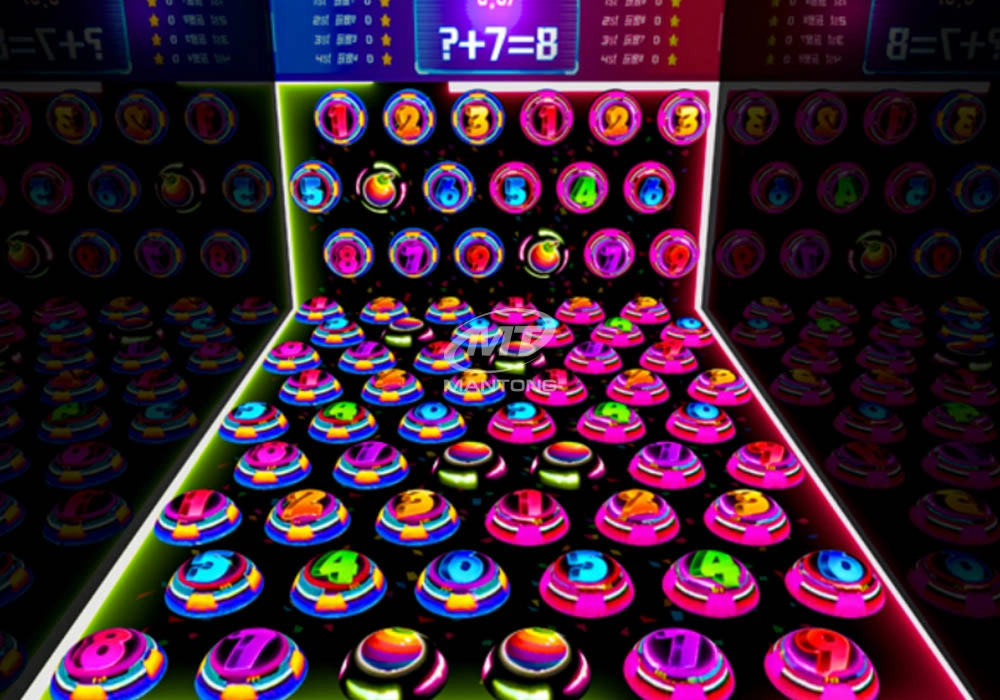
Amusement Rapidly Rotating Bouncing Sphere Interactive Wall Floor Projection Sports Games
Rapidly Rotating Bouncing Sphere is an interactive space where participants jump on rotating spheres. As they step on it, the spheres surface will show special interactivity
Jumping on spheres of the same color in succession causes them to pop, releasing light particles. The more consecutive jumps, the greater the reward—caterpillars appear, and eventually, all spheres of that color burst, filling the space with light and even more caterpillars.
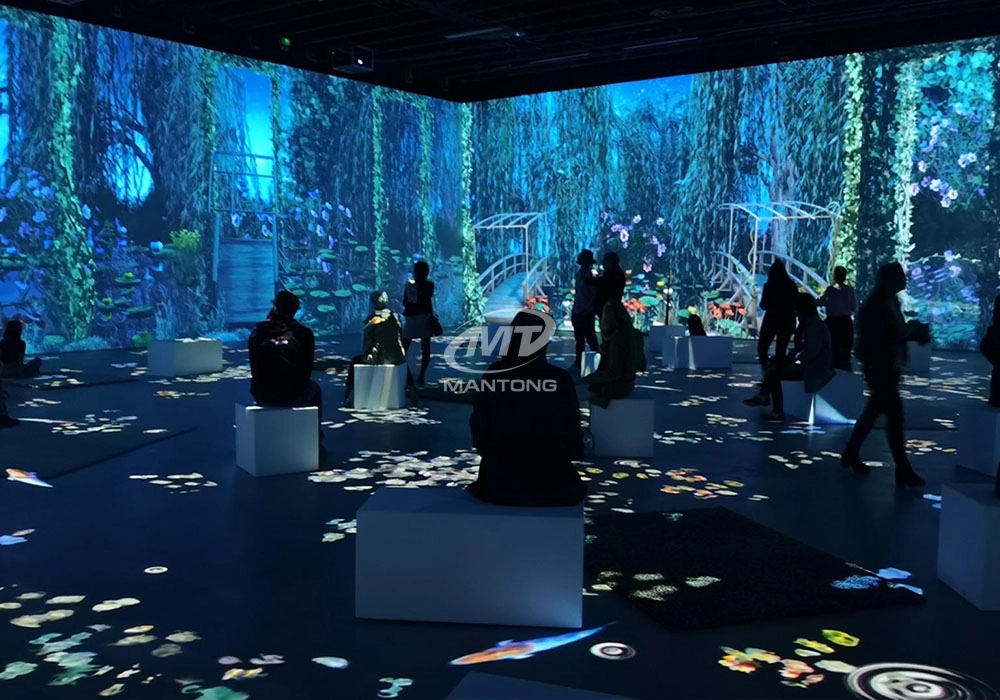
Mantong 6500LM High-Lumen Projector for Large-Scale Immersive Room Projection
Transform any space with Mantong's immersive projection mapping systems. Our high-lumen projectors (up to 6500 LM) and custom software create captivating interactive experiences for floors and walls. Ideal for museums, events, retail, and hospitality. Each kit includes professional ceiling mounting and 80+ pre-loaded video contents and is backed by a 12-month warranty and CE certification. We offer full customization and support to bring your vision to life.
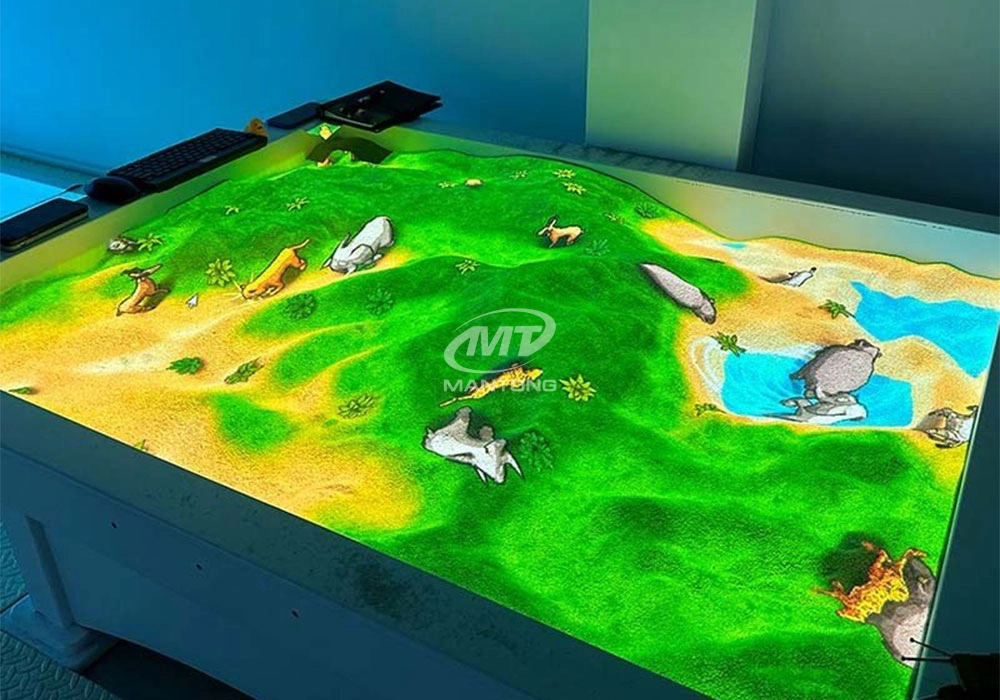
Interactive Sandbox Projection Mapping Games For Kids Play Park
Bring imagination to life with interactive sandbox projection mapping games designed for kids’ play parks. Using cutting-edge projection technology and real-time motion sensing, children can dig, build, and explore virtual worlds directly in the sand. Educational, engaging, and endlessly fun — it’s the perfect blend of play and learning.
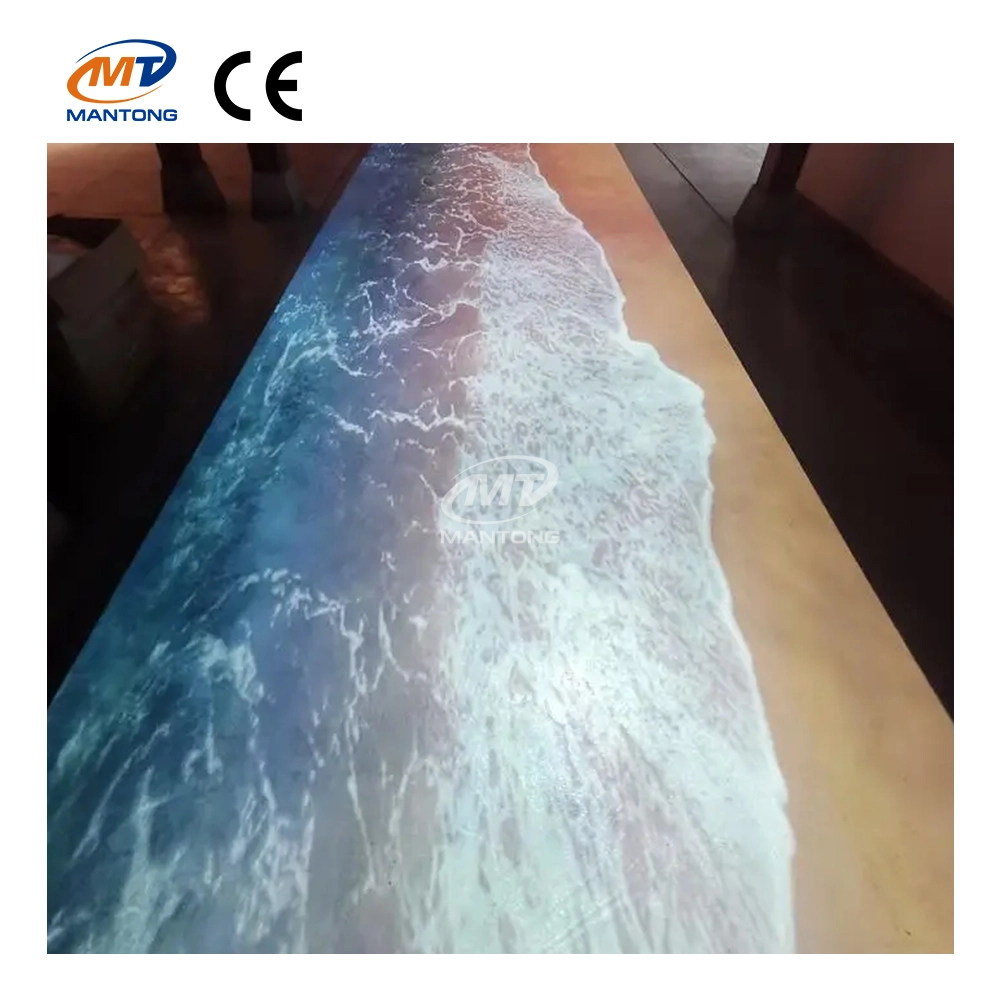
Indoor Interactive Floor Projector System - Customized Design & Installation Support
Indoor interactive floor projections display dynamic themed videos on the floor, commonly used in venues aiming to enhance brand influence or attract foot traffic, such as restaurants, hotel corridors, and brand car retail stores.
By using projectors and compatible software, the interactive content is projected onto the floor, encouraging engagement between people and the projected visuals. A single 5500-lumen indoor floor projector can cover an area of 5 m × 3 m. Typically, each project will use at least 3 units to ensure broad coverage and optimal visual effects.
We also offer customized design and installation support to enhance the interactive experience for your venue.

Kaida Business Center, Shixin Road, Panyu District,Guangzhou City, Guangdong Province, China.
ManTong
ManTong
ManTong