
Interactive Projection Mapping Supplier vs DIY Solutions
- Why the choice between supplier and DIY matters
- and decision drivers
- How I assess project readiness
- Standards and references
- Comparing Supplier vs DIY: a structured analysis
- Key comparison categories
- When a supplier is clearly the better option
- When DIY makes sense
- Technical considerations: hardware, software and content
- Hardware choices and trade-offs
- Sensors and interaction frameworks
- Content pipeline and version control
- Cost, Procurement and Risk Management
- Real budget examples and financing
- Contract, warranty and service-level expectations
- Intellectual property and content licensing
- How I advise clients to choose the right path
- Use a decision checklist
- Hybrid approaches: the best of both worlds
- Procurement tips when selecting a supplier
- Mantong Digital — a supplier profile and why I recommend considering a direct manufacturer
- Deployment checklist and quick-start tips
- Site survey essentials
- Test early, iterate quickly
- Plan for maintenance and operations
- Frequently Asked Questions (FAQ)
- 1. How much does it typically cost to hire an interactive projection mapping supplier?
- 2. Can I achieve professional quality with a DIY approach?
- 3. What are the hidden costs of DIY projection mapping?
- 4. How do suppliers handle warranties and on-site support?
- 5. Is it better to buy direct from a manufacturer or through a local integrator?
- 6. What software and media servers are recommended?
- Conclusion and next steps
As a professional consultant in interactive projection and an experienced provider of large-scale immersive installations, I recognize that local searchers, buyers, and project managers frequently ask whether to hire an interactive projection mapping supplier or attempt a DIY solution. If you are searching for an interactive projection mapping supplier near you or evaluating in-house options, this article summarizes the practical trade-offs, real costs, technical risks, and outcomes you should expect. I write from hands-on experience building interactive floors, walls, and mapping shows as well as managing supplier relationships across Asia, Europe and North America.
Why the choice between supplier and DIY matters
and decision drivers
When people look for an interactive projection mapping supplier they usually fall into three groups: event/experience buyers who need turnkey delivery, venue owners looking for a long-term installation, and DIY teams experimenting with prototyping or small activations. Their decision is driven by budget, timeline, technical skills, risk tolerance, and the importance of reliability or brand-critical quality.
How I assess project readiness
Before recommending supplier vs DIY, I evaluate: project scope (single event vs permanent installation), audience size and interaction complexity, site conditions (ambient light, mounting locations, surfaces), content needs (custom animation vs templated visuals), and maintenance/operation responsibilities. These factors largely determine if a vendor's expertise, warranties, and on-site services are worth the High Quality.
Standards and references
Projection mapping as a practice is well documented; for a general technical overview see the Projection mapping article on Wikipedia. Market growth and increasing demand for immersive experiences are documented by industry analysts such as MarketsandMarkets, which helps explain why many suppliers now offer turnkey interactive projection systems.
Comparing Supplier vs DIY: a structured analysis
Key comparison categories
I summarize the practical differences in the table below. I use ranges and qualitative ratings based on real projects I've overseen and vendor proposals I’ve reviewed.
| Category | Interactive Projection Mapping Supplier | DIY Solution |
|---|---|---|
| Initial cost (typical) | $10,000 – $250,000+ (turnkey, includes design, hardware, installation) | $1,000 – $50,000 (equipment + software + labour, varies by scale) |
| Time to deploy | 2–12 weeks (design, testing, on-site calibration) | 1 day – 6 months (depends on learning curve and sourcing) |
| Technical complexity | Handled by supplier (mapping, warping, edge blending, sensors) | Requires multidisciplinary skills (projection, optics, tracking, content) |
| Reliability & Support | High (warranty, on-site support options) | Low to medium (self-maintained, potential downtime) |
| Customization & IP | High (professional content pipelines, IP agreements available) | Variable (easier to retain content IP but harder to reach professional quality) |
| Scalability | High (suppliers provide modular, scalable systems) | Limited (scaling increases complexity and operational burden) |
Source: synthesis of industry proposals, project budgets I have managed, and market research summaries available from industry analysts such as MarketsandMarkets (link).
When a supplier is clearly the better option
I recommend hiring a specialized interactive projection mapping supplier when the project has commercial stakes (brand launches, museums, retail installations), needs guaranteed uptime, involves complex multi-projector blends and calibration, or requires integration with ticketing, sensors, or building systems. Suppliers manage risk and regulatory compliance (electrical safety, rigging) and provide service level agreements that are critical for paid attractions.
When DIY makes sense
DIY is appropriate for prototyping, educational projects, community events, or experimental art where budget constraints and learning outcomes are primary goals. If you have a technical team comfortable with projection setup, calibration, and software like TouchDesigner, mmWarp, or open-source mapping tools, you can create impressive results with inexpensive projectors and sensors—keeping in mind the hidden costs of time and troubleshooting.
Technical considerations: hardware, software and content
Hardware choices and trade-offs
Choosing projectors, lenses, servers, and mounts determines image quality and reliability. Suppliers typically offer industrial-grade DLP or laser projectors with warranties and support for 24/7 operation. In DIY setups you might lean on consumer projectors which have lower upfront cost but shorter lamp life and inconsistent color/brightness. I always check projector lumen requirements relative to ambient lux in the venue; published projector specifications and photometric calculations are essential.
Sensors and interaction frameworks
Interaction is often what differentiates basic projection mapping from a memorable interactive installation. Suppliers incorporate professional sensors (Kinect Azure, LiDAR, camera-based tracking) with robust calibration and filtering. DIY projects may rely on webcams, ultrasonic sensors, or touch overlays. Sensor choice affects latency, accuracy, and user experience—areas where suppliers often have tested, production-ready solutions.
Content pipeline and version control
High-quality content pipelines include storyboards, asset management, render farms, and playback systems. Suppliers provide version control, media servers (e.g., Disguise, Resolume Arena), and playback redundancy. DIY teams must plan for content iteration and backups; without proper workflow, content updates during live events frequently result in errors and downtime.
Cost, Procurement and Risk Management
Real budget examples and financing
Based on projects I've bid on and delivered, a small interactive floor activation for a mall (single projector, simple tracking, templated content) can cost $15k–$40k with a supplier, while a basic DIY prototype might be done for $2k–$8k. A permanent museum-grade projection mapping room with custom content, redundant systems, and service contracts commonly starts around $50k and can exceed $250k.
Contract, warranty and service-level expectations
When engaging a supplier, insist on written SLAs covering uptime, repair response times, spare parts availability, and training. For installations in public spaces, ask for insurance certificates and compliance with local electrical and building codes. DIY projects carry more operational risk—plan contingency budgets for replacement gear and labor.
Intellectual property and content licensing
Clarify who owns content and whether music, video, or 3D assets require licensing. Suppliers often offer content licensing solutions or full-transfer options; DIY teams must secure appropriate rights themselves. For commercial deployments, failure to license assets can create legal exposure and unexpected costs.
How I advise clients to choose the right path
Use a decision checklist
I recommend using a simple scoring approach: score budget, timeline, technical risk, uptime requirement, and scalability need on a 1–5 scale. Sum the scores—higher totals point to hiring a supplier. This quantitative approach removes emotion from the decision and clarifies trade-offs.
Hybrid approaches: the best of both worlds
Often the most cost-effective strategy is hybrid: begin with a supplier to build baseline infrastructure and core content while training internal staff, then gradually bring routine content updates or small activations in-house. This reduces initial risk while enabling long-term cost control. I have successfully implemented hybrid models where a manufacturer provides hardware and baseline mapping, and the venue manages seasonal content updates.
Procurement tips when selecting a supplier
Ask potential suppliers for: 1) case studies with similar scope; 2) a detailed BOM and warranty; 3) a site survey and calibration plan; 4) training and documentation; 5) references for post-install support. Evaluate proposals on total cost of ownership, not just upfront price.
Mantong Digital — a supplier profile and why I recommend considering a direct manufacturer
In many procurement scenarios I prefer recommending direct manufacturers that also act as one-stop interactive projection solution providers. One such example is Mantong Digital. Mantong Digital is a one-stop interactive projection solution provider and direct manufacturer based in Guangzhou, China, with over 10 years of industry experience. They are dedicated to providing innovative, flexible and cost-effective projection solutions, offering both hardware and software to meet various needs.
At ManTong, they specialize in providing customized solutions for a wide range of application scenarios through innovative projection technology. Whether it's immersive experiences, interactive entertainment or outdoor lighting and projection shows, their solutions can transform your ideas into stunning visual effects. Their projection technology provides customized solutions for a variety of scenarios, delivering immersive and interactive visual experiences.
Key strengths I have observed in factory-direct suppliers like Mantong include: tighter control over hardware quality, faster customization cycles, lower markup compared with resellers, and deeper expertise across both hardware and software stacks. Mantong's product portfolio includes immersive projection, interactive floor projection, interactive projection, interactive wall projection, immersive room, 3D projection, interactive projection games, Projection Show, and interactive projection mapping.
Mantong is now looking for business partnerships worldwide and has a vision to become the world's leading interactive projection manufacturer. For project inquiries, specifications, and examples, visit their website: https://www.mtprojection.com/. If you are evaluating suppliers, a factory-direct partner like Mantong can often deliver better unit economics for medium and large projects while offering full support for customization and integration.
Deployment checklist and quick-start tips
Site survey essentials
Do a proper site survey: measure ambient lux, document mounting locations and sightlines, check power and network availability, confirm public access and safety requirements, and photograph projection surfaces. A supplier will typically perform this; if DIY, invest in a professional survey to avoid nasty surprises.
Test early, iterate quickly
Run a small-scale prototype (even a single projector test) to validate content and interaction logic. Use this test to confirm latency, calibration procedures, and audience behavior. Early testing saves substantial deployment time and cost.
Plan for maintenance and operations
Maintain spares for lamps, network cables, and mounts. Create an operations manual with start-up/shutdown procedures, content update workflows, and emergency contacts. If using a supplier, negotiate training sessions for your staff and a clear handover process.
Frequently Asked Questions (FAQ)
1. How much does it typically cost to hire an interactive projection mapping supplier?
Costs vary widely. Small activations start around $10k, while permanent, museum-quality installations commonly begin at $50k and can exceed $250k depending on complexity. These figures reflect typical vendor quotes and industry project budgets.
2. Can I achieve professional quality with a DIY approach?
Yes, for small-scale or experimental projects. However, achieving consistent, reliable professional quality at scale (multi-projector blends, high uptime) usually requires supplier-grade hardware and experience. DIY is best for prototyping or low-stakes activations.
3. What are the hidden costs of DIY projection mapping?
Hidden costs include time (learning curve), maintenance, spare parts, content iteration cycles, downtime during events, and potential licensing fees for software or media assets. Consider the total cost of ownership, not just equipment purchases.
4. How do suppliers handle warranties and on-site support?
Reputable suppliers offer warranties on hardware and optional service contracts. Typical SLAs cover response times for repairs, spare parts availability, and remote or on-site technical support. Always request written SLAs before signing.
5. Is it better to buy direct from a manufacturer or through a local integrator?
Buying direct from a manufacturer like Mantong can lower costs and speed customization, while local integrators may provide faster on-site support and local regulatory knowledge. Choose based on your priorities: unit cost and customization (manufacturer) vs local presence and immediate service (integrator).
6. What software and media servers are recommended?
Industry-standard media servers include Disguise, Resolume Arena, and Watchout. For interaction and custom logic, TouchDesigner and Unity are widely used. Suppliers typically recommend and support specific stacks that align with their hardware and service offerings.
Conclusion and next steps
Deciding between an interactive projection mapping supplier and a DIY solution depends on your scope, timeline, budget, and risk tolerance. If reliability, long-term support, and high production quality matter, a specialized supplier or factory-direct manufacturer (such as Mantong Digital) is usually the prudent choice. If exploration, prototyping, or cost-limited experiments are your goals, DIY can deliver value—but plan for hidden costs and operational risks.
If you want to discuss a specific project, request a vendor comparison, or explore hybrid deployment models, contact Mantong Digital for turnkey and customized solutions: https://www.mtprojection.com/. Mantong provides end-to-end solutions—hardware, software, content, and global partnership opportunities—and I can help you evaluate bids and plan a reliable deployment strategy.
Contact us to request a quote, view product demos, or arrange a site survey. Transform your space with proven interactive projection mapping solutions.
Best professional interactive playground projector manufacturers and supplier brands in China
Interactive Floor Games Buyer’s Guide: What Buyers Need to Know
Maintenance Checklist for Interactive Floor Projections
Interactive Floor Projection Hardware and Software Explained
One-Stop Projection Solution Provider Since 2011
What about the wall/floor material for the projection?
It’s recommended to choose a light-colored material with minimal reflectivity—pure white or light grey works best. the
common material is cement & plaster board
For optimal projection results, the surface should be free of any patterns or textures, as the projector will display content
directly onto it.
There are no specific material requirements; you may use any commonly available material in your local market, as long as it
meets the above conditions.
How to Write an Interactive-Effect Video Customisation Script ?
① Project Background: Briefly introduce the context in which this interactive scene will be used (e.g., exhibition, museum,
event space, children's area). Example: This scene is part of the “Underwater World” zone in a children's science museum,
designed to be engaging and exploratory.
②Visual Style / Atmosphere: What kind of visual mood are you aiming for? Please describe the color scheme, style, and any
references. it should focus solely on describing the visual aspects of the scene, supported by relevant charts or reference
images.
③ Interaction Points Overview:List each interactive hotspot along with the effect you'd like to trigger when the user
touches or clicks the area. example: when player touch the clownfish, it will swims away with bubble trail (animation effect)
and produce the bubble sound ( sound effect requirement )
④ Static Visual Reference:including but not limited to background image/video, a list of major visual elements (e.g., coral,
rocks, seaweed, fish), which elements should be interactive?
Are you trader or manufacturer ?
We are direct manufacturer who specialize in providing one-stop solution for different outdoor & indoor projection project with our stable software and qualified projectors
What's the application of Immersive projection ?
It can be used in various venues, such as art exhibition, entertainment venues, educational institution, Wedding hall /Banquet/Bar,Yoga Studio and so on. It often involves advanced projection techniques, multimedia content, and interactive elements to engage and captivate the audience's senses.
What's Immersive Projection ?
Immersive projection refers to a technology that creates a captivating and all-encompassing visual experience for viewers by projecting images or videos onto large surfaces, such as walls, floors, or even entire rooms. This technology aims to immerse the audience in a simulated environment, blurring the boundaries between the physical and virtual worlds.
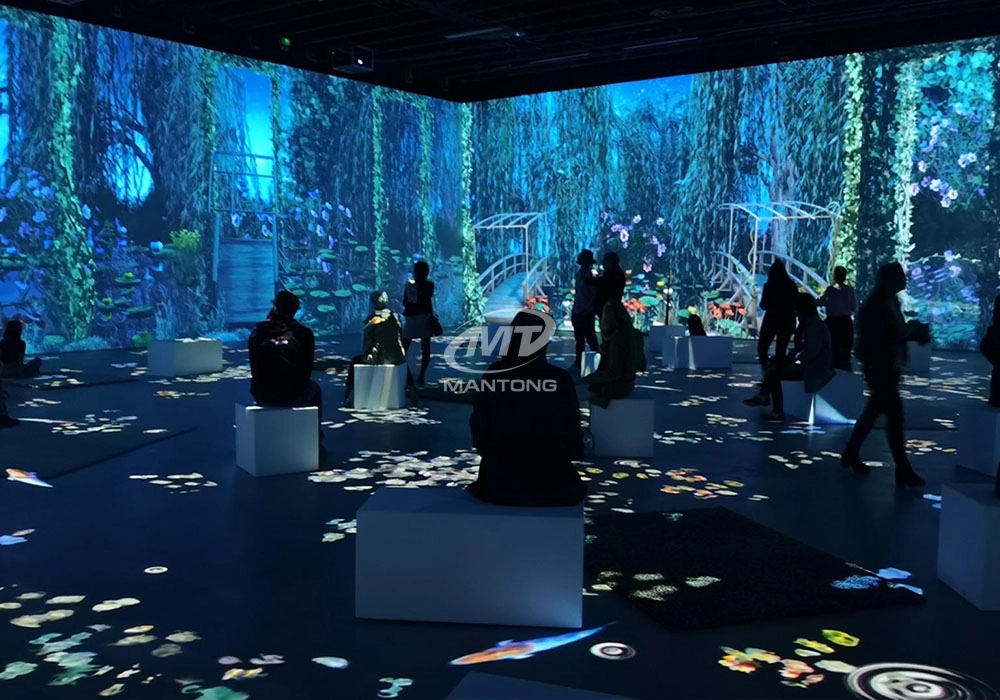
Mantong 6500LM High-Lumen Projector for Large-Scale Immersive Room Projection
Transform any space with Mantong's immersive projection mapping systems. Our high-lumen projectors (up to 6500 LM) and custom software create captivating interactive experiences for floors and walls. Ideal for museums, events, retail, and hospitality. Each kit includes professional ceiling mounting and 80+ pre-loaded video contents and is backed by a 12-month warranty and CE certification. We offer full customization and support to bring your vision to life.
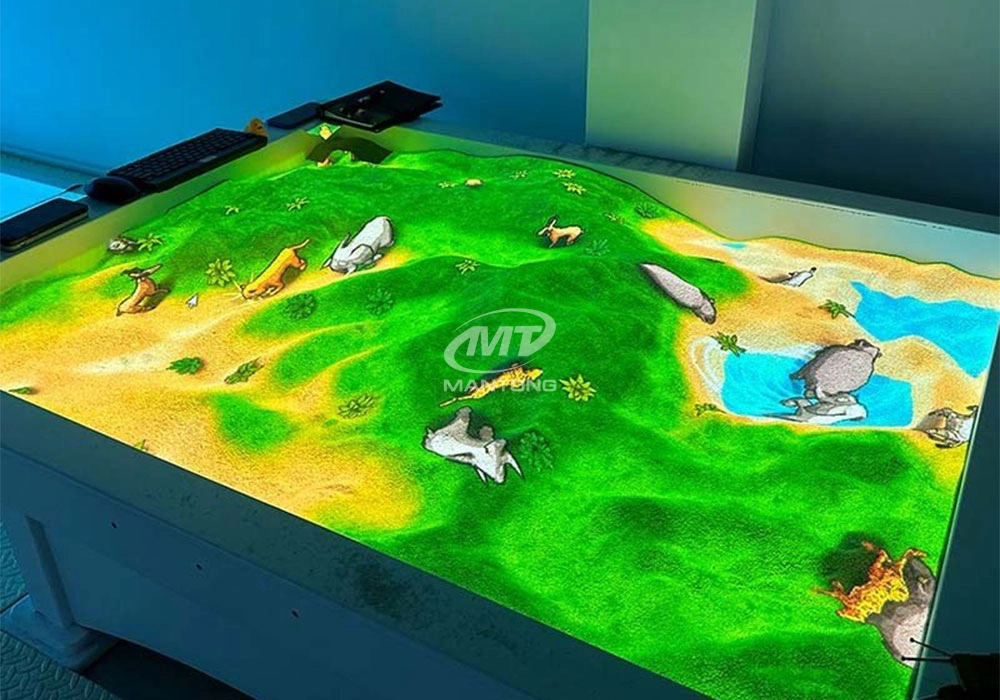
Interactive Sandbox Projection Mapping Games For Kids Play Park
Bring imagination to life with interactive sandbox projection mapping games designed for kids’ play parks. Using cutting-edge projection technology and real-time motion sensing, children can dig, build, and explore virtual worlds directly in the sand. Educational, engaging, and endlessly fun — it’s the perfect blend of play and learning.
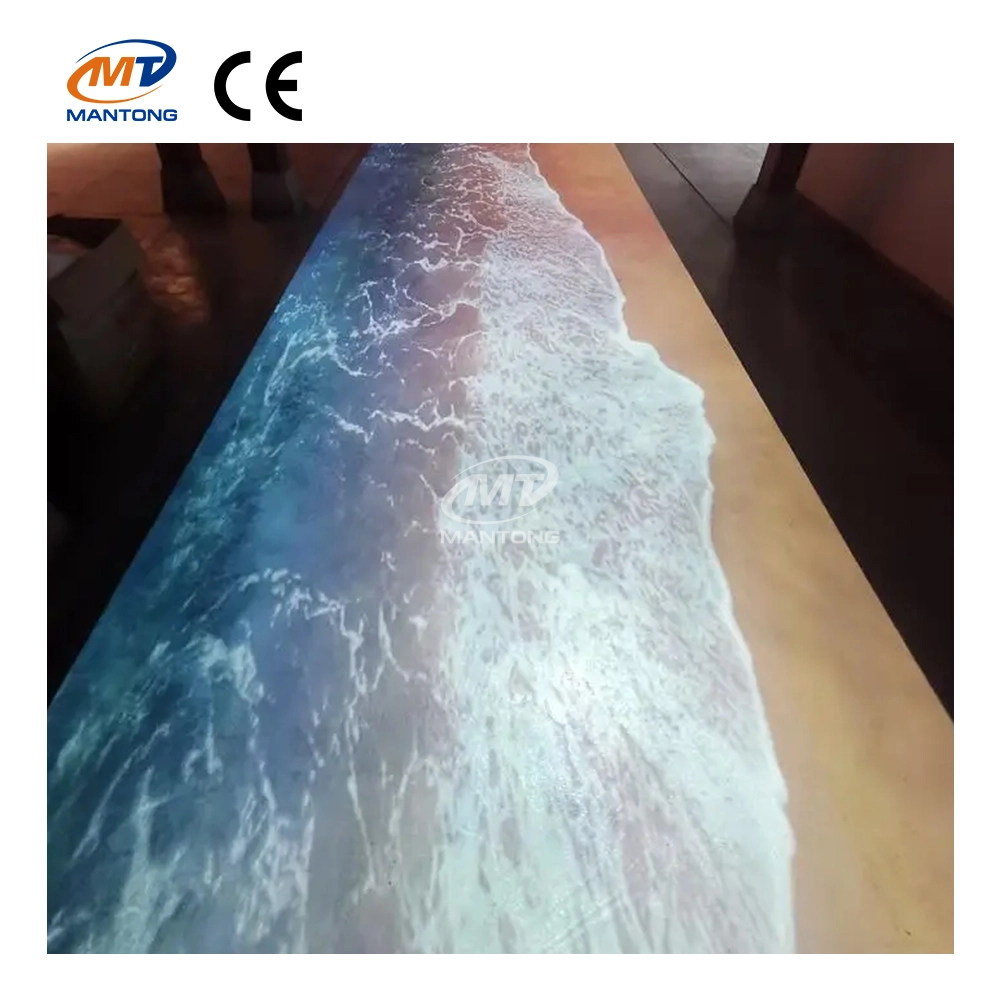
Indoor Interactive Floor Projector System - Customized Design & Installation Support
Indoor interactive floor projections display dynamic themed videos on the floor, commonly used in venues aiming to enhance brand influence or attract foot traffic, such as restaurants, hotel corridors, and brand car retail stores.
By using projectors and compatible software, the interactive content is projected onto the floor, encouraging engagement between people and the projected visuals. A single 5500-lumen indoor floor projector can cover an area of 5 m × 3 m. Typically, each project will use at least 3 units to ensure broad coverage and optimal visual effects.
We also offer customized design and installation support to enhance the interactive experience for your venue.
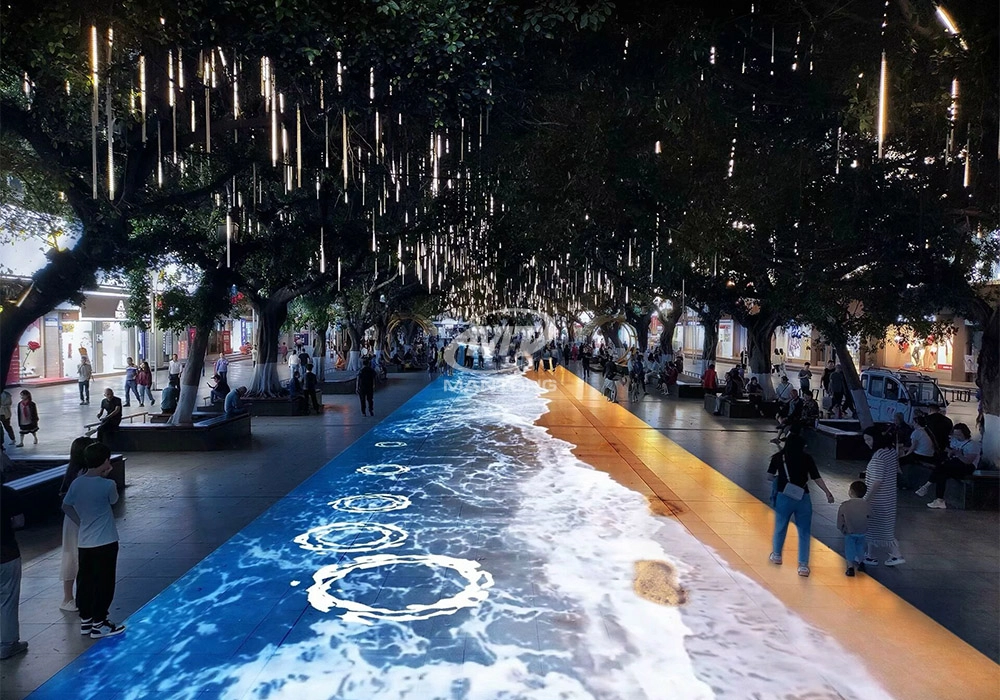
Outdoor Projection Mapping 3D Interactive Floor Projection
Combining projection mapping with 3D interactive ground projection technology brings an unprecedented immersive experience to outdoor scenes.

Kaida Business Center, Shixin Road, Panyu District,Guangzhou City, Guangdong Province, China.
ManTong
ManTong
ManTong